Last updated: July 20, 2026
Next review: July 2027
Written and source checked by: Adel Galal, Founder and Lead Writer at NextFitLife
Review status: Editorially reviewed and source checked. This article has not been medically reviewed by a doctor or registered dietitian.
The Best Foods and Drinks for Weight Loss are not secret foods that melt fat.
They do not burn belly fat while you sleep.
They do not speed up weight loss in a few days.
Useful foods help in a simpler way.
They can help you build filling meals.
They can provide protein, fiber, water, vitamins, and minerals.
They may also make it easier to eat an amount that fits your needs.
Weight changes happen over time.
Food is only one part of the process.
Physical activity, sleep, stress, medicines, hormones, age, health conditions, genes, and food access can also affect weight.
A safe plan should fit your health, budget, culture, schedule, and food preferences.
This guide explains 15 useful foods and drinks, simple meal ideas, portion tips, and realistic steps for healthy weight loss.
For wider food guidance, visit the NextFitLife Foods and Nutrition Hub.
Quick Answer
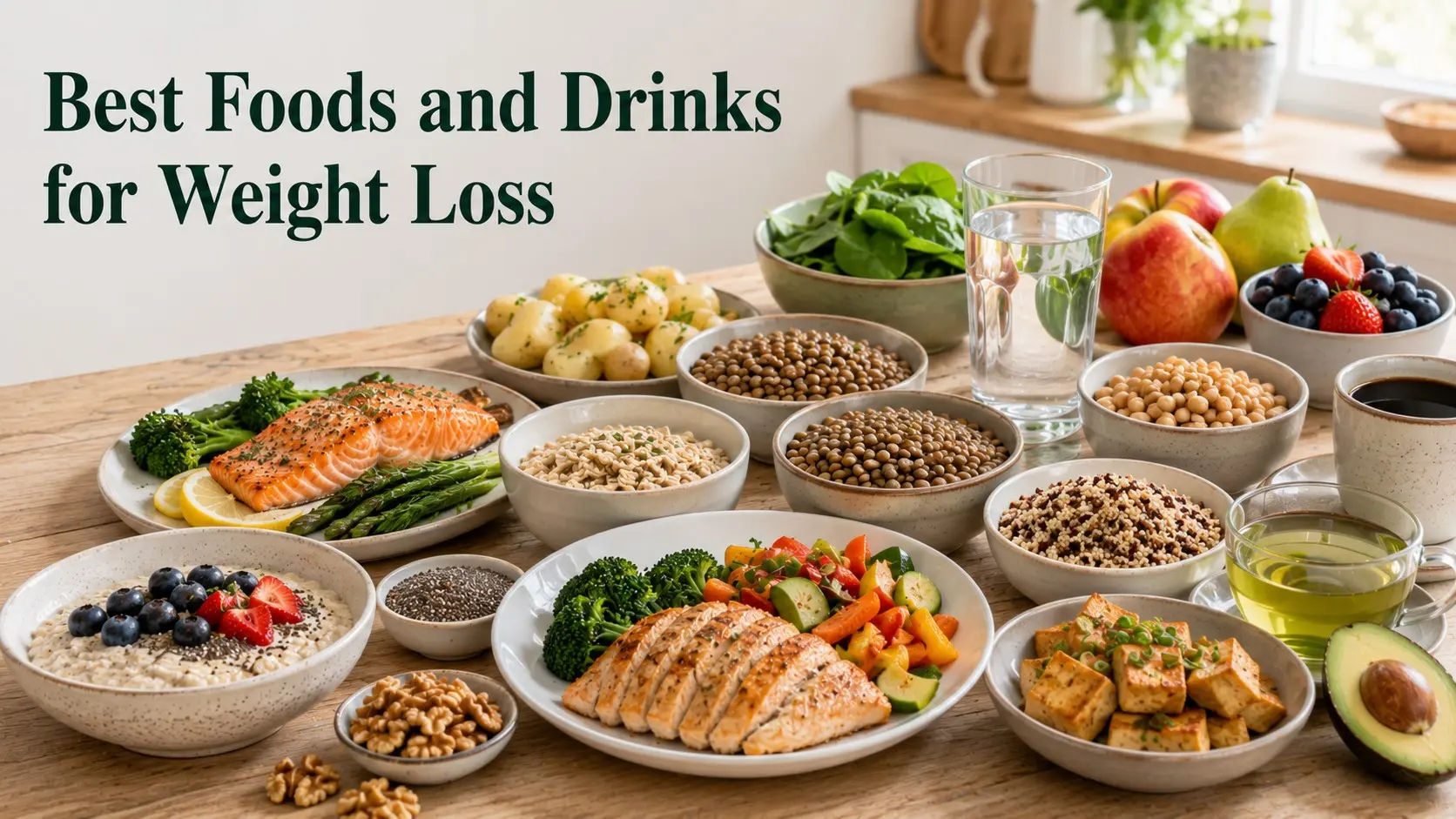
The Best Foods and Drinks for Weight Loss include eggs, plain Greek yogurt, fish, chicken, tofu, beans, lentils, oats, potatoes, whole grains, berries, apples, vegetables, nuts, seeds, water, tea, and coffee.
These foods do not cause weight loss on their own.
They can help you build meals that provide protein, fiber, and useful nutrition.
A lasting plan also needs realistic portions, regular movement, enough sleep, stress care, and habits you can maintain.
Important Medical and Nutrition Note
This content is for general educational purposes and does not replace professional medical advice, diagnosis, or treatment. Consult an appropriately qualified healthcare professional for personal medical concerns.
This article explains published guidance and does not provide a personal clinical assessment.
Always consult qualified medical professionals for diagnosis and treatment of any health condition.
Weight loss is not safe or needed for every person.
Do not begin a restrictive diet if you are pregnant, breastfeeding, under 18, underweight, recovering from illness, or living with an eating disorder unless your medical team guides you.
Ask a doctor or registered dietitian for personal advice if you have diabetes, kidney disease, liver disease, heart disease, digestive disease, food allergies, or medicine that affects weight, blood sugar, or appetite.
Seek help if food rules cause fear, guilt, binge eating, purging, fasting, or strong distress about your body.
How Does Weight Loss Work?
Body weight can change when the energy your body uses is different from the energy you get from food and drinks.
A calorie deficit means your body uses more energy than you eat and drink over time.
This does not mean you must count every calorie.
It also does not mean you should eat as little as possible.
Eating too little can cause weakness, poor focus, strong hunger, muscle loss, and nutrient gaps.
The goal is to find a pattern that provides enough food while supporting your health goals.
Current public health guidance supports gradual change.
The CDC notes that people who lose weight at a steady pace are more likely to keep it off than people who lose it very fast.
For many adults, this may be about one to two pounds each week.
Your safe rate may be slower.
Your doctor may recommend a different goal.
Small Changes Can Matter
You do not need a perfect diet.
One useful change can be enough to begin.
You might:
- Replace one sugary drink with water
- Add vegetables to dinner
- Eat protein at breakfast
- Use a smaller amount of cooking oil
- Plan lunch before work
- Walk after a meal when it is safe
- Sleep at a regular time
For a wider guide to daily habits, read our Healthy Eating Lifestyle Guide.
Can Foods Burn Belly Fat?
No single food burns belly fat.
You cannot tell your body to remove fat from one exact area by eating salmon, berries, chili, vinegar, or green tea.
Your body decides where it stores and loses fat.
This is affected by age, sex, genes, hormones, sleep, stress, activity, and total energy balance.
A nutritious eating pattern may support overall fat loss.
Over time, this may also reduce fat around the waist.
But there is no food that targets the stomach.
Belly fat loss also should not be confused with less bloating.
Bloating can change within hours.
Body fat changes more slowly.
Read our Complete Belly Fat Loss Guide for a full explanation of visceral fat, food, sleep, stress, and exercise.
How the Best Foods and Drinks for Weight Loss May Help
Protein Can Make Meals More Filling
High protein foods include eggs, fish, chicken, yogurt, beans, lentils, tofu, and cottage cheese.
Protein supports muscles and many body functions.
It may also help a meal feel more satisfying.
You do not need the highest possible protein intake.
Your needs depend on your body, health, age, and activity.
Fiber Adds Volume
Fiber rich foods include vegetables, fruit, beans, lentils, oats, whole grains, nuts, and seeds.
Fiber can support digestion.
It may also help you feel full.
Add fiber slowly if you eat very little now.
Water Rich Foods Can Fill the Plate
Vegetables and many fruits contain a lot of water.
They can add size, color, and texture to a meal.
This may help you enjoy a larger plate without relying only on very rich foods.
Normal Foods Support Better Nutrition
Nutrient dense foods provide protein, vitamins, minerals, fiber, or other useful nutrients.
They are not magic.
They simply help you build a better overall diet.
Enjoyment Helps a Plan Last
A plan made from foods you dislike will be hard to follow.
Choose foods that taste good to you.
Use herbs, spices, lemon, garlic, onion, and simple sauces.
Satiety means the feeling of being satisfied after eating.
Taste, texture, protein, fiber, fat, and portion size can all affect it.
15 Best Foods and Drinks for Weight Loss
These foods can fit a balanced plan.
None of them guarantees weight loss.
Portion size and the full meal still matter.
1. Eggs
Eggs provide protein, vitamins, minerals, and fat.
They are easy to cook.
Boil, poach, bake, or scramble them.
Add spinach, peppers, mushrooms, tomatoes, or onions.
Serve eggs with fruit, oats, potatoes, or whole grain toast.
This creates a more complete breakfast than eggs alone.
Try the meal ideas in our Healthy Breakfast Ideas Guide.
2. Plain Greek Yogurt and Cottage Cheese
Plain Greek yogurt and cottage cheese provide protein.
They can be used for breakfast, snacks, dips, and sauces.
Add berries, apples, oats, cinnamon, nuts, or seeds.
Choose plain products when you want less added sugar.
Cottage cheese can contain more sodium.
Compare labels when salt matters to your health.
3. Salmon and Other Fish
Fish provides protein.
Oily fish such as salmon, trout, sardines, herring, and mackerel also provide omega 3 fats.
Bake, grill, steam, or poach fish.
Serve it with vegetables and potatoes, rice, quinoa, or bread.
Smoked and canned fish may contain more sodium.
Read the label.
4. Chicken, Turkey, and Tofu
Chicken, turkey, and tofu are flexible protein foods.
Use them in soup, salad, wraps, rice bowls, pasta, or vegetable dishes.
Choose plain products when possible.
Prepared meat and flavored tofu may contain more sodium.
Grill, bake, steam, or cook them in a pan with a measured amount of oil.
5. Beans, Lentils, and Chickpeas
Beans and lentils provide protein and fiber.
They can make a meal feel filling.
Add them to soup, salad, curry, rice, wraps, or pasta sauce.
Drain and rinse canned beans to remove some sodium.
Increase the amount slowly if beans cause gas.
6. Oats
Oats provide soluble fiber.
They are simple, low cost, and easy to prepare.
Make oatmeal with milk or a fortified alternative.
Add fruit and a protein food such as yogurt.
Watch how many rich toppings you combine.
Honey, syrup, granola, dried fruit, nuts, seeds, and nut butter can make one bowl much larger than expected.
7. Potatoes and Sweet Potatoes
Potatoes are often blamed for weight gain.
Plain potatoes can fit a weight management plan.
They provide carbohydrate, potassium, vitamin C, and fiber when the skin is eaten.
The cooking method matters.
Boil, bake, roast, or air cook them.
Large amounts of oil, butter, cream, cheese, or fried toppings add more energy.
8. Whole Grains
Whole grains include brown rice, barley, quinoa, oats, whole grain bread, and whole wheat pasta.
They can provide fiber and useful nutrients.
White rice and regular pasta can also fit.
Use a portion that matches the rest of the meal.
Pair grains with vegetables and protein.
9. Berries
Strawberries, blueberries, raspberries, and blackberries provide fiber and natural sweetness.
Use fresh or frozen berries.
Add them to yogurt, oats, cereal, or smoothies.
Berries do not remove sugar cravings or burn fat.
They are simply a useful fruit choice.
10. Apples and Pears
Apples and pears are easy to carry.
They provide fiber and water.
Eat them whole rather than as juice when possible.
Pair fruit with yogurt, cheese, eggs, or a small amount of nuts when you need a more filling snack.
11. Leafy Greens
Spinach, kale, lettuce, arugula, and collard greens add volume and color.
Use them in salads, eggs, soup, pasta, rice, wraps, or smoothies.
Leafy greens do not detox the body.
They do not remove water weight overnight.
They are useful because they provide fiber and nutrients.
12. Broccoli and Other Vegetables
Broccoli, cauliflower, cabbage, peppers, carrots, green beans, mushrooms, and zucchini can help fill a plate.
Fresh, frozen, and canned vegetables can all work.
Roast, steam, grill, or stir cook them.
Measure oil instead of pouring it without looking.
Add herbs and spices for flavor.
13. Nuts, Seeds, Avocado, and Olive Oil
Nuts, seeds, avocado, and olive oil provide unsaturated fats.
They can help food taste satisfying.
They also contain a lot of energy in small amounts.
A larger amount is not always better.
Use a small handful of nuts.
Add a spoon of seeds.
Use part of an avocado.
Measure oil with a spoon when portion control is useful.
14. Water
Water has no calories.
It can replace soda, sweet tea, energy drinks, or large juice drinks.
Water does not burn fat.
It does not flush fat from the body.
Your fluid needs depend on climate, activity, body size, health, pregnancy, and medicine.
People with kidney disease, heart failure, or a prescribed fluid limit need personal advice.
15. Unsweetened Tea and Coffee
Plain tea and coffee contain very few calories.
They may help when they replace drinks with sugar, cream, or syrup.
Green tea does not cause large or rapid weight loss.
Coffee is not a meal.
Caffeine can affect sleep, anxiety, heart rhythm, and some medicines.
Avoid adding large amounts of sugar, cream, sweet foam, or flavored syrup.
Pregnant people should follow professional caffeine advice.
What About Apple Cider Vinegar?
Apple cider vinegar is not a fat burning drink.
It does not target belly fat.
Some small studies have looked at vinegar and appetite or blood sugar.
This does not prove that it causes useful long term weight loss.
Vinegar can damage tooth enamel.
It can irritate the throat and stomach.
It may also affect potassium or interact with medicine.
Use a small amount in food if you enjoy it.
Do not drink concentrated vinegar.
What About Chili Peppers?
Chili peppers add flavor.
Capsaicin may have a small effect on energy use or appetite.
The effect is not large enough to make chili a weight loss treatment.
Use chili because you enjoy it.
Avoid it if it worsens heartburn, stomach pain, or bowel symptoms.
How to Build a Balanced Weight Loss Meal
A balanced diet does not need perfect numbers.
Use this simple guide.
- Add vegetables or fruit.
- Choose a protein food.
- Add potatoes, beans, rice, oats, bread, pasta, or another grain.
- Add a suitable amount of fat.
- Choose water or an unsweetened drink.
| Meal part | Simple choices |
|---|---|
| Vegetables or fruit | Salad, broccoli, peppers, berries, apples, pears, or another suitable choice |
| Protein | Eggs, fish, chicken, yogurt, beans, lentils, tofu, or cottage cheese |
| Carbohydrate food | Potatoes, rice, oats, bread, pasta, beans, fruit, or whole grains |
| Fat | Olive oil, avocado, nuts, seeds, or fat already present in the meal |
| Drink | Water, plain tea, coffee, milk, or a suitable alternative |
The right amount is different for each person.
You may need a larger or smaller meal based on hunger, body size, health, and activity.
Simple Meals Using the Best Foods and Drinks for Weight Loss
Breakfast Idea 1
- Eggs with spinach and peppers
- Whole grain toast
- Fresh fruit
- Water, tea, or coffee
Breakfast Idea 2
- Plain Greek yogurt
- Oats
- Berries
- Chia seeds
Breakfast Idea 3
- Oatmeal made with milk
- Apple and cinnamon
- A small amount of walnuts
Lunch Idea 1
- Chicken or tofu
- Brown rice or potatoes
- Broccoli and peppers
- Lemon and a measured amount of olive oil
Lunch Idea 2
- Lentil soup
- Mixed salad
- Whole grain bread
- Plain yogurt
Dinner Idea 1
- Baked salmon
- Roasted potatoes
- Green beans or broccoli
- Water
Dinner Idea 2
- Bean and vegetable pasta
- Side salad
- A small amount of cheese if desired
Simple Snack Ideas
- An apple with plain yogurt
- A boiled egg with fruit
- Carrots and cucumber with hummus
- Cottage cheese with berries
- A small serving of nuts with a pear
A snack is optional.
Eat one when you are hungry or when it helps your schedule.
For a structured plan, visit our Simple Meal Plan for Weight Loss.
Seven Day Best Foods and Drinks for Weight Loss Plan
This plan is an example.
It does not provide a fixed calorie target.
Change the foods and portions to fit your needs.
| Day | Breakfast | Lunch | Dinner |
|---|---|---|---|
| Day 1 | Eggs, vegetables, toast, and fruit | Lentil soup, salad, and bread | Salmon, potatoes, and broccoli |
| Day 2 | Greek yogurt, oats, and berries | Chicken, rice, and mixed vegetables | Bean and vegetable pasta |
| Day 3 | Oatmeal, apple, cinnamon, and walnuts | Tuna, potatoes, cucumber, and tomatoes | Tofu, vegetables, and quinoa |
| Day 4 | Egg and vegetable wrap | Chickpea salad with whole grain bread | Chicken, potatoes, and green beans |
| Day 5 | Overnight oats with yogurt and berries | Leftover chicken and vegetable bowl | Lentil curry with rice |
| Day 6 | Cottage cheese, fruit, and oats | Bean soup and salad | Fish, roasted vegetables, and potatoes |
| Day 7 | Whole grain cereal, milk, fruit, and seeds | Egg and vegetable sandwich | Family meal with extra vegetables |
Simple Portion Tips
Portion control should not mean tiny meals.
It means noticing how much food you serve and whether the amount meets your needs.
Use a Plate as a Guide
Try adding vegetables to a large part of the plate.
Add protein and a suitable carbohydrate food.
This is only a visual guide.
It is not a strict rule.
Measure Oils and Rich Sauces
Oil, butter, dressing, nut butter, nuts, seeds, and avocado can fit.
They contain a lot of energy in small amounts.
Use a spoon when estimating is hard.
Eat Without Strong Distraction
Try to notice the meal.
Turn off the screen when possible.
Eat slowly enough to notice when you feel satisfied.
Pause Before a Second Serving
Wait a few minutes.
Ask whether you are still hungry.
Eat more when you need it.
Do Not Ignore Strong Hunger
Very small meals can lead to strong hunger later.
Add protein, vegetables, fruit, beans, potatoes, or grains when a meal is not enough.
Best Foods and Drinks for Weight Loss Shopping List
Protein Foods
- Eggs
- Plain Greek yogurt
- Cottage cheese
- Salmon
- Tuna
- Chicken
- Tofu
- Beans
- Lentils
- Chickpeas
Fruit and Vegetables
- Berries
- Apples
- Pears
- Oranges
- Spinach
- Broccoli
- Peppers
- Carrots
- Green beans
- Tomatoes
- Cucumber
- Frozen mixed vegetables
Grains and Starchy Foods
- Oats
- Potatoes
- Sweet potatoes
- Brown rice
- Quinoa
- Whole grain bread
- Whole wheat pasta
Fats and Extras
- Olive oil
- Avocado
- Walnuts
- Almonds
- Chia seeds
- Ground flaxseed
- Herbs
- Spices
- Lemon
- Vinegar for food
Drinks
- Water
- Plain tea
- Coffee
- Milk
- Suitable fortified plant drinks
How to Plan Meals Without Diet Stress
Meal planning can reduce daily decisions.
It does not need to control every bite.
Choose Three Breakfasts
Examples:
- Eggs and toast
- Yogurt and fruit
- Oats and berries
Choose Three Lunches
Examples:
- Chicken and rice bowl
- Lentil soup
- Tuna and potato salad
Choose Three Dinners
Examples:
- Fish, potatoes, and vegetables
- Chicken, rice, and salad
- Bean and vegetable pasta
Prepare One Food Ahead
Cook rice, beans, eggs, chicken, vegetables, oats, or soup.
One prepared food can help with several meals.
Visit our Meal Prep and Recipes Hub for more planning ideas.
Foods and Drinks That May Make Weight Loss Harder
No food must be banned.
Some choices are simply easy to eat or drink in large amounts.
Sugary Drinks
Soda, sweet tea, energy drinks, sweet coffee, and many juice drinks can add a lot of energy without making you feel full.
Replace one drink at a time.
Alcohol
Alcohol contains calories.
It may also affect sleep, hunger, judgment, and food choices.
People who are pregnant, taking certain medicines, driving, or living with some health conditions should avoid it.
Large Restaurant Portions
Restaurant meals can contain more oil, salt, sugar, and food than you expect.
Share a dish or save part for later when useful.
Frequent Fried Foods
Fried foods can contain a lot of oil.
Bake, grill, roast, steam, or air cook food more often.
Large Amounts of Sauces and Spreads
Mayonnaise, creamy sauce, butter, oil, dressing, nut butter, and cheese can add up quickly.
Use enough for taste.
You do not need to remove them.
Foods Eaten Without Attention
Eating from a large package can make portions hard to notice.
Place the food in a bowl or on a plate.
Common Weight Loss Mistakes
Looking for Rapid Results
Fast loss is not always safe.
It may include water and muscle loss.
Gradual habits are often easier to maintain.
Believing in Fat Burning Foods
No food targets belly fat.
Green tea, chili, lemon water, vinegar, and grapefruit are not weight loss treatments.
Cutting Out All Carbohydrates
Carbohydrate foods include fruit, beans, oats, potatoes, rice, bread, pasta, milk, and sweets.
They are not all the same.
Choose useful sources and suitable portions.
Eating Too Little Protein or Fiber
A meal made only from salad may not keep you satisfied.
Add beans, eggs, fish, chicken, tofu, yogurt, potatoes, rice, or bread.
Using Too Much Healthy Fat
Nuts, seeds, avocado, and olive oil are nutritious.
Large portions can still provide more energy than expected.
Drinking Your Meals
A smoothie can contain several portions of fruit, juice, honey, nut butter, oats, and protein powder.
Keep recipes simple.
Skipping Meals and Then Overeating
Skipping food may work for some adults.
For others, it creates strong hunger later.
Choose a meal pattern that helps you feel steady.
Ignoring Sleep and Stress
Sleep and stress can affect hunger, energy, activity, and food choices.
Food alone may not solve the problem.
Expecting the Scale to Move Every Day
Body weight changes with water, salt, digestion, hormones, and bowel movements.
Look at the trend over time.
Giving Up During a Plateau
Weight loss often slows.
This does not mean you failed.
Read our Weight Loss Plateau Guide for practical next steps.
Best Foods and Drinks for Weight Loss with Diabetes
People with diabetes need personal guidance.
Carbohydrate foods can affect blood sugar.
These include fruit, oats, rice, bread, potatoes, beans, milk, yogurt, and sweet drinks.
Pairing a suitable carbohydrate serving with protein and fiber may help build a balanced meal.
Do not change insulin or diabetes medicine because of a general article.
Watch for low blood sugar if you reduce food while taking medicine.
Best Foods and Drinks for Weight Loss After 40 or 50
Food needs can change with age.
Muscle mass, hormones, sleep, activity, medicine, and health conditions may affect weight.
Protein foods and strength activity can support muscle.
Fiber rich foods can support digestion.
A very low calorie diet may increase muscle loss.
Ask for personal guidance when you have osteoporosis, menopause symptoms, diabetes, kidney disease, or medicine changes.
When to Seek Professional Help
Speak with a doctor or registered dietitian if you:
- Have diabetes, kidney disease, liver disease, or heart disease
- Take medicine that affects appetite, blood sugar, or weight
- Are pregnant or breastfeeding
- Are under 18 or underweight
- Have lost weight without trying
- Have ongoing vomiting or diarrhea
- Have severe digestive symptoms
- Feel dizzy, weak, or faint
- Have missed periods
- Have strong fear or guilt around food
- Binge, purge, or fast to control weight
- Need a medically supervised weight plan
A healthcare professional can also check for conditions that affect weight.
These may include thyroid disease, sleep apnea, diabetes, depression, hormone changes, and medicine effects.
Conclusion: Use the Best Foods and Drinks for Weight Loss as Building Blocks
The Best Foods and Drinks for Weight Loss do not melt fat or create rapid results.
They help you build meals that are filling, varied, and easier to maintain.
Choose eggs, yogurt, fish, chicken, tofu, beans, lentils, oats, potatoes, whole grains, fruit, vegetables, nuts, seeds, water, tea, and coffee.
Use portions that fit your needs.
Plan a few simple meals.
Stay active in a safe way.
Protect your sleep.
Expect gradual progress.
Start with one step today.
Replace one sugary drink with water.
Add protein to breakfast.
Prepare vegetables for dinner.
Or plan tomorrow’s lunch before the day gets busy.
Save this guide and share it with someone who wants safe and realistic weight management advice.
References and Sources
- Centers for Disease Control and Prevention: Steps for Losing Weight
- National Institute of Diabetes and Digestive and Kidney Diseases: Eating and Physical Activity to Lose or Maintain Weight
- World Health Organization: Healthy Diet Fact Sheet
- National Health Service: Healthy Eating When Trying to Lose Weight
- U.S. Department of Agriculture and U.S. Department of Health and Human Services: Dietary Guidelines for Americans, 2025 to 2030
Frequently Asked Questions About the Best Foods and Drinks for Weight Loss
What are the Best Foods and Drinks for Weight Loss?
The Best Foods and Drinks for Weight Loss include eggs, yogurt, fish, chicken, tofu, beans, lentils, oats, potatoes, whole grains, fruit, vegetables, nuts, seeds, water, tea, and coffee. These foods can support filling meals, but they do not cause weight loss by themselves.
What food helps you lose weight fastest?
No food creates fast and safe weight loss. A steady plan built around balanced meals, suitable portions, activity, sleep, and stress care is more realistic.
What food burns belly fat?
No food targets belly fat. Overall fat loss may reduce waist size over time, but the body decides where fat is lost.
What drink is best for weight loss?
Water is a useful main drink because it has no calories. Plain tea and coffee may also fit when they replace drinks with added sugar, cream, or syrup.
Does green tea burn fat?
Green tea may have a small effect on energy use, but it does not produce large or rapid weight loss. Drink it because you enjoy it, not as a fat burning treatment.
Does apple cider vinegar help with weight loss?
Evidence is limited. Apple cider vinegar is not a reliable weight loss treatment and does not target belly fat. Concentrated vinegar can harm teeth and irritate the throat or stomach.
Are eggs good for weight loss?
Eggs provide protein and can be part of a filling meal. Weight loss still depends on the full eating pattern and portions over time.
Are potatoes good for weight loss?
Plain boiled or baked potatoes can fit a weight management plan. The amount of oil, butter, cheese, cream, or fried topping can change the meal greatly.
Can I eat carbohydrates and still lose weight?
Yes. Fruit, beans, oats, potatoes, rice, bread, and pasta can fit. Choose portions and meals that meet your health and energy needs.
Do I need to count calories?
No. Some people find calorie tracking useful, but it is not required for everyone. Meal structure, portions, food quality, hunger, and habits can also guide change.
How fast should weight loss happen?
Gradual loss is usually easier to maintain. The CDC notes that about one to two pounds each week is a steady pace for many adults, but personal goals can differ.
What should I do when weight loss stops?
Review portions, drinks, activity, sleep, stress, medicine, and your normal routine. A plateau is common and does not mean that you failed.

Health & wellness writer with 30+ years of experience in nutrition, fitness, and healthy aging. Founder of NextFitLife.com — evidence-based health guidance.