Published on: November 21, 2026
Microgreens are small, but their nutrition is not just marketing.
Many varieties provide useful amounts of vitamins, carotenoids, minerals, and plant compounds. The part that gets exaggerated is the idea that every microgreen is automatically several times more nutritious than every mature vegetable.
Quick answer: Microgreens nutrition varies by plant, but many types provide vitamin C, vitamin K, carotenoids, minerals, and polyphenols. Some nutrients can be more concentrated than in mature leaves. Microgreens are useful additions to meals, but they do not replace a varied diet, and raw microgreens still need careful food handling.
This article is for general information and education. It does not replace medical advice, diagnosis, or treatment.
Food safety matters: Microgreens are often eaten raw. Seeds, water, growing media, equipment, hands, storage, or cross-contamination can introduce harmful bacteria. People at higher risk of serious foodborne illness should take extra care with raw microgreens and ask a healthcare professional whether cooked options are more suitable.
For a wider look at vitamins and minerals in everyday foods, visit the NextFitLife Nutrition and Vitamins Hub.
Table of Contents
- What microgreens are
- 9 smart nutrition facts
- Microgreens vs mature vegetables
- Microgreens vs sprouts
- Raw food safety
- Best serving ideas
- Raw vs cooked microgreens
- Washing and storage
- Weight loss and diabetes
- Who should be careful
- Common nutrition mistakes
- References and Sources
- Internal Links and NextFitLife Hubs
- About the Author
- Frequently Asked Questions
What Are Microgreens?
Microgreens are young edible plants harvested after sprouting but before they become mature vegetables or herbs.
They are older than sprouts and younger than baby greens.
Common varieties include:
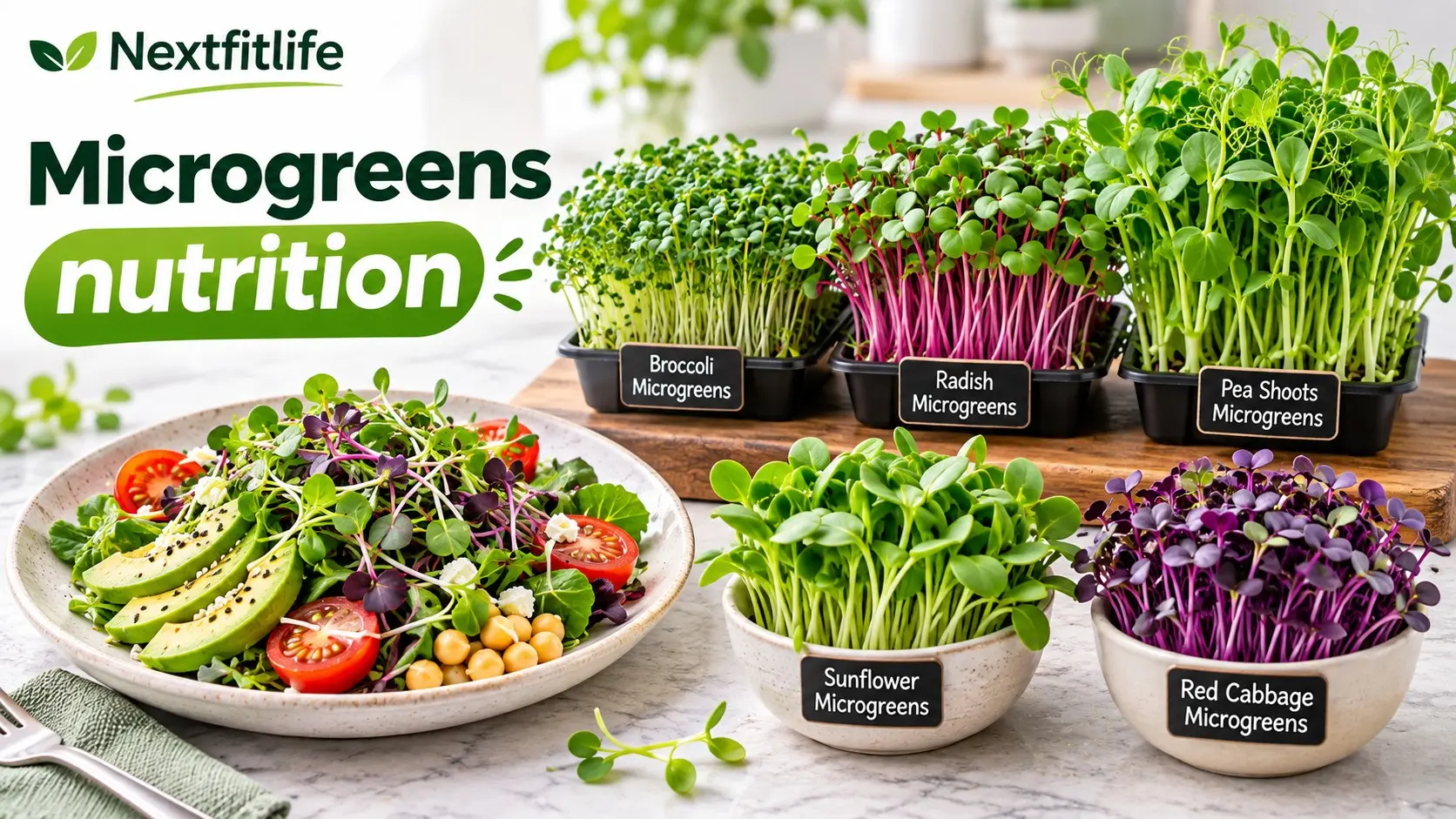
- Broccoli microgreens
- Radish microgreens
- Red cabbage microgreens
- Pea shoots
- Sunflower microgreens
- Beet microgreens
- Kale microgreens
- Mustard microgreens
- Cilantro microgreens
- Basil microgreens
The plant matters because nutrient levels can differ sharply from one variety to another.
That is the first rule of microgreens nutrition facts: there is no single nutrition label that fits every microgreen.
9 Smart Microgreens Nutrition Facts
1. Vitamin C Can Be High, but the Amount Varies
Vitamin C is one of the nutrients that shows how different microgreens can be.
A well known study measured 25 commercial microgreen varieties and found total vitamin C ranging from about 20.4 to 147 milligrams per 100 grams of fresh weight.
Red cabbage microgreens were among the stronger vitamin C varieties in that study.
That range is too wide to justify giving one vitamin C number for all microgreens.
Vitamin C supports collagen formation, normal immune function, and absorption of iron from plant foods.
2. Some Microgreens Provide Plenty of Vitamin K
Some green microgreens contain useful amounts of vitamin K.
The same 25 variety study found large differences in vitamin K1 between plants.
Vitamin K helps normal blood clotting and supports proteins involved in bone health.
If you take warfarin, do not suddenly remove green foods or suddenly eat much more of them without guidance. Keeping vitamin K intake reasonably consistent is usually more useful than avoiding vegetables.
3. Carotenoids Are One of Their Strong Features
Microgreens can contain carotenoids such as beta carotene, lutein, and zeaxanthin.
These plant compounds help create color and also have antioxidant roles.
Research shows large differences in carotenoid concentration between microgreen species.
That gives you a simple practical rule: rotate colors.
Green, purple, red, and dark leafy varieties do not have identical plant compounds.
4. They Can Provide Useful Minerals
Microgreens minerals can include:
- Potassium
- Calcium
- Magnesium
- Iron
- Zinc
- Copper
- Manganese
The exact amount depends on the plant, seed, growing conditions, and harvest stage.
Do not treat one laboratory result as the value for every tray sold in a grocery store.
If magnesium is one of your main goals, compare microgreens with the much wider range of foods in 14 Powerful Magnesium Rich Foods.
5. Some Nutrients Can Be More Concentrated Than in Mature Leaves
This is the claim that gets repeated the most.
There is real evidence behind it, but it needs careful wording.
The study of 25 commercial varieties found that several vitamins and carotenoids were present at higher concentrations in microgreen cotyledon leaves than in corresponding mature leaves.
Better wording: Some microgreens contain higher concentrations of certain vitamins and plant compounds than mature leaves. This does not mean every microgreen contains four or six times more of every nutrient.
The nutrient result depends on:
- Plant species
- Variety
- Light
- Growing medium
- Water
- Harvest time
- Storage
- Processing
6. Microgreens Contain Polyphenols and Other Plant Compounds
Microgreens also contain polyphenols and other plant compounds.
Depending on the species, these can include phenolic acids, flavonoids, glucosinolates, and carotenoids.
This is where marketing often runs ahead of human evidence.
A food showing antioxidant activity in a laboratory does not prove that eating it prevents cancer, reverses diabetes, or treats heart disease.
Those claims need human clinical evidence.
7. Human Health Research Is Still Limited
This is one of the most useful facts to know.
Most microgreen research still focuses on nutrient content, plant chemistry, growing methods, food safety, laboratory testing, and animal models.
Human trials are much less common.
A recent randomized crossover study of red cabbage and red beet microgreens in healthy middle aged and older adults mainly looked at whether daily intake was practical and well tolerated.
That is useful research, but it is not proof that microgreens treat heart disease, diabetes, inflammation, or another medical condition.
I would eat microgreens because they add nutrients, flavor, color, and variety to meals.
They do not need a disease cure claim.
8. Microgreens Are Not the Same as Sprouts
This difference matters.
Microgreens vs sprouts is not just a question of size.
Sprouts are usually germinated in very warm, moist conditions and are often eaten with the seed and root attached.
Microgreens grow longer and are normally cut above the soil or growing medium.
| Feature | Microgreens | Sprouts |
|---|---|---|
| Growth stage | Young seedling | Very early germination |
| Harvest | Cut above the growing medium | Usually eaten whole |
| Main edible part | Stem and young leaves | Seed, root, and shoot |
| Common use | Salads, bowls, eggs, sandwiches | Salads, sandwiches, cooked dishes |
FDA guidance treats microgreens differently from sprouts under the sprout specific Produce Safety Rule.
That does not make raw microgreens risk free.
9. Food Safety Deserves More Attention
Raw microgreens are fresh produce, and many people eat them without cooking.
Contamination can occur through:
- Seeds
- Water
- Growing media
- Trays and equipment
- Hands
- Harvesting
- Storage
- Cross contamination
Salmonella, harmful E. coli, and Listeria are among the organisms that food safety research watches closely.
In 2026, FDA and CDC linked a Salmonella outbreak to broccoli sprouts and microgreens grown from a contaminated seed lot. The FDA advises people not to use the recalled broccoli seeds, which have a long shelf life.
The final FDA update reported 34 illnesses across six states, three hospitalizations, and no deaths.
The seed lot was identified as the likely source.
This does not mean microgreens are unsafe food.
It means food safety is part of the nutrition story.
Are Microgreens More Nutritious Than Mature Vegetables?
Sometimes, gram for gram.
But this comparison can become misleading.
A small handful of microgreens may contain concentrated amounts of certain nutrients, yet you may eat far less of them than broccoli, carrots, spinach, beans, or other vegetables.
That is why I would not replace full vegetable servings with a tiny garnish.
Use microgreens as an addition to meals that already contain a useful amount of plant food.
A wider healthy food pattern can include vegetables, fruit, beans, whole grains, protein foods, nuts, and seeds. The NextFitLife Healthy Fitness Foods Guide gives practical examples.
How Many Calories Are in Microgreens?
There is no single calorie number because microgreens come from many different plants.
They are usually low in calories, especially in the small portions people add to meals.
The better question is what else they bring to the plate.
A handful can add color, flavor, micronutrients, and plant compounds without changing the meal's calorie total very much.
But do not turn that into a weight loss claim.
No microgreen burns body fat.
How Much Microgreens Should You Eat?
You do not need a perfect serving size.
A small garnish is fine for flavor, but it contributes less food than a full handful.
If you want microgreens to make a meaningful contribution to the meal, use enough to act like a real vegetable ingredient rather than three decorative leaves.
A practical approach is to add a loose handful to:
- Eggs
- Salads
- Sandwiches
- Grain bowls
- Beans
- Soups
- Tacos
8 Easy Ways to Eat Microgreens
1. Add Them to Eggs
Add microgreens to scrambled eggs, omelets, or an egg sandwich after cooking.
Broccoli and radish microgreens work especially well because their flavor can cut through rich eggs.
2. Use Them in a Real Salad
Mix them with lettuce, cucumber, tomatoes, beans, nuts, seeds, or another protein food.
I would not turn microgreens into the only vegetable simply because they are fashionable.
3. Add Them to Sandwiches
Microgreens can replace or sit beside lettuce.
Pea shoots and sunflower microgreens add more texture, while radish and mustard varieties give a peppery bite.
4. Put Them on Grain Bowls
Add a handful to brown rice, quinoa, lentil, or chickpea bowls.
For a fuller meal structure, combine them with the ideas in 9 Smart Ways to Build a High Protein High Fiber Diet.
5. Add Them to Soup After Cooking
Put them on top when the soup leaves the heat.
This keeps the fresh texture and turns a garnish into something you actually eat.
6. Use Them in Tacos
Radish, cilantro, mustard, and pea microgreens work well in tacos where you want fresh flavor without another sauce.
7. Blend a Small Amount Into a Smoothie
Mild microgreens can work in smoothies.
I would still eat most of them whole because chewing food makes it easier to notice how much you are eating.
8. Pair Them With Beans or Lentils
This is one of the easiest ways to turn a small green garnish into part of a balanced meal.
Microgreens bring freshness and plant compounds, while beans or lentils add much more protein and fiber.
Which Microgreens Taste Best?
| Microgreen | Typical Flavor | Easy Use |
|---|---|---|
| Radish | Peppery | Sandwiches and tacos |
| Broccoli | Mild and fresh | Eggs, salads, bowls |
| Pea shoots | Sweet and pea like | Salads and bowls |
| Sunflower | Mild and nutty | Sandwiches and salads |
| Mustard | Spicy | Eggs and tacos |
| Basil | Herbal | Tomato and pasta dishes |
| Cilantro | Fresh and strong | Tacos and bean bowls |
| Beet | Earthy | Salads |
If you are new to microgreens, start with broccoli, pea shoots, or sunflower microgreens before trying stronger mustard or radish varieties.
Raw vs Cooked Microgreens
Most people eat microgreens raw.
That preserves their fresh texture and sharp flavor.
Heat can change some vitamins and plant compounds, especially nutrients that are sensitive to heat.
That does not make cooked microgreens useless.
Cooking can also reduce microbial risk, which can matter for people who are more vulnerable to foodborne illness.
| Choice | Main Advantage | Main Tradeoff |
|---|---|---|
| Raw | Fresh texture and flavor | Greater concern if contaminated |
| Lightly cooked | Lower microbial risk | Texture and some nutrients can change |
How Should You Wash Microgreens?
Treat them like delicate fresh produce.
- Wash your hands first.
- Use clean utensils and a clean surface.
- Rinse the microgreens gently under clean running water.
- Drain them well.
- Eat them soon after washing.
- Return unused greens to the refrigerator promptly.
Do not wash fresh produce with soap, bleach, or household cleaner.
Those products are not designed to be eaten.
How Should You Store Microgreens?
Microgreens are delicate and spoil faster than many mature vegetables.
Keep them refrigerated and avoid storing them soaking wet.
Moisture can speed spoilage.
Throw them away if they become slimy, develop a bad smell, or show obvious mold or decay.
Do not use a calendar alone to decide whether spoiled food is safe.
Are Home Grown Microgreens Safe?
They can be, but growing them at home does not remove contamination risk.
The safety chain begins before harvest.
Use:
- Seeds sold for edible growing
- Clean trays
- Safe water
- Clean growing media
- Clean hands
- Clean scissors or knives
- Prompt refrigeration after harvest
Do not eat a tray that smells sour, feels slimy, or shows mold.
Who Should Be More Careful With Raw Microgreens?
People with a higher risk of severe foodborne illness should use extra care with uncooked produce.
This can include:
- Pregnant people
- Older adults
- Young children
- People with weakened immune systems
- People receiving certain cancer treatments
- People taking medicines that strongly suppress immunity
Cooking food thoroughly reduces many microbial risks.
If you are in a high risk group, ask your healthcare professional which raw foods are appropriate for you.
Are Microgreens Good for Weight Loss?
Microgreens fit easily into a weight management diet because they are low in calories and can add flavor and volume.
But they do not burn fat.
The useful question is what the entire meal looks like.
A handful of greens added to beans, vegetables, whole grains, and a suitable protein food can improve meal variety.
Adding the same handful to a very high calorie meal does not make the full meal a weight loss food.
Can People With Diabetes Eat Microgreens?
Yes.
Microgreens can fit into a diabetes eating pattern as a low calorie plant food.
But current human evidence does not show that a handful of microgreens lowers blood glucose on command or treats diabetes.
What matters more is the whole meal, including carbohydrate amount, fiber, protein, fats, medicines, and activity.
For more meal context, see 21 Smart Foods for People Living With Diabetes.
Are Microgreens Good for Gut Health?
They contribute plant material and some fiber, but they are usually eaten in small portions.
I would not depend on microgreens as the main fiber source in a meal.
Beans, lentils, whole grains, vegetables, fruit, nuts, and seeds provide much larger amounts.
If fiber is your main goal, the NextFitLife High Fiber Fruits List and High Protein High Fiber Diet Guide give more useful ways to raise intake.
Do Microgreens Detox the Body?
No.
Your liver, kidneys, lungs, skin, and digestive system already take part in normal waste processing.
Microgreens provide nutrients and plant compounds.
That is a good enough reason to eat them.
They do not need a detox label.
Do Microgreens Prevent Cancer?
There is not enough human clinical evidence to make that claim.
Some microgreens contain glucosinolates, carotenoids, polyphenols, and other compounds that are studied for biological effects.
Laboratory findings do not prove that eating a normal serving prevents or treats cancer in people.
The safer conclusion is that microgreens can be one part of a varied plant rich eating pattern.
Common Microgreens Nutrition Mistakes
Treating Every Microgreen as the Same Food
Broccoli, radish, pea, beet, basil, and sunflower microgreens do not have identical nutrient profiles.
Repeating the Four to Six Times Claim as a Rule
Some nutrients are more concentrated in some microgreens than mature leaves.
There is no universal multiplier that applies to every nutrient and every plant.
Turning Antioxidant Research Into Disease Claims
Laboratory antioxidant activity is not the same as proving a food prevents disease in humans.
Replacing Full Vegetables With a Garnish
A few leaves are useful, but they do not replace a full serving of vegetables.
Ignoring Food Safety Because the Greens Look Fresh
Fresh appearance does not prove that produce is free from harmful bacteria.
Storing Microgreens Wet
Excess moisture speeds spoilage.
Assuming Home Grown Means Sterile
Seeds, water, hands, equipment, and growing media can all introduce contamination.
How to Build a Better Meal With Microgreens
| Meal Part | Example | Main Role |
|---|---|---|
| Microgreens | Broccoli, radish, pea, sunflower | Micronutrients and plant compounds |
| Protein | Eggs, tofu, beans, fish, chicken | Main protein source |
| Fiber rich carbohydrate | Beans, lentils, oats, brown rice, quinoa | Energy and fiber |
| Extra vegetables | Tomato, cucumber, peppers, broccoli | Food volume and variety |
| Healthy fat | Olive oil, nuts, seeds, avocado | Unsaturated fat and flavor |
That is more useful than treating microgreens as a magic ingredient.
Conclusion
Microgreens nutrition can be impressive, but it is also highly variable.
Different varieties provide different amounts of vitamin C, vitamin K, carotenoids, minerals, and plant compounds. Some can be more concentrated in selected nutrients than mature leaves, but there is no universal four or six times rule.
The smart approach is simple: use microgreens to add color, flavor, and variety to meals, keep eating full sized vegetables, and handle raw greens carefully.
Your next step: choose one mild variety such as broccoli or pea shoots and add a real handful to eggs, a salad, sandwich, or grain bowl this week. Keep it refrigerated, wash it before eating, and use it while it is fresh.
References and Sources
- U.S. National Library of Medicine, MedlinePlus. Healthy Food Trends: Microgreens.
https://medlineplus.gov/ency/patientinstructions/000730.htm - U.S. Food and Drug Administration. Outbreak Investigation of Salmonella: Sprouts, September 2026.
https://www.fda.gov/food/outbreaks-foodborne-illness/outbreak-investigation-salmonella-sprouts-september-2026 - U.S. Food and Drug Administration. Produce Safety Guidance Covering Sprouts and Microgreens.
https://www.fda.gov/media/102430/download?attachment= - Journal of Agricultural and Food Chemistry via PubMed. Assessment of Vitamin and Carotenoid Concentrations of Edible Microgreens.
https://pubmed.ncbi.nlm.nih.gov/22812633/ - PeerJ via PubMed. Microgreens: Nutritional Properties, Health Benefits, Production Techniques, and Food Safety Risks.
https://pubmed.ncbi.nlm.nih.gov/41321944/ - PubMed Central. Feasibility and Tolerability of Daily Microgreen Consumption in Healthy Middle Aged and Older Adults.
https://pmc.ncbi.nlm.nih.gov/articles/PMC11820112/ - UMass Amherst Extension. Microgreens.
https://www.umass.edu/agriculture-food-environment/nutrition/publications-resources/produce-spotlight/microgreens
Internal Links and NextFitLife Hubs
- Nutrition and Vitamins Hub
- Healthy Fitness Foods
- High Protein High Fiber Diet Plan
- High Fiber Fruits List
- Magnesium Rich Foods
- Foods for People Living With Diabetes
- NextFitLife Health, Fitness, Nutrition and Beauty Guides
- About NextFitLife
Frequently Asked Questions
Are microgreens actually nutritious?
Yes. Many microgreens provide vitamin C, vitamin K, carotenoids, minerals, and plant compounds. The exact nutrient profile changes by plant species, growing method, harvest stage, and storage.
Are microgreens more nutritious than mature vegetables?
Some microgreens contain higher concentrations of certain vitamins and plant compounds than their mature leaves. This does not mean every microgreen contains several times more of every nutrient.
Are microgreens the same as sprouts?
No. Sprouts are eaten at an earlier growth stage and often include the seed and root. Microgreens grow longer and are usually cut above the growing medium.
Can you eat microgreens raw?
Yes, and many people do. Raw microgreens should still be handled like other fresh produce because seeds, water, equipment, growing media, and handling can introduce harmful bacteria.
Should you wash microgreens?
Yes. Wash your hands, rinse microgreens gently under clean running water, drain them well, and eat them soon after washing. Do not use soap or household cleaners on produce.
Which microgreens are easiest for beginners?
Broccoli, pea shoots, and sunflower microgreens are good starting choices because their flavors are usually milder. Radish and mustard microgreens have a stronger peppery taste.
Are microgreens good for weight loss?
They can fit easily into a weight management diet because they are low in calories and add flavor and volume. They do not burn body fat, so the full meal and overall diet still matter.
Can people with diabetes eat microgreens?
Yes. Microgreens can fit into a diabetes eating pattern, but they should not be treated as a blood sugar lowering treatment. The whole meal, carbohydrate amount, medicines, and individual glucose plan matter more.
Do microgreens detox the body?
No. Microgreens provide nutrients and plant compounds, but they do not perform a special detox. The liver, kidneys, lungs, skin, and digestive system already handle normal waste processing.
Who should be careful with raw microgreens?
Pregnant people, young children, older adults, and people with weakened immune systems are at higher risk of severe foodborne illness. They should discuss raw foods with a healthcare professional and may prefer cooked options.