Published on: November 20, 2026
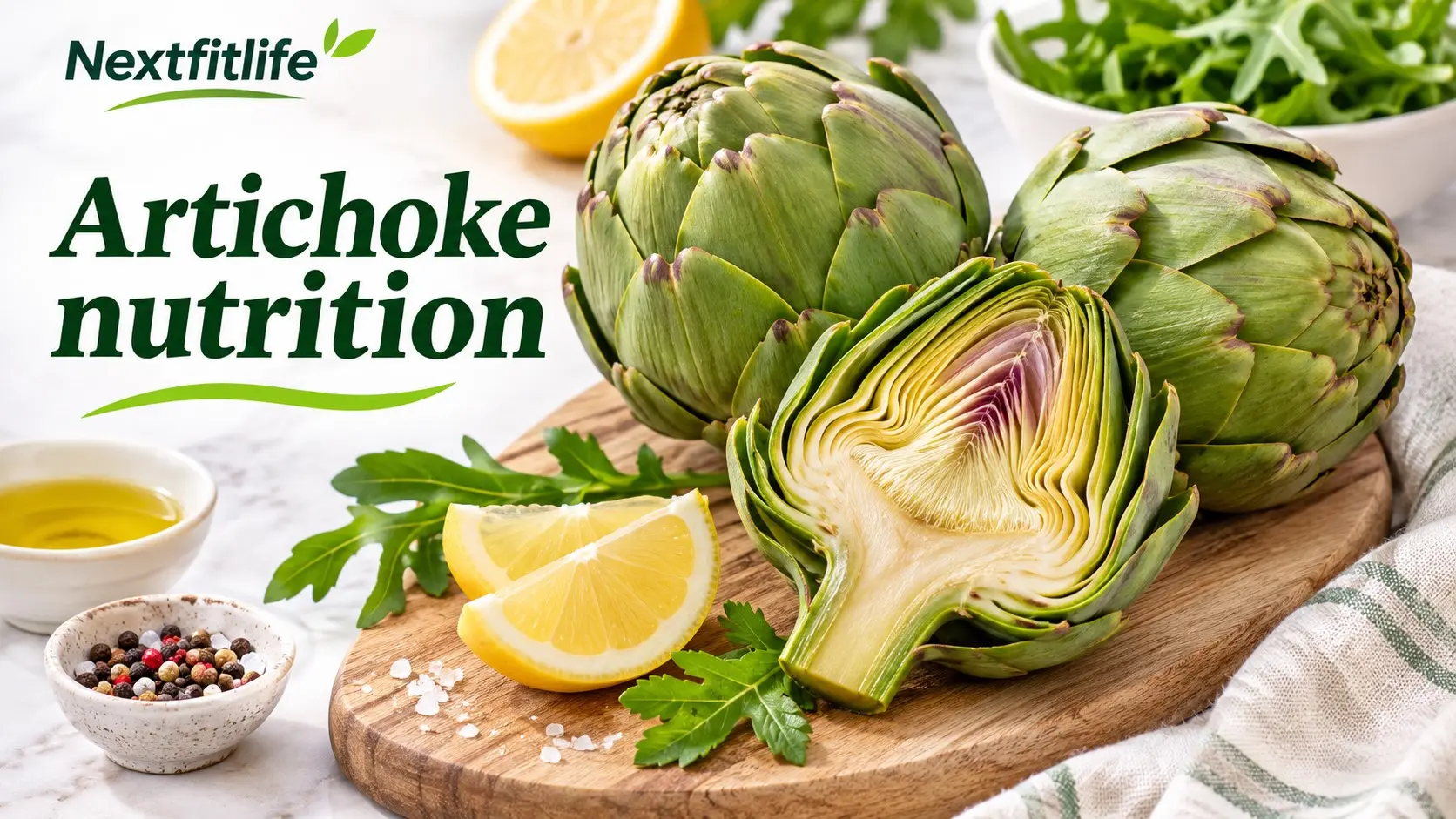
Artichokes are one of the easiest ways to add a lot of fiber to a meal without adding many calories.
A medium cooked artichoke also gives you folate, magnesium, potassium, vitamin C, vitamin K, and a little protein.
Quick answer: Artichoke nutrition stands out for fiber. One medium cooked artichoke has about 64 calories and nearly 7 grams of fiber, plus folate, magnesium, potassium, and vitamin C. Whole artichokes are nutritious food, but most research on cholesterol and liver enzymes uses concentrated artichoke extracts rather than ordinary servings.
This article is for general information and education. It does not replace medical advice, diagnosis, or treatment.
If you want a wider guide to food sources of vitamins and minerals, visit the NextFitLife Nutrition and Vitamins Hub.
Table of Contents
- Artichoke nutrition facts
- 10 smart nutrition facts
- Fiber and gut health
- Cholesterol claims
- Liver health claims
- Fresh, frozen, and canned artichokes
- Easy serving ideas
- Weight loss and diabetes
- Safety and supplements
- Common mistakes
- References and Sources
- Internal Links and NextFitLife Hubs
- About the Author
- Frequently Asked Questions
Artichoke Nutrition Facts at a Glance
A medium cooked globe artichoke has an edible portion of about 120 grams.
It provides roughly:
| Nutrient | Approximate Amount | Why It Matters |
|---|---|---|
| Calories | 64 kcal | Provides food volume for little energy |
| Carbohydrate | About 14.3 g | Includes a useful amount of fiber |
| Fiber | About 6.8 g | Supports bowel function and fullness |
| Protein | About 3.5 g | Small contribution to daily protein |
| Fat | About 0.4 g | Naturally very low |
| Folate | About 107 mcg | Supports cell division and DNA formation |
| Vitamin C | About 9 mg | Supports collagen and normal immune function |
| Vitamin K | About 18 mcg | Supports normal blood clotting and bone proteins |
| Magnesium | About 50 mg | Supports muscles, nerves, and enzymes |
| Potassium | About 343 mg | Supports muscles, nerves, and fluid balance |
These artichoke nutrition facts describe a plain cooked artichoke without a large amount of added salt, butter, cheese, or sauce.
That distinction matters because the extras can change the meal much more than the artichoke itself.
10 Smart Artichoke Nutrition Facts
1. Artichokes Are One of the Better Vegetables for Fiber
The strongest reason to eat artichokes is simple.
They provide a lot of artichoke fiber.
One medium cooked artichoke gives you close to 7 grams.
Fiber helps support normal bowel function and can make meals feel more filling.
Artichokes also contain fermentable carbohydrates, including inulin type fibers.
That makes them interesting for gut health, but it also explains why a large serving can cause gas or bloating in some people.
For more fiber ideas, read the NextFitLife High Fiber Fruits Guide and the Gut Health Foods Guide.
2. Artichokes Provide Folate
A medium cooked artichoke provides about 107 micrograms of folate.
Folate helps your body make DNA and new cells. It also matters during early fetal development.
Artichokes can therefore be part of a healthy pregnancy diet.
They do not replace folic acid recommendations before or during pregnancy.
3. Artichokes Add Useful Magnesium
One medium cooked artichoke provides about 50 milligrams of magnesium.
Magnesium supports normal muscle function, nerve signaling, energy production, and many enzyme reactions.
Artichokes are useful, but seeds, nuts, beans, leafy greens, and whole grains can provide more.
If magnesium is your main goal, see 14 Powerful Magnesium Rich Foods.
4. Potassium Adds to the Mineral Profile
A medium cooked artichoke provides around 343 milligrams of potassium.
Potassium helps with muscle contraction, nerve signals, and normal fluid balance.
For most healthy adults, potassium rich whole foods are useful.
People with advanced kidney disease may need an individual potassium target based on kidney function and blood tests.
5. Artichokes Are Low in Calories
One medium cooked artichoke has about 64 artichoke calories.
That gives you a lot of chewing and food volume for relatively little energy.
The recipe can change that quickly.
A steamed artichoke with lemon is very different from one covered in butter, cheese, mayonnaise, or a rich dip.
6. Artichokes Contain Some Protein
A medium cooked artichoke gives you about 3.5 grams of protein.
That is useful for a vegetable, but it does not make artichoke a main protein food.
Pair it with:
- Beans
- Lentils
- Fish
- Chicken
- Eggs
- Tofu
- Greek yogurt
This creates a more complete meal.
7. Artichoke Cholesterol Research Mostly Uses Extracts
This is where food articles often blur two different things.
There is human research on artichoke cholesterol outcomes, but the studies usually test artichoke leaf extract or artichoke juice preparations.
Meta analyses have reported reductions in total cholesterol, LDL cholesterol, and triglycerides after artichoke supplementation.
That is interesting evidence.
It does not prove that eating one steamed artichoke has the same effect as a concentrated extract.
If your cholesterol is high enough to need treatment, do not replace prescribed care with an artichoke supplement.
8. Artichokes Do Not Detox the Liver
I would not describe artichokes as a liver detox food.
Your liver already processes and removes many substances from your body.
Research on artichoke liver health has mainly looked at supplements.
Meta analyses of randomized trials have found lower ALT and AST liver enzymes after artichoke supplementation.
That does not mean whole artichokes clean the liver or treat liver disease.
If liver health is your concern, read the NextFitLife Liver Health Guide and the Fatty Liver Disease Guide.
9. Artichoke Fiber Can Feed Gut Bacteria
Artichokes contain fermentable fibers related to prebiotic fiber.
A controlled human study tested 10 grams per day of very long chain inulin extracted from globe artichoke.
The study found increases in beneficial bacterial groups, including bifidobacteria and lactobacilli.
But the study used purified extracted fiber.
It did not test one normal serving of whole artichoke.
This distinction matters because supplement research should not be copied directly onto a food serving.
10. Whole Artichokes and Artichoke Supplements Are Different
A cooked globe artichoke is food.
Artichoke leaf extract is a concentrated herbal product.
The extract may deliver far more plant compounds than you would get from a normal meal.
That means the safety questions are different too.
You can enjoy whole artichokes as part of a varied diet without assuming that every supplement claim applies to them.
Are Artichokes Good for Digestion?
They can be useful because they provide a lot of fiber.
That fiber supports normal bowel function and adds bulk to the diet.
But more fiber is not always better.
Artichokes can cause gas or bloating in people who are sensitive to fermentable carbohydrates.
If your diet is currently low in fiber, start with a smaller serving and increase high fiber foods gradually.
The NextFitLife Gut Health Foods Guide explains why fiber type and tolerance matter as much as the total amount.
What About Artichokes and Cholesterol?
Artichokes fit naturally into a heart healthy diet because they are rich in fiber and naturally low in saturated fat.
The stronger clinical evidence, however, comes from supplements.
A systematic review and dose response meta analysis of randomized trials found that artichoke supplementation reduced total cholesterol, LDL cholesterol, and triglycerides.
That does not turn a serving of artichoke into cholesterol medicine.
Practical rule: Eat artichokes because they are a high fiber vegetable. Treat research on concentrated artichoke extract as supplement research, not proof that a single food serving lowers LDL on demand.
Can Artichokes Improve Liver Health?
Whole artichokes can fit into a healthy eating pattern.
But they do not detox the liver.
Studies of artichoke supplements have reported improvements in liver enzymes in some groups, including people with fatty liver disease.
That is not the same as showing that whole artichokes treat fatty liver.
If you have abnormal liver tests, fatty liver, or another liver condition, find the cause and follow evidence based treatment instead of trying a detox product.
Use the NextFitLife Liver Health Hub for more guides on fatty liver, gallbladder health, bile ducts, supplements, and detox claims.
Fresh vs Frozen vs Canned Artichokes
| Type | Best Feature | What to Check |
|---|---|---|
| Fresh whole artichoke | Whole leaf and heart experience | Needs more preparation |
| Frozen hearts | Easy and convenient | Check added sauces |
| Canned artichokes | Ready to use | Check sodium |
| Oil packed hearts | Rich flavor | Higher calories from added oil |
Canned artichokes can still be a useful food.
If sodium is high, drain and rinse them before adding them to your meal.
Whole Artichoke vs Artichoke Hearts
Artichoke hearts are the soft center of the plant.
They are easy to eat and easy to add to meals.
With a whole cooked artichoke, you can also eat the tender flesh from the base of the leaves.
Pull off one leaf, scrape the soft part with your teeth, then discard the fibrous section.
When you reach the center, remove the fuzzy choke before eating the heart underneath.
How to Cook a Whole Artichoke
Step 1: Rinse It
Wash the outside well under running water.
Step 2: Trim It
Remove rough outer leaves and trim the stem if needed.
You can cut sharp tips with kitchen scissors.
Step 3: Cook It
You can steam, boil, roast, or grill artichokes.
Steaming is simple and does not require much added fat.
Step 4: Check It
A leaf should pull away easily when the artichoke is tender.
Step 5: Eat the Leaves
Pull off the leaves one at a time and scrape the tender flesh.
Step 6: Remove the Choke
Scoop away the fuzzy center before eating the heart.
7 Easy Ways to Eat Artichokes
1. Serve With Lemon and Herbs
Steam a whole artichoke and add lemon, herbs, black pepper, and a small amount of olive oil.
2. Add Artichoke Hearts to Salad
Combine them with tomatoes, cucumber, beans, leafy greens, and a simple dressing.
3. Add Them to Pasta
Artichokes work well with garlic, spinach, lemon, tomatoes, and a protein food.
4. Put Them in Eggs
Chopped hearts work well in omelets, scrambled eggs, and egg bakes.
5. Build a Grain Bowl
Try brown rice or quinoa with artichokes, chickpeas, greens, and tahini.
6. Roast the Hearts
Roasting gives frozen or canned hearts more texture.
7. Use Them in a Dip
Artichoke dip can fit into a balanced diet, but remember that cheese, cream cheese, mayonnaise, and oil can add far more calories than the artichoke itself.
How to Build a Balanced Artichoke Meal
| Meal Part | Example | What It Adds |
|---|---|---|
| Vegetable | Artichoke hearts | Fiber and micronutrients |
| Protein | Beans, fish, chicken, tofu, eggs | Main protein source |
| Carbohydrate | Brown rice, barley, potatoes, whole grain bread | Energy and more fiber |
| Healthy fat | Olive oil, tahini, nuts | Unsaturated fat and flavor |
For more simple meal ideas, see the Healthy Fitness Foods Guide.
Are Artichokes Good for Weight Loss?
They can fit very well into a weight management diet.
A medium cooked artichoke gives you close to 7 grams of fiber for about 64 calories.
That is useful because fiber and food volume can help make a meal more satisfying.
But artichokes do not burn fat.
The total meal still matters.
Can People With Diabetes Eat Artichokes?
Yes.
Plain artichokes can fit into a diabetes eating pattern.
They contain carbohydrate, but they also provide a useful amount of fiber.
The stronger studies on glucose and insulin use artichoke supplements, not normal food portions.
If you live with diabetes, look at the whole plate rather than expecting one vegetable to lower blood sugar.
For meal ideas, see 21 Smart Foods for People Living With Diabetes.
Artichoke Safety: Who Should Be Careful?
Normal food portions are safe for most people.
Concentrated herbal products need more care.
Bile Duct Problems
Artichoke leaf medicines can affect bile flow.
European Medicines Agency guidance says artichoke leaf medicines should not be used in certain liver and bile duct disorders, including bile duct obstruction.
If you have gallstones, bile duct disease, cholangitis, or another biliary condition, ask a doctor or pharmacist before taking concentrated artichoke products.
Allergy
Artichoke belongs to the Asteraceae plant family.
This family also includes plants such as ragweed, daisies, chrysanthemums, and sunflowers.
Allergic reactions to artichoke are uncommon, but they have been reported.
People with a serious allergy to related plants should use extra care.
Pregnancy and Breastfeeding
Eating artichokes as food is different from taking medicinal extracts.
There is not enough good safety information for concentrated artichoke leaf medicines during pregnancy and breastfeeding to assume that they are safe.
Ask your healthcare professional before using an extract.
Digestive Symptoms
A large amount of prebiotic fiber can cause:
- Gas
- Bloating
- Cramping
- Loose stools in some people
Start with a normal serving rather than assuming more is better.
Common Artichoke Nutrition Mistakes
Calling Artichokes a Liver Detox
They are nutritious food, but they do not clean toxins from liver tissue.
Treating Extract Studies Like Food Studies
Research on concentrated artichoke leaf extract should not be turned into claims about one serving of cooked artichoke.
Ignoring the Sauce
A vegetable can still be part of a high calorie meal when it is covered in cheese, cream, butter, or oil.
Assuming Canned Means Unhealthy
Canned artichokes can be convenient and nutritious.
Check sodium and added oil, then drain or rinse when useful.
Eating a Huge Fiber Portion Too Quickly
If you are not used to high fiber food, increase your intake gradually.
Using Supplements Without Checking Bile Duct Health
Medicinal artichoke products are not suitable for everyone.
What Artichokes Do Not Do
Artichokes are useful without miracle claims.
They do not:
- Detox the liver
- Cure fatty liver disease
- Replace cholesterol medicine
- Burn belly fat
- Cure IBS
- Prevent cancer by themselves
- Turn into medicine because they contain antioxidants
A food can be healthy without being a treatment.
Conclusion
Artichoke nutrition is strongest where the evidence is simplest. Artichokes provide a lot of fiber for relatively few calories, along with folate, magnesium, potassium, vitamin C, and other nutrients.
The biggest mistake is mixing up whole artichokes with concentrated supplements. Cholesterol and liver studies mostly test extracts, not normal food portions.
Your next step: try a steamed whole artichoke or add plain artichoke hearts to a salad, grain bowl, pasta dish, or egg meal this week. If you are considering artichoke leaf extract for cholesterol, digestion, or liver concerns, discuss it with your healthcare professional first.
References and Sources
- USDA Agricultural Research Service. National Nutrient Database for Standard Reference, Release 28.
https://www.ars.usda.gov/ARSUserFiles/80400535/Data/SR/SR28/reports/sr28fg11.pdf - PubMed. Effects of Artichoke Leaf Extract Supplementation or Artichoke Juice Consumption on Lipid Profile: Systematic Review and Dose Response Meta Analysis.
https://pubmed.ncbi.nlm.nih.gov/34569671/ - PubMed. Effects of Artichoke Supplementation on Liver Enzymes: Systematic Review and Meta Analysis of Randomized Controlled Trials.
https://pubmed.ncbi.nlm.nih.gov/35949559/ - PubMed. A Double Blind, Placebo Controlled, Cross Over Study of Inulin Extracted From Globe Artichoke.
https://pubmed.ncbi.nlm.nih.gov/20591206/ - European Medicines Agency. Artichoke Leaf Herbal Medicinal Product Information.
https://www.ema.europa.eu/en/medicines/herbal/cynarae-folium - DermNet. Artichoke Allergy and Plant Family Information.
https://dermnetnz.org/topics/artichoke
Internal Links and NextFitLife Hubs
- Nutrition and Vitamins Hub
- High Fiber Fruits Guide
- Gut Health Foods Guide
- Magnesium Rich Foods Guide
- Liver Health Guide
- Liver Health Hub
- Fatty Liver Disease Guide
- Healthy Fitness Foods
- Foods for People Living With Diabetes
- About NextFitLife
Frequently Asked Questions
What are the main artichoke nutrition facts?
A medium cooked artichoke has about 64 calories and nearly 7 grams of fiber. It also provides folate, magnesium, potassium, vitamin C, vitamin K, and a small amount of protein.
Are artichokes high in fiber?
Yes. A medium cooked artichoke provides close to 7 grams of fiber, making it one of the more useful vegetables for raising fiber intake.
Are artichokes good for gut health?
Artichokes provide fiber and contain fermentable carbohydrates related to inulin. These can support gut bacteria, but large portions may cause gas or bloating in sensitive people.
Do artichokes lower cholesterol?
Artichokes fit well into a heart healthy diet because they provide fiber. Clinical studies showing cholesterol changes have mainly tested concentrated artichoke extracts or juice products rather than normal servings of cooked artichoke.
Are artichokes good for the liver?
Whole artichokes are nutritious food, but they do not detox the liver. Studies showing changes in liver enzymes have mainly tested concentrated artichoke supplements.
Are canned artichokes healthy?
Yes. Canned artichoke hearts can be convenient and nutritious. Check the label for sodium and added oil, then drain or rinse them if needed.
Can people with diabetes eat artichokes?
Yes. Plain artichokes can fit into a diabetes eating pattern. They contain carbohydrate but also provide a useful amount of fiber. The whole meal and portion size still matter.
Are artichokes good for weight loss?
They can fit well into a weight management diet because they provide a lot of fiber and food volume for relatively few calories. They do not burn body fat.
Who should avoid artichoke leaf extract?
People with certain liver or bile duct disorders, including bile duct obstruction, should not use medicinal artichoke leaf products without professional guidance. People with plant allergies should also use caution.
Is artichoke leaf extract the same as eating an artichoke?
No. Artichoke leaf extract is a concentrated herbal product. A cooked artichoke is whole food, so supplement research should not automatically be applied to normal food servings.