Published: September 24, 2026
Last Updated: September 24, 2026
Written and Source Checked by: Adel Galal, Founder and Lead Writer at NextFitLife
Review Status: Updated using current American Heart Association, American College of Cardiology, American College of Sports Medicine, and peer reviewed resistance training evidence. This article has not been medically reviewed by a licensed clinician.
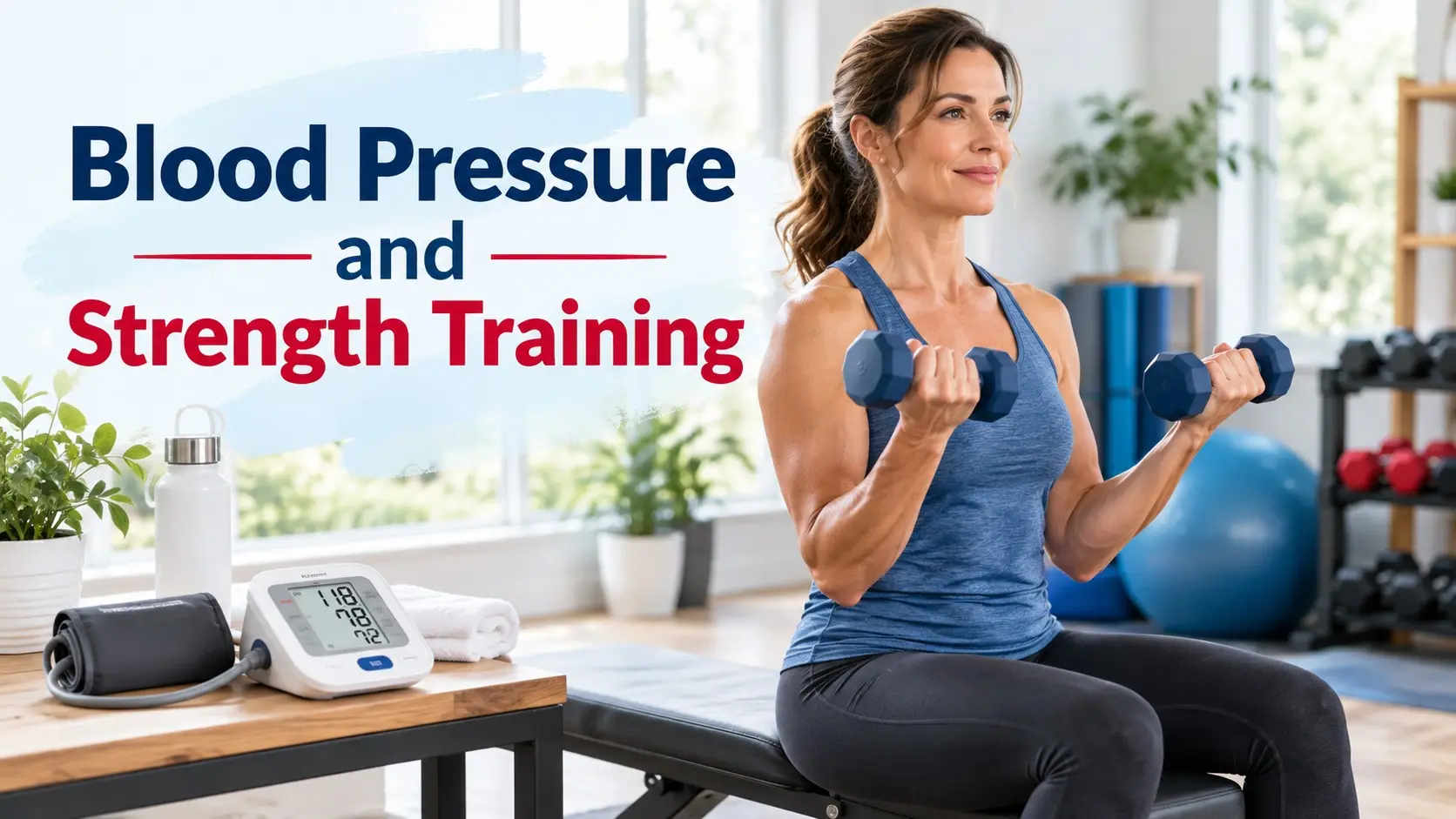
Blood Pressure and Strength Training can work together. Blood pressure rises for a short time while you lift, especially when a set becomes hard, yet regular resistance exercise can help lower resting blood pressure over time.
The goal is not to avoid strength training. The goal is to lift in a way that limits unnecessary pressure spikes while still building muscle, strength, balance, and daily function.
Table of Contents
- Understand the temporary blood pressure rise
- Keep breathing while lifting
- Start with manageable resistance
- Do not chase muscular failure
- Train at least two days weekly
- Keep aerobic exercise in the plan
- Use isometric exercise carefully
- Know when not to start a workout
- Account for blood pressure medicine
- Measure resting blood pressure correctly
- Progress without chasing maximum loads
- Beginner strength workout
- Common mistakes
- References and Sources
- Frequently asked questions
1. Blood Pressure Rises During a Set, Then Training Can Lower Resting Pressure
This sounds contradictory until you separate the short term exercise response from the long term training effect.
During resistance training, working muscles need more blood flow and your nervous system responds to the effort. As the set becomes harder, blood pressure rises.
That temporary rise is expected.
The long term picture is different. Current hypertension guidance supports dynamic resistance exercise as one part of blood pressure management because regular training can reduce resting systolic and diastolic pressure.
The effect varies with the person, program, medication use, baseline blood pressure, and exercise dose, so I would not promise one exact reduction to every reader.
2. Keep Breathing While You Lift
If you remember one technique rule from this article, make it this one: keep breathing.
Breath holding during lifting is often called the Valsalva maneuver. Competitive lifters sometimes use it during very heavy attempts, but that is not the breathing strategy I would choose for someone whose priority is blood pressure control.
Breath holding and hard straining can cause a much larger temporary blood pressure response.
Use this simple breathing pattern
- Breathe out during the harder part of the movement.
- Breathe in during the easier return.
Chair squat
Breathe in as you lower toward the chair and breathe out as you stand.
Chest press
Breathe in as the weight comes toward you and breathe out as you press it away.
Row
Breathe in as your arms extend and breathe out as you pull.
You do not need to force a huge breath with every repetition. The goal is simple: do not close your airway and strain through the whole set.
3. Start With Manageable Resistance, Not a Maximum Lift
A beginner with hypertension does not need to test a true one repetition maximum before training.
I would start with resistance you can control for around 8 to 12 smooth repetitions while keeping normal breathing and good technique.
Your face should not be turning red while you grind through the last rep.
A useful starting checklist
- You can control the weight.
- You can breathe throughout the set.
- You do not jerk or swing the load.
- You can maintain posture.
- You stop before the repetition becomes a maximum effort.
For a simpler introduction, read Strength Training Exercises at Home for Beginners.
4. You Do Not Need to Train to Failure
The last ugly repetition is not the one that makes the workout effective.
As fatigue grows, people tend to hold their breath, strain harder, rush the movement, and use poor form.
If your goal is health and strength, stop while your movement still looks controlled.
A useful rule is to finish most beginner sets while you still feel that another two or three clean repetitions would have been possible.
5. Strength Train at Least Two Days Each Week
You do not need to lift every day.
Current heart health guidance recommends muscle strengthening activity at least twice each week.
A practical beginner plan is two or three nonconsecutive strength sessions using the major muscle groups.
Useful beginner movements
- Chair squat
- Wall push up
- Resistance band row
- Glute bridge
- Hip hinge
- Calf raise
- Light shoulder exercise when appropriate
- Simple core work with continuous breathing
Visit the NextFitLife Home Workouts and Equipment Guide for more ideas.
6. Keep Aerobic Exercise in Your Blood Pressure Plan
Strength training does not replace cardio.
Current blood pressure guidance supports both aerobic exercise and resistance exercise.
Walking, cycling, swimming, dancing, and similar activities remain some of the best studied exercise options for lowering blood pressure.
Strength work adds something different: muscle, bone, balance, movement confidence, and daily physical function.
If lowering blood pressure is your main goal, I would use both.
Good aerobic choices include
- Brisk walking
- Cycling
- Swimming
- Low impact cardio
- Dancing
For a broader beginner plan, see How to Get Fit Fast Safely.
7. Isometric Exercise Can Help, but Keep Breathing
Isometric exercise contracts a muscle while the joint moves very little.
Examples include wall sits, planks, and static handgrip exercise.
Research has found meaningful reductions in office blood pressure after some isometric training programs, which is why these exercises now appear in modern hypertension guidance.
But that does not mean every person with hypertension should spend ten minutes holding wall sits.
The research protocols are specific, and office blood pressure results do not always match changes in 24 hour ambulatory blood pressure.
Hold the position, not your breath
You can perform a wall sit and keep breathing.
You can hold a plank and keep breathing.
The muscle contraction is static.
Your breathing does not need to be.
8. Know When a Resting Reading Means You Should Not Start Exercising
Do not use exercise as a test to see whether a severely elevated resting reading comes down.
For a nonpregnant adult, a systolic reading above 180 or a diastolic reading above 120 mm Hg needs urgent attention. Call emergency services immediately if there are serious new symptoms; do not delay for another measurement. If there are no concerning symptoms, wait at least one minute and measure again.
If the repeat reading remains that high and you do not have new concerning symptoms, contact a healthcare professional promptly.
If it remains above 180/120 and you also have chest pain, shortness of breath, weakness, numbness, vision change, difficulty speaking, back pain, or another new serious symptom, seek emergency care.
9. Blood Pressure Medicine Can Change How Exercise Feels
Blood pressure medicine does not mean strength training is off limits.
It does mean normal exercise signals can change.
Beta blockers
Beta blockers reduce the normal rise in heart rate during exercise. Generic heart rate targets can therefore be misleading for some people taking them.
Perceived effort and the talk test can be more useful.
Dizziness and position changes
Some blood pressure medicines can contribute to lightheadedness, especially when you stand quickly after lying or sitting down.
Move slowly between exercises and finish with a gentle cool down.
If dizziness keeps happening, speak with the clinician managing your medicine.
Do not stop medicine on your own
A good workout routine can improve blood pressure, but that does not mean you should lower or stop prescribed medicine yourself.
Share your home readings with your healthcare professional and let them decide whether treatment needs adjustment.
10. Measure Resting Blood Pressure Under Resting Conditions
A blood pressure reading taken immediately after a heavy set is not your normal resting blood pressure.
For routine home measurements, use a validated upper arm monitor and take the reading under consistent resting conditions.
Before measuring
- Avoid exercise for at least 30 minutes.
- Avoid caffeine for at least 30 minutes.
- Avoid smoking for at least 30 minutes.
- Empty your bladder.
- Sit quietly for about five minutes.
During the reading
- Support your back.
- Keep both feet flat on the floor.
- Do not cross your legs.
- Support your arm around heart level.
- Place the cuff on bare skin.
- Do not talk.
If your clinician wants BP readings specifically before or after exercise, follow their timing instructions.
For nutrition and blood pressure guidance, visit the NextFitLife DASH Diet Guide.
11. Progress Without Chasing Maximum Loads
You still need progression if you want strength to improve.
Heavier weight is only one option.
You can progress by
- Improving technique
- Adding one or two repetitions
- Adding another set
- Using a slightly harder variation
- Increasing comfortable range of motion
- Improving balance
- Moving with better control
Make one change at a time.
This lets you see how your breathing, recovery, joints, and blood pressure respond.
A Beginner Strength Workout for Controlled Blood Pressure
This is an educational example, not an individualized medical prescription.
It is aimed at a beginner who has been told exercise is appropriate and whose blood pressure is reasonably controlled.
Warm up
Walk slowly or march for around five minutes.
Add gentle shoulder, hip, knee, and ankle movement.
| Exercise | Starting Dose | Breathing Cue | Easy Version |
|---|---|---|---|
| Chair squat | 1 to 2 sets of 8 to 12 reps | Breathe out while standing | Use a higher chair |
| Band row | 1 to 2 sets of 8 to 12 reps | Breathe out while pulling | Use a lighter band |
| Wall push up | 1 to 2 sets of 8 to 12 reps | Breathe out while pushing | Stand closer to the wall |
| Glute bridge | 1 to 2 sets of 8 to 12 reps | Breathe out while lifting hips | Standing hip extension |
| Calf raise | 1 to 2 sets of 8 to 12 reps | Keep breathing normally | Hold a stable chair |
| Wall plank | 10 to 20 seconds | Breathe continuously | Stand closer to the wall |
Rest between sets
Do not rush just to make the session feel harder.
Rest until your breathing feels controlled and you can perform the next exercise with good technique.
Cool down
Walk slowly for several minutes.
Give your circulation time to adjust before sitting or lying down.
Are Squats Safe With High Blood Pressure?
For many people with controlled hypertension, yes.
The word “squat” is not the main issue.
The important factors are load, breathing, effort, medical history, symptoms, and blood pressure control.
A moderate chair squat performed with normal breathing is very different from a maximal barbell squat performed with hard straining.
Are Machines Better Than Free Weights?
Neither is automatically safer for blood pressure.
Machines can reduce balance demands and make resistance changes simple.
Free weights can build coordination and allow natural movement.
Resistance bands and bodyweight exercises can work too.
Use the method that lets you train with good control and normal breathing.
What About Overhead Lifting?
Overhead exercise is not automatically forbidden.
The issue appears when the load becomes so heavy that you strain hard, stop breathing, or grind through the movement.
Start light, move under control, and stop if you develop unusual dizziness, severe headache, chest discomfort, weakness, or another concerning symptom.
Can Strength Training Replace Blood Pressure Medicine?
No.
Exercise for high blood pressure supports treatment. It does not automatically replace prescribed medication.
A complete blood pressure plan can include:
- Regular aerobic exercise
- Resistance training
- DASH style eating
- Lower sodium intake
- Weight management when appropriate
- Good sleep
- Medication when prescribed
If your readings improve, let the clinician managing your care decide whether medicine should change.
Strength Training and DASH Make a Better Team
Blood pressure is rarely controlled by one habit.
The DASH Diet emphasizes vegetables, fruit, whole grains, beans, nuts, seeds, fish, lean poultry, and suitable dairy while helping limit excess sodium and saturated fat.
Exercise works through a different path.
Combining food, movement, sleep, monitoring, and medication when needed makes much more sense than searching for one perfect workout.
If diabetes is also part of your health picture, see Diabetes and Heart Diseases.
Seven Common Blood Pressure Strength Training Mistakes
1. Holding your breath
This can magnify the temporary blood pressure rise during lifting.
2. Testing maximum strength too soon
You do not need a true maximum lift to build strength.
3. Training every set to failure
Fatigue makes breath holding and technique breakdown more likely.
4. Dropping aerobic activity
Aerobic exercise remains one of the best studied tools for lowering blood pressure.
5. Checking resting BP immediately after the workout
An immediate post exercise reading is not your normal resting measurement.
6. Ignoring medicine effects
Some medications change heart rate, dizziness, and exercise response.
7. Treating exercise as a replacement for medical care
Exercise works best as part of a complete blood pressure plan.
When Should You Stop Exercising?
Stop and seek appropriate medical help if you develop:
- Chest pain or pressure
- Fainting
- Severe dizziness
- Unusual severe shortness of breath
- Sudden weakness
- New numbness
- Vision changes
- Difficulty speaking
- A sudden severe or unusual headache
- Symptoms that feel dangerous or very different from normal exercise effort
Conclusion: Use Strength Training as Part of the Plan
Blood Pressure and Strength Training can fit together well when the workout is controlled.
Use manageable resistance, keep breathing, avoid maximal straining, stop before your technique falls apart, train the major muscle groups regularly, and keep aerobic activity in your week.
Your next step is simple: plan two controlled strength sessions this week. If you already have hypertension, make sure your resting readings and treatment plan are under control, then progress gradually instead of testing your limits on day one.
Explore More NextFitLife Heart and Fitness Guides
- DASH Diet: A Safe Guide to Lower Blood Pressure
- Strength Training Exercises at Home for Beginners
- Home Workouts and Equipment Guide
- How to Get Fit Fast Safely
- How to Improve Blood Circulation
- Heart Rate Recovery After Exercise
- Diabetes and Heart Diseases
- NextFitLife Health Hub
- NextFitLife Fitness Hub
References and Sources
- American Heart Association and American College of Cardiology. 2025 Guideline for the Prevention, Detection, Evaluation, and Management of High Blood Pressure in Adults.
Read the guideline - American Heart Association. Getting Active to Control High Blood Pressure.
Read the AHA guide - American College of Sports Medicine. Exercise for the Prevention and Treatment of Hypertension.
Read the ACSM guidance - American Heart Association. When to Call 911 About High Blood Pressure.
Read the emergency blood pressure guidance - 2026 systematic review and meta analysis. Effects of Dynamic Resistance Training on Blood Pressure Across Different Baseline Levels.
Read the open access review
These organizations and researchers do not endorse NextFitLife. Exercise needs to be individualized when hypertension is uncontrolled or when heart disease, kidney disease, diabetes, pregnancy, recent cardiovascular events, fainting, dizziness, or other conditions affect exercise safety.
About the Author
Adel Galal is the Founder and Lead Writer of NextFitLife. He researches exercise, strength training, blood pressure, cardiovascular health, nutrition, healthy aging, weight management, and general wellness using recognized medical, public health, and exercise science sources.
His approach to exercise content is practical: separate the short term response during a workout from the long term training effect, avoid turning competitive lifting practices into beginner health advice, and make it clear when medical history changes the recommendation.
Adel is not a doctor, cardiologist, physical therapist, exercise physiologist, pharmacist, or other licensed healthcare professional.
This content is for general educational purposes and does not replace professional medical advice, diagnosis, or treatment. Consult an appropriately qualified healthcare professional for personal medical concerns. This article explains published guidance and does not provide a personal clinical assessment. Always consult qualified medical professionals for diagnosis and treatment of any health condition.
Learn more about Adel, NextFitLife, and the site's editorial approach at About NextFitLife and Founder Adel Galal.
Frequently Asked Questions About Blood Pressure and Strength Training
Can you do strength training with high blood pressure?
Many people with controlled hypertension can include resistance training as part of a complete exercise plan.
Does weight lifting raise blood pressure?
Yes. Blood pressure rises temporarily during resistance exercise, especially as effort and resistance increase.
Can strength training lower resting blood pressure?
Yes. Regular resistance training is associated with lower resting systolic and diastolic blood pressure.
Is cardio better than strength training for blood pressure?
Both are useful. Aerobic exercise has the strongest overall blood pressure evidence, while strength training adds muscle, bone, balance, and functional benefits.
How often should I strength train with hypertension?
At least two days per week is a common target. Two or three nonconsecutive sessions works well for many beginners.
How heavy should I lift?
Use resistance you can control without holding your breath, straining, or losing good form.
How many repetitions should I do?
Around 8 to 12 controlled repetitions is a practical starting range for many beginners.
Should I train to muscular failure?
No. Training to complete failure is not required for general health or blood pressure management.
Why is breath holding a problem?
Breath holding and straining can greatly increase the temporary blood pressure response during resistance exercise.
How should I breathe while lifting?
Breathe out during the harder lifting, pushing, or pulling phase and breathe in during the easier return phase.
Are squats safe with high blood pressure?
Controlled squats can fit into an appropriate program for many people with controlled hypertension.
Are push ups safe with hypertension?
Wall, incline, and suitable floor push ups can be used by many people. Avoid excessive straining and breath holding.
Are planks safe with hypertension?
Planks can fit into some programs, but continue breathing during the hold.
Can isometric exercise lower blood pressure?
Some isometric exercise programs have reduced office blood pressure in research, although the evidence base is smaller than that for aerobic exercise.
Should I check blood pressure immediately after lifting?
An immediate post exercise reading reflects the workout response rather than your normal resting blood pressure.
How long should I wait after exercise before checking resting blood pressure?
Avoid exercise for at least 30 minutes before a routine resting home blood pressure measurement.
What should I do if my blood pressure is over 180/120?
For a nonpregnant adult, a systolic reading above 180 or a diastolic reading above 120 mm Hg needs urgent attention. With serious new symptoms, call emergency services immediately; do not delay for another reading. Without concerning symptoms, wait at least one minute and recheck, then contact a healthcare professional promptly if it remains that high. Do not exercise to lower the reading. Serious symptoms may need emergency care even at lower readings.
Can beta blockers affect strength workouts?
Yes. Beta blockers can limit the usual rise in heart rate during exercise, so perceived effort can be more useful than standard heart rate targets.
Can exercise replace blood pressure medicine?
No. Exercise supports treatment but should not replace prescribed medicine unless your healthcare professional changes the plan.
Are machines safer than free weights?
Neither is automatically safer. Load, effort, breathing, technique, stability, and your medical condition matter more.
Should I avoid heavy lifting completely?
Not everyone needs the same restriction, but maximal and near maximal lifting creates much larger pressure responses and deserves more caution.
When should I stop a strength workout?
Stop for chest pain, fainting, severe dizziness, unusual severe shortness of breath, sudden weakness, numbness, vision changes, difficulty speaking, or other sudden concerning symptoms.

Health & wellness writer with 30+ years of experience in nutrition, fitness, and healthy aging. Founder of NextFitLife.com — evidence-based health guidance.