Published – February 3 Last Updated: February 3, 2026
Cataracts are the leading cause of blindness worldwide. But here’s great news: you can watch Cataracts Prevention naturally! By age 80, more than half of Americans have cataracts or have had cataract surgery. Yet research shows simple lifestyle changes can delay or prevent them.
In this guide, you’ll discover
- What cataracts are and how they form
- Proven ways to prevent cataracts
- Foods that protect your eyes
- Lifestyle habits that help
- When to see a doctor
Let’s keep our vision clear for life!
My Mom’s Wake-Up Call About Cataracts
I’ll never forget the day my mom couldn’t read the menu at her favourite restaurant. She squinted under the dim lighting. She held the menu at arm’s length, then closed it. Finally, with frustration in her eyes, she handed it to me. “Everything’s just so blurry now, honey.”
At 68, she’d developed cataracts in both eyes. The ophthalmologist said surgery was inevitable—just a matter of when. That conversation changed my perspective on cataract prevention forever. It wasn’t just medical advice. It was about keeping the people we love independent, active, and happy.
I spent months researching everything about cataract prevention. What I discovered amazed me: simple daily habits can delay the onset of cataracts by 10-15 years.
This is what I learned.
Understanding Cataracts Simply
Let me explain cataracts the way Dr. Martinez explained them to me—without confusing medical terms.
What Happens to Your Lens
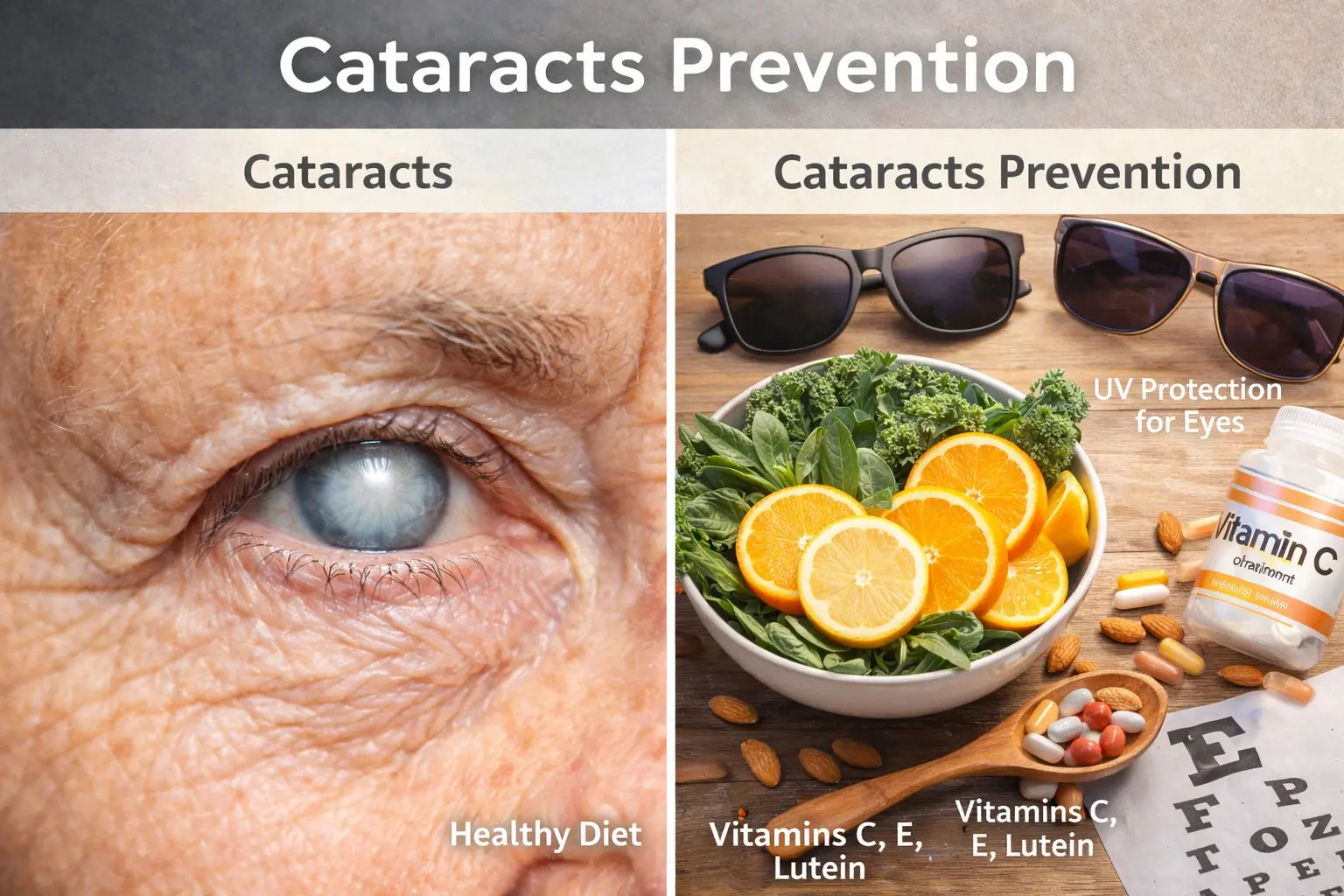
Your eye’s lens is normally crystal clear. It focuses light perfectly onto your retina. As we age, proteins inside this lens start breaking down. They clump together, creating cloudy spots. More clumps = cloudier vision. That’s a cataract.
Why This Matters
📊 Important Statistics
- Nearly 1 in 5 Americans aged 65-74 has cataracts
- By age 75+, about half have cataracts
- It’s the world’s #1 cause of blindness
- Good news: Surgery succeeds over 95% of the time
But cataract prevention can delay the need for surgery by years or even decades.
→ Complete guide: Complete Guide to Eye Health: Vision Care, Prevention & Wellness
Breaking Research: Scientists Discover Cataract-Reversing Protein
In September 2024, researchers at the National Institutes of Health published findings that stunned the medical world.
The Hibernating Squirrel Discovery
Scientists studied 13-lined ground squirrels that hibernate through harsh winters.
Here’s what amazed researchers:
These squirrels develop cataracts every time they hibernate. However, when they warm up in the spring, their cataracts completely disappear within five minutes.
The RNF114 Breakthrough
The research team, led by Dr. Wei Li at the National Eye Institute, identified a protein called RNF114 that clears cloudy lens proteins. When tested on rats with cataracts, the results were remarkable. The cloudy lenses cleared rapidly.
According to Dr. Xingchao Shentu from Zhejiang University, “Scientists have long searched for an alternative to cataract surgery. Lack of access to cataract surgery is a barrier to care in some parts of the world.”
💡 What This Means for Cataract Prevention
This could lead to eye drops or medications that reverse cataracts without surgery.
⚠️ Reality Check
Human trials haven’t started. Surgery remains the only proven treatment now.
But for 40 million people worldwide who can’t access surgery, this research brings hope.
Source: National Institutes of Health, Journal of Clinical Investigation, September 2024
Key Takeaways: Cataracts Prevention Reality
Let’s be honest about what works for UV protection for the eyes.
The truth
- You can’t prevent cataracts 100%
- Aging naturally affects lens proteins
- Genetics play a role
The good news
- You CAN delay cataracts by 10-15 years
- Simple lifestyle changes work
- The earlier you start, the better the results
Think of UV protection for eyes like car maintenance. You can’t stop all wear. But proper care extends life significantly.
UV Protection: The #1 Cataracts Prevention Strategy
This is the most critical thing to prevent cataracts.
UV radiation from the sun damages lens proteins. It’s like leaving an egg in the sun—proteins denature and clump together.
What Research Proves
UV exposure significantly increases cataract risk. People with high sun exposure develop cataracts 10-15 years earlier.
My Simple Protection Plan
Sunglasses (essential)
- 99-100% UVA and UVB protection
- Wraparound styles block side UV
- Wear EVERY time you go outside
- Even on cloudy days (UV penetrates clouds)
Wide-brimmed hat
- Adds 50% more protection
- Shade’s eyes from the overhead sun
- Combine with sunglasses
Smart timing
- UV peaks 10 am-4 pm
- Seek shade during peak hours
- Never skip protection at the beach or in the snow
Pro Tip for Cataract Prevention:
Keep backup sunglasses everywhere—car, office, gym bag. No excuses!
→ Detailed protection: UV Protection for Eyes: Complete Guide to Sun Safety
Antioxidants: Natural Cataracts Prevention
This aspect of cataract prevention surprised me most.
Your lens faces constant attack from free radicals. Antioxidants shield your lens from this damage.
The AREDS2 Formula
The National Eye Institute tested specific nutrients for eye health.
Proven nutrients for cataract prevention:
| Nutrient | Daily Amount | Protection Benefit |
| Vitamin C | 500 mg | Shields lens proteins |
| Vitamin E | 400 IU | Powerful antioxidant |
| Lutein | 10 mg | Filters harmful light |
| Zeaxanthin | 2 mg | Prevents oxidation |
| Zinc | 25 mg | Supports enzymes |
Best Foods for Cataracts Prevention
Real foods beat supplements every time.
Essential foods for Sunglasses to block UV rays
Dark leafy greens (daily):
- Kale, spinach, collard greens
- Highest in lutein and zeaxanthin
- Rich in vitamin C
Colourful vegetables:
- Bell peppers (vitamin C champions)
- Carrots (beta-carotene)
- Sweet potatoes
- Tomatoes
Citrus fruits
- Oranges, grapefruits
- Loaded with vitamin C
- Easy breakfast add
Nuts and seeds
- Almonds (vitamin E)
- Sunflower seeds
- Walnuts (omega-3s)
My daily cataracts prevention routine
Morning smoothie with spinach, berries, and orange juice. Big salad at lunch. Almonds for snacks. Simple but powerful!
Complete nutrition: 10 Best Foods for Eye Health and Better Vision
Lifestyle Factors in Cataracts Prevention
Daily choices matter enormously for preventing cataracts naturally.
Quit Smoking (Critical for Cataracts Prevention)
Smoking doubles your cataract risk. Heavy smokers triple the risk.
Why smoking destroys health
- Creates massive oxidative stress
- Depletes protective antioxidants
- Accelerates protein damage
- Reduces blood flow to the eyes
💚 Good news
Quitting helps immediately. Former smokers see risk drop within years.
My uncle quit at 55 after 30 years. At 75, his eyes are clear. His smoking buddies? All had surgery by age 70.
Control Blood Sugar for Cataracts Prevention
This is crucial if you have diabetes or prediabetes.
The diabetes connection
Recent 2024 UK research shows that diabetes approximately doubles cataract risk. People with diabetes for 10+ years have over 5 times the risk.
Why diabetes accelerates cataracts
- High blood sugar damages lens proteins
- Creates harmful AGEs (advanced glycation end products)
- Triggers inflammation and oxidative stress
- Disrupts lens protection systems
Essential for cataracts prevention
- Keep blood sugar in the target range
- Take medications as prescribed
- Monitor A1C regularly (aim under 7%)
- Annual dilated eye exams
Latest Research
November 2024 study of 319 diabetes patients found poorly controlled diabetes (HbA1c ≥7%) had 4.47 times higher odds of cortical cataracts.
Maintain a Healthy Weight
Obesity increases the risk of –
- Body-wide inflammation
- Oxidative stress
- Links to diabetes and hypertension
Exercise Regularly
Active people have healthier eyes!
Benefits for cataracts prevention
- Reduces inflammation
- Improves blood flow
- Controls blood sugar
- Maintains a healthy weight
My recommendation: 30 minutes daily. Walking counts!
No/Limit Alcohol
Heavy drinking may increase cataract risk. Moderation is safer for preventing cataract naturally.
Should You Take Eye Supplements?
An important question for cataract prevention.
When Supplements Help
Consider supplements if
- The diet lacks fruits and vegetables
- You have absorption issues
- Early cataract signs present
- The doctor recommends them
- Can’t eat enough protective foods consistently
When Food Is Enough
A balanced diet rich in colourful produce, nuts, and fish usually provides sufficient eye nutrients naturally.
Supplement guide – Vitamins for Eye Health: Complete Guide to Essential Nutrients
Warning Signs to Watch
Early cataracts develop slowly. Watch for these.
Common symptoms
- Blurry or cloudy vision
- Faded or yellowed colours
- Glare sensitivity (especially headlights)
- Halos around lights
- Double vision in one eye
- Frequent prescription changes
When to see a doctor
- Vision interferes with activities
- Reading becomes difficult
- Night driving feels unsafe
- Any sudden vision changes
Remember – Cataracts develop over years. Regular exams catch them early!
My Personal Cataracts Prevention Plan
Here’s my daily routine based on research:
Every morning
- Green smoothie (spinach, berries, orange)
- Omega-3 supplement
- Sunglasses in a bag
Throughout the day
- Wear sunglasses outside (no exceptions)
- Big colourful salad lunch
- Almond snacks
Evening
- Cooked vegetables with dinner
- Limited screen time before bed
- No smoking ever
Annual
- Comprehensive eye exam
- Blood work (sugar, cholesterol check)
- Update glasses if needed
Not complicated. Just consistent.
Your Cataracts Prevention Action Plan
Start This Week
✅ Buy UV-blocking sunglasses (99-100% UVA/UVB)
✅ Add one green smoothie daily
✅ Quit smoking or make a quit plan
✅ Schedule eye exam if overdue
✅ Keep sunglasses in the car
Built over a Month
✅ Eat leafy greens 5+ days weekly
✅ Add colourful vegetables to every meal
✅ Walk 30 minutes daily
✅ Control blood sugar if diabetic
✅ Wear sunglasses 100% outdoors
Long-Term Lifestyle
✅ UV protection automatic
✅ Healthy eating is normal
✅ Regular exercise routine
✅ No smoking forever
✅ Annual eye exams always
✅ Blood sugar controlled
Frequently Asked Questions
Q: Will I get cataracts, eventually?
A: Most people develop some lens clouding with age. But how to prevent cataracts naturally? Strategies can delay them 10-15 years, keeping you out of surgery longer!
Q: Can I reverse early cataracts naturally?
A: Not currently. Once proteins clump, they stay clumped. But you can dramatically slow progression. RNF114 research may change this future!
Q: Do cheap sunglasses work for cataract prevention?
A: UV protection isn’t about price. A $15 pair with UV 400 protection works as well as $300 designer glasses. Always check the label!
Q: Should I take AREDS2 vitamins?
A: They’re proven for macular degeneration. For UV ray sunglasses, evidence is promising but weaker. Focus on food first, supplements second.
Q: How do I know if I have early cataracts?
A: You might not! Early cataracts often have no symptoms. Annual eye exams after 60 (or 40 if high-risk) catch them early.
Q: Does diabetes really increase cataract risk?
A: Yes. Research shows that diabetes approximately doubles the risk, increasing dramatically with longer disease duration. Blood sugar control is essential for UV protection for the eyes.
Conclusion: Small Habits, Big Impact
My mom had cataract surgery last year. Her vision is better now than it’s been in a decade!
But I’m doing everything possible to delay mine as long as I can. Maybe I’ll need surgery at 80 instead of 68. Those 12 extra years of clear natural vision? Worth every effort.
The truth about cataract prevention:
- You can’t stop aging completely
- But you control many risk factors
- UV protection is your #1 defence
- Antioxidant foods really help
- Not smoking makes a vast difference
- Blood sugar control matters enormously
Start your cataract prevention today
- Grab those sunglasses
- Add spinach to the shopping list
- Schedule an overdue eye exam
- Quit smoking if you haven’t
- Control your blood sugar
Your future self—the one reading menus clearly at 75—will thank you.
Medical Disclaimer
This article provides information only and doesn’t replace professional medical advice. Cataract treatment should be discussed with your eye doctor. Information about RNF114 describes early-stage animal studies, not approved human treatments.
Reference
- National Eye Institute, NIH
- https://www.nei.nih.gov/research/clinical-trials/age-related-eye-disease-studies-aredsareds2/
- American Academy of Ophthalmology (AAO)
- https://www.aao.org/eye-health/diseases/what-are-cataracts
- National Eye Institute (NEI)
- https://www.nei.nih.gov/learn-about-eye-health/eye-conditions-and-diseases/cataracts
- American Optometric Association
- https://www.aoa.org/healthy-eyes/eye-and-vision-conditions/cataract

Adel Galal is a health and wellness writer with over 30 years of experience studying and writing about health, fitness, nutrition, and healthy living. He is the founder of NextFitLife.com, where he shares practical, evidence-based guidance to support long-term health at any age. Adel’s mission is simple:
to help people make smarter health choices that fit real life, at any age.