Published: October 11, 2026
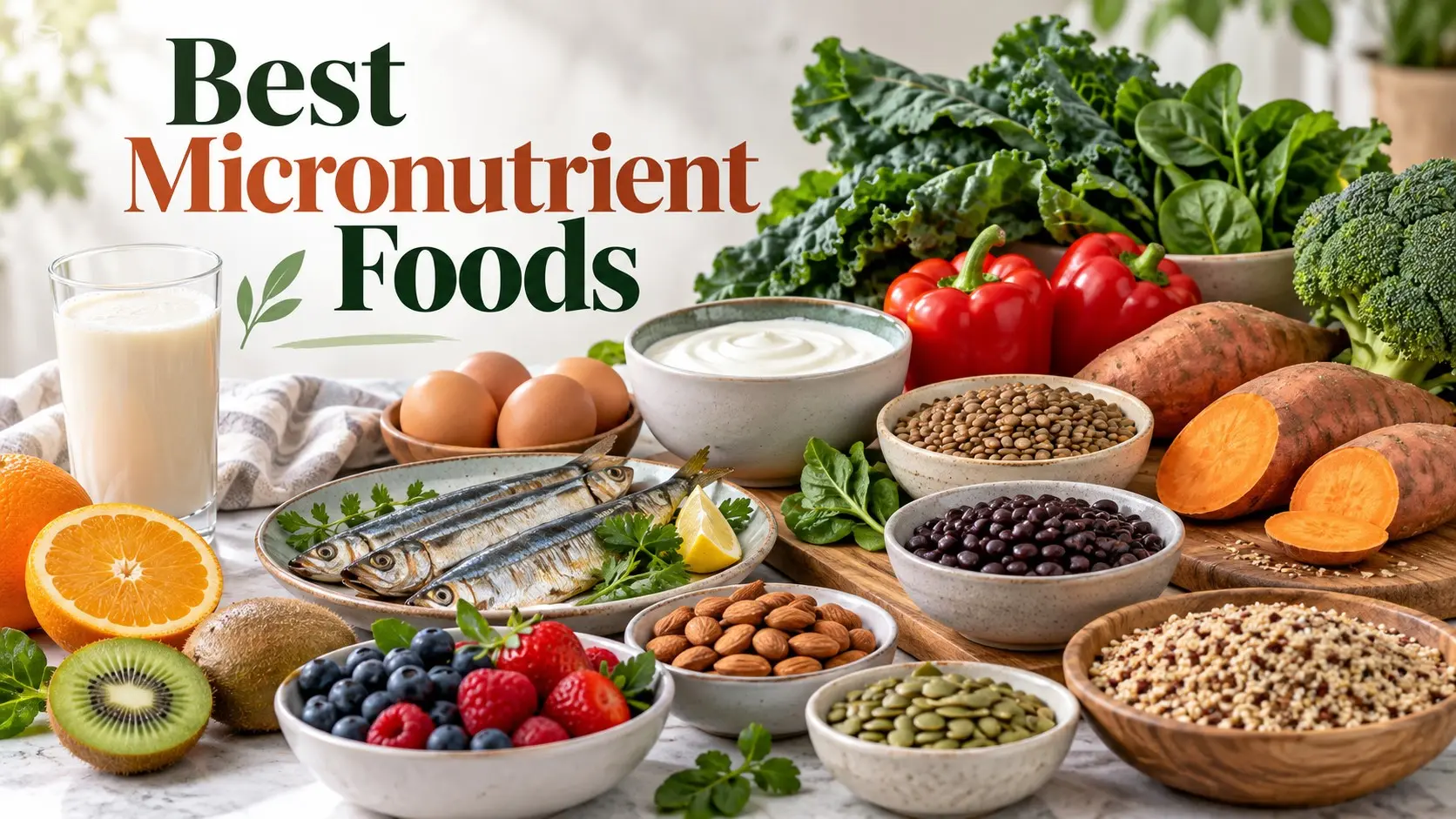
Best micronutrient foods give you several useful vitamins and minerals without making every meal complicated. Strong choices include leafy greens, shellfish, sardines, eggs, yogurt, beans, lentils, sweet potatoes, peppers, seeds, nuts, whole grains, fruit, and selected fortified foods. The best plan is not one perfect food. It is a mix that covers different nutrient jobs.
That is the part many food lists miss.
Spinach is excellent, but it does not give you reliable vitamin B12. Sardines offer calcium and B12, but they do not replace fruit and vegetables. Pumpkin seeds are rich in magnesium, yet they are not your vitamin C source.
Good nutrition is about coverage.
Health note: This article is for general information and education. It does not replace medical advice, diagnosis, or treatment.
I am not a dermatologist, doctor, or registered dietitian. What I share comes from real life experience, extensive research, and consultation with healthcare providers. Always consult qualified medical professionals for diagnosis and treatment of any health condition.
Review status: This article has been source checked against current public health and nutrition references. It has not been medically reviewed by a doctor or registered dietitian.
Table of Contents
- What Are Micronutrient Foods?
- How to Judge Nutrient Density
- 17 Best Micronutrient Foods
- Shellfish
- Sardines
- Eggs
- Plain Yogurt
- Dark Leafy Greens
- Sweet Potatoes
- Red Bell Peppers
- Lentils
- Beans
- Pumpkin Seeds
- Almonds
- Whole Grains
- Kiwi and Citrus
- Broccoli
- Calcium Set Tofu
- Fortified Foods
- Liver
- Foods to Eat With Care
- Best Food Pairings
- Simple Daily Meal Pattern
- Plant Based Choices
- Cooking and Micronutrients
- Food vs Supplements
- Frequently Asked Questions
- References and Sources
What Are Micronutrient Foods?
Micronutrient rich foods are foods that provide useful amounts of vitamins and minerals.
Micronutrients include vitamin A, the B vitamins, vitamin C, vitamin D, vitamin E, vitamin K, iron, calcium, magnesium, zinc, iodine, selenium, copper, manganese, and other nutrients.
Your body needs smaller amounts of micronutrients than it needs carbohydrate, protein, and fat. That does not make them less important.
The World Health Organization describes micronutrients as vitamins and minerals needed in small amounts for normal growth, development, and health. Current WHO healthy diet guidance recommends eating a wide range of nutrient dense foods, including vegetables, fruit, whole grains, legumes, nuts, seeds, and suitable animal source foods.
This is why a varied diet works better than chasing one nutrient at a time.
For more food and vitamin guidance, explore the NextFitLife Nutrition and Vitamins Hub.
How Should You Judge the Best Micronutrient Foods?
I would not rank a food because it wins one vitamin contest.
A useful food earns its place in several ways.
- It provides meaningful amounts of one or more nutrients.
- It contributes nutrients that are sometimes hard to obtain.
- Those nutrients are reasonably available for the body to absorb.
- The food can fit a normal meal.
- It can be eaten safely in sensible amounts.
This last point matters.
Liver is extremely high in several micronutrients, but that does not mean eating large amounts every day is wise. Brazil nuts can deliver a large amount of selenium in only a few nuts. Some seaweeds contain very large and highly variable amounts of iodine.
More is not always better.
Nutrient Density Is Not the Same as One Big Number
A peer reviewed analysis published in Frontiers in Nutrition compared foods for six nutrients that are commonly lacking in diets: vitamin A, folate, vitamin B12, calcium, iron, and zinc.
Foods with very high aggregate density included organ meats, small fish, dark green leafy vegetables, bivalves such as clams and oysters, eggs, milk, canned fish with bones, beef, and several other animal foods.
Pulses and traditional grains also made useful contributions, although they were not as concentrated across all six nutrients.
That study did not measure every beneficial nutrient in food, so it should not be treated as a universal ranking.
Still, it gives us an important idea: foods that cover several common nutrient gaps deserve special attention.
17 Best Micronutrient Foods
1. Shellfish Cover Several Hard to Get Nutrients
Shellfish are among the strongest high micronutrient foods if you eat seafood.
Clams, mussels, and oysters provide vitamin B12, iron, zinc, selenium, and other minerals.
Oysters stand out for zinc, while clams are exceptionally rich in B12.
The value is not simply that one nutrient is high. Shellfish cover several nutrient jobs in a relatively small amount of food.
People with shellfish allergies need to avoid them, of course, and anyone with specific medical dietary restrictions should follow their clinician's advice.
2. Sardines With Bones Give You Calcium Plus B12
Sardines are one of my favorite examples of a food that quietly covers several bases.
Canned sardines with their soft edible bones provide calcium, vitamin B12, selenium, protein, and omega 3 fats.
The bones are the reason calcium rises so much compared with fish where the bones are removed.
They also keep well in a cupboard and need almost no preparation.
Use sardines on whole grain toast, in salads, with potatoes, or beside vegetables.
For more foods that combine calcium with other nutrients, read Vitamin D and Calcium Foods.
3. Eggs Give You a Broad Mix in a Simple Food
Eggs do not dominate every nutrient chart, and that is fine.
They provide a useful mix that includes vitamin B12, selenium, iodine, vitamin A, riboflavin, choline, and other nutrients.
They are also easy to use.
Boil them, scramble them, add them to grain bowls, put them in sandwiches, or eat them with vegetables.
A practical food that appears regularly in your meals can matter more than an exotic food you buy once.
4. Plain Yogurt Makes Calcium Easy
Plain yogurt is an easy source of calcium and vitamin B12. Dairy foods can also contribute iodine, although amounts vary.
Add fruit, pumpkin seeds, oats, or nuts and the nutrient profile broadens quickly.
If you avoid dairy, choose a fortified plant yogurt or plant milk and check the label.
Fortification varies widely.
For dairy free options, see Calcium Rich Foods Without Dairy.
5. Dark Leafy Greens Cover Folate, Vitamin K, Magnesium, and Carotenoids
Spinach, kale, collard greens, mustard greens, and similar vegetables deserve regular space on the plate.
They provide combinations of folate, vitamin K, magnesium, carotenoids, and other plant compounds.
Spinach also contains iron.
There is one catch. Plant iron is nonheme iron, which is not absorbed as readily as heme iron from meat and seafood.
Pair leafy greens with a vitamin C food such as peppers, tomatoes, kiwi, strawberries, or citrus.
Vitamin C improves absorption of nonheme iron. Current NIH iron guidance confirms this relationship.
For useful pairings, read Foods That Help Iron Absorption.
6. Sweet Potatoes Are a Strong Vitamin A Food
Orange sweet potatoes are rich in beta carotene, which the body can convert to vitamin A.
They also provide potassium and other nutrients.
This is a very different vitamin A source from liver.
Sweet potatoes provide provitamin A carotenoids, while liver contains preformed vitamin A.
That distinction matters because excessive intake of preformed vitamin A can be harmful, while beta carotene from ordinary foods does not carry the same toxicity concern.
Roast sweet potatoes, add them to soups, mash them, or serve them with beans and greens.
For more options, see Vitamin A Rich Foods.
7. Red Bell Peppers Do More Than Supply Vitamin C
Red peppers are a strong vitamin C food.
That makes them useful by themselves, but they become even more useful beside beans, lentils, tofu, spinach, or whole grains.
Vitamin C helps your body absorb nonheme iron from plant foods.
This is why I prefer thinking in food pairs rather than isolated rankings.
A lentil bowl with red pepper makes more nutritional sense than asking whether lentils or peppers are “healthier.”
For more sources, read Vitamin C Foods.
8. Lentils Combine Folate, Iron, Magnesium, Fiber, and Protein
Lentils are one of the most useful everyday foods on this list.
They provide folate, iron, magnesium, potassium, protein, fiber, and other nutrients.
Their iron is nonheme iron, so again, pair them with vitamin C.
Try:
- Lentil soup with tomatoes
- Lentil salad with lemon and peppers
- Lentil curry with broccoli
- Lentils with spinach and citrus on the side
These are ordinary meals. That is the point.
9. Beans Give You More Than Protein
Beans are usually discussed as a protein or fiber food, but they also contribute iron, folate, magnesium, potassium, zinc, copper, and other nutrients.
White beans can be especially useful for iron.
Black beans, kidney beans, chickpeas, and other legumes have slightly different profiles, so rotate them instead of deciding one bean is the winner.
Beans also make it easy to build a meal around vegetables and whole grains.
10. Pumpkin Seeds Are One of the Easiest Magnesium Upgrades
Pumpkin seeds are rich in magnesium and also provide zinc, iron, copper, healthy fats, and protein.
You do not need a large bowl.
Sprinkle them over:
- Oatmeal
- Yogurt
- Salad
- Soup
- Roasted vegetables
- Grain bowls
They are small enough to add without rebuilding the meal.
For a broader mineral guide, read Magnesium and Potassium Rich Foods.
11. Almonds Add Vitamin E and Magnesium
Almonds provide vitamin E, magnesium, copper, manganese, healthy fats, and other nutrients.
They work well because they require almost no preparation.
A small handful can be a snack. Chopped almonds fit oats or yogurt. Almond butter works with whole grain toast or fruit.
Nuts are energy dense, so a normal portion is enough.
12. Whole Grains Keep Nutrients That Refining Removes
Whole grains provide magnesium, manganese, iron, selenium, B vitamins, and other nutrients depending on the grain.
Refining removes the bran and germ, which removes some of those nutrients.
Useful choices include:
- Oats
- Brown rice
- Whole wheat
- Barley
- Quinoa
- Teff
No single grain needs to become your identity.
Rotate them.
13. Kiwi, Citrus, and Berries Improve the Whole Meal
Fruit deserves more credit in micronutrient discussions.
Kiwi, oranges, strawberries, and other vitamin C rich fruits add vitamin C, folate, potassium, and plant compounds.
They also make plant iron easier to absorb.
Try kiwi beside oatmeal with pumpkin seeds, berries with yogurt, or an orange after a lentil meal.
That is a simple way to improve nutrient bioavailability without changing the main dish.
14. Broccoli Covers Several Jobs at Once
Broccoli gives you vitamin C, vitamin K, folate, carotenoids, fiber, and other nutrients.
It also fits almost any type of meal.
Steam it lightly, roast it, add it to pasta, stir it into soup, or eat it beside fish, tofu, beans, or eggs.
You do not need to eat it raw for it to be useful.
15. Calcium Set Tofu Combines Protein With Useful Minerals
Tofu is not nutritionally identical from one package to another.
Tofu made with calcium sulfate can provide a useful amount of calcium along with protein, iron, and other nutrients.
Other tofu may contain much less calcium.
Read the nutrition label and ingredient list.
This is one reason I do not like generic “tofu contains X” claims without checking the product.
Use calcium set tofu in stir fries, curries, salads, sandwiches, noodle dishes, or scrambles.
16. Fortified Foods Fill Gaps Whole Foods Do Not Always Cover Easily
Fortified foods are not cheating.
Fortification deliberately adds vitamins or minerals to food. Examples include iodine added to salt, iron and folate added to grain products, and calcium, vitamin D, or B12 added to some plant milks.
For fully vegan diets, vitamin B12 is the obvious reason fortification matters.
Ordinary unfortified plant foods do not provide a reliable source of vitamin B12.
Useful fortified foods include:
- Fortified plant milk
- Fortified breakfast cereal
- Fortified nutritional yeast
- Iodized salt
- Selected fortified plant yogurts
For a practical label guide, read Best Fortified Foods for Vegans.
For B12 specifically, see B12 Rich Foods.
17. Liver Is Extremely Nutrient Dense, but More Is Not Better
Liver is one of the most concentrated foods for vitamin A, B12, folate, copper, iron, and several B vitamins.
That makes it nutritionally impressive.
It also means portion and frequency matter.
Liver contains high amounts of preformed vitamin A. Excess preformed vitamin A can be harmful.
Pregnant people, people using retinoid medicines, and anyone with a medical reason to limit vitamin A need individual guidance.
I would treat liver as a concentrated food, not something to eat in large portions every day.
Three Micronutrient Foods Where More Is Not Better
1. Liver
Liver can provide very large amounts of preformed vitamin A.
Useful does not mean unlimited.
2. Brazil Nuts
Brazil nuts can contain a very high amount of selenium.
The amount varies, but NIH notes that individual Brazil nuts can provide tens of micrograms of selenium.
Eating a large handful every day can push selenium intake much higher than you intended.
For safer food first ideas, see Selenium Rich Foods.
3. Seaweed
Seaweed can be rich in iodine, but the iodine content varies greatly between species and products.
This makes “eat more seaweed” poor advice for someone trying to hit a precise iodine target.
Iodized salt can be easier to use consistently for many people who already use salt.
Do not increase your salt intake simply to obtain more iodine.
For more detail, read Plant Based Iodine Sources.
Which Foods Cover the Most Micronutrients?
| Food | Strong Nutrient Contribution | Best Use | Useful Caution |
|---|---|---|---|
| Shellfish | B12, zinc, iron, selenium | Concentrated mineral source | Avoid with shellfish allergy |
| Sardines with bones | Calcium, B12, selenium | Easy fish and calcium option | Check sodium if relevant |
| Eggs | B12, selenium, iodine, vitamin A | Flexible everyday food | Individual diet needs vary |
| Leafy greens | Folate, vitamin K, magnesium, carotenoids | Regular vegetable base | Pair plant iron with vitamin C |
| Lentils and beans | Folate, iron, magnesium, potassium | Affordable meal base | Iron is nonheme |
| Pumpkin seeds | Magnesium, zinc, iron, copper | Easy topping | Energy dense |
| Fortified foods | Depends on product | Fill predictable gaps | Read the label |
| Liver | Vitamin A, B12, folate, iron, copper | Very concentrated source | Do not overdo preformed vitamin A |
The Best Micronutrient Pairings Are Better Than Single Foods
This is where the article becomes useful in real life.
Lentils Plus Red Pepper
Lentils provide iron. Red pepper supplies vitamin C, which helps the body absorb nonheme iron.
Spinach Plus Citrus
Spinach contributes folate, magnesium, and plant iron. Citrus adds vitamin C.
Yogurt Plus Berries Plus Pumpkin Seeds
Yogurt provides calcium and B12. Berries add vitamin C. Pumpkin seeds bring magnesium and zinc.
Sardines Plus Whole Grain Toast Plus Vegetables
Sardines provide calcium, B12, selenium, and protein. Whole grain bread and vegetables widen the mineral and vitamin mix.
Calcium Set Tofu Plus Broccoli Plus Brown Rice
Tofu brings protein, calcium, and iron depending on the product. Broccoli contributes vitamin C, which supports plant iron absorption.
This is why I would rather improve a meal than search for a magic food.
A Simple Micronutrient Plate
You do not need to calculate 20 vitamins at dinner.
Use four jobs.
1. Choose a Protein and Mineral Anchor
Pick one:
- Fish
- Eggs
- Plain yogurt
- Beans
- Lentils
- Tofu
- Shellfish
- Lean meat
2. Add a Dark Green or Orange Vegetable
Use spinach, kale, broccoli, sweet potato, carrots, squash, or another deeply colored vegetable.
3. Add a Vitamin C Food
Choose peppers, tomatoes, kiwi, berries, citrus fruit, or broccoli.
4. Add a Mineral Rich Extra
Use pumpkin seeds, nuts, whole grains, or an appropriate fortified food.
You do not need every micronutrient in every meal. Repeating this pattern with different foods through the week creates much broader coverage.
What Could a Micronutrient Rich Day Look Like?
Breakfast
Plain yogurt with oats, berries, kiwi, and pumpkin seeds.
Lunch
Lentils with spinach, tomatoes, red pepper, and whole grain bread.
Snack
Fruit with almonds.
Dinner
Sardines, eggs, tofu, or another suitable protein with sweet potato and broccoli.
This is not a prescription meal plan.
It simply shows how a normal day can cover many micronutrients without turning food into a math test.
What Are the Best Micronutrient Foods for a Plant Based Diet?
Plant based diets can provide a wide range of vitamins and minerals, but some nutrients need more planning.
Useful choices include:
- Lentils
- Beans
- Dark leafy greens
- Pumpkin seeds
- Almonds
- Whole grains
- Calcium set tofu
- Sweet potatoes
- Red peppers
- Kiwi and citrus
- Fortified plant milk
- Fortified nutritional yeast
- Iodized salt
Vitamin B12 needs special attention in a fully vegan diet because unfortified plant foods do not supply reliable B12.
Use a dependable fortified food or supplement strategy.
Iron also deserves thought because plant iron is less readily absorbed than heme iron.
Pair beans, lentils, tofu, seeds, and fortified grains with vitamin C rich foods.
For more planning help, see Best Fortified Foods for Vegans.
Does Cooking Destroy Micronutrients?
Sometimes cooking reduces a nutrient. Sometimes it makes another nutrient easier to use.
Vitamin C is sensitive to heat and water, so long cooking can reduce it.
That does not mean every vegetable should be eaten raw.
Cooking softens food, makes many vegetables easier to eat, and can improve availability of some carotenoids.
A practical approach is better:
- Eat some fruit and vegetables raw.
- Steam or lightly cook some vegetables.
- Roast others.
- Use the cooking liquid in soups when practical.
- Eat a wide range over the week.
Variety beats obsession over one cooking method.
Are Micronutrient Foods Better Than Supplements?
Food should do most of the work for most healthy people.
Whole foods deliver nutrients together with protein, fiber, fats, carbohydrate, and other food components.
Supplements still have an important place.
A diagnosed iron deficiency may need iron treatment. A B12 deficiency may need a specific dose. Vitamin D supplementation may be appropriate for some people. Pregnancy also changes nutrient requirements.
Do not use a food list as treatment for a diagnosed deficiency without discussing the condition with a qualified healthcare professional.
Can You Get Too Many Micronutrients From Food?
For most ordinary foods, a varied diet is unlikely to create a problem.
The foods to think about are unusually concentrated sources.
Liver, Brazil nuts, and some seaweeds are good examples.
Fortified foods plus supplements can also stack up. If you take a multivitamin, mineral supplement, or several individual products, check the amounts against the fortified foods you eat regularly.
More does not mean healthier.
Who Needs Individual Nutrition Advice?
General food guidance has limits.
Speak with a doctor or registered dietitian if you:
- Are pregnant or breastfeeding
- Follow a strict vegan diet
- Have kidney disease
- Have thyroid disease
- Have had bariatric surgery
- Have celiac disease or another absorption disorder
- Have inflammatory bowel disease
- Have a diagnosed vitamin or mineral deficiency
- Take medicines that affect nutrient absorption
- Have unexplained fatigue, weakness, numbness, hair loss, or other persistent symptoms
Symptoms alone cannot tell you which nutrient is low.
Testing and medical context matter.
Conclusion
Best micronutrient foods are useful because they help you cover several nutrient needs without turning eating into a daily calculation.
Do not chase one perfect superfood. Build coverage instead. Choose a protein and mineral source, add colorful vegetables, include vitamin C rich produce, and use nuts, seeds, whole grains, or suitable fortified foods to fill the gaps.
Your next step is simple: look at your usual meals and find the missing category. Add one leafy green, one legume, one seed or nut, one vitamin C rich food, and a dependable source of B12 and minerals that fits the way you eat.
References and Sources
- World Health Organization. Healthy Diet.
https://www.who.int/news-room/fact-sheets/detail/healthy-diet - World Health Organization. Micronutrients.
https://www.who.int/health-topics/micronutrients - National Institutes of Health Office of Dietary Supplements. Iron Fact Sheet for Health Professionals.
https://ods.od.nih.gov/factsheets/Iron-HealthProfessional/ - National Institutes of Health Office of Dietary Supplements. Vitamin B12 Fact Sheet for Health Professionals.
https://ods.od.nih.gov/factsheets/VitaminB12-HealthProfessional/ - National Institutes of Health Office of Dietary Supplements. Vitamin C Fact Sheet for Health Professionals.
https://ods.od.nih.gov/factsheets/VitaminC-HealthProfessional/ - National Institutes of Health Office of Dietary Supplements. Selenium Fact Sheet for Health Professionals.
https://ods.od.nih.gov/factsheets/Selenium-HealthProfessional/ - National Institutes of Health Office of Dietary Supplements. Iodine Fact Sheet for Health Professionals.
https://ods.od.nih.gov/factsheets/Iodine-HealthProfessional/ - Frontiers in Nutrition. Priority Micronutrient Density in Foods.
https://www.frontiersin.org/journals/nutrition/articles/10.3389/fnut.2022.806566/full
Internal Links + Hub
- Nutrition and Vitamins Hub
- Nutrient Dense Foods for Adults Over 50
- Best Fortified Foods for Vegans
- Vitamin D and Calcium Foods
- Calcium Rich Foods Without Dairy
- Foods That Help Iron Absorption
- Magnesium and Potassium Rich Foods
- Zinc and Copper Rich Foods
- Plant Based Iodine Sources
- Selenium Rich Foods
- Vitamin A Rich Foods
- Vitamin C Foods
About the Author
Adel Galal is the Founder and Lead Writer at NextFitLife. His personal interest in health, fitness, nutrition, wellness, and healthy aging spans more than 30 years, and his health and wellness writing experience spans more than 15 years.
He researches nutrition topics by comparing current public health guidance, government nutrition resources, and published research, then turns that information into practical food choices for everyday readers.
Adel is not a doctor, registered dietitian, nutritionist, pharmacist, or other licensed healthcare professional. NextFitLife content is educational and does not replace medical or nutrition care.
Learn more about Adel, NextFitLife, and the site's approach on the About Us page.
Frequently Asked Questions
What are micronutrient foods?
Micronutrient foods are foods that provide vitamins and minerals such as vitamin A, B vitamins, vitamin C, calcium, iron, magnesium, zinc, iodine, and selenium. Most foods contain some micronutrients, but nutrient dense foods provide larger or broader amounts.
What are the best micronutrient foods?
The best micronutrient foods include shellfish, sardines, eggs, yogurt, dark leafy greens, sweet potatoes, peppers, lentils, beans, pumpkin seeds, almonds, whole grains, fruit, tofu, fortified foods, and liver. A varied mix gives better coverage than one food alone.
What food has the most micronutrients?
No food wins for every nutrient. Research comparing vitamin A, folate, B12, calcium, iron, and zinc found organ meats, small fish, dark green leafy vegetables, shellfish, eggs, milk, and canned fish with bones among the most concentrated categories.
What are good high micronutrient foods for vegetarians?
Vegetarians can use eggs, dairy, lentils, beans, leafy greens, pumpkin seeds, nuts, whole grains, tofu, fruit, and fortified foods. Fully vegan diets need a reliable source of vitamin B12 from fortified food or supplements.
Are fruits or vegetables higher in micronutrients?
Neither group wins overall. Leafy greens are strong sources of folate, vitamin K, magnesium, and carotenoids, while fruits such as kiwi, citrus, and berries are excellent vitamin C sources. Eating both gives broader coverage.
What is the best way to absorb iron from plant foods?
Pair plant iron sources such as lentils, beans, tofu, seeds, and leafy greens with vitamin C rich foods. Vitamin C improves absorption of nonheme iron.
Are fortified foods healthy sources of micronutrients?
They can be. Fortified plant milk, cereal, nutritional yeast, and iodized salt can fill specific nutrient gaps. Check the label because the amount added differs between products.
Do I need a multivitamin if I eat micronutrient rich foods?
Not automatically. A varied diet can meet many people's needs, but supplements may be appropriate for pregnancy, deficiencies, strict vegan diets, absorption problems, or other medical reasons.
Can you get too many micronutrients from food?
Most ordinary foods are unlikely to cause excessive intake when eaten as part of a varied diet. Very concentrated foods such as liver, Brazil nuts, and some seaweeds deserve more care because they can provide very high amounts of certain nutrients.

Health & wellness writer with 30+ years of experience in nutrition, fitness, and healthy aging. Founder of NextFitLife.com — evidence-based health guidance.