Home
Published:
Nov 27, 2025
Last Updated:
August 18, 2026
Next Review:
August 2027, or sooner if major treatment guidance changes
Written and source checked by:
Adel Galal,
Founder and Lead Writer of NextFitLife
Medical Review Status:
This article has not been formally reviewed by a dermatologist, pediatrician, pharmacist, infectious disease specialist, or another licensed healthcare professional.
That reaction is normal.
But the safest way to learn how to get rid of head lice is not to use more treatment than necessary.
It is to use the right treatment correctly.
Head lice are treatable.
The process usually has four parts.
First, confirm that live lice are really present.
Second, choose an appropriate head lice treatment.
Third, follow the instructions exactly.
Fourth, check the hair again and retreat only when the treatment instructions say it is needed.
You also need some simple household cleaning.
You do not need to spray your entire house.
You do not need to throw away bedding.
You do not need to shave the person's head.
And you should not keep applying medicine because you still see old nits.
This guide walks you through the process step by step.
Quick Answer: How to Get Rid of Head Lice
To get rid of head lice, confirm an active infestation, use an approved lice treatment exactly as directed, remove lice with a fine tooth comb when appropriate, check close contacts, and follow the product instructions for retreatment.
Some medicines kill lice but not eggs.
Those treatments often need another application after the eggs hatch.
Other medicines affect lice and eggs or prevent newly hatched lice from surviving.
Those may not need routine retreatment.
Do not automatically repeat every lice medicine after seven days.
Follow the instructions for the specific treatment you used.
Medical note:
This content is for general educational purposes and does not replace professional medical advice, diagnosis, or treatment. Consult an appropriately qualified healthcare professional for personal medical concerns. This article explains published guidance and does not provide a personal clinical assessment. Always consult qualified medical professionals for diagnosis and treatment of any health condition.
Head Lice Treatment at a Glance
- Treat only when an active infestation is present.
- Finding a live crawling louse gives the strongest evidence of active lice.
- Read the full medicine label before starting.
- Do not use more lice medicine than directed.
- Do not combine lice medicines unless a healthcare professional tells you to.
- Some treatments need retreatment.
- Other treatments may need only one application.
- A nit comb can help remove lice and eggs.
- Not every medicine requires nit removal.
- Check household members and close contacts.
- Treat people with lice and people who share a bed with them at the same time.
- Wash recently used bedding and clothing.
- Do not spray insecticide around the home.
- Ask a healthcare professional before treating very young children.
Step 1: Make Sure It Really Is Head Lice
Do not start treatment because you see one white speck.
Dandruff can look like a nit.
Hair products can look like nits.
Lint can look like nits.
The strongest sign of an active infestation is a live crawling louse.
Use:
- Bright light
- A fine tooth lice comb
- Small hair sections
Look especially:
- Behind the ears
- At the back of the neck
- Close to the scalp
If you are unsure what you found, read
Head Lice: Symptoms, Identification, Treatment and Prevention
before applying medicine.
Step 2: Read the Treatment Instructions Before You Start
This sounds simple.
It is one of the most important steps.
Different head lice medicines have different rules.
The instructions may tell you:
- Whether hair should be dry or damp
- How much product to use
- Where to apply it
- How long to leave it on
- How to rinse it
- Whether combing is needed
- Whether another treatment is needed
Do not copy instructions from another lice product.
The active ingredient matters.
Do Not Use Conditioner Before Many Lice Medicines
CDC advises against using a combination shampoo and conditioner or conditioner before applying lice medicine.
Conditioner can interfere with some treatments.
This is important because wet combing methods often use conditioner.
These are different treatment approaches.
If you are using a lice medicine, follow that medicine's label.
Do not add conditioner unless the instructions allow it.
Step 3: Apply the Lice Treatment Correctly
Follow the product label.
General CDC steps include:
- Remove clothing that may become wet or stained.
- Apply the medicine to the scalp and hair exactly as directed.
- Use enough product to cover the required area.
- Leave it on for the exact amount of time stated.
- Rinse it out according to the instructions.
- Put on clean clothing afterward.
Do not leave the medicine on longer because you think it will work better.
More is not better.
Lice medicines can cause side effects when misused.
What If the Hair Is Long or Thick?
Long or thick hair may require more product.
CDC notes that a person with shoulder length or longer hair may need a second bottle for some treatments.
The goal is complete coverage.
You can divide the hair into sections to make application easier.
Do not change the medicine strength.
Do not mix products.
Use the amount allowed by the label.
Does Hair Type Change the Medicine You Need?
Not automatically.
Straight, curly, coily, thick, and fine hair can all get lice.
The medicine should be chosen based on the infestation, age, health, previous treatment, local resistance, and professional guidance.
Hair texture can make sectioning and combing easier or harder.
It does not mean one hair type always needs a stronger medicine.
For curly or coily hair, work in small sections.
Follow the product instructions carefully.
Do not add oils or conditioner before a medicine unless the label says it is safe.
Which Head Lice Treatments Are Available?
Treatment options differ between countries.
In the United States, commonly used active ingredients include:
| Active Ingredient | What It Mainly Does | Retreatment | Important Note |
|---|---|---|---|
| Pyrethrins with piperonyl butoxide | Kills live lice | Usually required because eggs survive | Avoid if allergic to chrysanthemums or ragweed unless advised otherwise |
| Permethrin 1 percent | Kills live lice and may affect newly hatched lice | May be needed around day nine | Resistance can occur |
| Ivermectin lotion | Kills live lice and prevents many newly hatched lice from surviving | Do not repeat without professional advice | Age limits apply |
| Spinosad | Kills lice and eggs | Often not needed unless live lice remain later | Nit combing is not required for treatment success |
| Benzyl alcohol | Kills lice but not eggs | Another treatment is needed | Availability varies |
| Malathion | Kills lice and some eggs | May be repeated if live lice remain | Flammable and must be kept away from heat and flame |
Age limits and availability can change.
Read the current label.
Ask a pharmacist or healthcare professional if you are unsure.
Step 4: Know Whether Retreatment Is Needed
This is where many lice guides become too simple.
There is no universal rule that every treatment must be repeated.
Some medicines kill crawling lice but do not kill unhatched lice eggs.
Those treatments usually need another application after eggs hatch and before the new lice can lay more eggs.
CDC says this is often about seven to nine days later, depending on the drug.
Other medicines kill eggs or stop newly hatched lice from surviving.
Those treatments may not need routine retreatment.
Follow your product instructions.
For more detail on why timing matters, read
Life Cycle of Lice
.
What Should You Expect 8 to 12 Hours After Treatment?
Check the hair.
You may still see a few lice moving slowly.
That does not always mean the medicine failed.
CDC advises that you do not immediately apply more medicine if the lice are moving slowly.
Use a fine comb to remove dead or remaining lice.
But if the lice look as active as they did before treatment and you cannot find dead lice, the medicine may not be working.
Do not apply another dose right away.
Contact a healthcare professional.
Should You Wash the Hair Again Right Away?
Usually, no.
CDC advises not washing the hair again for one to two days after removing many lice medicines.
The exact rule depends on the product.
Follow the label for your treatment.
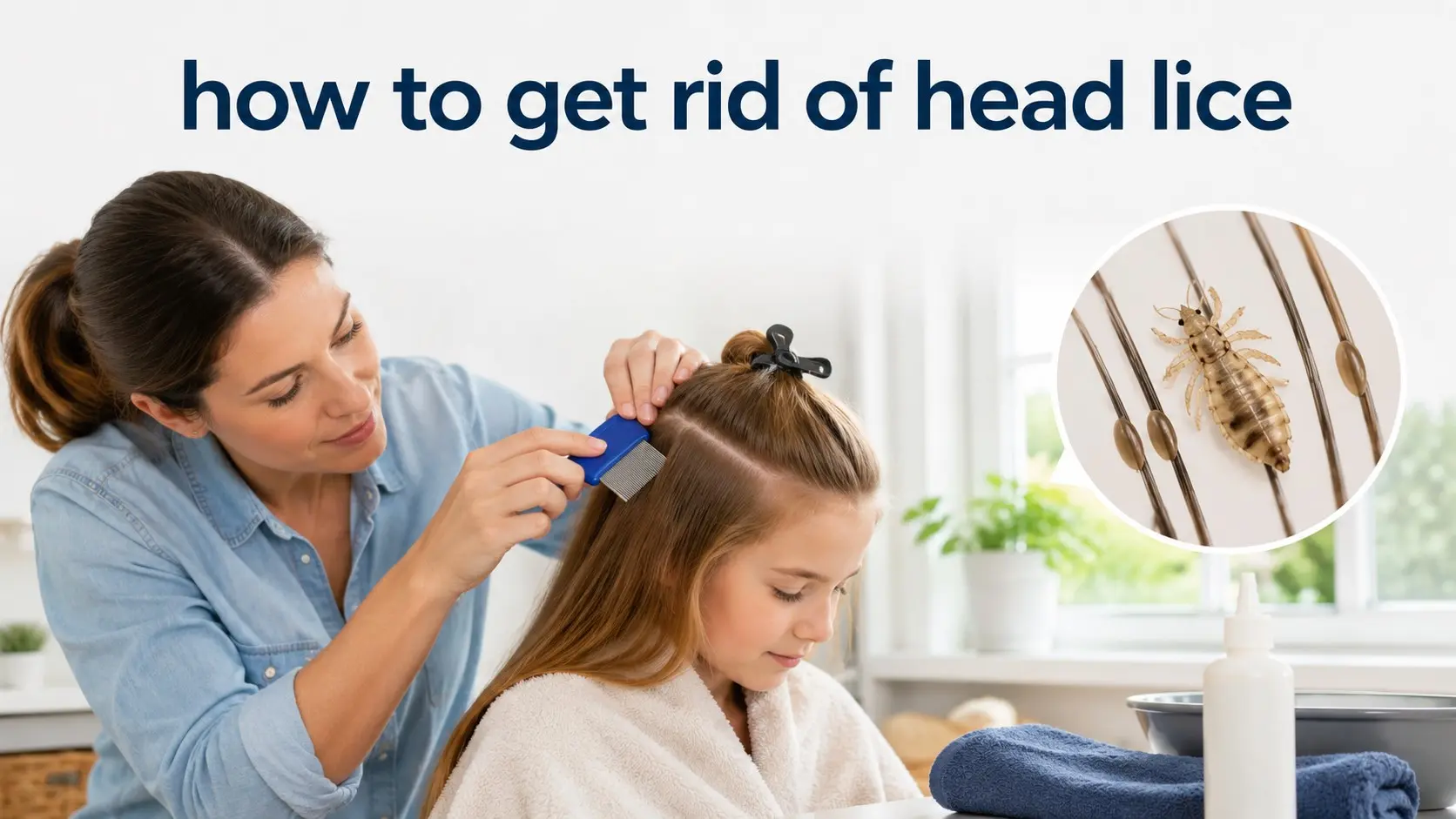
Step 5: Use a Fine Tooth Lice Comb When Appropriate
A nit comb can help remove:
- Live lice
- Dead lice
- Nymphs
- Nits
For many treatment plans, CDC recommends checking the hair and removing lice and nits every two to three days for two to three weeks.
Some medicines, such as spinosad, do not require nit removal for the medicine to work.
Combing can still make it easier to monitor the hair.
How to Use a Lice Comb
- Use bright light.
- Separate the hair into small sections.
- Place the comb close to the scalp.
- Pull it slowly through the full length of the hair.
- Check the comb after each pass.
- Wipe or rinse the comb before the next pass.
- Pay close attention behind the ears and near the neck.
Take your time.
Rushing makes it easier to miss lice.
Can Wet Combing Get Rid of Head Lice?
Wet combing is used as a treatment method in some countries.
The hair is wet and carefully combed in sections with a fine detection comb.
The process must be repeated on a schedule so new lice are removed before they reproduce.
If you choose wet combing instead of medicine, follow a recognized health service method.
Do not use conditioner before a medicated treatment unless that product allows it.
Step 6: Check Everyone in the Home
Check household members and close contacts.
Do not automatically put lice medicine on everyone.
Treat people who have active lice.
CDC also recommends treating people who share a bed with the infested person at the same time.
This reduces the chance of lice moving back between close contacts.
Step 7: Clean Only What Really Needs Cleaning
You do not need to disinfect the whole home.
Head lice do not survive well away from a human host.
Focus on things used during the two days before treatment.
Wash Bedding and Clothing
Wash recently used:
- Pillowcases
- Sheets
- Towels
- Hats
- Clothing
CDC recommends hot water at about 130 degrees Fahrenheit and high heat drying when the item can safely tolerate it.
Clean Combs and Brushes
Soak combs and brushes in water at least 130 degrees Fahrenheit for five to ten minutes.
Vacuum Main Areas
Vacuum places where the person recently sat or lay.
The risk from furniture and carpets is small.
Bag Items That Cannot Be Washed
If an item cannot be washed or dry cleaned, CDC says it can be sealed in a plastic bag for two weeks.
You do not need to bag the entire house.
Do Not Use Lice Sprays or Foggers in the Home
Do not use fumigant sprays or foggers for head lice.
CDC warns that these products can be toxic if they are inhaled or absorbed through the skin.
They are not necessary.
Treat the person.
Clean recent items.
That is enough in most homes.
Do Home Remedies Kill Head Lice?
Many families try household products first.
Common examples include:
- Mayonnaise
- Olive oil
- Butter
- Petroleum jelly
- Essential oils
- Coconut oil
CDC says there is no scientific evidence that mayonnaise, olive oil, margarine, butter, or similar substances reliably kill head lice by suffocation.
Do not use an unproven remedy instead of an effective treatment.
Never Use Dangerous Lice Remedies
Never put dangerous chemicals on a person's scalp.
Do not use:
- Gasoline
- Kerosene
- Household insecticide
- Animal flea treatment
- Industrial chemicals
These products can poison or seriously injure a person.
What If the First Head Lice Treatment Does Not Work?
Do not panic.
Treatment can fail for several reasons.
CDC lists common causes such as:
- Wrong diagnosis
- Using conditioner before treatment
- Not following the instructions
- Resistance to the medicine
- Getting lice again from another person
The next step depends on what happened.
Do not keep applying the same medicine again and again.
Ask a healthcare professional before changing or repeating treatment.
What Are Treatment Resistant Lice?
Some head lice have developed resistance to certain medicines.
This is sometimes called treatment resistant lice.
Resistance can reduce how well some older treatments work.
But treatment failure does not automatically prove resistance.
The problem may be:
- Incorrect diagnosis
- Incorrect use
- Not enough product for the hair
- Retreatment at the wrong time
- Reinfestation
A healthcare professional can recommend another active ingredient when needed.
Special Safety Warning for Malathion
Malathion lotion can be flammable.
If you are prescribed or advised to use it, follow the instructions carefully.
Keep treated hair away from:
- Open flames
- Cigarettes
- Hair dryers
- Curling irons
- Other heat sources
Do not use heat to dry hair while malathion is present.
How Do You Get Rid of Head Lice in Children?
Children should receive an age appropriate treatment.
Do not guess.
Check the minimum age on the label.
Ask a healthcare professional before treating a very young child.
The American Academy of Pediatrics advises that an adult should apply lice medicine to a child.
Do not leave a child alone with medicine in the hair.
Keep all lice medicine out of children's reach.
What About Head Lice in Babies?
Do not use a random store product on a baby.
Age limits differ between medicines.
Some products are approved for young infants.
Others are not.
Talk with the child's healthcare professional before treatment.
How Do You Treat Head Lice During Pregnancy or Breastfeeding?
Ask a healthcare professional or pharmacist before choosing treatment.
Some medicines may be suitable.
Others may not be the best choice.
Tell the professional:
- That you are pregnant or breastfeeding
- Which product you are considering
- Which treatments have already been used
- Any medicines you take
Do not use oral or topical medicines simply because they worked for another person.
When Can a Child Return to School?
Head lice are not a reason to miss unnecessary school.
CDC says a child found to have lice does not need to leave school early.
Treatment can begin at home.
The child can return after appropriate treatment has started.
The American Academy of Pediatrics also discourages policies that keep children out of school because old nits remain.
Do All Nits Need to Be Gone Before Treatment Is Finished?
No.
Old nits can stay attached to hair even when the live infestation is gone.
Seeing an old nit does not automatically mean treatment failed.
The main thing to look for is live crawling lice.
Removing nits can make the hair easier to monitor.
It is not required for every medicine to work.
How Long Does It Take to Get Rid of Head Lice?
There is no one time frame for every treatment.
Some medicines kill most live lice after one use.
Other products need a second treatment because eggs survive the first application.
CDC recommends checking the hair every two to three days for the next two to three weeks after many treatments.
This does not mean treatment has failed for three weeks.
It means you are monitoring for live lice that survived or hatched.
What Is the Fastest Way to Get Rid of Head Lice?
There is no guaranteed instant cure.
The fastest safe approach is:
- Confirm that live lice are present.
- Choose an effective treatment that is suitable for the person's age and health.
- Apply it exactly as directed.
- Check the hair after treatment.
- Retreat only when the product requires it.
- Treat affected close contacts at the same time.
Trying several products at once does not make treatment faster.
It increases the risk of irritation and misuse.
How Do You Know the Lice Treatment Is Working?
Check for live crawling lice.
After treatment:
- Dead lice are a good sign
- Slow moving lice may still die
- Old nits may remain
- No live crawling lice over time is the goal
If lice remain just as active 8 to 12 hours after treatment, talk with a healthcare professional before applying more medicine.
How Can You Stop Head Lice From Coming Back?
Reinfestation means a person cleared the lice and then caught them again.
To reduce the chance:
- Check close household contacts
- Treat active infestations at the same time
- Reduce direct head contact during an outbreak
- Avoid sharing combs and brushes
- Avoid sharing recently used hats or hair accessories
- Check the hair again after treatment
You do not need to apply preventive pesticide to people who do not have lice.
10 Common Head Lice Treatment Mistakes
- Treating dandruff as if it were lice.
- Using conditioner before a medicated treatment when the label says not to.
- Using too little medicine for long or thick hair.
- Leaving the medicine on for the wrong amount of time.
- Applying another dose too soon.
- Assuming every medicine needs the same retreatment schedule.
- Using several lice medicines together.
- Ignoring other infested household members.
- Using toxic sprays around the home.
- Repeating a treatment that clearly failed without getting advice.
When Should You See a Healthcare Professional?
Get professional advice when:
- You are unsure whether the problem is lice
- The first appropriate treatment does not work
- Live lice remain after the full treatment plan
- You think the lice may be resistant
- The scalp is badly irritated
- There are sores, swelling, or pus
- You are treating a very young child
- You are pregnant or breastfeeding
- A medicine causes a significant reaction
A dermatologist, pediatrician, or pharmacist can help choose the next safe treatment.
When Is a Lice Treatment Reaction an Emergency?
Head lice themselves are rarely an emergency.
A severe reaction to a treatment can be.
Seek urgent medical help for:
- Severe trouble breathing
- Swelling of the face or throat
- Fainting
- Severe widespread rash after treatment
- Another serious allergic reaction
Stop using the product and seek appropriate medical care.
Common Myths About How to Get Rid of Head Lice
Myth: Everyone Needs Two Lice Treatments
No.
Retreatment depends on the medicine.
Myth: You Must Remove Every Nit for Medicine to Work
No.
Some treatments work without complete nit removal.
Myth: More Lice Medicine Works Better
No.
Using too much can cause harm.
Myth: You Need to Treat Everyone in the Family
No.
Check everyone.
Treat people with an active infestation and follow guidance for bed partners.
Myth: You Need to Disinfect the Entire House
No.
Focus on recently used items.
Myth: Lice Sprays Make the House Safer
No.
Fumigant sprays can be toxic and are not needed.
Myth: Mayonnaise Is a Proven Cure
No.
It has not been proven to reliably eliminate head lice.
Myth: Lice Treatment Should Be Chosen by Hair Type
No.
Hair type can affect application and combing.
The medicine should be chosen based on safety, age, health, previous treatment, and appropriate guidance.
A Simple Seven Step Head Lice Treatment Plan
- Confirm live lice.
- Read the treatment label.
- Apply the correct amount exactly as directed.
- Check the hair after treatment.
- Comb when appropriate.
- Check and treat affected close contacts.
- Retreat only according to the treatment instructions.
Then keep checking for live lice.
That is more useful than panicking over every remaining nit.
How I Approach Head Lice Treatment Research
I have spent more than fifteen years researching and writing about health, infections, fitness, nutrition, sleep, and everyday wellness.
I also bring more than thirty years of personal experience with fitness, nutrition, sleep habits, and general wellness.
For a treatment article, I pay close attention to instructions.
Small details matter.
A medicine may work well when used correctly and fail when used incorrectly.
One product may need another application.
Another may not.
One may require combing.
Another may not.
That is why I avoid one rule for every treatment.
Before focusing on NextFitLife, I spent twenty nine years in information technology management.
That work trained me to follow processes, compare instructions, find errors, and troubleshoot problems step by step.
I use the same approach when I research how to get rid of head lice.
I compare current public health, dermatology, pediatric, medical, and medication guidance.
I also remove claims that do not have good support.
My goal is simple.
Use the right treatment.
Use it safely.
Know when to stop repeating the same thing and ask for help.
References and Sources
The treatment and safety guidance in this article was checked against these five high authority and publicly accessible sources.
- Centers for Disease Control and Prevention.
Treatment of Head Lice.This source explains lice medicine use, product specific retreatment, combing, household cleaning, treatment failure, and why fumigant sprays should not be used.
Open CDC Head Lice Treatment Guidance
. - Centers for Disease Control and Prevention.
Clinical Care of Head Lice.This healthcare professional resource explains active ingredients, age limits, retreatment timing, treatment resistance, medicine precautions, and prescription options.
Open CDC Clinical Care Guidance
. - American Academy of Dermatology.
Head Lice: Diagnosis and Treatment.
Updated September 3, 2025.This dermatology resource explains diagnosis, treatment application, lice combing, treatment failure, prescription options, and household measures.
Open AAD Head Lice Treatment Guidance
. - MedlinePlus, U.S. National Library of Medicine.
Head Lice.This resource explains nonprescription and prescription treatments, medicine safety, pregnancy, young children, combing, and correct product use.
Open MedlinePlus Head Lice Guidance
. - American Academy of Pediatrics through HealthyChildren.org.
Head Lice: What Parents Need to Know.This source explains safe treatment in children, age appropriate medicines, combing, household cleaning, dangerous home remedies, and school guidance.
Open AAP Head Lice Guidance
.
These organizations do not endorse NextFitLife.
Conclusion
Learning how to get rid of head lice does not require panic.
Confirm live lice first.
Choose an appropriate treatment.
Read the instructions.
Use the correct amount.
Check the hair afterward.
Comb when needed.
Treat affected close contacts.
Clean only the items that matter.
And repeat treatment only when your specific medicine requires it.
Your next step:
If you have confirmed live head lice, read the treatment label from beginning to end before applying the first dose.
Editorial Policies and Trust
About the Author

Frequently Asked Questions About How to Get Rid of Head Lice
What is the fastest way to get rid of head lice?
Confirm live lice, use an appropriate treatment exactly as directed, check the hair afterward, comb when appropriate, treat affected close contacts, and follow the treatment instructions for retreatment.
There is no guaranteed instant cure.
What kills head lice?
Approved head lice medicines can kill crawling lice.
Some products also kill eggs or prevent newly hatched lice from surviving.
The exact effect depends on the active ingredient.
Do you always have to treat lice twice?
No.
Some medicines need a second treatment because they do not kill eggs.
Other medicines may not require routine retreatment.
Follow the instructions for your specific product.
How long should I wait before treating lice again?
Timing depends on the medicine.
For medicines that kill lice but not eggs, retreatment is often needed about seven to nine days later.
Do not use that timing for every product.
What should I do if lice are still moving after treatment?
A few lice may move slowly for several hours after treatment.
Do not immediately apply more medicine.
If lice look as active as before after 8 to 12 hours, contact a healthcare professional before treating again.
Do I have to remove every nit?
No.
Old nits can remain after successful treatment.
Some medicines do not require nit removal for treatment success.
A fine tooth comb can still help with monitoring and removal.
How often should I comb after lice treatment?
CDC recommends checking hair and removing lice and nits every two to three days for two to three weeks after many treatments.
Some medicines have different instructions.
Should I use conditioner before lice medicine?
CDC advises against using conditioner or a combination shampoo and conditioner before many lice medicines because it can interfere with treatment.
Follow the product label.
Can conditioner be used for wet combing?
Some recognized wet combing methods use conditioner.
That is different from applying a medicated lice treatment.
Do not use conditioner before medicine unless the medicine instructions allow it.
How do I treat lice in long or thick hair?
Work in sections and make sure the treatment covers the required scalp and hair.
Some people with long hair may need more than one bottle.
Do not increase the medicine strength.
Do curly or coily hair types need stronger lice medicine?
No.
Hair texture does not automatically determine which medicine is best.
Sectioning may help with application and combing.
Treatment choice should be based on safety, age, health, and appropriate guidance.
Do I need to treat everyone in the house?
Check everyone first.
Treat people with an active infestation.
CDC also recommends treating people who share a bed with the infested person at the same time.
How should I clean my house after head lice?
Wash and dry recently used bedding, clothing, and towels.
Clean combs and brushes.
Vacuum places where the person recently sat or lay.
Extensive house cleaning is not needed.
Do I need to wash everything in the house?
No.
Focus on items used by the infested person during the two days before treatment.
Should I spray my furniture for lice?
No.
CDC advises against lice fumigant sprays and foggers because they are unnecessary and can be toxic.
Can mayonnaise get rid of head lice?
There is no good scientific evidence that mayonnaise, olive oil, butter, or similar products reliably eliminate head lice.
Can essential oils kill head lice?
Evidence for many essential oil treatments is limited.
They can also irritate skin or cause allergic reactions.
Do not rely on them instead of an effective treatment plan.
Why does lice treatment fail?
Common reasons include misdiagnosis, incorrect application, using conditioner before treatment, resistance to the medicine, incorrect retreatment timing, or getting lice again from another person.
What should I do if permethrin does not work?
Do not keep applying it repeatedly.
Talk with a healthcare professional.
Another active ingredient may be more appropriate.
Can a child return to school after lice treatment?
Yes.
CDC says children can return after appropriate treatment has begun.
They do not need to miss school until every nit is gone.
How do I know the head lice are gone?
The goal is no live crawling lice after the full treatment plan.
Old nits may remain attached to hair after treatment is successful.
How long does full head lice treatment take?
It depends on the medicine.
Some products work with one application.
Others need retreatment after eggs hatch.
Monitoring often continues for two to three weeks.
When should I see a doctor about head lice?
Get professional help if treatment fails, the diagnosis is uncertain, the scalp looks infected, you are treating a very young child, you are pregnant or breastfeeding, or a treatment causes a significant reaction.
Medical Disclaimer
NextFitLife provides general educational information.
It does not provide medical advice, diagnosis, treatment, emergency care, or personal medical recommendations.
Always speak with an appropriately qualified healthcare professional about uncertain diagnosis, treatment failure, young children, pregnancy, breastfeeding, medication safety, scalp infection, or treatment decisions.
Do not delay medical care because of information you read online.

Health & wellness writer with 30+ years of experience in nutrition, fitness, and healthy aging. Founder of NextFitLife.com — evidence-based health guidance.