Published on: August 30, 2025
Last updated: September 13, 2026
Next review: September 2027, or sooner if major calcium, food fortification, or bone health guidance changes
Written and source-checked by: Adel Galal, Founder and Lead Writer at NextFitLife
Medical review status: This article has not been medically reviewed by a doctor, registered dietitian, endocrinologist, nephrologist, or other licensed healthcare professional.
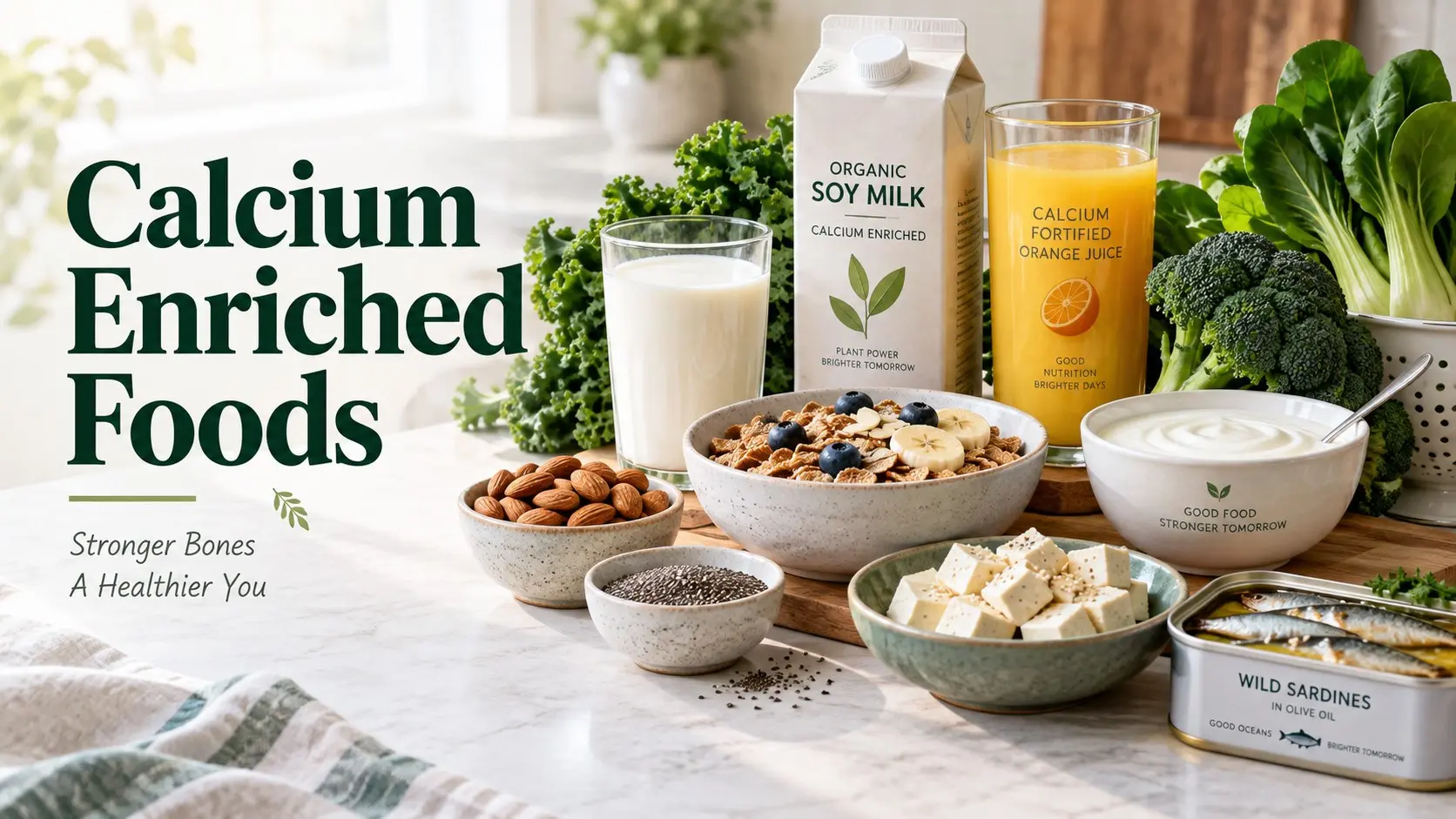
Calcium enriched foods are foods that have extra calcium added during manufacturing.
You will often see them called calcium fortified foods.
They can help people who drink little milk, avoid dairy, follow a vegan diet, have lactose intolerance, or struggle to reach their calcium needs from natural foods alone.
But added calcium does not automatically make a food healthy.
The best choice still depends on the full nutrition profile.
Important health note: This content is for general educational purposes and does not replace professional medical advice, diagnosis, or treatment. Consult an appropriately qualified healthcare professional for personal medical concerns. This article explains published guidance and does not provide a personal clinical assessment. Always consult qualified medical professionals for diagnosis and treatment of any health condition.
What Are Calcium Enriched Foods?
Quick answer: Calcium enriched foods are foods that have calcium added during processing. Examples include fortified soy milk, almond milk, oat milk, calcium-fortified orange juice, breakfast cereal, oatmeal, bread, plant yogurt, and tofu made with calcium salts.
Calcium Enriched Versus Naturally Calcium Rich
| Type | Definition | Examples | Best Use |
|---|---|---|---|
| Naturally calcium-rich | Calcium occurs naturally inside the food. | Milk, yogurt, cheese, sardines, kale, bok choy | Everyday food based calcium |
| Calcium fortified | Extra calcium is added during manufacturing. | Soy milk, almond milk, cereal, juice, plant yogurt | Helps close dietary calcium gaps |
| Calcium set food | A calcium salt used during processing becomes part of the final food. | Tofu made with calcium sulfate | Useful dairy free calcium plus protein |
15 Essential Calcium Enriched Foods
| Food | Calcium Potential | Nutrition Advantage | Check on Label |
|---|---|---|---|
| 1. Fortified soy milk | About 299 mg per cup | Calcium plus useful protein | Vitamin D, B12, protein, added sugar |
| 2. Fortified almond milk | Often High | Easy dairy-free calcium source | Calcium, vitamin D, low protein content |
| 3. Fortified oat milk | Often High | Creamy dairy-free option | Calcium, vitamin D, protein, added sugar |
| 4. Fortified rice milk | Varies by brand | Dairy-free beverage option | Calcium, vitamin D, protein |
| 5. Calcium fortified orange juice | About 349 mg per cup | Large calcium contribution | Serving size and sugar |
| 6. Fortified fruit drinks | Varies widely | Can provide added calcium | Added sugar and calcium amount |
| 7. Calcium set tofu | About 253 mg per 1/2 cup | Calcium plus plant protein | Look for calcium sulphate |
| 8. Fortified breakfast cereal | Low to very high | Easy breakfast source | Calcium, fibre, whole grain, added sugar |
| 9. Fortified oatmeal | Varies by product | Whole grain plus added calcium | Calcium and added sugar |
| 10. Fortified bread | Usually modest | Adds calcium across the day | Calcium per slice, fibre, whole grains |
| 11. Fortified English muffins | Product dependent | Convenient breakfast choice | Calcium and whole grain content |
| 12. Fortified tortillas | Product dependent | Easy meal based source | Calcium, sodium, serving size |
| 13. Fortified waffles | Product dependent | Breakfast calcium contribution | Calcium, fibre, added sugar |
| 14. Fortified plant yogurt | Can be substantial | Dairy-free calcium source | Calcium, protein, vitamin D, sugar |
| 15. Fortified nutrition drinks | Often substantial | Calcium plus other nutrients | Protein, energy, sugar, intended use |
1. Fortified Soy Milk
Fortified soy milk is one of the strongest nondairy calcium choices.
NIH lists about 299 mg of calcium in one cup of calcium fortified soy milk.
It also usually provides more protein than almond, oat, or rice beverages.
2. Fortified Almond Milk
Many almond beverages provide substantial calcium when fortified.
The exact amount varies by brand.
Protein is usually much lower than dairy milk or soy milk.
3. Fortified Oat Milk
Many oat beverages contain calcium and vitamin D.
Check added sugar and protein too.
4. Fortified Rice Milk
Rice milk can provide calcium when fortified.
It usually provides little protein.
5. Calcium Fortified Orange Juice
NIH lists about 349 mg of calcium per cup in one fortified orange juice example.
Some products use calcium citrate malate.
Whole fruit still offers more fiber than juice.
6. Fortified Fruit Drinks
Fortified fruit drinks vary greatly.
Never use one generic calcium value for every brand.
7. Calcium Set Tofu
Firm tofu made with calcium sulfate can provide a meaningful amount of calcium.
NIH lists about 253 mg per half cup in one example.
Check the ingredient list for calcium sulfate.
8. Fortified Breakfast Cereal
Some cereals provide a little calcium.
Others provide a lot.
Also compare fiber, whole grains, and added sugar.
9. Fortified Oatmeal
Some oatmeal products contain added calcium.
You can also make ordinary oats with fortified soy milk.
10. Fortified Bread
A modest amount of calcium per slice can add up across the day.
11. Fortified English Muffins
Check calcium, whole grains, and fiber.
12. Fortified Tortillas
Calcium content varies.
Check the exact product.
13. Fortified Waffles
Fortified waffles can contribute calcium.
Still judge them by their full nutritional profile.
14. Fortified Plant Yogurt
Some plant yogurts provide calcium, vitamin D, and vitamin B12.
Protein varies greatly between soy, almond, oat, and coconut products.
15. Fortified Nutrition Drinks
These can be useful when someone has difficulty meeting nutrition needs through normal meals.
Healthy adults don't automatically need them.
How to Read Calcium on a Food Label
| Daily Value | Approximate Calcium | FDA Interpretation | Practical Meaning |
|---|---|---|---|
| 5 percent | About 65 mg | Low | Small contribution |
| 10 percent | About 130 mg | Moderate | Useful contribution |
| 20 percent | About 260 mg | High | Strong calcium source |
| 25 percent | About 325 mg | High | Large contribution |
| 30 percent | About 390 mg | High | Very large contribution |
How Much Calcium Do You Need?
| Age or Life Stage | Recommended Calcium | Context |
|---|---|---|
| Children age 4 to 8 | 1,000 mg per day | Growth period |
| Age 9 to 18 | 1,300 mg per day | Highest general requirement |
| Adults age 19 to 50 | 1,000 mg per day | Most younger adults |
| Men age 51 to 70 | 1,000 mg per day | General adult target |
| Women age 51 to 70 | 1,200 mg per day | Requirement increases |
| Adults older than 70 | 1,200 mg per day | Men and women |
| Pregnancy age 19 to 50 | 1,000 mg per day | General recommendation |
How Well Is Calcium From Fortified Foods Absorbed?
NIH estimates calcium absorption from dairy foods and many fortified foods at about 30 percent.
Absorption varies with the calcium compound, vitamin D status, age, health, and the amount eaten at one time.
Common Calcium Forms Used in Fortified Foods
| Calcium Form | Common Use | What It Means |
|---|---|---|
| Calcium carbonate | Plant drinks and fortified foods | Common added calcium compound |
| Calcium citrate | Foods and supplements | Common absorbable calcium form |
| Calcium citrate malate | Some fortified juices | Well absorbed form used in beverages |
| Calcium phosphate | Fortified foods and beverages | Can provide calcium and phosphorus |
| Calcium sulfate | Some tofu | Can make tofu a major calcium source |
Natural Calcium Foods Versus Fortified Foods
| Natural Choice | Fortified Choice | Why It Helps |
|---|---|---|
| Milk | Fortified soy milk | Both can provide substantial calcium |
| Yogurt | Fortified plant yogurt | Dairy and dairy free options |
| Sardines with bones | Calcium set tofu | Two strong calcium foods from different diets |
| Kale and bok choy | Fortified cereal | Vegetable calcium plus convenient fortification |
| Chia seeds | Fortified oatmeal | Easy breakfast combination |
Best Natural Calcium Sources
| Food | Serving | Approximate Calcium |
|---|---|---|
| Plain low fat yogurt | 8 ounces | About 415 mg |
| Mozzarella | 1.5 ounces | About 333 mg |
| Sardines with bones | 3 ounces | About 325 mg |
| Nonfat milk | 1 cup | About 299 mg |
| Canned salmon with bones | 3 ounces | About 181 mg |
| Soybeans | 1/2 cup | About 131 mg |
| Turnip greens | 1/2 cup cooked | About 99 mg |
| Kale | 1 cup cooked | About 94 mg |
| Chia seeds | 1 tablespoon | About 76 mg |
| Bok choy | 1 cup raw shredded | About 74 mg |
Spinach Is Not the Best Calcium Green
Spinach contains calcium.
But it also contains a lot of oxalate.
Oxalate binds calcium.
NIH estimates that only about 5 percent of spinach calcium is absorbed.
Kale, broccoli, and bok choy provide more bioavailable calcium.
Read Green Vegetables High in Calcium for the full comparison.
Plant Milk Is Not Automatically Equal to Dairy Milk
| Nutrient | Dairy Milk | Fortified Soy Milk | Almond, Oat or Rice Drink |
|---|---|---|---|
| Calcium | Usually substantial | Often similar when fortified | Can be similar when fortified |
| Protein | Substantial | Usually substantial | Often much lower |
| Vitamin D | Often fortified | Often fortified | Depends on product |
| Vitamin B12 | Naturally present | Often added | Depends on product |
| Added sugar | Check flavoured products | Check sweetened products | Can vary greatly |
Can Calcium Enriched Foods Prevent Osteoporosis?
No single food prevents osteoporosis.
Calcium supports bone health.
Vitamin D, protein, exercise, hormones, age, medicines, smoking, alcohol, and medical conditions matter too.
Do You Need a Calcium Supplement?
Not automatically.
Start by estimating calcium from food and fortified foods.
If intake remains inadequate, a healthcare professional may recommend a supplement.
One Day Calcium Meal Example
| Meal | Foods | Calcium Strategy |
|---|---|---|
| Breakfast | Fortified cereal, fortified soy milk, berries | Two fortified calcium sources |
| Lunch | Calcium set tofu, bok choy, broccoli, rice | Calcium set tofu plus low oxalate vegetables |
| Snack | Plain yogurt or fortified plant yogurt with fruit | Easy calcium rich snack |
| Dinner | Lentils with kale and potatoes, or canned salmon with edible bones | Natural calcium plus balanced meal foods |
Common Calcium Enriched Food Mistakes
Assuming Every Plant Milk Contains Calcium
Some do. Some do not.
Assuming Every Plant Milk Has the Same Protein
Soy milk generally contains much more protein than almond, oat, or rice drinks.
Assuming Every Tofu Is High in Calcium
Check for calcium sulphate and read the calcium amount.
Choosing a Sugary Food Only Because It Is Fortified
The whole nutrition profile still matters.
Confusing Daily Value With Your Personal Requirement
The FDA uses 1,300 mg for labelling. Your actual requirement may differ.
Ignoring Vitamin D
Vitamin D helps calcium absorption.
Conclusion
Calcium Enriched Foods can make meeting calcium needs much easier.
Fortified soy milk, plant drinks, calcium fortified juice, calcium set tofu, cereal, oatmeal, bread, and plant yogurt can all contribute.
But products vary.
Read the label.
Check calcium.
Check vitamin D.
Check protein.
Check added sugar.
And remember that healthy bones need more than one mineral.
Your next step: Check three foods in your kitchen today and compare their calcium percentage, protein, vitamin D, and added sugar.
References and Sources
- NIH Calcium Fact Sheet for Health Professionals
- FDA Fortification Guidance
- FDA Daily Value Guide
- NIH Vitamin D Fact Sheet
- Bone Health and Osteoporosis Foundation Calcium Guide
Continue Reading on NextFitLife
- Green Vegetables High in Calcium
- Bone and Joint Health Hub
- Nutrition and Vitamins Hub
- Vitamin K2 Benefits
- Top Healthy Foods Guide
About the Author
Adel Galal is the Founder and Lead Writer at NextFitLife.
Adel has maintained a personal interest in health, fitness, nutrition, sleep, wellness, and healthy aging for more than 30 years.
His health and wellness writing and research communication experience spans more than 15 years.
For calcium content, he checks whether calcium occurs naturally, is added through fortification, or comes from a processing ingredient such as calcium sulphate in tofu.
He also separates calcium content from calcium absorption.
Adel is not a physician, registered dietitian, endocrinologist, nephrologist, pharmacist, dermatologist, or other licensed healthcare professional.
Learn more on the About Us page.
Frequently Asked Questions
What are calcium enriched foods?
Calcium enriched foods are foods that have extra calcium added during manufacturing.
What foods are commonly fortified with calcium?
Common examples include soy milk, almond milk, oat milk, rice milk, orange juice, cereal, oatmeal, plant yogurt, and some breads.
Is fortified soy milk high in calcium?
Yes. NIH lists about 299 mg in one cup of calcium fortified soy milk.
Is tofu high in calcium?
Tofu made with calcium sulphate can contain substantial calcium.
What is the Daily Value for calcium?
The FDA Daily Value for calcium is 1,300 mg.
Does everyone need 1,300 mg?
No. Most adults aged 19 to 50 need about 1,000 mg per day.
Does vitamin D help calcium absorption?
Yes. Vitamin D supports calcium absorption in the intestine.
Are calcium enriched foods useful for vegans?
Yes. Fortified plant milk, calcium set tofu, plant yogurt, fortified cereal, and low oxalate vegetables can help.
Does calcium prevent osteoporosis?
Calcium supports bone health, but osteoporosis depends on many other factors too.
How do I get enough calcium without dairy?
Use fortified plant milk, calcium set tofu, fortified plant yogurt, kale, bok choy, broccoli, beans, chia seeds, and other calcium foods.

Health & wellness writer with 30+ years of experience in nutrition, fitness, and healthy aging. Founder of NextFitLife.com — evidence-based health guidance.