Published: April 2026 | Last Updated: April 22, 2026
Mediterranean Diet weight Loss - The Most Evidence-Backed Diet in the World
The Mediterranean diet consistently ranks as the healthiest diet on earth. For good reason.
It produces reliable weight loss. It reduces visceral fat. It cuts type 2 diabetes risk by 31% when combined with calorie reduction and exercise. And people actually stick to it long- term because the food is genuinely enjoyable.
Unlike keto or strict calorie counting, the Mediterranean diet for weight loss does not feel like a punishment. That is not a small thing. Adherence is the most important factor in any diet's success.
This article is part of our complete weight loss guide.
What is the Mediterranean Diet, and why does it help with weight loss?
What do you eat on the Mediterranean diet?
The Mediterranean diet is based on the traditional eating patterns of countries bordering the Mediterranean Sea. Greece, Italy, Spain, and the Middle East.
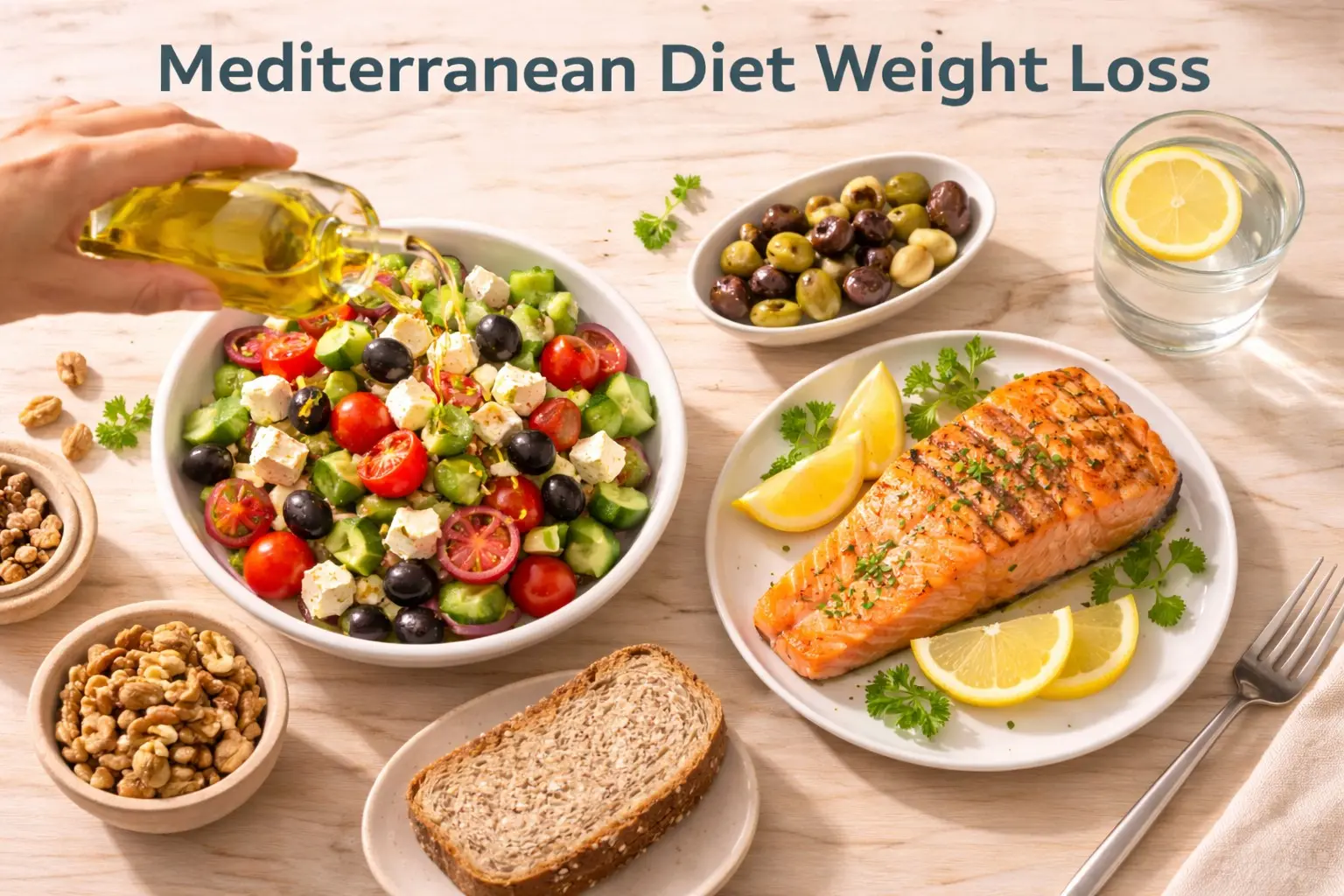
It focuses on: Plenty of vegetables, fruits, and whole grains. Olive oil is the main fat. Legumes, nuts, and seeds. Eat fish and seafood several times per week. Moderate amounts of dairy and eggs. Very little red meat and processed food. Red wine in moderation if desired.
The Mediterranean diet emphasises high intake of fruits, vegetables, whole grains, and healthy fats, with moderate intake of dairy and lean proteins, and little to no red meat.
How Does the Mediterranean Diet Produce Weight Loss?
It works through several mechanisms at once.
High fibre from vegetables, legumes, and whole grains extends fullness. Healthy fat from olive oil and fish provide satiety. The diet naturally reduces processed foods and added sugar. And it lowers insulin levels, which reduces fat storage.
Consumption of the Mediterranean diet is associated with greater weight loss compared to control diets. Weight loss is more significant when combined with energy restriction and increased physical activity.
What does the research say about Mediterranean diet weight loss results?
How much weight can you lose on the Mediterranean diet?
The NEJM 2-year trial is one of the most cited studies in nutrition. It compared low-fat, low-carb, and Mediterranean diets in 322 people. The Mediterranean diet group lost 4.1 to 10.1 kg over two years. The low-fat group lost only 2.9 to 5.0 kg.
The Mediterranean diet beat the low-fat diet clearly. It produced similar results to low-carb at the 12-month mark. But it was significantly easier to stick to the long-term.
This is the key finding that sets the Mediterranean diet apart. You can maintain it for years.
Does the Mediterranean Diet Help Keep Weight Off Long -Term?
Yes. Better than most other approaches.
Following the Mediterranean diet closely was linked to twice the likelihood of maintaining weight loss. People who followed the Mediterranean diet closely were twice as likely to keep the weight off as those who did not.
Weight loss maintenance is the hardest part of any diet. The Mediterranean diet succeeds here where others fail.
What are the other benefits of the Mediterranean diet?
Does the Mediterranean Diet Do More Than Just Cause Weight Loss?
Yes. Much more.
A Mediterranean-style diet combined with reduced calorie intake, moderate physical activity, and professional support cut the risk of type 2 diabetes by 31% in a 2025 Harvard study published in the Annals of Internal Medicine.
The same study found that participants also lost weight and reduced their waist circumference significantly.
Beyond diabetes, the Mediterranean diet is strongly linked to reduced heart disease risk. Lower blood pressure. Reduced inflammation markers. Better gut microbiome health. Reduced risk of certain cancers.Enhanced mental performance and a lower risk of Alzheimer’s disease.
This is why it is ranked number one by US News and World Report year after year.
How to Follow the Mediterranean Diet for Weight Loss
What Should You Eat Every Day on the Mediterranean Diet?
The Mediterranean diet is not about strict rules. It is about a pattern.
Eat every day - 3 to 5 servings of vegetables, 2 to 3 servings of fruit. Whole grains: brown rice, oats, whole- grain bread. Legumes — lentils, chickpeas, beans — at least once per day. Olive oil, 1 to 3 tablespoons as your main cooking fat. A small portion of nuts or seeds.
Eat several times per week - Fish or seafood, particularly oily fish like salmon, sardines, and mackerel. Eggs — enjoy three to five servings per week. Poultry chicken or turkey. Dairy — Greek yogurt and small amounts of cheese.
Eat red meat rarely — once per week at most. Processed foods, fried foods, and added sugar.
H3: How Do You Reduce Calories on the Mediterranean Diet for Weight Loss?
The Mediterranean diet is healthy, but not automatically low in calories. Each tablespoon of olive oil contains about 120 calories. Nuts are 180 calories per small handful.
To lose weight on a Mediterranean diet, you still need a calorie deficit.
The most successful method: Use our calorie deficit calculator to find your daily target. Then fill that calorie budget with Mediterranean-style whole foods. Keep olive oil to 2 tablespoons per day. Measure nuts rather than eating from the bag. Keep grain portions moderate — a fist-sized serving per meal.
What does a Mediterranean diet weight loss meal plan look like?
Mediterranean Diet: What a typical day of eating looks like
Breakfast - might include Greek yogurt topped with mixed berries, walnuts, and a drizzle of honey, paired with black coffee
Lunch - Large salad with chickpeas, cucumber, tomato, olives, feta cheese, and olive oil dressing. Whole-grain pita on the side.
Dinner - Grilled salmon with roasted vegetables, courgetti, peppers, auberge in olive oil and garlic. Brown rice alongside.
Snack - A small apple with a tablespoon of almond butter.
Total - Approximately 1,600 to 1,800 calories. 35 to 40 grams of fibre. 90 to 110 grams of protein.
H2: Mediterranean Diet VS Other Diets for Weight Loss
How does the Mediterranean diet for weight loss compare to Keto and low-fat?
| Diet | Short-Term Weight Loss | Long-Term Adherence | Health Benefits |
| Mediterranean | Strong | Very high | Very strong |
| Keto | Very fast initially | Low to moderate | Strong for blood sugar |
| Low fat | Moderate | Moderate | Moderate |
| Intermittent fasting | Moderate | Moderate | Good |
The Mediterranean diet is not the fastest option. But it produces the best combination of reliable weight loss, long-term adherence, and broad health benefits of any diet approach in the research.
Bottom Line on Mediterranean Diet Weight Loss
The Mediterranean diet for weight loss is not a quick fix. But it is the most sustainable approach available.
It beats the low-fat diet for weight loss. It matches the low-carb diet in the long run. It doubles your chances of keeping the weight off. And it reduces your risk of heart disease, diabetes, and cancer simultaneously.
You don’t have to cut out bread or steer clear of fat. You do not have to count every gram.
You just must eat more vegetables, whole grains, legumes, fish, and olive oil. And less ultra-processed food and sugar.
For a complete approach to daily eating habits that support long-term weight loss, read our weight loss habit guide and sustainable weight loss tips.
FAQs About Mediterranean Diet Weight Loss
Q: How much weight can you lose on the Mediterranean diet?
Research shows a weight loss of 4 to 10 kg over 12 months when combined with a calorie deficit. The NEJM 2-year trial found that the Mediterranean diet produced significantly more weight loss than a low-fat diet. Individual results depend on calorie intake, activity level, and consistency.
Q: Is the Mediterranean diet better than keto for weight loss?
Keto produces faster initial weight loss. The Mediterranean diet produces comparable results by 12 months with significantly better long-term adherence and broader health benefits. A study found Mediterranean diet followers were twice as likely to maintain weight loss long-term compared to other approaches.
Q: Can you eat carbs on the Mediterranean diet and still lose weight?
Yes. The Mediterranean diet includes whole grains, legumes, and fruit. These are carbohydrates. But they are fibre-rich, low-glycemic options that do not spike blood sugar sharply. Combined with healthy fats and protein, they support satiety and steady fat loss.
Q: How quickly does the Mediterranean diet start working for weight loss?
Most people notice reduced bloating and improved energy within the first 1 to 2 weeks of removing processed food and added sugar. Measurable fat loss typically appears by weeks 3 to 4. Visible body composition changes usually occur in months 2 to 3 with consistent effort.
Sources and References
- PMC — Mediterranean Diet and Obesity-related Disorders https://pmc.ncbi.nlm.nih.gov/articles/PMC9729142/
- American Journal of Medicine — Systematic Review Mediterranean Diet Long-Term Weight Loss https://www.amjmed.com/article/S0002-9343(15)30027-9/fulltext
- CDC — Dietary Guidelines and Healthy Eating https://www.cdc.gov/healthy-weight-growth/healthy-eating/index.html
- NHS — The Mediterranean diet https://www.nhs.uk/live-well/eat-well/how-to-eat-a-balanced-diet/
Last Updated: April 22, 2026


Health & wellness writer with 30+ years of experience in nutrition, fitness, and healthy aging. Founder of NextFitLife.com — evidence-based health guidance.