Published: April 2026 | Last Updated: April 22, 2026
Low Carb Diet for Weight Loss: The Honest Science-Backed Guide. A low-carb diet for weight loss is one of the most studied approaches in nutritional science. And it consistently produces actual results.
A 2025 meta-analysis of randomized trials found that carbohydrate-restricted diets led to greater reductions in body weight of 1.75 kg on average, BMI, fat mass, and waist circumference compared with high-carbohydrate diets. That is a real advantage. Not dramatic. But consistent and reliable.
This guide explains exactly how a low-carb diet works, how many carbs to eat, what foods to choose, and what results to expect. This article is part of our complete weight loss guide.
What is a low-carb diet, and how does it help with weight loss?
What does low-carb actually mean?
There is no single definition. But here are the most common carbohydrate thresholds used in research:
| Approach | Daily Carbs | Example |
| Moderate low carb | 100 to 150g | Reduced but not strict |
| Low carb | 50 to 100g | No bread, minimal grains |
| Very low carb | 20 to 50g | Near keto level |
| Ketogenic | Under 20g | Full ketosis |
There is no clear consensus on what defines a low-carb diet. Studies have defined low carbohydrate as a percentage of daily macronutrient intake or total daily carbohydrate load.
Most people who follow a low-carb diet aim for 50 to 100 grams per day. This is significantly lower than the typical Western diet of 200 to 300 grams per day, but far less restrictive than keto.
How does reducing carbs lead to weight loss?
Cutting carbs causes weight loss through four direct mechanisms. First, lower carb intake reduces insulin. Lower insulin means the body stores less fat and accesses stored fat more easily. Second, higher protein and fat in low-carb diets raise satiety hormones. You feel fuller. You eat less without trying.
Third, glycogen stores are reduced. Each gram of glycogen holds 3 to 4 grams of water. Lower glycogen means rapid initial weight loss. Fourth, many people naturally eat fewer calories when they cut carbs because they remove the most calorie-dense snack foods — biscuits, crisps, bread, and sweetened drinks.
Does a low-carb diet work better than other diets for weight loss?
What Does Research Say About Low-Carb vs. Low-Fat for Weight Loss?
Low-carb consistently beats low-fat in short-term comparisons.
Over 20 studies have compared these two approaches. Low-carb diets consistently lead to better results both for weight loss and common risk factors.
The 2025 meta-analysis found low-carb diets beat higher-carb diets by 1.75 kg at 6 months, with ketogenic versions showing the largest difference at 3.36 kg.
However, by 12 months, the gap narrows. The DIETFITS trial found no significant difference between a healthy low-carb and a healthy low-fat diet at one year when both groups focused on whole foods. Both groups lost about 5 to 6 kg.
The message is simple. Low-carb wins in the short term. Long -term, the quality of the whole diet matters more than the specific macro split.
Is a Low Carb Diet Better for Blood Sugar and Diabetes?
Yes. This is the strongest area of evidence for low-carb diets.
Certain low‑carb diets may offer advantages beyond weight loss, including lowering the risk of type 2 diabetes and metabolic syndrome.
Multiple 2025 systematic reviews confirm significant improvements in HbA1c and fasting glucose with low-carb approaches. For people with prediabetes or insulin resistance, reducing carbs may be the single most impactful dietary change available.
What can you eat on a low-carb diet for weight loss?
Which Foods Are Best on a Low- Carb Diet?
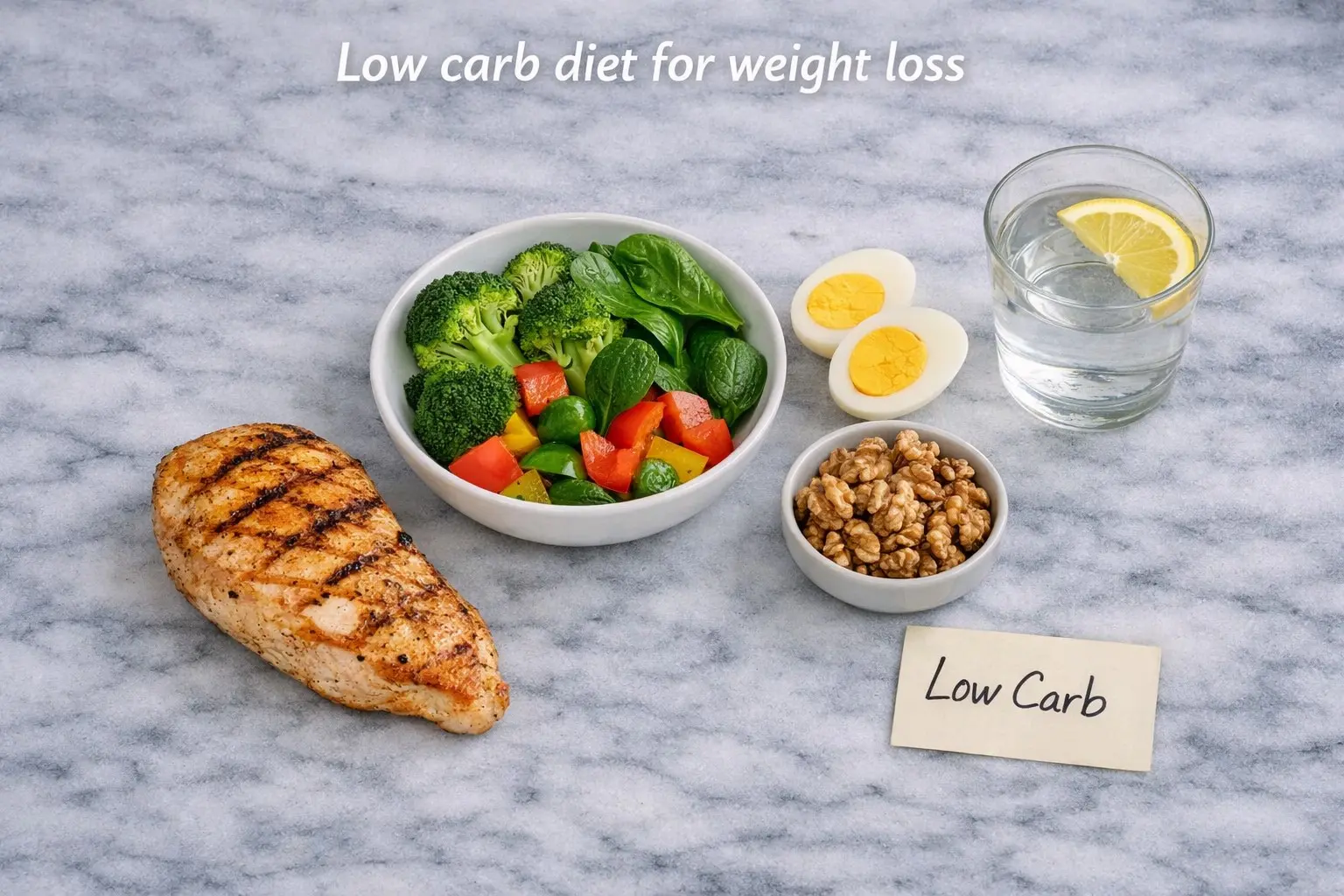
Freely eat: All meat, poultry, and fish. Eggs. Non-starchy vegetables — broccoli, spinach, cauliflower, peppers, courgetti, and cucumber. Avocado. Nuts and seeds in moderate amounts. Olive oil, butter, and coconut oil. Full-fat dairy cheese, Greek yogurt, cream.
Eat in small amounts - berries are the lowest sugar fruit option. Legumes, lentils and chickpeas have some carbs but good fibre. Sweet potato is a high-carb but nutrient-dense. Oats in moderate portions only.
Avoid or strictly limit -white bread, white rice, white pasta. Sugary drinks, juice, and alcohol. Biscuits, cakes, pastries, and sweetened cereals. Potatoes in large amounts. Most fruit in large amounts.
What does a Low Carb Meal Day look like?
Breakfast - Three eggs scrambled with spinach and mushrooms. Black coffee or tea. Carbs: 4g.
Lunch: Grilled chicken breast with a large mixed salad dressed in olive oil. Half an avocado. Carbs: 10g.
Dinner - Salmon fillet with roasted broccoli, cauliflower, and courgetti in olive oil and garlic. Carbs: 12g.
Snack - A small handful of mixed nuts. Carbs: 5g.
Total carbohydrates: approximately 31g. Well within the low-carb range.
How to Start a Low Carb Diet for Weight Loss
What is the best way to begin a low-carb diet?
Do not go from 250g of carbs per day to 30g overnight. That causes severe carb flu symptoms and is hard to sustain.
A gradual, 4-week approach:
Week 1 - Cut all sugary drinks, juice, and alcohol. Remove biscuits, crisps, and sweets. This alone reduces carbs by 60 to 100g for most people.
Week 2 - Replace white bread with whole-grain. Replace white rice with cauliflower rice or a smaller portion of brown rice. Remove sweetened breakfast cereals.
Week 3 - Reduce grain portions at lunch and dinner by half. Replace the grain with extra vegetables. Add protein to every meal.
Week 4 - Assess where you are. If you eat 80 to 100g of carbs per day, that is a good low-carb range for most people. Drop to 50g if you want faster initial results.
Use our calorie deficit calculator to confirm that you are also in a calorie deficit. Carb reduction helps, but a real deficit is still required.
What Results Can You Expect from a Low Carb Diet for Weight Loss?
How fast does a low-carb diet produce weight loss?
Week one is often dramatic. Most people lose 1 to 3 kg quickly. But this is mostly water weight from glycogen depletion. Do not be misled by this initial drop.
Real fat loss begins from week two to three. At a genuine calorie deficit, a low-carb diet produces 0.3 to 0.6 kg per week of actual fat loss. That is the rate to expect.
| Timeframe | Expected Result |
| Week 1 | 1 to 3 kg lost, mostly water |
| Weeks 2 to 4 | 0.3 to 0.6 kg per week of real fat loss |
| Months 2 to 3 | Noticeable waste reduction |
| Months 3 to 6 | Significant body composition change |
Who does a low-carb diet for weight loss suit best?
Is a Low-carb diet right for you?
A low-carb diet works best for certain types of people.
Best fit: People with insulin resistance or prediabetes, lower carbs directly improve insulin response. People who feel constantly hungry on regular diets with protein and fat are fuller. People tend to overeat sugary snacks and process carbohydrates. People who want a simple food rule to follow cut the refined carbs and sugar.
Essentially suitable: People who do intense daily exercise, glycogen from carbs fuels high-intensity training. People who struggle with the social aspects of avoiding bread, pasta, and rice completely. People who prefer the Mediterranean approach, similar results with the food variety.
The best diet is the one you can follow for 12 months. Low-carb is excellent if it fits your life. If it does not, the Mediterranean diet produces similar results with more flexibility.
Common Low Carb Diet Mistakes That Slow Weight Loss
What Goes Wrong with Low Carb Diets?
Not eating enough protein. Many people cut carbs but do not replace them with protein. The result is hunger, muscle loss, and poor adherence. Aim for 1.4 to 1.6g per kg of body weight. See our high-protein foods for weight loss guide for the best sources.
Eating too much fat. Some people treat low carb as a green light for unlimited fat. Fat is calorie-dense. 100g of nuts is 600 calories. Measure portions carefully.
Ignoring vegetables. Low-carb does mean no vegetables. Non-starchy vegetables have almost no carbs and provide essential fibre, vitamins, and minerals. Fill half your plate with them at every meal.
Giving up after the first week. The carb flu is real. It lasts 3 to 7 days. Most people who quit low carb do so during this window. Push through it, and the approach becomes significantly easier from week two onward.
Bottom Line on Low Carb Diet for Weight Loss
A low-carb diet for weight loss is one of the most effective and well-researched approaches available.
It beats low-fat diets in the short term. It improves blood sugar and insulin sensitivity. It reduces hunger through higher protein and fat intake. And it naturally removes the most calorie-dense, nutrient-poor foods from your diet.
The key is applying it correctly. Eat enough protein. Fill plates with non-starchy vegetables. Measure fat portions. Create a genuine calorie deficit. And push through the first week.
For the full approach to sustainable fat loss that works alongside any diet strategy, read our sustainable weight loss tips and weight loss habit guide.
FAQs About Low Carb Diet for Weight Loss
Q: How many carbs should I eat on a low-carb diet for weight loss?
Most research on low-carb diets uses 50 to 100 grams of carbohydrates per day as the target range. This is low enough to reduce insulin significantly and improve fat burning without the extreme restriction of ketogenic levels under 20g. Start by removing refined carbs and sugar first, then adjust the total gram target based on your progress.
Q: Does a low-carb diet work better than a low-fat diet?
In the short term, yes. A 2025 meta-analysis found carbohydrate-restricted diets produced 1.75 kg greater weight loss than higher-carb diets at 6 months. By 12 months, the DIETFITS trial found no significant difference between a healthy low-carb and a healthy low-fat diet when both focused on whole foods.
Q: How quickly will I lose weight on a low-carb diet?
Most people lose 1 to 3 kg in week one from water weight. Real fat loss of 0.3 to 0.6 kg per week begins from week two to three at a genuine calorie deficit. By month three, most people see noticeable waste reduction and improved body composition.
Q: Is a low-carb diet safe long term?
Yes, for most healthy adults. Mayo Clinic and NIH StatPearls both confirm low carb diets are a safe and effective weight loss strategy. People with kidney disease should monitor protein intake carefully. Those with diabetes on medication need medical supervision, as blood sugar can drop rapidly on a low-carb diet.
Sources and References
- ADMAC Fitness — Low Carb Dieting: What Does the Evidence Say, March 2026 https://www.admacfitness.com/blog/2026/3/16/65fwicthr83ypko7lzewm3auuxl6mh
- Gardner CD et al. — Effect of Low-Fat vs Low-Carbohydrate Diet on 12-Month Weight Loss — JAMA, 2018 https://pubmed.ncbi.nlm.nih.gov/29466592/
- CDC — Healthy eating for a healthy weight https://www.cdc.gov/healthy-weight-growth/healthy-eating/index.html
- NHS — Low-carbohydrate diets https://www.nhs.uk/live-well/healthy-weight/
Last Updated: April 22, 2026


Health & wellness writer with 30+ years of experience in nutrition, fitness, and healthy aging. Founder of NextFitLife.com — evidence-based health guidance.