Published: April 2026 | Last Updated: April 22, 2026
The Keto Diet for Weight Loss: The Honest Science-Based Answer
The keto diet for weight loss works. But it comes with real trade-offs that most people do not know about before they start. Keto produces faster initial weight loss than most other diets. It reduces hunger. It lowers blood sugar. But a January 2026 University of Utah study raised fresh concerns about long-term effects on liver health and glucose control.
This guide gives you the full picture. What keto is. How it works. What the research shows. And whether it is the right tool for your goals.
This article is part of our complete weight loss guide.
What is the keto diet, and how does it work for weight loss?
What does the ketogenic diet actually mean?
The keto diet is a very high-fat, very low-carbohydrate eating plan. You eat around 70 to 80% of calories from fat. About 20% of protein. And only 5 to 10% of carbohydrates.
The ketogenic diet is a high-fat, very low-carbohydrate, and moderate-protein dietary approach designed to induce nutritional ketosis. A typical macronutrient ratio consists of roughly 55–60% fat, 30–35% protein, and 5-10% carbohydrates.
This means keeping carbs below 20 to 50 grams per day. One slice of bread has around 15 grams of carbohydrates. You see how restrictive this is.
How does the keto diet burn fat?
When you cut carbs that low, your body runs out of its usual fuel. It switches to burning fat instead. The liver breaks fat into molecules called ketones. These become an alternative energy sources for your brain and body.
This shift alters glucose utilization, enhances ketone production, reduces circulating insulin levels, and enhances fat oxidation. This creates physiologic conditions that may benefit individuals with epilepsy, obesity, type 2 diabetes, and certain metabolic disorders.
This state is called ketosis. Getting into it takes 2 to 7 days of strict carb restriction. Staying in it requires staying below 50 grams of carbs every single day.
Does the Keto Diet Actually Work for Weight Loss?
What does the research say about keto diet results?
Yes, it works. Especially in the short term.
The keto diet may be more energy efficient than other dietary strategies. It curtails hunger, improves satiety, decreases appetite, and induces faster initial weight loss associated with lower glycogen levels and reduced water retention.
A 2025 meta-analysis found that carbohydrate-restricted diets led to greater reductions in body weight of 1.75 kg on average, BMI, fat mass, and waist circumference compared with higher-carbohydrate diets, with ketogenic versions showing the largest effects at 3.36 kg body weight.
So in direct comparisons, keto beats low-fat diets for short-term weight loss. That is real and meaningful.
How Does Keto Weight Loss Compare to Other Diets Long Term?
The long-term picture is less clear.
The landmark DIETFITS trial found no significant difference in 12-month weight loss between a healthy low-carb diet and a healthy low-fat diet. Both groups lost around 5 to 6 kg on average.
While keto's efficacy in weight loss is well documented, evidence for long-term benefits remains limited.
The pattern is consistent across the research. Keto wins in the first 3 to 6 months. By 12 months, the advantage shrinks significantly. By 2 years, results are like those of other calorie-restricted approaches.
What are the keto diet benefits of weight loss?
Does the Ketogenic Diet Improve Blood Sugar and Diabetes?
Yes. This is one of the strongest areas of evidence for keto.
Long-term use of the ketogenic diet can reduce insulin resistance and improve glycemic control compared with some other diets. It leads to lower HbA1c in days or weeks.
A 5-year study by the Virta Health programme using a very low-carb ketogenic approach found remarkable improvements in blood sugar management and even remission of type 2 diabetes in some participants.
For people with type 2 diabetes or prediabetes, keto may be more than just a weight loss tool. But always work with a doctor if you are on diabetes medication, as keto can cause dangerous blood sugar drops.
Does Keto Reduce Hunger?
Yes. This is one of its most practical advantages.
Higher fat and protein intake raises satiety hormones and lowers ghrelin. Many keto followers report significantly less hunger than on calorie-restricted low-fat diets. This makes the calorie deficit easier to maintain without constant willpower.
What are the keto diet side effects?
What is the keto flu, and how do you avoid it?
Most people feel rough in the first week of keto. Headaches, fatigue, irritability, and brain fog. This is called keto flu. It happens because your body is adapting to burning fat instead of carbs. Electrolytes also drop rapidly as glycogen depletes and water is released.
To reduce keto flu symptoms, stay well‑hydrated by drinking around 2.5–3 litres of water daily. Add sodium, potassium, and magnesium through food or supplements. Do not restrict calories in the first two weeks. Let your body adapt first. Ease into keto over a week rather than cutting all carbs overnight.
Are there long-term keto diet risks?
This is where you need to be honest with yourself.
A January 2026 study from the University of Utah examined the long-term effects of the ketogenic diet. The results raise fresh questions about whether the diet is safe or effective for improving metabolic health over extended periods, pointing to potentially harmful changes in how the body handles fats and carbohydrates.
Additionally, the keto diet can be very low in fibre if not carefully planned. Low- fibre diets are linked to poor gut health, increased bowel cancer risk, and reduced microbiome diversity.
The keto diet also limits many nutrient-rich foods — legumes, whole grains, and most fruit. Long-term restriction of these foods may increase the risk of micronutrient deficiencies.
What can you eat on a keto diet for weight loss?
What Foods Are Allowed on the Ketogenic Diet?
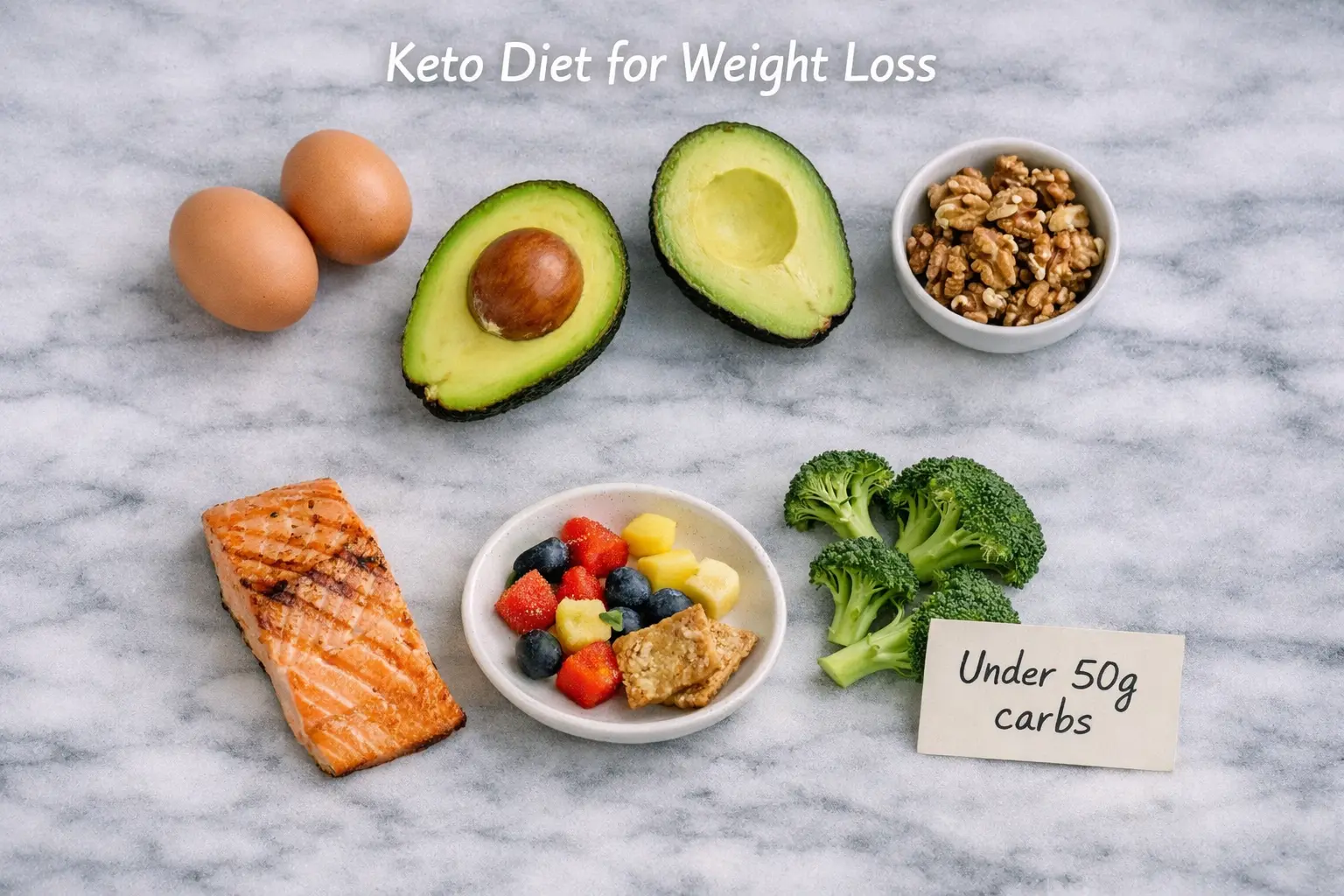
Eat freely: meat, poultry, and fish. Eggs. Hard cheese. Butter and cream. Olive oil and avocado oil. Non-starchy vegetables — spinach, broccoli, cauliflower, courgetti, peppers. Avocado and nuts in controlled portions.
Avoid completely: Bread, rice, pasta, and oats. All sugar and sweetened drinks. Most fruits are excluded, with small portions of berries being the rare exception. Legumes and beans. Potatoes and starchy vegetables.
What does a typical keto day look like?
Breakfast: Three eggs scrambled in butter with spinach and two slices of bacon.
Lunch: Grilled chicken thighs with a large salad dressed in olive oil and avocado.
Dinner: Salmon fillet with roasted broccoli and cauliflower in olive oil.
Snack: A handful of walnuts or a hard-boiled egg.
Total carbohydrates: approximately 25 to 30 grams. In ketosis.
Who does the keto diet for weight loss suit best?
Is the Keto Diet Right for You?
Keto suits some people very well. It suits others very poorly.
Keto works best for people with type 2 diabetes or insulin resistance. People who feel constantly hungry on other diets. People who do not rely on carbohydrates for high-intensity sports. People who genuinely enjoy high-fat, low-carb foods.
Keto is less suitable for -People who train at high intensity regularly; keto impairs glycogen-fuelled performance. People who struggle to maintain social eating strict rules. People with kidney diseases, high protein and fat loads increase kidney strain. People who prefer variety and plant-rich eating patterns.
Bottom Line on the Keto Diet for Weight Loss
The keto diet for weight loss is real and evidence-backed. It works especially well in the short term. It reduces hunger. It improves blood sugar. And it beats low-fat diets for speed of initial weight loss.
But it is not magic. By 12 months, the weight loss advantage largely disappears. Long-term safety questions are proper and not yet fully resolved. And it is hard to maintain for most people.
If you choose keto, do it properly. Plan your electrolytes. Load up on fiber by eating plenty of non‑starchy vegetables. Get your blood markers checked every 3 to 6 months.
For the calorie and protein targets that apply to any diet approach, use our calorie deficit calculator and high-protein foods for weight loss guide. For daily habits that support long-term results, read our weight loss habit guide.
FAQs About the Keto Diet for Weight Loss
Q: How fast does the keto diet produce weight loss?
Most people lose 1 to 3 kg in the first week from water and glycogen loss. After that, fat loss continues at 0.4 to 0.7 kg per week at a genuine calorie deficit. A 2025 meta-analysis found keto produces 3.36 kg more weight loss than higher-carb diets at 6 months.
Q: Do you need to count calories on the keto diet?
Not strictly. Keto naturally reduces hunger, and many people eat less without counting. But the calorie deficit is still what drives fat loss. If results stall, tracking calories confirms whether you are actually in a deficit.
Q: What is the keto flu, and how long does it last?
The keto flu is fatigue, headaches, and brain fog that most people feel in the first 3 to 7 days. It happens as the body adapts to ketosis and loses electrolytes. It passes within a week for most people. Staying hydrated and increasing sodium, potassium, and magnesium speeds recovery.
Q: Is the keto diet safe long-term?
The evidence on long-term safety is still developing. A January 2026 university study raised questions about liver health and glucose regulation with very long-term keto use. Most experts suggest cycling keto for 3 to 6 months, followed by a period of more balanced eating rather than staying on it permanently.
Sources and References
- ScienceDaily — Keto diet weight loss may come with a hidden cost, January 2026 https://www.sciencedaily.com/releases/2026/01/260127010144.htm
- Gardner CD et al. — Effect of Low-Fat vs Low-Carbohydrate Diet on 12-Month Weight Loss — JAMA, 2018 https://pubmed.ncbi.nlm.nih.gov/29466592/
- Springer — The Ketogenic Diet in Obesity Management: Friend or Foe? August 2025 https://link.springer.com/article/10.1007/s12013-025-01878-0
- CDC — Healthy eating for a healthy weight https://www.cdc.gov/healthy-weight-growth/healthy-eating/index.html
- The Ketogenic Diet: Clinical Applications, Evidence-Based Indications, and Implementation
https://www.ncbi.nlm.nih.gov/books/NBK499830/
Last Updated: April 22, 2026


Health & wellness writer with 30+ years of experience in nutrition, fitness, and healthy aging. Founder of NextFitLife.com — evidence-based health guidance.