
Updated on: October 15, 2026
Written and source checked by: Adel Galal, Founder and Lead Writer at NextFitLife
Medical review status: This article has not been medically reviewed by a doctor, dentist, oral medicine specialist, infectious disease specialist, pharmacist, or other licensed healthcare professional.
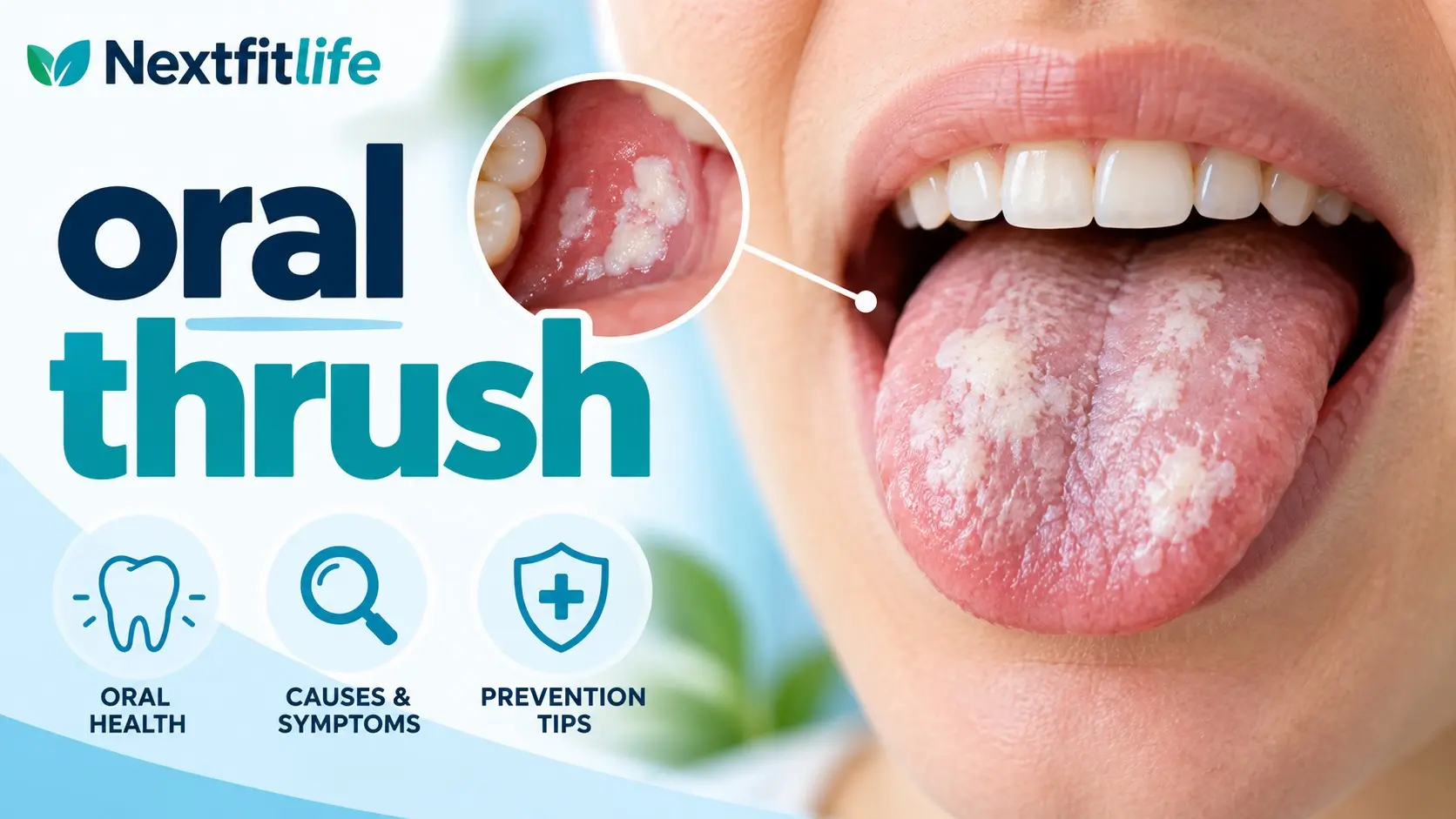
Oral thrush is a fungal infection caused by an overgrowth of Candida in the mouth. It often causes creamy white patches on the tongue or inner cheeks, but soreness, redness, taste changes, cracks at the corners of the mouth, and pain while eating can also occur.
The infection is usually treatable with antifungal medicine. The more useful question, especially in an adult, is why Candida was able to grow too much in the first place.
This article is for general information and education. It does not replace medical advice, diagnosis, or treatment.
For basic mouth care that supports healthy teeth, gums, and oral tissues, see the NextFitLife Oral Hygiene Guide.
Table of Contents
- What oral thrush is
- Candida overgrowth
- Where thrush appears
- 9 signs to recognize
- White patches
- Redness and soreness
- Bleeding after wiping
- Burning or pain
- Taste changes
- Cotton like feeling
- Cracked mouth corners
- Eating discomfort
- Swallowing problems
- Who is more likely to get thrush
- How oral thrush is diagnosed
- Effective treatment
- Home care that may help
- What not to do
- How to reduce recurrence
- Thrush in babies and breastfeeding
- When to seek professional care
- Frequently asked questions
What Is Oral Thrush?
Oral thrush, also called oral candidiasis or oropharyngeal candidiasis, is a yeast infection of the mouth and sometimes the throat.
Candida can normally live in the mouth without causing a problem.
Your saliva, immune system, healthy mouth tissues, and other microorganisms usually help keep it under control. Thrush develops when that balance changes and Candida grows too much.
The CDC notes that oral and throat candidiasis is much less common in healthy adults than in people with certain risk factors.
This point matters.
A single mild episode after antibiotics or inhaled steroid use may have an obvious trigger. Repeated or unexplained thrush in an otherwise healthy adult deserves a closer look at possible causes.
Where Can Oral Thrush Appear?
Thrush is not limited to the top of the tongue.
White patches in the mouth may appear on the:
- Tongue
- Inner cheeks
- Roof of the mouth
- Gums
- Tonsils
- Back of the throat
Some people have more redness than white patches.
Others mainly notice soreness, burning, poor taste, or discomfort while eating.
9 Critical Signs of Oral Thrush
1. Creamy White Patches
The classic sign is a creamy white or pale coating that looks slightly raised.
These patches may resemble cottage cheese. They often appear on the tongue and inside the cheeks, but they can occur elsewhere in the mouth.
Do not assume every white tongue means thrush.
Food residue, dry mouth, a coated tongue, geographic tongue, leukoplakia, lichen planus, and other oral conditions can also change the color of the tongue or mouth.
2. Red or Sore Areas Under the Patches
A thrush patch may leave a red and tender area underneath when it is gently wiped or examined.
Some people have widespread redness without dramatic white patches.
This is especially relevant in people who wear dentures.
3. Slight Bleeding After a Patch Is Disturbed
Thrush patches can leave tender tissue that bleeds a little after brushing or scraping.
Do not repeatedly scrape white areas to test them.
A mouth patch that persists, bleeds, grows, or looks unusual needs a dentist or medical professional to identify it correctly.
4. Burning or Mouth Pain
Oral candidiasis symptoms can include burning, tenderness, or general mouth soreness.
Eating hot, spicy, salty, or acidic foods may make the discomfort more obvious.
If you have one isolated open sore rather than widespread white patches, see our Mouth Ulcers Guide because ulcers and thrush are different problems.
5. Loss or Change of Taste
Food may taste different during an episode of thrush.
Some people notice reduced taste. Others describe an unpleasant taste that does not match what they are eating.
This can make eating less enjoyable, especially when mouth soreness is present at the same time.
6. A Cotton Like Feeling in the Mouth
The CDC lists a cotton like feeling in the mouth as one possible symptom of oral and throat candidiasis.
This sensation can overlap with dry mouth, so the symptom alone cannot prove you have thrush.
7. Cracks at the Corners of the Mouth
Redness and cracking at the corners of the lips can occur with Candida.
This is sometimes called angular cheilitis.
Other factors can cause cracked mouth corners too, including irritation, saliva, nutritional problems, poorly fitting dentures, or bacterial infection.
8. Pain While Eating
A sore mouth can make chewing and eating uncomfortable.
Babies may become unsettled during feeding. Adults may avoid foods that sting.
Difficulty drinking is more concerning because dehydration can develop if pain becomes severe.
9. Pain or Difficulty Swallowing
This sign needs more attention.
Painful swallowing, trouble swallowing, or a feeling that food is stuck may suggest Candida has affected the esophagus or that another condition is causing the symptom.
CDC guidance notes that esophageal candidiasis can cause pain and difficulty swallowing.
Do not try to manage that pattern as simple mouth thrush at home.
Oral Thrush Versus a Coated White Tongue
A white tongue does not automatically mean Candida.
| Feature | Oral Thrush | Simple Coated Tongue |
|---|---|---|
| Appearance | Creamy white raised patches | More even surface coating |
| Location | Tongue, cheeks, palate, gums, throat | Often mainly the tongue |
| After wiping | May reveal red tender tissue | May simply clear some coating |
| Pain | Can cause burning or soreness | Often painless |
| Next step | May need antifungal treatment and cause assessment | Look for hygiene, dry mouth, smoking, food, or other causes |
If you cannot tell what you are looking at, a dentist, doctor, or qualified pharmacist can help.
Who Is More Likely to Develop Oral Thrush?
Thrush develops when the normal balance in the mouth changes.
Some triggers are common and easy to spot. Others need medical assessment.
Recent Antibiotic Use
Antibiotics kill bacteria that cause bacterial infections, but they can also change normal bacterial populations.
This can give Candida more opportunity to grow.
Do not avoid an antibiotic that is medically needed because of fear of thrush. Take antibiotics only when prescribed and use them as directed.
Inhaled Corticosteroids
People who use inhaled corticosteroids for asthma or another airway condition have a higher risk of oral candidiasis.
CDC prevention guidance recommends rinsing the mouth or brushing the teeth after using an inhaled corticosteroid.
Do not stop an asthma controller medicine because you develop mouth symptoms. Ask your clinician or pharmacist to check your inhaler technique and prevention steps.
Dentures
Denture wearers have a higher risk of Candida overgrowth, especially when dentures are not cleaned well or do not fit correctly.
Thrush related to dentures may cause red and inflamed tissue underneath the denture.
Your dentist can show you how to clean and disinfect your specific denture material safely.
Dry Mouth
Saliva helps protect the tissues inside your mouth.
Dry mouth can therefore increase the risk of oral infection, including Candida overgrowth.
Dry mouth may come from medicines, dehydration, mouth breathing, salivary gland problems, health conditions, or some cancer treatments.
If dryness is strongest after sleep, read Why Do I Wake Up With Dry Mouth?
Diabetes
Diabetes is a recognized risk factor for oral candidiasis.
Recurring thrush does not mean you have diabetes, but unexplained or repeated episodes are one reason a clinician may review symptoms and decide whether blood glucose testing is appropriate.
For wider information, see our Diabetes and Blood Sugar Management Hub.
Weakened Immunity
A healthy immune system helps keep Candida under control.
Risk rises in people with weakened immunity, including some people with HIV, cancer, organ transplants, or medicines that suppress immune function.
Thrush in someone with significantly reduced immunity deserves professional treatment and follow up.
Cancer Treatment
Chemotherapy and some other cancer treatments can change immune function and affect tissues inside the mouth.
New mouth pain, white patches, sores, or swallowing problems during cancer treatment should be reported to the cancer care team.
Smoking
Smoking is another recognized oral thrush risk factor.
There is another reason not to self diagnose a white patch in a smoker. Tobacco use can be linked with other mouth changes that need professional assessment.
Babies and Older Adults
Oral thrush is more common in young babies and older adults than in healthy younger adults.
Dentures, dry mouth, medicines, diabetes, and immune changes can add to risk later in life.
Is Oral Thrush Contagious?
Oral thrush does not behave like a cold or flu infection.
Candida already lives in many people's mouths and on other parts of the body.
In most healthy adults, oral thrush is not considered something that easily spreads from everyday contact.
The situation is a little different during breastfeeding because Candida can affect both the baby's mouth and the nursing parent's nipples. Assessment and treatment may need to consider both people when symptoms are present.
How Is Oral Thrush Diagnosed?
A healthcare professional or dentist can often recognize typical thrush by looking inside the mouth.
They may examine:
- Tongue
- Inner cheeks
- Palate
- Gums
- Tonsils
- Throat
- Dentures and the tissue underneath them
Sometimes a clinician takes a small scraping to examine or test.
If thrush is severe, keeps coming back, or appears without an obvious trigger, the clinician may look for an underlying cause.
That could involve reviewing medicines, diabetes risk, dry mouth, immune health, denture fit, or other symptoms.
What Is the Best Treatment for Oral Thrush?
The main treatment is an antifungal medicine.
CDC guidance says treatment type and length depend on the site of infection, severity, and the person's overall health.
| Situation | Treatment Approach | What Matters |
|---|---|---|
| Mild to moderate mouth thrush | Antifungal treatment used inside the mouth | Correct product, dose, age, medicines, and duration |
| More severe infection | Systemic antifungal medicine may be used | Medical assessment is important |
| Possible esophageal infection | Systemic treatment and further assessment | Painful or difficult swallowing needs medical care |
| Recurring thrush | Treat infection and investigate why it returns | Review medicines, dentures, dry mouth, diabetes, and immune risk |
Common antifungal medicines used in clinical care include nystatin, miconazole, clotrimazole, and fluconazole.
Which one is suitable depends on your age, country, health conditions, other medicines, pregnancy status, severity, and where the infection is located.
Do not copy another person's prescription.
How Long Does Oral Thrush Treatment Take?
There is no one treatment length for every person.
CDC guidance states that mild to moderate mouth and throat candidiasis is commonly treated with an oral antifungal product for about 7 to 14 days.
More severe disease can need a different medicine or plan.
Take antifungal treatment for as long as your healthcare professional or medicine instructions tell you.
Do not stop early simply because the white patches disappear.
What Can You Do at Home While Thrush Is Treated?
Home care can improve comfort and reduce triggers.
It does not replace antifungal medicine when medication is needed.
Keep the Mouth Clean
Brush gently and keep up normal oral hygiene unless your healthcare professional tells you otherwise.
For a complete routine, see our Oral Hygiene Guide.
Clean Dentures Properly
If you wear dentures, clean them using the method recommended for your denture type.
Ask your dentist how long they should be removed each day and how to disinfect them safely during a thrush episode.
Rinse After Steroid Inhalers
Rinse your mouth after using an inhaled corticosteroid.
If advised for your particular inhaler, brushing afterward can also help.
Correct inhaler technique matters too.
Keep the Mouth Moist
Drink enough water if you are able to do so.
Persistent dry mouth needs its own cause assessed rather than constant sipping being treated as the full solution.
Choose Foods That Do Not Hurt
If your mouth feels sore, soft and mild foods may be easier.
Very spicy, acidic, hot, or rough foods can sting irritated tissue.
Does Salt Water Cure Oral Thrush?
No.
A warm salt water rinse can soothe a sore mouth for some people, but it is not a proven replacement for antifungal treatment.
Mayo Clinic lists warm salt water rinses as a comfort measure during oral thrush treatment.
Think of it as supportive care.
Not a Candida cure.
Can Yogurt or Probiotics Cure Thrush?
This claim gets overstated online.
Yogurt or probiotics may be part of a normal diet, and researchers have studied probiotics in relation to oral Candida.
They should not replace prescribed antifungal treatment for a confirmed infection.
If you are interested in probiotics and general digestive health, visit the NextFitLife Gut Health Foods Guide.
Does Cutting Out Sugar Cure Oral Thrush?
No diet has been shown to replace antifungal medicine for an established oral Candida infection.
People sometimes hear that Candida “feeds on sugar,” then remove large groups of foods hoping to starve the infection.
That is too simple.
Healthy blood glucose control does matter in diabetes because poorly controlled diabetes raises the risk of candidiasis.
But a restrictive online “Candida cleanse” should not replace diagnosis or medical treatment.
What Should You Avoid?
Do Not Scrape the Mouth Aggressively
Scraping can damage tender tissue and cause bleeding.
A toothbrush or tongue cleaner should not be used like a tool for removing an infection by force.
Do Not Use Household Chemicals
Do not apply bleach, strong peroxide, vinegar, essential oils, or other harsh substances to the inside of the mouth.
They can irritate or injure tissue.
Do Not Assume Every White Patch Is Thrush
This may be the biggest practical mistake.
Some white mouth patches have completely different causes.
A patch that does not clear, especially if it is hard, thick, painful, ulcerated, bleeding, or persistent, should be assessed.
Do Not Stop Prescription Medicine Yourself
If an antibiotic, steroid, or another medicine may be contributing, talk with the prescriber.
Stopping important medicine without advice can create a bigger health problem than the thrush.
Why Does Oral Thrush Keep Coming Back?
Repeated thrush means you should look beyond the current white patches.
The infection may clear, then return because the trigger remains.
Common issues to review include
- Repeated or recent antibiotics
- Inhaled steroid technique
- Dentures and denture hygiene
- Persistent dry mouth
- Diabetes or high blood glucose
- Smoking
- Medicines that suppress immunity
- Health conditions that weaken immune defenses
That is the difference between treating an episode and reducing the chance of another episode.
How Can You Reduce the Risk of Oral Thrush?
You cannot prevent every case, but simple steps address several known risk factors.
- Keep good oral hygiene. Brush and clean between your teeth regularly.
- Rinse after steroid inhalers. Follow the instructions for your device and medicine.
- Clean dentures correctly. Ask your dentist about the safest method.
- Address dry mouth. Persistent dryness deserves investigation.
- Use antibiotics only when medically indicated. Take them exactly as prescribed.
- Manage diabetes with your healthcare team. Good glucose management supports wider health and lowers several infection risks.
- Do not smoke. Smoking is a recognized oral candidiasis risk factor and causes many other mouth and health problems.
- Attend dental checks. Denture fit, oral lesions, gum health, and persistent patches can be assessed early.
Oral Thrush in Babies
Thrush is common in young babies.
It can cause white patches on the tongue or inside the mouth. Some babies become unsettled or reluctant to feed because the mouth feels sore.
Milk residue can also make a baby's tongue look white, so appearance alone can be misleading.
Ask a pediatric healthcare professional or pharmacist for advice if you think your baby has thrush.
What About Thrush During Breastfeeding?
Candida can affect the baby's mouth and the breastfeeding parent's nipples or breast tissue.
If both have symptoms, treatment may need to address both at the same time to reduce repeated infection between them.
Symptoms in the nursing parent can include red, sensitive, cracked, itchy, shiny, or painful nipples, but breastfeeding pain has many possible causes.
Do not assume every nipple pain is Candida.
A breastfeeding specialist or healthcare professional can help assess feeding technique, nipple injury, bacterial infection, dermatitis, vasospasm, and other possible causes.
Can Oral Thrush Spread to the Esophagus?
Yes, but this is much more likely in people with certain health risks.
Esophageal candidiasis can cause:
- Pain when swallowing
- Difficulty swallowing
- Feeling as if food is stuck
- Pain behind the breastbone while swallowing
CDC states that most people who develop Candida infection in the esophagus also have infection in the mouth or throat.
This needs medical treatment rather than home care alone.
Can Oral Thrush Become an Invasive Candida Infection?
For most healthy people with mouth thrush, invasive candidiasis is not the expected outcome.
CDC explains that invasive candidiasis mainly affects people who are already seriously ill, often in hospital, or who have major risk factors such as invasive medical devices, intensive care treatment, major surgery, or severe immune problems.
Do not read about bloodstream Candida and assume that ordinary mouth thrush means the infection is spreading throughout your body.
These are very different clinical situations.
When Should an Adult With Oral Thrush See a Professional?
Mayo Clinic notes that thrush is unusual enough in healthy older children, teenagers, and adults that professional assessment can be useful, especially when there is no clear trigger.
See a doctor, dentist, or other suitable healthcare professional if:
- You are not sure the white areas are thrush
- This is your first unexplained episode as an adult
- The patches keep returning
- Treatment is not working
- You have severe mouth pain
- You cannot eat or drink normally
- You have diabetes that is not well controlled
- You have a weakened immune system
- You are receiving chemotherapy or immune suppressing treatment
- You have a persistent white or red patch
- The area bleeds or changes
When Is Oral Thrush More Urgent?
Get prompt medical help if you develop:
- Painful swallowing
- Difficulty swallowing
- A feeling that food is stuck
- Signs of dehydration because you cannot drink
- Significant symptoms while your immune system is weakened
- Rapid worsening during cancer treatment or another serious illness
Seek emergency care for severe difficulty breathing, severe throat swelling, fainting, confusion, or another rapidly worsening emergency symptom.
Oral Thrush, Mouth Ulcer, or Something Else?
| Problem | Common Appearance | Typical Pattern |
|---|---|---|
| Oral thrush | Creamy white patches with red tender tissue underneath | Multiple areas, soreness, risk factors such as antibiotics or inhaled steroids |
| Mouth ulcer | Round or oval open sore | Often one or a few painful sores |
| Simple tongue coating | More even coating over the tongue | May relate to dry mouth, hygiene, food, illness, or smoking |
| Persistent unexplained white patch | White area that does not behave like a typical thrush patch | Needs dental or medical assessment rather than repeated self treatment |
Conclusion: Treat Oral Thrush and Find the Trigger
Oral thrush is usually treatable, but the white patches are only part of the story.
The best plan is to confirm the diagnosis, use the right antifungal treatment when needed, and correct any trigger that can be changed.
If you use an inhaled steroid, review your rinse routine. If you wear dentures, check cleaning and fit. If your mouth is always dry, investigate why. If thrush keeps returning without a clear reason, speak with a doctor or dentist rather than repeating home treatments.
Your next step is simple: look at your symptoms and risk factors together. If this is a new, persistent, painful, or recurring mouth problem, arrange professional assessment so you know you are treating the right condition.
References and Sources
- Centers for Disease Control and Prevention. Candidiasis Basics.
Current CDC overview of oral, throat, esophageal, and invasive candidiasis, including risk factors and treatment principles.
https://www.cdc.gov/candidiasis/about/index.html - Centers for Disease Control and Prevention. Symptoms of Candidiasis.
Lists white mouth patches, redness, soreness, cotton like feeling, taste changes, eating pain, cracked mouth corners, and swallowing symptoms.
https://www.cdc.gov/candidiasis/signs-symptoms/index.html - Centers for Disease Control and Prevention. Treatment of Candidiasis.
Explains antifungal treatment for mouth and throat candidiasis and how severity changes treatment choice.
https://www.cdc.gov/candidiasis/treatment/index.html - Centers for Disease Control and Prevention. Risk Factors for Candidiasis.
Covers antibiotics, corticosteroids, dentures, dry mouth, diabetes, smoking, HIV, cancer, and other factors linked with mouth and throat candidiasis.
https://www.cdc.gov/candidiasis/risk-factors/index.html - Mayo Clinic. Oral Thrush: Symptoms and Causes.
Explains Candida overgrowth, typical lesions, risk factors, breastfeeding considerations, and reasons adults may need evaluation.
https://www.mayoclinic.org/diseases-conditions/oral-thrush/symptoms-causes/syc-20353533 - Mayo Clinic. Oral Thrush: Diagnosis and Treatment.
Explains examination, testing, antifungal treatment, denture care, and assessment when esophageal infection is suspected.
https://www.mayoclinic.org/diseases-conditions/oral-thrush/diagnosis-treatment/drc-20353539 - MedlinePlus. Thrush in Children and Adults.
Reviews symptoms, risk factors, diagnosis, treatment, prevention, and when professional care is needed.
https://medlineplus.gov/ency/article/000626.htm
Internal Links and Helpful NextFitLife Guides
- Oral Hygiene Guide: Daily Habits for Healthy Teeth and Gums
- Mouth Ulcers: Causes, Relief and Warning Signs
- Why Do I Wake Up With Dry Mouth?
- Oral Thrush in Adults: Symptoms and Treatment
- Diabetes and Blood Sugar Management Hub
- Nutrition and Vitamins Hub
- Gut Health Foods and Digestion Guide
About the Author
Adel Galal is the Founder and Lead Writer at NextFitLife. He researches health, fitness, nutrition, oral health, wellness, and healthy aging topics and turns current medical and public health guidance into clear information for everyday readers.
I am not a dermatologist or a doctor, and this content does not replace professional medical advice. What I share comes from real life experience, extensive research, and consultation with healthcare providers. Always consult qualified medical professionals for diagnosis and treatment of any health condition.
Learn more about Adel, the NextFitLife editorial approach, and how health content is researched on the About Us page.
Frequently Asked Questions
What does oral thrush look like?
Oral thrush often causes creamy white, slightly raised patches on the tongue, inner cheeks, palate, gums, tonsils, or throat. The tissue underneath may be red and sore and can bleed slightly if disturbed.
What causes oral thrush?
Oral thrush happens when Candida yeast grows more than usual in the mouth. Risk factors include antibiotics, inhaled corticosteroids, dentures, dry mouth, diabetes, smoking, cancer, HIV, and medicines or illnesses that weaken immune defenses.
How do you get rid of oral thrush?
Confirmed oral thrush is usually treated with antifungal medicine. The product and treatment length depend on age, severity, health conditions, medicines, and whether the infection is limited to the mouth or involves the throat or esophagus.
Can oral thrush go away without treatment?
A mild episode may improve when a temporary trigger ends, but suspected thrush should not simply be ignored, especially in adults, babies with feeding problems, people with weak immunity, or anyone with recurring symptoms.
How long does oral thrush last?
CDC guidance says many mild to moderate mouth and throat infections are treated with an antifungal for about 7 to 14 days. Severe, recurring, or resistant infection can need a different plan.
Is oral thrush contagious?
Oral thrush is not usually considered contagious in the same way as a cold or flu because Candida commonly lives in the body already. During breastfeeding, Candida related symptoms may affect both the baby and nursing parent and both may need assessment.
Can oral thrush cause a sore throat?
Yes. Candida can affect the mouth and throat. Painful or difficult swallowing, or a feeling that food is stuck, can suggest deeper involvement and needs medical assessment.
Does oral thrush mean I have diabetes?
No. Diabetes is one risk factor, but thrush can have many other causes. Repeated unexplained thrush may prompt a clinician to review diabetes risk and decide whether blood glucose testing is appropriate.
Can antibiotics cause oral thrush?
Yes. Antibiotics can change the normal balance of microorganisms in the mouth, which may give Candida an opportunity to grow. Do not stop or avoid medically needed antibiotics without professional advice.
Can inhalers cause oral thrush?
Inhaled corticosteroids can increase the risk of oral thrush. Rinsing the mouth after use and using the inhaler correctly can help reduce this risk. Do not stop prescribed asthma medicine without medical advice.
Does salt water cure oral thrush?
No. Warm salt water may soothe soreness, but it does not replace antifungal medicine when treatment is needed.
Can probiotics cure oral thrush?
Probiotics are being studied for Candida and may be part of a normal diet, but they should not be used as a substitute for proven antifungal treatment for a confirmed infection.
When should I worry about oral thrush?
Seek professional care if thrush keeps returning, does not improve, causes severe pain, appears while your immune system is weak, or makes eating difficult. Pain or difficulty swallowing, feeling food stuck, or inability to drink needs prompt medical assessment.

Health & wellness writer with 30+ years of experience in nutrition, fitness, and healthy aging. Founder of NextFitLife.com — evidence-based health guidance.

