
Published on: March 13, 2025
Updated on: November 4, 2026
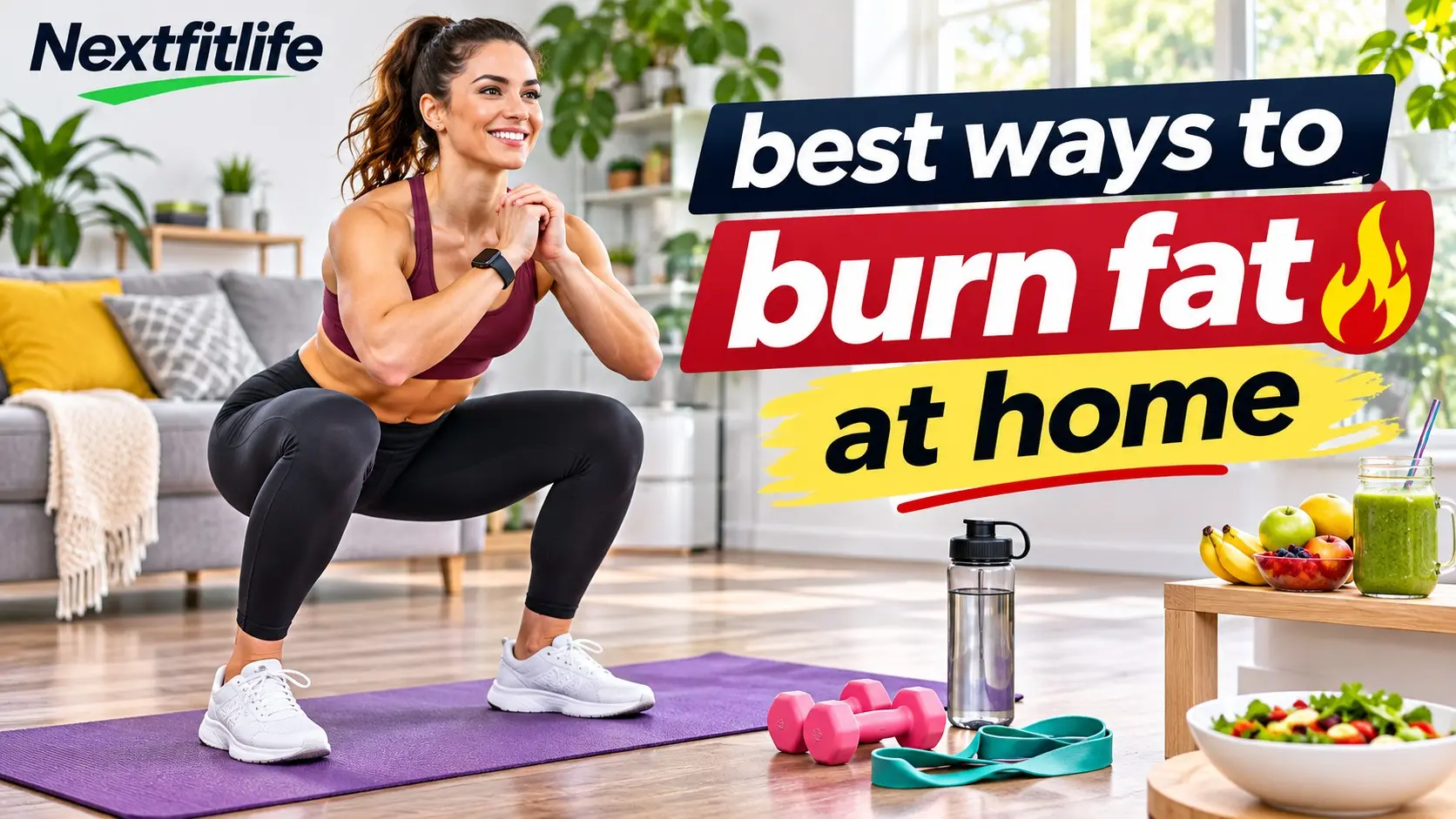
The best ways to burn fat at home are simpler than many fitness ads make them sound. You do not need a treadmill, a full gym, a detox drink, or a workout that leaves you exhausted on the floor.
Fat loss happens over time when your overall routine creates a calorie deficit. Home exercise helps by increasing activity and calorie use, while strength training can help maintain or build muscle.
The strongest plan combines walking, aerobic exercise, resistance training, filling food, good sleep, and enough consistency for those habits to work.
This updated guide gives you 17 practical methods you can use at home, including beginner options and a complete weekly plan.
Important: This article is for general information and education. It does not replace medical advice, diagnosis, or treatment.
Table of Contents
- Quick Answer
- How Fat Loss Works
- 17 Best Ways to Burn Fat at Home
- Beginner Home Workout
- Weekly Home Fat Loss Plan
- Strength Training at Home
- Cardio at Home
- HIIT and Fat Loss
- Walking for Fat Loss
- Nutrition for Home Fat Loss
- Sleep and Recovery
- Fat Loss Myths
- How Fast Results Happen
- Common Mistakes
- When to Get Medical Advice
- Conclusion
- References and Sources
- Internal Links + Fitness Hub
- About the Author
- Frequently Asked Questions
Quick Answer: What Are the Best Ways to Burn Fat at Home?
The best ways to burn fat at home combine movement with a sustainable eating plan.
Start with these 17 methods:
- Create a moderate calorie deficit.
- Walk more every day.
- Use brisk walking for aerobic exercise.
- Perform squats.
- Add incline push ups.
- Train your back with rows.
- Use glute bridges and hip hinges.
- Add step ups.
- Use controlled lunges.
- Build low impact cardio circuits.
- Add intervals if they suit you.
- Strength train at least twice each week.
- Use progressive overload.
- Increase movement outside workouts.
- Eat more protein and fiber rich foods.
- Protect sleep and recovery.
- Track progress and adjust slowly.
You do not need to complete all 17 at once. Start with walking, two strength sessions, and one or two food changes.
For an easier exercise focused option, also see our Low Impact Exercises to Burn Fat at Home.
How Does Your Body Actually Lose Fat?
Your body stores energy in fat tissue.
Over time, fat mass can decrease when your body uses more energy than you take in. This is called a calorie deficit.
Exercise helps because movement uses energy, but food intake still matters. CDC notes that most weight loss comes from reducing calorie intake, while regular physical activity is important for health and keeping lost weight off.
This is why a good fat loss program does not rely on one “fat burning” exercise.
Simple rule: use home workouts to move more, get stronger, and improve fitness while your overall eating pattern supports a manageable calorie deficit.
17 Best Ways to Burn Fat at Home
1. Create a Moderate Calorie Deficit
Exercise is useful, but it cannot fully compensate for regularly eating more energy than your body needs.
Start with simple changes:
- Reduce sugary drinks.
- Measure cooking oil.
- Use smaller portions of calorie dense foods.
- Eat vegetables at lunch and dinner.
- Choose whole fruit more often than juice.
Extreme restriction is not required.
For a broader plan, read our Weight Loss Strategies.
2. Increase Your Daily Walking
Walking for weight loss is one of the easiest ways to increase activity without buying equipment.
You can walk:
- Around your home
- Outside
- On stairs
- During phone calls
- After meals
Start from your current activity level and gradually add more.
Our Walking for Weight Loss guide gives a complete progression.
3. Use Brisk Walking as Cardio
A brisk walk is a form of moderate intensity exercise.
You should feel warmer and breathe faster, while still being able to speak in short sentences.
CDC recommends that adults work toward at least 150 minutes of moderate aerobic activity each week.
You can divide that time into smaller sessions.
4. Add Squats
Squats train large muscles in your legs and hips.
Beginners can start with a chair squat:
- Stand in front of a sturdy chair.
- Lower yourself toward the seat.
- Touch the chair lightly.
- Stand back up.
Starting target: 2 sets of 8 to 12 repetitions.
5. Use Incline Push Ups
Incline push ups train your chest, shoulders, triceps, and trunk.
- Place your hands on a sturdy counter or bench.
- Walk your feet backward.
- Keep your body straight.
- Lower your chest toward the surface.
- Push back up.
Starting target: 2 sets of 6 to 12 repetitions.
6. Train Your Back With Rows
Rows help train muscles that are often missed in simple home routines.
You can use:
- Dumbbells
- Resistance bands
- A safely anchored band
Starting target: 2 to 3 sets of 8 to 15 repetitions.
7. Add Glute Bridges and Hip Hinges
Glute bridges train the hips and glutes, while hip hinges train the muscles along the back of the legs.
For a glute bridge:
- Lie on your back.
- Bend your knees.
- Place your feet on the floor.
- Lift your hips.
- Lower slowly.
Starting target: 2 to 3 sets of 10 to 15 repetitions.
8. Use Step Ups
Step ups combine leg strength with movement.
Use a stable low step rather than furniture that may move.
- Place one foot fully on the step.
- Stand up through that leg.
- Step down slowly.
- Switch sides.
Starting target: 2 sets of 8 to 12 repetitions per side.
9. Add Controlled Reverse Lunges
Reverse lunges train your legs, glutes, and balance.
If balance is difficult, hold a sturdy support.
You can also shorten the range of motion until you become stronger.
Starting target: 2 sets of 6 to 10 repetitions per leg.
10. Build a Low Impact Cardio Circuit
You do not have to jump to raise your heart rate.
Try this simple circuit:
- March in place for 45 seconds.
- Side step for 45 seconds.
- Do controlled knee drives for 45 seconds.
- Perform standing punches for 45 seconds.
- Rest for 60 seconds.
Repeat two to four rounds based on your fitness level.
See our Low Impact Exercises to Burn Fat at Home for more options.
11. Add Intervals if They Suit You
Intervals alternate harder and easier periods.
For example:
- Walk easily for 2 minutes.
- Walk briskly for 1 minute.
- Repeat.
You do not need all out sprinting.
High intensity interval training can be useful, but it is optional rather than required.
12. Strength Train at Least Twice Each Week
Strength training supports muscle, physical function, and healthy body composition.
CDC recommends muscle strengthening exercise on at least two days each week.
Current ACSM guidance also shows that home based resistance training can work well.
You can use:
- Your bodyweight
- Dumbbells
- Resistance bands
- Household space
For a complete guide, visit our Strength Training and Muscle Building Guide.
13. Use Progressive Overload
Doing the same easy workout forever gives your body little reason to adapt.
Progressive overload means gradually increasing the challenge.
You can:
- Add a repetition.
- Add a small amount of resistance.
- Add a set.
- Use a larger range of motion.
- Improve your control.
Change one thing at a time.
14. Move More Outside Your Workouts
Your formal workout is only part of your day.
Daily movement can include:
- Cleaning
- Walking
- Gardening
- Taking stairs
- Standing more often
- Playing with children
Small amounts of movement add up.
15. Eat More Protein and Fiber
Protein rich foods and high fiber foods can help make meals satisfying.
Protein options include:
- Fish
- Eggs
- Chicken
- Greek yogurt
- Beans
- Lentils
- Tofu
Fiber sources include vegetables, whole fruit, beans, oats, and whole grains.
Our Best Vegetables for Weight Loss guide gives 17 useful choices.
16. Protect Your Sleep and Recovery
Sleep does not directly melt body fat, but it can affect appetite, energy, recovery, and your ability to follow a healthy routine.
Try to:
- Keep a regular sleep schedule.
- Allow enough time for sleep.
- Reduce late caffeine.
- Keep your room dark and comfortable.
17. Track Progress and Adjust Slowly
Do not judge your progress from one morning on the scale.
Track:
- Weekly weight trends
- Waist measurement
- Workout repetitions
- Walking time
- Strength
- How clothes fit
This gives you a better view of your body composition and fitness progress.
Simple Beginner Fat Loss Workout at Home
| Exercise | Sets | Reps or Time | Main Focus |
|---|---|---|---|
| Chair Squat | 2 | 8 to 12 | Legs and hips |
| Incline Push Up | 2 | 6 to 12 | Chest and arms |
| Band or Dumbbell Row | 2 | 8 to 15 | Back and arms |
| Glute Bridge | 2 | 10 to 15 | Glutes and hips |
| March in Place | 3 | 60 seconds | Cardio |
Perform this routine two or three times per week. Leave at least one recovery day between demanding strength sessions when you are starting out.
A Practical Seven Day Home Fat Loss Plan
| Day | Activity | Goal |
|---|---|---|
| Monday | Full body strength | Build strength |
| Tuesday | 30 minute brisk walk | Aerobic activity |
| Wednesday | Low impact cardio circuit | Fitness and movement |
| Thursday | Full body strength | Muscle and strength |
| Friday | 30 minute brisk walk | Aerobic activity |
| Saturday | Longer easy walk or enjoyable activity | Extra movement |
| Sunday | Rest or gentle movement | Recovery |
Adjust this schedule to your fitness level. Beginners may need shorter sessions at first.
Can Home Strength Training Really Work?
Yes.
You do not need a commercial gym to benefit from resistance training.
The 2026 ACSM resistance training guidance found that elastic bands, bodyweight exercises, free weights, and home based routines can all improve strength, muscle size, and physical function.
ACSM also found that complicated training systems are often unnecessary for the average healthy adult.
Consistency matters more.
A 2025 randomized pilot trial also tested home based resistance exercise during dietary weight loss in adults with overweight or obesity. The home training program improved strength and physical function and may help limit unwanted lean tissue loss during weight reduction.
Is Cardio or Strength Training Better for Fat Loss?
You do not need to choose one.
Aerobic activity increases calorie use and improves cardiovascular fitness.
Strength training supports muscle, strength, and physical function.
A balanced plan can use both.
For most adults, a useful foundation is:
- At least 150 minutes of moderate aerobic activity each week
- At least 2 strength training days each week
- Additional daily movement when practical
Do You Need HIIT to Burn Fat at Home?
No.
HIIT is only one exercise option.
If you enjoy intervals and can perform them safely, they can provide vigorous activity in a shorter session.
However, walking, cycling, dancing, low impact cardio, and other forms of aerobic exercise can also support fat loss and health.
The best exercise is one you can repeat consistently.
Can Walking Burn Fat?
Walking can contribute to fat loss by increasing total energy expenditure.
It works best when combined with an eating pattern that supports a calorie deficit.
Walking also has a major advantage: many people can recover from it easily enough to do it often.
You can build your walking time gradually instead of chasing an arbitrary step target on day one.
Does Sweating Mean You Are Burning Fat?
No.
Sweating mainly helps your body control temperature.
A hard workout can both use calories and make you sweat, but the sweat itself is mostly fluid.
A sudden drop in scale weight after a very sweaty workout is mainly water loss and usually returns after you rehydrate.
Can You Burn Belly Fat With Ab Exercises?
Ab exercises can make your abdominal muscles stronger, but they do not reliably force the body to remove fat from your stomach.
Your body decides where stored fat comes off based on many factors, including genetics and sex.
Train your abs for strength and function, while using overall nutrition and activity to reduce total body fat.
Try our Best Ab Exercises guide for core training.
Does Fasted Exercise Burn More Body Fat?
You do not need to exercise on an empty stomach to lose body fat.
Your body may use different fuel sources during a specific workout depending on when you last ate, but long term fat loss depends much more on overall energy balance.
Train when you feel comfortable and can perform well.
Do You Need Fat Burner Supplements?
No.
A home fat loss plan does not require pills, detox powders, stimulant products, or metabolism boosters.
Focus first on:
- Food quality
- Calories
- Walking
- Strength training
- Aerobic activity
- Sleep
Our Best Detox for Fat Loss guide explains why cleanse products are not a shortcut.
What Should You Eat to Support Fat Loss at Home?
NIDDK recommends a sustainable eating pattern that includes vegetables, whole fruit, whole grains, and a range of protein foods.
A simple plate can look like this:
| Plate Area | Food Group | Examples |
|---|---|---|
| About Half | Vegetables and some fruit | Salad, broccoli, peppers, berries |
| About One Quarter | Protein | Fish, chicken, eggs, beans, tofu |
| About One Quarter | High fiber carbohydrate | Oats, brown rice, potato, whole grains |
| Small Portion | Healthy fat | Olive oil, nuts, seeds, avocado |
This is a practical visual guide rather than an exact medical diet.
How Fast Can You Lose Fat at Home?
There is no safe rate that applies to everyone.
Body weight can change from water, sodium, food intake, digestion, hormones, and stored carbohydrate.
That means a fast drop on the scale is not always a fast drop in body fat.
CDC generally describes gradual weight loss of about 1 to 2 pounds per week as a reasonable approach for many adults trying to lose weight.
Your rate may be slower or faster depending on your starting point and health.
How Long Should a Home Fat Loss Workout Last?
A workout does not need to last an hour to count.
You can start with:
- 10 minutes of walking
- 15 minutes of resistance exercise
- 20 minutes of low impact cardio
Build gradually.
CDC notes that weekly activity can be divided into smaller chunks, so you do not have to complete all 150 minutes at once.
Common Mistakes When Trying to Burn Fat at Home
Doing Hard Workouts but Ignoring Food
Exercise helps, but total calorie intake still affects fat loss.
Thinking More Sweat Means More Fat Loss
Sweat mainly reflects temperature regulation and fluid loss.
Doing Hundreds of Ab Exercises
Train your core for strength, not as a way to selectively melt abdominal fat.
Doing Cardio but No Strength Work
Include resistance exercise to support muscle and physical function.
Making Every Workout HIIT
Hard training needs recovery. Moderate activity can also be effective.
Using the Same Easy Workout Forever
Increase the challenge gradually as you improve.
Training Through Sharp Pain
Normal effort is different from sudden or worsening pain.
Expecting Results in a Few Days
Judge trends over weeks and months rather than one workout or weigh in.
Buying Fat Burner Products
You do not need supplements to create an effective home fat loss program.
Ignoring Sleep
Recovery can affect training quality, appetite, energy, and consistency.
When Should You Get Medical Advice Before Exercising?
Moderate exercise is safe for most healthy adults, but individual health matters.
Ask a healthcare professional for guidance if you have a significant chronic condition or if you are unsure what exercise intensity is appropriate for you.
Stop exercising and seek appropriate medical care if you develop:
- Chest pain or pressure
- Fainting
- Severe unusual shortness of breath
- Sudden severe weakness
- A serious injury
- New severe neurological symptoms
Conclusion
The best ways to burn fat at home are not extreme. Walking, aerobic exercise, squats, rows, push ups, step ups, resistance training, daily movement, filling food, and good recovery can build a strong fat loss routine without a gym.
The key is to stop looking for one exercise that “melts fat” and build a routine that creates a manageable calorie deficit while protecting your strength and health.
Your next step: take a brisk 20 minute walk today, complete one short full body strength session this week, and choose one food change you can maintain for the next month.
References and Sources
- Centers for Disease Control and Prevention. Adult Activity: An Overview. Current guidance recommends at least 150 minutes of moderate aerobic exercise each week and at least two muscle strengthening days.
https://www.cdc.gov/physical-activity-basics/guidelines/adults.html - Centers for Disease Control and Prevention. Physical Activity and Your Weight and Health. Explains how physical activity increases calorie use and how activity and reduced calorie intake can create the calorie deficit needed for weight loss.
https://www.cdc.gov/healthy-weight-growth/physical-activity/ - National Institute of Diabetes and Digestive and Kidney Diseases. Eating and Physical Activity to Lose or Maintain Weight. Guidance on sustainable eating, calorie reduction, physical activity, and long term weight management.
https://www.niddk.nih.gov/health-information/weight-management/adult-overweight-obesity/eating-physical-activity - American College of Sports Medicine. Updated Resistance Training Guidelines, 2026. Evidence shows that consistency matters more than complicated programming and that home based routines, bands, bodyweight exercise, machines, and free weights can all work.
https://acsm.org/resistance-training-guidelines-update-2026/ - Gray SR and colleagues. The Effects of a Home Based Resistance Training Programme on Body Composition and Muscle Function During Weight Loss in People Living With Overweight or Obesity. Randomized controlled pilot trial published in 2025.
https://pubmed.ncbi.nlm.nih.gov/40760444/
Internal Links + Fitness Hub
- NextFitLife Fitness Hub
- Strength Training and Muscle Building Guide
- Low Impact Exercises to Burn Fat at Home
- Walking for Weight Loss
- Weight Loss Strategies
- Basic Weight Loss Tips
- How to Drop Pounds
- How to Shed Pounds Quickly
- Lose Stubborn Fat
- How to Melt Fat in Body
- Best Vegetables for Weight Loss
- Best Ab Exercises
- Injury Prevention Exercises
About the Author
Adel Galal is a father of four, three sons and a daughter, and a grandfather of four, with 33 years of hands on parenting experience. He is the founder of Parnthub.com, based in Cairo, Egypt, where he shares practical guidance on feeding, development and family life from newborns to teenagers.
Adel is not a medical professional. Health articles cite trusted sources and are for general information only.
Learn more on the NextFitLife About Us page.
Frequently Asked Questions
What are the best ways to burn fat at home?
The best ways to burn fat at home combine a sustainable calorie deficit with walking, aerobic activity, strength training, daily movement, good nutrition, and enough recovery.
Can you really lose body fat with home workouts?
Yes. Home workouts can increase activity and improve strength and fitness. Fat loss occurs when your overall routine also creates a calorie deficit over time.
What exercise burns the most fat at home?
No single exercise guarantees the most body fat loss for everyone. Exercises that involve large muscle groups and activities you can perform consistently are useful, while total calorie balance determines long term fat loss.
Is walking enough to lose weight?
Walking can support weight loss by increasing energy expenditure. It works best alongside a healthy eating pattern, and strength training can add further benefits for muscle and physical function.
Do I need HIIT to burn fat at home?
No. HIIT is optional. Brisk walking, low impact cardio, cycling, dancing, strength training, and other activities can all contribute to a successful fat loss plan.
Can squats burn belly fat?
Squats train the legs and hips and use energy, but they cannot selectively remove belly fat. Overall fat loss requires an energy deficit over time.
Does sweating mean I am burning more fat?
No. Sweating mainly helps regulate body temperature. A temporary drop in body weight after heavy sweating is mostly fluid loss rather than body fat loss.
How often should I exercise at home for fat loss?
A useful target for healthy adults is at least 150 minutes of moderate aerobic activity each week plus muscle strengthening activity on at least two days. Beginners can start with less and build gradually.
Can I lose fat at home without equipment?
Yes. Walking, chair squats, incline push ups, lunges, glute bridges, step ups, and other bodyweight exercises can form an effective home fitness program.
How long does it take to see fat loss from home workouts?
The timeline varies with food intake, activity, starting body composition, sleep, health, and consistency. Track progress over weeks and months rather than expecting major fat loss within a few days.

Health & wellness writer with 30+ years of experience in nutrition, fitness, and healthy aging. Founder of NextFitLife.com — evidence-based health guidance.

