Published: Oct 5, 2025
Last updated: July 2026
Reviewed for accuracy: Editorially reviewed and fact-checked against kidney-health and medical sources
Reading time: 15–20 minutes
Kidney disease symptoms can be easy to miss. You may feel fine. You may have no pain. You may still pass urine. But your kidneys may already be under stress.
The kidneys clean waste and extra fluid from the blood. They also help control blood pressure, balance minerals, support red blood cells, and protect bones.
When kidney disease starts, symptoms may be mild or not present at all. That is why blood and urine tests matter, especially if you have high blood pressure, diabetes, heart disease, or a family history of kidney failure.
For more kidney-health education, visit our Kidney Health & Disease Hub. You can also explore our Health Hub, Medical Tests & Screenings Hub, and Heart & Cardiovascular Health Hub.
Medical note: This article is for education only. It does not diagnose or treat kidney disease. If you have severe back or side pain, blood in urine, fever, vomiting, trouble breathing, chest pain, confusion, very little urine, severe swelling, or symptoms that feel like an emergency, seek medical care right away.
Quick Answer: What Are Kidney Disease Symptoms?
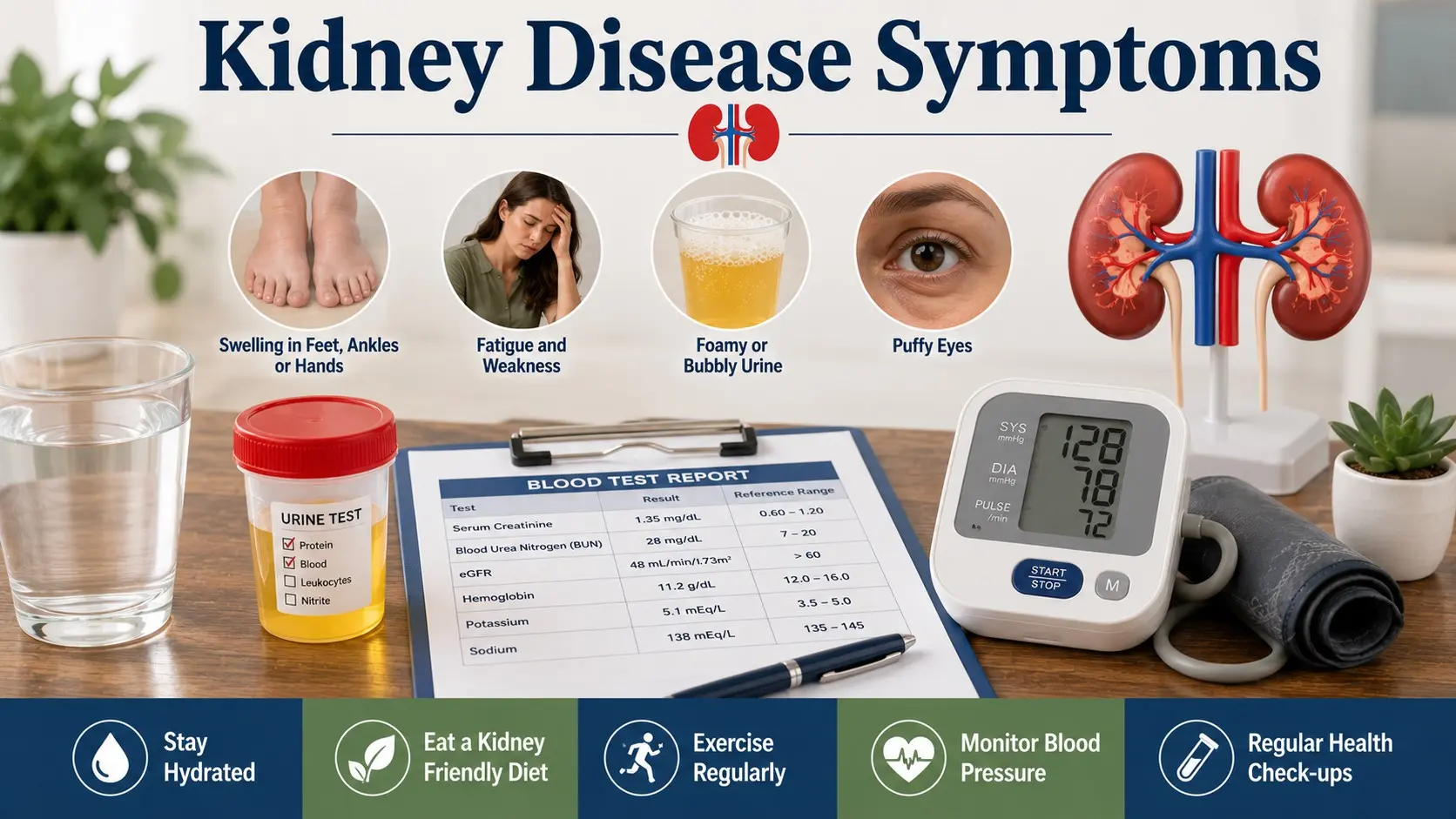
Kidney disease may cause no symptoms at first. When symptoms happen, they may include urine changes, swelling, tiredness, itchy skin, poor appetite, nausea, muscle cramps, trouble sleeping, high blood pressure, or puffiness around the eyes.
Possible signs include:
- Foamy urine
- Blood in urine
- Urinating more often, especially at night
- Urinating less than usual
- Swelling in feet, ankles, legs, hands, or face
- Puffy eyes
- Tiredness or weakness
- Shortness of breath
- High blood pressure
- Loss of appetite
- Nausea or vomiting
- Itchy skin
- Muscle cramps
- Trouble sleeping
- Metal taste in the mouth
- Poor focus or brain fog
These symptoms can also happen for many other reasons. A blood test and urine test are needed to check kidney health.
Why Kidney Disease Can Be Hard to Notice
Kidney disease can move slowly. The body may adjust for a long time. This means you may not feel sick in the early stages.
Many people only discover kidney problems after routine tests show:
- Low eGFR
- High creatinine
- Protein in urine
- Albumin in urine
- Blood in urine
- High blood pressure
Do not wait for pain. Kidney disease often does not cause kidney pain until another problem is present, such as infection, stones, blockage, or swelling.
Who Should Get Checked?
You may need kidney tests if you have a higher risk.
Ask a healthcare professional about testing if you have:
- Diabetes
- High blood pressure
- Heart disease
- Family history of kidney failure
- Past kidney disease
- Protein or blood in urine
- Frequent kidney infections
- Kidney stones
- Autoimmune disease
- Long-term use of some pain medicines
- Older age
- Smoking history
If you have diabetes or high blood pressure, kidney checks are very important because these are common causes of chronic kidney disease.
1. Foamy Urine
Foamy urine can happen for simple reasons, like a fast urine stream. But urine that is often foamy may mean protein is leaking into the urine.
Protein in urine can be an early sign of kidney damage.
See a healthcare professional if foamy urine:
- Happens often
- Does not go away
- Comes with swelling
- Comes with high blood pressure
- Comes with diabetes
- Comes with tiredness or puffy eyes
A urine albumin-to-creatinine ratio test can help check for albumin in urine.
2. Blood in Urine
Blood in the urine should be checked. It may look pink, red, brown, tea-colored, or cola-colored. Sometimes blood is only found on a urine test.
Possible causes include:
- Urine infection
- Kidney stones
- Kidney disease
- Prostate problems
- Bladder problems
- Injury
- Some medicines
Do not ignore blood in urine. It needs medical advice, even if there is no pain.
3. Urinating More Often at Night
Needing to urinate more at night can happen for many reasons. It may be because of drinking fluids late, caffeine, diabetes, prostate issues, sleep problems, medicines, or kidney problems.
Get checked if night urination is new, persistent, or comes with:
- Thirst
- Weight changes
- Swelling
- Foamy urine
- High blood pressure
- Poor sleep
- Burning or pain when passing urine
4. Urinating Less Than Usual
Passing much less urine can be serious, especially if it happens suddenly.
Possible causes include:
- Dehydration
- Kidney injury
- Blocked urine flow
- Severe infection
- Heart problems
- Some medicines
Seek urgent care if you pass very little urine and also have swelling, shortness of breath, confusion, severe weakness, fever, vomiting, or severe pain.
5. Swelling in Feet, Ankles, Legs, Hands, or Face
Kidney disease can cause fluid and salt to build up. This may lead to swelling.
Swelling may show as:
- Tight shoes
- Sock marks on the legs
- Puffy ankles
- Swollen feet
- Puffy hands
- Face swelling
- Swelling around the eyes
Swelling can also happen from heart disease, liver disease, vein problems, pregnancy, medicines, or standing for a long time. A doctor can check the cause.
6. Puffy Eyes
Puffy eyes may happen from sleep, allergies, salt, crying, or sinus problems. But if puffiness is common, especially in the morning, it may be linked with protein loss in urine.
Ask about kidney testing if puffy eyes happen with:
- Foamy urine
- Swelling in legs
- High blood pressure
- Diabetes
- Fatigue
- Weight gain from fluid
7. Tiredness and Weakness
Kidney disease can cause tiredness. Waste can build up in the blood. Kidney disease can also lead to anemia, which means the body has fewer healthy red blood cells.
Fatigue may feel like:
- Low energy
- Weakness
- Brain fog
- Shortness of breath with activity
- Needing more rest than usual
- Feeling tired even after sleep
Fatigue has many causes. Do not assume it is kidney disease. Ask a healthcare professional if tiredness is strong, long-lasting, or unexplained.
8. Shortness of Breath
Kidney problems can sometimes lead to fluid buildup. Extra fluid may affect breathing. Anemia from kidney disease can also make you feel short of breath.
Shortness of breath can also come from heart, lung, blood, anxiety, or infection problems.
Seek urgent care if shortness of breath is sudden, severe, linked with chest pain, blue lips, fainting, confusion, or severe swelling.
9. High Blood Pressure
High blood pressure can cause kidney damage. Kidney disease can also raise blood pressure. This can become a harmful cycle.
Get kidney checks if you have high blood pressure, especially if:
- It is hard to control
- You need several medicines
- You also have diabetes
- You have swelling
- You have protein in your urine
- You have abnormal kidney blood tests
For more support, read Lower Blood Pressure: Safe Steps, Fast Tips, Symptoms, and Long-Term Control and What Causes High Blood Pressure and How to Prevent It.
10. Nausea, Vomiting, or Poor Appetite
When kidney disease becomes more advanced, waste can build up in the blood. This may cause nausea, vomiting, poor appetite, or a bad taste in the mouth.
These symptoms can also happen with stomach problems, infections, liver disease, medicines, pregnancy, stress, and many other conditions.
Get medical advice if nausea or appetite loss is persistent, worsening, or linked with weight loss, vomiting, swelling, urine changes, or severe fatigue.
11. Itchy Skin
Itchy skin can happen for many reasons. Dry skin, allergies, eczema, liver disease, thyroid problems, and medicines can all cause itching.
Kidney disease can cause itching when waste or mineral balance problems build up.
See a healthcare professional if itching is severe, long-lasting, unexplained, or comes with fatigue, swelling, urine changes, or abnormal blood tests.
12. Muscle Cramps
Muscle cramps can happen when minerals and fluid balance are affected. Kidney disease can sometimes play a role.
Other common causes include:
- Dehydration
- Exercise
- Low magnesium
- Low calcium
- Medicines
- Poor circulation
- Nerve problems
Get checked if cramps are frequent, severe, or linked with weakness, swelling, or abnormal blood tests.
13. Trouble Sleeping
Kidney disease may affect sleep. Some people have restless legs, itching, cramps, anxiety, or frequent urination at night.
Sleep problems can also be caused by stress, caffeine, sleep apnea, pain, depression, or poor sleep habits.
If you snore loudly, gasp during sleep, wake with headaches, or feel very sleepy in the day, ask about sleep apnea. Read our guide on Snoring Treatment: Practical Solutions for Quieter Sleep.
14. Metallic Taste or Bad Breath
Waste buildup in the blood may affect taste or breath in more advanced kidney disease. Food may taste different. Meat may taste unpleasant. Appetite may drop.
This symptom can also happen from dental problems, reflux, medicines, sinus issues, or dehydration.
See a healthcare professional if taste changes are persistent or linked with weight loss, nausea, or fatigue.
15. Poor Focus or Brain Fog
Kidney problems can affect focus if waste builds up, anemia develops, sleep becomes poor, or blood pressure is uncontrolled.
Brain fog can also happen from stress, depression, thyroid disease, vitamin deficiency, poor sleep, diabetes, and many other causes.
Get medical advice if confusion is sudden, severe, or comes with weakness, speech trouble, chest pain, fever, or very high blood pressure.
Kidney Pain: Is Back Pain a Kidney Symptom?
Kidney pain is often felt in the side or back, under the ribs. It may be one-sided or two-sided.
But most back pain is not kidney disease. It is often muscle, spine, posture, or injury-related.
Kidney-related pain may happen with:
- Kidney stones
- Kidney infection
- Urine blockage
- Injury
- Some cysts or other kidney problems
Get urgent care if side or back pain comes with fever, vomiting, blood in urine, severe pain, or trouble passing urine.
Causes of Kidney Disease
Kidney disease has many causes. The most common causes in adults are diabetes and high blood pressure.
Other causes may include:
- Glomerulonephritis
- Polycystic kidney disease
- Kidney infections
- Kidney stones or blockage
- Autoimmune diseases such as lupus
- Heart disease
- Long-term use of some pain medicines
- Inherited conditions
- Birth defects affecting the urinary tract
- Severe infections or kidney injury
Finding the cause matters because treatment depends on the cause.
Diabetes and Kidney Disease
Diabetes can damage small blood vessels in the kidneys. Over time, this can lead to kidney disease.
If you have diabetes, ask about:
- eGFR blood test
- Urine albumin test
- Blood pressure goal
- Blood sugar goal
- Kidney-protective medicines if appropriate
- How often to test
Visit our Diabetes & Blood Sugar Management Hub for more support.
High Blood Pressure and Kidney Disease
High blood pressure can damage kidney blood vessels. Damaged kidneys can also raise blood pressure.
Good blood pressure control can help protect kidney function.
Helpful steps include:
- Check blood pressure
- Take medicine as prescribed
- Reduce sodium
- Move often
- Limit alcohol
- Stop smoking
- Follow up with your doctor
How Kidney Disease Is Tested
Kidney disease is usually checked with blood and urine tests.
eGFR Blood Test
eGFR estimates how well your kidneys filter blood. It is calculated from creatinine and other factors.
Urine Albumin-to-Creatinine Ratio
This test checks for albumin in urine. Albumin is a protein. Protein in urine can be an early sign of kidney damage.
Urinalysis
A urine test may check for blood, protein, signs of infection, sugar, and other changes.
Blood Pressure Check
Blood pressure is important because high blood pressure can damage the kidneys, and kidney disease can raise blood pressure.
Other Tests
Your healthcare professional may also check blood sugar, electrolytes, blood count, imaging, ultrasound, or other tests based on your symptoms.
For more test education, visit our Medical Tests & Screenings Hub.
How to Help Prevent Kidney Damage
You cannot prevent every kidney problem. But you can lower your risk.
1. Control Blood Pressure
High blood pressure is a major risk to the kidneys. Check it. Treat it. Follow your care plan.
2. Manage Diabetes
If you have diabetes, blood sugar and blood pressure control are key kidney-protection steps.
3. Avoid Smoking
Smoking can harm blood vessels and raise the risk of kidney and heart disease.
4. Use Pain Medicines Safely
Some pain medicines can harm the kidneys, especially with long-term use, dehydration, kidney disease, or other risk factors. Ask a pharmacist or doctor what is safe for you.
5. Drink Fluids Wisely
Water supports health, but more is not always better. People with kidney disease, heart failure, or fluid limits should follow medical advice.
6. Eat a Heart-Friendly Diet
A diet rich in vegetables, fruit, whole grains, beans, lean protein, and less salt can support kidney and heart health.
7. Move Often
Walking and regular movement can support blood pressure, blood sugar, weight, and heart health.
8. Get Tested if You Are at Risk
Do not wait for symptoms. Ask for eGFR and urine albumin testing if you are at higher risk.
Kidney-Friendly Lifestyle Basics
These habits help many people protect their kidney health:
- Check blood pressure
- Check blood sugar if at risk
- Take medicines as prescribed
- Limit salt
- Eat more whole foods
- Walk most days
- Quit smoking
- Limit alcohol
- Use pain medicines safely
- Keep follow-up visits
For a full lifestyle plan, read Healthy Lifestyle Roadmap: 14 Practical Tips for Better Health.
Foods and Kidney Disease: Be Careful
There is no single kidney diet for everyone. Diet depends on kidney stage, blood potassium, blood phosphorus, blood pressure, diabetes, weight, and medicines.
Some people need to limit:
- Sodium
- Potassium
- Phosphorus
- Protein amount
- Fluids
Other people do not need all these limits. Do not start a strict kidney diet without medical advice. Ask for a registered dietitian if you have diagnosed kidney disease.
Red Flags: Get Medical Help Quickly
Get urgent help if you have:
- Blood in urine
- Very little urine
- Severe side or back pain
- Fever with back or side pain
- Repeated vomiting
- Severe swelling
- Shortness of breath
- Chest pain
- Confusion
- Fainting
- Very high blood pressure with symptoms
- Severe weakness
- Signs of dehydration
- Unable to pass urine
These symptoms may need urgent care.
What Not to Do
- Do not wait for kidney pain to get tested.
- Do not ignore foamy urine that keeps happening.
- Do not ignore blood in urine.
- Do not stop blood pressure or diabetes medicine without advice.
- Do not use pain medicine daily without checking kidney safety.
- Do not start a strict kidney diet without test results.
- Do not use detox drinks to “clean” your kidneys.
- Do not take kidney supplements without medical advice.
- Do not drink extreme amounts of water.
- Do not skip follow-up if you have diabetes or high blood pressure.
Questions to Ask Your Doctor
- What is my eGFR?
- Do I have albumin or protein in my urine?
- Do I need a urine albumin-to-creatinine ratio test?
- How often should I check kidney function?
- Could my blood pressure be affecting my kidneys?
- Could diabetes be affecting my kidneys?
- Are my medicines safe for my kidneys?
- Should I avoid NSAID pain medicines?
- Do I need a kidney ultrasound?
- Should I see a kidney specialist?
- Do I need diet changes?
- What symptoms indicate urgent care?
Simple 7-Day Kidney Protection Starter Plan
This is not a cure. It is a safe habit starter.
Day 1: Know Your Risk
Write down if you have diabetes, high blood pressure, heart disease, or a family history of kidney failure.
Day 2: Check Blood Pressure
Take a correct blood pressure reading or book a check.
Day 3: Ask About Tests
Ask if you need an eGFR blood test and a urine albumin test.
Day 4: Reduce Salt
Choose one lower-sodium swap today.
Day 5: Move
Walk for 10 to 30 minutes, based on your level.
Day 6: Review Medicines
Ask a pharmacist or doctor if your pain medicines or supplements are safe for your kidneys.
Day 7: Plan Follow-Up
Book or plan any needed follow-up visit.
FAQ
What are the first symptoms of kidney disease?
Early kidney disease may have no symptoms. Potential signs include foamy urine, swelling, puffy eyes, tiredness, nighttime urination, high blood pressure, and changes in urine.
Can kidney disease have no symptoms?
Yes. Many people have no symptoms in the early stages. Blood and urine tests are often needed to find kidney disease early.
What urine changes can mean kidney disease?
Possible urine changes include foamy urine, blood in urine, urinating more often at night, urinating less than usual, or abnormal protein found on a urine test.
Does kidney disease cause swelling?
Yes. Kidney disease can cause fluid and salt to build up, which may lead to swelling in the feet, ankles, legs, hands, face, or around the eyes.
Can kidney disease cause fatigue?
Yes. Kidney disease can cause fatigue because waste may build up and anemia may develop. But fatigue has many causes, so testing is needed.
Is back pain a kidney disease symptom?
Most back pain is not kidney disease. Kidney-related pain may happen with stones, infection, blockage, or injury. Severe side pain, fever, vomiting, or blood in the urine should be checked quickly.
What tests detect kidney disease?
Common tests include an eGFR blood test, urine albumin-to-creatinine ratio, urinalysis, blood pressure check, and sometimes imaging such as ultrasound.
What causes kidney disease?
Common causes include diabetes and high blood pressure. Other causes include glomerulonephritis, inherited kidney disease, infections, stones, blockage, autoimmune disease, and some medicines.
Can kidney damage be prevented?
Some kidney damage can be prevented or slowed by controlling blood pressure, managing diabetes, avoiding smoking, using pain medicines safely, limiting salt, staying active, and getting tests if you are at risk.
When should I see a doctor for kidney symptoms?
See a doctor if you have foamy urine, blood in urine, swelling, puffy eyes, high blood pressure, fatigue, urine changes, or symptoms that are persistent or worrying.
Related Reading
- Kidney Health & Disease Hub
- Health Hub
- Medical Tests & Screenings Hub
- Heart & Cardiovascular Health Hub
- Diabetes & Blood Sugar Management Hub
- Nutrition & Vitamins Hub
- Lower Blood Pressure: Safe Steps, Fast Tips, Symptoms, and Long-Term Control
- What Causes High Blood Pressure and How to Prevent It
- High Cholesterol: Symptoms, Causes, Treatment, and Warning Signs
- Healthy Lifestyle Roadmap: 14 Practical Tips for Better Health
- Effect of Unhealthy Lifestyle: Warning Signs, Health Risks, and How to Reset
Key Takeaway
Kidney disease symptoms can be quiet or easy to miss. Early kidney disease may cause no symptoms at all.
Possible signs include foamy urine, blood in urine, swelling, puffy eyes, tiredness, night urination, high blood pressure, nausea, itching, cramps, and poor appetite.
Do not guess. If you have symptoms or risk factors like diabetes, high blood pressure, heart disease, or a family history of kidney failure, ask about an eGFR blood test and a urine albumin test.
Kidney damage may be slowed or prevented with early testing, blood pressure control, diabetes care, safe medicine use, less salt, no smoking, regular movement, and medical follow-up.
Sources
- NIDDK — Chronic Kidney Disease
- NIDDK — Chronic Kidney Disease Tests and Diagnosis
- NIDDK — Causes of Chronic Kidney Disease in Adults
- CDC — Testing for Chronic Kidney Disease
- NHS — Chronic Kidney Disease Symptoms
- NHS — Chronic Kidney Disease Diagnosis
- National Kidney Foundation — Signs and Symptoms of Kidney Disease

Health & wellness writer with 30+ years of experience in nutrition, fitness, and healthy aging. Founder of NextFitLife.com — evidence-based health guidance.