Published: May 11, 2025
Last updated: July 2026
Reviewed for accuracy: Editorially reviewed and fact-checked against dental, sinus, jaw health, and medical sources
Reading time: 15–20 minutes
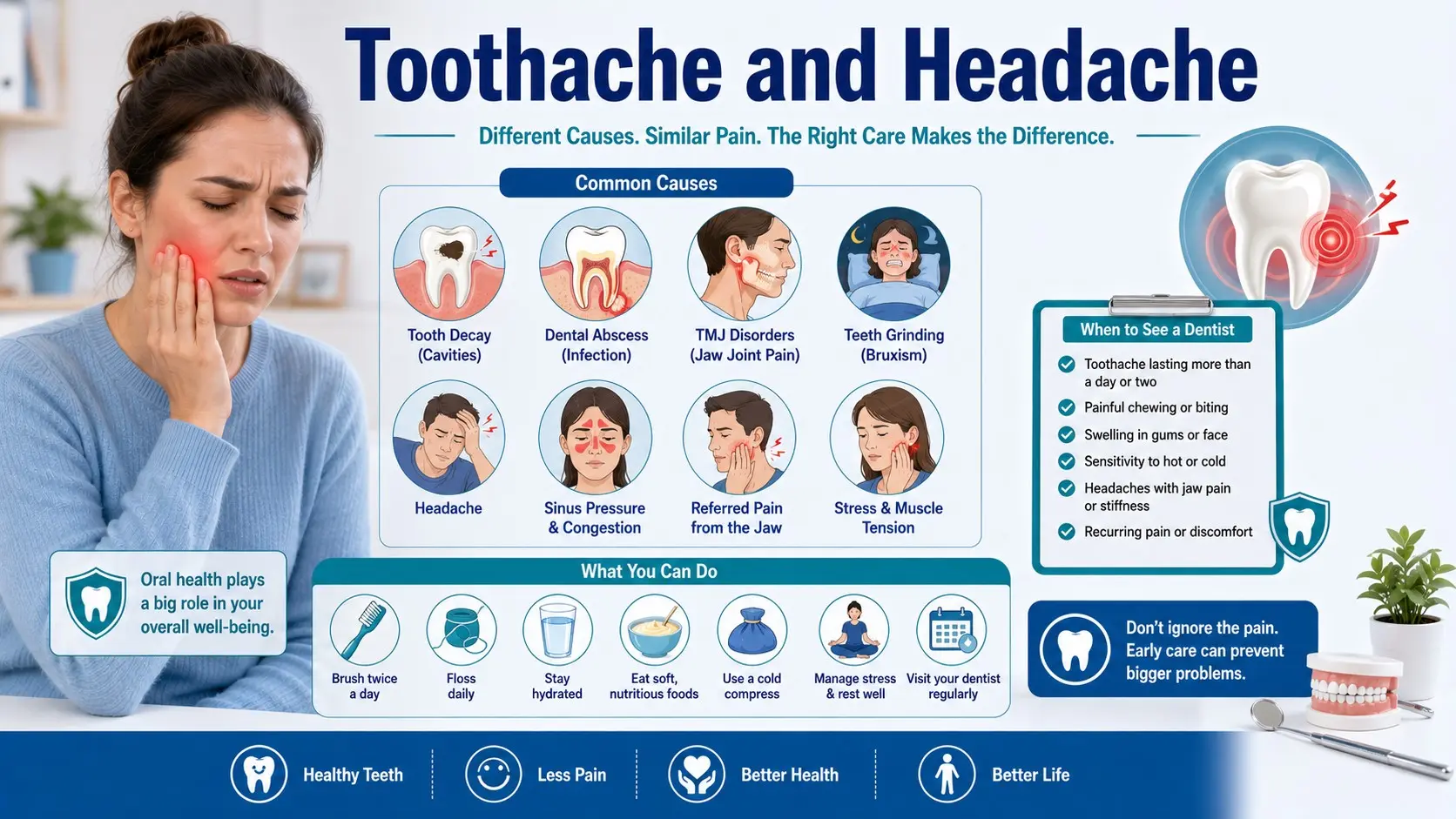
A toothache and headache can happen at the same time. The pain may feel dull. It may throb. It may stay on one side. It may move from the tooth to the temple, ear, jaw, cheek, eye, or forehead.
This can feel confusing. Is it a tooth problem? Is it a sinus problem? Is it a migraine? Is it jaw pain?
The answer depends on the cause.
Tooth pain and headache can happen together because the teeth, jaw, face, sinuses, and head share nerve pathways. Pain in one area can feel like pain in another area.
This guide explains toothache and headache causes, one-sided pain, upper teeth pain, dental red flags, sinus clues, TMJ and teeth grinding, quick relief, treatment, prevention, and when to see a dentist or doctor.
For more simple health guides, visit our Health Hub, Pain Management & Conditions Hub, First Aid & Home Remedies Hub, and Medical Tests & Screenings Hub.
Medical note: This article is for education only. It does not diagnose or treat dental disease, infection, sinus disease, migraine, jaw disease, or heart problems. See a dentist or doctor for tooth pain that lasts, keeps coming back, or comes with swelling, fever, bad taste, pus, trouble opening your mouth, trouble swallowing, or trouble breathing. Seek urgent care for severe facial swelling, chest pain, fainting, confusion, one-sided weakness, severe sudden headache, or symptoms that feel like an emergency.
Quick Answer: Why Do Toothache and Headache Happen Together?
Toothache and headache can happen together because pain can spread through shared nerves in the face and head.
Common causes include:
- Tooth decay
- Dental cavity
- Dental abscess
- Gum infection
- Cracked tooth
- Loose filling
- Wisdom tooth pain
- Teeth grinding
- Jaw clenching
- TMJ disorder
- Sinus infection
- Sinus pressure
- Migraine
- Tension headache
- Ear infection
- Nerve pain
The best treatment depends on the cause. Pain relief can help for a short time, but dental infection, cavities, and abscesses need dental care.
When Toothache and Headache Are Urgent
Get urgent dental or medical help if you have:
- Severe tooth pain
- Face swelling
- Swelling under the jaw
- Swelling near the eye
- Fever
- Chills
- Pus near a tooth or gum
- Bad taste that will not go away
- Trouble opening your mouth
- Trouble swallowing
- Trouble breathing
- Severe headache with stiff neck
- Severe sudden headache
- Confusion
- Fainting
- Chest pain
- Jaw pain with chest pressure or shortness of breath
A dental abscess does not heal on its own. It needs dental care.
How Tooth Pain Can Cause Head Pain
The teeth, jaw, sinuses, and head are close together. They also share nerves.
A bad tooth can send pain to the:
- Temple
- Ear
- Jaw
- Cheek
- Eye area
- Forehead
- Neck
- Same side of the head
This is called referred pain. It means pain starts in one place but is felt in another place.
That is why a tooth problem can feel like a headache, and a sinus problem can feel like tooth pain.
1. Tooth Decay or Cavity
A cavity can cause a toothache and headache when decay gets deep enough to irritate the tooth nerve.
Signs may include:
- Tooth sensitivity
- Pain with sweet foods
- Pain with hot drinks
- Pain with cold drinks
- Pain when biting
- A hole or dark spot in the tooth
- Food getting stuck in one tooth
- Bad breath
- A dull headache on the same side
Early tooth decay may have no symptoms. Pain often means the decay is deeper.
Quick relief may help for a short time, but a cavity usually needs a dentist. Treatment may include a filling, crown, root canal, or another dental plan.
2. Dental Abscess
A dental abscess is a pocket of pus caused by infection. It can happen near the tooth root or the gum.
This can cause a strong toothache and a headache.
Signs may include:
- Severe throbbing tooth pain
- Pain that spreads to the ear, jaw, neck, or head
- Pain worse when lying down
- Pain when chewing
- Swollen gum
- Swollen face
- Bad taste in the mouth
- Bad breath
- Fever
- Tender or loose tooth
- Sensitivity to hot or cold
A dental abscess needs urgent dental treatment. Painkillers may reduce pain, but they do not remove the infection.
3. Gum Disease or Gum Infection
Gum problems can cause aching teeth, jaw pain, and headaches.
Signs may include:
- Red gums
- Swollen gums
- Bleeding gums
- Bad breath
- Gum pain
- Loose teeth
- Pain when chewing
- Pus around the gum
Gum infection should be checked by a dentist. Treatment may include cleaning, deep cleaning, medicine, or other dental care.
4. Cracked Tooth or Broken Filling
A cracked tooth can cause sharp pain. It may also cause pain that comes and goes.
You may feel pain when:
- Biting down
- Releasing a bite
- Eating cold food
- Eating sweet food
- Chewing on one side
A crack can irritate the nerve. Pain may spread to the jaw, ear, or head.
See a dentist. A cracked tooth can get worse if ignored.
5. Wisdom Tooth Pain
Wisdom teeth can cause toothache and headache if they are trapped, infected, or pushing on nearby teeth.
Signs may include:
- Pain at the back of the mouth
- Jaw pain
- Swollen gum behind the last tooth
- Bad taste
- Bad breath
- Pain when opening the mouth
- Headache on the same side
- Ear pain
A dentist may need to check with an exam and X-ray.
6. Teeth Grinding or Jaw Clenching
Teeth grinding is also called bruxism. It can happen during sleep or during the day.
It can cause both tooth pain and a headache.
Signs may include:
- Morning headache
- Jaw pain
- Tight jaw muscles
- Worn teeth
- Tooth sensitivity
- Chipped teeth
- Pain around the temples
- Ear-like pain
- Neck tension
A dentist may suggest a custom night guard, bite check, stress support, or jaw-care plan.
7. TMJ Disorder
TMJ means temporomandibular joint. This joint helps your jaw open and close.
TMJ disorder can cause toothache-like pain and headaches.
Signs may include:
- Jaw pain
- Clicking jaw
- Popping jaw
- Jaw locking
- Pain when chewing
- Temple headache
- Ear pain
- Face pain
- Neck pain
- Teeth aching without a clear cavity
TMJ pain may get worse with clenching, chewing gum, stress, hard foods, or poor sleep.
8. Sinus Infection or Sinus Pressure
Sinusitis can cause upper teeth pain and headache.
This is common because the upper back teeth sit close to the maxillary sinuses.
Sinus-related tooth pain may feel like:
- Pressure in the upper teeth
- Pain in several upper teeth
- Cheek pressure
- Forehead pressure
- Pain worse when bending forward
- Stuffy nose
- Runny nose
- Thick yellow or green mucus
- Reduced smell
- Bad breath
- Cough
- Ear pressure
Sinus pain often affects several upper teeth, not just one tooth.
If one tooth hurts sharply, hurts with biting, or has swelling nearby, a dental problem may be more likely.
Toothache and Headache on One Side
A one-sided toothache and headache can happen when the cause is only on one side.
Possible causes include:
- One infected tooth
- One deep cavity
- One cracked tooth
- Wisdom tooth infection
- Gum abscess
- TMJ pain on one side
- Teeth grinding more on one side
- Sinus pressure on one side
- Migraine
- Cluster headache
- Nerve pain
One-sided pain does not prove the cause. A dentist or doctor may need to check.
One-Sided Pain Red Flags
Get help fast if one-sided pain comes with:
- Face swelling
- Fever
- Eye swelling
- Vision changes
- Weakness on one side of the body
- Confusion
- Sudden severe headache
- Chest pain
- Trouble breathing or swallowing
Upper Teeth Pain and Headache
Upper teeth pain with a headache is often linked with either dental disease or sinus pressure.
It may be dental if:
- One tooth hurts the most
- Pain is sharp
- Pain happens when biting
- Cold or hot drinks trigger pain
- There is a visible cavity
- There is gum swelling
- There is bad taste or pus
- Pain wakes you at night
It may be sinus-related if:
- Several upper teeth ache
- There is cheek pressure
- There is a stuffy nose
- There is thick nasal mucus
- Pain is worse when bending forward
- You recently had a cold
- You have reduced smell
- You have ear pressure
Sometimes both can happen at the same time. A dentist can rule out tooth causes.
Headache and Teeth Hurting Together
If your whole mouth or many teeth hurt with a headache, think about causes that affect the whole jaw or sinuses.
Possible causes include:
- Teeth grinding
- Jaw clenching
- TMJ disorder
- Sinus infection
- Viral illness
- Migraine
- Tension headache
- Dehydration
- Dental bite problems
Many teeth hurting at once is less likely to be one cavity, but it still needs checking if the pain lasts.
Can a Toothache Cause a Migraine?
A tooth problem may trigger head pain in some people. It can also make an existing migraine worse.
But migraine is a separate headache disorder.
Migraine may cause:
- Throbbing head pain
- Pain on one side
- Nausea
- Light sensitivity
- Sound sensitivity
- Worse pain with movement
- Visual aura in some people
If you keep getting severe headaches, ask a healthcare professional. If tooth pain is also present, see a dentist too.
Can a Headache Make Teeth Hurt?
Yes. Some headaches can feel like tooth pain.
This can happen with:
- Sinus headache
- Migraine
- Cluster headache
- Tension headache with jaw clenching
- TMJ pain
- Nerve pain
This is why the pain pattern matters. Your dentist or doctor may ask where the pain starts, what triggers it, and what makes it better.
Rare But Serious: Heart Pain Can Feel Like Jaw or Tooth Pain
Most toothache is dental. But pain in the jaw, neck, shoulder, or teeth can rarely be linked with heart problems.
Call emergency help if tooth or jaw pain comes with:
- Chest pressure
- Chest pain
- Shortness of breath
- Cold sweat
- Nausea
- Dizziness
- Pain spreading to the arm, shoulder, neck, or back
- Fainting
For heart safety, read Chest Pain vs. Heart Attack: Know the Life-Saving Difference and Signs of a Heart Attack: What Your Body Is Trying to Tell You.
Quick Relief for Toothache and Headache
Quick relief can help while you arrange care. It is not a cure for infection or decay.
1. Rinse With Warm Salt Water
Mix half a teaspoon of salt in a cup of warm water. Swish gently. Spit it out.
Do not swallow it. Do not use very hot water.
2. Use a Cold Compress
Place a cold pack on the cheek for 15 to 20 minutes. Wrap it in a cloth first.
This may help with swelling and pain.
3. Use Over-the-Counter Pain Medicine Safely
Ask a dentist, doctor, or pharmacist what is safe for you.
Some people can use acetaminophen or ibuprofen. But these are not safe for everyone.
Avoid ibuprofen if you have been told not to use NSAIDs, have some stomach, kidney, heart, bleeding, or pregnancy-related risks, or take certain medicines.
4. Avoid Triggers
Until you know the cause, avoid:
- Very hot drinks
- Very cold drinks
- Sweet foods
- Hard foods
- Chewing on the sore side
- Alcohol
- Smoking
5. Keep the Mouth Clean
Brush gently. Floss carefully if it does not worsen pain. Food stuck between teeth can make pain worse.
6. Sleep With Head Raised
If pain is worse when lying down, raising your head may help a little.
7. Do Not Put Aspirin on the Tooth
Do not place aspirin on the gum or tooth. It can burn the mouth tissue.
8. Book Dental Care
If tooth pain lasts more than 1 to 2 days, comes back, or is severe, see a dentist.
What Not to Do
- Do not ignore severe tooth pain.
- Do not put aspirin on the tooth or gum.
- Do not use antibiotics without a prescription.
- Do not keep taking painkillers instead of seeing a dentist.
- Do not use alcohol to numb the pain.
- Do not use very hot compresses on swelling.
- Do not pop a gum swelling.
- Do not delay care if your face is swollen.
- Do not assume upper teeth pain is always sinus pain.
- Do not assume headache with tooth pain is always dental.
How Dentists Find the Cause
A dentist may check:
- Which tooth hurts
- Gum swelling
- Tooth decay
- Cracks
- Loose fillings
- Wisdom teeth
- Bite pressure
- Jaw joint pain
- Teeth grinding signs
- X-rays
- Cold or tapping tests
- Gum pocket depth
If the dentist thinks the pain may be sinus, nerve, migraine, or heart-related, they may advise medical care too.
Treatment Options
Treatment depends on the cause.
For Cavities
Treatment may include a filling, crown, root canal, or tooth removal if the tooth cannot be saved.
For Dental Abscess
Treatment may include draining the infection, root canal treatment, tooth removal, and sometimes antibiotics if the infection has spread or the risk is high.
For Gum Disease
Treatment may include professional cleaning, deep cleaning, gum treatment, better home care, and follow-up visits.
For a Cracked Tooth
Treatment may include bonding, a crown, a root canal, or removal, depending on the crack.
For Teeth Grinding
Treatment may include a night guard, bite check, stress care, sleep support, and jaw exercises.
For TMJ Disorder
Treatment may include soft foods, jaw rest, heat or cold, physical therapy, bite guard, medicine, stress care, or specialist care.
For Sinusitis
Treatment may include fluids, rest, nasal saline, pain relief, and medical care if symptoms are severe, last too long, or worsen after improving.
How to Prevent Toothache and Headache From Dental Causes
Simple habits can lower risk.
- Brush twice a day.
- Use fluoride toothpaste.
- Clean between teeth daily.
- Limit sugary snacks and drinks.
- Drink water.
- See a dentist for checkups.
- Treat cavities early.
- Replace broken fillings.
- Wear a night guard if you grind your teeth.
- Do not use your teeth to open packages.
- Use a mouthguard for contact sports.
- Do not ignore gum bleeding.
For mouth pain guides, read Mouth Ulcers: Causes, Fast Relief, Prevention, and When to Worry.
Simple 7-Day Toothache and Headache Action Plan
This is a safety plan. It is not a cure.
Day 1: Find the Pattern
Write down where pain starts, where it spreads, and what triggers it.
Day 2: Check Dental Clues
Look for swelling, cavity, cracked tooth, loose filling, bad taste, or pain when biting.
Day 3: Check Sinus Clues
Notice a stuffy nose, thick mucus, cheek pressure, reduced smell, or pain worse when bending forward.
Day 4: Reduce Pain Safely
Use salt water rinse, cold compress, soft foods, and safe pain medicine if suitable.
Day 5: Protect the Tooth
Avoid chewing on the sore side. Avoid very hot, cold, sweet, or hard foods.
Day 6: Book a Dentist
See a dentist if pain is severe, lasts, comes back, or has swelling.
Day 7: Follow-Up
If the dentist rules out teeth, ask a doctor about sinus, migraine, TMJ, nerve pain, or other causes.
Questions to Ask Your Dentist or Doctor
- Is my pain from a tooth, gum, jaw, sinus, or nerve?
- Do I need an X-ray?
- Do I have a cavity?
- Do I have an abscess?
- Do I need a filling?
- Do I need a root canal?
- Could I be grinding my teeth?
- Could TMJ be causing my headache?
- Could sinusitis be causing upper teeth pain?
- What pain medicine is safe for me?
- What symptoms mean urgent care?
- How can I stop this from coming back?
FAQ
Can a toothache cause a headache?
Yes. Tooth pain can spread to the head, temple, ear, jaw, cheek, or neck because the teeth and face share nerve pathways.
What causes toothache and headache on one side?
One-side pain may come from a cavity, dental abscess, cracked tooth, wisdom tooth, TMJ disorder, teeth grinding, sinus pressure, migraine, cluster headache, or nerve pain.
Why do my upper teeth hurt with a headache?
Upper teeth pain with headache may come from a dental problem or sinusitis. Sinus pain often affects several upper back teeth and may come with stuffy nose, cheek pressure, and thick mucus.
How do I know if tooth pain is from sinus pressure?
Sinus tooth pain often affects several upper teeth and comes with blocked nose, facial pressure, thick mucus, reduced smell, or pain worse when bending forward.
How do I know if tooth pain is an abscess?
An abscess may cause severe throbbing pain, gum swelling, face swelling, fever, bad taste, bad breath, pain when chewing, and pain spreading to the ear, jaw, neck, or head.
Can teeth grinding cause headaches?
Yes. Teeth grinding and jaw clenching can cause morning headaches, jaw pain, temple pain, tooth sensitivity, worn teeth, and TMJ symptoms.
What is the fastest relief for a toothache and headache?
Short-term relief may include a cold compress, warm salt water rinse, soft foods, avoiding chewing on the sore side, and safe pain medicine. Dental care is still needed if the cause is a tooth problem.
Should I use antibiotics for a toothache?
Do not use antibiotics unless a dentist or doctor prescribes them. Many toothaches need dental treatment, not just antibiotics.
When should I see a dentist?
See a dentist if tooth pain lasts more than 1 to 2 days, is severe, comes back, wakes you at night, hurts when biting, or comes with swelling, fever, pus, or bad taste.
When are a toothache and a headache an emergency?
Seek urgent help for a toothache with face swelling, fever, chills, trouble swallowing, trouble breathing, severe headache, confusion, chest pain, or swelling near the eye.
Related Reading
- Pain Management & Conditions Hub
- First Aid & Home Remedies Hub
- Medical Tests & Screenings Hub
- Infections & Immune Health Hub
- Health Hub
- Mouth Ulcers: Causes, Fast Relief, Prevention, and When to Worry
- Causes of Mouth Ulcers in Children: Triggers, Relief, and When to Worry
- Chest Pain vs. Heart Attack: Know the Life-Saving Difference
- Signs of a Heart Attack: What Your Body Is Trying to Tell You
- Healthy Lifestyle Roadmap: 14 Practical Tips for Better Health
- Effect of Unhealthy Lifestyle: Warning Signs, Health Risks, and How to Reset
Key Takeaway
Toothache and headache can happen together because teeth, jaw, sinuses, and head share nerve pathways.
Common causes include cavities, dental abscess, gum disease, cracked teeth, wisdom teeth, teeth grinding, TMJ disorder, sinusitis, migraine, and tension headache.
Upper teeth pain with a headache may be from sinus pressure, but it can also be dental.
One-sided toothache and headache may be from a single bad tooth, jaw pain, sinus pressure, or a headache disorder.
Use short-term relief safely, but do not delay dental care. Tooth infection and abscess need treatment.
Get urgent help for swelling, fever, trouble swallowing, trouble breathing, severe headache, chest pain, confusion, or symptoms that feel like an emergency.
Sources
- NIDCR — Tooth Decay
- NHS — Dental Abscess
- NHS Inform — Dental Abscess
- Mayo Clinic — Tooth Abscess Symptoms and Causes
- Mayo Clinic — Tooth Abscess Diagnosis and Treatment
- MedlinePlus — Toothaches
- Cleveland Clinic — Toothache
- Cleveland Clinic — Bruxism
- Cleveland Clinic — TMJ Disorders
- NHS — Sinusitis
- Mayo Clinic — Sinus Infection and Toothache
- American Dental Association — Acute Dental Pain Management Guideline

Health & wellness writer with 30+ years of experience in nutrition, fitness, and healthy aging. Founder of NextFitLife.com — evidence-based health guidance.