Published: August 29, 2022
Last updated: July 16, 2026
Next review: July 2027
Written by: Adel Galal, Founder and Lead Writer at NextFitLife
Review status: Editorially reviewed and checked against current American Heart Association, National Heart Lung and Blood Institute, World Health Organization, CDC, and FDA guidance. This page has not been medically reviewed by a doctor, cardiologist, pharmacist, or registered dietitian.
Reading time: About 19 minutes
One meal rarely causes heart disease.
One slice of cake does not block an artery.
One burger does not make a person unhealthy.
Risk is shaped by your overall eating pattern over time.
Portion size also matters.
So do your blood pressure, cholesterol, blood sugar, sleep, activity, smoking history, medicine, age, and family history.
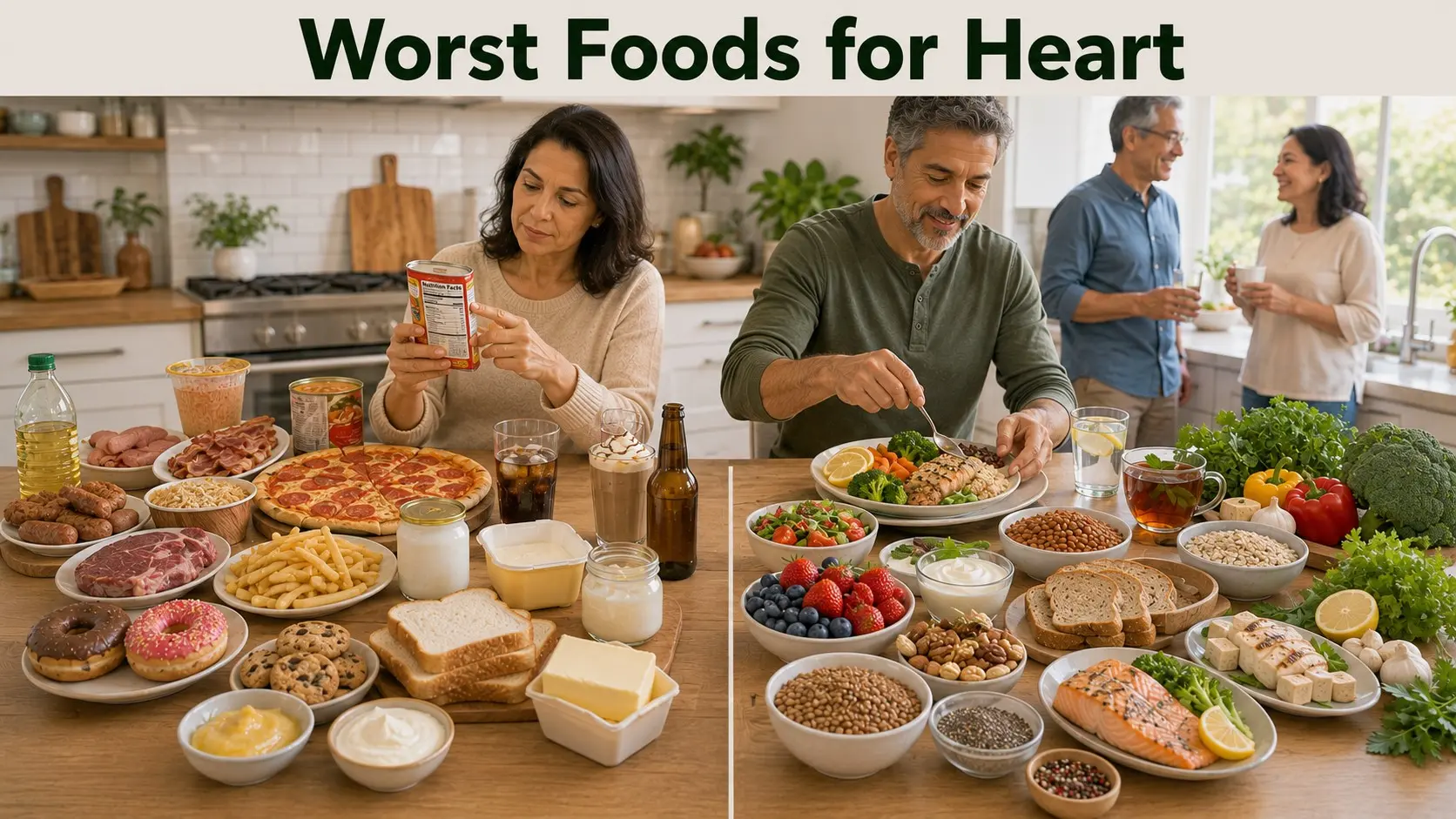
The foods commonly called the worst foods for heart tend to contain a lot of sodium, saturated fat, trans fat, or added sugar.
They may also provide little fibre, protein, fruit, or vegetables.
This does not mean you must fear them.
It means they are better eaten less often, in smaller portions, or with simple changes.
This guide explains ten food groups to review.
It also gives realistic swaps, label tips, meal ideas, internal heart health resources, and urgent warning signs.
For a wider view of prevention, read the NextFitLife heart health guide.
Worst Foods for Heart: Quick Answer
The main foods and drinks to limit are:
- Processed meats
- Salty ready meals and instant foods
- Sugar-sweetened drinks
- Cakes, cookies, pastries, and sweet cereals
- Deep-fried fast foods
- Fatty cuts of meat and poultry skin
- Butter, ghee, cream, and frequent full-fat dairy
- Coconut, palm, and palm kernel oils
- Large, refined-grain meals with little fibre
- Alcohol
You do not need to remove every item forever.
Eat them less often.
Use smaller portions.
Read labels.
Replace some meals with vegetables, fruit, beans, whole grains, nuts, fish, lean protein, low-fat dairy, and liquid plant oils.
These choices form a practical heart healthy diet.
Editorial and Advertising Disclosure
This guide was written and editorially reviewed by Adel Galal.
Adel is a health and wellness writer.
He is not a doctor, cardiologist, pharmacist, or registered dietitian.
This page cannot assess your blood pressure, cholesterol, blood sugar, heart rhythm, medicines, or personal risk.
NextFitLife uses display advertising to support the website.
Advertising does not decide the foods, advice, safety warnings, sources, or conclusions on this page.
Read the
Editorial Policy,
Medical Review Policy,
and
Corrections Policy.
Important Heart Safety Note
Food changes help with long term heart care.
They do not treat a heart attack.
They do not open a blocked coronary artery.
They do not replace cholesterol medicine, blood pressure medicine, diabetes care, or cardiac rehabilitation.
Call emergency services for chest pressure, squeezing, fullness, or pain that lasts or returns.
Also seek emergency help for pain in the arms, back, neck, jaw, or stomach.
Shortness of breath, a cold sweat, nausea, faintness, or sudden unusual weakness can also be warning signs.
Do not wait to see whether food, water, rest, or an antacid makes the symptoms disappear.
What Does Worst Foods for Heart Really Mean?
The phrase worst foods for heart is useful for search.
But foods are not good or evil.
The better question is:
Which foods should I eat less often to support my heart?
Frequency Matters
A small serving eaten sometimes is different from a large serving eaten every day.
A slice of pizza with salad is different from a large pizza with processed meat and sugary soda.
The Full Meal Matters
White rice with beans, vegetables, and fish can be a balanced meal.
A huge bowl of white rice with salty sauce and no vegetables is different.
Replacement Matters
Removing butter helps most when it is replaced with a suitable unsaturated fat.
Replacing bacon with beans, fish, tofu, or skinless poultry changes the whole meal.
Replacing soda with water also lowers added sugar intake.
Your Medical Needs Matter
A person with heart failure may need a personal sodium and fluid plan.
A person taking warfarin may need steady vitamin K intake.
A person with kidney disease may need potassium limits.
Review the NextFitLife diet for kidney disease guide before adding high potassium foods or salt substitutes.
Nutrients Linked With Heart Health
Foods often called the worst foods for heart tend to contain one or more nutrients that are easy to overeat.
| Nutrient | Why it matters | Common sources |
|---|---|---|
| Sodium | Too much can raise blood pressure in many people. | Processed meats, ready meals, soup, sauces, snacks, restaurant food |
| Saturated fat | It can raise LDL cholesterol when eaten in excess. | Fatty meat, butter, ghee, cream, full fat dairy, coconut oil, palm oil |
| Industrial trans fat | It has harmful effects on blood cholesterol and heart risk. | Some bakery fats, shortenings, fried foods, and products made with partially hydrogenated oil |
| Added sugar | Frequent high intake may support excess calorie intake and related heart risk factors. | Soda, sweet tea, desserts, candy, sweet cereal, flavored coffee |
| Low fiber | Low fiber meals may replace whole grains, beans, vegetables, and fruit. | Many refined snacks, desserts, and large refined grain meals |
Sodium and Blood Pressure
Most sodium does not come only from the salt shaker.
It often comes from packaged food, sauces, bread, processed meat, takeaway meals, and restaurant food.
For more detail, read what to drink for blood pressure and when a high reading needs urgent care.
Saturated Fat and LDL Cholesterol
LDL cholesterol is often called bad cholesterol.
High LDL can support plaque buildup in the arteries.
Replacing some saturated fat with unsaturated fat can support a healthier pattern.
Added Sugar and Sugary Drinks
Liquid sugar is easy to drink quickly.
Soda, sweet tea, sweet coffee, fruit drinks, and energy drinks can add a lot of sugar without much fiber.
10 Worst Foods for Heart Health to Limit
This list is not a ban.
It is a guide to frequency, portions, labels, and better replacements.
| Food group | Main concern | Better choice |
|---|---|---|
| Processed meats | Sodium and often saturated fat | Fish, beans, tofu, eggs, or fresh lean poultry |
| Salty ready meals | High sodium and large portions | Home cooked meals or lower sodium products |
| Sugary drinks | Added sugar with little fiber | Water, sparkling water, or unsweetened tea |
| Sweet bakery foods | Added sugar, refined flour, and saturated fat | Fruit, oatmeal, or plain yogurt |
| Deep fried fast food | Sodium, saturated fat, and large portions | Baked, grilled, roasted, or steamed food |
| Fatty meat and poultry skin | Saturated fat | Lean cuts, fish, beans, tofu, or skinless poultry |
| Butter, ghee, cream, and full fat dairy | Saturated fat | Liquid plant oil and lower fat dairy |
| Coconut and palm oils | High saturated fat content | Olive, canola, sunflower, or soybean oil |
| Large refined grain meals | Little fiber and poor meal balance | Whole grains or refined grains with vegetables and protein |
| Alcohol | Blood pressure, rhythm, sleep, medicine, and calorie concerns | Water or an alcohol free drink |
1. Processed Meats
Processed meat includes bacon, sausage, hot dogs, salami, pepperoni, and many deli meats.
These products are often high in sodium.
Some are also high in saturated fat.
They are easy to eat often because they are quick and convenient.
Simple Swaps
- Use sliced home cooked chicken instead of deli meat.
- Use beans or lentils in soup and sandwiches.
- Choose tuna or salmon with no added salt when suitable.
- Try tofu, eggs, or hummus.
- Use a smaller processed meat portion with more vegetables.
A processed meat meal does not need to become a source of guilt.
Look at how often you eat it.
Start with one replacement each week.
2. Salty Ready Meals, Soup, Instant Noodles, and Sauces
Ready meals can save time.
But some contain a large amount of sodium in one portion.
Instant noodles, canned soup, frozen dinners, stock cubes, soy sauce, and bottled sauces can add sodium quickly.
Simple Swaps
- Choose a lower sodium version.
- Use half the seasoning packet.
- Add frozen vegetables.
- Drain and rinse canned beans.
- Use lemon, vinegar, garlic, herbs, and spices.
- Cook a double portion and freeze half.
A low sodium label does not mean a product is right for every person.
Check the serving size and full meal.
3. Sugar Sweetened Drinks
Sugar sweetened beverages include soda, sweet tea, sweet coffee, fruit drinks, energy drinks, and some flavored waters.
These drinks can add a lot of added sugar.
They provide little or no fiber.
Simple Swaps
- Choose plain water.
- Add lemon, berries, cucumber, or mint.
- Choose sparkling water without added sugar.
- Reduce sugar in tea or coffee slowly.
- Use a smaller cup.
Fruit juice is not the same as soda.
But juice still contains free sugars and little fiber.
Choose whole fruit more often.
4. Cakes, Cookies, Pastries, Doughnuts, and Sweet Cereals
These foods may contain added sugar, refined flour, butter, cream, shortening, or palm oil.
Some also contain a lot of sodium.
They can fit sometimes.
The concern is frequent large portions.
Simple Swaps
- Choose a smaller dessert.
- Share it.
- Use fruit with plain yogurt.
- Choose plain oatmeal with berries.
- Pick cereal with more fiber and less added sugar.
- Eat dessert after a balanced meal instead of using it as the meal.
Check ingredients for partially hydrogenated oil when it is used in your country.
5. Deep Fried Fast Foods
Fried chicken, French fries, fried fish, chips, and fried pastries may contain a lot of sodium, fat, and calories.
The cooking oil and portion size also matter.
Fried food is not automatically poisonous.
It is better as an occasional choice than a daily meal.
Simple Swaps
- Choose grilled chicken.
- Choose baked fish.
- Roast potatoes.
- Use an air fryer with little oil.
- Add vegetables or salad.
- Order the smaller size.
6. Fatty Cuts of Meat and Poultry Skin
Fatty meat can contain a large amount of saturated fat.
Examples include fatty ribs, heavily marbled meat, and some ground meat.
Poultry skin also adds saturated fat.
Simple Swaps
- Choose leaner cuts.
- Remove visible fat.
- Remove poultry skin.
- Use beans or lentils for part of the meat.
- Choose fish more often.
- Keep the meat portion moderate.
The aim is not to remove all meat.
The aim is to improve the balance of the plate.
7. Butter, Ghee, Cream, and Frequent Full Fat Dairy
Butter, ghee, cream, cream cheese, and some full fat dairy products are rich in saturated fat.
Dairy also provides protein, calcium, and other nutrients.
The goal is not to call all dairy unhealthy.
Simple Swaps
- Use olive or canola oil for some cooking.
- Choose low fat milk or yogurt when suitable.
- Use a smaller cheese portion.
- Use plain yogurt instead of cream in some recipes.
- Spread butter thinly.
Children and people with poor appetite may have different calorie needs.
Ask a dietitian when weight gain or malnutrition is a concern.
8. Coconut, Palm, and Palm Kernel Oils
These oils come from plants.
But they contain more saturated fat than many liquid plant oils.
The word plant does not always mean low in saturated fat.
Simple Swaps
- Use olive oil.
- Use canola oil.
- Use sunflower oil.
- Use soybean oil.
- Use a small amount of any oil.
Coconut oil may still fit in a traditional recipe.
Use it less often when saturated fat is a concern.
9. Large Refined Grain Meals With Little Fibre
White bread, white rice, and regular pasta are not forbidden foods.
The issue is a meal built almost entirely from refined grains with little protein, fibre, or vegetables.
For example, a huge plate of plain pasta is different from pasta with vegetables, beans, and fish.
Simple Swaps
- Replace part of the grain with vegetables.
- Add beans or lentils.
- Add eggs, fish, chicken, or tofu.
- Choose whole grains more often.
- Use brown rice, oats, barley, bulgur, or whole grain bread.
Whole grains may not suit every kidney or digestive plan.
Use the grain that fits your health needs.
10. Alcohol
Alcohol is not required for heart health.
If you do not drink, do not start for a possible heart benefit.
Alcohol may affect blood pressure, heart rhythm, sleep, liver health, medicine, and judgment.
It also adds calories.
Safer Choices
- Choose water.
- Choose sparkling water with fruit.
- Choose an alcohol free drink.
- Ask a doctor whether alcohol is safe with your medicine.
- Avoid alcohol during pregnancy.
Better Swaps for the Worst Foods for Heart
Small replacements are easier to keep than a strict diet.
| Limit more often | Choose more often |
|---|---|
| Bacon or sausage | Eggs, beans, fish, tofu, or fresh lean chicken |
| Salty instant soup | Homemade soup or a lower sodium product |
| Soda | Water or unsweetened tea |
| Sweet breakfast cereal | Oatmeal or a higher fiber cereal |
| Deep fried chicken | Baked or grilled chicken |
| Fatty meat | Fish, beans, tofu, or lean meat |
| Butter or ghee | A small amount of liquid plant oil |
| Coconut oil is used every day | Olive, canola, sunflower, or soybean oil |
| Plain large white pasta meal | Pasta with vegetables and protein |
| Alcohol | Water or an alcohol free drink |
Heart health also depends on circulation and blood pressure.
See foods that may support blood vessel health and leg circulation for a careful guide to PAD and blood clot warning signs.
How to Read Food Labels for Heart Health
Labels help you compare similar products.
They do not tell you whether one food is good or bad.
Start With the Serving Size
A package may contain two, three, or more servings.
If you eat twice the listed serving, you eat twice the sodium, saturated fat, and added sugar.
Check Sodium
Compare soup with soup.
Compare bread with bread.
Choose the lower sodium option when taste, cost, and medical needs allow.
Check Saturated Fat
Look at grams and percent Daily Value.
Choose products with less saturated fat more often.
Check Added Sugar
Total sugar includes natural and added sugar.
The added sugar line tells you how much sugar was added during processing.
Use Percent Daily Value
On United States labels, 5 percent Daily Value or less is considered low.
Twenty percent or more is considered high.
This is a quick guide, not a personal prescription.
Read the Ingredient List
Look for:
- Partially hydrogenated oil
- Added sugars
- Palm oil
- Palm kernel oil
- Potassium chloride when you have kidney disease
Restaurant and Takeaway Food
Restaurant food can fit a heart healthy diet.
The problem is that portions, sodium, sauces, and cooking fats may be hard to see.
Before Ordering
- Check the menu online.
- Choose grilled, baked, roasted, or steamed food.
- Ask for sauce on the side.
- Ask for less salt when possible.
- Add vegetables.
- Choose water instead of soda.
Control the Portion
Share a large meal.
Order the small size.
Save part for later when food safety allows.
One Meal Does Not Ruin Your Plan
Return to your normal routine at the next meal.
Do not punish yourself by skipping food.
Build a Heart Healthy Eating Pattern
Focusing only on the worst foods for heart can make eating feel negative.
It is also important to know what to add.
Add More Vegetables and Fruit
Use fresh, frozen, or canned produce.
Choose options without excess sodium or added sugar.
Add Beans, Lentils, Nuts, and Seeds
These foods provide fiber, plant protein, and unsaturated fat.
Use portions that fit your kidney, diabetes, and calorie needs.
Choose Whole Grains More Often
Oats, barley, brown rice, bulgur, and whole grain bread provide more fiber than many refined products.
Soluble fiber in oats, barley, beans, and some fruit can support cholesterol care.
Choose Fish and Lean Protein
Fish, beans, lentils, tofu, eggs, and skinless poultry can replace some processed or fatty meat.
Some fish provide omega 3 fats.
Choose Liquid Plant Oils
Use olive, canola, sunflower, soybean, or other suitable liquid plant oils instead of some butter, ghee, or tropical oil.
Consider DASH or Mediterranean-style eating
The DASH eating plan focuses on vegetables, fruit, whole grains, beans, nuts, fish, poultry, low-fat dairy, and less sodium.
A Mediterranean diet also focuses on plant foods, fish, and olive oil.
Neither plan requires expensive superfoods.
Simple local foods can work well.
For more food planning ideas, visit the NextFitLife Foods and Nutrition Hub.
Simple One-Day Heart-Healthy Meal Plan
This is a general example.
Adjust it for allergies, diabetes, kidney disease, heart failure, pregnancy, and personal calorie needs.
Breakfast
Choose plain oatmeal with berries, plain yogurt, and ground flax.
Or choose eggs with whole grain toast and tomato.
Morning Snack
Choose fruit with a small handful of unsalted nuts.
Lunch
Choose lentil soup with salad and whole grain bread.
Use herbs and lemon instead of excess salt.
Afternoon Snack
Choose plain yogurt.
Or choose vegetables with hummus.
Dinner
Choose baked fish, skinless chicken, or tofu.
Add brown rice, potatoes, or another suitable grain.
Fill much of the plate with vegetables.
Drinks
Choose water.
Use unsweetened tea, coffee, low-fat milk, or fortified soy drink when suitable.
Heart Foods and Personal Medical Conditions
High Blood Pressure
Sodium may need closer attention.
Keep a record of home readings and take medicine as prescribed.
High Cholesterol
Review saturated fat and fibre.
Food changes do not replace a statin or another medicine when prescribed.
Heart Failure
You may need a personal sodium and fluid limit.
Do not increase water because general advice says to stay hydrated.
Kidney Disease
Potassium-rich foods and salt substitutes may not be safe for everyone.
Diabetes
Carbohydrate amount, meal timing, and blood glucose medicine matter.
Blood Thinning Medicine
Some foods, alcohol, supplements, and herbs may interact with medicine.
People taking warfarin should keep vitamin K intake steady.
Ask a pharmacist before using garlic pills, fish oil capsules, turmeric extracts, or other supplements.
Common Myths About the Worst Foods for Heart
Myth: One Food Causes a Heart Attack
No.
Heart risk usually develops through many factors over time.
A heart attack still needs emergency care when warning signs occur.
Myth: All Fat Is Bad
No.
The type and amount matter.
Unsaturated fats from fish, nuts, seeds, avocado, and liquid plant oils can fit a heart-healthy pattern.
Myth: All Carbohydrates Are Bad
No.
Whole grains, fruit, vegetables, beans, and lentils provide useful carbohydrates and fibre.
Myth: Coconut Oil Is Always Heart Healthy
No.
Coconut oil contains a lot of saturated fat.
It may fit sometimes, but liquid plant oils are usually lower in saturated fat.
Myth: Sea Salt Is Sodium-Free
No.
Sea salt and table salt both provide sodium.
Myth: Red Wine Is Required for Heart Health
No.
Do not start drinking alcohol for a possible health benefit.
Myth: A Healthy Label Makes Any Food Healthy
No.
Read the serving size, sodium, saturated fat, added sugar, fibre, and ingredient list.
Heart Attack Warning Signs
A diet guide cannot diagnose a heart attack.
Act fast when symptoms occur.
Call Emergency Services for
- Chest pressure, squeezing, fullness, or pain
- Pain or discomfort in one or both arms
- Pain in the back, neck, jaw, or stomach
- Shortness of breath
- A cold sweat
- Nausea or vomiting
- Lightheadedness or faintness
- Sudden unusual tiredness or weakness
Symptoms can differ between people.
Chest discomfort remains a common sign.
Some people may have more shortness of breath, nausea, back pain, jaw pain, or unusual weakness.
Do not drive yourself when emergency transport is available.
Fast treatment can save heart muscle and life.
Conclusion
The phrase worst foods for heart should not create fear or guilt.
It should help you notice foods that are high in sodium, saturated fat, trans fat, or added sugar.
Processed meat, salty ready meals, sugary drinks, fried food, fatty meat, butter, tropical oils, sweet bakery food, unbalanced refined grain meals, and alcohol are useful places to start.
Eat them less often.
Use smaller portions.
Replace them with vegetables, fruit, beans, whole grains, fish, lean protein, nuts, seeds, and liquid plant oils.
Choose one item from this list of worst foods for heart today, compare its label, and make one realistic swap at your next meal.
References and Sources
- American Heart Association. Diet and Lifestyle Recommendations.Current open guidance about heart-healthy eating patterns, vegetables, fruit, whole grains, protein foods, liquid plant oils, sodium, saturated fat, added sugar, processed food, and alcohol.
- National Heart, Lung and Blood Institute. Choose Heart-Healthy Foods.Open NIH guidance about foods to eat, foods to limit, sodium, saturated fat, added sugar, dairy, fish, beans, nuts, seeds, tofu, and food labels.
- National Heart, Lung and Blood Institute. DASH Eating Plan.Current open guidance about vegetables, fruit, whole grains, low-fat dairy, fish, poultry, beans, nuts, vegetable oils, sweets, saturated fat, and sodium.
- World Health Organization. Healthy Diet.Current open guidance about balanced dietary patterns, whole grains, vegetables, fruit, pulses, fibre, free sugars, sodium, saturated fat, trans fat, and highly processed food.
- World Health Organization. Sodium Reduction.Current open guidance about sodium intake, blood pressure, cardiovascular disease, processed food, sauces, bread, processed meat, and salt reduction.
- United States Food and Drug Administration. How to Understand and Use the Nutrition Facts Label.Open guidance about serving sizes, percent Daily Value, sodium, saturated fat, added sugar, fibre, and comparing food products.
- American Heart Association. Warning Signs of a Heart Attack.Open guidance about chest discomfort, arm, back, neck, jaw, and stomach pain, shortness of breath, nausea, cold sweat, lightheadedness, and emergency action.
Continue Reading on NextFitLife
Frequently Asked Questions
What are the worst foods for heart health?
Common foods to limit include processed meat, salty ready meals, sugary drinks, sweet bakery foods, deep-fried fast food, fatty meat, butter, ghee, cream, tropical oils, and frequent large refined grain meals.
Must I completely avoid the worst foods for heart?
No. Frequency, portion size, and the full eating pattern matter. Eat these foods less often and replace some servings with heart-healthy choices.
Are eggs bad for the heart?
Eggs provide protein and other nutrients. They can fit many heart-healthy eating plans. Your full diet and medical needs matter.
Is red meat always bad for the heart?
No. Choose lean cuts, moderate portions, and less processed meat. Beans, fish, tofu, and poultry can provide useful alternatives.
Is cheese one of the worst foods for heart health?
Cheese can provide protein and calcium, but some types contain much sodium and saturated fat. Use a smaller portion or choose a lower-fat and lower-sodium option.
Is coconut oil heart-healthy?
Coconut oil contains more saturated fat than many liquid plant oils. Olive, canola, sunflower, and soybean oils are usually lower in saturated fat.
Are all fried foods bad for the heart?
No single fried food ruins your health. Frequent large portions may add sodium, saturated fat, and calories. Choose baked or grilled foods more often.
Is white rice bad for the heart?
No. White rice can fit into a balanced meal. Add vegetables and protein, use a suitable portion, and choose whole grains sometimes when they fit your health needs.
Which drink is the worst for heart health?
Frequent sugar-sweetened drinks can add a large amount of added sugar. Alcohol and energy drinks may also cause problems for some people.
What foods are best for the heart?
Useful choices include vegetables, fruit, beans, lentils, whole grains, nuts, seeds, fish, tofu, lean poultry, lower-fat dairy, and liquid plant oils.
How can I reduce sodium?
Read labels, choose lower-sodium products, cook more often, rinse canned foods, use less sauce, and add herbs, lemon, garlic, and spices.
Can diet reverse blocked heart arteries?
Diet can support risk factor control. It cannot be relied on to remove a dangerous blockage. Follow medical treatment and seek emergency care for heart attack symptoms.
When should chest pain be treated as an emergency?
Call emergency services for chest pressure, squeezing, fullness, or pain, especially with shortness of breath, arm or jaw pain, sweating, nausea, or faintness.
Is this article medical advice?
No. It provides general education. A qualified healthcare professional should diagnose and treat heart disease, high blood pressure, high cholesterol, and chest symptoms.
Heart Health and Medical Disclaimer
This content is for education only.
It does not replace a medical examination, blood pressure checks, cholesterol tests, diagnosis, medicine, cardiac rehabilitation, medical nutrition therapy, or emergency care.
I am not a dermatologist or a doctor, and this content does not replace professional medical advice.
What I share comes from actual life experience, extensive research, and consultation with healthcare providers.
Always consult qualified medical professionals for diagnosis and treatment of any health condition.
Call emergency services for chest discomfort, shortness of breath, arm or jaw pain, cold sweat, nausea, faintness, or another heart attack symptom.
```

Health & wellness writer with 30+ years of experience in nutrition, fitness, and healthy aging. Founder of NextFitLife.com — evidence-based health guidance.