Published: March 2024
Last updated: July 16, 2026
Next review: July 2027
Written by: Adel Galal, Founder and Lead Writer at NextFitLife
Review status: Editorially reviewed and checked against current American Heart Association, NHS, CDC, NHLBI, NIH, and vascular specialist guidance. This page has not been medically reviewed by a doctor, cardiologist, vascular specialist, pharmacist, or registered dietitian.
Reading time: About 18 minutes
But food cannot open a blocked artery.
Food cannot dissolve a blood clot.
Food cannot treat a serious loss of blood flow.
Leg symptoms have many possible causes.
They may come from peripheral artery disease, a blood clot, vein disease, diabetes, nerve damage, an injury, or another condition.
Some causes require urgent treatment.
The phrase foods that improve blood circulation in legs should therefore be understood with care.
The foods in this guide may support the heart and blood vessels over time.
They are not a quick cure for poor circulation.
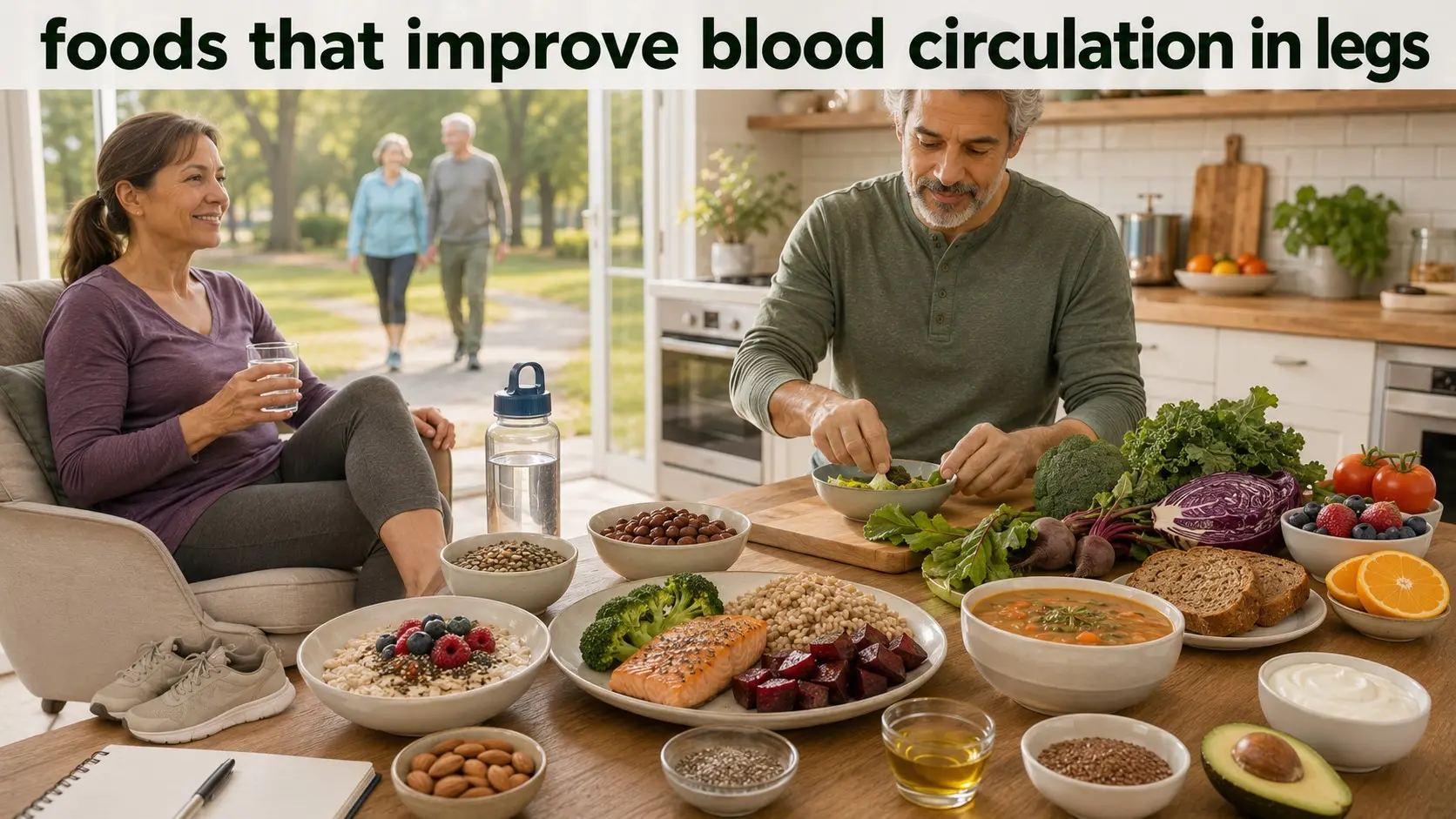
This guide explains 15 heart-healthy choices, simple meals, conditions that affect leg circulation, warning signs, and when to seek medical care.
Foods That Improve Blood Circulation in Legs: Quick Answer
No single food can fix poor blood flow in the legs.
A heart-healthy eating pattern may support the blood vessels over time.
Useful foods include:
- Leafy green vegetables
- Broccoli and cabbage
- Beets
- Berries
- Citrus fruit
- Tomatoes
- Beans and lentils
- Oats and barley
- Whole grains
- Unsalted nuts
- Seeds
- Oily fish
- Olive oil
- Avocado
- Plain low-fat yogurt
Use these foods as part of a DASH eating plan or a Mediterranean-style pattern.
Exercise, stopping smoking, blood pressure control, diabetes care, cholesterol treatment, and prescribed medicine may be more important than a single food.
Seek urgent help for one swollen, painful leg, sudden breathing trouble, or a leg that becomes suddenly cold, pale, numb, or very painful.
Editorial and Advertising Disclosure
This guide was written and editorially reviewed by Adel Galal.
Adel is a health and wellness writer.
He is not a doctor, vascular specialist, cardiologist, pharmacist, or registered dietitian.
This page cannot examine your legs or diagnose the cause of pain, swelling, numbness, or color change.
NextFitLife uses display advertising to support the website.
Advertising does not decide the advice, sources, food choices, or medical warnings on this page.
Read the
Editorial Policy,
Medical Review Policy,
and
Corrections Policy.
Important Leg Circulation Warning
Do not try to treat serious leg symptoms with food, tea, juice, massage, or supplements.
Get urgent medical help if one leg becomes swollen, painful, warm, or discoloured.
This may be a deep vein thrombosis.
Call emergency services for sudden breathing trouble, chest pain, coughing up blood, fainting, or a very fast heartbeat.
These may be signs of a blood clot in the lungs.
Get emergency help if a leg or foot becomes suddenly:
- Very painful
- Pale
- Cold
- Numb
- Weak
- Difficult to move
This may be a sudden loss of arterial blood flow.
Fast treatment may help save the limb.
What Does Poor Circulation in the Legs Mean?
Blood circulation is the movement of blood through arteries, veins, and small blood vessels.
Arteries carry oxygen-rich blood from the heart to the legs.
Veins carry blood back toward the heart.
A problem can happen on either side.
Arterial Circulation Problems
Peripheral artery disease, also called PAD, happens when arteries become narrow or blocked.
This can reduce blood flow to the legs and feet.
The common cause is a buildup of fatty plaque inside the arteries.
Venous Circulation Problems
Veins contain valves that help blood move upward.
If the valves do not work well, blood may collect in the lower legs.
This can cause swelling, aching, skin changes, or varicose veins.
Blood Clots
A clot in a deep vein is called deep vein thrombosis.
A clot can travel to the lungs.
This can become life-threatening.
Other Causes of Leg Symptoms
Cold, painful, numb, or tired legs may also be linked to:
- Nerve damage
- Diabetes
- Back problems
- Arthritis
- Muscle injury
- Medicine
- Anemia
- Heart failure
- Kidney disease
- Thyroid disease
An examination is needed when symptoms are new, severe, one-sided, or persistent.
Can Foods Improve Blood Circulation in the Legs?
Food affects cardiovascular health over time.
A healthy diet may help manage:
- High blood pressure
- High LDL cholesterol
- High blood sugar
- Excess body weight
- Inflammation linked with chronic disease
These factors can affect the heart and arteries.
But food does not travel to the legs and clean the arteries.
It does not break up plaque.
It does not dissolve a clot.
It does not replace medical treatment.
The Full Diet Matters More Than One Food
The strongest advice supports a full eating pattern.
This may include the DASH eating plan or a Mediterranean-style pattern.
Both focus on vegetables, fruit, whole grains, beans, nuts, fish, and healthy oils.
Use Food Alongside Medical Care
People with diagnosed PAD may need:
- A walking program
- Help to stop smoking
- Cholesterol medicine
- Blood pressure treatment
- Diabetes care
- Medicine to reduce blood clot risk
- A procedure or surgery
Do not replace any prescribed treatment with food or supplements.
15 Foods That Improve Blood Circulation in Legs Over Time
The heading uses the common search phrase foods that improve blood circulation in legs.
A more accurate meaning is foods that can fit a heart-healthy pattern.
They may support the arteries and veins by helping with risk factors.
| Food | Why it may fit | Simple serving idea |
|---|---|---|
| Leafy greens | Provide fibre, potassium, folate, and plant compounds | Add spinach or kale to eggs, soup, beans, or pasta. |
| Broccoli and cabbage | Add fibre and vegetable variety | Steam, roast, or add to a stir-fry. |
| Beets | Contain natural nitrate and can be part of a vegetable-rich diet | Roast beets or add a small amount to salad. |
| Berries | Provide fibre and colourful plant compounds | Add berries to oats or plain yogurt. |
| Citrus fruit | Provides vitamin C, water, and a variety of fruits | Choose a whole orange or grapefruit when safe with medicine. |
| Tomatoes | Provide potassium, vitamin C, and plant compounds | Add fresh tomato to beans, eggs, or salad. |
| Beans and lentils | Provide fibre and plant protein with little saturated fat | Use lentil soup, bean salad, or chickpea stew. |
| Oats and barley | Provide soluble fibre that can support cholesterol control | Choose oatmeal or add barley to soup. |
| Whole grains | Provide fibre and can replace refined grains | Choose brown rice or whole grain bread. |
| Unsalted nuts | Provide unsaturated fats, fibre, and plant protein | Eat a small handful or add nuts to oatmeal. |
| Seeds | Provide unsaturated fats, fibre, and minerals | Add ground flax, chia, or pumpkin seeds to meals. |
| Oily fish | Provides protein and omega-3 fats | Choose salmon, sardines, trout, or herring. |
| Olive oil | Can replace butter and other fats high in saturated fat | Use a small amount for salad or cooking. |
| Avocado | Provides unsaturated fat, fibre, and potassium | Add a small portion to toast or salad. |
| Plain low-fat yogurt | Provides protein and calcium, and can fit the DASH plan | Serve with fruit, oats, or unsalted nuts. |
1. Leafy Green Vegetables
Leafy greens include spinach, kale, chard, lettuce, and rocket.
They provide fibre, potassium, folate, and other nutrients.
They can help add more vegetables to the diet.
Try them in:
- Eggs
- Soup
- Pasta
- Beans
- Salad
People taking warfarin should keep vitamin K intake steady.
Do not suddenly eat a very large amount without discussing it with the anticoagulation team.
2. Broccoli, Cabbage, and Similar Vegetables
Broccoli, cabbage, cauliflower, and Brussels sprouts add fibre and food variety.
They can replace foods high in salt or saturated fat.
Steam, roast, or cook them in soup.
Start with a small amount if they cause gas.
3. Beets
Beets contain natural nitrate.
The body can use nitrate to make nitric oxide.
Nitric oxide helps blood vessels relax.
This does not mean beets can treat a blocked artery.
Use whole beets as part of meals.
Beet juice is concentrated and contains natural sugar.
Ask for advice if you have kidney disease, low blood pressure, or a history of certain kidney stones.
4. Berries
Berries include strawberries, blueberries, raspberries, and blackberries.
They provide fibre and colourful plant compounds.
Use fresh or frozen berries.
Choose products without added sugar.
Add them to oatmeal or plain yogurt.
5. Citrus Fruit
Oranges, mandarins, lemons, and other citrus fruits provide vitamin C.
Whole fruit also provides fibre.
Juice has less fiber and is easier to drink in large amounts.
Choose whole fruit more often.
Grapefruit can interact with several medicines.
Ask a pharmacist if grapefruit is safe with your prescriptions.
6. Tomatoes
Tomatoes provide potassium, vitamin C, and lycopene.
Fresh tomatoes are naturally low in sodium.
Canned tomato products can contain a lot of salt.
Choose a no-salt or lower-sodium product when possible.
People with kidney disease may need to limit potassium.
7. Beans, Lentils, and Chickpeas
Beans and lentils provide plant protein and fibre.
They contain little saturated fat.
They can replace processed meat or fatty meat in some meals.
Try:
- Lentil soup
- Bean stew
- Chickpea curry
- Hummus
- Bean salad
Rinse canned beans to remove some sodium.
8. Oats and Barley
Oats and barley contain soluble fibre.
Soluble fibre can support cholesterol control as part of a balanced diet.
Try oatmeal for breakfast.
Add barley to soup.
Choose plain products instead of sweetened instant versions.
9. Whole Grains
Whole grains include brown rice, whole grain bread, quinoa, bulgur, and whole grain pasta.
They provide more fibre than many refined grains.
Replace one refined grain at a time.
Choose portions that fit your blood sugar and energy needs.
10. Unsalted Nuts
Walnuts, almonds, pistachios, peanuts, and other nuts provide unsaturated fats.
They also provide fibre and plant protein.
Choose unsalted nuts.
A small handful is enough for most snacks.
Nut portions contain many calories.
11. Seeds
Chia, ground flax, pumpkin, sunflower, and sesame seeds can fit a heart-healthy diet.
They provide fibre and unsaturated fats.
Add a spoonful to oatmeal, yogurt, soup, or salad.
Drink enough fluid when increasing fibre unless you have a fluid limit.
12. Oily Fish
Salmon, sardines, trout, herring, and Atlantic mackerel provide omega-3 fats.
Fish can replace red or processed meat in some meals.
Choose grilled, baked, or steamed fish.
Avoid fish that is deep-fried or covered with a salty sauce.
Follow local mercury guidance during pregnancy.
13. Olive Oil
Olive oil is a liquid plant oil.
It can replace butter, ghee, lard, and some solid fats.
This can reduce saturated fat intake.
Use a small amount.
Olive oil is still high in calories.
It does not clean the arteries.
14. Avocado
Avocado provides unsaturated fat, fibre, and potassium.
Add a small portion to salad, toast, beans, or eggs.
People with kidney disease may need to watch potassium intake.
15. Plain Low-Fat Yogurt
Plain low-fat yogurt provides protein and calcium.
It can fit a DASH-style diet.
Choose plain yogurt with little or no added sugar.
Add fruit, oats, or unsalted nuts.
Use a fortified soy product when dairy is not suitable.
One-Day Plan With Foods That Improve Blood Circulation in Legs
This plan does not treat blocked arteries or blood clots.
It is an example of heart-healthy eating.
Breakfast
Choose oatmeal with berries, ground flax, and plain yogurt.
Morning Snack
Choose an orange and a small handful of unsalted nuts.
Lunch
Choose lentil and tomato soup with whole grain bread.
Add a leafy green salad with olive oil.
Afternoon Snack
Choose plain yogurt with berries.
Or choose vegetables with hummus.
Dinner
Choose baked salmon, barley, and steamed broccoli.
Add roasted beets or another vegetable.
Drinks
Choose water.
Use unsweetened tea or low-fat milk if suitable.
Follow any fluid limit given by your medical team.
Peripheral Artery Disease and Leg Blood Flow
Peripheral artery disease happens when arteries that carry blood to the legs become narrow or blocked.
It raises the risk of heart attack and stroke.
Common PAD Symptoms
A common symptom is pain or cramping while walking.
The pain may affect the calf, thigh, hip, buttock, or foot.
It often improves after a few minutes of rest.
This is called intermittent claudication.
Other PAD Signs
- One foot feels colder than the other
- Weak pulses in the feet
- Slow-growing toenails
- Less hair on the legs
- Shiny or pale skin
- Color changes
- Foot wounds that heal slowly
- Pain in the foot while resting
Food Does Not Replace PAD Treatment
Eating well can support risk factor control.
It cannot remove an established blockage.
Treatment may include:
- A structured walking plan
- Stopping smoking
- Cholesterol medicine
- Blood pressure treatment
- Diabetes management
- Medicine to reduce clot risk
- A vascular procedure
Tell a clinician about repeated leg pain while walking.
Deep Vein Thrombosis Is Not Poor Circulation From Diet
Deep vein thrombosis, also called DVT, is a blood clot in a deep vein.
It often affects one leg.
Possible DVT Symptoms
- Swelling in one leg
- Calf or thigh pain
- Tenderness
- Warm skin
- Red, blue, or darker skin
- Swollen or sore veins
Some people have no obvious symptoms.
Do Not Massage a Suspected Clot
Do not massage the leg.
Do not try to treat it with garlic, ginger, turmeric, juice, tea, or supplements.
Seek urgent medical assessment.
Signs of a Pulmonary Embolism
A clot can travel to the lungs.
Call emergency services for:
- Sudden shortness of breath
- Chest pain that may worsen when breathing
- Coughing blood
- Fainting
- A very fast or irregular heartbeat
Vein Problems, Varicose Veins, and Leg Swelling
Not all circulation problems involve blocked arteries.
Weak vein valves can allow blood to collect in the legs.
This may cause:
- Heavy legs
- Aching
- Ankle swelling
- Itching
- Varicose veins
- Skin color changes
- Leg ulcers
Food May Support General Health
A balanced diet can support body weight, blood pressure, and overall health.
It does not repair damaged vein valves.
Other Treatment May Be Needed
A clinician may advise movement, leg elevation, skin care, compression, or a vein procedure.
Do not start compression socks when arterial disease may be present without professional assessment.
Diabetes, Nerve Damage, and Foot Health
Diabetes can damage blood vessels and nerves.
A person may have a foot injury without feeling much pain.
High blood sugar can also slow healing.
Check Your Feet
Look at both feet every day.
Check for:
- Cuts
- Blisters
- Redness
- Swelling
- Color change
- Cracks
- Drainage
- Areas that feel hot or cold
Seek Early Care
Do not wait for a diabetic foot wound to improve with food alone.
Contact the diabetes or foot care team.
Early treatment may prevent infection and amputation.
Habits That May Support Leg Circulation
Food is only one part of vascular health.
Stop Smoking
Smoking damages blood vessels.
It can make PAD worse.
Ask a clinician or pharmacist for help to stop.
Follow an Exercise Plan
Regular walking is an important treatment for many people with stable PAD.
A structured or supervised plan may work best.
Ask for medical advice before beginning exercise when symptoms are new or severe.
Move During Long Sitting
Avoid sitting still for many hours.
Stand, walk, and move your ankles when it is safe.
People at high clot risk may need a medical prevention plan.
Manage Blood Pressure
Check blood pressure as advised.
Take medicine as prescribed.
Manage Cholesterol and Diabetes
Follow blood tests and treatment plans.
Do not stop the medicine because your diet improves.
Care for the Feet
Wear suitable shoes.
Do not walk barefoot when sensation is reduced.
Arrange care for wounds that do not heal.
Foods to Limit for Better Vascular Health
No food needs to be feared.
But frequent intake of some foods can make risk factor control harder.
Processed Meat
Processed meat may contain a large amount of sodium and saturated fat.
Examples include sausages, bacon, salami, and some deli meats.
Deep Fried Foods
Deep-fried meals can add a large amount of fat and calories.
Choose baked, grilled, or steamed food more often.
High Sodium Foods
Too much sodium can raise blood pressure in many people.
Check labels on:
- Soup
- Sauces
- Instant noodles
- Salty snacks
- Processed meat
- Ready meals
Sugary Drinks
Soda, sweet tea, and fruit drinks add sugar with little nutrition.
Choose water more often.
Large Amounts of Alcohol
Alcohol can raise blood pressure and interact with medicine.
Do not start drinking for heart health.
Do Circulation Supplements Work?
Supplements are often sold with claims about blood flow.
These claims may be stronger than the evidence.
A supplement cannot replace an examination.
Products May Interact With Medicine
Garlic extract, ginkgo, turmeric, fish oil, nattokinase, vitamin E, and other products may affect bleeding or the action.
This matters when you use aspirin, warfarin, clopidogrel, apixaban, rivaroxaban, or another blood thinner.
Do Not Combine Products Without Advice
Natural does not mean safe.
Ask a doctor or pharmacist before taking a circulation supplement.
Never Replace Prescribed Medicine
Do not stop cholesterol, blood pressure, diabetes, or clot prevention medicine for a supplement.
When Leg Circulation Symptoms Need Medical Help
Call Emergency Services for a Sudden Cold or Painful Limb
Get emergency help if a leg or foot becomes suddenly:
- Severely painful
- Pale
- Cold
- Numb
- Weak
- Difficult to move
This may be acute limb ischemia.
Seek Urgent Care for DVT
Get prompt medical help for one leg that becomes:
- Swollen
- Painful
- Tender
- Warm
- Red or discoloured
Call Emergency Services for Possible Pulmonary Embolism
- Sudden shortness of breath
- Chest pain
- Coughing blood
- Fainting
- A very fast heartbeat
Arrange a Medical Appointment for PAD Symptoms
Speak with a clinician if leg pain starts when walking and improves with rest.
Also seek care for:
- Foot pain while resting
- A foot that is colder than the other
- Color changes
- A weak pulse
- Slow healing wounds
- Black skin or tissue
Common Leg Circulation Myths
Myth: Garlic Opens Blocked Arteries
No.
Garlic is food.
It does not remove an arterial blockage.
Myth: Beet Juice Treats PAD
No.
Beets can fit a healthy diet.
They do not replace PAD treatment.
Myth: Massage Is Safe for Every Swollen Leg
No.
Do not massage a leg when a blood clot may be present.
Myth: Cold Feet Always Mean Poor Circulation
No.
Cold feet can have several causes.
One foot that is suddenly colder needs urgent attention.
Myth: Supplements Can Dissolve Blood Clots
No.
Blood clots require medical assessment and treatment.
Myth: Walking Is Safe for Every Leg Pain
No.
Walking can help stabilize PAD under a treatment plan.
Sudden severe pain, swelling, or a cold, pale foot needs medical care first.
Conclusion
The best foods that improve blood circulation in legs are heart-healthy foods that support the blood vessels over time.
Choose vegetables, fruit, beans, whole grains, nuts, seeds, fish, olive oil, avocado, and plain low-fat dairy.
Use them as part of a DASH or Mediterranean-style pattern.
Do not expect one food to open an artery or dissolve a clot.
Exercise, stopping smoking, medicine, and medical care may be essential.
Start by adding one of these foods that improve blood circulation in legs to your next meal, and arrange medical care for repeated walking pain, one-sided swelling, a cold foot, or a wound that does not heal.
References and Sources
- American Heart Association. Symptoms of Peripheral Artery Disease.Current information about walking pain, cold feet, colour changes, slow-healing wounds, and other signs of reduced arterial blood flow.
- NHS. Peripheral Arterial Disease.Open guidance about PAD symptoms, risk factors, complications, diagnosis, exercise, smoking, diet, medicine, and treatment.
- Centers for Disease Control and Prevention. Venous Thromboembolism and Blood Clots.Current guidance about DVT symptoms, pulmonary embolism symptoms, risk factors, and urgent medical care.
- Society for Vascular Surgery. Acute Limb Ischemia.Specialist guidance about sudden severe pain, pale skin, loss of pulse, numbness, weakness, and a cold limb.
- National Heart, Lung, and Blood Institute. DASH Eating Plan.Current NIH guidance about vegetables, fruit, whole grains, beans, nuts, low-fat dairy, sodium, blood pressure, and heart-healthy eating.
- American Heart Association. Diet and Lifestyle Recommendations.Current guidance about healthy dietary patterns, vegetables, fruit, whole grains, plant protein, fish, dairy, oils, sodium, sugar, and processed foods.
- National Institutes of Health Office of Dietary Supplements. Omega-3 Fatty Acids.Open information about omega-3 foods, oily fish, supplements, cardiovascular research, and supplement safety.
Continue Reading on NextFitLife
- Heart and Cardiovascular Foods Hub
- Foods and Nutrition Hub
- Healthy Eating Lifestyle Hub
- Healthy Drinks Hub
- Vitamins and Minerals in Food Hub
- Foods That May Support Healthy Blood Pressure
- What to Drink for Healthy Blood Pressure
- How to Lower Blood Pressure Safely
- Foods for General Heart Health
- Health Hub
Frequently Asked Questions
What are the best foods that improve blood circulation in the legs?
Useful heart-healthy choices include leafy greens, berries, citrus fruit, beets, tomatoes, beans, oats, whole grains, nuts, seeds, oily fish, olive oil, avocado, and plain low-fat yogurt.
Can food open blocked arteries in the legs?
No. Food may support risk factor control, but it cannot remove an established arterial blockage.
Can garlic improve blood circulation in the legs?
Garlic can be part of a balanced diet. It does not treat PAD, open an artery, or dissolve a blood clot.
Does beetroot improve leg circulation?
Beets contain natural nitrate and may support blood vessel function. They cannot treat a blocked leg artery or a clot.
Which fish are excellent for vascular health?
Salmon, sardines, trout, herring, and Atlantic mackerel provide omega-3 fats and can replace some processed or fatty meats.
Is walking good for poor leg circulation?
A structured walking plan is an important treatment for many people with stable PAD. New, sudden, or severe symptoms need medical assessment first.
What does PAD leg pain feel like?
PAD may cause aching, cramping, tiredness, or pain during walking. It often improves after a few minutes of rest.
What are the signs of a blood clot in the leg?
Potential signs include one-sided swelling, pain, tenderness, warmth, and red or darker skin. Seek urgent medical assessment.
When is a cold foot an emergency?
A foot that becomes suddenly cold, pale, numb, weak, or very painful may have lost arterial blood flow and needs emergency care.
Can I massage a swollen leg?
Do not massage a new, swollen, painful leg until a blood clot has been ruled out.
Can supplements improve leg circulation?
Evidence for many circulation supplements is limited. Some can interact with blood thinners and other medications.
What should I avoid with poor circulation?
Avoid smoking. Limit high-sodium foods, processed meat, sugary drinks, deep-fried foods, and excess alcohol.
Is this article medical advice?
No. It provides general education. A qualified healthcare professional should diagnose and treat leg pain, swelling, numbness, wounds, or colour changes.
Vascular Health and Medical Disclaimer
This content is for education only.
It does not replace a vascular examination, blood clot assessment, diagnosis, medicine, surgery, exercise treatment, foot care, or emergency care.
This content is for general educational purposes and does not replace professional medical advice, diagnosis, or treatment. Consult an appropriately qualified healthcare professional for personal medical concerns.
Always consult qualified medical professionals for diagnosis and treatment of any health condition.
Get urgent help for one-sided swelling and pain, sudden breathing trouble, chest pain, coughing up blood, or a limb that becomes suddenly cold, pale, numb, weak, or severely painful.

Health & wellness writer with 30+ years of experience in nutrition, fitness, and healthy aging. Founder of NextFitLife.com — evidence-based health guidance.