
Published on: May 2024
Updated on: October 11, 2026
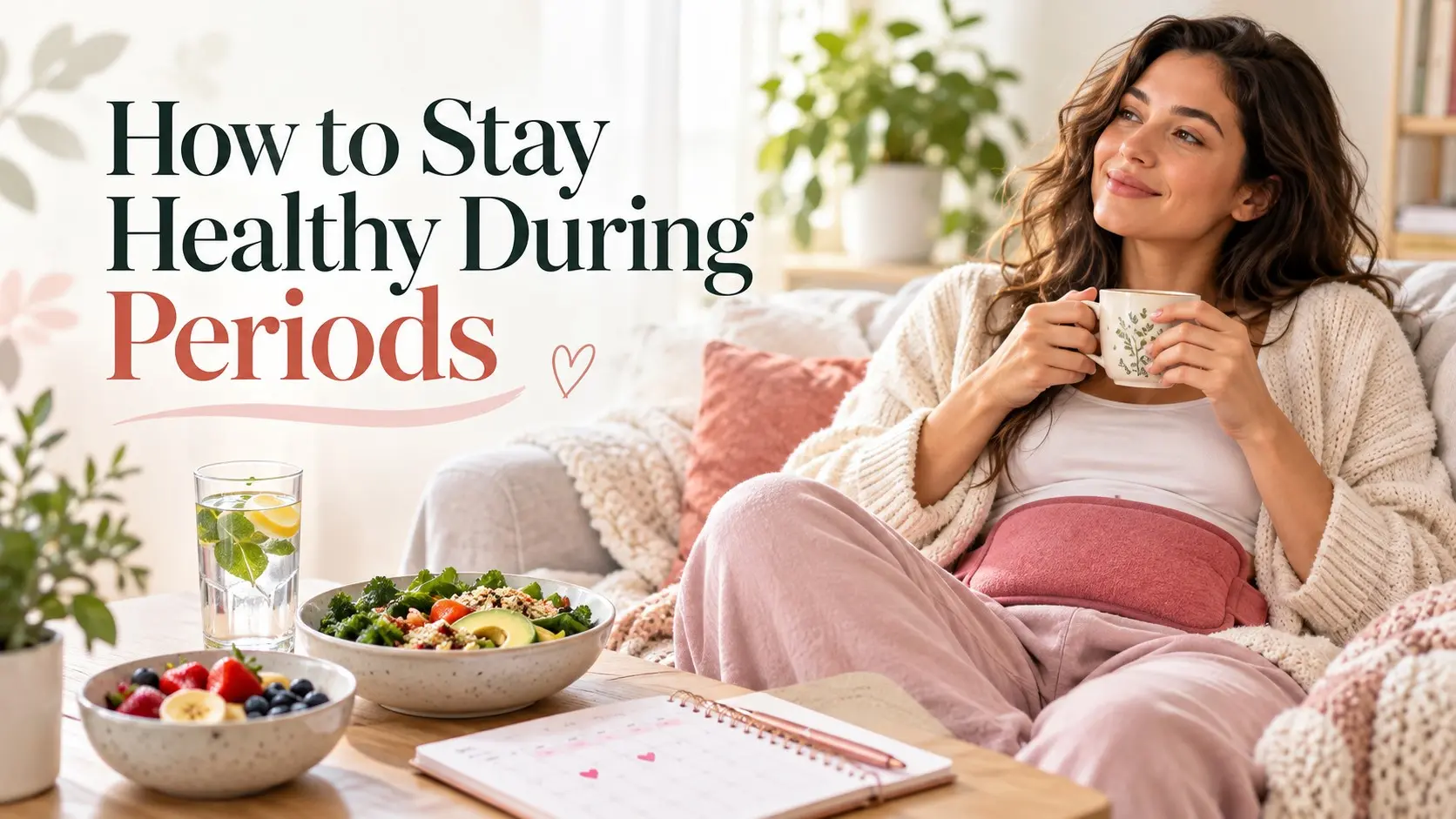
How to Stay Healthy During Periods starts with simple care: use clean menstrual products correctly, eat regular nutritious meals, drink enough fluid, stay active if you feel able, use heat or suitable pain relief for cramps, protect your sleep, and pay attention to bleeding, pain, fatigue, and mood changes that feel unusual for you.
A period does not require a special detox, restrictive diet, or total break from exercise.
It does deserve attention.
Your period can give useful clues about your health, especially when the bleeding suddenly becomes much heavier, pain begins interfering with daily life, or fatigue and shortness of breath suggest possible iron deficiency.
Medical note: This article is for general information and education. It does not replace medical advice, diagnosis, or treatment.
I am not a dermatologist or a doctor, and this content does not replace professional medical advice. What I share comes from real life experience, extensive research, and consultation with healthcare providers. Always consult qualified medical professionals for diagnosis and treatment of any health condition.
Medical review status: This article has not been independently medically reviewed by a gynecologist, physician, registered dietitian, pharmacist, or other licensed healthcare professional.
Get prompt medical help if:
- You are soaking through a pad or tampon about every hour for several hours.
- You feel faint, very weak, short of breath, or have chest pain during heavy bleeding.
- Your period pain is sudden, severe, or much worse than usual.
- You have heavy bleeding with a possible pregnancy.
- You develop fever with severe pelvic pain.
- You have thoughts of harming yourself or feel unable to stay safe.
Heavy menstrual bleeding, severe pain, or major mood changes should not be dismissed as something you simply have to tolerate.
Table of Contents
- What Healthy Period Care Means
- 12 Effective Period Health Tips
- Track Your Cycle
- Use Menstrual Products Safely
- Keep the Vulva Clean
- Use Heat for Cramps
- Choose Pain Relief Safely
- Stay Hydrated
- Eat for Energy and Iron
- Keep Moving
- Protect Sleep and Rest
- Manage Bloating and Bowel Changes
- Support Mood and Stress
- Know When Symptoms Need Care
- What to Eat During Your Period
- Exercise During Menstruation
- Heavy Bleeding and Iron
- Normal Cramps vs Severe Pain
- Menstrual Hygiene
- PMS and Mood Changes
- Period Myths
- Frequently Asked Questions
- References and Sources
What Does Healthy Period Care Really Mean?
Menstrual health is more than managing blood flow.
WHO describes menstrual health as having accurate information, safe menstrual materials, clean facilities, freedom from stigma, and access to medical care when symptoms are difficult or abnormal.
People can experience very different periods.
Common symptoms include:
- Period cramps
- Bloating
- Fatigue
- Headache
- Back discomfort
- Breast tenderness
- Loose stool or constipation
- Mood changes
- Food cravings
Mild symptoms that improve within a few days are common.
Pain or bleeding that stops you from going to work, school, exercising, sleeping, or doing normal activities deserves medical attention.
For more women’s health topics, visit the NextFitLife Women’s Health Hub.
12 Effective Tips for How to Stay Healthy During Periods
1. Track Your Cycle, Flow, Pain, and Mood
Before changing your diet or buying supplements, learn your own pattern.
Period tracking can show you:
- How often periods occur
- How many days bleeding lasts
- Which days are heaviest
- How often you change menstrual products
- Whether you pass large clots
- When cramps begin
- How severe the pain becomes
- Whether mood changes happen before or during bleeding
Mayo Clinic recommends tracking menstrual cycles because changes in bleeding, timing, or pain can provide useful health information.
One unusual period does not always signal a problem.
A repeated change is more useful to record.
2. Use Menstrual Products Safely
There is no single “healthiest” menstrual product.
You can use:
- Pads
- Tampons
- Menstrual cups
- Menstrual discs
- Period underwear
- Reusable pads
Choose what fits your body, flow, access, comfort, and daily routine.
The CDC advises changing menstrual products regularly and following the instructions that come with each product.
Wash your hands before and after changing a product.
Reusable products should be cleaned, dried, and stored according to their instructions.
Do not keep a menstrual product in place longer than its manufacturer recommends simply to avoid changing it.
3. Keep the Vulva Clean Without Trying to Clean Inside the Vagina
This is one of the easiest ways to improve menstrual hygiene.
The vagina cleans itself.
You do not need to douche, steam, deodorize, or wash inside it.
CDC recommends cleaning the outside genital area, the vulva, while avoiding scented menstrual and hygiene products if they cause irritation.
A simple routine is enough:
- Wash the vulva gently.
- Change damp underwear.
- Wear breathable clothing when comfortable.
- Wipe from front to back after using the toilet.
- Avoid strongly scented sprays or washes around the vulva.
If you develop unusual discharge, strong odor, severe itching, sores, or burning, do not assume menstruation is the cause.
4. Use Heat for Period Cramps
A heating pad or warm water bottle can be remarkably useful.
WHO and NHS guidance both include heat among practical ways to manage menstrual pain.
Apply comfortable warmth to the lower abdomen or lower back.
Protect the skin with a layer of cloth and avoid very high temperatures.
A warm bath or shower can also feel soothing.
Heat helps symptoms.
It does not treat an underlying condition such as endometriosis, fibroids, or adenomyosis if one of those is causing the pain.
5. Use Pain Medicine Safely When You Need It
Anti inflammatory medicines such as ibuprofen and naproxen can be effective for primary dysmenorrhea.
ACOG explains that these medicines reduce prostaglandins, chemicals involved in uterine contractions and cramping.
They tend to work best when started at the beginning of the period or when pain first appears.
But they are not safe for everyone.
Ask a doctor or pharmacist before using an NSAID if you have:
- Stomach ulcers
- Kidney disease
- A bleeding disorder
- Some forms of asthma
- An aspirin allergy
- Liver disease
- Blood thinning medicine
- Pregnancy or possible pregnancy
Do not take more than the package instructions recommend.
If ordinary pain medicine no longer works, get the cause checked rather than repeatedly increasing the dose.
6. Drink Enough Fluid, but Do Not Force a Fixed Amount
Hydration matters, but your body does not suddenly require a universal eight glasses because you are menstruating.
Drink regularly and use thirst as a practical guide unless a healthcare professional has given you different instructions.
You may need more fluid if you:
- Exercise
- Live in hot weather
- Have diarrhea
- Are vomiting
- Sweat heavily
Water is a simple choice.
Fruit, vegetables, soups, milk, and other drinks also contribute to fluid intake.
If you have kidney disease, heart failure, or another condition that requires fluid limits, follow your medical plan.
7. Eat for Energy, Protein, Fiber, and Iron
You do not need a special “period diet.”
A normal balanced eating pattern works well for most people.
Include:
- Vegetables
- Fruit
- Whole grains
- Beans and lentils
- Fish
- Eggs
- Poultry or lean meat if you eat them
- Tofu and other plant proteins
- Nuts and seeds
- Suitable dairy foods or alternatives
Iron deserves extra attention when bleeding is heavy.
Iron rich foods include red meat, poultry, seafood, lentils, beans, tofu, fortified cereals, pumpkin seeds, and dark green vegetables.
Vitamin C can improve absorption of non heme iron from plant foods.
Pair beans, lentils, or fortified cereal with foods such as peppers, oranges, kiwi, tomatoes, or berries.
For more detail, read Foods That Help Iron Absorption.
Do not start high dose iron just because you have a period.
Iron supplements can cause constipation, nausea, and other side effects, and they should be used when there is a reason for them.
8. Keep Moving if You Feel Able
You do not have to stop exercising because your period started.
The Office on Women’s Health reports that researchers have not found a general reduction in a woman’s ability to exercise across the menstrual cycle.
Regular movement may also help some people with cramps.
Useful options include:
- Walking
- Strength training
- Swimming
- Cycling
- Yoga
- Stretching
- Normal sports
The important part is how you feel.
If you normally train hard and feel good, menstruation alone does not require you to switch to gentle exercise.
If cramps or fatigue are strong, lower the intensity.
For more activity guidance, see Benefits of Physical Activity.
9. Protect Your Sleep and Give Yourself Permission to Rest
Some people feel more tired before or during a period.
Pain, headaches, mood changes, and bleeding can also make sleep harder.
Try to keep a regular sleep schedule and give yourself enough time to sleep.
A comfortable sleep routine can include:
- A regular bedtime
- A cool, dark room
- Less late caffeine if it affects you
- A warm shower
- Heat for cramps before bed
- A clean menstrual product that suits your overnight flow
If fatigue is severe even after enough sleep, especially with heavy periods, ask whether anemia could be contributing.
For better sleep habits, read Sleep Hygiene.
10. Manage Bloating, Diarrhea, and Other Digestive Changes
Your period can affect the gut too.
Some people notice:
- Period bloating
- Loose stool
- Diarrhea
- Constipation
- Nausea
- Food cravings
Keep meals regular rather than skipping food all day.
If large meals worsen bloating, try smaller meals.
Very salty foods can make fluid retention feel worse for some people.
There is no need to cut out entire food groups unless you have a specific reason.
If diarrhea is your main issue, see How to Stop Diarrhea on Period.
11. Pay Attention to Mood as Well as Physical Symptoms
PMS symptoms can include irritability, sadness, anxiety, tiredness, sleep trouble, cravings, headaches, bloating, and breast tenderness.
Useful support can include:
- Regular activity
- Enough sleep
- Normal meals
- Stress management
- Talking with someone you trust
- Tracking mood symptoms across several cycles
If severe depression, anxiety, rage, or hopelessness appears predictably before your period and interferes with normal life, ask about premenstrual dysphoric disorder, or PMDD.
PMDD is a medical condition.
It is not a lack of self control.
If you have thoughts of harming yourself, seek urgent mental health support.
For broader emotional health guidance, visit the Mental Health and Wellness Hub.
12. Learn Which Period Symptoms Should Be Checked
This is the habit that prevents “normal period” advice from hiding a real health problem.
Talk with a healthcare professional when you have:
- Very heavy bleeding
- Bleeding lasting longer than usual
- New bleeding between periods
- Severe pain that stops normal activities
- Pain that is becoming worse over time
- Pain outside your period
- Large frequent clots
- Periods that become suddenly irregular
- Persistent fatigue
- Dizziness or shortness of breath
- Major mood symptoms
Possible causes can include endometriosis, uterine fibroids, adenomyosis, thyroid disorders, bleeding disorders, PCOS, or other conditions.
Period symptoms deserve proper evaluation when they change your ability to live normally.
What Should You Eat During Your Period?
There is no single best food for menstruation.
A better goal is a varied eating pattern that supports energy, protein, fiber, and micronutrients.
| Need | Food Examples | Why It Helps |
|---|---|---|
| Iron | Meat, lentils, beans, tofu, fortified cereal, leafy greens | Supports red blood cell production |
| Vitamin C | Peppers, citrus, kiwi, berries, tomatoes | Helps absorb plant based iron |
| Protein | Eggs, fish, poultry, yogurt, tofu, legumes | Supports normal body function and satiety |
| Fiber | Oats, vegetables, fruit, beans, whole grains | Supports bowel regularity |
| Fluids | Water, milk, soup, fruit, vegetables | Supports normal hydration |
If you want a broader eating framework, read Healthy Eating Lifestyle.
Do You Need Extra Iron During Every Period?
No.
Menstruation causes iron loss, but that does not mean everyone who menstruates needs an iron supplement.
The concern rises when bleeding is heavy or when symptoms suggest iron deficiency anemia.
Possible clues include:
- Unusual fatigue
- Weakness
- Dizziness
- Shortness of breath
- Pale skin
- Fast heartbeat
- Reduced exercise tolerance
WHO notes that heavy menstrual bleeding can contribute to iron deficiency anemia.
If you have these symptoms, ask whether a blood count and iron testing are appropriate.
For a deeper explanation, see How to Treat Iron Deficiency Anemia.
Can You Exercise Normally During Your Period?
Yes, if you feel well enough.
You do not need to avoid lifting weights, running, swimming, or another normal workout just because you are menstruating.
The Office on Women’s Health reports no consistent general loss in exercise ability across the menstrual cycle.
Adjust intensity based on symptoms rather than a rigid cycle rule.
| How You Feel | Reasonable Choice |
|---|---|
| Normal energy | Follow your usual workout |
| Mild cramps | Walk, cycle, stretch, swim, or train normally if comfortable |
| Low energy | Reduce duration or intensity |
| Dizziness or severe weakness | Stop and consider medical assessment |
What Is the Best Way to Relieve Period Cramps?
For typical primary cramps, several approaches have reasonable support.
- Heat
- Gentle or normal exercise as tolerated
- NSAID pain medicine when safe for you
- A warm bath or shower
- Gentle massage
- Enough sleep
ACOG explains that anti inflammatory medicines work by reducing prostaglandins, while NHS guidance recommends warmth and movement among home measures.
If cramps are severe enough to stop daily activities, treatment should not end with another heating pad.
Conditions such as endometriosis, fibroids, and adenomyosis can cause secondary dysmenorrhea.
How Much Bleeding Is Too Much?
There is no need to measure menstrual blood in milliliters at home.
Use practical signs.
Heavy bleeding is more likely when you:
- Need to change a pad or tampon every one to two hours
- Need more than one type of menstrual product together
- Bleed through clothing or bedding
- Pass repeated large clots
- Bleed for longer than about a week
- Cancel activities because of the bleeding
- Feel weak, dizzy, breathless, or unusually exhausted
NHS and the Office on Women’s Health both recommend medical assessment for this pattern.
Heavy periods are treatable.
Possible causes include fibroids, adenomyosis, ovulation problems, thyroid disease, bleeding disorders, and other conditions.
Period Hygiene: What Actually Matters?
The basics are simpler than social media sometimes makes them look.
- Wash your hands before and after changing a period product.
- Change products regularly according to their instructions.
- Keep reusable products clean and dry.
- Clean only the outside genital area.
- Avoid douching.
- Use unscented products if fragrances irritate your skin.
- Store unused menstrual products somewhere clean and dry.
You do not need intimate deodorant, vaginal wash, steam, or perfume to have good hygiene.
What About Caffeine, Salt, Sugar, and Alcohol?
You do not need a universal “forbidden foods” list during your period.
Instead, notice your own symptoms.
If high salt meals make bloating worse, reduce them.
If large amounts of caffeine worsen anxiety, headaches, sleep, or breast tenderness, use less.
If alcohol makes sleep, cramps, or mood worse, reduce or avoid it.
Sugary food is not dangerous because you are menstruating, but relying mainly on sweets can leave little room for foods that provide protein, iron, fiber, and other nutrients.
The goal is a balanced eating pattern, not food guilt.
Should You Take Magnesium or Herbal Supplements for Period Pain?
Do not assume “natural” means harmless.
Supplements can vary in dose, purity, and interaction risk.
Some products can interact with medicines or affect bleeding.
The older version of this article recommended several herbs too casually.
A safer approach is to start with heat, suitable pain medicine, sleep, food, and movement.
If you want to try a supplement for recurring period symptoms, discuss the product and dose with a healthcare professional who knows your medical history.
Is Cycle Syncing Necessary?
No.
You can adjust exercise, food, and workload according to how you feel without following a rigid cycle syncing program.
Cleveland Clinic’s 2026 review describes cycle syncing as adapting habits around changes in energy and symptoms, but it does not mean every person follows the same pattern.
Your own response matters more than an internet chart telling you exactly how energetic you should feel on day 14 or day 25.
When Period Pain Is Not “Just Cramps”
See a healthcare professional if pain:
- Stops you from working or studying
- Is getting worse each year
- Occurs outside your period
- Does not improve with ordinary pain treatment
- Occurs with very heavy bleeding
- Occurs during sex
- Occurs with bowel or bladder symptoms
Possible causes include:
- Endometriosis
- Adenomyosis
- Fibroids
- Pelvic inflammatory disease
- Ovarian cysts
Severe pain deserves an explanation.
A Simple Period Day Plan
Morning
- Change your menstrual product.
- Eat a normal breakfast if hungry.
- Drink something.
- Use heat if cramps are active.
- Take suitable pain medicine if needed and safe for you.
During the Day
- Change period products regularly.
- Eat normal balanced meals.
- Include an iron rich food if bleeding is heavy.
- Move your body if comfortable.
- Note unusual bleeding, pain, dizziness, or fatigue.
Evening
- Use a warm shower or heat for cramps.
- Choose an overnight menstrual product suitable for your flow.
- Wind down for sleep.
- Record your symptoms if you are tracking the cycle.
Period Health Myths to Leave Behind
Myth: You Should Not Exercise During Your Period
False.
You can exercise normally if you feel well enough.
Myth: You Need a Special Detox During Menstruation
False.
Your liver and kidneys already handle waste removal.
Myth: Severe Period Pain Is Always Normal
False.
Common does not mean something should be ignored when it disrupts daily life.
Myth: You Should Wash Inside the Vagina During Your Period
False.
The vagina is self cleaning. Clean the external vulva instead.
Myth: Everyone Needs Iron Supplements During Their Period
False.
Some people need iron because of deficiency or heavy bleeding. Many do not.
Myth: Every Person Should Follow the Same Period Diet
False.
A balanced diet matters more than a rigid menstrual menu.
Conclusion
How to Stay Healthy During Periods does not require a complicated monthly routine.
Use menstrual products safely, keep the vulva clean, eat regular nutritious meals, stay hydrated, move if you feel able, protect your sleep, use heat or suitable pain medicine for cramps, and pay attention to changes in flow, pain, energy, and mood.
Most importantly, do not normalize symptoms that are controlling your life.
If bleeding becomes very heavy, pain becomes severe, or you develop dizziness, shortness of breath, major fatigue, or serious mood changes, arrange medical care instead of simply trying to push through another period.
References and Sources
- World Health Organization. Menstrual Health.
https://www.who.int/news-room/fact-sheets/detail/menstrual-health - Centers for Disease Control and Prevention. Healthy Habits: Menstrual Hygiene.
https://www.cdc.gov/hygiene/about/menstrual-hygiene.html - American College of Obstetricians and Gynecologists. Dysmenorrhea: Painful Periods.
https://www.acog.org/womens-health/faqs/dysmenorrhea-painful-periods - Office on Women’s Health. Period Problems.
https://womenshealth.gov/menstrual-cycle/period-problems - Office on Women’s Health. Physical Activity and Your Menstrual Cycle.
https://womenshealth.gov/getting-active/physical-activity-menstrual-cycle - Mayo Clinic. Menstrual Cycle: What Is Typical and What Is Not.
https://www.mayoclinic.org/healthy-lifestyle/womens-health/in-depth/menstrual-cycle/art-20047186 - NHS. Period Pain.
https://www.nhs.uk/symptoms/period-pain/ - NHS. Heavy Periods.
https://www.nhs.uk/conditions/heavy-periods/ - World Health Organization. Anaemia.
https://www.who.int/news-room/fact-sheets/detail/anaemia
Internal Links + Hub
- Women’s Health Hub
- NextFitLife Health Hub
- Healthy Eating Lifestyle
- Foods That Help Iron Absorption
- How to Treat Iron Deficiency Anemia
- Iron Deficiency and Dizziness When Standing
- Benefits of Physical Activity
- Sleep Hygiene
- Mental Health and Wellness Hub
- How to Stop Diarrhea on Period
- Endometriosis Diet
- What Causes Lower Back Pain in Females?
About the Author
Adel Galal is the Founder and Lead Writer at NextFitLife. He researches and writes educational content about health, fitness, foods and nutrition, sleep, wellness, and healthy aging.
Adel has maintained a personal interest in health, fitness, nutrition, sleep, wellness, and healthy aging for more than 30 years. His health and wellness writing experience spans more than 15 years.
His approach is to compare guidance from major public health and medical organizations, separate established recommendations from trends, and make clear when common symptoms deserve professional care.
Adel is not a physician, gynecologist, registered dietitian, pharmacist, physiotherapist, psychologist, or other licensed healthcare professional. NextFitLife content is educational and does not replace professional medical advice, diagnosis, treatment, nutrition care, or emergency assessment.
Learn more about Adel and NextFitLife on the About Us page.
Frequently Asked Questions
How to Stay Healthy During Periods?
Use menstrual products safely, wash the external vulva, eat regular balanced meals, drink enough fluid, stay active if comfortable, use heat or suitable pain medicine for cramps, sleep enough, and track unusual changes in bleeding, pain, energy, or mood.
What foods are best during a period?
There is no single best period food. Choose a balanced mix of vegetables, fruit, whole grains, protein foods, beans, lentils, nuts, seeds, and suitable dairy foods or alternatives. Iron rich foods are especially useful when menstrual bleeding is heavy.
Should I drink more water during my period?
Drink enough to stay normally hydrated. There is no universal extra amount required simply because you are menstruating. Needs rise with heat, exercise, diarrhea, vomiting, and other fluid losses.
Can I exercise during my period?
Yes. Most people can exercise normally during menstruation. Walking, swimming, cycling, strength training, yoga, and other activities are all reasonable if you feel well enough.
What helps period cramps?
Heat, movement, a warm shower, gentle massage, and suitable pain medicine can help. NSAIDs such as ibuprofen or naproxen are often effective when safe for you. Severe or worsening cramps need medical assessment.
How do I know if my period is too heavy?
Heavy bleeding may mean changing a pad or tampon every one to two hours, bleeding through clothes or bedding, passing repeated large clots, bleeding for more than about a week, or feeling weak, dizzy, or short of breath.
Can heavy periods cause iron deficiency?
Yes. Heavy menstrual bleeding can contribute to iron deficiency and iron deficiency anemia. Symptoms can include fatigue, weakness, dizziness, pale skin, fast heartbeat, and shortness of breath.
Should everyone take iron during their period?
No. Iron supplements are useful when there is iron deficiency or another clear medical reason. They can cause side effects and should not be taken routinely just because menstruation occurs.
Should I avoid caffeine during my period?
Not everyone needs to avoid caffeine. Reduce it if you notice that it worsens headaches, anxiety, sleep, breast tenderness, or another symptom.
Is it safe to shower during a period?
Yes. Showering is safe during menstruation. Clean the external vulva gently. There is no need to wash inside the vagina or use vaginal deodorants or douches.
When should period pain be checked by a doctor?
Seek medical advice when pain stops normal activities, gets worse over time, occurs outside menstruation, does not respond to usual treatment, or occurs with very heavy bleeding or other unusual symptoms.
Can period mood changes be serious?
Yes. Mild mood changes can occur with PMS, but severe depression, anxiety, anger, or hopelessness that repeatedly appears around the menstrual cycle may need assessment for PMDD or another mental health condition.

Health & wellness writer with 30+ years of experience in nutrition, fitness, and healthy aging. Founder of NextFitLife.com — evidence-based health guidance.

