Published: July 22, 2026Last updated: July 22, 2026
Next review: July 2027, or earlier if heat-illness first-aid guidance changes
Written by: Adel Galal, Founder and Lead Writer at NextFitLife
Review status: Written and source checked by Adel Galal. Not medically reviewed by a doctor, emergency physician, paramedic, sports-medicine specialist, occupational-health clinician, pharmacist, or registered nurse.
Reading time: About 20 minutes
Confusion, unusual behavior, slurred speech, seizure, fainting, collapse, or loss of consciousness after heat exposure should be treated as heat stroke even when a thermometer is unavailable.
The skin may be hot and dry, but a person with exertional heat stroke may still sweat heavily. Sweating does not rule it out.
Call emergency services immediately and begin rapid cooling at the same time.
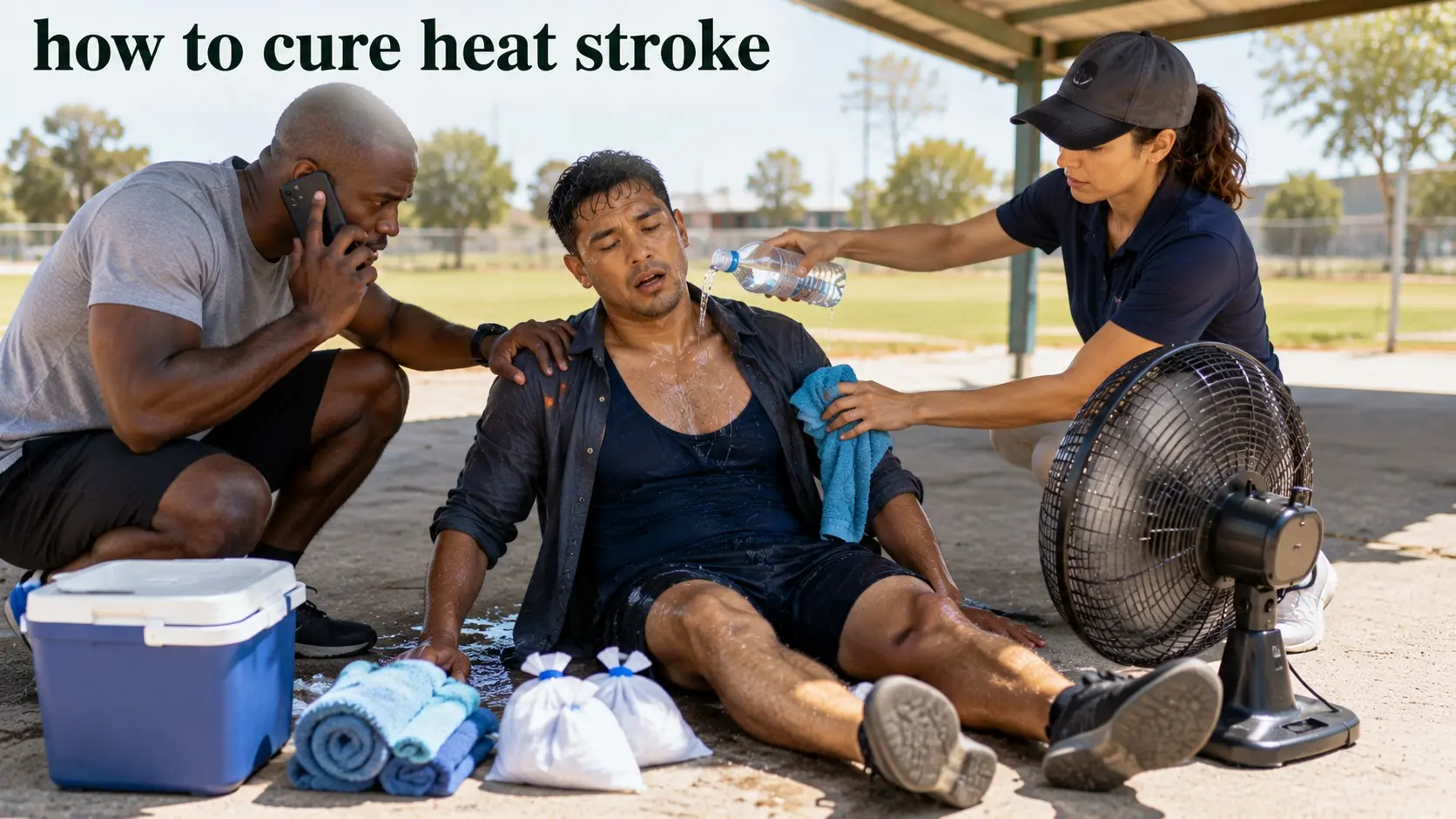
Move the person out of the heat. Remove unnecessary clothing and equipment. Use cold-water immersion when it is available and safe, or soak the skin and clothing with cool water while fanning continuously. Wrapped cold packs can be placed around the neck, armpits, and groin while more effective whole-body cooling is arranged.
Do not give food, drinks, or medicine to someone who is confused, drowsy, having a seizure, vomiting, or unable to swallow safely.
Do not use paracetamol, acetaminophen, aspirin, ibuprofen, alcohol rubs, salt tablets, or “detox” remedies. Heat stroke is not a fever caused by infection, and these treatments do not correct dangerous overheating.
Start with the First Aid and Home Remedies Hub for more emergency-safety topics. For cardiovascular risks made worse by extreme heat, visit the Heart and Cardiovascular Health Hub.
Quick Answer: How Do You Treat Heat Stroke?
- Call emergency services immediately.
- Begin cooling without delay.
- Move the person to shade or air conditioning.
- Remove excess clothing and sports or work equipment.
- Use cold-water immersion when practical and safe.
- When immersion is unavailable, wet the skin and clothing with cool water and fan continuously.
- Use wrapped cold packs at the neck, armpits, and groin as an additional measure.
- Monitor breathing and responsiveness.
- Place an unresponsive but breathing person on their side when cooling can continue safely.
- Start CPR if they are not breathing normally and you are trained or instructed by emergency dispatch.
Do not wait for a temperature reading before acting when altered mental status follows heat exposure or strenuous activity.
Review and Medical Notice
This article was written and source checked by Adel Galal.
Adel is a health and wellness writer. He is not a doctor, emergency physician, paramedic, sports-medicine specialist, occupational-health clinician, pharmacist, or registered nurse.
This guide cannot diagnose heat stroke, measure core temperature accurately, replace emergency services, supervise cold-water immersion, prescribe fluid treatment, or determine when someone can safely return to work or exercise.
NextFitLife uses display advertising to support the website. Advertising does not determine the emergency instructions, cooling advice, sources, or conclusions on this page.
Read the Editorial Policy, Medical Review Policy, and Corrections Policy.
What Is Heat Stroke?
Heat stroke is the most severe heat-related illness.
It occurs when heat production and environmental heat overwhelm the body’s ability to cool itself.
The defining danger is central nervous system dysfunction, such as:
- Confusion
- Unusual behavior
- Agitation
- Slurred speech
- Poor coordination
- Seizure
- Fainting
- Loss of consciousness
Core body temperature is often around 40°C or 104°F or higher, but first-aid action should not depend on obtaining that number.
Heat stroke can damage the brain, heart, kidneys, liver, muscles, and blood-clotting system.
The longer dangerous hyperthermia continues, the greater the risk of permanent disability or death.
Heat Stroke Symptoms
Possible signs include:
- Confusion, disorientation, or unusual behavior
- Slurred speech
- Seizure
- Fainting or collapse
- Severe weakness or poor coordination
- Very high body temperature
- Hot skin
- Heavy sweating or dry skin
- Fast breathing
- Rapid heartbeat
- Headache
- Nausea or vomiting
- Muscle cramps or weakness
Do not require every symptom to be present.
Altered thinking or consciousness after heat exposure is enough to treat the situation as an emergency.
Extreme heat can also worsen heart, kidney, lung, and blood-pressure conditions. Read How to Check Heart Health at Home, Kidney Disease Symptoms, and Blood Pressure Signs and Symptoms for related warning signs.
Heat Exhaustion Versus Heat Stroke
| Feature | Heat exhaustion | Heat stroke |
|---|---|---|
| Mental status | Usually alert, although weak or dizzy | Confusion, altered behavior, seizure, fainting, or unconsciousness |
| Temperature | May be elevated | Often very high, but do not wait for measurement |
| Sweating | Often heavy | May be heavy or absent |
| Typical action | Stop activity, cool, rest, and hydrate if fully alert | Call emergency services and cool immediately |
Heat exhaustion may cause:
- Tiredness
- Dizziness
- Headache
- Nausea
- Heavy sweating
- Pale or clammy skin
- Muscle cramps
- Thirst
- Fast breathing or heartbeat
Move the person to a cool place, remove unnecessary clothing, cool the skin, and offer cool fluids only when the person is fully alert and able to swallow.
If symptoms worsen, do not improve promptly, or include confusion or fainting, call emergency services and treat the condition as possible heat stroke.
Emergency First Aid for Suspected Heat Stroke
1. Call Emergency Services
Call immediately. Put the phone on speaker so cooling can begin while you follow the dispatcher’s instructions.
2. Move Away From Heat
Move the person into shade, air conditioning, or the coolest available location.
3. Remove Heat-Trapping Items
Remove unnecessary outer clothing, helmets, pads, packs, and protective equipment when it can be done safely.
4. Begin Rapid Cooling
Use the fastest effective method available without delaying the emergency call.
5. Keep the Airway Safe
Do not give drinks to a confused, drowsy, vomiting, seizing, or unconscious person.
6. Monitor Breathing
If the person is unresponsive but breathing, place them on their side when this does not interrupt effective cooling.
If they are not breathing normally, begin CPR according to your training or emergency-dispatch instructions.
7. Do Not Leave the Person Alone
Heat illness can worsen quickly. Continue cooling and monitoring until emergency professionals take over.
How to Cool Someone With Heat Stroke
Cold-Water Immersion
For exertional heat stroke, immersing most of the body in cold or ice water is one of the fastest cooling methods when trained helpers and a suitable container are available.
Keep the head and airway supported above water.
Continue to monitor breathing and responsiveness.
Do not delay the emergency call while preparing immersion.
Water and Continuous Fanning
When immersion is unavailable:
- Soak the skin and light clothing with cool water.
- Fan the person continuously.
- Reapply water as it evaporates.
- Turn the person carefully so more skin can be cooled.
Cold Shower or Hose
A cool shower or hose may help when it can be used safely and does not create a fall, drowning, or electrical hazard.
Wrapped Cold Packs
Place wrapped cold packs around the neck, armpits, and groin as an additional cooling measure.
Do not rely only on a few cold packs when whole-body cooling is possible.
Cool Wet Sheets
Wrap the person in cool wet sheets and fan vigorously when other cooling options are not available.
Replace or re-wet the material frequently.
Dangerous Heat-Stroke Mistakes to Avoid
- Do not wait for a thermometer. Altered mental status after heat exposure is an emergency.
- Do not wait to see whether rest alone works.
- Do not leave the person alone.
- Do not give fever-reducing medicine. Paracetamol, acetaminophen, aspirin, and ibuprofen do not treat heat stroke.
- Do not use alcohol rubs.
- Do not force fluids.
- Do not give salt tablets.
- Do not cover the person with dry blankets.
- Do not delay cooling while arranging transportation.
- Do not assume sweating rules out heat stroke.
- Do not send a confused person home to sleep.
- Do not allow an immediate return to work, sport, or driving.
Should Someone With Heat Stroke Drink Water?
Oral fluids are not the main treatment for heat stroke.
Do not give anything by mouth when the person is:
- Confused
- Drowsy
- Unconscious
- Having a seizure
- Vomiting
- Unable to swallow normally
Giving fluids in these situations can cause choking or aspiration.
A fully alert person with heat exhaustion may sip cool water or an appropriate rehydration drink while being cooled.
People with heart failure, kidney disease, or a prescribed fluid restriction need individualized hydration advice.
For general hydration habits, see Improve Health With a Busy Schedule and Why Do I Wake Up With Dry Mouth?.
Classic Versus Exertional Heat Stroke
Classic Heat Stroke
Classic heat stroke usually develops during environmental heat exposure.
It is more common in older adults, infants, people living without adequate cooling, and people with chronic illness or heat-risk medicines.
It may develop over hours or days during a heatwave.
Exertional Heat Stroke
Exertional heat stroke develops during intense physical activity, often in hot or humid conditions.
It may affect athletes, military personnel, outdoor workers, and people who are not acclimatized to heat.
Heavy sweating is common, so hot dry skin is not required for diagnosis.
Both types need emergency treatment and rapid cooling.
Who Is at Higher Risk?
Risk factors include:
- Older age
- Infancy and young childhood
- Pregnancy
- Heart disease
- Kidney disease
- Diabetes
- Respiratory disease
- Obesity
- Fever or recent illness
- Dehydration
- Alcohol or drug use
- Heavy protective clothing or equipment
- Strenuous activity
- Lack of heat acclimatization
- Living or working without adequate cooling
- Being alone during extreme heat
Visit the Kidney Health and Disease Hub and Diabetes and Blood Sugar Management Hub for conditions that can complicate heat exposure.
Medicines That May Increase Heat Risk
Some medicines can affect sweating, thirst, circulation, alertness, kidney function, or fluid balance.
Examples may include:
- Diuretics
- Some blood-pressure medicines
- Anticholinergic medicines
- Some antidepressants and antipsychotics
- Stimulants
- Some antihistamines
- Some medicines that affect kidney function
Do not stop prescribed medicine because hot weather is expected.
Ask a doctor or pharmacist how to manage heat exposure, hydration, and monitoring safely.
People taking blood-pressure medicine can review warning symptoms in Blood Pressure Signs and Symptoms and What Causes High Blood Pressure?.
How Heat Stroke Is Treated in Hospital
Hospital care may include:
- Continued rapid cooling
- Airway and breathing support
- Intravenous fluids selected according to clinical findings
- Electrolyte and glucose testing
- Kidney and liver tests
- Heart monitoring
- Testing for muscle breakdown
- Monitoring for bleeding or clotting problems
- Treatment of seizures or organ complications
Antibiotics and fever-reducing medicines do not treat heat stroke unless another condition is also present.
Even when the person looks better after cooling, organ injury may continue to develop. Medical evaluation is still required.
Heat-Stroke Recovery and Return to Activity
Recovery time varies according to illness severity and organ involvement.
After discharge, the medical team may recommend:
- Rest from heat exposure
- Repeat kidney, liver, muscle, or blood tests
- Medication review
- Gradual return to activity
- Supervised heat acclimatization
- Assessment before returning to intense sport or hot work
Do not return to strenuous exercise or hot work simply because the temperature has normalized.
Persistent fatigue, reduced urine, dark urine, muscle pain, confusion, chest symptoms, or breathlessness needs medical review.
How to Prevent Heat Stroke
Check the Forecast and Heat Risk
Plan around temperature, humidity, direct sun, workload, clothing, and access to shade or cooling.
Move Activity to Cooler Hours
Exercise or work earlier in the morning or later in the evening when possible.
Use Shade and Rest Breaks
Take scheduled breaks before symptoms begin.
Drink Regularly
Drink enough for the conditions and activity rather than waiting for intense thirst.
People with fluid restrictions should follow their clinician’s plan.
Wear Appropriate Clothing
Choose lightweight, loose, breathable clothing when job or sport safety allows.
Use a Buddy System
People experiencing heat illness may not recognize their own confusion.
Never Leave Anyone in a Parked Vehicle
Vehicle temperatures can become deadly quickly, even with windows partly open.
Check Vulnerable People
During heatwaves, check older adults, people living alone, pregnant people, infants, and people with chronic illness.
The Healthy Lifestyle Roadmap offers broader daily prevention habits, but emergency heat safety always takes priority.
Heat Safety for Workers
Outdoor and indoor workers can develop heat illness when environmental heat, physical workload, and protective clothing combine.
Prevention plans should include:
- Water access
- Rest breaks
- Shade or cooled recovery areas
- Training on symptoms and first aid
- A buddy system
- Emergency communication
- Workload adjustment
- Heat acclimatization
New and returning workers need gradual exposure.
NIOSH recommends building heat tolerance over approximately 7 to 14 days, with slower progression for new workers.
Symptoms should never be dismissed as weakness or lack of fitness.
Heat Safety for Athletes and Outdoor Exercise
Athletes should:
- Schedule training during cooler hours.
- Increase intensity gradually.
- Use rest and hydration breaks.
- Wear light clothing when appropriate.
- Monitor teammates.
- Stop immediately for faintness, weakness, confusion, or unusual behavior.
- Have an emergency cooling and communication plan.
Coaches should have cold-water immersion equipment available during high-risk practices and events when feasible.
For safer activity planning, read Walking Exercise for Seniors. Older adults should avoid outdoor exercise during dangerous heat.
Children, Babies, and Older Adults
Children and Babies
Children heat up faster and depend on adults for fluids, shade, and safe scheduling.
Never cover a stroller or pram with a blanket because airflow can be reduced and heat can build up.
Keep babies out of direct sun and never leave a child in a parked vehicle.
Older Adults
Older adults may have a reduced thirst response, chronic illness, limited mobility, or medicines that increase risk.
During heatwaves:
- Check in regularly.
- Ensure access to cooling.
- Review hydration instructions.
- Watch for confusion, weakness, falls, and reduced urine.
- Arrange help before indoor temperatures become dangerous.
Common Heat-Stroke Myths
Myth: Heat Stroke Can Be Cured With Water Alone
False. It requires emergency care and rapid cooling.
Myth: The Person Must Stop Sweating
False. Exertional heat stroke often includes heavy sweating.
Myth: You Must Confirm 104°F Before Calling
False. Confusion or collapse after heat exposure is enough to act.
Myth: Fever Medicine Lowers Heat-Stroke Temperature
False. Heat stroke is not an infectious fever.
Myth: Ice Packs Alone Are Always Enough
False. Whole-body cooling is generally more effective.
Myth: A Cold Shower Is Dangerous
False. Rapid external cooling is necessary, although safety and airway protection must be maintained.
Myth: Someone Who Feels Better Can Go Home
False. Suspected heat stroke requires medical evaluation.
Myth: Only Outdoor Workers Are at Risk
False. Hot indoor workplaces and homes can also be dangerous.
Myth: Fit Athletes Are Protected
False. Intense exertion can cause heat stroke in highly trained people.
Myth: Salt Tablets Prevent Heat Stroke
False. They can be harmful and do not replace a complete heat-safety plan.
Conclusion
Searching for how to cure heat stroke should lead to one clear message: do not attempt a home cure.
Heat stroke is a life-threatening emergency marked by dangerous overheating and brain dysfunction.
Call emergency services and begin rapid cooling immediately.
Cold-water immersion is a highly effective option for exertional heat stroke when it can be performed safely. Otherwise, soak the person with cool water, fan continuously, remove excess clothing, and use wrapped cold packs while help is coming.
Do not force fluids or give fever medicine.
Prevent heat stroke with acclimatization, water, shade, rest, workload changes, safe exercise timing, and attention to vulnerable people.
Recognize confusion early, call for help, and cool first while emergency care is on the way.
References and Sources
- CDC and NIOSH. Heat-Related Illnesses. Heat-stroke definition, symptoms, severity, and emergency response, updated March 2026.
- CDC Yellow Book. Heat and Cold Illness in Travelers. Heat stroke as a medical emergency requiring aggressive cooling and hospitalization.
- Occupational Safety and Health Administration. Heat-Related Illnesses and First Aid. Emergency calling and active cooling guidance.
- Occupational Safety and Health Administration. Heat Illness Signs and First Aid. Confusion, fainting, seizures, sweating, and skin findings.
- NHS. Heat Exhaustion and Heatstroke. Symptoms, cooling measures, and emergency action.
- World Health Organization. Climate Change, Heat and Health. Heat-stroke risk and the growing global burden of extreme heat, updated April 2026.
- World Health Organization. Tips for Keeping Cool. Hydration, clothing, shade, and prevention advice.
- CDC and NIOSH. Workplace Recommendations for Heat Stress. Water, rest, shade, training, and acclimatization.
- CDC and NIOSH. Acclimatization. Gradual exposure over 7 to 14 days, updated March 2026.
- Centers for Disease Control and Prevention. Heat and Athletes. Exercise timing, hydration, pacing, clothing, and buddy monitoring.
- CDC and NIOSH. OSHA-NIOSH Heat Safety Tool App. Local heat-index risk and prevention recommendations.
- Occupational Safety and Health Administration. Heat Case Studies. Heat illness can occur without record-breaking outdoor temperatures and may worsen quickly.
- NHS. Heatwave: How to Cope in Hot Weather. Current prevention and seasonal safety guidance, reviewed June 2026.
- World Health Organization. Heatwaves. Vulnerable groups and preventable health risks from extreme heat.
Internal Links and Related Hubs
Emergency and Warning-Sign Guides
- Blood Pressure Signs and Symptoms
- Signs of a Heart Attack
- Heart Failure Symptoms
- Kidney Disease Symptoms
- How to Check Heart Health at Home
Hydration, Activity, and Prevention Guides
- Healthy Lifestyle Roadmap
- Improve Health With a Busy Schedule
- Why Do I Wake Up With Dry Mouth?
- Walking Exercise for Seniors
- What Causes High Blood Pressure?
Main NextFitLife Hubs
Frequently Asked Questions
Can heat stroke be cured at home?
No. Suspected heat stroke requires emergency medical care and immediate active cooling while help is on the way.
What is the first thing to do for heat stroke?
Call emergency services, move the person out of the heat, remove excess clothing, and begin rapid whole-body cooling immediately.
Can someone have heat stroke while still sweating?
Yes. Heavy sweating is common in exertional heat stroke, so sweating does not rule out a medical emergency.
Do you need a 104°F temperature to diagnose heat stroke?
No. Confusion, seizure, fainting, or other altered mental status after heat exposure requires emergency action without waiting for a thermometer.
Should you give water to someone with heat stroke?
Do not give fluids to anyone who is confused, drowsy, vomiting, seizing, unconscious, or unable to swallow safely.
Is cold-water immersion safe for heat stroke?
Cold-water immersion is a rapid cooling method for exertional heat stroke when helpers can protect the airway, monitor the person, and call emergency services.
Can fever medicine treat heat stroke?
No. Paracetamol, acetaminophen, aspirin, and ibuprofen do not correct heat stroke and may create additional risk.
What is the difference between heat exhaustion and heat stroke?
Heat exhaustion usually does not cause severe mental-status changes. Confusion, seizure, fainting, or unconsciousness indicates possible heat stroke.
How long does heat stroke last?
The emergency overheating may improve with rapid cooling, but organ injury and fatigue can continue for days or longer and require medical follow-up.
Who is most at risk of heat stroke?
Older adults, infants, pregnant people, athletes, workers, people with chronic disease, and those taking certain medicines or lacking heat acclimatization are at higher risk.
How can heat stroke be prevented?
Use water, shade, rest breaks, gradual acclimatization, cooler activity times, appropriate clothing, buddy monitoring, and early action for heat-illness symptoms.
Is this article medically reviewed?
No. It was written and source checked using authoritative references, but it has not been medically reviewed by a doctor or emergency physician.
Heat-Stroke Medical Disclaimer
All content on NextFitLife is for educational and informational purposes only.
It does not replace emergency services, professional first-aid training, rapid clinical cooling, core-temperature measurement, hospital assessment, or personal medical advice.
Call emergency services for confusion, slurred speech, unusual behavior, seizure, fainting, collapse, loss of consciousness, or other altered mental status after heat exposure.
Begin active cooling immediately and do not force fluids or give fever medicine.

Health & wellness writer with 30+ years of experience in nutrition, fitness, and healthy aging. Founder of NextFitLife.com — evidence-based health guidance.