
Published: July 22, 2026Last updated: July 22, 2026
Next review: July 2027, or earlier if blood-pressure guidance changes
Written by: Adel Galal, Founder and Lead Writer at NextFitLife
Review status: Written and source-checked by Adel Galal. Not medically reviewed by a doctor, cardiologist, emergency physician, pharmacist, registered nurse, paramedic, or obstetrician.
Reading time: About 20 minutes
Wait at least one minute and repeat the measurement.
If the repeat reading remains that high and you have chest pain, shortness of breath, back pain, numbness, weakness, vision change, difficulty speaking, or another new and concerning symptom, call emergency services immediately.
Low blood pressure may cause dizziness, lightheadedness, blurred vision, weakness, nausea, confusion, or fainting.
During pregnancy or soon after childbirth, a persistent headache, visual change, swelling of the face or hands, upper-abdominal pain, nausea, breathing difficulty, or a high blood-pressure reading can signal preeclampsia and needs urgent obstetric assessment.
Do not try to lower a dangerous blood-pressure reading quickly with extra medicine, water, breathing exercises, supplements, or home remedies unless a qualified clinician has given you a specific action plan.
Blood Pressure Signs and Symptoms: Quick Answer
High blood pressure is usually silent.
The seven red-flag situations in this guide are:
- Extremely high blood pressure with chest pain or pressure
- Extremely high blood pressure with shortness of breath or back pain
- Extremely high blood pressure with weakness, numbness, or speech difficulty
- Extremely high blood pressure with sudden vision change or another neurologic symptom
- Fainting, confusion, or severe weakness with possible low blood pressure
- Persistent dizziness or blurred vision when standing
- Pregnancy or postpartum warning signs of preeclampsia
These are not seven routine symptoms that diagnose hypertension.
They are warning situations that may require urgent or emergency care.
Review and Medical Notice
This article was written and source-checked by Adel Galal.
Adel is a health and wellness writer. He is not a doctor, cardiologist, emergency physician, pharmacist, registered nurse, paramedic, obstetrician, or licensed medical professional.
This page cannot diagnose hypertension, hypotension, stroke, heart attack, preeclampsia, medication toxicity, or another medical condition.
NextFitLife uses display advertising to support the website. Advertising does not determine the emergency guidance, thresholds, references, or treatment information on this page.
Read the Editorial Policy, Medical Review Policy, and Corrections Policy.
High Blood Pressure Usually Has No Symptoms
High blood pressure is often called a silent condition because most people do not feel it.
The NHS states that hypertension rarely causes symptoms.
The CDC also emphasizes that measuring blood pressure is necessary because a person may not know it is high.
Do not use the absence of:
- Headache
- Dizziness
- Nosebleed
- Chest discomfort
- Fatigue
as proof that blood pressure is normal.
Likewise, these symptoms do not prove that blood pressure is high.
They have many possible causes.
Regular screening and correct measurement matter more than symptom guessing.
Seven Blood Pressure Red Flags to Watch
1. Extremely high blood pressure with chest pain
A repeat reading higher than 180 and/or 120 mm Hg with chest pain, pressure, tightness, or burning is a medical emergency.
Possible causes include:
- Heart attack
- Acute aortic disease
- Severe strain on the heart
- Another emergency occurring with severe hypertension
Call emergency services.
Do not drive yourself.
Do not take extra blood-pressure medicine or aspirin unless emergency professionals instruct you.
2. Extremely high blood pressure with shortness of Breath or back pain
Call emergency services when a repeat reading above 180 and/or 120 occurs with:
- Shortness of breath
- Severe back pain
- Sudden chest or abdominal pain
- Rapid deterioration
These symptoms may indicate heart failure, aortic disease, heart attack, or another emergency.
3. Weakness, Numbness, or Difficulty Speaking
Sudden:
- Facial weakness
- Arm or leg weakness
- Numbness on one side
- Slurred or confused speech
- Difficulty understanding words
May be stroke symptoms.
Call emergency services immediately.
Do not wait for another blood-pressure reading before calling.
4. Sudden Vision Change or Another Neurologic Symptom
A very high blood-pressure reading with sudden:
- Blurred or lost vision
- Double vision
- Severe balance loss
- Confusion
- Seizure
requires emergency assessment.
Vision symptoms can result from stroke, hypertensive injury, retinal disease, migraine, or another condition.
Do not diagnose the cause at home.
5. Fainting, Confusion, or Severe Weakness
Low blood pressure may reduce blood flow to the brain.
Call emergency services for:
- Fainting with injury
- Repeated fainting
- Confusion
- Cold or clammy skin
- Severe weakness
- Rapid breathing
- A weak, fast pulse
These may indicate shock, severe bleeding, infection, heart disease, dehydration, an allergic reaction, or another emergency.
6. Persistent Dizziness or Blurred Vision When Standing
Dizziness, weakness, nausea, blurred vision, or near-fainting after standing may indicate postural hypotension.
Sit or lie down safely to prevent a fall.
Arrange medical review when symptoms:
- Keep returning
- Cause falls
- Begin after a medicine change
- Occur with palpitations
- Are accompanied by weight loss, vomiting, diarrhea, or poor intake
Call emergency services when symptoms include chest pain, severe breathlessness, fainting, bleeding, or confusion.
7. Pregnancy or Postpartum Preeclampsia Warning Signs
Preeclampsia can occur during pregnancy or after childbirth.
Urgent warning signs include:
- A headache that does not go away
- Changes in vision or seeing spots
- Swelling of the face or hands
- Pain in the upper abdomen or right shoulder
- Nausea or vomiting in the second half of pregnancy
- Difficulty breathing
- A blood-pressure reading of 140/90 mm Hg or higher during pregnancy
- Severe-range blood pressure of 160/110 mm Hg or higher
Contact the obstetric team immediately.
Call emergency services for severe symptoms, seizure, collapse, chest pain, severe breathlessness, stroke symptoms, or rapid deterioration.
What to Do if Blood Pressure Is Above 180/120
If the monitor shows a systolic reading above 180 and/or a diastolic reading above 120:
- Stay seated and remain still.
- Wait at least one minute.
- Repeat the measurement using correct technique.
- Check for new symptoms.
Call emergency services when symptoms are present
Call immediately if the repeat reading remains extremely high and you have:
- Chest pain
- Shortness of breath
- Back pain
- Numbness
- Weakness
- Vision change
- Difficulty speaking
- Another new and concerning symptom
Do not wait to see whether it comes down by itself.
When there are no symptoms
When the repeat reading remains above 180 and/or 120 without symptoms, contact your healthcare professional immediately for advice.
This may be severe hypertension.
It still needs prompt attention.
Do not:
- Take an extra dose of medicine unless your written plan directs it
- Exercise
- Use a cold shower
- Drink alcohol
- Use herbal supplements
- Rely on deep breathing to correct the number
Symptoms of low blood pressure
The NHS lists possible hypotension symptoms, such as:
- Lightheadedness or dizziness
- Feeling sick
- Blurred vision
- General weakness
- Confusion
- Fainting
A low number alone is not always a problem.
Some healthy people naturally have readings below 90/60 mm Hg without symptoms.
Treatment depends on:
- Symptoms
- How quickly the pressure fell
- The cause
- Age and pregnancy status
- Medicine use
- Heart and neurologic conditions
New symptomatic low blood pressure needs assessment.
Postural Hypotension
Postural or orthostatic hypotension is a drop in blood pressure after standing from sitting or lying down.
Possible symptoms include:
- Lightheadedness
- Dizziness
- Blurred vision
- Weakness
- Nausea
- Unsteadiness
- Fainting
Possible contributors include:
- Dehydration
- Blood loss
- Medication
- Prolonged bed rest
- Diabetes
- Parkinson’s disease
- Heart disease
- Adrenal or endocrine disorders
- Heat
- Alcohol
Stand up slowly and hold a stable surface.
Do not stop medicine on your own.
A clinician may compare blood pressure and pulse while lying and standing.
Blood Pressure During Pregnancy and After Birth
Blood-pressure thresholds and treatment decisions during pregnancy differ from general adult care.
A reading of 140/90 mm Hg or higher during pregnancy is concerning and needs obstetric review.
ACOG identifies severe-range blood pressure as 160 systolic or 110 diastolic or higher.
Preeclampsia may develop without obvious symptoms.
Possible warning signs include:
- Persistent headache
- Vision change
- Face or hand swelling
- Upper-abdominal or shoulder pain
- Nausea or vomiting
- Difficulty breathing
- Abnormal kidney or liver tests
Preeclampsia can occur soon after childbirth.
Do not assume postpartum symptoms are caused by sleep loss, stress, migraine, or normal recovery.
Contact the obstetric team urgently.
Are Headaches and nosebleeds signs of high blood pressure?
Most people with high blood pressure do not have headaches or nosebleeds.
These symptoms are not reliable screening tools.
Headache
Headache may occur for many reasons, including:
- Migraine
- Viral illness
- Dehydration
- Medication effects
- Sleep problems
- Stress
- Very severe hypertension
Call emergency services for a sudden severe headache with weakness, speech difficulty, vision change, seizure, confusion, fainting, or an extremely high blood-pressure reading.
Nosebleed
Common causes include:
- Dry air
- Nose picking or injury
- Allergy or infection
- Blood-thinning medicine
- Nasal sprays
Frequent nosebleeds deserve medical review, but they do not prove hypertension.
For an active nosebleed:
- Sit upright.
- Lean slightly forward.
- Pinch the soft part of the nose continuously.
- Seek urgent care when bleeding is heavy, follows major injury, affects breathing, or does not stop.
What Blood Pressure Numbers Mean
Blood pressure is written as systolic over diastolic.
Systolic pressure is the pressure when the heart contracts.
Diastolic pressure is the pressure between beats.
| Category for most nonpregnant adults | Systolic | Diastolic |
|---|---|---|
| Normal | Below 120 | Below 80 |
| Elevated | 120 to 129 | Below 80 |
| Stage 1 hypertension | 130 to 139 | 80 to 89 |
| Stage 2 hypertension | 140 or higher | 90 or higher |
| Severe hypertension | Higher than 180 | And/or higher than 120 |
One reading does not diagnose hypertension.
Diagnosis usually depends on repeated readings or ambulatory monitoring.
Targets may differ for:
- Pregnancy
- Older adults
- Kidney disease
- Diabetes
- Previous stroke or heart disease
- Medication side effects
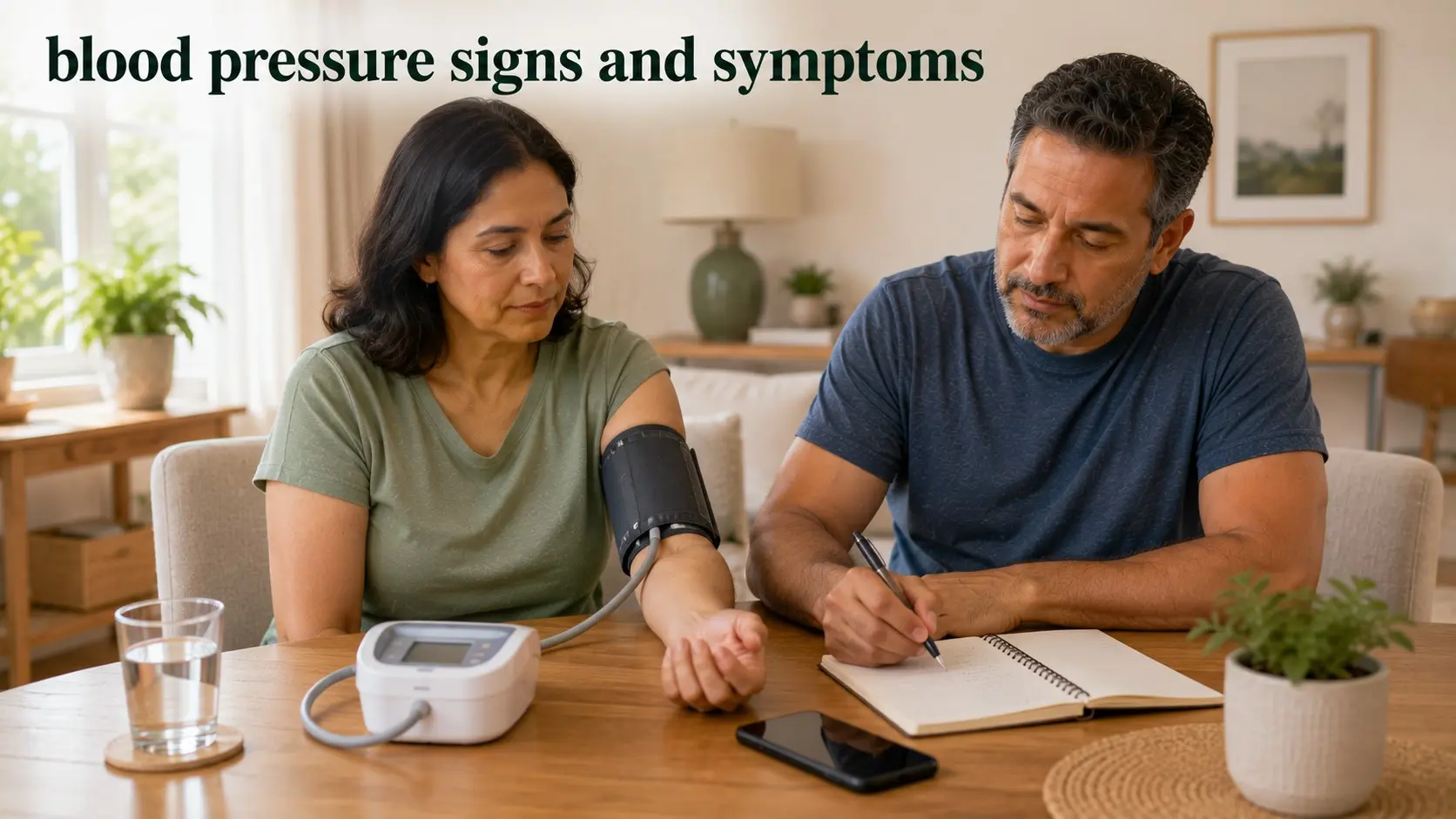
How to Measure Blood Pressure Correctly
Use a validated automatic upper-arm device with the correct cuff size.
Before Measuring
- Avoid exercise, caffeine, and smoking for at least 30 minutes.
- Empty your bladder.
- Sit quietly for five minutes.
- Do not talk or use the phone.
Correct Position
- Support your back.
- Keep both feet flat on the floor.
- Do not cross your legs.
- Put the cuff on bare skin.
- Support the arm at chest or heart level.
- Keep the hand relaxed.
Record the Result
- Take two readings one minute apart.
- Record the date, time, and both readings.
- Measure at similar times according to your clinician’s plan.
- Bring the monitor and log to appointments.
A cuff that is too small, talking, crossed legs, unsupported feet, or an arm below heart level can distort the result.
Causes and Risk Factors for High Blood Pressure
Most hypertension develops from a combination of age, genetics, and lifestyle or environmental factors.
Risk factors include:
- Family history
- Older age
- High-sodium eating pattern
- Low intake of potassium-rich foods
- Physical inactivity
- Excess body weight
- Smoking
- Heavy alcohol use
- Poor sleep
- Sleep apnea
- Diabetes
- Kidney disease
- Chronic stress
Secondary hypertension may be caused by:
- Kidney disease
- Renal artery disease
- Thyroid or adrenal disorders
- Pregnancy-related conditions
- Some medicines and substances
A person can have hypertension without obvious risk factors.
Causes of Low Blood Pressure
Possible causes include:
- Dehydration
- Bleeding
- Severe infection
- Allergic reaction
- Heart attack or heart failure
- Abnormal heart rhythm
- Pregnancy
- Endocrine disorders
- Anemia
- Prolonged bed rest
- Medication
Sudden hypotension with cold skin, rapid breathing, confusion, weakness, or fainting may indicate shock.
Call emergency services.
Medicines and Substances That Can Change Blood Pressure
Blood pressure may rise with:
- Some decongestants
- NSAID pain relievers
- Stimulant medication
- Cocaine or amphetamines
- Some hormonal medicines
- Licorice-containing products
- Some supplements
Blood pressure may fall with:
- Blood-pressure medicine
- Diuretics
- Nitrates
- Some antidepressants
- Parkinson’s medicines
- Alcohol
- Other medicines that affect circulation
Do not stop prescribed medicine abruptly.
Contact the prescriber when symptoms begin after a medicine or dose change.
How Blood Pressure Problems Are Diagnosed
Evaluation may include:
- Repeated office readings
- Home blood-pressure logs
- Twenty-four-hour ambulatory monitoring
- Standing and lying measurements
- Medicine review
- Blood and urine tests
- ECG
- Kidney evaluation
- Pregnancy assessment
- Sleep-apnea evaluation
Testing may look for:
- Kidney disease
- Diabetes
- Cholesterol problems
- Electrolyte abnormalities
- Thyroid or adrenal disease
- Heart-muscle or rhythm problems
- Organ damage from hypertension
Treatment and Management
Treatment depends on the blood-pressure pattern, symptoms, cardiovascular risk, pregnancy status, and cause.
High Blood Pressure
Management may include:
- Reduced sodium intake
- A DASH-style or heart-healthy eating pattern
- Physical activity
- Weight management when appropriate
- Smoking cessation
- Limiting alcohol
- Treating sleep apnea
- Prescription medicine
Do not change medicine based on one reading.
Low Blood Pressure
Treatment may involve:
- Correcting dehydration or blood loss
- Reviewing medicine
- Treating infection, anemia, heart disease, or endocrine disease
- Compression garments in selected cases
- Changing position slowly
- An individualized fluid or salt plan
Increasing salt or fluid is not safe for everyone, including some people with heart failure, kidney disease, liver disease, or pregnancy-related hypertension.
Follow professional advice.
Hypertensive Emergency
A hypertensive emergency is treated in a hospital with controlled blood-pressure reduction and treatment of organ injury.
Do not attempt rapid home treatment.
How to Keep Blood Pressure in a Healthier Range
Evidence-based steps may include:
- Check blood pressure at recommended intervals.
- Use prescribed medicine consistently.
- Choose vegetables, fruit, beans, whole grains, nuts, and suitable lean proteins.
- Reduce sodium and highly processed foods.
- Be physically active according to your health and medical guidance.
- Do not smoke or vape.
- Limit or avoid alcohol.
- Sleep consistently.
- Seek testing for sleep apnea symptoms.
- Manage diabetes, cholesterol, and kidney disease.
- Review over-the-counter medicines and supplements.
Lifestyle changes lower risk over time.
They are not emergency treatment for a dangerous reading.
Common Blood Pressure Myths
Myth: High Blood Pressure Always Causes a Headache
False. Most hypertension causes no symptoms.
Myth: A Nosebleed Proves Blood Pressure Is High
False. Nosebleeds have many common causes.
Myth: Feeling Well Means the Reading Is Safe
False. Severe hypertension can occur without symptoms.
Myth: One High Reading Means You Have Hypertension
False. Diagnosis usually uses repeated measurements, but an extreme reading still needs immediate action.
Myth: Water or Deep Breathing Can Treat a Hypertensive Emergency
False. A hypertensive emergency needs immediate medical treatment.
Myth: Low Blood Pressure Is Always Healthy
False. Symptomatic or sudden hypotension may be dangerous.
Myth: Dizziness Always Means Low Blood Pressure
False. Dizziness has many possible causes.
Myth: You Should Take Extra Medicine for One High Reading
False. Follow your written treatment plan or contact a healthcare professional.
Myth: Pregnancy Blood Pressure Uses the Same Rules as Everyone Else
False. Pregnancy requires obstetric thresholds and evaluation.
Myth: Home monitors are accurate in Any Position
False. Cuff size and body position can change the result.
Conclusion
Blood pressure signs and symptoms do not reliably reveal routine hypertension because high blood pressure is usually silent.
Regular measurement is the only dependable way to know your numbers.
The most important red flags are an extremely high reading with chest pain, breathlessness, back pain, weakness, numbness, vision change, speech difficulty, or another new concerning symptom.
Low blood pressure may cause dizziness, blurred vision, weakness, confusion, or fainting.
Pregnancy and postpartum blood-pressure warning signs require urgent obstetric attention.
Use a validated upper-arm monitor, measure correctly, and record repeated readings.
Do not try to lower a dangerous reading quickly with home remedies or extra medicine.
Know your numbers, recognize emergencies, and use home monitoring to support—not replace—professional care.
References and Sources
- Centers for Disease Control and Prevention. About High Blood Pressure. Definition, categories, risks, and the silent nature of hypertension.
- Centers for Disease Control and Prevention. Measuring Your Blood Pressure. Correct home measurement technique updated May 2026.
- American Heart Association. Understanding Blood Pressure Readings. Adult categories and severe-hypertension guidance.
- American Heart Association. When to Call 911 for High Blood Pressure. Hypertensive-emergency symptoms and immediate action.
- American Heart Association. Home Blood Pressure Monitoring. Device selection, repeated readings, and emergency thresholds.
- NHS. Blood Pressure Test. High blood pressure usually has no symptoms and low blood pressure may cause dizziness or fainting.
- NHS. Low Blood Pressure. Dizziness, nausea, blurred vision, weakness, confusion, and fainting.
- Guy’s and St Thomas’ NHS Foundation Trust. Postural Hypotension. Standing-related dizziness, blurred vision, weakness, nausea, and fainting.
- American College of Obstetricians and Gynecologists. Preeclampsia and High Blood Pressure During Pregnancy. Pregnancy warning signs and severe-range blood pressure.
- American College of Obstetricians and Gynecologists. Seven Things to Know About Preeclampsia. Concerning readings and warning symptoms.
- American College of Obstetricians and Gynecologists. High Blood Pressure During Pregnancy. Persistent headache, vision change, swelling, and upper-right-abdominal pain.
- American Heart Association. Health Threats From High Blood Pressure. Stroke, heart, kidney, eye, and hypertensive-emergency risks.
- American Heart Association. How to Manage High Blood Pressure. Monitoring, medicine, and lifestyle management.
- Centers for Disease Control and Prevention. Managing High Blood Pressure. Home monitoring and ongoing care.
- Centers for Disease Control and Prevention. High Blood Pressure Facts. Current burden and cardiovascular risk information updated June 2026.
Continue Reading on NextFitLife
- How to Check Heart Health at Home
- What Causes High Blood Pressure
- How to Lower Blood Pressure Safely
- What to Drink for Blood Pressure
- Low Blood Pressure Diet and Safety
- Signs of a Heart Attack
- Stroke Symptoms and FAST Warning Signs
- Heart Failure Symptoms
- Complete Heart Health Guide
- Heart and Cardiovascular Health Hub
FAQs about Blood Pressure Signs and Symptoms
What are the symptoms of high blood pressure?
Most people with high blood pressure have no symptoms. The only reliable way to know is to measure blood pressure correctly.
What blood pressure is considered an emergency?
A repeat reading higher than 180 and/or 120 mm Hg with chest pain, breathlessness, back pain, numbness, weakness, vision change, speech difficulty, or another concerning symptom is an emergency.
Can high blood pressure cause headaches?
Most routine hypertension does not cause headaches. A severe headache with an extremely high reading or neurologic symptoms requires emergency assessment.
Are nosebleeds a reliable sign of high blood pressure?
No. Nosebleeds have many causes and do not reliably diagnose hypertension, although frequent or severe bleeding should be assessed.
What are common low blood pressure symptoms?
Possible symptoms include dizziness, lightheadedness, nausea, blurred vision, weakness, confusion, and fainting.
What is postural hypotension?
It is a blood-pressure drop after standing that may cause dizziness, blurred vision, weakness, nausea, unsteadiness, or fainting.
What should I do if my reading is above 180/120?
Wait at least one minute and repeat it. Call emergency services when it remains that high with concerning symptoms. Without symptoms, contact a healthcare professional immediately.
Can I lower a dangerous blood pressure reading quickly at home?
Do not try rapid home treatment with extra medicine, supplements, water, or breathing exercises unless a clinician has provided a specific written plan.
What blood pressure is concerning during pregnancy?
A reading of 140/90 mm Hg or higher during pregnancy is concerning. A reading of 160/110 mm Hg or higher is severe-range and needs urgent obstetric care.
How should I measure blood pressure at home?
Rest for five minutes, sit with your back supported and feet flat, place the cuff on a bare upper arm supported at heart level, avoid talking, and take two readings one minute apart.
Can one high reading diagnose hypertension?
No. Diagnosis usually depends on repeated measurements, but an extremely high reading still requires immediate action according to symptoms.
Is this article medically reviewed?
No. It was written and source-checked using authoritative references, but a doctor or cardiologist has not medically reviewed it.
Blood Pressure Medical Disclaimer
All content on NextFitLife is for educational and informational purposes only.
It does not replace blood-pressure diagnosis, emergency assessment, pregnancy care, medical examination, blood tests, ECG testing, imaging, prescription medicine, or professional medical advice.
Call emergency services when a repeat reading above 180 and/or 120 mm Hg occurs with chest pain, breathlessness, back pain, numbness, weakness, vision change, difficulty speaking, or another new and concerning symptom.
Seek urgent obstetric care for pregnancy or postpartum preeclampsia warning signs.
Do not take extra medicine or use home remedies to rapidly lower a dangerous reading unless a qualified clinician has given you a specific action plan.

Health & wellness writer with 30+ years of experience in nutrition, fitness, and healthy aging. Founder of NextFitLife.com — evidence-based health guidance.

