Last Updated: June 2026
— Updated with 2026 ADA, NEI and WHO research
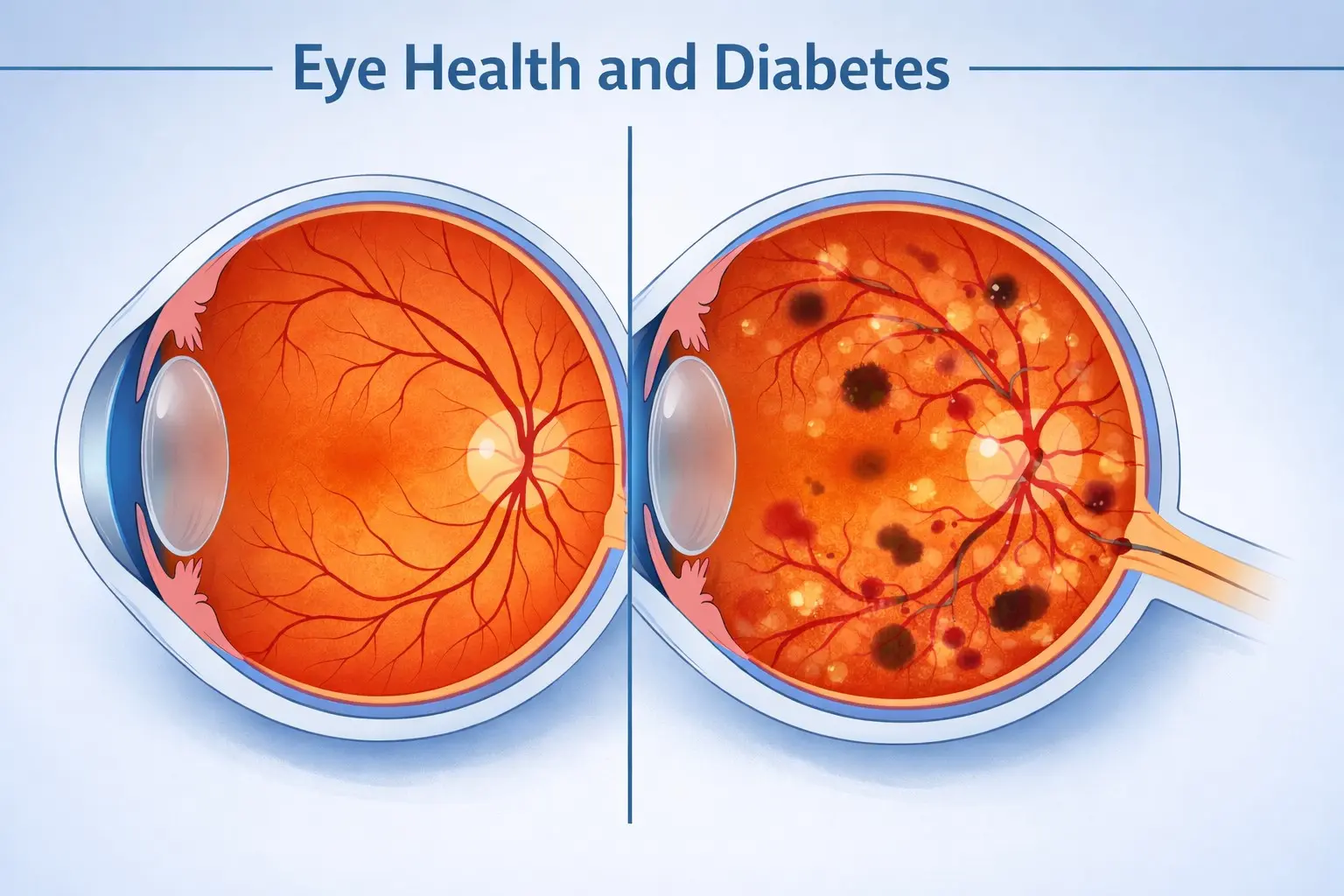
Eye Health and Diabetes is a serious concern, as diabetes is the leading cause of blindness among working-age adults worldwide, a fact confirmed by the World Health Organization. Much of this vision loss is preventable. High blood sugar silently damages the tiny blood vessels in the retina, often without symptoms until significant harm occurs.
Regular eye exams, blood sugar control, and healthy lifestyle choices are essential to protect your vision and reduce the risk of diabetic eye disease.
Some of my relatives are living with type 2 diabetes. Watching them navigate diabetic eye disease taught me just how important early action is. This guide covers everything you need to know to protect your vision with diabetes — in plain language.
complete eye health guide: vision care, prevention and wellness
| KEY FACTS | Diabetic retinopathy is the leading cause of blindness in adults aged 20 to 74 worldwide
Over 90 million people globally have a diabetic eye disease (WHO 2024) Up to 50% of people with diabetes do not know they have eye damage until it is advanced Annual dilated eye exams can detect diabetic retinopathy before any vision loss occurs Tight blood sugar control reduces the risk of diabetic retinopathy by up to 76% (DCCT trial) All four types of diabetic eye disease are more common when blood sugar is poorly controlled Vision loss from diabetic retinopathy is largely preventable with early detection and treatment |
How Does Diabetes Damage Your Eyes?
Your retina — the light-sensitive lining at the back of your eye — is fed by thousands of tiny blood vessels. These vessels are some of the smallest in your body. High blood sugar damages them.
When blood glucose stays too high for too long, it causes these vessels to weaken, swell, and leak. New but fragile blood vessels grow in to compensate. These new vessels are unstable. They bleed easily. Over time, this process scars the retina and steals your vision.
This has diabetes retinopathy in simple terms. It is a direct consequence of chronic high blood sugar, not a separate disease. Control the blood sugar, and you slow the damage dramatically.
The 4 Eye Conditions Caused or Worsened by Diabetes
Diabetes does not just cause retinopathy. It affects several structures within the eye. Here are the four conditions every person with diabetes needs to know about.
| Condition | Part of Eye Affected | Main Risk | How Common in Diabetics |
| Diabetic Retinopathy | Retinal blood vessels | Blindness | 1 in 3 people with diabetes over 40 |
| Diabetic macular edema (DME) | Macula (central retina) | Central vision loss | Up to 10% of all diabetics |
| Cataracts | Lens of the eye | Cloudy vision | 2 to 5x more common than in non-diabetics |
| Glaucoma glaucoma prevention and early detection |
Optic nerve | Peripheral vision loss | 2x more common in people with diabetes |
Progression of Diabetic Retinopathy: Ranging from Early to Advanced Stages
Diabetic retinopathy progresses through four stages. Catching it early makes all the difference.
| Stage | What Is Happening | Symptoms | Treatment at This Stage |
| Mild NPDR | Small balloon-like swellings in retinal vessels | Usually none | Blood sugar control, annual monitoring |
| Moderate NPDR | Vessels blocked, blood and fluid leaking | Possibly slight blurring | Better glucose control, closer monitoring |
| Severe NPDR | Many vessels are blocked, retina signalling for new growth | Noticeable vision changes | Laser treatment or injections are considered |
| PDR (Proliferative) | New fragile vessels grow and bleed into the vitreous | Dark floaters, vision loss, and detachment | Urgent laser injections or surgery |
NPDR stands for non-proliferative diabetic retinopathy. PDR stands for proliferative, the more advanced and dangerous stage. Most people with NPDR never progress to PDR if they manage their diabetes well.
how nutrition prevents macular damage
Which Signs Indicate Diabetic Eye Problems?
This is where the danger lies. In the early stages, diabetic eye disease has no symptoms at all. You can have significant retinal damage and still have normal vision. By the time you notice something is wrong, the disease is often advanced.
Early Stage - No Symptoms
You feel and see nothing different. This is why annual retinal exams are non-negotiable for everyone with diabetes. The exam can detect microscopic damage years before it affects your vision.
Later Stage - Symptoms That Need Same-Day Assessment
- Blurry or fluctuating vision — vision that changes depending on blood sugar levels
- Dark spots or floaters — blood leaking into the vitreous gel of the eye, eye floaters — when are they dangerous
- Colours looking washed out — damage to colour-sensitive cone cells in the macula
- A dark or empty spot in the center of vision — macular edema or advanced retinopathy
- Sudden loss of vision — vitreous hemorrhage or retinal detachment — this is an emergency
| GO TO EYE EMERGENCY TODAY IF YOU HAVE | Sudden dark floaters or a shower of spots in your vision
A dark curtain or shadow across any part of your visual field Abrupt vision loss affecting one or both eyes These symptoms can indicate a vitreous hemorrhage or retinal detachment. Both are emergencies. Do not wait. |
Why the Annual Dilated Eye Exam Is the Most Important Thing You Can Do
A standard vision test does not check for diabetic retinopathy. You need a dilated retinal exam. This is where the optician or ophthalmologist puts drops in your eyes to widen the pupils. Then they look directly at your retina with a special light.
I have seen people skip this exam because their vision felt fine. That is exactly the wrong logic with diabetic eye disease. The damage happens long before your vision changes. Early detection means early treatment. Early treatment saves sight.
| Diabetes Type | Recommended First Exam | After That |
| Type 1 diabetes | Within 5 years of diagnosis | Every year |
| Type 2 diabetes | At diagnosis — immediately | Every year |
| Gestational diabetes | Early in pregnancy | As advised by your doctor |
| Prediabetes with risk factors | Discuss with your doctor | Every 1 to 2 years |
| Diabetes plus high blood pressure | At diagnosis | Every year, higher risk |
Blood Sugar Control - The Single Most Powerful Protection for Your Eyes
The Diabetes Control and Complications Trial (DCCT) is one of the most important studies ever done on diabetes. It found that tight blood sugar control reduced the risk of developing retinopathy by 76 percent and slowed its progression by 54 percent.
That number should stop you in your tracks. Three-quarters of the risk is eliminated by controlling blood glucose.
What blood sugar targets should you aim for?
| Measurement | Target for Most Adults with Diabetes | Why does it matter for Eyes? |
| HbA1c | Below 7.0% (53 mmol/mol) | Lower HbA1c means less cumulative retinal damage |
| Fasting blood glucose | 4.0 to 7.0 mmol/L (72 to 126 mg/dL) | High fasting glucose harms vessels overnight |
| Post-meal blood glucose | Under 10.0 mmol/L (180 mg/dL) | Spikes cause acute vessel damage over time |
| Blood pressure | Under 130/80 mmHg | High BP accelerates retinal vessel damage independently |
| LDL cholesterol | Under 2.6 mmol/L (100 mg/dL) | Cholesterol deposits worsen retinal vessel blockage |
These targets are guidelines, not absolute rules. Your doctor will set individual targets based on your age, health history, and type of diabetes. The key point is: every improvement in blood glucose control reduces eye damage risk.
Blood Pressure and Cholesterol: The Two Hidden Eye Threats in Diabetes
Many people focus only on blood sugar. But high blood pressure is an independent risk factor for diabetic retinopathy that is just as important.
The UK Prospective Diabetes Study found that tight blood pressure control reduced the risk of diabetes-related eye complications by 34 percent. That is nearly as powerful as blood sugar control alone.
High cholesterol causes fatty deposits in the retinal blood vessels. These deposits — called hard exudates — are visible on a retinal exam. They block blood flow and accelerate vision loss. Keeping LDL cholesterol below 2.6 mmol/L matters for your eyes as much as it matters for your heart.
what causes high blood pressure and how to prevent it
What to Eat to Protect Your Eyes With Diabetes
Your diet affects your eyes in two ways. It controls blood sugar, which is the key driver of retinal damage. And it provides nutrients that directly protect retinal cells.
| Food | Eye Benefit | Blood Sugar Benefit |
| Dark leafy greens (kale, spinach) | Lutein and zeaxanthin protect the macula | Low glycemic index, high fibre |
| Oily fish (salmon, sardines) | Omega-3 DHA supports retinal cell structure | Anti-inflammatory, neutral on glucose |
| Eggs | Bioavailable lutein and zinc | Minimal glucose impact |
| Berries (blueberries, blackberries) | Anthocyanins protect retinal vessels | Low GI, high antioxidant |
| Sweet potato (in moderation) | Beta-carotene for vitamin A and night vision | Moderate GI — portion control important |
| Nuts and seeds | Vitamin E protects retinal cell membranes | Low-carb, satiating |
| Avocado | Lutein, vitamin E, healthy fats | Low GI, no significant glucose spike |
I like to think of this as a two-for-one approach. Foods that are good for blood sugar control are often the same foods that provide the nutrients your retina needs. A Mediterranean-style diet ticks both boxes consistently.
10 best foods for eye health and better vision
Medical Treatments for Diabetic Eye Disease: What to Expect
If retinopathy is detected, several effective treatments exist. Early-stage diseases are monitored closely. More advanced disease requires active intervention.
| Treatment | What It Does | Used For | Effectiveness |
| Anti-VEGF injections | Blocks the signal that triggers abnormal vessel growth | PDR, macular edema | Very high — often first choice |
| Laser photocoagulation | Burns and seals leaking blood vessels | Severe NPDR, PDR | Good — less used since anti-VEGF |
| Vitrectomy surgery | Removes blood from the vitreous, repairs retina | Vitreous hemorrhage, detachment | High for appropriate cases |
| Corticosteroid implants | Reduces macular inflammation and swelling | Diabetic macular edema | Good for certain cases |
| Blood sugar optimization | Prevents and slows ALL stages | All stages — foundation of treatment | 76% risk reduction (DCCT) |
What I Have Seen and Learned About Diabetes and Eye Health
| Adel Galal | I am not diabetic. I’ve seen relatives cope with type 2 diabetes for many years.
One relative ignored his annual eye exam for three years. He felt fine. His vision was normal. When he finally went, his ophthalmologist found moderate non-proliferative retinopathy. Three years of invisible damage had already happened. He was lucky. It was caught before the proliferative stage. With better glucose control and annual monitoring, it has been stable for 4 years. That experience reinforced something I now tell everyone with diabetes: The exam is not for when something goes wrong. It is for catching damage before you notice it. I have also seen how dramatically blood sugar control changes outcomes. The same person: HbA1c improved from 9.1% to 7.2% over 18 months. His retinopathy did not progress at all during that period. The evidence is clear. The control is proper. The difference it makes is significant. |
Your Complete Eye Protection Checklist for Diabetes
| CHECKLIST — do all of these | Get a dilated retinal exam every year without exception — do not wait for symptoms
Keep your HbA1c below 7% as a target — discuss individual goals with your doctor Control blood pressure to below 130/80 mmHg — it protects eyes as much as blood sugar Keep LDL cholesterol below 2.6 mmol/L — cholesterol deposits damage retinal vessels Eat a Mediterranean-style diet rich in leafy greens, fish, eggs, and berries Stay well hydrated — 2 litres of water daily supports overall vascular health Stop smoking — smoking doubles the risk of retinopathy progression in diabetics Exercise regularly, as it physically improves insulin sensitivity and reduces eye pressure Report any new floaters, dark spots, or vision changes immediately to your eye doctor Photograph your eye exam reports — track changes over the years to spot trends |
Key Takeaways - Eye Health and Diabetes
| SUMMARY | Diabetic retinopathy is the leading cause of blindness in working-age adults
It has NO symptoms in the early stages — only annual retinal exams can detect it Blood sugar control reduces retinopathy risk by up to 76%, the most powerful protection Blood pressure and cholesterol control are equally important and often neglected All four diabetic eye conditions are more common and severe with poorly controlled diabetes Anti-VEGF injections are now the most effective treatment for advanced retinopathy Your diet matters — lutein, omega-3, and low-GI foods protect retinal cells directly The best time to act is now — before symptoms appear |
References and Sources
1- Diabetic Retinopathy — National Eye Institute (NEI/NIH)
https://www.nei.nih.gov/learn-about-eye-health/eye-conditions-and-diseases/diabetic-retinopathy
NIH/NEI authority. Use for: definition, stages, prevalence, symptoms, and treatment options.
2- Diabetes and Vision — World Health Organization
https://www.who.int/news-room/fact-sheets/detail/blindness-and-visual-impairment
WHO global authority. Use for: diabetic retinopathy as the leading cause of blindness in working-age adults.
3- DCCT Trial — Diabetes Control and Complications Trial — NEJM
https://www.nejm.org/doi/full/10.1056/NEJM199309303291401
Landmark clinical trial. Use for: 76% retinopathy risk reduction with tight glucose control claim.
4- Eye Complications of Diabetes — American Diabetes Association
https://diabetes.org/health-wellness/eye-health
ADA authority. Use for: exam frequency guidelines, blood sugar targets, and treatment overview.
5- UK Prospective Diabetes Study — Blood Pressure Control — BMJ
https://www.bmj.com/content/317/7160/703
Major UK clinical study. Use for: 34% reduction in eye complications with tight blood pressure control.
Part of Our Eye Health Series
This article is part of our complete eye health resource.
Read all topics in our Complete Eye Health Guide or browse our
Eye Health and Vision Resource Directory.
Adel Galal
Health and Wellness Writer | 30+ Years Personal Practice | Founder, NextFitLife.com
Adel Galal has studied
health, vision care, and natural aging for over 30 years. At 58, he writes from genuine
lived experience — including supporting family members with type 2 diabetes through their
eye health journey. He is not a doctor or ophthalmologist. Everything shared reflects
personal research, experience, and consultation with healthcare providers. Always consult
a qualified healthcare professional for diabetes and eye health management.

Health & wellness writer with 30+ years of experience in nutrition, fitness, and healthy aging. Founder of NextFitLife.com — evidence-based health guidance.