Published on: September 16, 2026
Next review: September 2027, or sooner if nutrition guidance changes
Written and source-checked by: Adel Galal, Founder and Lead Writer at NextFitLife
Medical review status: This article has not been medically reviewed by a doctor or registered dietitian.
Medical and Nutrition Notice
I am not a dermatologist or a doctor, and this content does not replace professional medical advice. What I share comes from real life experience, extensive research, and consultation with healthcare providers. Always consult qualified medical professionals for diagnosis and treatment of any health condition.
I am also not a registered dietitian or licensed nutrition professional. This guide is for general education. It does not diagnose copper deficiency, prescribe a diet, or tell you to start or stop a supplement.
Quick Answer: What Foods Are Highest in Copper?
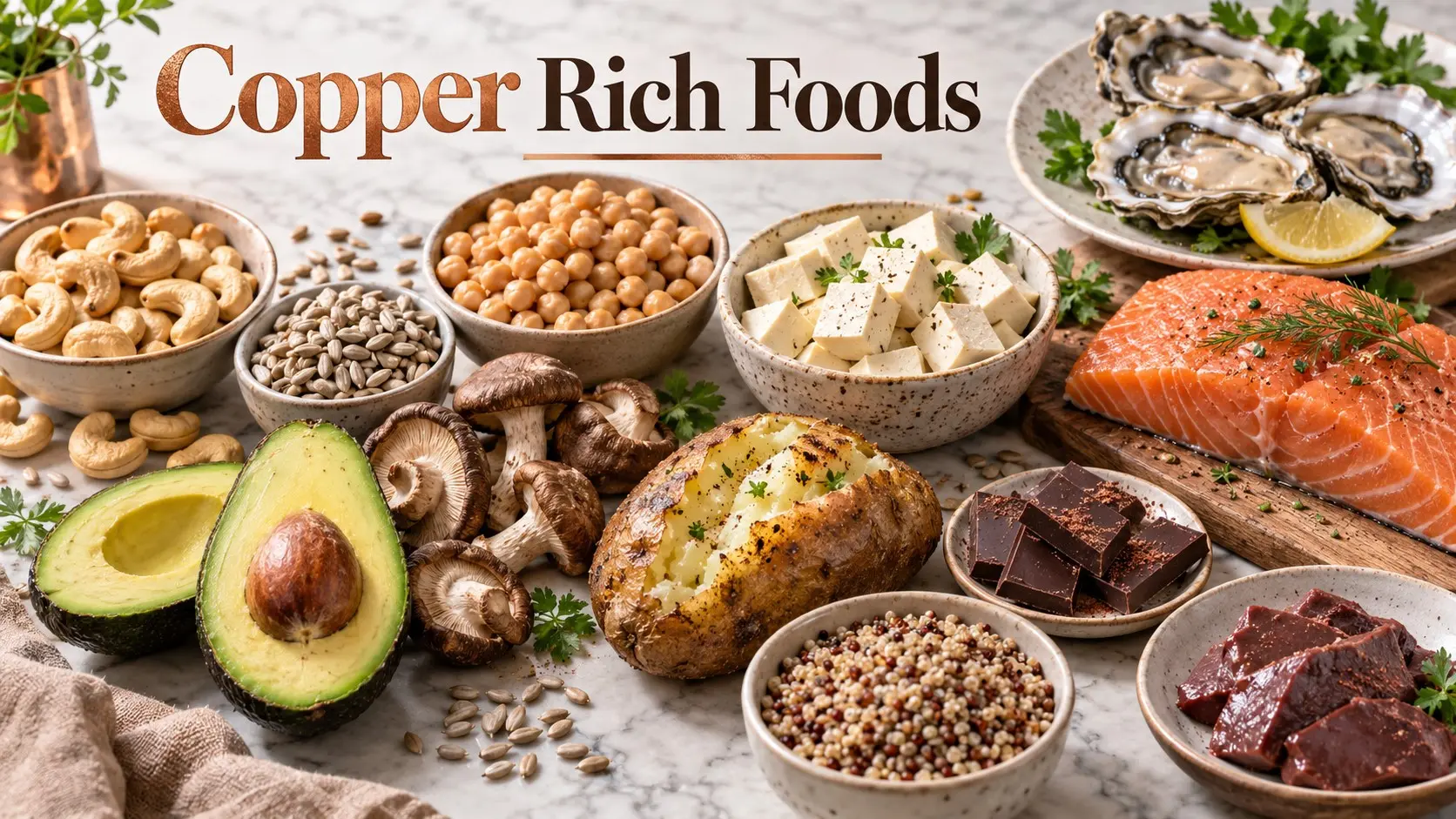
Copper rich foods include beef liver, oysters, dark chocolate, potatoes, shiitake mushrooms, cashews, crab, sunflower seeds, tofu, chickpeas, salmon, whole grains, and avocado. Adults need 900 mcg of copper daily in the United States, and most people can meet that amount through a varied diet.1
For everyday eating, I prefer nuts, seeds, legumes, potatoes, mushrooms, tofu, whole grains, and seafood over treating liver like a daily mineral supplement.
Why Does Your Body Need Copper?
Copper is an essential trace mineral.
Your body uses dietary copper in enzymes involved in energy production, iron metabolism, connective tissue, brain chemicals, pigmentation, immune function, and protection from oxidative damage.1
You only need a small amount.
That is why a varied diet works so well here.
For a wider look at vitamins and minerals, visit the NextFitLife Nutrition and Vitamins Hub.
How much copper do you need each day?
The United States National Institutes of Health lists the following Recommended Dietary Allowances for copper.1
| Life stage | Copper per day |
|---|---|
| Children ages 9 to 13 | 700 mcg |
| Teens ages 14 to 18 | 890 mcg |
| Adults ages 19 and older | 900 mcg |
| Pregnancy | 1,000 mcg |
| Breastfeeding | 1,300 mcg |
Your copper daily requirement is small compared with the amount found in some foods.
One ounce of cashews plus half a cup of chickpeas provides about 918 mcg based on the NIH food table.
That already meets the adult RDA.
12 Copper Rich Foods Worth Adding to Your Diet
This table uses serving values published by the NIH Office of Dietary Supplements. The NIH table draws its food data from USDA FoodData Central.13
| Food | Serving | Copper | Daily Value | Simple use |
|---|---|---|---|---|
| Beef liver | 3 oz | 12,400 mcg | 1,378% | Very concentrated, not my pick for daily use |
| Cooked oysters | 3 oz | 4,850 mcg | 539% | Seafood meal |
| Potato with skin | 1 medium | 675 mcg | 75% | Bake, roast, or add to a meal bowl |
| Shiitake mushrooms | ½ cup cooked | 650 mcg | 72% | Add to rice, soup, eggs, or tofu |
| Cashews | 1 oz | 629 mcg | 70% | Snack or add to oats and salads |
| Cooked crab | 3 oz | 624 mcg | 69% | Seafood meal or salad |
| Sunflower seeds | ¼ cup | 615 mcg | 68% | Add to salad, oats, or yogurt |
| Dark chocolate, 70% to 85% cacao | 1 oz | 501 mcg | 56% | Small dessert portion |
| Firm tofu | ½ cup | 476 mcg | 53% | Stir fry, soup, or grain bowl |
| Chickpeas | ½ cup | 289 mcg | 32% | Hummus, salad, soup, or curry |
| Wild Atlantic salmon | 3 oz | 273 mcg | 30% | Main meal protein |
| Avocado | ½ cup | 219 mcg | 24% | Toast, salad, sandwich, or bowl |
These are some of the best known foods high in copper, but you do not need to eat the richest food every day.
Moderate sources add up fast.
1. Beef Liver Has So Much Copper That More Is Not Better
Beef liver sits at the top of many lists of high copper foods.
Three ounces of pan fried beef liver contains about 12,400 mcg of copper.1
That is huge.
The adult tolerable upper intake level is 10,000 mcg per day.1
A single three ounce serving therefore contains more copper than that adult upper limit.
This does not mean one serving will automatically cause copper toxicity. The upper limit is a safety reference for usual intake.
It does mean liver makes little sense as a daily copper plan.
If you enjoy liver, think of it as a very concentrated food rather than a mineral supplement you need to repeat every day.
2. Oysters Give You Several Days' Worth in One Serving
Three ounces of cooked eastern oysters provide about 4,850 mcg of copper.1
That is more than five times the adult Daily Value.
Other seafood contributes copper too. Crab and salmon appear in the NIH food table, and Harvard also lists shellfish and fish among useful copper food sources.4
If seafood is already part of your diet, you probably do not need to chase extra copper on those days.
3. Potatoes Are an Easy Source That People Overlook
A medium cooked potato with its flesh and skin contains about 675 mcg.
That is 75% of the Daily Value.1
I like this example because it shows how normal foods can beat expensive nutrition trends.
Roast a potato.
Add chickpeas, tofu, or salmon.
Now the meal has several useful nutrients without becoming complicated.
For more ideas built around ordinary foods, see Top 20 Healthy Foods for Everyday Nutrition.
4. Shiitake Mushrooms Are One of the Best Plant Sources
Half a cup of cooked shiitake mushrooms contains about 650 mcg of copper.1
That is useful for anyone looking for strong plant-based copper sources.
Add them to rice.
Cook them with tofu.
Mix them into eggs.
Use them in soup.
You do not need a special recipe.
5. Cashews Make Copper Almost Effortless
One ounce of dry roasted cashews provides about 629 mcg.
That is 70% of the Daily Value.1
Add half a cup of chickpeas later in the day, and the two foods provide about 918 mcg together.
Adult target met.
That is the kind of combination I prefer.
It uses food that fits into normal snacks and meals.
6. Crab Is a Strong Seafood Choice
Three ounces of cooked Dungeness crab provides about 624 mcg of copper.1
That is almost 70% of the Daily Value.
You can pair crab with a potato, whole grains, vegetables, or avocado and let several foods share the job.
That is better than trying to make one ingredient carry your whole diet.
7. Sunflower Seeds Work in Breakfast, Lunch, or Snacks
A quarter cup of toasted sunflower seed kernels provides about 615 mcg.1
Add them to oats.
Sprinkle them over salad.
Mix them with nuts.
Or use a smaller amount and get the rest of your copper elsewhere.
Seeds are useful because they bring more than one nutrient to the table.
8. Dark Chocolate Counts, but Keep the Reason Sensible
One ounce of dark chocolate with 70% to 85% cacao provides about 501 mcg of copper.1
Yes, that is more than half the Daily Value.
No, it does not turn chocolate into medicine.
Use it as one food in a varied diet.
Harvard also lists dark chocolate as a source of copper, magnesium, iron, zinc, and other nutrients.4
9. Tofu Gives Plant Based Meals a Strong Start
Half a cup of firm tofu contains about 476 mcg of copper.1
Pair tofu with shiitake mushrooms and the combination easily passes the adult copper target.
That makes tofu useful for vegetarian and vegan diets.
It also works in soups, curries, bowls, salads, and stir-fries.
10. Chickpeas Are Cheap, Flexible, and Easy to Repeat
Half a cup of chickpeas provides about 289 mcg of copper.1
That is not the biggest number on this page.
It may be one of the most useful.
You can eat chickpeas as hummus, in salads, in soup, in curry, or roasted as a snack.
The same food also fits the broader healthy eating pattern discussed in NextFitLife Nutrition Tips for Improving Your Health.
11. Salmon Adds Copper Without Making Copper the Complete Meal
Three ounces of cooked wild Atlantic salmon supplies about 273 mcg.1
That is 30% of the Daily Value.
Serve it with a potato, whole wheat pasta, vegetables, or avocado and your copper intake climbs without much thought.
This is how I prefer to think about nutrition.
The meal matters more than one nutrient chart.
12. Avocado Is a Useful Supporting Source
Half a cup of avocado provides about 219 mcg of copper.1
It will not cover your whole day.
It does not need to.
Add it to whole grain toast, chickpeas, a tofu bowl, or a seafood meal.
Several moderate foods with copper can easily do the work together.
What Does 900 mcg of copper look like in Real Food?
This is the part food lists often miss.
You do not need liver.
You do not need oysters.
You do not need a supplement.
Here are simple combinations using the NIH serving values.
| Food combination | Approximate copper | Easy use |
|---|---|---|
| 1 oz cashews plus ½ cup chickpeas | 918 mcg | Snack plus lunch |
| ¼ cup sunflower seeds plus ½ cup chickpeas | 904 mcg | Salad or grain bowl |
| ½ cup tofu plus ½ cup avocado plus ½ cup spinach plus ½ cup tomato | 905 mcg | Plant-based bowl |
| 3 oz salmon plus 1 cup whole wheat pasta plus ½ cup avocado plus ½ cup spinach | 912 mcg | Dinner |
| 1 medium potato plus ½ cup spinach plus ½ cup tomato plus plain Greek yogurt | About 927 mcg | Loaded potato meal |
The message is simple.
Food variety can cover copper very quickly.
Can You Get Enough Copper on a Vegan Diet?
Yes.
You have many plant based copper sources.
- Cashews
- Sunflower seeds
- Shiitake mushrooms
- Tofu
- Chickpeas
- Potatoes
- Whole grains
- Avocado
- Dark chocolate
- Spinach
- Asparagus
- Dried figs
NIH specifically lists nuts, seeds, whole grain foods, potatoes, mushrooms, avocados, chickpeas, tofu, and chocolate as copper sources.2
A varied vegan diet does not need organ meat or seafood to supply copper.
Does Your Body Absorb All the Copper You Eat?
No.
Copper absorption changes with the amount you eat.
NIH reports that the body absorbs a higher percentage when dietary copper is low and a lower percentage when intake is high.1
That is normal regulation.
Your body is not trying to absorb the maximum amount from every meal.
This is another reason I would not chase extremely high copper totals.
Meet your needs.
Then move on to the rest of your diet.
Is Copper Deficiency Common?
No.
NIH says copper deficiency is uncommon in humans and that typical diets in the United States meet or exceed the copper RDA.1
Some people need more attention.
Risk can be higher with certain problems that affect copper absorption or metabolism.
NIH identifies people with celiac disease, people with Menkes disease, and people taking high amounts of zinc supplements as groups at higher risk of inadequate copper status.1
Low copper can be linked with anemia, bone problems, loss of skin pigment, coordination problems, connective tissue changes, and increased infection risk.1
Those symptoms are not unique to copper.
Do not diagnose yourself from a symptom list.
A healthcare professional can decide whether testing makes sense.
What Is the Link Between Copper and Zinc?
This part deserves more attention than most copper food lists give it.
Copper and zinc interact.
Large amounts of zinc can reduce copper absorption.
NIH states that zinc doses of 50 mg or more used for weeks can interfere with copper absorption, and its copper guidance notes that excessive zinc supplement use can lead to copper deficiency.5
This is mainly a supplement issue.
It is very hard to reach those zinc amounts from normal food alone.
If you regularly take a high-dose zinc product, check the label and discuss long-term use with a qualified professional.
You can also read Zinc and Magnesium Benefits: Food, Supplements and Safety.
Do you need a copper supplement?
Most people do not need to start one just because copper is essential.
NIH says most people get enough copper from food.2
A copper supplement makes more sense when a genuine need has been identified, or a healthcare professional recommends it.
I would not use copper casually for energy, immunity, hair colour, or vague wellness promises.
Essential does not mean more is better.
For a broader look at food deficiencies and supplement questions, use the Nutrition and Vitamins Hub.
Can You Get Too Much Copper?
Yes.
For adults, the United States tolerable upper intake level is 10,000 mcg, or 10 mg, per day from food and supplements.1
Long term excessive copper exposure can damage the liver and cause stomach problems such as nausea, vomiting, cramps, abdominal pain, and diarrhea.1
Copper toxicity is rare in healthy people who do not have a disorder of copper handling.
That brings us to one major exception.
Wilson Disease Changes the Advice Completely
Wilson disease is a rare inherited disorder that stops the body from removing excess copper normally.
Copper can then build up in organs, especially the liver and brain.4
If you have Wilson disease, a general list of best sources of copper is not a diet plan for you.
Your medical team may tell you to limit very high copper foods such as liver and shellfish.
Follow your specialist's treatment and diet instructions.
Do not use a general nutrition article to change a Wilson disease diet.
My Food First Rule for Copper
Do not build your diet around one mineral.
Build meals from useful foods and let copper come along with them.
That might look like cashews at breakfast.
Chickpeas at lunch.
A potato at dinner.
Or tofu and mushrooms in one meal.
This is a better use of dietary copper than trying to hit an exact number with one extreme food.
NextFitLife takes the same approach in the Top 20 Healthy Foods guide: variety matters more than one supposed superfood.
5 Copper Mistakes I Would Avoid
1. Eating liver every day just because it tops the Chart
Liver is extremely concentrated.
A three-ounce serving provides more copper than the adult upper limit.
2. Assuming only animal foods contain copper
Nuts, seeds, mushrooms, chickpeas, tofu, potatoes, whole grains, avocado, and chocolate can all contribute.
3. Taking Copper Because You Feel Tired
Tiredness has many causes.
Do not treat one vague symptom as proof of a mineral deficiency.
4. Ignoring high doses of zinc
Long-term high zinc intake from supplements can lower copper absorption.
5. Trying to Get 100% From One Food
Your diet works.
Let several foods share the job.
A Simple 4- Step Copper Food Plan
- Pick one easy source. Cashews, sunflower seeds, potatoes, chickpeas, tofu, or mushrooms are simple choices.
- Add a second source later. You do not need one huge serving.
- Rotate your foods. Fresh foods give you different vitamins, minerals, fibre, protein, and fats.
- Check supplements before adding more. Pay special attention to zinc and copper doses.
That is enough for most healthy adults.
Conclusion: Make copper part of normal food
The best approach to copper rich foods is simple.
Pick foods you already enjoy.
Cashews, chickpeas, potatoes, mushrooms, tofu, seeds, whole grains, seafood, and avocado can all help.
Let several foods add up instead of chasing one extreme source.
Your next step: choose two copper rich foods from this guide and add them to meals you already eat this week.
References and Sources
- National Institutes of Health, Office of Dietary Supplements. Copper Fact Sheet for Health Professionals.
NIH Copper Fact Sheet for Health ProfessionalsUsed for copper functions, recommended intakes, food values, deficiency, zinc interaction, upper limits, and toxicity. - National Institutes of Health, Office of Dietary Supplements. Copper Fact Sheet for Consumers.
NIH Copper Consumer Fact SheetUsed for food sources, daily needs, supplement information, and groups more likely to have low copper intake or status. - United States Department of Agriculture. FoodData Central.
USDA FoodData CentralOpen federal food composition database used by the NIH selected food table. - Harvard T.H. Chan School of Public Health. The Nutrition Source: Copper.
Harvard Nutrition Source Copper GuideUsed as an additional source for copper functions, food sources, deficiency, toxicity, and food first context. - National Institutes of Health, Office of Dietary Supplements. Zinc Fact Sheet for Health Professionals.
NIH Zinc Fact Sheet for Health ProfessionalsUsed for the interaction between high zinc intake and copper absorption.
Continue Reading on NextFitLife
Use these guides to build the rest of your nutrition plan.
- Nutrition and Vitamins Hub for vitamins, minerals, food sources, deficiencies, supplements, and safety.
- Top 20 Healthy Foods for simple nutrient-rich foods and balanced meal ideas.
- Nutrition Tips for Improving Your Health for practical everyday food choices.
- Zinc and Magnesium Benefits for mineral food sources and supplement safety.
- B12 Rich Foods for vitamin B12 food sources and diet guidance.
- Vitamin C Foods for food sources of vitamin C and practical ways to use them.
About the Author
Adel Galal is the founder and lead writer of NextFitLife.
His personal interest in health, fitness, nutrition, wellness, sleep, and healthy aging spans more than 30 years. His health and wellness writing and research communication experience spans more than 15 years.
Adel is not a physician, registered dietitian, or licensed healthcare professional.
His work at NextFitLife focuses on checking health and nutrition claims against credible sources, comparing current guidance, separating established facts from marketing claims, and explaining complex topics in simple language readers can use.
For this copper guide, the core intake, food, safety, and supplement claims were checked against current National Institutes of Health guidance, USDA food data, Harvard Nutrition Source material, and current zinc interaction guidance.
Learn more about Adel, NextFitLife's research process, medical review policy, corrections, and editorial standards on the About NextFitLife page.
Frequently Asked Questions About Copper Rich Foods
What foods have the most copper?
Beef liver and oysters are among the richest sources. Nuts, seeds, mushrooms, potatoes, tofu, chickpeas, dark chocolate, seafood, whole grains, and avocado also provide copper.
How much copper does an adult need each day?
Adults ages 19 and older need 900 mcg of copper per day under the United States RDA.
What are the best copper rich foods for everyday use?
Cashews, sunflower seeds, potatoes, mushrooms, chickpeas, tofu, whole grains, avocado, and seafood are easy everyday choices. They are less concentrated than liver and fit normal meals well.
Which fruit is high in copper?
Avocado is a useful fruit source. Half a cup provides about 219 mcg of copper, according to the NIH selected food table. Dried figs also provide copper.
Which nuts are high in copper?
Cashews are a powerful source. One ounce of dry roasted cashews provides about 629 mcg of copper.
Are eggs high in copper?
Eggs are not among the richest copper sources listed by NIH. Nuts, seeds, shellfish, organ meat, mushrooms, potatoes, tofu, and chickpeas provide much more.
Is dark chocolate high in copper?
Yes. One ounce of dark chocolate with 70% to 85% cacao provides about 501 mcg of copper in the NIH table.
Can vegans get enough copper?
Yes. Cashews, sunflower seeds, mushrooms, tofu, chickpeas, potatoes, whole grains, avocado, spinach, and dark chocolate provide copper without animal foods.
Can too much zinc cause copper deficiency?
Yes. High zinc intake from supplements used for weeks can interfere with copper absorption. Normal food intake is much less likely to reach those high zinc levels.
Should I take a copper supplement?
Most people get enough copper from food. A supplement should have a clear reason, especially because too much copper can be harmful.
Can you get too much copper from food?
Yes, although toxicity is rare in healthy people. Liver is extremely concentrated, and people with Wilson disease require medical guidance about copper intake.
Is copper deficiency common?
No. NIH describes copper deficiency as uncommon. Risk is higher in some people with absorption disorders, rare genetic conditions, or high zinc supplement use.

Health & wellness writer with 30+ years of experience in nutrition, fitness, and healthy aging. Founder of NextFitLife.com — evidence-based health guidance.