
Published on: November 16, 2026
Updated on: November 16, 2026
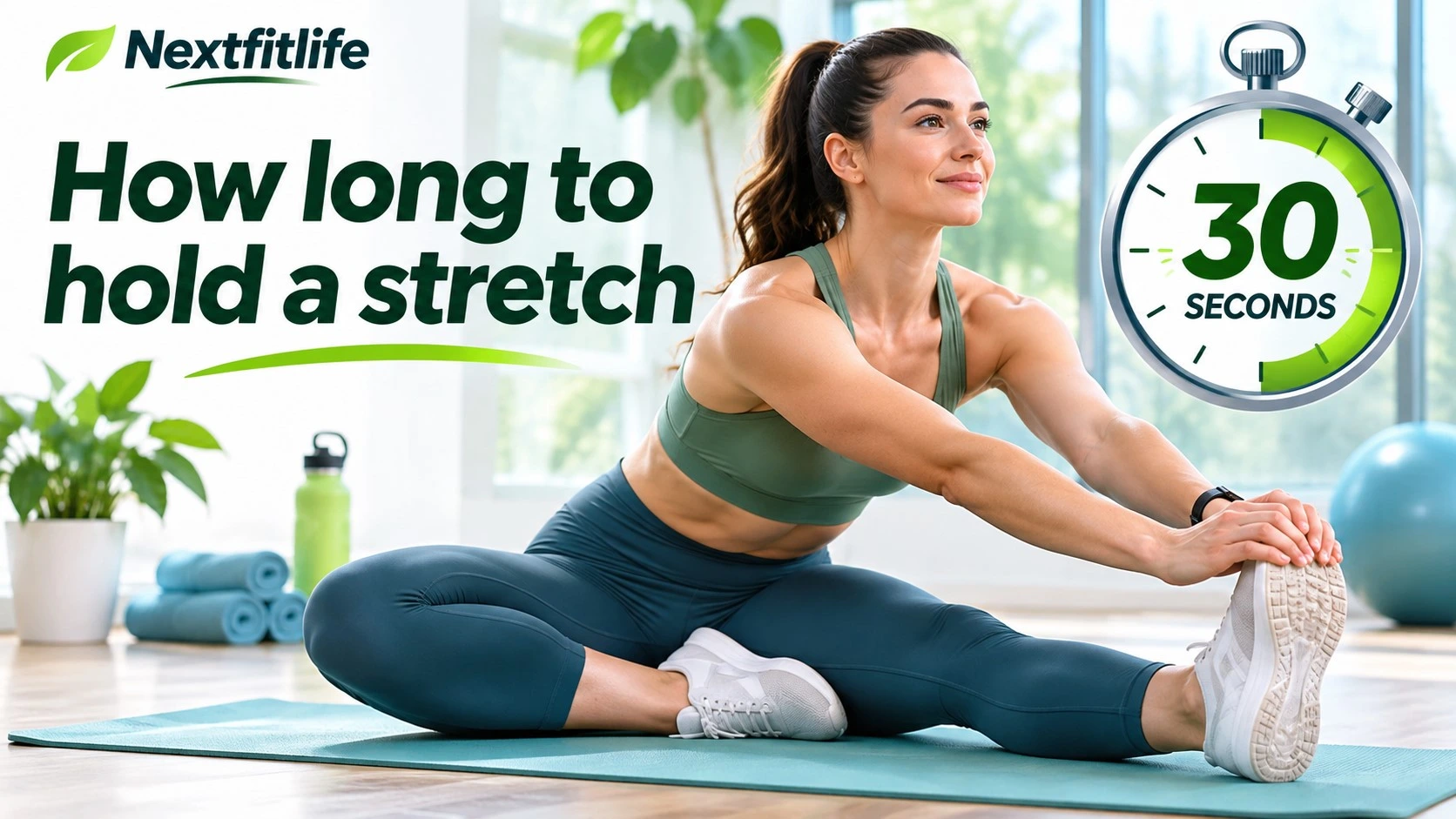
If you want one simple answer, hold most static stretches for about 10 to 30 seconds.
Thirty seconds is a good default for many adults, but the best timing changes with your age, your goal, and whether you are stretching before or after exercise.
Quick answer: If you are wondering how long to hold a stretch, use about 10 to 30 seconds for most static stretches and repeat 2 to 4 times. Older adults may benefit from 30 to 60 second holds. Before sprinting, jumping, or heavy lifting, favor dynamic movement and avoid long static holds.
Health note: This article is for general information and education. It does not replace medical advice, diagnosis, or treatment.
Stop stretching and get medical advice if a stretch causes sharp pain, numbness, tingling, weakness, joint instability, severe swelling, or worsening pain after an injury.
For more mobility work, visit the NextFitLife Yoga Exercises Guide or explore the Yoga Poses for Beginners Guide.
Table of Contents
- The best stretch hold time
- 5 smart timing rules
- Static versus dynamic stretching
- How many repetitions to do
- How often to stretch
- Common stretches and hold times
- Stretching before workouts
- Stretching after workouts
- Common stretching mistakes
- When to stop and get advice
- References and Sources
- Related guides
- About the author
- Frequently asked questions
What Is the Best Stretch Hold Time?
For most adults, 10 to 30 seconds works well for a basic static stretch.
Mayo Clinic commonly recommends holding stretches for about 30 seconds and repeating them 2 to 4 times.
The American Heart Association also gives a range of roughly 10 to 30 seconds for many stretches.
That is why 30 seconds is such a useful default.
It is long enough to settle into the position without turning each stretch into a long session.
5 Smart Rules for How Long to Hold a Stretch
1. For General Flexibility, Use 10 to 30 Seconds
This is the range I would start with for most people.
Move slowly into the stretch until you feel clear tension, then hold it without bouncing.
You should feel a stretch, but not sharp pain.
A simple plan could be:
- Hamstrings: 30 seconds
- Calves: 30 seconds
- Hip flexors: 30 seconds
- Chest: 30 seconds
Repeat the areas that need more work.
2. Older Adults May Benefit From 30 to 60 Seconds
Older adults sometimes need a little more time to settle into a comfortable range.
ACSM based guidance commonly uses 30 to 60 seconds for older adults, compared with shorter holds for many younger adults.
Longer does not mean harder.
If 60 seconds feels painful or unstable, shorten the stretch.
3. Before Power Exercise, Keep Static Stretching Short
This matters before activities such as:
- Sprinting
- Jumping
- Heavy lifting
- Fast change of direction
- Explosive sport drills
Long static holds just before high power activity can temporarily reduce strength or power.
The risk is more noticeable when one muscle is stretched for around 60 seconds or longer.
For this reason, dynamic stretching usually fits a warm up better.
4. After Exercise, 30 Seconds Is a Good Default
After a workout, the concern about temporary performance loss is much smaller.
Your muscles are also already warm.
That makes post workout stretching a good time for slow, controlled holds.
About 20 to 30 seconds per stretch works well for many people.
5. Think About Total Stretch Time, Not One Giant Hold
Newer research suggests total stretching volume matters more than making one hold extremely long.
A 2025 systematic review found that flexibility gains increased with stretching volume, but the benefit did not keep rising forever.
The researchers found little extra benefit beyond about four minutes of total stretching per session for a target area.
This does not mean holding one stretch for four minutes.
It means you can build the total through several shorter holds.
| Goal | Useful Hold Time | Practical Note |
|---|---|---|
| General flexibility | 10 to 30 seconds | Good default for most adults |
| Older adults | 30 to 60 seconds | Use a comfortable range |
| Before power exercise | Brief static holds or dynamic movement | Avoid long static holds right before performance |
| After exercise | 20 to 30 seconds | Good time for slower static stretching |
Static Stretching vs Dynamic Stretching
Static stretching means moving into a position and holding it.
Dynamic stretching means moving through a range in a controlled way.
Examples of dynamic movements include:
- Leg swings
- Arm circles
- Walking lunges
- Hip circles
- Controlled squats
Static stretching is useful for flexibility.
Dynamic stretching is often better for preparing the body to move fast.
You do not need to choose one forever. Use the type that fits the goal.
How Many Times Should You Repeat a Stretch?
For many people, 2 to 4 repetitions is enough.
A practical target is about 60 seconds of total stretching for one area.
You could get there with:
- 2 sets of 30 seconds
- 3 sets of 20 seconds
- 4 sets of 15 seconds
There is no need to make every session identical.
How Often Should You Stretch?
For general flexibility, aim for at least 2 to 3 days per week.
Daily stretching can also work if it feels comfortable.
Consistency matters more than trying to do one huge session.
If you want a simple flexibility routine, combine this guidance with the Yoga Exercises at Home Guide.
How Long Should You Hold a Hamstring Stretch?
For most adults, hold a hamstring stretch for about 20 to 30 seconds.
Repeat it 2 to 4 times if needed.
Classic research found that 30 second hamstring stretches improved flexibility and that increasing the hold to 60 seconds did not clearly improve the result in the young adults studied.
For more targeted movements, see the NextFitLife Hamstring Exercises Guide.
How Long Should You Hold a Calf Stretch?
About 20 to 30 seconds is a useful starting point.
Keep the heel down and move into the stretch slowly.
Do not bounce.
If you feel sharp pain near the Achilles tendon, stop and adjust the position.
How Long Should You Hold a Hip Flexor Stretch?
Start with 20 to 30 seconds on each side.
Keep your pelvis controlled rather than arching your lower back.
You should feel mild tension across the front of the hip.
You do not need to force the pelvis forward until the stretch hurts.
How Long Should You Hold a Shoulder Stretch?
Around 20 to 30 seconds works well for many basic shoulder stretches.
Move slowly and avoid forcing the arm into pain.
Shoulder pain is not always a flexibility issue, so persistent pain deserves a proper assessment.
What About Yoga Holds?
Yoga poses can use longer holds because the goal may include flexibility, balance, breathing, body control, or relaxation.
That does not mean every pose needs to be held for one minute.
Some poses work better with a few breaths, while others are held longer.
Good form is more useful than staring at a stopwatch.
Beginners can use the NextFitLife Yoga Poses for Beginners Guide for easier starting positions.
What Is PNF Stretching?
PNF stretching means proprioceptive neuromuscular facilitation.
A common version uses a short muscle contraction followed by a deeper assisted stretch.
ACSM based guidance often uses a contraction lasting about 3 to 6 seconds followed by a 10 to 30 second stretch.
PNF can improve flexibility, but beginners do not need it.
Basic static stretching works well too.
Should a Stretch Hurt?
No.
A stretch should feel like tension or mild discomfort.
Sharp pain, burning, numbness, tingling, or joint pain is a reason to stop.
More pain does not create better flexibility.
Should You Bounce While Stretching?
For normal static stretching, no.
Move slowly into position and hold it.
Bouncing makes the stretch harder to control.
Specialized athletes sometimes use ballistic stretching, but that is different from a beginner trying to improve everyday flexibility.
Should You Stretch Cold Muscles?
I would warm up first.
Five to ten minutes of easy walking, cycling, or general movement can make stretching feel more comfortable.
If you have just finished exercising, your muscles are already warm.
Is Static Stretching Bad Before a Workout?
No, but timing matters.
A few short static holds are unlikely to ruin your workout.
The concern is long static stretching immediately before high power or high strength activity.
If you are about to sprint or lift heavy, use dynamic movement first and save longer static holds for later.
This is why warm ups in the NextFitLife Injury Prevention Exercises Guide focus heavily on movement rather than long passive holds.
Can Stretching Prevent Injuries?
Stretching can improve range of motion, but it is not injury insurance.
Injury risk also depends on:
- Strength
- Training load
- Technique
- Fatigue
- Recovery
- Previous injury
Use stretching because you need enough movement for your sport and daily life.
Can Stretching Fix Tight Muscles Forever?
Not by itself.
A muscle can feel tight for many reasons.
Sometimes you need more flexibility. Sometimes you need strength. Sometimes you simply stayed in one position for too long.
If you keep stretching the same area every day but it still feels tight, look at movement habits and strength instead of just holding the stretch longer.
A Simple 5 Minute Flexibility Routine
| Stretch | Hold | Focus |
|---|---|---|
| Hamstring stretch | 30 seconds per side | Back of the thigh |
| Hip flexor stretch | 30 seconds per side | Front of the hip |
| Calf stretch | 30 seconds per side | Lower leg |
| Chest stretch | 30 seconds | Chest and front shoulder |
| Upper back stretch | 30 seconds | Upper back |
Repeat one or two areas if they feel more limited than the others.
Common Stretching Mistakes
Holding Your Breath
Breathe normally and let the body settle into the position.
Stretching Into Pain
Back off until you feel tension rather than pain.
Bouncing Through the Stretch
For normal static stretching, keep the movement smooth.
Doing Long Static Holds Before Power Training
Use dynamic movement first when speed or strength matters.
Stretching but Never Strengthening
Flexibility is more useful when you can control the range.
Trying to Become Extremely Flexible
You need enough movement for your goals.
You do not need gymnast level flexibility unless your activity demands it.
When Should You Stop Stretching and Get Advice?
Stop and seek professional advice if stretching causes:
- Sharp pain
- Numbness
- Tingling
- Weakness
- Joint instability
- Severe swelling
- Worsening pain after an injury
People with recent surgery, major injury, osteoporosis, or other medical conditions may also need modified stretches.
Conclusion
If you want one easy rule for how long to hold a stretch, start with about 30 seconds.
Most adults do well with 10 to 30 second holds, while some older adults may benefit from 30 to 60 seconds. Before fast or powerful exercise, favor dynamic movement and keep long static stretching for later.
Your next step: choose three areas that feel tight, hold each stretch for 30 seconds, repeat twice, and practice that routine several times this week before deciding you need anything more complicated.
References and Sources
- Mayo Clinic. A Guide to Basic Stretches.
https://www.mayoclinic.org/healthy-lifestyle/fitness/in-depth/stretching/art-20546848 - American Heart Association. Flexibility Exercise and Stretching.
https://www.heart.org/en/healthy-living/exercise-and-physical-activity/fitness-basics/flexibility-exercise-stretching - PubMed. Optimising the Dose of Static Stretching to Improve Flexibility: Systematic Review and Meta Analysis.
https://pubmed.ncbi.nlm.nih.gov/39614059/ - PubMed. Effect of Acute Static Stretch on Maximal Muscle Performance: Systematic Review.
https://pubmed.ncbi.nlm.nih.gov/21659901/ - PubMed. The Effect of Time and Frequency of Static Stretching on Flexibility of the Hamstring Muscles.
https://pubmed.ncbi.nlm.nih.gov/9327823/
Related NextFitLife Guides
- Hamstring Exercises
- Injury Prevention Exercises
- Yoga Poses for Beginners
- Yoga Exercises at Home
- Yoga for Back Pain
- Knee Exercises for Runners
- Sciatica Relief Exercises
Frequently Asked Questions
How long should you hold a stretch?
For most adults, hold a static stretch for about 10 to 30 seconds. Thirty seconds is a useful default for many common stretches.
Is holding a stretch for 60 seconds better?
Not always. Longer holds can help in some flexibility routines and may suit older adults, but 60 seconds is not necessary for every stretch. Long static holds right before explosive exercise may temporarily reduce performance.
How many times should I repeat each stretch?
Two to four repetitions works well for many people. A practical goal is around 60 seconds of total stretching for each target area.
Should I stretch before or after exercise?
Use dynamic stretching before fast or powerful activity. Static stretching fits well after exercise or during a separate flexibility session.
How long should older adults hold a stretch?
Older adults may benefit from static stretches held for about 30 to 60 seconds, as long as the position stays comfortable and pain free.
Should stretching hurt?
No. A stretch should create mild tension or gentle discomfort, not sharp pain, numbness, tingling, or joint pain.
How often should I stretch?
For general flexibility, aim for at least two or three sessions per week. Daily stretching can also work if your body tolerates it well.
Is dynamic stretching better before a workout?
For activities that need speed, strength, or power, dynamic stretching is usually a better warm up because it prepares movement without long passive holds.
How long should I hold a hamstring stretch?
About 20 to 30 seconds is a practical starting point. Repeat it two to four times if the hamstrings still feel restricted.
Can stretching prevent injuries?
Stretching can improve range of motion, but injury prevention also depends on strength, training load, technique, recovery, and previous injury history.

