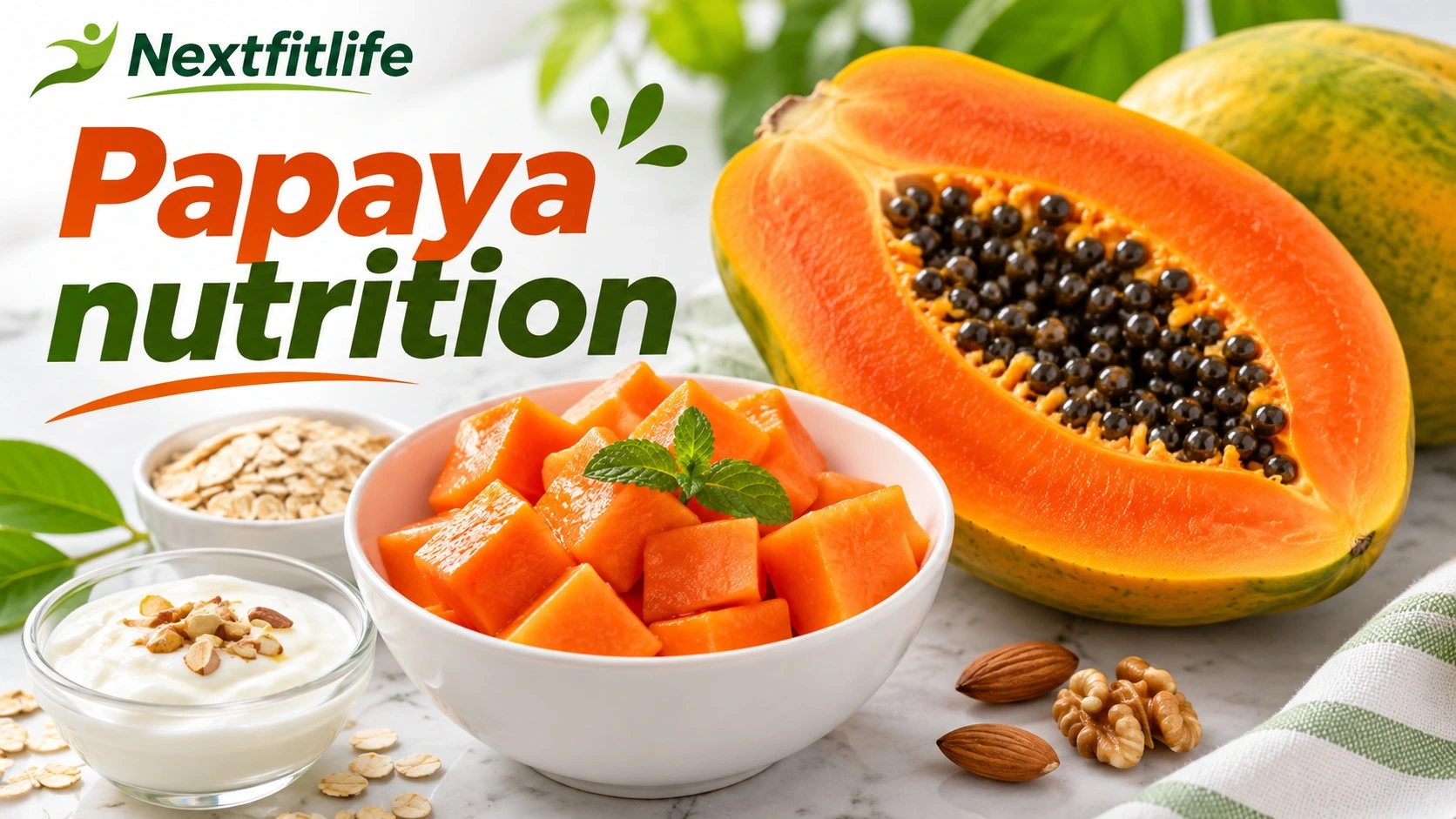
Published on: November 17, 2026
Papaya is sweet, soft, refreshing, and especially rich in vitamin C.
Papaya nutrition also includes fiber, folate, potassium, and carotenoids, while a cup of fresh fruit stays fairly light in calories. The useful part is knowing what the fruit can actually do, and where popular claims about digestion, diabetes, pregnancy, and papain go too far.
Quick answer: One cup of raw papaya pieces provides about 62 calories, around 16 grams of carbohydrate, roughly 2.5 grams of fiber, and a large amount of vitamin C. Ripe papaya fits most healthy diets, but unripe papaya, papain supplements, latex allergy, and some medical conditions need more care.
Health note: This article is for general information and education. It does not replace medical advice, diagnosis, or treatment.
Get urgent help for a serious allergic reaction. Trouble breathing, throat swelling, faintness, or rapidly worsening hives after eating papaya can signal anaphylaxis and needs emergency care.
For more evidence based nutrition guides, visit the NextFitLife Nutrition and Vitamins Hub.
Table of Contents
- Papaya nutrition at a glance
- 13 smart nutrition facts
- Papaya calories and serving sizes
- Papaya and blood sugar
- Papaya and digestion
- Papaya during pregnancy
- Papaya allergy and latex cross-reaction
- Papaya seeds and supplements
- Easy serving ideas
- Who should be careful
- References and Sources
- Internal links and hubs
- About the author
- Frequently asked questions
Papaya Nutrition at a Glance
Papaya is mostly water and carbohydrate, with very little fat and protein.
A cup of raw papaya pieces, about 145 grams, contains roughly:
| Nutrient | Approximate Amount | Why It Matters |
|---|---|---|
| Calories | About 62 kcal | Provides energy |
| Carbohydrate | About 15.7 g | Main energy source |
| Fiber | About 2.5 g | Supports digestion and fullness |
| Vitamin C | About 88 mg | Supports collagen formation and immune function |
| Folate | About 54 mcg | Supports normal cell division |
| Potassium | About 260 to 270 mg | Supports normal muscle and nerve function |
The exact numbers change with variety, ripeness, and serving size.
13 Powerful Papaya Nutrition Facts
1. Papaya Is Especially Rich in Vitamin C
This is where papaya stands out most clearly.
One cup provides close to a full day's Daily Value of vitamin C for many adults.
Vitamin C helps the body make collagen, supports normal immune function, and improves absorption of non heme iron from plant foods.
It also acts as an antioxidant.
That does not mean papaya prevents every cold or infection. It simply makes papaya a strong vitamin C food.
2. It Gives You Fiber Without Many Calories
A cup provides about 2.5 grams of dietary fiber.
That is useful, but it is not enough to meet your whole day's fiber needs.
Pair papaya with foods such as oats, chia, nuts, beans, lentils, and whole grains if fiber is a priority.
For more options, see the High Fiber Foods Guide.
3. Papaya Provides Folate
Folate is a B vitamin involved in cell division and DNA production.
Papaya provides a useful amount, but it should be viewed as one part of the diet rather than a substitute for medically recommended folic acid or prenatal supplements.
4. Its Orange Color Comes From Carotenoids
Orange and red papaya contain carotenoid pigments such as beta carotene and beta cryptoxanthin.
The body can convert some of these carotenoids into vitamin A.
Vitamin A supports normal vision, skin, and immune function.
This does not mean eating more papaya automatically improves poor eyesight.
5. Papaya Contains Potassium
Potassium supports normal nerve signaling, muscle contraction, and fluid balance.
Papaya contributes some potassium, though foods such as potatoes, beans, dairy, and some leafy vegetables can provide more.
6. Papaya Is Very Low in Fat
Fresh papaya contains very little fat.
That makes it easy to pair with foods that provide healthy fats, such as nuts, seeds, or plain yogurt.
7. Papaya Is Not a Protein Food
One cup has less than 1 gram of protein.
That means a bowl of papaya is not a balanced breakfast by itself.
Add a source such as:
- Greek yogurt
- Cottage cheese
- Eggs
- Nuts
- Seeds
- Tofu
8. Papain Is Real, but Its Benefits Get Oversold
Papain is an enzyme that breaks down proteins.
That is why it appears in digestive enzyme products and meat tenderizers.
But ripe papaya is not the same thing as a concentrated papain supplement.
Unripe papaya and papaya latex contain more proteolytic enzyme activity, while fully ripe fruit contains far less.
So I would not tell someone with reflux, pancreatic disease, or chronic digestive symptoms to “treat it with papaya.”
9. Whole Papaya Is Better Than Juice for Most People
Whole fruit keeps the fiber and structure intact.
Juice makes it easier to drink a larger amount quickly and usually provides less fiber.
A smoothie keeps the fiber, but it can still make it easy to combine several servings of fruit at once.
Whole fruit is the simplest default.
10. Papaya Can Fit a Diabetes Meal Plan
Papaya contains carbohydrate and natural sugar, so it will affect blood sugar.
Published glycemic index results vary by variety, ripeness, population, and testing method.
That is why I would not use one fixed GI number for every papaya.
A better approach is to use a measured portion and pair it with protein or fat.
For example:
Papaya + plain Greek yogurt + nuts
That is a very different meal from papaya mixed with sweetened yogurt, honey, juice, and sugary granola.
11. Papaya Can Fit Weight Loss Diets
One cup has only about 62 calories.
That makes papaya a good swap for a more calorie dense dessert or snack.
But papaya does not burn body fat.
If weight loss is your goal, focus on the whole diet rather than one fruit.
12. Ripe and Green Papaya Are Not the Same
Ripe papaya is soft, sweet, and usually eaten fresh.
Green papaya is firmer, less sweet, and often used in savory dishes.
Unripe papaya contains more latex and enzyme activity, which matters when discussing pregnancy and allergy.
13. Papaya Seeds Are Edible but Not a Medicine
Papaya seeds have a peppery flavor and are technically edible.
There is no good reason to eat large amounts as a parasite cleanse.
If you suspect a parasite infection, get tested and use proper treatment rather than relying on seeds or extracts.
Papaya Calories and Serving Sizes
This is where nutrition articles often confuse readers.
Papayas vary a lot in size.
| Serving | Calories | Carbs | Fiber |
|---|---|---|---|
| 100 g raw | About 43 | About 11 g | About 1.7 g |
| 1 cup pieces, 145 g | About 62 | About 15.7 g | About 2.5 g |
| Small papaya, about 157 g | About 67 | About 17 g | About 2.6 g |
One large papaya can provide several servings.
That is why “one papaya” is not a useful nutrition unit unless you know the weight.
Is Papaya Good for Blood Sugar?
It can fit well, but portion matters.
Papaya is fruit, and fruit contains carbohydrate.
Instead of trying to find one perfect glycemic index value, focus on the meal.
A reasonable pattern is:
- One measured serving of papaya
- A protein source
- Some healthy fat
- No need for extra syrup or sugar
If you have diabetes, use your glucose results and care plan to judge the portion that works for you.
Does Papaya Improve Digestion?
Papaya can support normal digestion mainly because it provides water and fiber.
The papain story is more complicated.
Papain is a protein digesting enzyme, but ripe fruit contains much less enzyme activity than unripe papaya latex or concentrated supplements.
That means ripe papaya is not a proven treatment for indigestion, reflux, constipation, or pancreatic disease.
Enjoy it as food.
Do not treat it like prescription digestive medicine.
Can Papaya Help With Constipation?
It can contribute to a bowel friendly diet because it provides water and fiber.
But 2 to 3 grams of fiber in a serving is not enough to fix a low fiber diet by itself.
Combine papaya with oats, chia, beans, whole grains, vegetables, and enough fluid.
For more ideas, see the High Fiber Foods for Constipation Guide.
Does Papaya Reduce Inflammation?
Papaya contains vitamin C, carotenoids, and other antioxidant compounds.
Those compounds are worth eating.
But that is different from saying papaya acts like an anti inflammatory drug.
Much of the research uses extracts, isolated compounds, animals, or laboratory models.
A bowl of papaya is nutritious. It is not a treatment for chronic inflammatory disease.
Can Papaya Prevent Cancer?
No fruit should be sold with that promise.
Papaya contains antioxidant nutrients and plant compounds that scientists study.
That does not prove papaya prevents or treats cancer in humans.
Eat different fruits and vegetables because dietary variety supports good nutrition, not because one fruit is a cure.
Is Papaya Safe During Pregnancy?
This question needs a careful answer.
Ripe papaya and unripe papaya latex are not the same exposure.
Fully ripe papaya is eaten as a normal food in many diets.
Unripe papaya contains more latex and papain related enzyme activity, which is why pregnancy warnings usually focus on unripe fruit, latex, or concentrated supplements.
If you are pregnant, I would avoid using unripe papaya or papain supplements as a home treatment without checking with your obstetric clinician.
Normal ripe fruit is a different question from medicinal or concentrated products.
What About Papaya While Breastfeeding?
Ripe papaya can be eaten as food if you tolerate it.
Claims that papaya reliably increases milk production are not supported by good clinical evidence.
If milk supply is a concern, get help with feeding technique, frequency, infant transfer, and medical causes rather than relying on a fruit or supplement.
Can Papaya Cause an Allergy?
Yes.
Papaya can cause allergic reactions, and people with latex allergy may have a higher chance of reacting because some plant proteins cross react.
Possible symptoms include:
- Mouth itching
- Hives
- Lip or tongue swelling
- Wheezing
- Trouble breathing
Breathing problems or severe swelling need emergency care.
Can Papaya Interact With Medicines?
Normal ripe fruit and concentrated extracts should not be treated as the same thing.
Supplements containing papain or papaya extracts can deliver much higher amounts of active compounds than a serving of fruit.
If you take blood thinners, thyroid medicine, heart rhythm drugs, or several prescription medicines, ask your pharmacist before adding concentrated papaya or enzyme supplements.
Do not stop a prescribed medicine because of a food article.
Is Papaya Good for Weight Loss?
It can fit well because it gives you a large serving for relatively few calories.
One cup contains about 62 calories.
That makes it useful when you want something sweet after a meal.
Still, it does not burn fat.
A balanced calorie intake matters far more than whether papaya appears on the menu.
Is Papaya Good After Exercise?
Yes, but add protein.
Papaya provides carbohydrate and fluid, so it can fit into a post workout meal.
Good pairings include:
- Papaya with Greek yogurt
- Papaya with cottage cheese
- Papaya smoothie with plain yogurt
- Papaya with oats and milk
For more training food ideas, see the Healthy Fitness Foods Guide.
Papaya vs Mango
Both are nutritious fruits.
Papaya is usually lower in calories and carbohydrate for the same weight, while mango has its own mix of vitamin C, folate, and carotenoids.
There is no need to choose one forever.
Eat the fruit you enjoy and rotate different colors across the week.
Papaya vs Pineapple
Both provide vitamin C.
Pineapple contains bromelain, while papaya is associated with papain.
That does not make either fruit a digestive medicine.
If pineapple feels too acidic for you, papaya may feel gentler, but tolerance varies from person to person.
What Is a Good Papaya Serving?
About one cup of diced fruit is an easy starting point.
You can eat more or less depending on hunger, activity, blood sugar goals, and the rest of your diet.
I would not obsess over whether the serving is exactly 145 grams.
The bigger issue is whether the fruit fits the full meal.
Easy Ways to Eat Papaya
| Meal | Papaya Idea | What to Add |
|---|---|---|
| Breakfast | Papaya bowl | Greek yogurt, oats, nuts |
| Snack | Chilled papaya with lime | A few nuts |
| Lunch | Papaya salsa | Fish or chicken |
| Smoothie | Papaya with ice | Plain yogurt or milk |
| Higher fiber meal | Papaya with oats | Chia or flax |
Who Should Be More Careful?
Get individual medical or dietetic advice if you:
- Have a known papaya allergy
- Have a serious latex allergy
- Are pregnant and considering green papaya or papain supplements
- Take medicines that may interact with concentrated supplements
- Have diabetes and are unsure how fruit fits your carbohydrate plan
- Are considering high dose papaya or enzyme products
For most healthy adults, ripe papaya is simply a nutritious fruit.
Conclusion
Papaya nutrition is strong because one serving gives you a lot of vitamin C along with fiber, folate, potassium, and carotenoids for relatively few calories.
The useful approach is simple: eat ripe papaya as food, pair it with protein when you want a complete meal, and ignore claims that turn it into a cure for digestion, diabetes, parasites, or cancer.
Your next step: try one cup of ripe papaya with plain yogurt, oats, or nuts this week, and use it as one part of a varied fruit and vegetable intake.
References and Sources
- USDA FoodData Central. Papayas, raw.
https://fdc.nal.usda.gov/ - Cleveland Clinic. Papaya Health Benefits.
https://health.clevelandclinic.org/papaya-benefits - National Library of Medicine. LactMed: Papaya.
https://www.ncbi.nlm.nih.gov/books/NBK501881/ - European Food Safety Authority. Safety assessment of papain from Carica papaya latex.
https://pmc.ncbi.nlm.nih.gov/articles/PMC12951539/ - National Library of Medicine, PubMed. Glycemic index research involving papaya and tropical fruits.
https://pubmed.ncbi.nlm.nih.gov/18364324/
Internal Links and NextFitLife Hubs
- Nutrition and Vitamins Hub
- High Fiber Foods Guide
- Vitamin A Rich Foods
- High Protein High Fiber Diet Plan
- Healthy Fitness Foods
- Foods for Eye Health
- Healthy Foods for Everyday Nutrition
- Biotin Rich Foods
Frequently Asked Questions
How many calories are in papaya?
One cup of fresh papaya pieces contains about 62 calories. A small papaya provides roughly 67 calories, though actual values vary with size and variety.
Is papaya high in sugar?
Papaya contains natural fruit sugar but is not unusually high in calories or carbohydrate. One cup contains about 16 grams of carbohydrate, including roughly 11 grams of natural sugars.
Is papaya high in vitamin C?
Yes. Papaya is an excellent source of vitamin C, with one cup providing close to a full day's Daily Value for many adults.
Is papaya good for digestion?
Ripe papaya provides water and fiber, which can support normal digestion. Claims that ripe papaya works as a strong digestive enzyme treatment are overstated because papain activity is much higher in unripe papaya and latex.
Can people with diabetes eat papaya?
Yes. Papaya can fit a diabetes meal plan, but portion size and the full meal matter because the fruit contains carbohydrate. Pairing it with protein or healthy fat can make the meal more balanced.
Is ripe papaya safe during pregnancy?
Ripe papaya eaten as a normal food is different from unripe papaya latex or concentrated papain supplements. Pregnancy cautions mainly concern unripe papaya and medicinal amounts of papain, so ask your obstetric clinician if you are unsure.
Can papaya cause an allergic reaction?
Yes. Papaya can trigger allergy, and cross reaction may occur in some people with latex allergy. Severe swelling or trouble breathing needs emergency care.
Are papaya seeds safe to eat?
Papaya seeds are edible in small food amounts, but they should not be used as a parasite cleanse or a replacement for medical treatment.
Is papaya good for weight loss?
Papaya can fit a weight loss diet because it provides a large serving for relatively few calories. It does not directly burn fat, so the full eating pattern still matters.
What is a good serving size of papaya?
About one cup of diced ripe papaya is a practical serving for many adults. The right amount can change with hunger, activity, diabetes goals, and the rest of the meal.