Updated on: October 13, 2026
Written by: Adel Galal, Founder and Lead Writer at NextFitLife
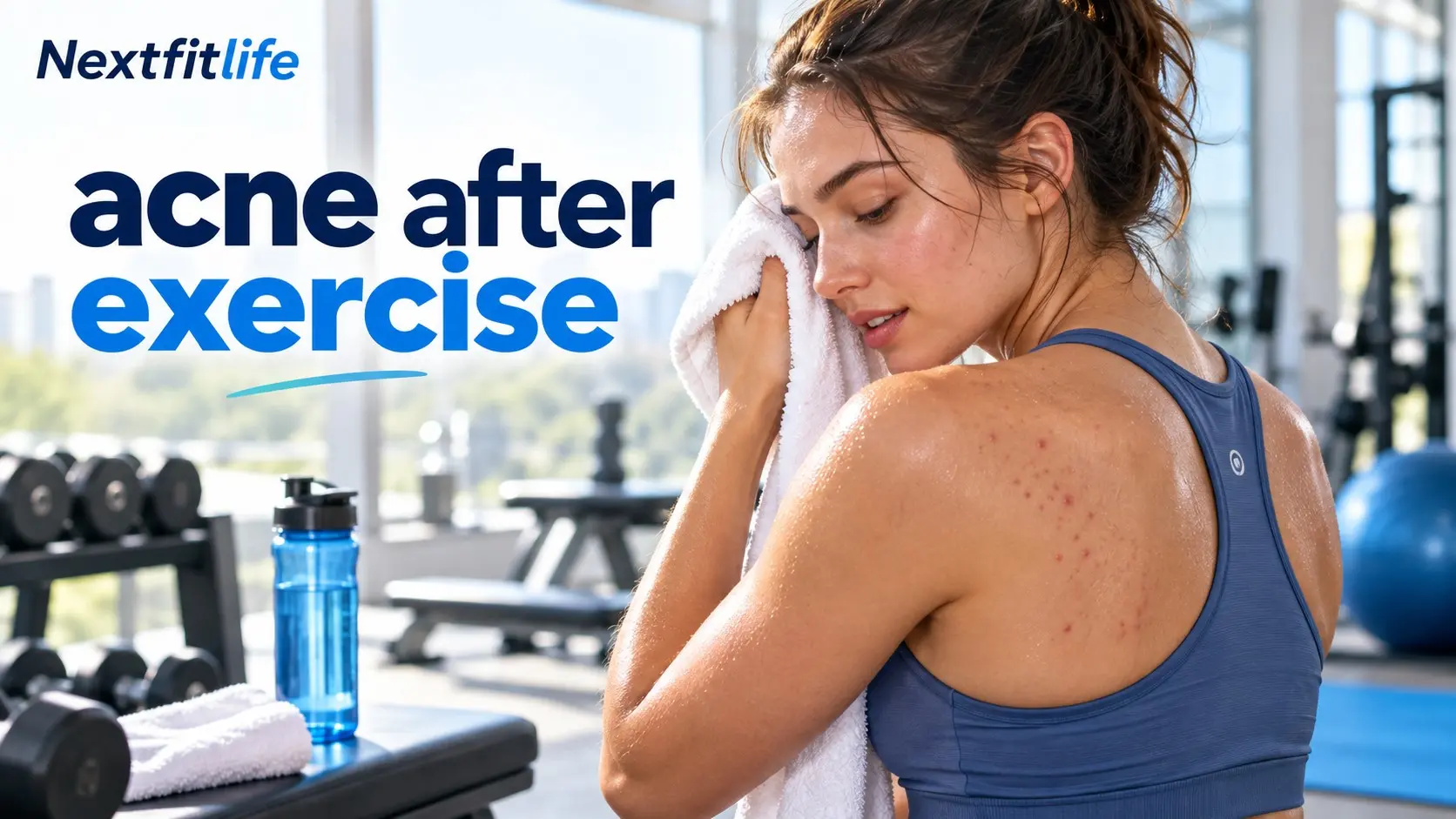
Acne after exercise usually comes from the conditions around your workout rather than exercise itself. Sweat, skin oil, tight clothing, makeup, friction, and repeated pressure from sports gear can create the perfect setting for breakouts on the face, chest, shoulders, and back.
You do not need to stop training.
The better approach is to identify what is actually causing the bumps, reduce friction and trapped moisture, change out of sweaty clothes, cleanse gently, and use a proven acne treatment when needed.
There is one catch: not every “post-workout pimple” is acne. Very itchy, uniform bumps may be folliculitis, while tiny itchy spots that appear within minutes of exercise may be exercise hives.
This article is for general information and education. It does not replace medical advice, diagnosis, or treatment.
For more acne guidance, visit the NextFitLife Acne, Whiteheads and Pores Hub. You can also explore the Fitness Hub for practical workout guidance.
- Why exercise can seem to cause acne
- When workout bumps are not acne
- 11 smart ways to prevent breakouts
- Body acne after exercise
- Face, forehead, chest, and back patterns
- Before, during, and after workout routine
- Benzoyl peroxide and salicylic acid
- Whey protein and supplements
- Common mistakes
- When to see a dermatologist
- Seven-day workout breakout audit
- References and Sources
- Internal Links + Hub
- Author Bio
- Frequently Asked Questions
Why do I get acne after exercise?
Exercise does not suddenly fill your pores with dirt.
Acne begins inside hair follicles. Oil, dead skin cells, inflammation, and other factors contribute to blocked follicles and pimples.
During exercise, several extra triggers can pile on:
- Sweat stays against the skin
- Tight fabric traps heat and moisture
- Straps and sports equipment rub repeatedly
- Makeup and oily products remain on the skin
- Hands and towels repeatedly touch the face
- Damp clothing stays on long after training ends
The American Academy of Dermatology specifically recognizes the combination of heat, trapped sweat, pressure, and rubbing from clothing or sports gear. The resulting pattern is called acne mechanica.
If your breakout follows the shape of a helmet, backpack strap, sports bra, lifting belt, or compression shirt, friction is giving you a clue.
Is sweat the real cause?
Not by itself.
Sweating is a normal way for your body to control temperature. The problem begins when sweat remains trapped with oil, cosmetics, tight clothing, and repeated rubbing.
That is why two people can complete the same workout and have completely different skin afterward.
Trying to “scrub the sweat out” usually makes matters worse.
AAD advises gentle cleansing and warns that scrubbing acne-prone skin can irritate it and make breakouts flare.
First, make sure your workout bumps are actually acne
This is the part many workout skincare guides skip.
| Pattern | What It May Be | Useful Clue |
|---|---|---|
| Blackheads, whiteheads, red pimples | Acne | Different types of spots may appear together |
| Bumps exactly under straps or gear | Acne mechanica | Pressure, heat, sweat, and friction match the location |
| Very itchy, similar-looking bumps | Malassezia folliculitis | Often affects chest, back, shoulders, or forehead |
| Pus-filled follicle-based spots | Bacterial folliculitis | May itch, sting, or feel sore |
| Prickly bumps after hot workouts | Heat rash | Appears where heat and sweat are trapped |
| Tiny itchy bumps within minutes of exercise | Cholinergic urticaria | Appears quickly and can fade after exercise stops |
Acne mechanica
Acne mechanica is common in athletes because clothing and equipment trap heat and sweat while rubbing the skin.
You may first notice tiny rough bumps where a helmet, strap, pad, belt, or tight garment sits.
This pattern often improves when the mechanical trigger is corrected.
Malassezia folliculitis
Malassezia folliculitis is sometimes called fungal acne, but it is not acne vulgaris.
The bumps are commonly small, similar in size, and itchy. Heat, sweating, oily skin, and occlusion can make the problem more likely.
Blackheads and whiteheads are usually absent.
Bacterial folliculitis
Bacterial folliculitis involves inflammation or infection around hair follicles.
It can cause groups of small red or pus-filled bumps that look like acne.
A spreading painful rash, fever, large boils, or rapidly worsening infection deserves medical assessment.
Exercise hives
Cholinergic urticaria can create tiny itchy wheals after body temperature rises.
Unlike acne, the rash can appear within minutes of exercise and often fades much faster.
Seek urgent medical help if an exercise-related rash comes with:
- Trouble breathing
- Throat or tongue swelling
- Fainting
- Severe wheezing
- Rapidly worsening widespread hives
How to prevent acne after exercise: 11 smart changes
1. Start every workout in clean clothes
Yesterday's gym shirt is not really clean just because it dried.
Used clothing can hold skin oil, sweat, and dead skin against acne-prone areas.
Use freshly washed:
- Workout shirts
- Sports bras
- Headbands
- Caps
- Compression clothing
- Towels
This is one of the easiest ways to reduce repeated exposure to the same sweat and oil.
2. Remove heavy makeup before hard training
A full face of heavy foundation under heat and sweat can make an already acne-prone environment harder to manage.
AAD recommends removing makeup before exercise.
If you train outdoors, do not skip sun protection. Choose a sunscreen labelled noncomedogenic or oil-free.
For more guidance, read What Noncomedogenic Skincare Really Means.
3. Pat sweat instead of rubbing your skin
Rubbing a rough towel across your face after every set adds friction to already warm skin.
Use a clean towel and gently pat sweat away.
That tiny change matters more than it sounds.
4. Look at friction before buying stronger skincare
If shoulder acne follows your backpack straps, the straps deserve attention.
If chest acne sits directly under a sports bra band, look at fit, friction, and trapped moisture.
If forehead spots, follow a helmet liner, clean the liner and reduce rubbing.
AAD recommends moisture-wicking clothing and reducing friction for friction acne.
5. Put clean material between hard gear and your skin
Helmets, shoulder pads, chin straps, belts, and protective equipment repeatedly press against the same areas.
Clean washable pads and liners regularly.
Where practical, use clean soft material between equipment and skin to reduce rubbing.
6. Change out of wet clothes soon after training
You do not need to sprint from your final repetition into the shower.
But staying in soaked clothing for hours keeps moisture, heat, and friction against the skin longer than necessary.
Change into dry clothing when you finish training.
If a shower has to wait, changing clothes should not.
7. Shower after sweating without attacking your skin
Gentle washing is enough.
Use warm rather than very hot water and apply cleanser with your hands.
Avoid turning every workout into an exfoliation session with:
- Harsh scrubs
- Rough brushes
- Scratchy loofahs
- Repeated acid treatments
- Strong alcohol based products
Your skin barrier does not need punishment because you exercised.
8. Use one evidence-based acne active
If basic prevention is not enough, consider an established acne ingredient rather than adding five products at once.
Current American Academy of Dermatology guidelines recommend several topical therapies. Two familiar options are benzoyl peroxide and salicylic acid.
Benzoyl peroxide
Benzoyl peroxide is strongly recommended in the AAD acne guideline and can be especially useful for inflammatory acne.
Body washes can be practical for the chest, shoulders, and back.
One annoying detail: benzoyl peroxide can bleach towels, sheets, and clothing.
Salicylic acid
Salicylic acid can help unclog pores and is included among AAD-recommended topical options.
It may suit people whose workout acne includes clogged pores and minor bumps.
Start simply and watch for dryness or irritation.
For a broader treatment guide, see NextFitLife Acne Treatment Guide.
9. Moisturize if acne treatment dries the skin
Oily skin can still become dry and irritated.
If cleanser or acne treatment leaves your skin tight, use a light noncomedogenic moisturizer.
Overdrying your skin does not mean the treatment is working better.
10. Clean the things that repeatedly touch your skin
The gym floor is not the only surface that matters.
Pay attention to:
- Phone screens
- Helmet padding
- Yoga mats
- Headbands
- Chin straps
- Backpack straps
- Benches
- Reusable towels
You do not need to disinfect your entire life.
Simply stop letting dirty, oily equipment repeatedly sit against acne prone skin.
11. Keep exercising
Do not solve workout acne by quitting exercise.
The effect of exercise on acne differs between people, and exercise itself is not a reason to abandon physical activity.
Fix the conditions surrounding the workout instead.
For training guidance, visit the NextFitLife Fitness Hub.
How to prevent body acne after exercise
Body acne needs extra attention because clothing, straps, pressure, and sweat play a larger role than they do on much of the face.
Back acne
A sweaty shirt, backpack, bench contact, and tight compression gear can all aggravate the back.
My priority order would be:
- Clean shirt for every workout
- Change after training
- Reduce rubbing
- Shower gently
- Consider an acne wash if breakouts persist
- Check whether very itchy uniform bumps might be folliculitis
See Back Acne: Smart Fixes That Really Help.
Chest acne
Sports bras, compression shirts, heart rate straps, and fitted tops can trap heat and sweat against the chest.
If every bump looks almost identical and itching is a major feature, do not assume it is ordinary acne.
Read Chest Acne and Chest Acne Treatment.
Shoulder acne
Look at the equipment map.
Backpack straps, gym bags, bra straps, protective pads, and weighted vests can all produce repeated pressure over the shoulders.
Forehead acne
Headbands, caps, helmet padding, and hair products deserve attention.
A row of bumps following the exact edge of a headband is useful information.
See Forehead Acne Causes and Care.
Scalp and hairline bumps
The scalp has its own list of problems.
Persistent scalp bumps can involve acne, folliculitis, hair products, or other scalp conditions.
Read Scalp Acne Causes rather than applying strong facial acne treatment blindly to the scalp.
Your before, during, and after workout skin routine
| When | Do This | Avoid This |
|---|---|---|
| Before | Remove heavy makeup, wear clean clothes, use noncomedogenic sunscreen outdoors | Yesterday's sweaty shirt or dirty helmet liner |
| During | Pat sweat gently, use your own clean towel, reduce rubbing | Scrubbing your face or repeatedly touching pimples |
| After | Change clothes, shower gently, apply your normal acne treatment | Hours in wet clothes or stacking several harsh treatments |
Does sweating open and clean your pores?
No.
Sweating helps control body temperature. It is not a detox treatment for blocked follicles.
You cannot sweat acne plugs out of your pores.
That is another reason aggressive scrubbing after exercise makes little sense.
Does working out itself cause acne?
Not in a simple direct way.
Exercise changes several things at once: heat, sweat, oil, friction, clothing contact, equipment contact, and sometimes supplement use.
Any of those can change the way acne behaves.
For some people, training does not noticeably change acne at all.
Does whey protein cause acne after exercise?
This question deserves more nuance than it usually gets.
Case reports and observational studies have raised concerns about whey protein, but that does not prove that whey causes acne in everyone.
A 2024 double blind randomized controlled trial studied 49 young men with mild to moderate facial or truncal acne.
One group used 30 grams of whey protein daily plus another supplement. The control group received a non whey nutritional supplement.
After six months, the whey group did not show worse changes in total acne lesions or acne severity compared with the control group.
That trial does not prove whey can never affect an individual.
It does mean “whey causes acne” is too confident.
If your acne clearly began after starting a supplement, note the timing and discuss it with a clinician or registered dietitian. First, fix the simpler workout triggers such as friction, dirty clothing, and poor post-workout skin care.
What about testosterone boosters and androgenic supplements?
This deserves more attention than whey.
Androgen hormones, including testosterone, can increase sebum production and contribute to acne.
Cleveland Clinic specifically warns that exercise supplements designed to raise androgens or testosterone can provoke acne flares.
AAD also recognizes acne associated with testosterone exposure.
If new severe chest, shoulder, or back acne appeared after starting an androgenic or muscle building product, tell your healthcare professional exactly what you are using.
Do you need a special antibacterial spray after every workout?
No.
Most people do not need a complicated spray routine.
Start with the basics:
- Clean clothing
- Less friction
- Gentle cleansing
- A proven acne treatment if needed
That routine has more value than buying a cabinet full of workout skincare.
Can showering too much make breakouts worse?
Yes, if every shower becomes harsh.
AAD warns that repeated scrubbing and irritating products can worsen acne.
If you train twice in one day, it can still make sense to rinse or gently cleanse after sweating.
You do not need a strong medicated wash every single time.
Should you exfoliate after every workout?
No.
Sweat does not create an automatic need for exfoliation.
If salicylic acid is already part of your routine, follow the product directions and your skin's tolerance.
Do not scrub first, add several acids, then wonder why the skin burns.
How long does an acne routine take to work?
Do not judge a real acne treatment after a weekend.
AAD advises giving acne treatment time to work rather than changing products every few days.
Mechanical changes can give useful clues sooner.
If you stop wearing a tight, dirty headband and the row of forehead bumps stops returning in that exact spot, you have probably found an important trigger.
Seven workout acne mistakes worth fixing
1. Rewearing damp workout clothes
Clean fabric is an easy win.
2. Scrubbing hard after sweating
Friction and irritation can worsen the problem.
3. Keeping sweaty clothing on for hours
Change when your workout ends.
4. Treating every itchy bump as acne
Folliculitis and hives require a different approach.
5. Adding too many acne products at once
More irritation does not equal faster results.
6. Ignoring helmets, straps, and pads
The location of your acne may be telling you exactly what is rubbing the skin.
7. Blaming one food or supplement before checking the basics
Look at clothing, friction, cleansing, gear, and the appearance of the rash first.
A seven-day workout breakout audit
Before buying another product, spend one week tracking your routine.
Day 1: Map the breakout
Write down exactly where it appears.
Day 2: Check every contact point
Look at straps, pads, bras, belts, helmets, headbands, and tight clothing.
Day 3: Use clean clothes only
Fresh clothing for every session.
Day 4: Stop rubbing sweat
Pat gently instead.
Day 5: Change immediately after training
Do not sit around in wet clothing.
Day 6: Look closely at the bumps
Are there blackheads and whiteheads, or are all the spots small, identical, and itchy?
Day 7: Review supplements and medicines
Note whey products, androgenic supplements, testosterone products, new medicines, and anything else added around the time the acne started.
This will not clear established acne in seven days.
It can show you what keeps provoking it.
When should you see a dermatologist?
Arrange professional care when you have:
- Deep painful nodules or cysts
- Acne scars
- Widespread chest or back acne
- Breakouts that persist despite sensible treatment
- Very itchy uniform bumps
- Repeated folliculitis
- A painful spreading rash
- Uncertainty about whether the problem is actually acne
Early treatment matters because deeper inflammatory acne can leave lasting marks and scars.
See Acne Marks vs Acne Scars if you are already seeing changes after breakouts heal.
What if you are pregnant?
Pregnancy changes which acne medicines are suitable.
Do not automatically start a topical retinoid or other acne medicine during pregnancy without checking with a qualified healthcare professional.
Gentle cleansing, reducing friction, changing sweaty clothing, and choosing noncomedogenic products remain useful steps.
Conclusion: fix the workout environment before quitting exercise
Acne after exercise usually becomes easier to manage when you stop treating sweat as the enemy and focus on the things that actually aggravate acne-prone skin: friction, trapped moisture, tight clothing, dirty gear, irritating skincare, and the wrong diagnosis.
If you want the simplest starting point, make your next workout an experiment.
Use clean clothes, reduce rubbing, change as soon as you finish, wash gently, and look closely at what the bumps actually look like. If the pattern keeps returning despite those changes, move on to evidence-based acne treatment or a dermatologist rather than adding more scrubs.
References and Sources
- American Academy of Dermatology. Is Your Workout Causing Your Acne?
Used for makeup removal, clean workout clothes, sweat care, sunscreen, equipment hygiene, and post workout cleansing.
https://www.aad.org/public/diseases/acne/causes/workouts - American Academy of Dermatology. Is Sports Equipment Causing Your Acne?
Used for acne mechanica, friction, trapped heat, sweat, equipment, and protective barriers.
https://www.aad.org/public/diseases/acne/causes/sports-equipment - American Academy of Dermatology. Acne Clinical Guideline.
Used for benzoyl peroxide, topical retinoids, salicylic acid, azelaic acid, antibiotic practices, and prescription treatment context.
https://www.aad.org/member/clinical-quality/guidelines/acne/ - American Academy of Dermatology. 10 Skin Care Habits That Can Worsen Acne.
Used for gentle cleansing, avoiding scrubbing, moisturizing acne prone skin, and patting rather than rubbing sweat.
https://www.aad.org/public/diseases/acne/skin-care/habits-stop - DermNet. Malassezia Folliculitis.
Used to distinguish itchy uniform follicular bumps from acne vulgaris.
https://dermnetnz.org/topics/malassezia-folliculitis - DermNet. Cholinergic Urticaria.
Used for exercise-related hives, timing, itch, and warning signs.
https://dermnetnz.org/topics/cholinergic-urticaria - Mayo Clinic. Folliculitis.
Used for bacterial folliculitis symptoms and risk context.
https://www.mayoclinic.org/diseases-conditions/folliculitis/symptoms-causes/syc-20361634 - Sompochpruetikul K, et al. Whey Protein and Male Acne: A Double Blind, Randomized Controlled Trial. Journal of Dermatology. 2024.
Used for the section explaining why the whey protein and acne relationship remains uncertain.
https://onlinelibrary.wiley.com/doi/full/10.1111/1346-8138.17109 - Cleveland Clinic. Does Working Out Help Acne?
Used for exercise, post-workout skin care, androgenic supplements, and the distinction between exercise and acne triggers.
https://health.clevelandclinic.org/does-exercise-help-acne
Internal Links + Hub
- Acne, Whiteheads and Pores Hub
- Skin, Hair and Nail Health Hub
- Fitness Hub
- Recovery and Injury Prevention Guide
- Acne Treatment Guide
- Back Acne
- Chest Acne
- Chest Acne Treatment
- Forehead Acne Causes and Care
- Scalp Acne Causes
- Noncomedogenic Skincare Meaning
- Acne Marks vs Acne Scars
- Post Inflammatory Hyperpigmentation Acne
- Skin Health Guide
Author Bio
Adel Galal is the founder and lead writer of NextFitLife. His health, fitness, and skincare content focuses on turning established dermatology and public health guidance into clear information readers can use in daily life.
For this article, the focus is on explaining acne after exercise without blaming sweat alone, while helping readers separate acne mechanica from folliculitis, heat rash, and exercise-related hives.
I am not a dermatologist or a doctor, and this content does not replace professional medical advice. What I share comes from real-life experience, extensive research, and consultation with healthcare providers. Always consult qualified medical professionals for diagnosis and treatment of any health condition.
This article has not been medically reviewed by a dermatologist, physician, allergist, or other licensed healthcare professional.
Learn more about NextFitLife and its editorial approach at About Us.
Frequently Asked Questions
Why do I get acne after exercise?
Exercise creates heat and sweat, while tight clothing, sports equipment, makeup, oil, and repeated friction can irritate acne-prone skin and contribute to blocked or inflamed follicles. The workout itself is not always the direct cause.
Does sweat cause acne?
Sweat alone does not explain acne. Breakouts are more likely when sweat becomes trapped with oil, tight clothing, makeup, and friction. Leaving damp clothing on for a long time can also make the environment less friendly for acne-prone skin.
How do I prevent acne after exercise?
Wear clean workout clothes, remove heavy makeup, pat rather than rub sweat, reduce friction from gear, change out of wet clothing, shower gently, and use an evidence based acne treatment if needed.
How do I prevent body acne after exercise?
Focus on reducing friction and trapped moisture across the chest, shoulders, and back. Change sweaty clothes promptly, clean equipment that touches your skin, shower gently, and consider a benzoyl peroxide or salicylic acid product if true acne persists.
What is acne mechanica?
Acne mechanica is acne triggered or worsened by heat, sweat, pressure, and rubbing from clothing or sports equipment. It commonly develops under helmet padding, straps, pads, belts, and tight athletic clothing.
How can I tell acne from folliculitis?
Acne often includes a mixture of blackheads, whiteheads, inflamed pimples, and deeper lesions. Malassezia folliculitis is more likely to produce small, similar looking, itchy bumps without typical blackheads or whiteheads. A dermatologist can confirm the diagnosis.
Should I shower immediately after exercise?
You do not need to panic if a shower is not available within minutes. Change out of damp clothes when practical and cleanse sweaty acne prone skin reasonably soon. Gentle washing matters more than harsh scrubbing.
Is benzoyl peroxide good for workout acne?
Benzoyl peroxide is strongly recommended in current American Academy of Dermatology acne guidance and can help inflammatory acne. Body washes can be useful for the chest and back, although the product can bleach fabrics.
Is salicylic acid good for post-workout acne?
Salicylic acid is an AAD-recommended topical acne option and can help unclog pores. It can be useful when workout acne includes small clogged bumps, but excessive use can irritate the skin.
Does whey protein cause acne?
The evidence is mixed. A 2024 randomized controlled trial involving 49 young men did not find worse facial or truncal acne with 30 grams of daily whey protein compared with a non-whey supplement. Individual reactions can still differ.
Can testosterone supplements cause acne?
Androgenic and testosterone-boosting products can contribute to acne because androgen hormones increase skin oil production and affect acne biology. Tell your healthcare professional if severe body acne began after starting one of these products.
Should I stop working out if exercise makes my acne worse?
Usually no. First address clean clothing, trapped sweat, friction, makeup, gear, and skin care. Exercise offers broad health benefits, and acne can usually be managed without giving up training.
Can workout bumps actually be hives?
Yes. Cholinergic urticaria can cause small itchy hives within minutes of exercise or another rise in body temperature. Unlike acne, they usually appear quickly and fade much faster. Breathing trouble or fainting with hives requires urgent medical care.
When should I see a dermatologist for acne after exercise?
Seek professional care for deep painful acne, scarring, widespread chest or back acne, persistent breakouts despite treatment, repeated folliculitis, or bumps that are very itchy and difficult to identify.

Health & wellness writer with 30+ years of experience in nutrition, fitness, and healthy aging. Founder of NextFitLife.com — evidence-based health guidance.