
NextFitLife Fitness Hub
Published: March 2026 · Last updated: July 2026 · Next review: July 2027
Important recovery and injury safety note
This guide is for education only. It does not diagnose injuries, replace medical care, prescribe rehabilitation, or tell you to start, stop, or change medication, treatment, supplements, diet, breathing practices, skin treatment, surgery, or exercise.
Stop exercising and seek urgent medical help if you have chest pain, severe shortness of breath, fainting, severe dizziness, sudden weakness, signs of stroke, confusion, seizure, severe injury, uncontrolled bleeding, new numbness, loss of bladder or bowel control, severe headache with neurological symptoms, or symptoms that feel sudden, severe, unusual, or dangerous.
Speak with a qualified healthcare professional before continuing exercise if you have persistent pain, worsening pain, swelling, weakness, numbness, tingling, repeated injuries, severe back pain, sciatica symptoms, vertigo, balance problems, recent surgery, osteoporosis, pregnancy, chronic disease, or a medical condition that may affect safe movement.
Source and review standard for recovery and injury prevention content
Source standard: Recovery and injury prevention articles should use trusted medical, physical therapy, sports-medicine, orthopaedic, sleep-health, dermatology, and public-health sources where relevant. Articles about pain, sciatica, vertigo, breathing for anxiety, insomnia, loose skin, skin tightening, or rehabilitation need extra caution.
Review priority: High for articles about lower back pain, exercises to avoid, sciatica, vertigo, knee pain, breathing exercises for anxiety or sleep, loose skin treatments, persistent pain, and any content that may delay medical care. Medium for general warmup, cooldown, sleep, recovery, and mobility topics.
Reader safety note: Recovery advice is not one-size-fits-all. Pain location, cause, severity, injury history, medication use, age, pregnancy status, sleep problems, and medical conditions all affect what is safe.
Trusted sources used for recovery and injury prevention guidance
The sources used vary by article, but recovery and injury prevention content should commonly reference trusted sources such as:
- MedlinePlus: How to Avoid Exercise Injuries
- MedlinePlus: Benefits of Exercise
- AAOS OrthoInfo: Sports Injury Prevention
- AAOS OrthoInfo: Rest, Recovery, Warmups, Cooldowns, Strength, and Stretching
- CDC: Adult Activity — An Overview
- CDC: Older Adult Activity — An Overview
- NCCIH: Stress and Relaxation Techniques
- MedlinePlus: Learn to Manage Stress
- American Academy of Dermatology: Many Ways to Firm Sagging Skin
- MedlinePlus: Considering Plastic Surgery After a Large Weight Loss
Individual articles should include their own references when they discuss specific injuries, pain conditions, sciatica, vertigo, back pain, knee pain, insomnia, breathing exercises, anxiety, skin laxity, cosmetic procedures, or recovery claims.
How to use this recovery and injury prevention guide
Start with the section closest to your current concern. If your goal is safer training, begin with warmups, gradual progression, mobility, strength balance, and recovery habits. If you have pain, dizziness, numbness, or persistent symptoms, treat these articles as educational support and seek professional guidance.
If an exercise increases pain, causes sharp symptoms, changes your balance, affects breathing, causes dizziness, or triggers nerve symptoms, stop and reassess. Recovery should help you train safely over time, not push through warning signs.
Recovery and injury prevention articles
These articles are grouped by topic. Some older URLs or article titles may still include hype words such as “evidence-based,” “best,” “secret,” “pain-free for life,” “ultimate,” “naturally,” “life-changing,” “tighten fast,” “proven,” “expert,” or “fixes that work.” The safer visible titles below are the standard to follow as the posts are updated.
Back and joint protection
- Lower Back Pain During Core Exercises: Causes, Form Tips, and When to Stop – Tips to reduce back strain during core work.
- Lower Back Pain Exercises to Avoid: Safer Movement Questions – Movements that may worsen some back-pain patterns.
- Knee Exercises for Runners: Strength, Control, and Pain-Aware Training – Knee-support exercises for runners.
- Fire Hydrant Exercise: Hip Stability, Form, and Common Mistakes – Hip stability exercise for injury-aware training.
Injury prevention and rehabilitation questions
- Injury Prevention Exercises: Strength, Mobility, Balance, and Safety Tips – Preventive exercises for common training risks.
- Sciatica Stretches: Nerve Pain, Safety Limits, and When to Get Care – Sciatica-related stretching considerations. No URL was provided in the original HTML.
- Vertigo Exercises: Dizziness, Balance, and When to Seek Medical Care – Exercises sometimes used for vertigo symptoms with safety cautions.
Sleep and recovery
- Sleep for Fitness Recovery: Timing, Habits, and Training Support – Sleep’s role in recovery and performance habits.
- Can Exercising Late Cause Insomnia? Workout Timing and Sleep Questions – Workout timing and sleep considerations.
Breathing and relaxation
- Breathing Exercises for Anxiety: Relaxation, Limits, and When to Get Help – Breathing for relaxation and stress support.
- Breathing Exercises for Sleep: Relaxation Habits and Safety Notes – Breathing practices that may support a calming bedtime routine.
Skin changes after weight loss
- Loose Skin After Weight Loss: Causes, Expectations, and Care Options – Skin changes after weight loss.
- Flabby Skin After Weight Loss: Skin Laxity, Habits, and Treatment Questions – Loose skin and care options.
- Loose Skin After Fat Loss: What Can and Cannot Change Naturally – Skin laxity after fat loss.
- Skin Tightening Treatments for the Stomach: Options, Limits, and Questions – Skin tightening options after weight loss.
- How to Address Loose Belly Skin: Realistic Options and Safety Notes – Loose belly skin care and treatment considerations.
- Excess Stomach Skin: Habits, Procedures, and When to Ask a Specialist – Stomach skin laxity and professional options.
Frequently asked questions
What does recovery mean in fitness?
Recovery means allowing the body time and support to adapt after training. It can include sleep, rest days, hydration, nutrition, warmups, cooldowns, mobility work, lighter sessions, and reduced training load when needed.
How do I know if pain is not normal workout soreness?
Normal soreness is usually mild to moderate and improves over time. Sharp pain, swelling, numbness, tingling, weakness, pain after trauma, worsening pain, night pain, or pain that changes how you move should be checked by a qualified healthcare professional.
Can stretching prevent injuries?
Stretching can support flexibility, but injury prevention depends on many factors, including warm-up, strength, technique, load management, recovery, sleep, footwear, equipment, and gradual progression.
When should I stop exercising immediately?
Stop immediately for chest pain, severe shortness of breath, fainting, severe dizziness, sudden weakness, severe injury, new numbness, loss of bladder or bowel control, confusion, seizure, or symptoms that feel sudden, severe, or unsafe.
Can breathing exercises treat anxiety or insomnia?
Breathing exercises may support relaxation for some people, but they do not replace mental health care, sleep evaluation, medication guidance, or treatment. Seek professional help for severe anxiety, panic symptoms, depression, suicidal thoughts, or persistent insomnia.
Can exercise tighten loose skin after weight loss?
Exercise can help build muscle and support body composition, but it cannot guarantee the removal or tightening of loose skin. Skin laxity depends on age, genetics, amount and speed of weight loss, skin elasticity, weight stability, and whether medical or cosmetic procedures are appropriate.
When should skin after weight loss be checked?
Seek professional care if loose skin causes rashes, sores, hygiene problems, pain, recurrent infections, or functional limitations. A dermatologist, primary care clinician, or qualified surgical specialist can explain realistic options.
Are these articles medically reviewed?
Some high-risk recovery and injury prevention articles may receive medical, physical therapy, sports medicine, dermatology, or professional fitness review. When a page has been reviewed, the reviewer’s name, credentials, and review date should be shown clearly. If no reviewer is listed, readers should treat the article as editorially reviewed fitness information, not personal medical or rehabilitation advice.
References and sources
These references support the safety and source standards for this recovery and injury prevention sub-hub. Individual articles should include additional sources specific to their symptoms, conditions, exercises, populations, and claims.
- MedlinePlus Medical Encyclopedia. How to Avoid Exercise Injuries.
- MedlinePlus. Benefits of Exercise.
- American Academy of Orthopaedic Surgeons / OrthoInfo. Sports Injury Prevention for Baby Boomers.
- American Academy of Orthopaedic Surgeons / OrthoInfo. OneSport Injury Prevention Guidance.
- Centers for Disease Control and Prevention. Adult Activity: An Overview.
- Centers for Disease Control and Prevention. Older Adult Activity: An Overview.
- National Center for Complementary and Integrative Health. Stress.
- MedlinePlus Medical Encyclopedia. Learn to Manage Stress.
- American Academy of Dermatology. Many Ways to Firm Sagging Skin.
- MedlinePlus Medical Encyclopedia. Considering Plastic Surgery After a Large Weight Loss.
Our editorial and review standards
To understand how NextFitLife handles health and fitness content, corrections, medical review, and reader safety, read:
Recovery helps training stay sustainable
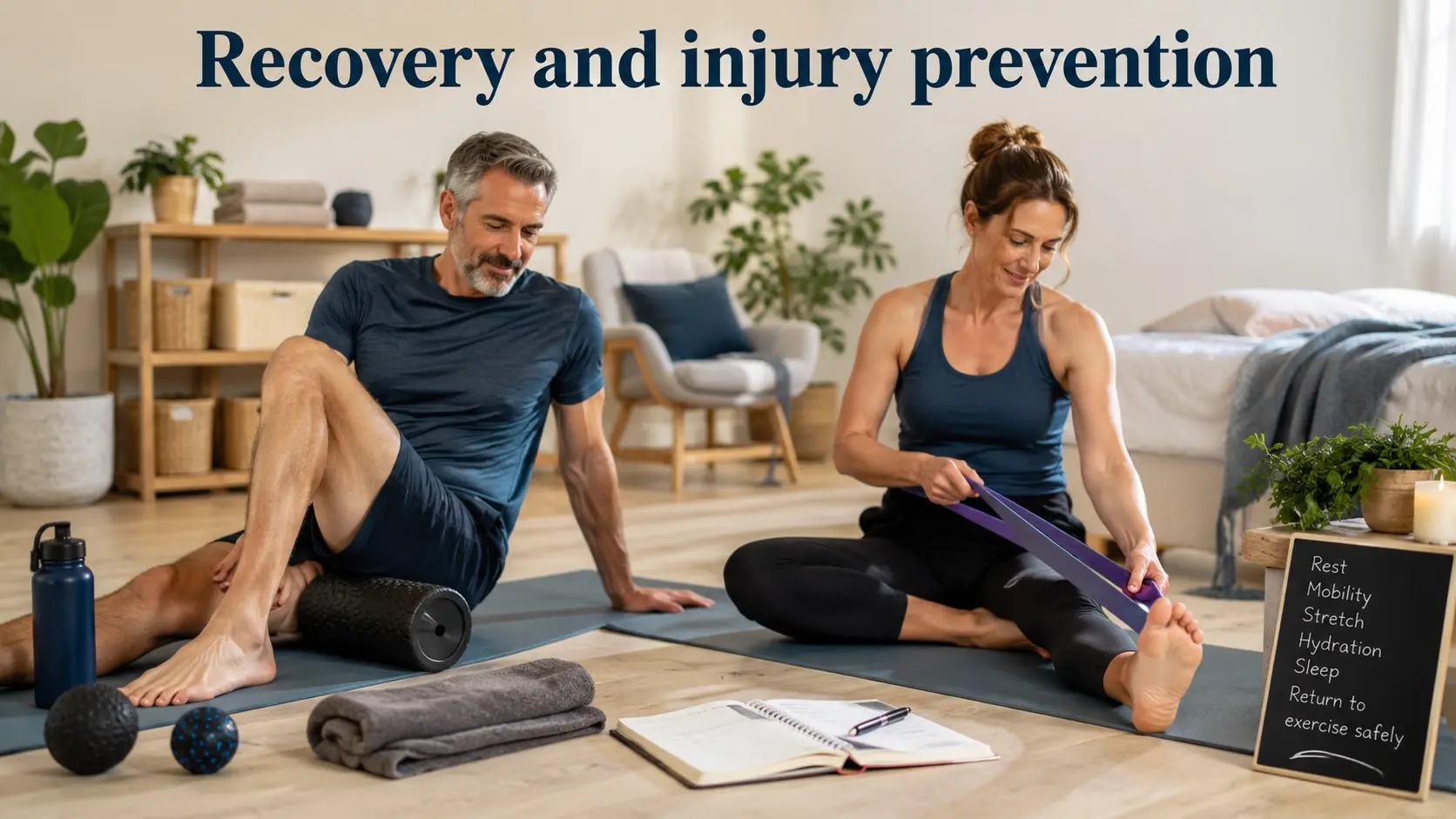
Recovery is not a sign of weakness. It is part of how the body adapts to training. A safer routine usually includes rest, sleep, gradual progression, hydration, enough food, mobility, strength, balance, and attention to pain or warning signs.
Use this sub-hub as a starting map. Choose the section that matches your concern, read the related articles, and adjust your training based on symptoms, recovery, sleep, medical history, and professional guidance when needed.
Medical and fitness disclaimer
All fitness content on NextFitLife is for educational purposes only and is not intended to replace professional medical advice, diagnosis, personal training, physical therapy, rehabilitation, dermatology care, mental health care, sleep care, emergency care, or treatment. Always consult a qualified healthcare provider before starting or changing exercise, supplements, diet, medication, rehabilitation, breathing practices, skin treatments, or treatment plans, especially if you have symptoms, a medical condition, take prescription medication, are pregnant, are immunocompromised, or are managing a chronic disease.
If you experience urgent symptoms during or after exercise, such as chest pain, severe shortness of breath, fainting, sudden weakness, signs of stroke, severe dizziness, severe allergic reaction, uncontrolled bleeding, confusion, seizure, new numbness, loss of bladder or bowel control, or severe injury, seek emergency medical help immediately.