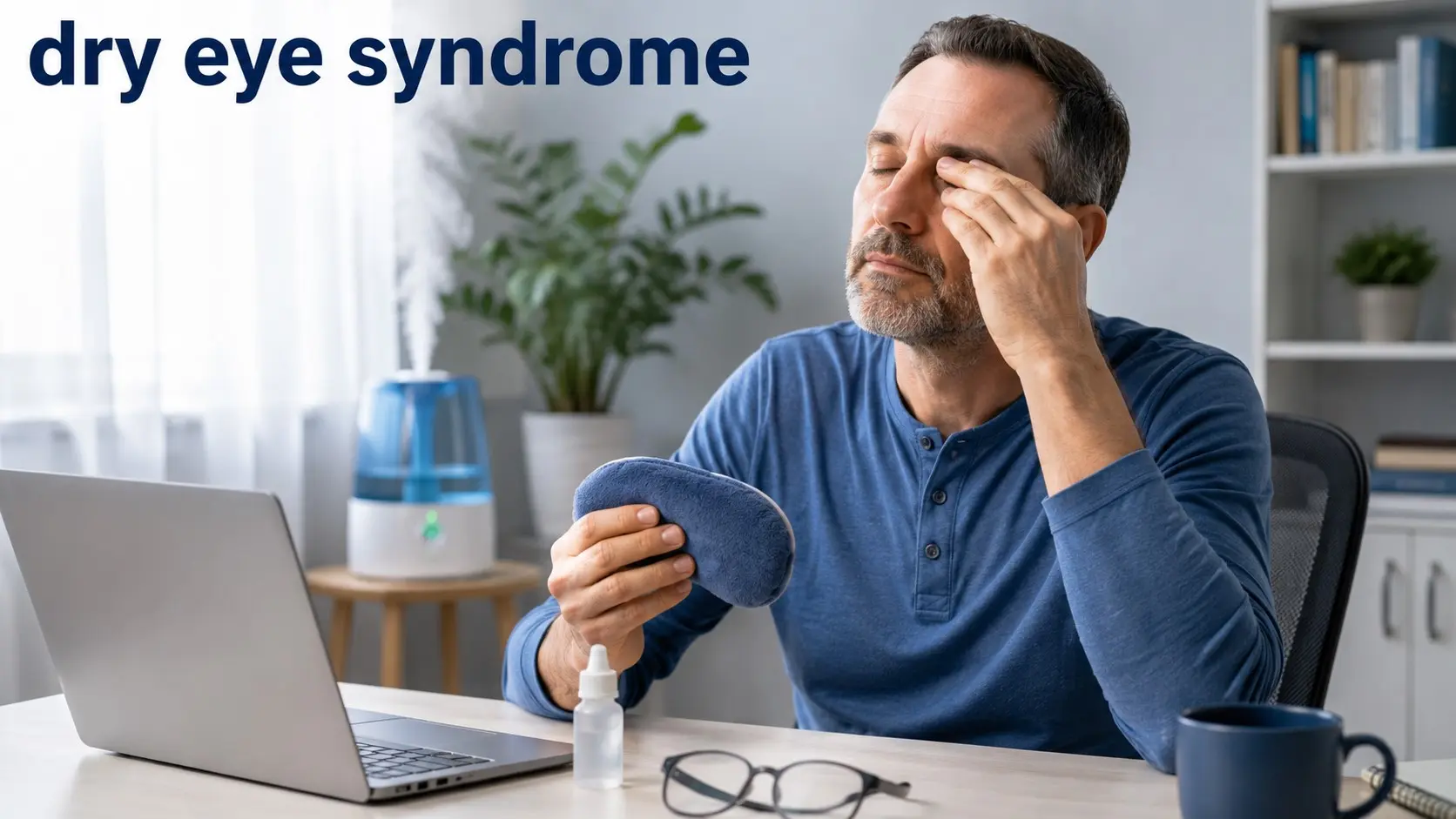
Last updated: July 27, 2026 — Updated for medical accuracy, reader safety and current dry-eye guidance
Dry Eye Syndrome: Causes, Symptoms and Safe Home Relief
Dry eye syndrome can make your eyes feel gritty, burning, tired, watery or unusually sensitive to light. It can also cause blurry vision during reading or screen use, which briefly improves after blinking.
The condition develops when the eyes do not produce enough tears, when tears evaporate too quickly, or when the tear film does not remain stable across the eye’s surface. Common contributors include meibomian gland dysfunction, aging, concentrated screen use, contact lenses, dry environments, certain medicines, hormonal factors, autoimmune disease and previous eye surgery.
Quick answer: What helps dry eye syndrome?
Safe first steps may include suitable lubricating eye drops, warm compresses when blocked eyelid oil glands are involved, gentle eyelid care, regular screen breaks, complete blinking, redirecting fans or air-conditioning vents and using a clean humidifier in very dry rooms. Persistent, painful or vision-changing symptoms need an examination because dry eye has several possible causes.
Eye-safety warning: Do not place cosmetic castor oil, coconut oil, honey, lemon juice, tea, essential oils, herbal mixtures, homemade saline or other non-sterile products into your eyes. Products used inside the eye should be sterile and specifically formulated for ophthalmic use.
Dry eye is one of the conditions covered in our Complete Eye Health Guide. You can also browse the Eye Health and Vision Resource Directory for related guidance on eyelid health, screen strain, contact lenses and healthy vision after 40.
What Is Dry Eye Syndrome?
Dry eye syndrome—also called dry-eye disease—is a condition in which the tears do not keep the front surface of the eye adequately lubricated and protected.
This can happen because:
- The eyes do not produce enough of the watery component of tears.
- The oily component is inadequate, causing tears to evaporate too quickly.
- The tear film spreads unevenly or breaks apart too rapidly.
- The eyelids do not close or blink completely.
- Inflammation or nerve-related changes affect the eye surface.
- Several of these problems occur together.
Dry eye is therefore not one identical condition in every person. Two people may report the same burning sensation but have different underlying causes and require different treatment plans.
Mild episodes may occur only in dry environments or after extended computer use. More persistent dry-eye disease can interfere with reading, work, driving, sleep, contact-lens wear and overall quality of life.
How Does the Tear Film Protect Your Eyes?
The tear film is a thin, complex layer that spreads across the cornea and conjunctiva every time you blink. It keeps the surface smooth, comfortable and optically clear.
| Tear-film component | Main role | What may happen when it is disrupted |
|---|---|---|
| Lipid or oily component | Helps slow tear evaporation and supports a smooth tear surface. | Tears may evaporate quickly, especially in wind, dry air or during screen use. |
| Watery component | Lubricates the eye, carries protective substances and helps wash away debris. | The eyes may feel dry, burning, gritty or sensitive. |
| Mucins | Help tears spread and remain attached evenly across the eye surface. | The tear film may become unstable, causing irritation and fluctuating vision. |
The meibomian glands along the eyelid margins produce much of the oily material that reduces evaporation. When these glands become blocked or produce abnormal oil, meibomian gland dysfunction may contribute to evaporative dry eye.
What Are the Main Types of Dry Eye?
Evaporative Dry Eye
Evaporative dry eye happens when tears leave the eye surface too quickly. It is often associated with:
- Meibomian gland dysfunction.
- Blepharitis or eyelid-margin inflammation.
- Reduced or incomplete blinking during screen use.
- Contact-lens wear.
- Wind, heating, air conditioning or low humidity.
- Eyelid-position or eyelid-closure problems.
Aqueous-Deficient Dry Eye
Aqueous-deficient dry eye occurs when the lacrimal system does not produce enough of the watery part of tears. Possible contributors include:
- Aging.
- Sjögren syndrome.
- Other autoimmune conditions.
- Certain medicines.
- Damage or inflammation affecting tear production.
Mixed Dry Eye
Many people have features of both evaporative and aqueous-deficient dry eye. For example, a person may produce fewer tears while also having blocked meibomian glands.
This is one reason a treatment that helps one person may provide little benefit to another.
What Causes Dry Eye Syndrome?
Dry eye may result from eye-surface, eyelid, environmental, medical, medication-related or behavioural factors. Identifying the likely contributors helps guide treatment.
Meibomian Gland Dysfunction
Meibomian gland dysfunction affects the oil-producing glands in the eyelids. The oil may become thick, the gland openings may become blocked, or the glands may gradually lose function.
Without a stable oily component, tears can evaporate more rapidly. Symptoms may include burning, gritty eyes, fluctuating vision, eyelid tenderness and difficulty tolerating contact lenses.
Read our detailed guide to meibomian gland dysfunction and daily eyelid care.
Blepharitis
Blepharitis is inflammation along the eyelid margins. It may cause redness, crusting, itching, irritation and changes in meibomian-gland function.
Gentle, appropriate eyelid hygiene can help selected cases, but repeated or severe inflammation should be evaluated because treatment depends on the type of blepharitis.
See our guide to blepharitis symptoms and eyelid management.
Aging
Tear production and eyelid-gland function can change with age. Older adults may also take more medicines, experience eyelid-position changes or have health conditions that contribute to dryness.
Dry eye is common with aging, but persistent discomfort should not be dismissed as something a person simply has to tolerate.
Hormonal Factors
Hormonal changes may influence tear production and meibomian-gland function. Dry-eye symptoms are frequently reported during and after menopause, although individual experiences vary.
Pregnancy, hormone therapies and other hormonal changes may also affect the eye surface. A clinician can help determine whether symptoms are related to hormones, medicines or another condition.
Digital Screen Use
Concentrated screen use may worsen dry eye because people often blink less frequently or fail to complete each blink fully while reading, gaming, working or watching video.
A complete blink spreads the tear film and helps move oil from the meibomian glands. Long periods of reduced blinking allow the tear film to break up and evaporate.
Blue light is not considered the primary cause of screen-related dryness. Blink behaviour, viewing duration, glare, airflow and the surrounding environment are generally more relevant.
For additional strategies, read our guide to digital eye strain relief and our practical screen-break and blinking exercises.
Contact Lenses
Contact lenses interact directly with the tear film. Some wearers develop dryness, discomfort or fluctuating vision, particularly after long wearing periods or in air-conditioned environments.
Risk may increase with:
- Overwearing lenses.
- Sleeping in lenses not approved for overnight use.
- Poor replacement habits.
- Incorrect lens fit.
- Using unsuitable eye drops.
- Pre-existing dry-eye disease.
- Exposure to smoke, wind or dry indoor air.
Remove contact lenses and seek prompt assessment if you develop significant pain, light sensitivity, marked redness, discharge or reduced vision.
Medicines
Dry eye can occur as a side effect of some medicines, including certain:
- Antihistamines.
- Decongestants.
- Antidepressants.
- Blood-pressure medicines.
- Acne medicines such as isotretinoin.
- Hormone treatments.
- Sleeping medicines.
- Eye drops, particularly when preservatives irritate the eye surface.
Do not stop prescribed medicine on your own. Ask the prescriber whether the medicine could be contributing, whether the dose can be reviewed or whether a suitable alternative exists.
Medical Conditions
Conditions associated with dry eye may include:
- Sjögren syndrome.
- Rheumatoid arthritis.
- Lupus.
- Thyroid disease.
- Diabetes.
- Rosacea.
- Allergic eye disease.
- Neurological conditions that affect blinking or corneal sensation.
- Vitamin A deficiency in appropriate clinical circumstances.
Dry eyes combined with persistent dry mouth, joint pain, unexplained fatigue or other systemic symptoms should be discussed with a healthcare professional.
Eye Surgery
LASIK, cataract surgery and other eye procedures can temporarily or persistently affect corneal sensation, tear production, blinking or the eye surface in some people.
Symptoms and recovery vary. Follow the surgeon’s postoperative instructions and report symptoms that are severe, worsening or not following the expected recovery pattern.
Read our guide to dry eye and long-term eye health after LASIK.
Environmental Conditions
Dry-eye symptoms may worsen around:
- Air-conditioning vents.
- Heating systems.
- Fans.
- Wind.
- Smoke and air pollution.
- Low-humidity rooms.
- Aircraft cabins.
- Dusty workplaces.
Changing the direction of airflow can sometimes provide more immediate relief than adding another product.
Eyelid-Closure Problems
If the eyelids do not close completely during blinking or sleep, part of the eye may remain exposed. This can cause marked morning dryness, redness, pain or surface damage.
Anyone who suspects incomplete eyelid closure should seek professional assessment rather than relying only on a sleep mask or nighttime ointment.
What Are the Symptoms of Dry Eye Syndrome?
Dry-eye symptoms vary from mild and occasional to persistent and disabling.
Common Sensations
- Burning or stinging.
- A gritty, sandy or scratchy feeling.
- Eye fatigue.
- A feeling of heaviness in the eyelids.
- Itching or irritation.
- A sensation that something is in the eye.
- Difficulty keeping the eyes open comfortably.
Visible Signs
- Redness.
- Watery eyes.
- Stringy mucus around the eyes.
- Crusting or debris along the eyelashes when blepharitis is present.
- Frequent rubbing or blinking.
Vision and Activity Problems
- Fluctuating blurry vision.
- Vision that temporarily clears after blinking.
- Difficulty reading for long periods.
- Discomfort during computer work.
- Reduced tolerance of contact lenses.
- Light sensitivity.
- Difficulty driving at night.
Dry eye can blur vision because tears form part of the eye’s optical surface. When that surface becomes irregular, the image may fluctuate even when the glasses prescription is correct.
Why Can Dry Eyes Make Your Eyes Water?
Dry eyes can trigger reflex tearing. Irritation sends a signal that causes the eyes to produce a sudden flow of watery tears.
These tears may run down the cheeks but fail to create lasting comfort because they may not contain or retain the balanced oily and mucin components needed for a stable tear film.
This explains why an eye can feel dry, irritated and watery at the same time.
Dry Eye Cause-and-Action Table
| Possible contributor | Common clue | Practical next step |
|---|---|---|
| Screen use | Symptoms worsen during computer or phone work. | Take breaks, blink fully and position the screen slightly below eye level. |
| Meibomian gland dysfunction | Burning, fluctuating vision or thick eyelid oils. | Consider a warm-compress routine and professional eyelid assessment. |
| Contact lenses | Discomfort increases as lens-wearing time continues. | Remove the lenses and ask the prescriber to review fit, material and schedule. |
| Medicine effect | Symptoms began or worsened after a medicine change. | Discuss the timing with the prescriber; do not stop treatment independently. |
| Dry airflow | Symptoms worsen near fans, heaters or air conditioning. | Redirect airflow and consider a clean humidifier. |
| Allergy | Itching is prominent, often with seasonal exposure. | Ask whether allergy-specific treatment is appropriate. |
| Autoimmune disease | Dry eye occurs with dry mouth, joint symptoms or systemic illness. | Arrange medical and eye-care assessment. |
| Post-surgical dryness | Symptoms began after LASIK, cataract surgery or another procedure. | Follow up with the surgeon or treating eye professional. |
10 Safe Home Strategies for Dry Eye Relief
Home care may improve mild symptoms, but it should not be presented as a universal cure. The most useful strategy depends on the underlying cause.
1. Use a Comfortably Warm Compress
A warm compress may help soften thickened eyelid oils when meibomian gland dysfunction contributes to dryness.
- Wash your hands.
- Use a clean reusable eye mask or clean washcloth.
- Make it comfortably warm, not hot.
- Close your eyes and place the compress over the eyelids.
- Keep it in place for approximately 5 to 10 minutes, or follow your eye professional’s instructions.
- Stop if it causes pain, skin irritation or worsening redness.
A dry, reusable heat mask may maintain temperature more consistently than a washcloth, but it should be cleaned and used according to its instructions.
2. Clean the Eyelid Margins Gently
When blepharitis, crusting or eyelid debris is present, gentle eyelid cleaning may help.
- Use a commercial eyelid wipe or cleanser designed for the eye area.
- Keep the eye closed during cleaning.
- Clean along the lash line without scraping or vigorous rubbing.
- Do not allow cleanser to enter the eye.
- Stop if the product causes swelling, rash or increased irritation.
Diluted baby shampoo has traditionally been used, but it may irritate some people. A purpose-made eyelid product may be easier to control.
3. Use Suitable Lubricating Eye Drops
Artificial tears can temporarily improve lubrication and comfort. Products vary in thickness, preservatives and ingredients, so one product may work better than another for a particular person.
Preservative-free drops may be preferable when:
- Drops are needed frequently.
- The eyes are sensitive to preservatives.
- The eye surface is significantly inflamed.
- Contact-lens or postoperative care requires a particular formulation.
“Redness-relief” drops are not the same as lubricating artificial tears. Ask a pharmacist, optometrist or ophthalmologist which type is suitable.
4. Follow the 20-20-20 Reminder
Every 20 minutes, look at something approximately 20 feet away for at least 20 seconds. This is a practical reminder to interrupt prolonged near focus.
Also try to:
- Blink fully and gently several times.
- Take longer movement breaks during extended work.
- Increase text size instead of leaning toward the screen.
- Reduce glare and reflections.
- Position the screen slightly below eye level.
A lower screen position can reduce how widely the eyes remain open, potentially decreasing the exposed surface area.
5. Practise Complete Blinking
A complete blink brings the upper and lower eyelids together gently, helping spread tears and move meibomian-gland oils across the surface.
- Close the eyes gently without squeezing.
- Pause briefly.
- Open normally.
- Repeat several times during screen breaks.
Blinking exercises may improve blink awareness, but they do not cure every type of dry-eye disease.
6. Redirect Fans and Air-Conditioning Vents
Moving air increases evaporation. Point car vents, desk fans, heaters and air-conditioning outlets away from the face.
A small environmental change can sometimes reduce symptoms more effectively than repeatedly adding eye drops while the airflow continues.
7. Use a Clean Humidifier in Dry Rooms
A humidifier may improve comfort when indoor air is very dry.
- Clean the device according to the manufacturer’s instructions.
- Change the water regularly.
- Do not allow mould or mineral buildup.
- Place it safely away from electronics and walking areas.
A humidifier is not appropriate for every indoor environment, particularly where humidity is already high or mould is a concern.
8. Protect the Eyes From Wind
Wraparound sunglasses may reduce exposure to wind and moving air. People with more severe evaporative dry eye may ask an eye professional about moisture-chamber glasses.
For more outdoor protection guidance, visit our UV protection for eyes guide.
9. Review Contact-Lens Habits
Contact-lens wearers should:
- Follow the prescribed replacement schedule.
- Wash and dry their hands before handling lenses.
- Use only compatible rewetting drops.
- Carry backup glasses.
- Avoid sleeping, swimming or showering in lenses unless specifically advised otherwise.
- Remove lenses when the eyes become painful, unusually red or light-sensitive.
Do not continue wearing lenses through significant pain or reduced vision.
10. Eat a Balanced Diet and Maintain Normal Hydration
Fish, vegetables, fruit, eggs, beans, nuts, seeds and other minimally processed foods can support overall eye, cardiovascular and metabolic health.
Food cannot cure dry-eye disease, but a balanced dietary pattern can support the tissues and health conditions that influence the eyes.
Drink according to thirst, climate, physical activity and medical advice. There is no universal water target suitable for everyone, and some people with kidney, heart or endocrine conditions need individualized fluid guidance.
For meal ideas, read our guide to the best foods for eye health and our article on an anti-inflammatory dietary pattern for eye health.
Do Omega-3 Supplements Help Dry Eye?
Omega-3-rich foods can be part of a healthy diet, but evidence for omega-3 supplements as a dry-eye treatment is mixed.
Some trials and analyses have reported improvements in selected symptoms or measurements. However, the large NIH-funded DREAM trial found that high-dose omega-3 supplementation was not significantly better than an olive-oil placebo for treating dry-eye symptoms and signs.
This means omega-3 supplements should not be described as a guaranteed treatment, natural cure or replacement for an eye examination.
Before taking a concentrated supplement, ask a doctor or pharmacist for advice if you:
- Use anticoagulants or antiplatelet medicines.
- Have a bleeding disorder.
- Are preparing for surgery.
- Have a fish allergy.
- Are pregnant or breastfeeding.
- Take several supplements or prescription medicines.
Learn more in our balanced guide to omega-3 fatty acids and eye health.
What Should You Never Put in Your Eyes?
Do not put a product into your eyes merely because it is described as natural, organic, food-grade or safe for the skin.
Avoid placing these directly into the eyes unless they are ingredients in a sterile ophthalmic product specifically recommended for you:
- Cosmetic or food-grade castor oil.
- Coconut oil.
- Honey.
- Lemon juice.
- Tea or tea bags that can leak liquid or particles into the eye.
- Essential oils.
- Herbal extracts.
- Homemade saline.
- Tap water.
- Saliva.
- Skin creams or serums.
- Products intended for hair or eyelashes.
Non-sterile substances may introduce microorganisms, chemicals or particles that irritate or damage the cornea.
Castor oil clarification
Some commercially manufactured eye products may contain specially formulated, sterile oil-based ingredients. That does not make a bottle of cosmetic, cold-pressed or food-grade castor oil safe to use as an eye drop.
Over-the-Counter Treatments for Dry Eye
Artificial Tears
Artificial tears provide temporary lubrication. They may be used for occasional environmental dryness or as part of a larger treatment plan.
Options include:
- Low-viscosity drops that cause little temporary blur.
- Oil-containing or lipid-supporting drops for some evaporative cases.
- Preservative-free single-use or multidose products.
- Contact-lens-compatible rewetting drops.
Gel Drops
Gel drops are thicker and may last longer than standard artificial tears. They can temporarily blur vision, so some people prefer using them in the evening.
Lubricating Ointments
Ointments remain on the eye longer and are generally used at bedtime because they cause temporary blurred vision.
A person with suspected incomplete eyelid closure, recurrent morning pain or severe overnight dryness should seek professional assessment rather than relying indefinitely on ointment alone.
Eyelid Cleansers
Commercial eyelid wipes, foams or sprays may be useful when blepharitis or eyelid debris contributes. Product selection depends on the eyelid condition and skin sensitivity.
Allergy Eye Drops
If itching is the main symptom, allergy may be involved. Allergy-specific eye drops may be more suitable than repeated lubricating drops alone.
Some oral antihistamines can worsen dryness, so discuss the overall treatment plan with a pharmacist or clinician.
How Is Dry Eye Diagnosed?
An optometrist or ophthalmologist can evaluate the tear film, eyelids, cornea, conjunctiva, blink pattern and possible contributing health conditions.
The assessment may include:
- A detailed symptom history.
- A review of medicines, contact lenses and previous surgery.
- A slit-lamp examination.
- Eye-surface staining.
- Tear-breakup time.
- Assessment of tear quantity.
- Examination of the meibomian glands.
- Evaluation of eyelid closure and blink completeness.
- Meibography in selected clinics.
- Tear-osmolarity or inflammation testing when clinically useful.
Not every patient needs every test. The examination is tailored to the symptoms, history and findings.
Why Diagnosis Matters
Burning and redness can also occur with:
- Eye allergy.
- Infection.
- Corneal injury.
- Inflammation inside the eye.
- Contact-lens complications.
- Medication toxicity.
- Nerve-related eye pain.
Treating every red or uncomfortable eye as ordinary dryness can delay care for a more serious condition.
Professional Treatments for Persistent Dry Eye
When home care and ordinary lubricating drops are not enough, treatment may target inflammation, tear drainage, eyelid glands, exposure or severe eye-surface damage.
Prescription Anti-Inflammatory Eye Drops
An eye-care professional may prescribe medicines such as cyclosporine or lifitegrast for selected patients. These treatments target aspects of inflammation involved in dry-eye disease.
Response times and side effects vary. Use prescription drops exactly as directed and attend follow-up appointments.
Short-Term Steroid Eye Drops
Topical corticosteroids may sometimes be used for short periods under professional supervision.
They should not be self-used or continued without monitoring because inappropriate or prolonged use can increase eye pressure, contribute to cataracts or worsen certain infections.
Punctal Plugs
Punctal plugs are small devices placed in tear-drainage openings to help keep tears on the eye surface longer.
They may be temporary or longer-lasting. They are not appropriate for every type of dry eye, particularly when uncontrolled inflammation is present.
Professional Meibomian-Gland Treatment
Selected patients with meibomian gland dysfunction may be offered:
- Professional gland expression.
- Thermal pulsation.
- Intense pulsed light.
- Other heat, light or pressure-based procedures.
Benefits, costs, treatment schedules and duration of effect vary. No procedure should be described as a guaranteed permanent cure.
Scleral Lenses
Scleral lenses are larger specialist contact lenses that create a fluid reservoir over the cornea. They may improve comfort and vision in severe or complex eye-surface disease.
They require specialist fitting, cleaning and follow-up.
Autologous Serum Tears
Autologous serum tears are prepared from a patient’s own blood under controlled medical conditions. They may be considered for severe dry eye or eye-surface damage that has not responded adequately to standard treatments.
Treatment of Eyelid-Closure Problems
When the eyes remain partly open during blinking or sleep, treatment may include lubrication, moisture protection, eyelid taping under professional instruction or procedures to improve closure.
Managing an Underlying Health Condition
Dry eye related to Sjögren syndrome, thyroid disease, rosacea, diabetes or another systemic condition may require coordinated care between eye professionals and other clinicians.
When Should You See an Eye Doctor?
Arrange an Eye Examination When:
- Symptoms continue despite appropriate home care.
- Dryness returns frequently.
- Vision fluctuates repeatedly.
- Symptoms interfere with reading, work, driving or sleep.
- Contact lenses have become difficult to tolerate.
- Symptoms developed after eye surgery.
- You have an autoimmune condition.
- A medicine change appears connected to the symptoms.
- You depend on eye drops several times every day without a diagnosis.
Seek Urgent or Same-Day Care for:
- Sudden vision loss or a rapid decline in vision.
- Severe or rapidly increasing eye pain.
- Marked light sensitivity.
- Significant redness, particularly in one eye.
- Thick yellow or green discharge.
- An eye injury or chemical splash.
- A white or cloudy spot on the cornea.
- Pain, redness or light sensitivity after sleeping or swimming in contact lenses.
- New flashes, many new floaters or a curtain over the vision.
- Severe headache, nausea and eye pain.
- Inability to keep the eye open.
These symptoms may indicate infection, corneal injury, inflammation, retinal disease, acute glaucoma or another condition rather than routine dry eye.
A Simple Daily Dry Eye Routine
Morning
- Notice whether the eyes are unusually painful, red or difficult to open.
- Use prescribed or recommended lubrication when needed.
- Clean the eyelid margins gently if eyelid hygiene is part of your treatment plan.
- Wear glasses instead of contact lenses when the eyes are significantly irritated.
During Screen Work
- Follow regular visual breaks.
- Blink fully several times each break.
- Keep the screen slightly below eye level.
- Redirect fans and vents.
- Use suitable lubricating drops when recommended.
Outdoors
- Wear wraparound sunglasses when wind triggers symptoms.
- Avoid direct smoke and dust when possible.
- Use workplace eye protection where required.
Evening
- Remove contact lenses at the recommended time.
- Remove eye makeup gently.
- Use a warm compress when meibomian gland dysfunction is part of the problem.
- Use gel or ointment only when appropriate for your treatment plan.
Long-Term
- Review persistent symptoms with an eye-care professional.
- Discuss medicine-related dryness with the prescriber.
- Manage diabetes, thyroid disease, rosacea or autoimmune conditions appropriately.
- Do not rely on viral home-remedy trends.
Dry Eye Syndrome: Key Takeaways
- Dry eye occurs when tears are insufficient, evaporate too quickly or do not function properly.
- Common symptoms include burning, grittiness, watering, redness and fluctuating blurry vision.
- Dry eyes can water because irritation triggers reflex tears.
- Meibomian gland dysfunction is an important cause of evaporative dry eye.
- Screen use can worsen symptoms by reducing complete blinking.
- Safe first steps may include suitable artificial tears, screen breaks, complete blinking and reduced airflow.
- Warm compresses are most relevant when eyelid oil glands are involved.
- Omega-3 supplement evidence is mixed, so benefits should not be guaranteed.
- Never use cosmetic castor oil or homemade mixtures as eye drops.
- Persistent, painful or vision-changing symptoms require professional assessment.
My Approach to Dry Eye Health Information
Adel Galal’s editorial perspective
After more than 30 years of studying nutrition, healthy aging and preventive wellness, I have learned that eye-health advice must be practical without becoming overconfident. Dry eye is not one condition with one natural cure. A warm compress may help blocked eyelid glands, while another person may need allergy treatment, medication review or prescription therapy.
This guide therefore separates low-risk comfort measures from treatments that require diagnosis. It also avoids recommending non-sterile oils or homemade substances inside the eye.
Frequently Asked Questions About Dry Eye Syndrome
What is the main cause of dry eye syndrome?
There is no single cause for everyone. Dry eye may result from insufficient tear production, rapid evaporation, meibomian gland dysfunction, incomplete blinking, medicines, contact lenses, health conditions or environmental exposure.
Why are my eyes watery if they are dry?
Dryness and irritation can trigger reflex tears. These watery tears may overflow without creating the balanced and stable tear film needed for lasting comfort.
What is the safest home remedy for dry eyes?
Safe first steps commonly include suitable lubricating eye drops, reducing direct airflow, taking screen breaks and blinking fully. A comfortably warm compress may help when meibomian gland dysfunction or eyelid inflammation contributes.
Are preservative-free eye drops better?
They may be preferable for frequent use or for people who are sensitive to preservatives. The best product depends on the type and severity of dry eye and whether contact lenses are being worn.
Does omega-3 cure dry eye?
No. Research on omega-3 supplements is mixed, and supplements are not a proven cure. Omega-3-rich foods can still be included in a balanced diet.
Can I put castor oil in my eyes?
Do not use cosmetic, food-grade or homemade castor oil as an eye drop. Products placed directly into the eye should be sterile and specifically formulated for ophthalmic use.
Can screen time cause dry eyes?
Extended screen use can worsen dry-eye symptoms because people often blink less frequently or incompletely while concentrating. Regular breaks and complete blinking may help.
Does blue light cause dry eye?
Blue light is not considered the main mechanism behind screen-related dryness. Reduced blinking, incomplete blinking, long viewing periods, glare and environmental airflow are more relevant contributors.
Can dry eye cause blurry vision?
Yes. An unstable tear film can cause fluctuating blurry vision that may temporarily improve after blinking or using suitable lubricating drops.
Can dry eye permanently damage vision?
Most mild cases do not cause permanent vision loss. Severe or untreated eye-surface disease can damage the cornea, which is why significant pain, light sensitivity or persistent vision changes require professional care.
Should I stop wearing contact lenses?
Not everyone needs to stop permanently. Remove lenses when symptoms become significant and ask the prescriber to review the fit, material, replacement schedule and suitable rewetting drops.
When should I see an eye doctor?
Arrange an examination when symptoms persist, worsen, affect daily activities or make contact lenses difficult to tolerate. Seek prompt care for significant pain, light sensitivity, discharge, marked redness or vision changes.
Sources and Medical References
- National Eye Institute — Dry Eye: symptoms, diagnosis and treatment
- National Eye Institute — Causes of Dry Eye
- National Eye Institute — Testing for Dry Eye
- Tear Film & Ocular Surface Society — Dry Eye Definition and Classification
- TFOS DEWS II — Management and Therapy Report
- New England Journal of Medicine — DREAM Trial of Omega-3 Supplementation for Dry Eye
- American Academy of Ophthalmology — Fish Oil and Dry Eye
- American Academy of Ophthalmology — Safety of Castor Oil in the Eye
Part of the NextFitLife Eye Health Series
Continue learning through our Complete Eye Health Guide and Eye Health and Vision Resource Directory. Related guides include meibomian gland dysfunction, digital eye strain, eye health after LASIK, foods for eye health and omega-3 and eye health.
Medical disclaimer
This article provides general education and does not diagnose dry-eye disease or replace care from an optometrist, ophthalmologist, physician, pharmacist or other qualified professional. Seek urgent care for sudden vision loss, severe eye pain, marked light sensitivity, injury, chemical exposure, significant discharge, a white spot on the cornea or symptoms associated with contact-lens wear. Never put homemade or non-sterile products into your eyes, and never stop prescribed medicine without consulting the prescriber.
Written and source-checked by Adel Galal
Founder and Lead Writer, NextFitLife | 30+ Years of Personal Study in Health, Fitness, Nutrition and Healthy Aging
Adel Galal creates plain-language health content designed to help readers understand evidence, avoid unsafe health trends and have better-informed conversations with qualified professionals. He is not an optometrist, ophthalmologist, physician or pharmacist. This article was editorially source-checked against information from the National Eye Institute, the Tear Film & Ocular Surface Society, the American Academy of Ophthalmology and peer-reviewed dry-eye research.

Health & wellness writer with 30+ years of experience in nutrition, fitness, and healthy aging. Founder of NextFitLife.com — evidence-based health guidance.