Last updated: September 22, 2026
Written and source checked by: Adel Galal, Founder and Lead Writer at NextFitLife
Review status: Updated using current NIH, FDA, Harvard Nutrition Source, NIDDK, and WHO guidance. This article has not been medically reviewed by a doctor, registered dietitian, nephrologist, or sports medicine professional.
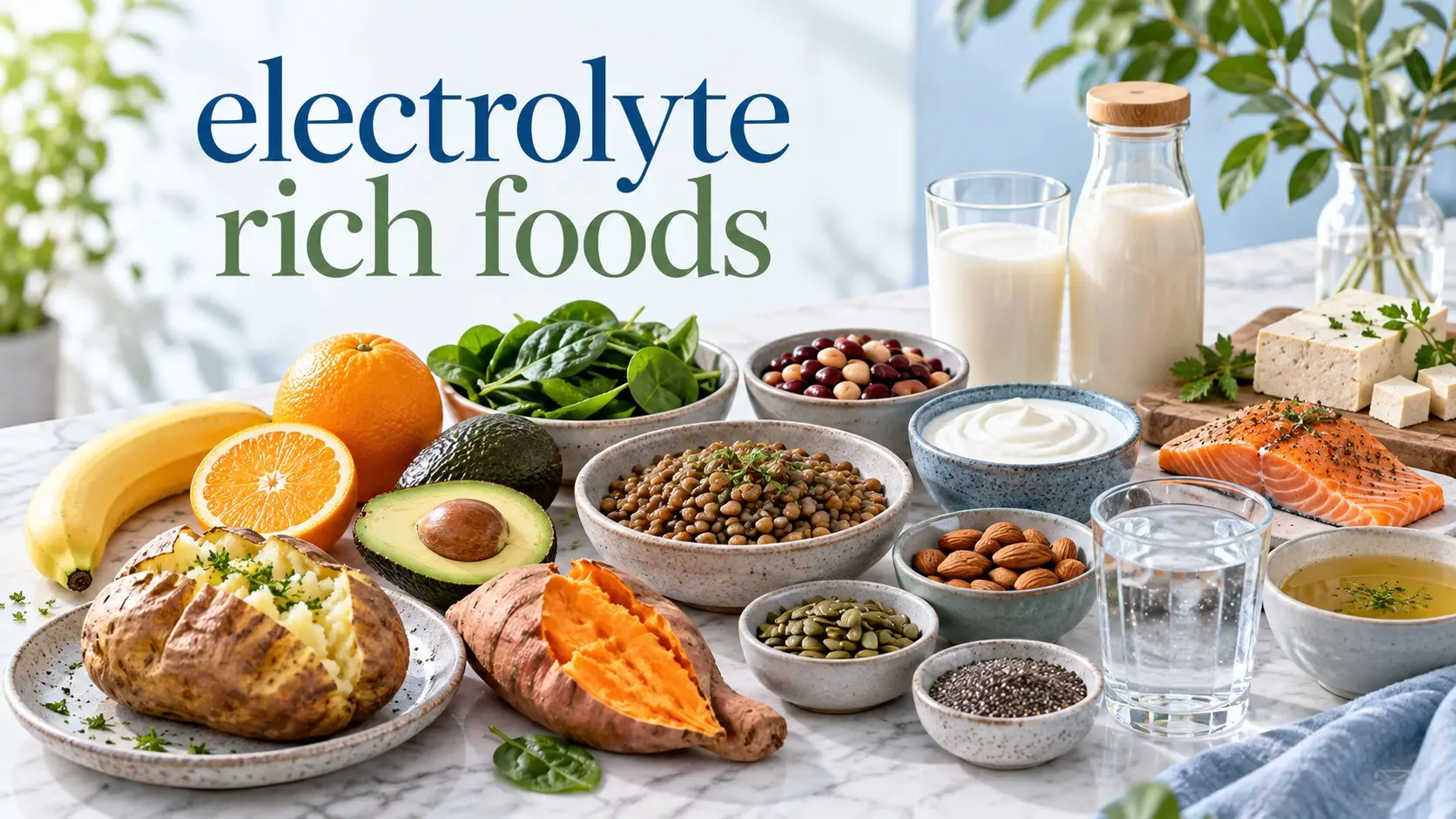
You probably do not need an electrolyte powder for an ordinary day. Electrolyte rich foods such as potatoes, lentils, beans, yogurt, milk, leafy vegetables, nuts, seeds, fruit, fish, and normal salted meals can supply potassium, magnesium, calcium, sodium, chloride, and phosphorus as part of a balanced diet.
The useful question is not simply, “Which foods contain electrolytes?” Almost every natural food contains minerals.
The better question is: which electrolyte are you trying to replace, and why?
A banana is a useful potassium food. It is not a complete replacement for heavy sodium losses. Coconut water supplies plenty of potassium, but it is not automatically the best drink after hours of heavy sweating. Significant diarrhea is different again because oral rehydration solution is designed for a different job.
Quick Answer: What Are the Best Electrolyte Rich Foods?
Good food sources include potatoes, lentils, beans, yogurt, milk, salmon, spinach, avocado, bananas, oranges, tofu, almonds, pumpkin seeds, chia seeds, sardines, broth, and other balanced foods. The best choice depends on which mineral you need because potassium, magnesium, calcium, sodium, chloride, and phosphorus are different nutrients.
For most healthy people eating normal meals, food and water cover everyday needs. Deliberate electrolyte replacement matters more after prolonged heavy sweating or meaningful fluid loss from illness.
Table of Contents
- What electrolytes actually are
- 21 electrolyte rich foods
- Best potassium foods
- Best magnesium foods
- Best calcium foods
- When sodium matters
- Phosphorus foods
- Electrolytes after workouts
- Coconut water
- Vomiting and diarrhea
- Muscle cramps
- Kidney disease safety
- Simple food first day
- References and Sources
- Frequently asked questions
What Are Electrolytes, Really?
Electrolytes are minerals that carry an electrical charge when dissolved in body fluids.
They help with several basic functions, including fluid balance, nerve signaling, muscle contraction, heart function, and acid balance.
The main electrolytes discussed in nutrition include:
- Sodium
- Potassium
- Chloride
- Calcium
- Magnesium
- Phosphate
- Bicarbonate
Your kidneys and hormones constantly help regulate these minerals.
That is why “more electrolytes” is not a sensible goal by itself.
A balanced level matters more than a high intake.
For broader mineral guidance, visit the NextFitLife Nutrition and Vitamins Hub.
21 Electrolyte Rich Foods and What They Actually Provide
This table is more useful than ranking foods from “best” to “worst.” Different foods solve different mineral needs.
| No. | Food | Main Electrolytes | Best Everyday Use |
|---|---|---|---|
| 1 | Potato | Potassium, magnesium | Easy potassium rich meal base |
| 2 | Sweet potato | Potassium, magnesium | Meals with vegetables and protein |
| 3 | Lentils | Potassium, magnesium, phosphorus | Soups, bowls, salads, plant protein meals |
| 4 | Beans | Potassium, magnesium, phosphorus | Chili, salads, bowls, side dishes |
| 5 | Edamame | Potassium, magnesium, phosphorus | Snack or plant protein addition |
| 6 | Banana | Potassium | Portable snack or workout meal component |
| 7 | Orange | Potassium | Fruit with meals or snacks |
| 8 | Avocado | Potassium, magnesium | Toast, salads, bowls, sandwiches |
| 9 | Spinach | Magnesium, potassium, calcium | Salads, eggs, soups, cooked meals |
| 10 | Bok choy | Calcium, potassium, magnesium | Stir fries, soups, vegetable sides |
| 11 | Milk | Calcium, potassium, phosphorus, sodium | Breakfast, meals, post exercise nutrition |
| 12 | Plain yogurt | Calcium, potassium, phosphorus, magnesium | Breakfast or post workout snack |
| 13 | Fortified soy milk | Calcium, potassium, magnesium | Dairy alternative when appropriately fortified |
| 14 | Calcium set tofu | Calcium, magnesium, potassium | Plant based main meals |
| 15 | Salmon | Potassium, phosphorus, magnesium | Protein rich lunch or dinner |
| 16 | Sardines with edible bones | Calcium, phosphorus, sodium | Calcium rich protein choice |
| 17 | Almonds | Magnesium, potassium, calcium | Snack or meal topping |
| 18 | Pumpkin seeds | Magnesium, potassium | Useful magnesium focused topping or snack |
| 19 | Chia seeds | Calcium, magnesium, phosphorus | Oats, yogurt, pudding, smoothies |
| 20 | Broth or soup | Sodium, chloride | Situations where extra sodium and fluid are useful |
| 21 | Coconut water | Mostly potassium with smaller amounts of other minerals | Optional potassium containing drink |
The table makes one point clear: there is no single “best electrolyte food.”
A potato solves a different nutrition problem from broth. Pumpkin seeds solve a different problem from milk. Coconut water and salted soup do not replace the same minerals.
Potassium Deserves More Attention Than Another Banana List
Bananas are useful. They have simply become too famous for their own good.
Potassium rich foods also include potatoes, lentils, kidney beans, orange juice, milk, yogurt, spinach, tomatoes, avocado, fish, and many other fruits and vegetables.
NIH lists a medium banana at about 422 mg of potassium. A cup of cooked lentils provides substantially more, at about 731 mg, while a medium baked potato provides about 610 mg from the flesh alone.
So if you eat lentils at lunch and a potato at dinner, you do not need to chase bananas all day to “get electrolytes.”
How much potassium do adults need?
For healthy adults age 19 and older, NIH lists Adequate Intakes of:
- Men: 3,400 mg per day
- Women: 2,600 mg per day
- Pregnancy: 2,900 mg per day for adult women
- Breastfeeding: 2,800 mg per day for adult women
These recommendations do not apply in the same way to people whose kidneys cannot remove potassium normally.
For more food based mineral guidance, visit the Nutrition and Vitamins Hub.
If You Want Magnesium, Look at Seeds, Nuts, Beans, and Greens
Magnesium rich foods are much more interesting than most electrolyte drinks.
Useful options include:
- Pumpkin seeds
- Chia seeds
- Almonds
- Cashews
- Beans
- Edamame
- Spinach
- Whole grains
- Avocado
- Yogurt
Adult men need about 400 to 420 mg of magnesium per day, while adult women need about 310 to 320 mg. Needs change during pregnancy and with age.
This is why I prefer a food first approach for everyday nutrition. A meal containing beans, whole grains, spinach, and seeds provides magnesium together with potassium, fiber, protein, and other nutrients.
An electrolyte sachet does not automatically improve on that.
NextFitLife's Zinc and Magnesium Guide explains food sources, supplementation, and mineral safety in more detail.
Calcium Is an Electrolyte Too
Calcium tends to get filed under bone health and forgotten in hydration discussions.
It also supports normal muscle contraction, nerve signaling, blood vessel function, and other processes.
Food sources include:
- Milk
- Yogurt
- Fortified plant drinks
- Calcium set tofu
- Sardines with edible bones
- Some green vegetables such as kale and bok choy
For most adults ages 19 through 50, the recommended calcium intake is 1,000 mg per day. Requirements rise for some older adults.
For the wider bone nutrition picture, use the NextFitLife Bone and Joint Health Hub.
Sodium Is an Electrolyte, but Most People Do Not Need to Chase It
This is where electrolyte marketing gets odd.
Yes, sodium is essential.
Yes, sweat contains sodium.
But an ordinary diet can already contain plenty from bread, cheese, restaurant meals, sauces, processed foods, and salt added during cooking.
That means deliberately adding salty electrolyte drinks to a sedentary day is not automatically helpful.
When does sodium replacement make more sense?
It becomes more relevant after meaningful losses, such as:
- Prolonged heavy sweating
- Long exercise sessions in heat
- Repeated intense training
- Substantial vomiting
- Significant diarrhea
Useful food sources when sodium replacement is appropriate include broth, soup, salted crackers, pretzels, olives, pickles, cheese, and ordinary salted meals.
The right amount depends on the situation.
Chloride usually comes along with sodium
Table salt is sodium chloride.
That means many salty foods provide both sodium and chloride together.
For most healthy people eating a normal diet, finding chloride is not difficult.
Phosphorus Is Another Major Electrolyte
Phosphorus appears across the food supply.
Good sources include dairy foods, fish, poultry, meat, lentils, beans, nuts, seeds, and whole grains.
Most healthy adults have little trouble getting enough.
The issue changes with kidney disease because damaged kidneys can have trouble removing excess phosphorus from the blood.
Read the dedicated Phosphorus Rich Foods Guide for natural food sources, phosphate additives, and kidney safety.
Milk and Yogurt Are Underrated Electrolyte Foods
If I had to pick ordinary foods that cover several minerals at once, dairy would rank near the top.
Milk contributes calcium, potassium, phosphorus, and some sodium. Yogurt provides a similar mixture and also works easily with fruit, oats, and nuts.
A better post workout snack than one lonely banana
Try plain yogurt with banana and pumpkin seeds.
The banana adds potassium. Yogurt contributes calcium, potassium, and phosphorus. Pumpkin seeds bring magnesium.
That is a better example of natural electrolytes than pretending one fruit contains everything lost during exercise.
Potatoes May Be the Most Boring Useful Electrolyte Food
Nobody sells potatoes in a neon tub labeled “advanced hydration.”
That may be part of their charm.
A medium baked potato is a strong potassium source. Add a protein food, vegetables, and normal seasoning and you have a balanced recovery meal without designing your diet around a supplement.
Sweet potatoes are useful too.
People with kidney disease may need to limit high potassium foods, so the advice changes in that setting.
Beans and Lentils Cover More Than One Mineral
Beans and lentils provide potassium, magnesium, and phosphorus along with fiber and protein.
A cup of cooked lentils contains roughly 731 mg of potassium according to NIH data.
This is why lentil soup is such a practical example.
The lentils provide potassium and magnesium. A normal salted broth can provide sodium and chloride.
One meal now covers several sides of electrolyte balance.
Is Coconut Water a Good Electrolyte Drink?
It has a place.
It is not magic.
Coconut water is rich in potassium and provides smaller amounts of other minerals. That can make it a pleasant drink if you like it.
The problem comes when “contains electrolytes” gets translated into “perfectly replaces sweat.”
Sweat contains substantial sodium and chloride. Coconut water is much more potassium focused.
After a normal day, that distinction may not matter much.
After prolonged heavy sweating, it can matter a lot.
Do You Need Electrolytes After Every Workout?
No.
Harvard's Nutrition Source notes that for exercise lasting less than about an hour at lower intensity in moderate temperatures, plain water is usually the better default. A normal meal or snack afterward can replace minerals.
That means a 40 minute gym session does not automatically require an electrolyte drink.
Simple post workout food combinations
| Combination | Main Electrolytes | When It Fits |
|---|---|---|
| Yogurt + banana + seeds | Potassium, calcium, magnesium, phosphorus | Normal workout recovery |
| Milk + fruit + oats | Potassium, calcium, phosphorus, magnesium | Breakfast or post exercise meal |
| Eggs + potato + vegetables | Potassium, phosphorus, sodium depending on seasoning | Full recovery meal |
| Lentil soup | Potassium, magnesium, sodium, chloride | Meal after ordinary activity or cooler weather training |
| Salmon + potato + greens | Potassium, magnesium, phosphorus, some calcium | Main meal after training |
For more exercise nutrition guidance, visit the NextFitLife Fitness Hub.
When Does an Electrolyte Drink Make More Sense?
There are situations where drinking fluid and minerals is simply more convenient than trying to eat during exercise.
Examples include:
- Long endurance sessions
- Vigorous exercise lasting well beyond an hour
- Training in significant heat
- Very heavy sweating
- Repeated hard sessions with short recovery time
Your personal sweat rate and sodium loss matter.
The athlete who finishes a long summer run with white salt marks on clothing is dealing with a different problem from someone walking on a treadmill for 30 minutes in air conditioning.
Read the Nutrition Facts panel
Do not assume all products called electrolyte drinks are similar.
One product may contain mostly sodium.
Another may focus on potassium.
Some contain meaningful carbohydrate for long exercise.
Others contain very little mineral at all.
The front of the package tells you the marketing story. The label tells you what you are buying.
Vomiting and Diarrhea Need Different Hydration Advice
This is where an ordinary food list stops being enough.
Significant diarrhea or repeated vomiting can remove fluid and salts quickly.
A banana, sports drink, coconut water, or bowl of spinach is not equivalent to a properly formulated oral rehydration solution.
ORS contains water, glucose, sodium, chloride, potassium, and other components in proportions designed to improve fluid absorption and replace losses.
The World Health Organization recommends oral rehydration therapy for dehydration caused by diarrhea.
Food still has a role
As appetite returns, suitable foods may include:
- Rice
- Potatoes
- Bananas
- Soup
- Crackers
- Oatmeal
- Plain foods that are tolerated
But treating meaningful dehydration is the first job.
NextFitLife's Diarrhea Hydration and Care Guide explains oral rehydration and warning signs in more detail.
Get medical help for serious dehydration
Seek prompt medical care for symptoms such as:
- Confusion
- Fainting
- Very little urine
- Severe weakness
- Persistent inability to keep fluids down
- Fast worsening symptoms
- Blood in stool or vomit
- Severe abdominal pain
Do Muscle Cramps Mean You Need More Electrolytes?
Not automatically.
This is one of the easiest nutrition myths to repeat.
Exercise related cramps have several possible contributors, including local muscle fatigue and neuromuscular factors. Dehydration and electrolyte losses can matter in some situations, but they do not explain every cramp.
So if you cramp repeatedly, ask better questions:
- Was the workout much harder than usual?
- Did training volume rise suddenly?
- Was the weather hot?
- Did you sweat heavily?
- Were you dehydrated?
- Are you taking medicines that affect minerals?
- Do cramps happen at rest too?
“Eat a banana” is a snack suggestion.
It is not a diagnosis.
Kidney Disease Changes the Entire Electrolyte Conversation
This is the biggest safety exception in the article.
Healthy kidneys help balance sodium, potassium, phosphorus, fluid, and other minerals.
With chronic kidney disease, that regulation can become less reliable.
NIDDK explains that some people with CKD need individualized limits on potassium, sodium, phosphorus, or fluid as kidney function changes.
That means many foods praised in a general foods high in electrolytes list may be inappropriate in large amounts for a specific kidney patient.
High potassium foods can become a problem
Foods such as potatoes, bananas, avocado, orange juice, tomatoes, beans, and some dairy products can contribute significant potassium.
That is useful for most healthy people.
It can be dangerous for someone whose kidneys cannot remove potassium properly.
Be careful with potassium based salt substitutes
Some lower sodium salt substitutes contain potassium chloride.
NIDDK warns that these products can raise potassium intake and may be unsuitable for some people with CKD or people using medicines that raise blood potassium.
If you have kidney disease, do not build a high electrolyte diet from a general wellness article.
Use your laboratory results and care plan.
For kidney specific nutrition, read Kidney Disease Symptoms, Tests, and Warning Signs.
Medicines Can Change Electrolytes Too
Food is only one part of electrolyte balance.
Diuretics, some blood pressure medicines, laxatives, antacids, supplements, and other drugs can change mineral or fluid levels.
Some medicines increase mineral losses. Others make the body hold onto potassium or another electrolyte.
If a clinician is checking your potassium, magnesium, sodium, calcium, or kidney function because of medicine, follow those blood results rather than an online hydration formula.
Can You Tell if Your Electrolytes Are Low From Symptoms?
Not reliably.
Weakness, fatigue, cramps, nausea, headache, dizziness, and feeling “off” have many possible causes.
A significant electrolyte imbalance is assessed using the situation, medical history, examination, and sometimes blood or urine testing.
Serious abnormalities can affect the heart, nerves, muscles, and brain.
Seek urgent medical care for severe confusion, seizures, fainting, severe weakness, significant heart rhythm symptoms, severe dehydration, or another rapidly worsening condition.
A Simple Food First Electrolyte Day
You do not need all 21 foods.
A normal varied day already covers several electrolytes.
| Meal | Example | Main Electrolytes |
|---|---|---|
| Breakfast | Plain yogurt, banana, oats, pumpkin seeds | Potassium, calcium, magnesium, phosphorus |
| Lunch | Lentil soup, vegetables, whole grain bread | Potassium, magnesium, sodium, chloride, phosphorus |
| Snack | Orange and almonds | Potassium, magnesium, calcium |
| Dinner | Salmon, baked potato, spinach, vegetables | Potassium, magnesium, phosphorus, calcium |
This is an example, not a prescription.
Kidney disease, heart disease, pregnancy, diabetes, digestive illness, medication use, and athletic training can change what is appropriate.
My Food First Rules for Electrolytes
- Start with varied meals. Fruit, vegetables, beans, dairy or fortified alternatives, nuts, seeds, whole grains, fish, and other protein foods cover the major electrolytes well.
- Stop treating bananas as complete electrolyte replacement. Bananas are mainly useful as a potassium food.
- Do not deliberately chase sodium on normal days. Many diets already provide plenty.
- Match replacement to the actual loss. A normal gym workout, a long run in heat, and a day of diarrhea are different problems.
- Use water and food for ordinary activity. That is enough for many healthy people.
- Use a planned hydration strategy for prolonged heavy sweating. Sodium and fluid become more important as losses rise.
- Use proper oral rehydration treatment for meaningful illness related dehydration. That is different from a casual sports drink.
- Do not load potassium or other minerals blindly if you have kidney disease or relevant medication use.
What I Would Do Differently From Most Electrolyte Food Lists
I would not tell you that every food on this page does the same job.
I would not call coconut water a perfect sweat replacement drink simply because it contains potassium.
I would not tell a healthy desk worker to deliberately increase sodium just because sodium is an electrolyte.
I would not treat a normal workout and severe diarrhea as the same hydration problem.
And I would not recommend a high potassium diet without warning readers about kidney disease and medicines.
The better approach is to ask three questions:
- Which electrolyte am I trying to replace?
- Why did I lose it?
- Do I have a medical condition or medicine that changes what is safe?
Those questions make an ordinary food list much more useful.
Conclusion: Use Electrolyte Rich Foods for the Right Job
For most healthy people, electrolyte rich foods fit naturally into ordinary meals. Potatoes and beans provide potassium, seeds and nuts help with magnesium, dairy and fortified foods provide calcium, and normal salted foods supply sodium and chloride.
The important part is matching the solution to the situation.
Tomorrow, look at your meals before buying another electrolyte powder. If you already eat vegetables, fruit, beans, dairy or fortified alternatives, nuts, seeds, whole grains, and a normal amount of salt, you may already be covering far more electrolytes than the supplement label suggests.
Explore More NextFitLife Nutrition Guides
- Nutrition and Vitamins Hub
- Top 20 Healthy Foods for Everyday Nutrition
- Zinc and Magnesium Benefits
- Phosphorus Rich Foods Guide
- Bone and Joint Health Hub
- DASH Diet Guide
- Kidney Disease Symptoms and Tests
- Diarrhea Hydration and Care Guide
- Fitness Hub
References and Sources
- NIH Office of Dietary Supplements. Potassium Fact Sheet for Health Professionals. Includes adult intake recommendations, potassium food sources, and medicine and kidney safety information.
Read the NIH source - NIH Office of Dietary Supplements. Magnesium Fact Sheet for Health Professionals. Covers daily requirements, food sources, deficiency, supplements, and medicine interactions.
Read the NIH source - Harvard T.H. Chan School of Public Health, The Nutrition Source. Do I Need Electrolyte Drinks? Covers ordinary hydration, shorter workouts, prolonged exercise, electrolyte drinks, and food based replacement.
Read the Harvard source - National Institute of Diabetes and Digestive and Kidney Diseases. Healthy Eating for Adults With Chronic Kidney Disease. Covers sodium, potassium, phosphorus, fluids, and individualized kidney nutrition.
Read the NIDDK guide - World Health Organization. Oral Rehydration Salts guidance and diarrhea management resources. Explains why oral rehydration solution is used to replace water and electrolytes during diarrheal illness.
Read the WHO source
These organizations do not endorse NextFitLife. Guidance can change, and individual medical conditions can change electrolyte needs.
About the Author
Adel Galal is the Founder and Lead Writer of NextFitLife. He has maintained a personal interest in health, fitness, nutrition, sleep, wellness, and healthy aging for more than 30 years, and his health and wellness writing experience spans more than 15 years.
For nutrition articles, Adel reviews government nutrition guidance, medical sources, public health recommendations, and open research before turning the information into simple food choices and practical safety notes.
His approach is food first. Supplements and specialized hydration products have a place, but they should solve a defined need rather than replace ordinary meals without a reason.
Adel is not a doctor, registered dietitian, nephrologist, pharmacist, sports medicine physician, or other licensed healthcare professional.
This content is for general educational purposes and does not replace professional medical advice, diagnosis, or treatment. Consult an appropriately qualified healthcare professional for personal medical concerns. This article explains published guidance and does not provide a personal clinical assessment. Always consult qualified medical professionals for diagnosis and treatment of any health condition.
Learn more about Adel, NextFitLife, and the site's editorial approach at About NextFitLife and Founder Adel Galal.
Frequently Asked Questions About Electrolyte Rich Foods
What foods are highest in electrolytes?
There is no single highest electrolyte food because electrolytes are different minerals. Potatoes, lentils, beans, yogurt, milk, nuts, seeds, leafy greens, fish, broth, and fruit all provide different combinations.
What is the best natural source of electrolytes?
A varied meal is usually better than one single food. Yogurt with fruit and seeds, lentil soup, or salmon with potato and greens can provide several electrolytes at once.
Are bananas high in electrolytes?
Bananas are useful for potassium, with a medium banana providing about 422 mg according to NIH data. They provide much less sodium, so they are not a complete replacement for heavy sweat losses.
Are potatoes high in electrolytes?
Potatoes are one of the better everyday potassium sources and also provide magnesium. Their potassium content can be a concern for some people with kidney disease.
Which foods are highest in magnesium?
Pumpkin seeds, chia seeds, almonds, cashews, beans, spinach, whole grains, and some fortified foods are strong magnesium choices.
Which foods provide calcium electrolytes?
Milk, yogurt, fortified plant drinks, calcium set tofu, sardines with edible bones, kale, and bok choy are useful calcium sources.
Do I need electrolytes after every workout?
No. For shorter, lower intensity exercise in moderate conditions, water and normal food are usually enough. Deliberate electrolyte replacement becomes more relevant during prolonged or very sweaty exercise.
Is coconut water better than water for hydration?
Not for every situation. Coconut water provides potassium, but plain water is adequate for many everyday hydration needs and shorter workouts. Heavy sweat losses can require more sodium than coconut water supplies.
What is the best food after sweating?
A balanced meal containing fluid, potassium rich foods, normal sodium, protein, and carbohydrate is a practical choice after an ordinary workout. Examples include yogurt with fruit and seeds or salmon with potato and vegetables.
Is broth good for electrolytes?
Broth can supply sodium and chloride, which makes it useful when replacing salt losses is appropriate. Sodium intake still needs to fit your overall health and diet.
Are electrolyte powders necessary?
Most healthy people do not need electrolyte powder for ordinary daily hydration. Powders can be useful during prolonged exercise, heavy sweating, travel, or other situations where convenient mineral replacement has a clear purpose.
Are sports drinks the same as oral rehydration solution?
No. Oral rehydration solution is specifically formulated with water, glucose, and electrolytes to improve rehydration during illnesses such as diarrhea. An ordinary sports drink is designed for a different purpose.
Can too many electrolytes be harmful?
Yes. Electrolytes can be too high as well as too low. Excess potassium, sodium, magnesium, calcium, or other minerals can cause problems, particularly with kidney disease or certain medicines.
Should people with kidney disease eat electrolyte rich foods?
They should follow individualized advice. Kidney disease can change safe potassium, sodium, phosphorus, and fluid intake, so a general high electrolyte diet can be inappropriate.
Do muscle cramps mean I need electrolytes?
Not necessarily. Exercise related cramps have several possible causes, including muscle fatigue. Repeated or unexplained cramps should not automatically be treated as a mineral deficiency.

Health & wellness writer with 30+ years of experience in nutrition, fitness, and healthy aging. Founder of NextFitLife.com — evidence-based health guidance.