Last updated: September 10, 2026
Next editorial review: September 2027 or sooner if important nutrition or supplement safety guidance changes
Written and source checked by: Adel Galal, Founder and Lead Writer at NextFitLife
Medical review status: This article has not been medically reviewed by a doctor, registered dietitian, pharmacist, or neurologist.
Foods high in vitamin B6 are easier to find than many people think.
You do not need an expensive powder.
You do not need a huge supplement dose.
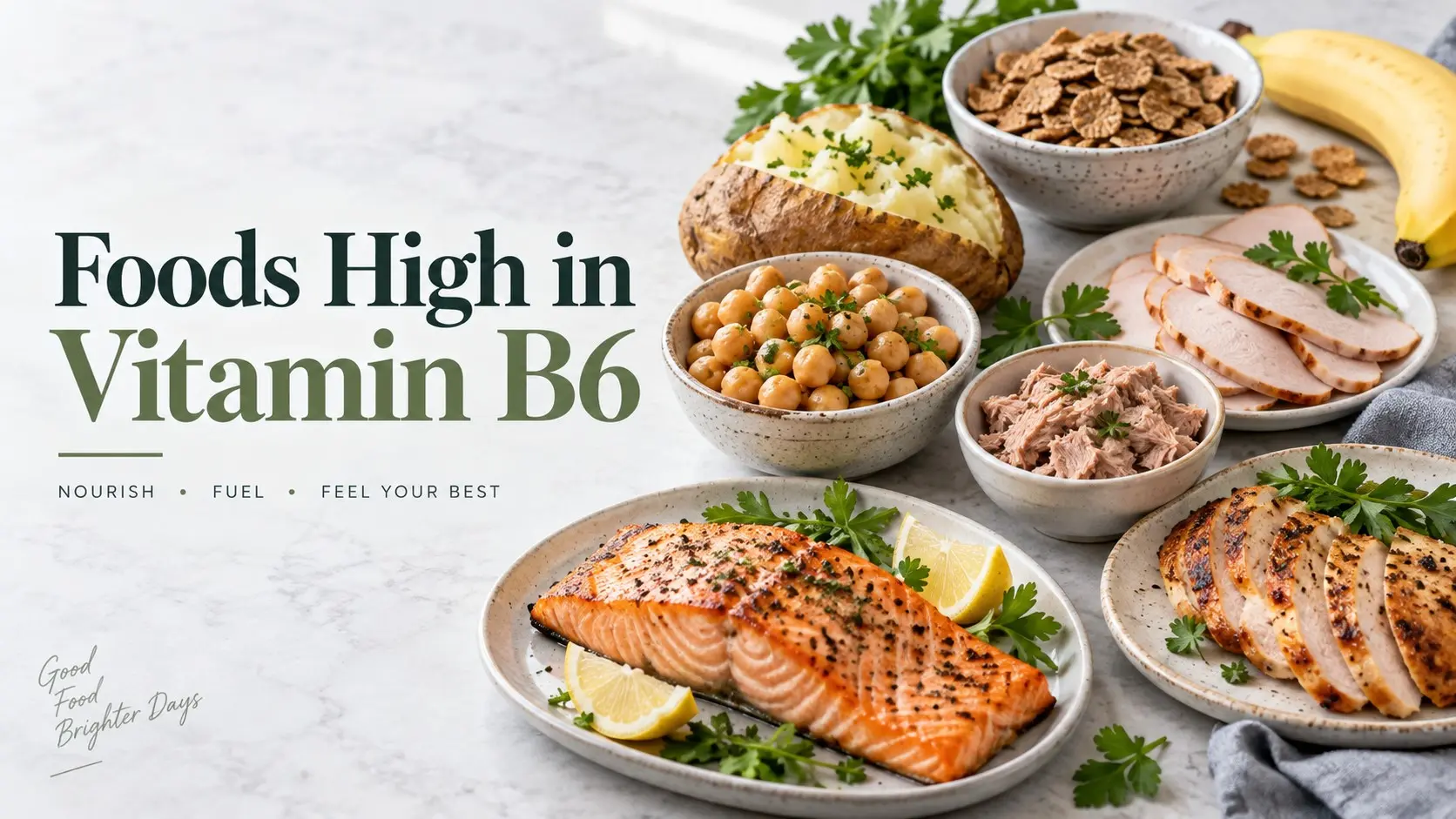
Chicken, salmon, tuna, chickpeas, potatoes, bananas, turkey, fortified cereals, and liver can all provide vitamin B6.
Vitamin B6 is also called pyridoxine, although vitamin B6 is actually a family of related compounds.
Your body needs B6 for many jobs.
It helps your body process protein, carbohydrates, and fats.
It supports normal nerve function.
It helps make hemoglobin.
It also supports normal immune function.
But more is not always better.
Most people can get enough vitamin B6 from a varied diet.
Very large supplement doses can damage nerves.
This guide shows you the best everyday vitamin B6 foods, how much B6 you need, how to build simple meals, and when supplements need more care.
For more vitamin and mineral guides, visit the NextFitLife Nutrition and Vitamins Hub.
Quick Answer: What Foods Are Highest in Vitamin B6?
Good food sources of vitamin B6 include:
- Chickpeas
- Yellowfin tuna
- Beef liver
- Salmon
- Chicken breast
- Potatoes
- Turkey
- Fortified breakfast cereal
- Bananas
According to the NIH Office of Dietary Supplements, one cup of canned chickpeas provides about 1.1 milligrams of vitamin B6.
That is about 65 percent of the current U.S. Daily Value.
Three ounces of cooked yellowfin tuna or beef liver provide about 0.9 milligrams.
Three ounces of cooked sockeye salmon provide about 0.6 milligrams.
Roasted chicken breast provides about 0.5 milligrams per three ounces.
Vitamin B6 Foods at a Glance
| Food | Serving | Vitamin B6 | Approximate Daily Value |
|---|---|---|---|
| Chickpeas, canned | 1 cup | 1.1 mg | 65% |
| Beef liver, cooked | 3 ounces | 0.9 mg | 53% |
| Yellowfin tuna, cooked | 3 ounces | 0.9 mg | 53% |
| Sockeye salmon, cooked | 3 ounces | 0.6 mg | 35% |
| Chicken breast, roasted | 3 ounces | 0.5 mg | 29% |
| Potatoes, boiled | 1 cup | 0.4 mg | 25% |
| Turkey, roasted | 3 ounces | 0.4 mg | 25% |
| Fortified breakfast cereal | 1 serving | About 0.4 mg | About 25% |
| Banana | 1 medium | 0.4 mg | 25% |
Food values can vary by type, brand, growing conditions, and preparation.
Use the numbers as useful guides rather than exact promises for every serving.
Medical and Safety Notice
I am not a dermatologist or A doctor, and this content does not replace professional medical advice. What I share comes from real-life experience, extensive research, and consultation with healthcare providers. Always consult qualified medical professionals for diagnosis and treatment of any health condition.
Do not diagnose a vitamin deficiency from symptoms alone.
Tiredness, numbness, low mood, mouth changes, weakness, anemia, and skin problems can have many causes.
Do not start a high dose vitamin B6 supplement because of symptoms without professional advice.
This is especially important if you take regular medicine or already have tingling, numbness, burning, balance problems, or another nerve symptom.
What Is Vitamin B6?
Vitamin B6 is a water soluble vitamin.
Your body needs it every day.
The term vitamin B6 includes several related compounds.
These include pyridoxine, pyridoxal, and pyridoxamine.
The active form called pyridoxal 5 phosphate helps many enzymes do their jobs.
You do not need to remember those names to eat well.
The main point is simple.
B6 is an essential nutrient.
Your body cannot function normally without enough of it.
What Does Vitamin B6 Do?
Vitamin B6 takes part in more than 100 enzyme reactions.
Many involve protein metabolism.
B6 also helps with carbohydrate and fat metabolism.
It supports:
- Normal protein metabolism
- Normal carbohydrate metabolism
- Normal fat metabolism
- Hemoglobin formation
- Brain development
- Neurotransmitter production
- Normal immune activity
- Normal nerve health
You will often see these roles described as vitamin B6 benefits.
I prefer to call them normal body functions.
That wording is more accurate.
A nutrient being essential does not mean that taking extra amounts makes a healthy body work better.
Does Vitamin B6 Give You Energy?
Vitamin B6 helps with energy metabolism.
That does not mean B6 contains energy.
It also does not work like caffeine.
Your body uses B6 in reactions that help process nutrients from food.
If you already get enough B6, eating much more will not normally give you an instant energy boost.
If you feel tired all the time, do not assume vitamin B6 is the cause.
Fatigue can be linked with sleep, anemia, thyroid problems, infection, stress, medicines, diabetes, heart problems, depression, low calorie intake, and many other causes.
How Much Vitamin B6 Do You Need Each Day?
Your need depends on your age and life stage.
| Group | Recommended Amount |
|---|---|
| Adults age 19 to 50 | 1.3 mg per day |
| Men age 51 and older | 1.7 mg per day |
| Women age 51 and older | 1.5 mg per day |
| Pregnancy | 1.9 mg per day |
| Breastfeeding | 2.0 mg per day |
These are U.S. Recommended Dietary Allowances.
Children and teenagers need different amounts.
Most adults need only a small amount each day.
This is one reason a varied diet can often meet B6 needs without a stand alone supplement.
9 Essential Foods High in Vitamin B6
1. Chickpeas
Chickpeas are one of my favorite B6 rich foods.
They are plant based.
They are easy to use.
They also give you fiber and plant protein.
One cup of canned chickpeas contains about 1.1 milligrams of vitamin B6 in the NIH food table.
That is around 65 percent of the Daily Value.
Chickpeas work well in:
- Hummus
- Salads
- Soups
- Rice bowls
- Vegetable dishes
- Roasted snacks
You do not have to eat a full cup at once.
A smaller portion still contributes B6.
Simple idea: Add chickpeas to a salad with cucumber, tomato, parsley, lemon, and olive oil.
2. Yellowfin Tuna
Yellowfin tuna is a concentrated source of vitamin B6.
Three cooked ounces provide about 0.9 milligrams.
That is around 53 percent of the Daily Value.
Tuna also provides protein and other nutrients.
Fish can fit well into a varied diet.
But fish choices matter during pregnancy and for young children because mercury levels vary between species.
Follow current local pregnancy and seafood advice if that applies to you.
Simple idea: Serve cooked tuna with potatoes and vegetables.
3. Beef Liver
Beef liver is nutrient dense.
Three cooked ounces provide about 0.9 milligrams of vitamin B6.
It also contains high amounts of several other vitamins and minerals.
That does not mean you need liver every day.
A food can be nutrient rich without being an everyday requirement.
If you are pregnant, have a health condition, or have been told to control intake of certain nutrients, ask your healthcare professional whether liver is suitable for you.
Simple idea: Use a small serving with onions, vegetables, and potatoes if liver is part of your normal diet.
4. Salmon
Salmon gives you vitamin B6 plus protein.
Three ounces of cooked sockeye salmon provide about 0.6 milligrams of B6.
That equals around 35 percent of the Daily Value.
Salmon also provides omega 3 fats.
This makes it an easy food to use in a balanced meal.
Simple idea: Bake salmon and serve it with potatoes, green vegetables, and a simple salad.
You can find more meal ideas in our Healthy Fitness Foods Guide.
5. Chicken Breast
Chicken is one of the most practical natural sources of vitamin B6.
Three ounces of roasted chicken breast provide about 0.5 milligrams.
That is around 29 percent of the Daily Value.
Chicken is easy to add to:
- Salads
- Rice bowls
- Soups
- Sandwiches
- Vegetable trays
- Pasta meals
Chicken also gives you protein.
Use safe food handling and cook poultry fully.
Simple idea: Grill chicken breast and serve it with roasted vegetables and potatoes.
6. Potatoes
Potatoes are often overlooked as a vitamin source.
One cup of boiled potatoes provides about 0.4 milligrams of vitamin B6.
That is around 25 percent of the Daily Value.
Potatoes also provide carbohydrate and potassium.
The way you prepare them matters more than people sometimes realize.
A boiled or baked potato is different from a very large serving of deep fried potatoes.
Simple idea: Bake a potato and top it with chickpeas, yogurt, herbs, or chicken.
7. Turkey
Turkey is another useful poultry choice.
Three ounces of roasted turkey provide about 0.4 milligrams of vitamin B6.
That is around 25 percent of the Daily Value.
Turkey can be used in:
- Salads
- Sandwiches
- Soup
- Rice dishes
- Wraps
Try to look at the whole meal.
A healthy meal is not healthy because one ingredient contains B6.
Vegetables, whole grains, legumes, fruit, and healthy fats still matter.
8. Fortified Breakfast Cereal
Some breakfast cereals have vitamin B6 added to them.
A cereal fortified with 25 percent of the Daily Value provides about 0.4 milligrams per serving.
Brands vary a lot.
Always read the nutrition label.
Look at more than B6.
Also check:
- Serving size
- Added sugar
- Fiber
- Sodium
- Other added vitamins
Fortified foods can be useful.
But more fortification does not always mean a better overall product.
Simple idea: Choose a higher fiber cereal with less added sugar and add fruit.
9. Bananas
Bananas are simple, portable, and affordable in many places.
One medium banana provides about 0.4 milligrams of vitamin B6.
That is around 25 percent of the Daily Value.
Bananas also provide carbohydrate and potassium.
They work well as a snack or part of breakfast.
Simple idea: Slice a banana over oatmeal or plain yogurt.
Best Plant Based Foods High in Vitamin B6
You do not need meat to get every bit of B6.
Useful plant choices include:
- Chickpeas
- Potatoes
- Bananas
- Fortified cereals
- Bulgur
- Winter squash
- Nuts
- Some vegetables
A varied plant based diet can provide vitamin B6.
But vegan diets need special attention to vitamin B12 because B12 is a different nutrient.
Read our B12 Rich Foods Guide if you want to compare the two vitamins.
Vitamin B6 and Vitamin B12 Are Not the Same
The names sound similar.
The vitamins are different.
Vitamin B6 and vitamin B12 both support important body functions.
But their food sources, deficiency risks, and supplement needs are not the same.
B12 naturally comes mainly from animal foods.
B6 is found across a wider range of animal and plant foods.
Do not assume a food rich in one B vitamin is rich in every B vitamin.
Vitamin B6 Versus Vitamin C
Vitamin B6 and vitamin C are also different.
Vitamin C supports collagen formation and helps with iron absorption.
Vitamin B6 works as a coenzyme in many metabolic reactions.
A good diet can provide both.
You do not have to choose one vitamin over another.
For more food sources, read our Vitamin C Foods Guide.
Can You Get Enough Vitamin B6 From Food?
For many people, yes.
NIH guidance says most people in the United States get enough vitamin B6 from food.
Look at a simple example.
A day could include:
- Banana at breakfast
- Chickpeas at lunch
- Chicken or salmon at dinner
- Potatoes or other vegetables with a meal
You do not need every food on the list.
Variety across the week matters more than chasing one perfect meal.
A Simple Vitamin B6 Meal Day
Breakfast
Oatmeal with a banana and yogurt.
Lunch
Chickpea salad with cucumber, tomato, herbs, and olive oil.
Snack
Fruit with a small handful of nuts.
Dinner
Baked salmon or chicken with potatoes and vegetables.
This meal pattern gives you many nutrients.
It is not built around B6 alone.
That is how I prefer to approach nutrition.
What Happens if You Do Not Get Enough Vitamin B6?
True vitamin B6 deficiency is uncommon.
It can still happen.
NIH guidance links deficiency with problems such as:
- A type of anemia
- Cracks at the corners of the mouth
- Scaling on the lips
- A swollen tongue
- Skin changes
- Confusion
- Depression
- Weakened immune function
These symptoms are not unique to vitamin B6 deficiency.
That is important.
For example, anemia has several possible causes.
Numbness has many possible causes.
Depression has many possible causes.
A swollen tongue also has several possible causes.
Do not self diagnose from a symptom list.
Who Has a Higher Risk of Low Vitamin B6?
Most healthy people are not deficient.
But some groups are more likely to have low B6 status.
These may include people with:
- Impaired kidney function
- Kidney failure
- Celiac disease
- Crohn's disease
- Ulcerative colitis
- Other problems that reduce nutrient absorption
- Alcohol dependence
- Certain autoimmune conditions
Some medicines can also affect vitamin B6.
This is another reason supplements should not be chosen from symptoms alone.
Can a Blood Test Check Vitamin B6?
Vitamin B6 status can be measured.
A common marker is plasma pyridoxal 5 phosphate.
You may see it written as PLP.
A clinician decides whether testing is useful based on your symptoms, health history, diet, medicines, and other findings.
You do not need routine B6 testing simply because you eat a normal diet.
Can Too Much Vitamin B6 Be Harmful?
Yes.
This mainly matters with supplements.
People almost never get too much B6 from normal foods.
Large supplemental amounts used for a long time can damage nerves.
This can lead to peripheral neuropathy.
Symptoms can include:
- Numbness
- Tingling
- Burning feelings
- Problems with balance
- Problems coordinating movement
Do not assume a B vitamin is harmless because it is water soluble.
Water soluble does not mean risk free.
Why Vitamin B6 Supplement Limits Can Look Confusing
You may see different safety numbers online.
There is a reason.
In the United States, the adult Tolerable Upper Intake Level has traditionally been 100 milligrams per day.
In 2023, the European Food Safety Authority set a lower adult upper limit of 12 milligrams per day.
EFSA based this update largely on evidence about peripheral nerve damage.
This difference is important.
It also shows why I do not recommend casual high dose B6 use.
Your normal daily requirement is only around 1.3 to 1.7 milligrams for most adults.
A supplement containing tens of milligrams is therefore very different from eating a banana or piece of chicken.
Check Your B Complex Supplement
Vitamin B6 can appear in:
- Multivitamins
- B complex supplements
- Magnesium products
- Energy supplements
- Nerve support products
- Stress formulas
- Sleep products
You may take B6 from more than one bottle without noticing.
Check every label.
Add the amounts together.
Do not assume that a product is safe just because each bottle looks normal on its own.
Does the Form P5P Make High Doses Safe?
Some supplements use pyridoxal 5 phosphate.
You may see it called P5P or PLP.
Other products use pyridoxine hydrochloride.
Do not assume that a different form removes the need to think about dose.
The total B6 exposure still matters.
If a product contains much more B6 than your normal daily need, ask why you need that dose.
Vitamin B6 and Medicines
Vitamin B6 supplements can interact with some medicines.
NIH guidance discusses interactions involving medicines such as:
- Cycloserine
- Some anti seizure medicines
- Theophylline
Some medicines may lower B6 status.
High supplemental B6 can also affect how certain medicines work.
Do not change prescription medicine because of a vitamin article.
Ask your pharmacist or doctor to review your exact medicine and supplement list.
Can Vitamin B6 Improve Mood?
Vitamin B6 is involved in neurotransmitter production.
That does not mean high dose B6 is an antidepressant.
NIH notes that B6 supplements have not been shown to improve mood or cognitive function in healthy people simply because they take more.
If you have ongoing low mood, anxiety, confusion, or memory changes, speak with a healthcare professional.
Does Vitamin B6 Prevent Heart Disease?
B vitamins can reduce blood homocysteine levels.
This once led to hopes that B6 supplements might prevent heart attacks and strokes.
Large studies have not shown a clear cardiovascular benefit from taking B6 supplements for this purpose.
A normal B6 intake is important.
Taking extra B6 is not a proven heart disease prevention strategy.
Vitamin B6 During Pregnancy
Pregnancy increases B6 needs.
The recommended amount is about 1.9 milligrams per day.
Vitamin B6 is also used under medical guidance for nausea and vomiting during pregnancy.
This does not mean pregnant women should choose their own high dose B6 supplement.
Prenatal vitamins can already contain B6.
Check the label.
Talk with your maternity healthcare professional before adding another B6 product.
Are Bananas the Best Vitamin B6 Food?
Bananas are a good source.
They are not the richest source.
A medium banana provides around 0.4 milligrams.
Chickpeas, tuna, liver, salmon, and chicken provide more B6 in the servings listed by NIH.
Bananas are still useful because they are easy to buy and eat.
Are Eggs High in Vitamin B6?
Eggs contain vitamin B6.
But they are not among the highest sources in the NIH selected foods table.
Eggs can still be part of a nutritious diet because a food does not need to be high in every vitamin to be useful.
Are Nuts High in Vitamin B6?
Nuts provide some vitamin B6.
Mixed dry roasted nuts provide around 0.1 milligrams per ounce in the NIH selected food table.
That is less than chickpeas, tuna, salmon, chicken, potatoes, or bananas.
Nuts still provide other useful nutrients.
Does Cooking Destroy Vitamin B6?
Vitamin B6 is water soluble.
Some nutrient loss can happen during food storage and cooking.
The amount depends on the food and cooking method.
You do not need to eat everything raw.
Fish, poultry, potatoes, and many other foods need suitable cooking.
Food safety matters more than trying to preserve every last fraction of a vitamin.
How I Choose Vitamin B6 Foods
I do not rank food by one vitamin alone.
I look at the whole food.
I ask:
- Does it provide useful nutrients?
- Is it practical?
- Can people afford it?
- Can it fit into normal meals?
- Does it suit different diet styles?
- Is the portion realistic?
- Does the health claim match the evidence?
This is why chickpeas rank highly for me.
They provide B6, plant protein, and fiber.
Salmon gives B6, protein, and omega 3 fats.
Chicken is simple and widely used.
Bananas and potatoes are practical.
A healthy diet is built from useful combinations.
It is not built from chasing one nutrient.
How to Build a B6 Rich Plate
Keep it simple.
Choose one main B6 source.
Add vegetables.
Add a useful carbohydrate source when appropriate.
Add healthy fat.
Example 1
Salmon, potatoes, broccoli, and olive oil.
Example 2
Chicken, rice, mixed vegetables, and salad.
Example 3
Chickpeas, bulgur, cucumber, tomato, herbs, and olive oil.
Example 4
Turkey sandwich with vegetables and a banana.
For broader meal and food guidance, visit the NextFitLife General Wellness and Healthy Lifestyle Hub.
Common Vitamin B6 Myths
| Claim | What You Should Know |
|---|---|
| Vitamin B6 gives instant energy | B6 supports normal metabolism but does not work like a stimulant. |
| Bananas are the richest B6 food | Bananas provide B6, but chickpeas, tuna, liver, salmon, and chicken provide more in common reference servings. |
| More B6 is always better | No. High supplemental intake can damage nerves. |
| Water soluble vitamins cannot be harmful | False. Too much supplemental vitamin B6 can cause peripheral neuropathy. |
| B6 deficiency is the main cause of tiredness | No. Fatigue has many possible causes. |
| You need a supplement to get enough B6 | Many people can meet their needs through food. |
| A B complex is always safe | No. Check the actual B6 dose and all other supplements you use. |
Key Takeaways
- Vitamin B6 is needed for more than 100 enzyme reactions.
- Most adults need about 1.3 to 1.7 mg per day.
- Pregnancy needs rise to about 1.9 mg per day.
- Breastfeeding needs rise to about 2.0 mg per day.
- Chickpeas are one of the richest practical plant sources.
- Tuna, liver, salmon, chicken, and turkey provide B6.
- Potatoes and bananas are useful everyday sources.
- Fortified cereals can provide B6, but brands vary.
- Most people can get enough B6 through food.
- Large supplemental doses can cause nerve damage.
Conclusion: Choose Foods High in Vitamin B6 First
Foods high in vitamin B6 can fit easily into normal meals.
Chickpeas, tuna, salmon, chicken, potatoes, turkey, fortified cereal, bananas, and liver can all contribute.
You do not need to build your whole diet around one vitamin.
Eat a varied mix of foods.
Use supplements for a clear reason.
Check the dose before taking extra B6.
Start today by adding one practical vitamin B6 food to your next meal, then build variety across the rest of your week.
Continue Reading on NextFitLife
- Nutrition and Vitamins Hub
- B12 Rich Foods Guide
- Vitamin C Foods Guide
- Healthy Fitness Foods Guide
- Nutrition Tips for Improving Your Health
- General Wellness and Healthy Lifestyle Hub
References and Sources
- National Institutes of Health Office of Dietary Supplements. Vitamin B6 Fact Sheet for Health Professionals.
Detailed information on vitamin B6 functions, recommended intake, food values, deficiency, upper limits, and medicine interactions.
NIH Vitamin B6 Health Professional Fact Sheet - National Institutes of Health Office of Dietary Supplements. Vitamin B6 Fact Sheet for Consumers.
Easy to read government guidance on B6 needs, food sources, supplements, deficiency, and safety.
NIH Vitamin B6 Consumer Fact Sheet - U.S. Department of Agriculture. FoodData Central.
The USDA database provides food composition information, including vitamin B6 data for foods and food products.
USDA FoodData Central - MedlinePlus. Vitamin B6.
U.S. National Library of Medicine guidance on vitamin B6 functions, food sources, deficiency, and problems from excessive intake.
MedlinePlus Vitamin B6 - European Food Safety Authority. Summary of Tolerable Upper Intake Levels.
EFSA safety tables list an adult vitamin B6 upper intake level of 12 mg per day, including pregnancy and lactation.
EFSA Tolerable Upper Intake Levels
About the Author
Frequently Asked Questions About Foods High in Vitamin B6
What food is highest in vitamin B6?
Among common foods in the NIH selected food table, one cup of canned chickpeas provides about 1.1 mg of vitamin B6. Three ounces of cooked yellowfin tuna or beef liver provide about 0.9 mg.
What fruit has the most vitamin B6?
Bananas are a useful and common source of vitamin B6. One medium banana provides about 0.4 mg in the NIH food table. Other noncitrus fruits can also contribute smaller amounts.
How much vitamin B6 do adults need each day?
Adults age 19 to 50 need about 1.3 mg per day. Men age 51 and older need about 1.7 mg, while women age 51 and older need about 1.5 mg.
Can I get enough vitamin B6 from food?
Many people can. Fish, poultry, chickpeas, potatoes, bananas, fortified cereals, and other foods can provide enough B6 when eaten as part of a varied diet.
What are the symptoms of vitamin B6 deficiency?
Possible signs can include certain types of anemia, cracks at the corners of the mouth, a swollen tongue, skin changes, confusion, low mood, and weakened immune function. These symptoms have many possible causes, so they do not prove a B6 deficiency.
Can too much vitamin B6 damage nerves?
Yes. High supplemental vitamin B6 intake over time can cause peripheral nerve damage. Symptoms may include numbness, tingling, burning, poor balance, and problems coordinating movement.
Is 50 mg of vitamin B6 a lot?
It is far above the normal daily requirement for most adults. Adult needs are usually about 1.3 to 1.7 mg per day. EFSA now uses an adult upper intake level of 12 mg per day, while the traditional U.S. upper limit is 100 mg per day. Ask a healthcare professional before using high dose B6.
Are bananas high in vitamin B6?
Yes. A medium banana provides about 0.4 mg of B6, or roughly 25 percent of the U.S. Daily Value. It is a good source, although some fish, meat, and chickpeas provide more.
Is vitamin B6 good for energy?
Vitamin B6 helps your body process nutrients during normal energy metabolism. It does not work like caffeine, and taking extra B6 does not normally give an instant energy boost if you already get enough.
Should I take a vitamin B6 supplement?
Not automatically. Many people get enough from food. Supplements can be useful for specific medical or nutritional needs, but the reason and dose matter because excessive intake can harm nerves.

Health & wellness writer with 30+ years of experience in nutrition, fitness, and healthy aging. Founder of NextFitLife.com — evidence-based health guidance.