
Published on: March 19, 2025
Updated on: November 4, 2026
The best fun ways to track weight loss do more than record a number on the scale.
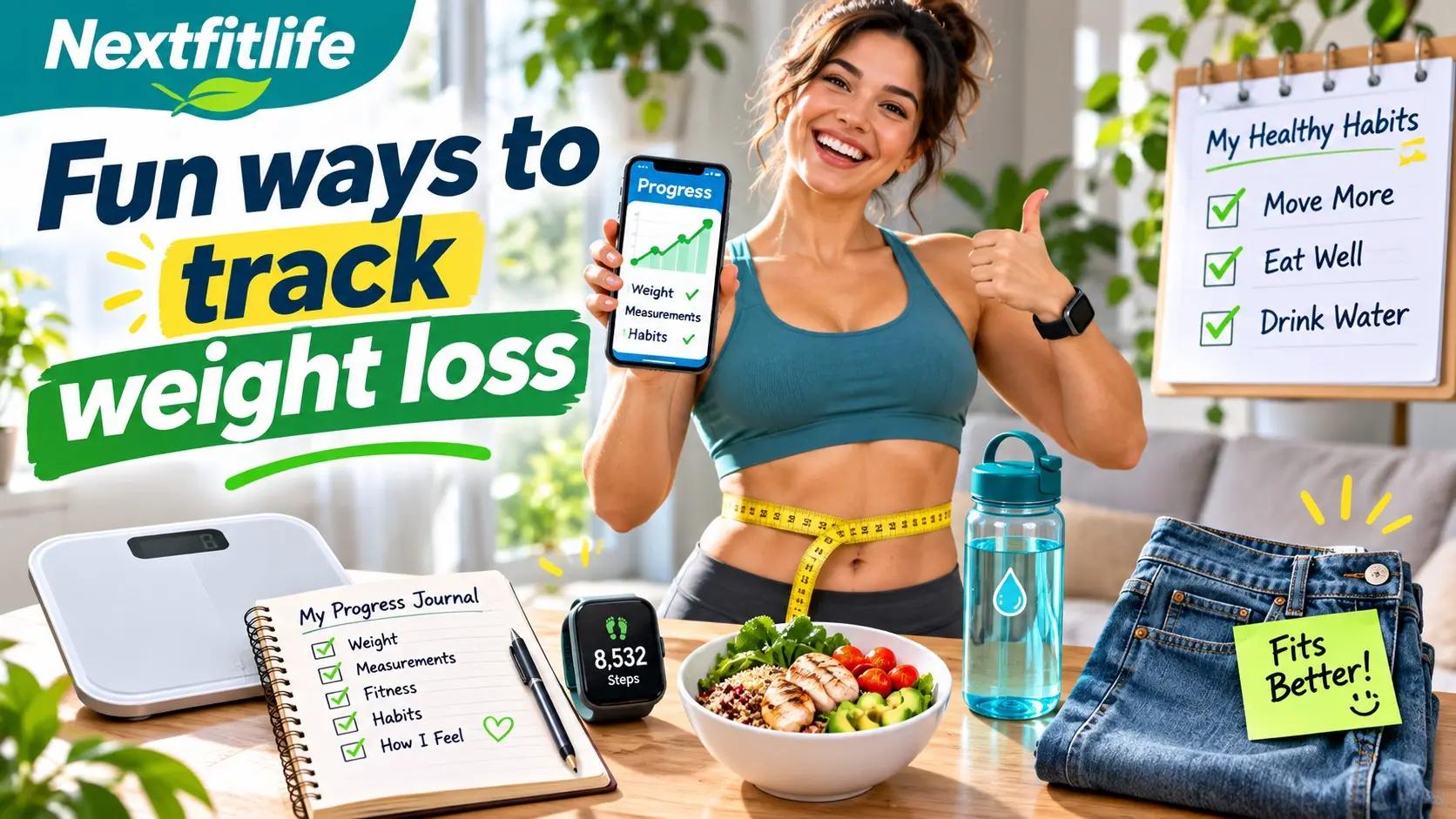
You can track your waist, walking, strength, sleep, photos, habits, energy, clothes fit, and other non scale victories. These measures can show progress even when body weight moves slowly.
Tracking should help you learn what is working. It should not make you feel punished every time a number changes.
This guide gives you 15 simple ways to make weight loss progress easier to see, understand, and celebrate.
Important: This article is for general information and education. It does not replace medical advice, diagnosis, or treatment.
Table of Contents
- Quick Answer
- Why Tracking Helps
- 15 Fun Tracking Ideas
- Weekly Weight Trends
- Waist Measurement
- Progress Photos
- Strength and Fitness
- Habit Tracking
- Sleep and Energy
- Apps and Wearables
- What Not to Track
- When Tracking Becomes Stressful
- Monthly Review
- Conclusion
- References and Sources
- Internal Links + Weight Management Hub
- About the Author
- Frequently Asked Questions
Quick Answer: What Are Fun Ways to Track Weight Loss?
The most useful fun ways to track weight loss combine scale and non scale progress.
Try these 15 ideas:
- Use a weekly weight trend.
- Measure your waist.
- Take monthly progress photos.
- Use one pair of progress clothes.
- Track your daily steps.
- Track walking minutes.
- Record strength gains.
- Create a simple habit score.
- Track your sleep.
- Record energy and mood.
- Use a meal photo journal.
- Celebrate non scale victories.
- Create a visual progress board.
- Use an app or wearable if it helps.
- Review everything once a month.
You do not need to use all 15. Pick three to five measures that matter to you.
For a broader plan, read our Weight Loss Strategies and Basic Weight Loss Tips.
Why Tracking Weight Loss Can Help
Self monitoring can help you notice patterns that are easy to miss.
CDC suggests tracking nutrition, physical activity, sleep, stress, and other wellness factors when working toward a healthier weight.
Tracking can answer useful questions:
- Am I walking more than last month?
- Am I stronger?
- Am I sleeping better?
- Are my portions more consistent?
- Is my waist changing even when weight is stable?
These questions are often more useful than asking whether the scale dropped today.
Why Scale Weight Changes So Much
Your body weight can move from day to day without a major change in body fat.
Short term changes can come from:
- Water
- Sodium
- Carbohydrate intake
- Food in your digestive system
- Bowel movements
- Menstrual cycle changes
- Exercise related inflammation
That is why a weekly weight trend can be more useful than reacting to one reading.
Key idea: one number is a data point. A trend tells a story.
15 Fun Ways to Track Weight Loss
1. Use a Weekly Weight Trend
If weighing yourself feels comfortable, record your weight under similar conditions.
For example:
- Same scale
- Similar time of day
- Similar clothing
Then look at the weekly pattern rather than one day.
Some people prefer weighing once each week. Others like several readings and a weekly average.
Choose the method that gives useful information without increasing stress.
2. Measure Your Waist
A waist measurement can show changes that scale weight may miss.
Use the same tape, same general location, and similar conditions each time.
Monthly measurement is often enough.
Do not pull the tape so tight that it compresses your skin.
3. Take Monthly Progress Photos
Progress photos can make gradual changes easier to see.
For a fair comparison, use:
- The same location
- Similar lighting
- Similar clothing
- The same camera distance
- Front and side views
Monthly photos are usually more useful than daily pictures.
4. Choose One Pair of Progress Clothes
Pick jeans, trousers, or another item that fits consistently.
Try it on every few weeks.
If the waistband feels looser or movement feels easier, that can be a useful non scale victory.
5. Track Your Daily Steps
Your step count gives you a simple measure of daily movement.
Instead of chasing one universal target, compare your steps with your own starting level.
If you average 4,000 steps now, moving toward 5,000 or 6,000 may be a practical first goal.
See our Walking for Weight Loss guide.
6. Track Walking Minutes
If step numbers do not motivate you, track time.
You might record:
- 10 minute morning walk
- 15 minute lunch walk
- 20 minute evening walk
This can be easier to understand than a large step number.
7. Record Strength Gains
Fat loss is not the only useful change.
Track:
- Dumbbell weight
- Repetitions
- Push ups
- Squat depth
- Plank time
- Walking speed
Better strength progress can show that your fitness is improving even when the scale moves slowly.
For structured training ideas, visit our Strength Training and Muscle Building Guide.
8. Make a Simple Habit Score
Create five habits and give yourself one point for each habit you complete.
For example:
| Habit | Daily Goal | Point |
|---|---|---|
| Vegetables | Eat with two meals | 1 |
| Walking | 20 minutes | 1 |
| Water | Choose instead of sugary drink | 1 |
| Sleep Routine | Follow planned bedtime | 1 |
| Training | Complete planned session | 1 |
This keeps the focus on behaviors you can control.
9. Track Sleep
CDC includes sleep as one of the factors worth tracking during a weight management plan.
Your sleep tracking can be simple.
Record:
- Bedtime
- Wake time
- Approximate sleep duration
- How rested you feel
You do not need a wearable to do this.
10. Record Energy and Mood
Use a simple 1 to 5 score for daily energy and mood.
You may discover that better sleep, regular meals, or exercise improves how you feel before you see large changes on the scale.
11. Use a Meal Photo Journal
If writing every ingredient feels tedious, take a photo of your meals.
A food diary does not have to include calorie counting.
Photos can help you notice:
- Vegetable intake
- Portion size
- Frequent snacks
- Restaurant meals
- Meal timing
NIDDK recommends food and beverage diaries as one way to identify eating patterns.
12. Create a Non Scale Victory List
Keep a list of things that improve even when weight does not.
Examples:
- Walking farther
- Climbing stairs more easily
- Using heavier dumbbells
- Sleeping better
- Cooking more meals at home
- Feeling more energetic
- Clothes fitting differently
Add one new victory whenever you notice it.
13. Build a Visual Progress Board
Create a physical or digital board with:
- Monthly photos
- Waist measurements
- Walking totals
- Strength records
- Habit streaks
- Positive milestones
Keep it focused on progress rather than perfection.
14. Use an App or Wearable Only if It Helps
Apps and wearables can make digital health tracking easier.
They can record:
- Steps
- Weight
- Meals
- Sleep
- Heart rate
- Workouts
But more data is not automatically better.
A 2025 review found that calorie tracking apps can be useful, but long term adherence often falls. Easy entry, automation, personalization, and clear feedback can make apps easier to use.
Choose one tool you will actually keep using.
15. Review Progress Once a Month
Once each month, look at the big picture.
Ask:
- Is my weight trend moving?
- Has my waist changed?
- Am I stronger?
- Am I walking more?
- Are my habits more consistent?
- Am I sleeping better?
Then change one thing if needed.
Do not rebuild your whole plan because of one difficult week.
A Simple Weight Loss Tracking Dashboard
| Measure | How Often | What It Shows |
|---|---|---|
| Weight Trend | Weekly | Overall direction |
| Waist | Monthly | Body size change |
| Photos | Monthly | Visual change |
| Steps | Daily or weekly average | Daily movement |
| Strength | Each workout | Fitness progress |
| Habits | Daily | Consistency |
| Sleep | Daily or weekly | Recovery pattern |
Should You Weigh Yourself Every Day?
Not everyone needs to.
Some research programs use daily self weighing as part of a larger behavior change system. Other public health guidance suggests weekly weight recording can also be useful.
The right frequency depends on how the information affects you.
If daily weighing helps you see normal fluctuations without stress, it may be useful.
If every change affects your mood, use a less frequent schedule or choose other measures.
What Is Better Than Scale Weight Alone?
Use a small combination of measures.
A useful set could be:
- Weekly weight trend
- Monthly waist measurement
- Walking average
- Strength progress
- Monthly photo
This gives you more context without turning your day into a spreadsheet.
Can Apps Help You Lose Weight?
They can help some people.
Digital interventions can support goal setting, reminders, self monitoring, and feedback.
A 2026 meta analysis of fully digital lifestyle programs found improvements in weight related outcomes compared with control groups, although results varied widely.
Another large 2026 analysis found that combinations of apps, wearables, and health education may perform better than some single digital tools.
The important point is not to own the most advanced tracker. It is to use a system that makes healthy behavior easier.
What Should You Not Track?
You do not need to track every number your device can generate.
Be cautious with:
- Exact daily calorie burn estimates
- Constant body fat readings from home scales
- Every gram of food forever
- Hourly weight changes
- Exercise calories used as permission to eat
Consumer devices can be useful for trends, but their numbers are not perfect laboratory measurements.
When Can Tracking Become Unhelpful?
Tracking should support your health, not control your day.
Consider reducing or stopping a tracking method if you notice:
- Anxiety before weighing
- Guilt after meals
- Repeated weighing throughout the day
- Skipping meals to improve app numbers
- Exercising to punish yourself
- A strong fear of breaking a streak
If you have a current or past eating disorder, frequent weight or food tracking may not be appropriate. A qualified healthcare professional can help you choose a safer approach.
How to Make Tracking More Fun
Turn your tracker into a record of wins rather than a list of failures.
You can:
- Add stickers to a calendar.
- Use a colored habit chart.
- Save monthly photos in a private album.
- Create strength milestones.
- Celebrate walking streaks.
- Use non food rewards for consistency.
CDC suggests using realistic goals and recognizing achievements as part of a weight management plan.
A Better Monthly Review
At the end of each month, review your data without judging yourself.
Use three questions:
- What improved?
- What stayed difficult?
- What is one change I can make next month?
This keeps your plan simple and flexible.
Conclusion
The best fun ways to track weight loss make progress easier to see without turning every day into a test.
Use a mix of weekly weight trends, waist measurements, photos, steps, strength, sleep, habits, and non scale victories. Then review the bigger picture instead of reacting to one number.
Your next step: choose three measures today. Pick one body measure, one fitness measure, and one habit measure, then review them again in four weeks.
References and Sources
- Centers for Disease Control and Prevention. Steps for Losing Weight. Guidance on tracking nutrition, physical activity, sleep, stress, goals, and progress.
https://www.cdc.gov/healthy-weight-growth/losing-weight/ - Centers for Disease Control and Prevention. Tips for Keeping Weight Off. Guidance on monitoring steps, physical activity, eating habits, and weight trends.
https://www.cdc.gov/healthy-weight-growth/losing-weight/keeping-it-off.html - National Institute of Diabetes and Digestive and Kidney Diseases. Health Tips for Adults. Guidance on food diaries, activity tracking, apps, weight management, and healthy habits.
https://www.niddk.nih.gov/health-information/weight-management/healthy-eating-physical-activity-for-life/health-tips-for-adults - Calorie Counting Apps for Monitoring and Managing Calorie Intake in Adults Living With Weight Related Chronic Diseases. 2025 scoping review examining 68 studies and common barriers and benefits of digital tracking.
https://pubmed.ncbi.nlm.nih.gov/41329042/ - Effects of Stand Alone Digital Lifestyle Interventions on Weight Related Outcomes in Adults With Overweight or Obesity. 2026 systematic review and meta analysis of randomized controlled trials.
https://pubmed.ncbi.nlm.nih.gov/42081742/
Internal Links + Weight Management Hub
- Weight Loss Strategies
- Basic Weight Loss Tips
- How to Drop Pounds
- How to Shed Pounds Quickly
- Walking for Weight Loss
- Lose Stubborn Fat
- Best Way to Lose Weight After 40
- Best Ways to Burn Fat at Home
- HIIT Workouts for Weight Loss
- Strength Training and Muscle Building Guide
- Best Vegetables for Weight Loss
- NextFitLife Fitness Hub
About the Author
Adel Galal is a father of four, three sons and a daughter, and a grandfather of four, with 33 years of hands on parenting experience. He is the founder of Parnthub.com, based in Cairo, Egypt, where he shares practical guidance on feeding, development and family life from newborns to teenagers.
Adel is not a medical professional. Health articles cite trusted sources and are for general information only.
Learn more on the NextFitLife About Us page.
Frequently Asked Questions
What are fun ways to track weight loss?
Useful options include weekly weight trends, waist measurements, progress photos, clothes fit, steps, walking minutes, strength gains, habit charts, sleep, energy, and non scale victories.
How often should I weigh myself?
There is no single schedule that works for everyone. Some people prefer daily weighing and a weekly average, while others prefer one weigh in each week. Choose a frequency that gives useful information without causing stress.
Is waist measurement better than scale weight?
Neither measure tells the whole story. Using waist measurement together with a weight trend can provide more useful context than either measure alone.
How often should I take weight loss progress photos?
Monthly photos are enough for many people. Use similar lighting, clothing, distance, and poses so the comparison is fair.
What are non scale victories?
Non scale victories are improvements that are not measured by body weight, such as walking farther, getting stronger, sleeping better, having more energy, or noticing that clothes fit differently.
Can a fitness tracker help with weight loss?
A fitness tracker can help monitor steps, workouts, and habits, but it is only a tool. The best tracker is one that helps you take useful action without making you overly focused on numbers.
Should I track calories every day?
Not necessarily. Calorie tracking can help some people understand portions, but others may prefer meal photos, portion awareness, or habit tracking. Long term adherence to calorie tracking apps often declines.
Why does my weight change even when I follow my plan?
Short term weight changes can come from water, sodium, digestion, carbohydrate intake, menstrual cycle changes, and exercise related inflammation. Look at longer trends instead of one reading.
Can tracking become unhealthy?
Yes. If tracking causes anxiety, guilt, repeated weighing, meal skipping, or compulsive exercise, reduce or stop that method and consider professional guidance.
What is the simplest way to track weight loss?
Use three measures: one weekly weight trend, one monthly waist measurement, and one behavior such as walking minutes or strength progress.

Health & wellness writer with 30+ years of experience in nutrition, fitness, and healthy aging. Founder of NextFitLife.com — evidence-based health guidance.

