Last Updated: July 13, 2026
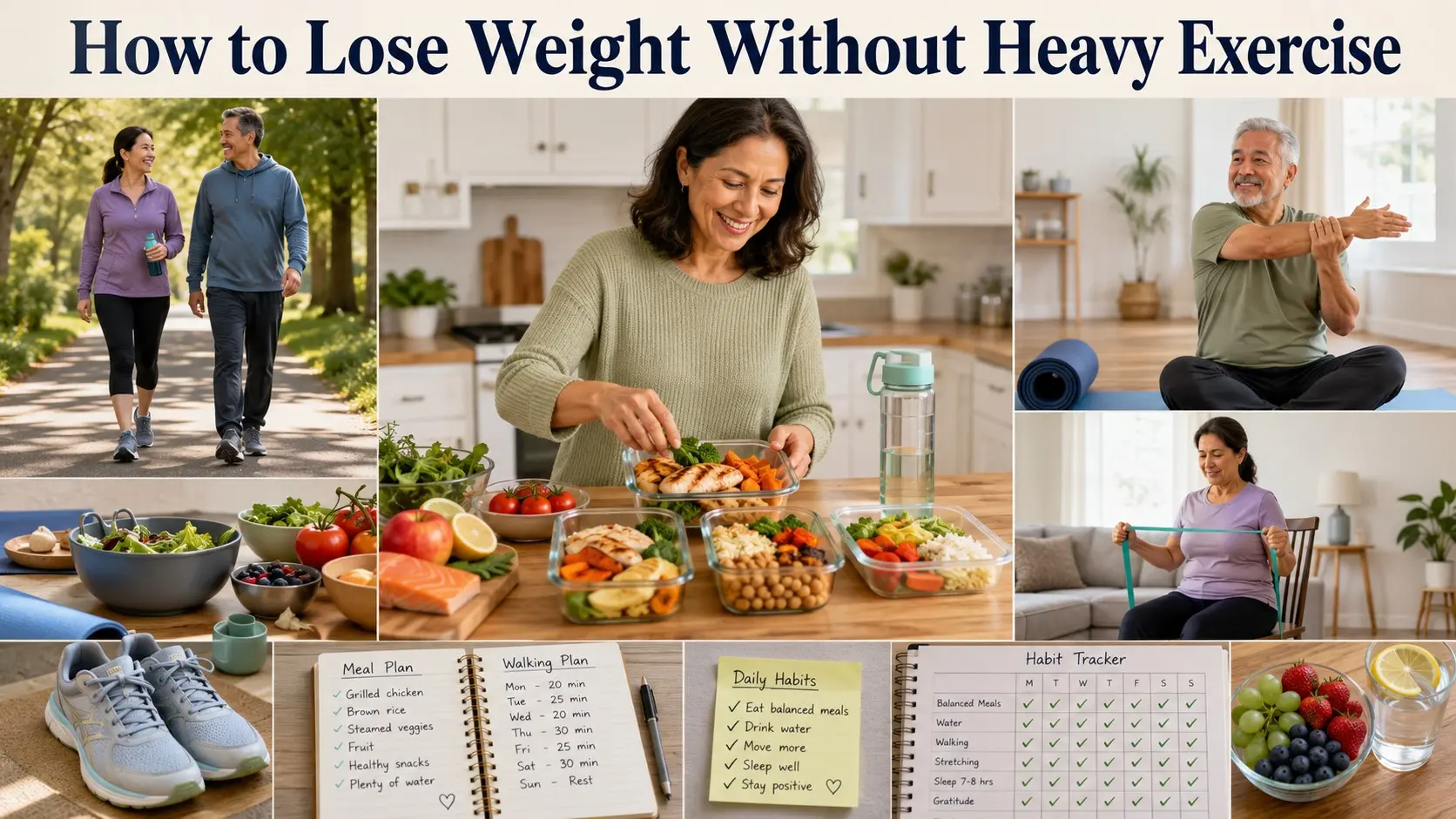
Topic: How to Lose Weight Without Heavy Exercise
Reading Time: About 11 minutes
Content Note: This article is for education only. It does not replace medical advice.
Many people want to know how to lose weight without heavy exercise.
Maybe your knees hurt.
Maybe your schedule is full.
Maybe hard workouts feel stressful.
Maybe you are just starting again.
That is okay.
You do not need to punish your body to start losing weight.
You do not need extreme workouts.
You do not need to sweat for one hour every day.
You do need a plan you can repeat.
You need better food habits.
You need light movement.
You need sleep.
You need stress care.
You need patience.
This guide shows you how to start in a safe and simple way.
Quick answer
How to lose weight without heavy exercise starts with food habits, walking, light movement, better sleep, stress control, and daily consistency.
You can begin with small meal changes, more protein, more vegetables, fewer sugary drinks, short walks, chair-based movement, and simple tracking.
You do not have to do intense workouts to begin.
Can you lose weight without heavy exercise?
Yes, many people can lose weight without heavy exercise.
But this does not mean doing nothing.
It means choosing lighter actions that fit your body.
You may walk more.
You may stand more.
You may stretch.
You may do chair exercises.
You may improve meals.
You may reduce liquid calories.
You may sleep better.
These actions can support healthy weight loss.
What does without heavy exercise mean?
Without heavy exercise means you are not relying on hard workouts.
You are not doing intense gym sessions.
You are not doing long-running sessions.
You are not doing painful training.
Instead, you use easy and moderate habits.
- Walking
- Light strength work
- Chair movement
- Stretching
- More daily steps
- Better meals
- Better sleep
This is a gentle way to build weight management.
Do not confuse light with useless
Light movement still counts.
A short walk counts.
Taking stairs when safe counts.
Standing during a phone call counts.
Chair squats count.
Cooking at home counts.
Preparing meals counts.
Your body responds to repeated habits.
Small steps can become real progress.
Before you start
Talk with a qualified healthcare professional before starting a new weight loss plan if you have diabetes, heart disease, kidney disease, liver disease, high blood pressure, pregnancy, breastfeeding, a history of eating disorders, severe joint pain, dizziness, unexplained weight loss, severe fatigue, or a long-term health condition.
Also ask for medical advice if you take medicine that affects blood sugar, blood pressure, appetite, fluid balance, or weight.
Stop any plan that makes you feel faint, confused, very weak, or unwell.
Step 1: Make your meals easier to control
Weight loss often starts in the kitchen.
This does not mean starving.
It means making meals easier to manage.
Use a simple plate.
- Half a plate of vegetables or fruit
- One quarter plate of protein
- One quarter plate of rice, potatoes, oats, beans, lentils, or whole grains
- A small amount of healthy fat
- Water or a low-calorie drink
This helps you build balanced meals.
It also helps you feel full with less effort.
Step 2: Add protein to each meal
Protein can help you feel full.
It can also help support muscle while you lose weight.
Simple protein foods include:
- Eggs
- Chicken
- Fish
- Lean meat
- Greek yogurt
- Cottage cheese
- Beans
- Lentils
- Tofu
This is a simple way to use protein for weight loss.
You do not need to use protein powder unless it truly helps your routine.
Step 3: Create a small calorie gap
Weight loss happens when your body uses more energy than you consume over time.
This is called a calorie deficit.
But it does not need to be extreme.
A small gap is easier to keep.
Start here:
- Use a smaller plate.
- Eat slower.
- Stop when satisfied, not stuffed.
- Limit second servings.
- Keep high-calorie snacks in smaller portions.
- Add vegetables before larger portions of rice or bread.
This is safer than crash dieting.
Step 4: Stop drinking hidden calories
Drinks can add calories quickly.
Many people do not notice them.
Watch for:
- Soda
- Sweet tea
- Large coffee drinks
- Juice
- Energy drinks
- Alcohol
Try water, sparkling water, plain tea, or unsweetened coffee if it works for you.
This can help with low-calorie drinks and better weight control.
Step 5: Walk in small pieces
You do not need a long workout.
You can split walking into small pieces.
- 5 minutes after breakfast
- 5 minutes after lunch
- 5 minutes after dinner
- 5 minutes during a work break
These short walks add up.
They also feel easier than one long session.
This is a simple form of walking for weight loss.
Step 6: Use gentle movement after meals
A short walk after a meal can help you move more.
It may also help some people feel less sleepy after eating.
Start with 5 to 10 minutes.
Keep the pace easy.
If you have diabetes, low blood sugar risk, foot problems, or dizziness, ask your healthcare provider what is safe.
This can become a useful daily movement habit.
Step 7: Build a light home routine
Light exercise can help your body stay strong.
You can do it at home.
You can use a chair.
You can use body weight.
Try this routine 2 or 3 days each week.
Light routine
- Chair squat, 8 reps
- Wall push-up, 8 reps
- Glute bridge, 8 reps
- Standing march, 30 seconds
- Wall plank, 15 seconds
Rest when needed.
This is a safe start for low-impact exercise.
Step 8: Make the home environment easier
Your home can help you.
Or it can make things harder.
Try these minor changes.
- Keep fruit where you can see it.
- Keep water nearby.
- Prepare protein foods early.
- Put snacks in small containers.
- Keep walking shoes ready.
- Keep a simple meal plan on the fridge.
This supports healthy habits with no need for willpower all day.
Step 9: Plan snacks before hunger gets strong
Snacks are not bad.
Unplanned snacks can be hard to manage.
Try snacks that include protein, fibre, or both.
- Greek yogurt with fruit
- Boiled eggs
- Apple with peanut butter
- Carrots with hummus
- Cottage cheese with berries
- Beans or lentil soup
This helps with hunger control.
Step 10: Eat more slowly
Eating fast can make it easy to overeat.
Try slowing down.
- Put the fork down between bites.
- Chew well.
- Take a sip of water.
- Pause halfway through the meal.
- Ask if you are still hungry.
This supports mindful eating.
It is simple, but it can help.
Step 11: Sleep better
Sleep affects hunger, cravings, mood, and energy.
Poor sleep can make weight loss harder.
Try these steps.
- Keep a steady sleep time when possible.
- Limit late caffeine if it affects you.
- Put your phone away earlier.
- Keep your room cool and dark.
- Use a calm bedtime routine.
This supports sleep and weight loss.
Step 12: Manage stress eating
Stress eating is common.
It does not mean you failed.
It means your body wants comfort.
Try a pause before eating from stress.
- Drink water.
- Take 5 slow breaths.
- Walk for 5 minutes.
- Write what you feel.
- Then choose what to eat.
This can help with stress eating.
Step 13: Track only what helps
Tracking should guide you.
It should not shame you.
Track simple things.
- Water
- Protein at meals
- Steps
- Sleep time
- Vegetables
- Snack planning
Do not track in a way that harms your mood.
The goal is awareness.
Step 14: Use light strength training to keep muscle
When losing weight, you want to support muscle.
Light strength training can help.
Start with simple moves.
- Chair squats
- Wall push-ups
- Step ups
- Band rows
- Farmer carries
This supports body composition.
It also helps daily tasks feel easier.
A simple 7-day plan without heavy exercise
Use this as a starter plan.
Day 1
Add protein to breakfast and walk for 10 minutes.
Day 2
Drink water instead of one sugary drink and do light stretching.
Day 3
Use the simple plate method at lunch and walk after dinner.
Day 4
Do the light home routine and prepare one healthy snack.
Day 5
Eat slowly at dinner and put your phone away before bed.
Day 6
Take two 5-minute walks and add vegetables to two meals.
Day 7
Review the week and choose two habits to repeat.
Easy meal ideas
Breakfast
- Eggs with vegetables
- Greek yogurt with fruit
- Oats with berries and nuts
- Beans with salad
Lunch
- Chicken salad bowl
- Tuna with potatoes and vegetables
- Lentil soup with salad
- Tofu or beans with rice and vegetables
Dinner
- Fish with vegetables
- Lean meat with salad
- Chicken with potatoes and vegetables
- Beans or lentils with rice
These meals are simple and flexible.
What to avoid?
You do not need a perfect diet.
But some habits can slow progress.
- Skipping meals and then overeating later
- Drinking many calories
- Eating from stress without a pause
- Keeping large snack bags nearby
- Sleeping too little
- Expecting results in a few days
- Trying unsafe detox plans
Small fixes are better than extreme rules.
Can you lose weight without any exercise at all?
Some people can lose weight by changing their food habits alone.
But movement is still good for health.
Even light movement can help your heart, muscles, mood, balance, and daily energy.
So, the better goal is not zero exercise.
A better goal is no heavy exercise.
Move in ways your body can handle.
When heavy exercise is not a good idea
Heavy exercise may not be right for everyone right now.
You may need gentler options if you have:
- Joint pain
- Recent surgery
- Very low fitness level
- Pregnancy
- Breathing problems
- Dizziness
- Heart concerns
- High stress or poor sleep
Get personal guidance if you are unsure.
My simple rule
Do not ask only, “How can I lose weight without exercise?”
Ask, “What light habits can I repeat every day?”
That question works better.
Repeatable habits beat extreme plans.
Conclusion
How to lose weight without heavy exercise is possible when you focus on simple habits.
Eat balanced meals.
Add protein.
Drink water.
Walk in small pieces.
Use light movement.
Sleep better.
Manage stress.
Keep going.
Your next step: choose one meal habit, one short walk, and one sleep habit from this How to Lose Weight Without Heavy Exercise guide and start today.
Related guides from NextFitLife
This article is part of our Fitness Hub. You may also want to visit our Fitness Nutrition & Supplements Guide, Fitness for Beginners Guide, and Cardio & Endurance Guide.
FAQ
Can I lose weight without heavy exercise?
Yes. Many people can start losing weight with food habits, walking, light movement, better sleep, stress care, and consistency.
Can I lose weight without any exercise?
Some people can lose weight by changing food habits alone, but light movement is still helpful for health, energy, mood, and weight management.
What is the best way to lose weight without heavy workouts?
Start with balanced meals, protein at each meal, fewer sugary drinks, short walks, simple strength moves, better sleep, and planned snacks.
Is walking enough to start losing weight?
Walking can be a strong starting habit. It works best when paired with healthy food habits, realistic portions, sleep, and consistency.
What foods help with weight loss without heavy exercise?
Protein foods, vegetables, fruit, beans, lentils, whole grains, and water can help you build filling meals that support weight goals.
Who should talk to a doctor before trying this plan?
Talk with a healthcare professional if you have diabetes, heart disease, kidney disease, liver disease, high blood pressure, pregnancy, breastfeeding, eating disorder history, severe joint pain, dizziness, unexplained weight loss, or a long-term health condition.
References and Sources
- Centers for Disease Control and Prevention. Steps for Losing Weight.
- National Institute of Diabetes and Digestive and Kidney Diseases. Choosing a Safe and Successful Weight Loss Program.
- MedlinePlus. Weight Control.
- MedlinePlus. Exercise and Activity for Weight Loss.
- Centers for Disease Control and Prevention. Adult Activity: An Overview.