Last Updated: July 11, 2026
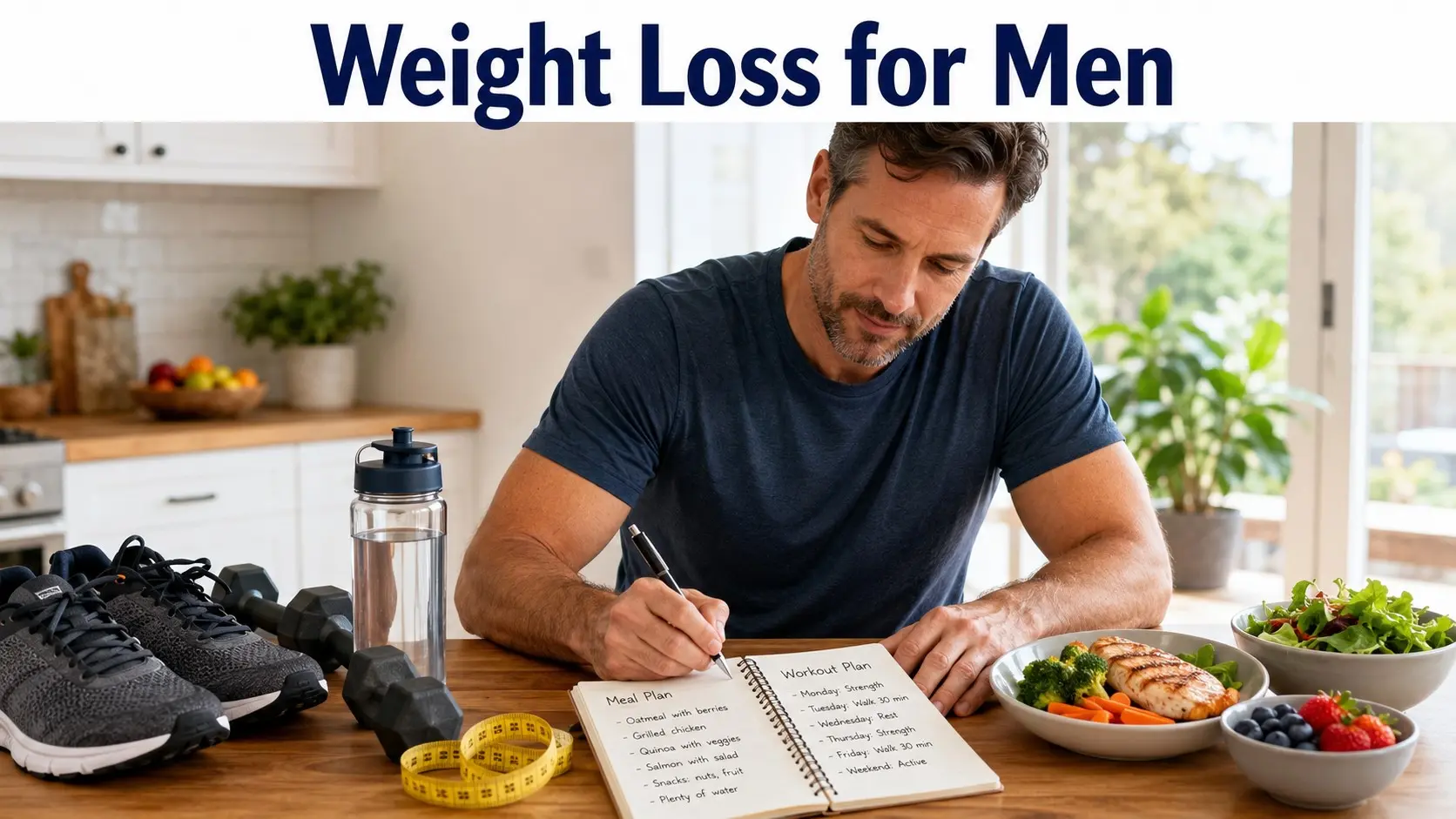
Topic: Weight Loss for Men
Reading Time: About 10 minutes
Content Note: This article is educational. It does not replace medical advice.
Weight Loss for Men can feel hard.
You may eat less.
You may walk more.
You may still see the same number on the scale.
I get why that feels bad.
Many men try to lose weight with a hard diet. Then hunger, work stress, poor sleep, and family life get in the way.
This guide keeps things simple.
You will learn how to eat, move, sleep, and plan in a way that fits real life.
You will also learn what to do if you came from the old Weight Loss for Women article. Most safe weight loss habits are the same. Some needs can differ by sex, age, hormones, muscle mass, health history, and life stage.
Quick answer
The best plan for weight loss for Men is simple.
- Eat mostly whole foods.
- Use a small calorie gap.
- Eat enough protein.
- Lift weights 2 or more days each week.
- Walk most days.
- Sleep well.
- Track what matters.
- Do not chase fast fixes.
This works better than a strict plan you hate.
Why weight loss can be different for men
Many men have more muscle than women.
Muscle uses energy.
This can help some men lose fat when they train and eat well.
But men also face common weight gain traps.
- Large portions
- Late-night eating
- Alcohol calories
- Low daily steps
- Stress eating
- Poor sleep
- Too little protein
- Too much sitting
Weight loss is not about blame.
It is about finding the small habits that move your body in the right direction.
Start with your actual goal
Do not start with a crash diet.
Start with a simple goal.
A good goal sounds like this:
I want to lose weight safely, keep my strength, feel better, and build habits I can keep.
That is better than:
I want to lose weight as fast as possible.
Fast plans can make you tired.
They can also lead to hunger, poor training, and quick weight regain.
Use a small calorie gap
To lose weight, your body needs to use more energy than you consume over time.
That does not mean starving.
A small calorie gap is often easier to keep.
Try this first:
- Keep breakfast simple.
- Use smaller plates.
- Cut liquid calories.
- Eat protein at each meal.
- Add vegetables to lunch and dinner.
- Stop eating when you feel satisfied, not stuffed.
This is the basis of **healthy weight loss**.
Build your plate the easy way
You do not need a perfect diet.
You need a repeatable plate.
Use this simple plate most of the time:
- Half a plate of vegetables or fruit
- One quarter plate of protein
- One quarter plate of carbs
- A small amount of healthy fat
- Water or a low-calorie drink
This can support **fat loss**, fullness, and better food quality.
Protein helps men lose weight better
Protein helps you feel full.
It also helps protect muscle when you lose weight.
Good protein foods include:
- Eggs
- Chicken
- Turkey
- Fish
- Lean meat
- Greek yogurt
- Cottage cheese
- Beans
- Lentils
- Tofu
Try to add protein to each meal.
This makes **protein for weight loss** simple.
Carbs are not the enemy
Many men cut carbs first.
That can work for a short time.
But carbs are not bad by themselves.
Your body can use carbs for walking, lifting, work, and daily energy.
Choose carbs that help you feel full.
- Oats
- Potatoes
- Sweet potatoes
- Brown rice
- Whole grain bread
- Beans
- Fruit
Limit foods that are easy to overeat.
- Cookies
- Cakes
- Chips
- Sugary drinks
- Large fast food meals
This supports a better **calorie deficit** without making food feel boring.
Fibre is your quiet helper
Fibre helps you feel full.
It also supports gut health.
Simple fibre foods include:
- Vegetables
- Fruit
- Beans
- Lentils
- Oats
- Whole grains
- Nuts and seeds
Increase fibre slowly.
Drink water, too.
This helps your stomach adjust.
Strength training matters for men
Weight loss is not only about the scale.
You also want to keep muscle.
This is why **strength training** is key.
You do not need a fancy gym.
Start with basic moves.
- Squat
- Push up
- Row
- Hip hinge
- Carry
- Plank
Train 2 or 3 days each week.
Start light.
Add weight or reps slowly.
This helps with **muscle maintenance** while you lose fat.
Walking is better than many men think
Walking is simple.
It is also easy to repeat.
That matters.
Try this plan:
- Week 1: Walk 10 minutes after one meal.
- Week 2: Walk 15 minutes after one meal.
- Week 3: Walk 20 minutes most days.
- Week 4: Add a longer walk on the weekend.
This supports **walking for weight loss** without beating up your joints.
Cardio helps, but do not overdo it
Cardio can help your heart and fitness.
It can also help you burn energy.
Good choices include:
- Walking
- Cycling
- Swimming
- Rowing
- Jogging
- Stair climbing
If you are new, go slow.
If you have chest pain, heart disease, severe shortness of breath, or dizziness, talk with a healthcare provider before hard workouts.
Sleep can change your hunger
Poor sleep can make weight loss harder.
You may feel hungrier.
You may crave sweet foods.
You may skip exercise.
Try this:
- Sleep at the same time most nights.
- Stop screens before bed if you can.
- Keep the room dark.
- Limit late caffeine.
- Do not use alcohol as a sleep tool.
This supports **sleep and weight loss** in a real way.
Stress eating is not a weakness
Many men eat more when life is hard.
That does not make you weak.
It makes you human.
Use a simple stress plan.
- Walk for 5 minutes.
- Drink water.
- Take 5 slow breaths.
- Eat a planned snack.
- Call a friend.
- Go to bed earlier.
This can help with **stress eating** before it becomes a habit.
What about belly fat?
Many men want to lose belly fat first.
That is normal.
But no food or workout can choose where fat leaves first.
Your body decides that.
The best path is still simple.
- Eat fewer calories than you use.
- Lift weights.
- Walk often.
- Sleep well.
- Limit alcohol.
- Be patient.
This is the safest way to work on **belly fat loss**.
Alcohol can slow progress
Alcohol adds calories.
It can also lower food control.
It may hurt sleep too.
You do not need to be perfect.
But if weight is stuck, check alcohol first.
Try this:
- Drink less often.
- Use smaller servings.
- Drink water between drinks.
- Do not eat large snacks after drinking.
Simple meal ideas for men
Breakfast
- Eggs with vegetables and whole-grain toast
- Greek yogurt with berries and oats
- Oats with protein and fruit
- Beans with eggs and salad
Lunch
- Chicken rice bowl with vegetables
- Tuna potato salad
- Lean meat with rice and salad
- Lentil soup with whole grain bread
Dinner
- Grilled chicken with vegetables
- Fish with potatoes and salad
- Lean beef with vegetables
- Bean bowl with rice and avocado
Snacks
- Fruit
- Boiled eggs
- Yogurt
- Protein smoothie
- Carrots and hummus
- A small handful of nuts
A simple 7-day plan
This is not a strict meal plan.
It is a simple guide.
Day 1
Walk 20 minutes. Eat protein at breakfast. Add vegetables at dinner.
Day 2
Do a simple strength workout. Drink water before lunch. Stop eating when satisfied.
Day 3
Walk after one meal. Plan tomorrow’s breakfast. Sleep 30 minutes earlier.
Day 4
Do a strength workout. Add fruit. Limit sugary drinks.
Day 5
Walk 20 to 30 minutes. Eat a high-protein lunch. Keep dinner simple.
Day 6
Do a longer walk. Prep 2 meals. Choose one treat and enjoy it slowly.
Day 7
Rest or walk easily. Check your week. Pick one habit to improve next week.
How to track progress
Do not only use the scale.
The scale can move up and down.
Track more than one thing.
- Body weight 1 to 3 times each week
- Waist size every 2 weeks
- Steps
- Strength workouts
- Sleep
- Energy
- How clothes fit
This gives a better view of **body composition**.
Common mistakes men make
- Eating too little at first
- Skipping protein
- Doing only cardio
- Ignoring sleep
- Drinking too many calories
- Training too hard too soon
- Quitting after one bad day
You do not need a perfect week.
You need a better average week.
Weight Loss for Women: What to Know
Weight loss for women can feel different from person to person.
Some women lose weight faster at first.
Some lose weight slowly.
Some feel stuck even when they eat well and move more.
This can happen for many reasons.
- Hormone changes
- Menstrual cycle changes
- Pregnancy or breastfeeding history
- Menopause
- PCOS
- Thyroid problems
- Stress
- Poor sleep
- Low muscle mass
- Low iron or low energy
- Medication effects
This does not mean your body is broken.
It means your plan should be kind, realistic, and personal.
For most women, the best place to start is simple.
- Eat more whole foods.
- Add protein to each meal.
- Include vegetables, fruit, and fibre.
- Drink enough water.
- Walk most days.
- Do strength training 2 or more days each week.
- Sleep as well as you can.
- Manage stress without using food as the only comfort.
This supports healthy weight loss, better energy, and better body composition.
Women should be careful with very low-calorie diets, detox plans, extreme fasting, and rapid weight loss promises.
These plans may increase hunger, fatigue, cravings, and weight regain.
If you are pregnant, breastfeeding, trying to get pregnant, managing PCOS, thyroid disease, diabetes, eating disorder history, menopause symptoms, or any long-term health condition, speak with a qualified healthcare professional before starting a weight loss plan.
The goal is not to punish your body.
The goal is to build habits that help you feel stronger, healthier, and more in control.
When to talk to a doctor
Please talk with a qualified healthcare professional before starting a weight loss plan if you have:
- Diabetes
- Heart disease
- Kidney disease
- Liver disease
- High blood pressure
- Sleep apnea
- Eating disorder history
- Unexplained weight loss
- Severe fatigue
- Chest pain
- Dizziness during exercise
- Medication that affects weight or appetite
Also, seek medical care if you lose weight without trying.
My simple rule for men
Do not ask, “What is the fastest plan?”
Ask, “What plan can I repeat?”
That question changes everything.
Good weight loss is not just about eating less.
It is about building a life that makes your goal easier.
Conclusion
Weight Loss for Men works best when the plan is simple, safe, and repeatable.
Start with protein, whole foods, walking, strength training, better sleep, and small steps you can keep.
Do not chase shame or quick fixes.
Choose one habit today.
Do it for 7 days.
Then build from there.
Your next step: save this Weight Loss for Men guide, choose one meal habit and one movement habit, and start today.
Related guides from NextFitLife
This article is part of our Fitness Hub. For more support, visit our Fitness Nutrition & Supplements Guide and Fitness for Beginners Guide.
FAQ
What is the best way for men to lose weight?
The best way is to eat a little less than your body uses, choose whole foods, eat enough protein, walk often, lift weights, sleep well, and stay consistent.
Can men lose belly fat first?
No. You cannot choose where fat leaves first. A steady plan can reduce total body fat over time, and belly fat may go down as part of that process.
How much exercise should men do for weight loss?
A good goal is regular walking or cardio plus strength training at least 2 days each week. Start small if you are new.
Do men need a low carb diet to lose weight?
No. Some men like low carb plans, but they are not required. Weight loss can happen with many eating patterns when calories, food quality, protein, and habits are managed.
Is fast weight loss safe?
Fast weight loss is not always safe or easy to maintain. A slower plan is often better for hunger, energy, muscle, and long-term results.
References and Sources
- Centers for Disease Control and Prevention. Steps for Losing Weight.
- National Institute of Diabetes and Digestive and Kidney Diseases. Choosing a Safe and Successful Weight Loss Program.
- Office of Disease Prevention and Health Promotion. Current Dietary Guidelines for Americans.
- American Heart Association. Recommendations for Physical Activity in Adults.
- MedlinePlus. Benefits of Exercise.

Health & wellness writer with 30+ years of experience in nutrition, fitness, and healthy aging. Founder of NextFitLife.com — evidence-based health guidance.