Published: October 2, 2026
Written and Source Checked by: Adel Galal, Founder and Lead Writer at NextFitLife
Medical Review Status: This article has not been medically reviewed by a doctor, registered dietitian, nephrologist, cardiologist, pharmacist, or other licensed healthcare professional.
If you want more magnesium and potassium, you do not need a special powder. Beans, greens, potatoes, seeds, yogurt, fruit, soy foods, whole grains, and fish can do most of the work.
The part that deserves more attention is safety. More potassium is not right for everyone, especially when kidney function or certain medicines change how the body handles it.
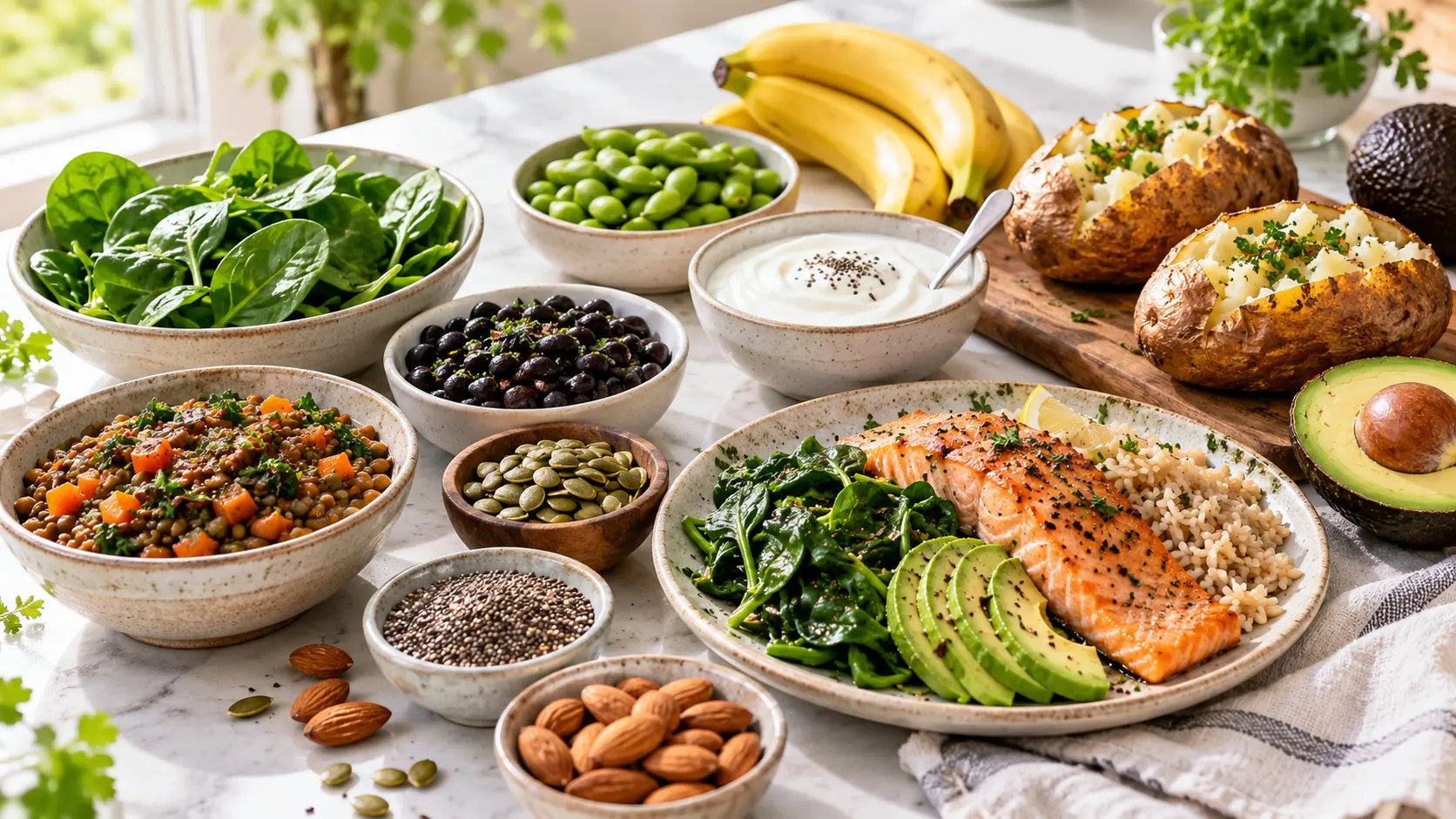
Quick answer: The best magnesium and potassium rich foods include spinach, lentils, beans, potatoes, edamame, yogurt, bananas, avocado, pumpkin seeds, chia seeds, almonds, brown rice, and salmon. Build meals from several of these foods instead of chasing one superfood. People with kidney disease or medicines that raise potassium need personal advice before increasing potassium intake.
For more guidance about minerals, food sources, deficiencies, and supplements, visit the NextFitLife Nutrition and Vitamins Hub.
Important Medical Note: This content is for general educational purposes and does not replace professional medical advice, diagnosis, or treatment. Consult an appropriately qualified healthcare professional for personal medical concerns. This article explains published guidance and does not provide a personal clinical assessment. Always consult qualified medical professionals for diagnosis and treatment of any health condition.
This article provides general nutrition education. It does not prescribe a personal potassium, magnesium, sodium, fluid, or supplement target.
Table of Contents
- What magnesium and potassium do
- How much adults need
- 13 practical food choices
- Pumpkin seeds
- Chia seeds
- Almonds
- Spinach
- Black beans
- Lentils
- Potatoes
- Edamame
- Plain yogurt
- Bananas
- Avocado
- Brown rice
- Salmon
- Best food combinations
- A simple one day eating plan
- Magnesium, potassium, and blood pressure
- The kidney safety warning
- Salt substitutes and potassium chloride
- Magnesium supplement safety
- Muscle cramps and exercise
- Common mistakes
- References and Sources
- Related NextFitLife guides
- About the author
- Frequently asked questions
What Do Magnesium and Potassium Do?
Magnesium and potassium are minerals your body needs every day.
Magnesium takes part in hundreds of enzyme reactions. It supports normal muscle function, nerve function, energy production, blood glucose control, bone health, and normal heart rhythm.
Potassium is an electrolyte. It helps nerves send signals and muscles contract. It also helps control fluid balance inside cells.
Your heart uses both minerals.
That does not mean eating extra amounts will make a healthy heart stronger. The goal is to get enough, not as much as possible.
If you want a wider guide to food based electrolytes, read 21 Smart Electrolyte Rich Foods for Better Hydration.
How Much Magnesium Do Adults Need?
Magnesium needs change with age and sex.
| Adult Group | Magnesium Per Day |
|---|---|
| Men age 19 to 30 | 400 mg |
| Men age 31 and older | 420 mg |
| Women age 19 to 30 | 310 mg |
| Women age 31 and older | 320 mg |
| Pregnancy | Usually 350 to 360 mg for adults, depending on age |
These are Recommended Dietary Allowances from the National Institutes of Health.
Magnesium rich foods include leafy greens, beans, nuts, seeds, soy foods, and whole grains.
How Much Potassium Do Adults Need?
The current adult Adequate Intake for potassium is:
- Men age 19 and older: 3,400 mg per day
- Women age 19 and older: 2,600 mg per day
- Pregnancy: 2,900 mg per day for adult women
- Breastfeeding: 2,800 mg per day for adult women
These values are for healthy people. They do not apply in the same way when kidney disease or medicine reduces potassium removal from the body.
Why Does a Food Label Say 4,700 mg of Potassium?
This confuses a lot of people.
The U.S. Daily Value used on food labels is 4,700 mg of potassium. The current adult Adequate Intakes are 3,400 mg for men and 2,600 mg for women.
They are different reference systems.
The Daily Value helps compare food labels. The Adequate Intake is used to describe nutrient needs for healthy people by age, sex, and life stage.
You do not need to force every day to exactly 4,700 mg because you saw that number on a package.
13 Practical Magnesium and Potassium Rich Foods
The best list is not the one with the largest numbers.
I would choose foods that are easy to find, easy to combine, and useful in normal meals.
1. Pumpkin Seeds
If magnesium is your main concern, pumpkin seeds deserve a place near the top.
One ounce of roasted pumpkin seeds provides about 156 mg of magnesium according to the NIH. That is a large amount from a small serving.
Seeds also contribute other minerals, healthy fats, and protein.
Add a small portion to yogurt, oatmeal, salads, or cooked vegetables. There is no need to eat a huge bowl.
2. Chia Seeds
One ounce of chia seeds provides about 111 mg of magnesium.
They also provide fiber and plant based fat.
Mix them into yogurt or oats, or use them in a chia pudding.
Dry chia seeds absorb a lot of liquid, so use them in food or drink as intended rather than swallowing large spoonfuls dry.
3. Almonds
One ounce of dry roasted almonds provides about 80 mg of magnesium.
Almonds also give you protein, unsaturated fat, and some potassium.
A small handful works well as a snack or topping. Nuts are energy dense, so a normal portion is enough.
4. Spinach
Spinach is one of the better examples of a food that contributes both minerals.
One half cup of boiled spinach provides about 78 mg of magnesium. Two cups of raw spinach provide about 334 mg of potassium in the NIH food tables.
The servings differ because cooked leaves shrink a lot.
That is why cooked spinach can pack more leaves into a small bowl.
Add it to eggs, lentils, beans, pasta, soups, curries, or a baked potato.
5. Black Beans
Beans belong in this article because they do more than provide one mineral.
One half cup of cooked black beans provides about 60 mg of magnesium.
Beans are also useful potassium food sources, while giving you fiber and plant protein.
Use them in rice bowls, chili, salads, soups, wraps, or baked potatoes.
Canned beans are fine. If sodium matters to you, compare labels and rinse them before eating.
6. Lentils
One cup of cooked lentils provides about 731 mg of potassium in the NIH table.
That is more potassium than one medium banana.
Lentils also provide magnesium, protein, and fiber.
This is why I prefer meals over nutrient trivia. A bowl of lentil soup can contribute several useful nutrients at once.
7. Baked Potatoes
Potatoes are one of the most useful high potassium foods.
The NIH table lists about 610 mg of potassium in the flesh of one medium baked potato.
A baked potato with skin also provides magnesium. One 3.5 ounce serving provides about 43 mg of magnesium.
The numbers will change with potato size and whether skin is included.
Use the potato as a meal base. Add beans, plain yogurt, vegetables, fish, eggs, or another protein food.
8. Edamame
Edamame gives you protein and useful minerals in the same food.
One half cup of cooked, shelled edamame provides about 50 mg of magnesium.
Soy foods also contribute potassium.
Add edamame to salads, rice bowls, stir fries, soups, or eat a measured portion as a snack.
9. Plain Yogurt
Yogurt does not look like an electrolyte food, but it contributes several minerals.
Eight ounces of plain low fat yogurt provide about 42 mg of magnesium in the NIH magnesium table.
Yogurt also provides potassium and calcium. The amount changes by brand and style.
Plain yogurt is especially useful because it combines easily with banana, pumpkin seeds, chia seeds, oats, or fruit.
10. Bananas
Bananas are useful. They are simply not the only potassium food.
One medium banana provides about 422 mg of potassium and 32 mg of magnesium.
That makes a banana a good potassium snack but only a modest magnesium source.
Pair it with almonds, yogurt, pumpkin seeds, peanut butter, or chia if you want more magnesium too.
11. Avocado
Avocado provides both potassium and magnesium along with fiber and unsaturated fat.
It works well with beans, whole grain toast, eggs, salads, and grain bowls.
There is nothing magical about avocado, though. If it is expensive where you live, beans, potatoes, greens, yogurt, and seeds can still build an excellent mineral rich diet.
12. Brown Rice
Whole grains can quietly add magnesium across the day.
One half cup of cooked brown rice provides about 42 mg of magnesium.
The NIH potassium table lists about 154 mg of potassium in one cup of cooked medium grain brown rice.
Brown rice is not a potassium powerhouse by itself. Its real strength is that it pairs easily with beans, lentils, vegetables, tofu, fish, or yogurt based sauces.
Refining grains can remove magnesium rich parts of the grain, which is one reason whole grains can provide more magnesium than refined versions.
13. Salmon
Salmon gives you protein plus both minerals.
Three ounces of cooked Atlantic salmon provide about 326 mg of potassium and 26 mg of magnesium in the NIH tables.
It is not a top magnesium food, but it fits well into a meal that includes potatoes, leafy greens, beans, or brown rice.
13 Foods at a Glance
| No. | Food | Main Strength | Easy Way to Use It |
|---|---|---|---|
| 1 | Pumpkin seeds | Excellent magnesium source | Yogurt, oats, salads |
| 2 | Chia seeds | Magnesium and fiber | Oats, yogurt, pudding |
| 3 | Almonds | Magnesium plus healthy fat | Snack or topping |
| 4 | Spinach | Strong in both minerals | Eggs, soup, beans |
| 5 | Black beans | Magnesium, potassium, fiber | Bowls, soups, wraps |
| 6 | Lentils | High potassium plus plant protein | Soup, curry, salad |
| 7 | Baked potato | Strong potassium source | Meal base with beans or fish |
| 8 | Edamame | Magnesium and protein | Bowls, salads, snacks |
| 9 | Plain yogurt | Several minerals plus protein | Breakfast or snack |
| 10 | Banana | Convenient potassium | Snack with nuts or yogurt |
| 11 | Avocado | Potassium, magnesium, healthy fat | Toast, salad, beans |
| 12 | Brown rice | Useful magnesium base | Beans, vegetables, fish |
| 13 | Salmon | Potassium plus protein | Potato, rice, vegetables |
Food data note: Mineral values change with variety, cooking method, brand, serving weight, and whether a food is measured raw or cooked. Use nutrition numbers as practical guides rather than treating every potato, banana, or bowl of yogurt as identical.
What Are the Best Food Combinations?
This is where the list becomes useful.
One food does not need to provide everything.
Yogurt, Banana, and Pumpkin Seeds
The banana brings potassium. Pumpkin seeds add a large amount of magnesium. Yogurt contributes potassium, magnesium, calcium, and protein.
That is a much better mineral combination than eating a banana alone and calling it an electrolyte meal.
Lentils and Spinach
Lentils and cooked spinach work well in soup, curry, or a warm bowl.
You get potassium and magnesium along with fiber and plant protein.
Potato, Beans, and Greens
A baked potato topped with black beans and spinach is simple, filling, and mineral rich.
Add plain yogurt or another suitable protein if you like.
Salmon, Potato, and Spinach
This meal combines protein with several useful sources of potassium and magnesium.
No electrolyte powder is required.
Brown Rice, Edamame, and Vegetables
Brown rice provides magnesium, while edamame adds protein and more minerals.
Add spinach, broccoli, peppers, or another vegetable you enjoy.
For more examples of mineral rich everyday foods, see the NextFitLife Top 20 Healthy Foods Guide.
What Does a Magnesium and Potassium Rich Day Look Like?
You do not need to eat all 13 foods.
This is one simple example.
| Meal | Food Idea | Main Mineral Sources |
|---|---|---|
| Breakfast | Plain yogurt, banana, oats, and pumpkin seeds | Pumpkin seeds, banana, yogurt |
| Lunch | Lentil soup with spinach and whole grain bread | Lentils, spinach, whole grains |
| Snack | Fruit with a small handful of almonds | Almonds and fruit |
| Dinner | Salmon with baked potato and cooked greens | Potato, salmon, greens |
The point is not to copy this menu exactly.
Build a pattern that uses foods you enjoy, can afford, and can keep eating.
Can Magnesium and Potassium Rich Foods Help Blood Pressure?
A diet rich in vegetables, fruit, beans, nuts, seeds, whole grains, and suitable dairy foods fits well with the DASH eating pattern.
DASH was designed to support healthier blood pressure.
It provides plenty of potassium, magnesium, calcium, fiber, and protein while keeping sodium lower.
But do not give magnesium or potassium all the credit.
The DASH diet changes many things at once. It changes sodium, food quality, fiber, calcium, potassium, magnesium, fat quality, and the overall eating pattern.
This matters because a magnesium capsule is not the same thing as eating a DASH style diet.
Read the full NextFitLife DASH Diet Guide if blood pressure is your main goal.
The Most Important Safety Note: More Potassium Is Not Safe for Everyone
Do not deliberately increase potassium without personal medical advice if you have kidney disease, high blood potassium, certain heart conditions, adrenal disease, or take medicine that reduces potassium removal.
Healthy kidneys normally remove extra potassium through urine.
That changes when kidney function is poor.
A person with chronic kidney disease may need a personal potassium target based on kidney function, blood tests, medicines, urine output, and treatment.
Even foods that are healthy for most people may need smaller portions.
This can include:
- Bananas
- Potatoes
- Tomatoes
- Beans
- Lentils
- Avocado
- Oranges
- Dried fruit
- Milk and yogurt
- Some salt substitutes
That does not mean every person with kidney disease must avoid all of these foods.
The correct diet depends on the person.
If kidney disease affects your diet, read the NextFitLife Diet for Kidney Disease Guide.
Which Medicines Can Raise Potassium?
Some medicines reduce potassium loss in urine.
Examples include certain ACE inhibitors, angiotensin receptor blockers, and potassium sparing diuretics.
These medicines are useful and commonly prescribed. Do not stop them because of this article.
The important step is to ask your healthcare professional whether you need potassium monitoring or a change in food or supplement intake.
Spironolactone is one example of a potassium sparing medicine.
Some other diuretics can have the opposite effect and lower potassium.
This is why copying somebody else's potassium plan is a bad idea.
Why Are Salt Substitutes a Potassium Issue?
Many reduced sodium salt substitutes replace some or all sodium chloride with potassium chloride.
That can add a surprisingly large amount of potassium.
The NIH reports that potassium in these products can range from about 440 mg to 2,800 mg per teaspoon.
Someone with impaired potassium removal could get a large dose without thinking of the product as a supplement.
NIDDK also advises people who need potassium control to check ingredient lists for potassium chloride.
Label check: If you have been told to control potassium, do not look only at the Nutrition Facts box. Check the ingredient list for potassium chloride too.
Is Magnesium From Food Safer Than Magnesium Supplements?
For healthy people, getting too much magnesium from ordinary food is not the usual problem.
The kidneys remove extra magnesium.
Supplements are different.
The adult upper limit of 350 mg per day applies to magnesium from supplements and medications. It does not include magnesium naturally found in food.
High supplemental doses can cause diarrhea, nausea, and stomach cramps.
Very large doses can be dangerous.
Kidney failure raises the risk because magnesium cannot be removed normally.
For a deeper look at magnesium foods and supplement safety, read Zinc and Magnesium Benefits: Food, Supplements and Safety.
Should You Take Potassium Supplements?
Do not start potassium supplements simply because you want more electrolytes.
Potassium affects muscles and the heart, and both too little and too much can become dangerous.
A supplement can make sense when a clinician identifies a real need, but the dose should match the reason.
People with kidney disease or medicines that raise potassium need particular care.
Food is usually the better starting point for healthy people who simply want a better diet.
Do Muscle Cramps Mean You Need Magnesium or Potassium?
No.
A cramp does not tell you which mineral is low.
Magnesium deficiency can cause muscle contractions and cramps when deficiency becomes more severe. Potassium problems can also affect muscle function.
But cramps have many other causes.
Training load, dehydration, nerve problems, medicines, circulation, pregnancy, illness, and muscle fatigue can all enter the picture.
Do not diagnose a deficiency from one symptom.
Persistent, severe, or unusual cramps deserve proper assessment.
Do You Need Extra Electrolytes After Exercise?
Not after every workout.
Most people doing ordinary exercise can use water and normal meals for everyday hydration and mineral intake.
The situation changes after long exercise, heavy sweating, very hot conditions, or illness with major fluid loss.
Sweat also contains sodium and chloride, so simply taking more potassium and magnesium is not a complete replacement plan.
See the NextFitLife Electrolyte Rich Foods Guide for a fuller breakdown.
Common Mistakes to Avoid
Thinking a Banana Is the Best Source of Everything
A banana is a handy potassium food.
It is not a major magnesium source.
Pair it with seeds, nuts, yogurt, oats, or peanut butter if you want a stronger magnesium meal.
Ignoring Serving Size
Nutrition charts become misleading when one food is measured by one ounce and another by two cups.
Look at the portion before comparing numbers.
Buying Supplements Before Fixing Meals
If your meals contain few vegetables, beans, whole grains, nuts, seeds, fruit, or suitable dairy foods, start there.
A capsule does not repair an empty food pattern.
Assuming Low Sodium Salt Is Safe for Everyone
A product can contain less sodium because it contains more potassium chloride.
That may be a problem when potassium must be limited.
Trying to Treat Blood Pressure With One Mineral
Blood pressure care is bigger than potassium or magnesium.
Food pattern, sodium, body weight, activity, sleep, alcohol, medicine, kidney health, and other factors can matter.
Assuming Healthy Food Is Unlimited Food
Dried fruit, seeds, nuts, avocado, and many other healthy foods are concentrated.
Normal portions still matter.
How to Shop for These Foods
You do not need to buy all 13 choices.
Pick foods that combine well.
A Simple Shopping Basket
- Spinach
- Lentils
- Black beans
- Potatoes
- Bananas
- Plain yogurt
- Pumpkin seeds
- Almonds
- Brown rice
- Salmon or another suitable protein
That is enough to make several breakfasts, lunches, dinners, and snacks.
Healthy eating becomes easier when the foods work together instead of sitting in the kitchen waiting for a special recipe.
Conclusion
Magnesium and potassium rich foods do not need to be exotic. Spinach, beans, lentils, potatoes, seeds, yogurt, bananas, soy foods, whole grains, avocado, nuts, and fish can cover a lot of ground.
My recommendation is simple: build meals instead of chasing a single mineral champion. Add beans or lentils, a vegetable, a whole food carbohydrate, and a small portion of nuts or seeds across the day.
If you have kidney disease, abnormal potassium tests, heart failure, or take medicine that affects potassium, ask for your personal target before deliberately increasing high potassium foods or using potassium based salt substitutes.
References and Sources
- National Institutes of Health, Office of Dietary Supplements. Magnesium Fact Sheet for Health Professionals.
https://ods.od.nih.gov/factsheets/Magnesium-HealthProfessional/ - National Institutes of Health, Office of Dietary Supplements. Potassium Fact Sheet for Health Professionals.
https://ods.od.nih.gov/factsheets/Potassium-HealthProfessional/ - National Heart, Lung, and Blood Institute. DASH Eating Plan.
Updated February 25, 2026.
https://www.nhlbi.nih.gov/health/dash-eating-plan - National Institute of Diabetes and Digestive and Kidney Diseases. Healthy Eating for Adults With Chronic Kidney Disease.
https://www.niddk.nih.gov/health-information/kidney-disease/chronic-kidney-disease-ckd/healthy-eating-adults-chronic-kidney-disease - National Kidney Foundation. Potassium and Kidney Health.
https://www.kidney.org/kidney-topics/potassium
Continue Reading on NextFitLife
Use these related guides for more help with minerals, electrolytes, healthy eating, blood pressure, and kidney safe nutrition:
- Nutrition and Vitamins Hub
- 21 Smart Electrolyte Rich Foods for Better Hydration
- Zinc and Magnesium Benefits: Food, Supplements and Safety
- DASH Diet: A Safe Guide to Lower Blood Pressure
- Diet for Kidney Disease: Foods and Safety Guide
- Top 20 Healthy Foods: Nutrient Rich Choices
About the Author
Adel Galal is the founder and lead writer of NextFitLife. His personal interest in health, fitness, nutrition, sleep, wellness, and healthy aging spans more than 30 years, and his health and wellness writing experience spans more than 15 years.
His work focuses on comparing nutrition and health claims with recognized medical, government, and scientific sources, then explaining the findings in clear, practical language.
Adel is not a physician, registered dietitian, pharmacist, nephrologist, cardiologist, or other licensed healthcare professional. NextFitLife content is educational and does not replace medical or nutrition care.
Learn more about Adel Galal, NextFitLife, and the site's editorial approach on the About Us page.
Frequently Asked Questions
What foods are high in both magnesium and potassium?
Useful choices include spinach, beans, lentils, potatoes, edamame, avocado, yogurt, bananas, seeds, nuts, whole grains, and some fish. Foods vary in how much of each mineral they provide, so combining several foods works better than relying on one.
What is the best food for magnesium and potassium?
There is no single best food. Spinach, beans, lentils, potatoes, and soy foods are especially practical because they contribute both minerals and fit easily into meals.
Is a banana high in magnesium and potassium?
A medium banana provides about 422 mg of potassium and 32 mg of magnesium. It is a useful potassium food but only a modest magnesium source.
What food has more potassium than a banana?
Several foods do. One cup of cooked lentils provides about 731 mg of potassium, while a medium baked potato contains about 610 mg in the flesh alone according to NIH food tables.
Which food is very high in magnesium?
Pumpkin seeds are one of the strongest common food sources. One ounce of roasted pumpkin seeds provides about 156 mg of magnesium.
Can I get enough magnesium from food?
Many people can meet their needs through foods such as seeds, nuts, beans, leafy greens, whole grains, soy foods, and suitable dairy foods. Individual needs differ, and some health conditions can affect absorption or losses.
Should I take magnesium and potassium together?
Do not start supplements simply because both are electrolytes. Supplements should address a real need. Potassium supplements require particular care because kidney disease and some medicines can cause potassium to build up.
Can kidney patients eat magnesium and potassium rich foods?
Sometimes, but the amount may need to change. Kidney disease can reduce potassium removal, while dialysis and different stages of kidney disease have different nutrition needs. Follow a personal plan from a kidney professional or renal dietitian.
Can salt substitutes raise potassium?
Yes. Many salt substitutes use potassium chloride. NIH reports that some products provide hundreds or even thousands of milligrams of potassium per teaspoon.
Is magnesium from food dangerous?
Too much magnesium from food is not usually a concern for healthy people because the kidneys remove extra amounts. The adult upper limit of 350 mg applies to supplemental magnesium and magnesium from medications, not magnesium naturally found in food.
Do muscle cramps mean I need potassium?
No. Muscle cramps have many causes. Potassium or magnesium problems can affect muscle function, but cramps alone cannot tell you which nutrient is low.
Do I need electrolyte drinks if I eat these foods?
Most people do not need an electrolyte drink after an ordinary day or short workout. Food and water often cover everyday needs. Long exercise, heavy sweating, heat, vomiting, or diarrhea can create different replacement needs.

Health & wellness writer with 30+ years of experience in nutrition, fitness, and healthy aging. Founder of NextFitLife.com — evidence-based health guidance.