Original publication: September 25, 2026
Last updated: September 25, 2026
Next review: September 2027, or sooner if major selenium or nutrition guidance changes
Written and source checked by: Adel Galal, Founder and Lead Writer at NextFitLife
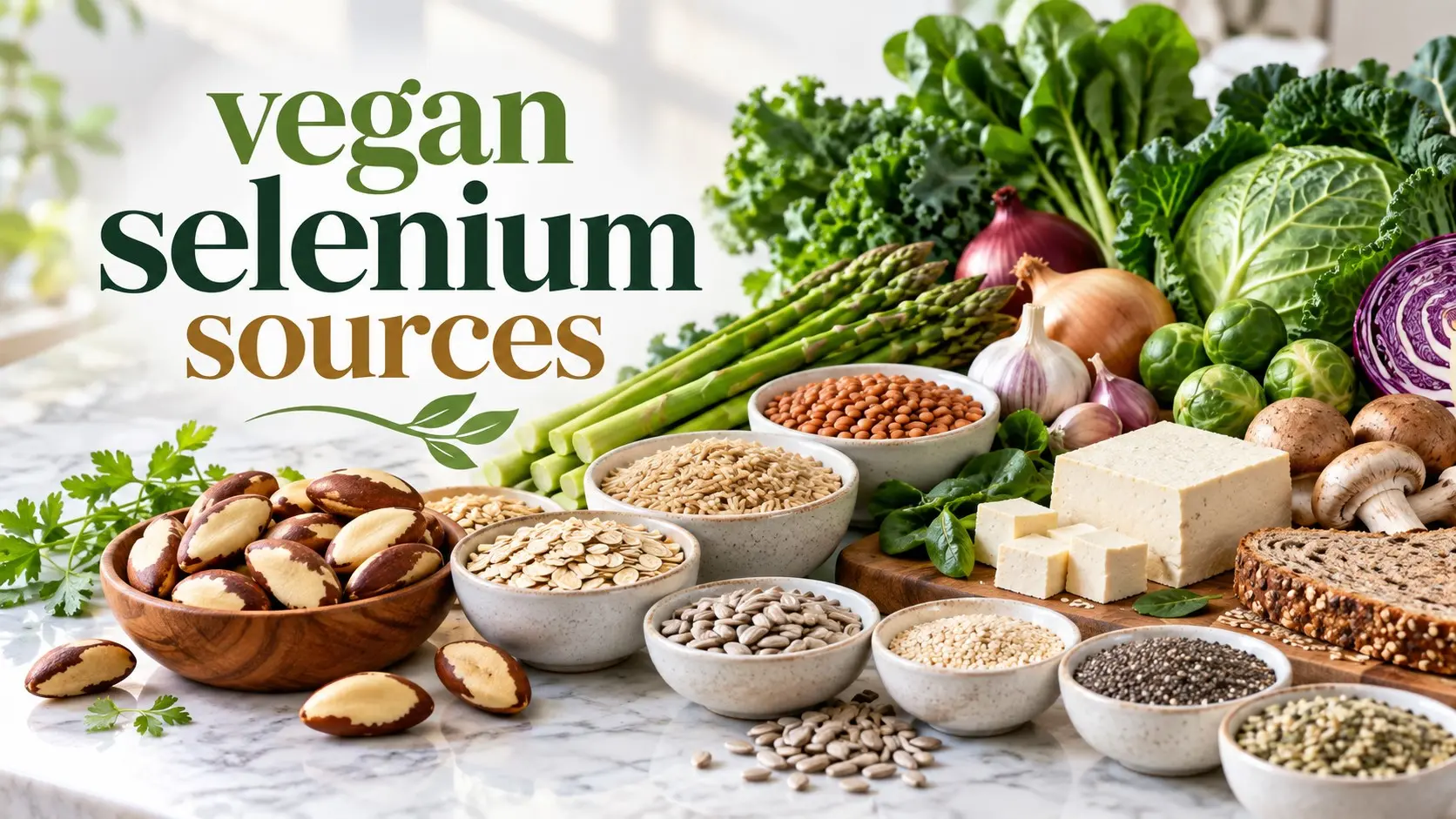
The best vegan selenium sources include Brazil nuts, whole grains, oats, beans, lentils, tofu, mushrooms, seeds, and several vegetables.
There is one detail that matters more than ranking those foods from first to thirteenth: selenium in plants can change greatly depending on the soil in which the food was grown.
That makes selenium different from nutrients such as protein, where the amount in a serving is usually more predictable.
A Brazil nut can be extremely rich in selenium. Brown rice may provide a moderate amount. Lentils may contribute a smaller amount. Yet none of those plant foods should be treated like a precisely measured selenium tablet.
The smarter goal is to build several useful plant sources into your normal diet while avoiding unnecessary high dose intake.
Medical notice: This content is for general educational purposes and does not replace professional medical advice, diagnosis, or treatment. Consult an appropriately qualified healthcare professional for personal medical concerns. This article explains published guidance and does not provide a personal clinical assessment. Always consult qualified medical professionals for diagnosis and treatment of any health condition.
Quick Answer: What Are the Best Vegan Selenium Sources?
Useful vegan selenium sources include Brazil nuts, oats, brown rice, whole grain bread and pasta, beans, lentils, tofu, mushrooms, sunflower seeds, sesame, chia, hemp seeds, and several vegetables.
Brazil nuts contain much more selenium than most plant foods, but their selenium content varies widely. Plant selenium also changes with soil and geographic origin.
Most U.S. adults need 55 micrograms of selenium per day. Pregnant adults need 60 micrograms and breastfeeding adults need 70 micrograms.
Think in terms of a varied weekly diet rather than trying to hit an exact selenium number with one food every morning.
For broader guidance on minerals, vitamins, food sources, deficiencies, and supplement safety, visit the NextFitLife Nutrition and Vitamins Guide.
Table of Contents
- Why selenium matters
- How much selenium adults need
- Why plant selenium varies
- 13 smart vegan selenium sources
- How much selenium is in Brazil nuts
- Can vegans get enough without Brazil nuts?
- A simple food first selenium plan
- Selenium and thyroid health
- Selenium and immune function
- When supplements may make sense
- Signs of too much selenium
- Who should pay closer attention
- Common selenium mistakes
- References and Sources
- Continue Reading on NextFitLife
- About the Author
- Frequently Asked Questions
Why Does Your Body Need Selenium?
Selenium is an essential trace mineral. You need only a small amount, but your body still needs a reliable supply.
Selenium forms part of proteins called selenoproteins.
According to the National Institutes of Health Office of Dietary Supplements, these proteins take part in thyroid hormone metabolism, DNA production, reproduction, protection from oxidative damage, and normal responses to infection.
That does not make selenium a miracle antioxidant or a cure for disease.
It means your body needs enough selenium for normal physiology.
How Much Selenium Do Adults Need?
For most adults in the United States, the Recommended Dietary Allowance is 55 micrograms per day.
| Life Stage | Recommended Selenium | Practical Note |
|---|---|---|
| Adults | 55 mcg per day | Applies to most healthy adults |
| Pregnancy | 60 mcg per day | Needs rise slightly |
| Breastfeeding | 70 mcg per day | Needs rise further during lactation |
These are U.S. reference values.
Other countries sometimes use somewhat different targets. The Vegan Society, for example, cites UK reference intakes of 60 micrograms for adult women and 75 micrograms for adult men.
That does not mean one system is wrong.
National authorities can use different methods when they set nutrient reference values.
Why Is Selenium in Plant Foods So Hard to Predict?
This is the part of plant based selenium that deserves more attention.
Plants absorb selenium from the soil.
If the soil contains plenty of available selenium, the plant may contain more. If the soil contains very little, the same type of plant can contain much less.
NIH notes that soil pH, organic matter, the chemical form of selenium, and geographic location can all affect the selenium content of plant foods.
Germany's Federal Institute for Risk Assessment makes the same point and notes that selenium concentrations in European soils are often relatively low.
So a nutrition database can tell you what one analyzed sample contained.
It cannot promise that every bag of lentils, every loaf of bread, or every Brazil nut contains exactly that amount.
Practical takeaway: Treat plant selenium values as useful estimates. Build variety into the diet instead of trying to dose selenium precisely from one plant food.
13 Smart Vegan Selenium Sources
1. Brazil Nuts
Brazil nuts are by far the most concentrated item on this list.
NIH reports an average of about 544 micrograms per ounce, which is roughly six to eight nuts in the U.S. reference data.
That amount is already above the U.S. adult upper limit of 400 micrograms for an entire day.
There is another complication: Brazil nut selenium varies enormously from nut to nut and region to region.
This is why I would not turn a large handful of Brazil nuts into a daily health habit.
A small amount can contribute plenty.
2. Oats
One cup of cooked oatmeal contains around 13 micrograms in the NIH reference table.
Oats are useful because they fit naturally into breakfast and also provide fiber.
Try oats with fruit, chia seeds, sunflower seeds, or fortified plant milk.
The exact selenium amount still depends partly on where the grain was grown.
3. Whole Grain Pasta
The NIH food table lists one cup of cooked spaghetti at around 33 micrograms selenium.
That makes grain products potentially meaningful contributors.
Still, do not treat 33 micrograms as a universal pasta value. Grain selenium can change sharply with soil conditions and origin.
4. Brown Rice
A cup of cooked long grain brown rice provides around 12 micrograms in the U.S. reference data.
Brown rice works well with beans, lentils, tofu, vegetables, mushrooms, or tahini based sauces.
That lets several moderate selenium rich vegan foods contribute in the same meal.
5. Whole Wheat Bread
One slice of whole wheat bread is listed at about 8 micrograms selenium in NIH data.
Again, origin matters.
The Vegan Society specifically notes that bread made from wheat grown in selenium rich areas, including some Canadian wheat, can contribute more selenium than grain grown in lower selenium soils.
6. Beans
Baked beans provide around 13 micrograms per cup in the NIH reference table.
Other beans can also contribute selenium.
The bigger nutritional advantage is that beans bring protein and fiber at the same time.
Black beans, kidney beans, white beans, and chickpeas can all be useful parts of a varied plant based diet.
7. Lentils
A cup of cooked lentils provides about 6 micrograms in the NIH food table.
That sounds modest compared with Brazil nuts.
It is still useful.
Nutrition does not require every food to be spectacular.
Lentils also provide plant protein, fiber, folate, iron, and other minerals.
8. Tofu
Tofu appears on vegan nutrition resources as a useful plant based selenium contributor.
The exact amount varies enough that I would not assign every block one universal number.
Tofu earns a place here because it combines selenium contribution with high quality plant protein and can fit into stir cooked dishes, curries, wraps, salads, bowls, and soups.
If you follow a vegan diet regularly, the NextFitLife B12 Rich Foods Guide is also worth reading because selenium and vitamin B12 require very different planning strategies.
9. Portobello Mushrooms
Half a cup of grilled portobello mushrooms contains about 13 micrograms selenium in NIH reference data.
Mushrooms are simple to add to rice, pasta, tofu, soups, grain bowls, or sandwiches.
Like other plant foods, their mineral content can vary.
10. Sunflower Seeds
Sunflower seeds are listed by the Vegan Society as one of the plant foods that can contribute selenium.
They are easy to sprinkle over oats, salad, soup, plant yogurt, or whole grain dishes.
They also provide vitamin E, healthy fats, and other minerals.
11. Sesame Seeds and Tahini
Sesame seeds appear in European vegan nutrition guidance as another plant selenium source.
Tahini is simply ground sesame, which makes it easy to use in real meals.
Add it to hummus, salad dressing, grain bowls, roasted vegetables, or sauces.
12. Chia and Hemp Seeds
Chia and hemp seeds are additional plant contributors listed in vegan nutrition resources.
Neither should be treated as a complete selenium solution.
They work best as part of a diet that also contains grains, legumes, tofu, vegetables, and other seeds.
13. Cabbage, Asparagus, Garlic, Onions, and Other Vegetables
Germany's Federal Institute for Risk Assessment highlights cabbage family vegetables, asparagus, pulses, garlic, and onions among plant foods that can contribute selenium.
Vegetables rarely compete with Brazil nuts for concentration.
That does not make them unimportant.
You are eating them for a combination of fiber, vitamins, minerals, and plant compounds, with selenium as one part of the package.
Which Vegan Foods Provide the Most Selenium?
Here is the useful version of the numbers.
| Food | Reference Serving | Reference Selenium | How to Use the Number |
|---|---|---|---|
| Brazil nuts | 1 oz, about 6 to 8 nuts | About 544 mcg | Extremely rich and highly variable. Do not use large servings every day. |
| Cooked spaghetti | 1 cup | About 33 mcg | Potentially useful, but grain origin can change the value. |
| Oatmeal | 1 cup cooked | About 13 mcg | Useful everyday contribution. |
| Baked beans | 1 cup | About 13 mcg | Adds protein and fiber too. |
| Portobello mushrooms | 1/2 cup grilled | About 13 mcg | Easy savory food source. |
| Brown rice | 1 cup cooked | About 12 mcg | Moderate contribution that combines well with legumes and tofu. |
| Whole wheat bread | 1 slice | About 8 mcg | Highly dependent on grain origin. |
| Lentils | 1 cup cooked | About 6 mcg | Small to moderate contribution with strong overall nutrition value. |
| Cooked spinach | 1/2 cup | About 5 mcg | Useful as one small contributor in a varied diet. |
Do not read these values as guarantees.
The numbers come from reference food composition data. NIH specifically states that plant selenium varies with geography and soil.
Are Brazil Nuts the Best Vegan Selenium Source?
If “best” means most concentrated, yes.
If “best” means most predictable, no.
That distinction matters.
NIH reports that Brazil nuts commonly contain around 68 to 91 micrograms of selenium per nut, while analyses have found considerable variation.
One nut can therefore contribute roughly an entire adult day's selenium in some cases.
Another nut from a different location may contain a very different amount.
I would not count Brazil nuts as if they were precisely manufactured tablets.
Practical rule: Brazil nuts are concentrated selenium foods. Moderate use makes more sense than eating a large handful every day.
Can You Get Enough Selenium Without Brazil Nuts?
Yes, depending on your diet and where your food was grown.
Grains, beans, lentils, tofu, mushrooms, seeds, and vegetables can all contribute.
A person eating grain from a higher selenium region may obtain considerably more than a person eating mostly locally grown plant foods from a low selenium region.
That geographic uncertainty is why there is no single answer that fits every vegan worldwide.
The Vegan Society gives special attention to this issue for people in Europe, where soil selenium can be lower.
For broader plant based nutrition, the NextFitLife Nutrition Tips Guide covers beans, lentils, whole grains, nuts, seeds, vegetables, fruit, and plant protein in the wider diet.
A Simple Food First Selenium Day
You do not need to eat all thirteen foods.
Here is a practical pattern.
| Meal | Example | Selenium Contributors |
|---|---|---|
| Breakfast | Oats with chia or sunflower seeds and fruit | Oats and seeds |
| Lunch | Lentil soup with whole grain bread and cabbage salad | Lentils, grain, cabbage |
| Dinner | Tofu with brown rice, mushrooms, broccoli, and tahini sauce | Tofu, rice, mushrooms, sesame |
| Optional concentrated source | A small amount of Brazil nut rather than a large handful | Brazil nut |
This example is not a medical meal plan and does not promise an exact selenium total because the plant values vary.
That uncertainty is the point.
Why Variety Beats Chasing One Selenium Superfood
A varied vegan diet solves more problems than a selenium specific diet.
Oats give you fiber.
Beans and lentils provide protein and iron.
Tofu provides protein and can provide calcium when calcium set.
Seeds supply healthy fats and several minerals.
Vegetables add fiber, vitamins, minerals, and plant compounds.
This is why I would rather see several moderate selenium rich foods in a normal week than one food being treated like medicine.
The NextFitLife Healthy Foods Guide gives more examples of building nutrition around food variety rather than one supposed superfood.
Does Selenium Support Thyroid Health?
Yes, but that statement needs boundaries.
Selenium is part of enzymes involved in selenium and thyroid health, including processes that help regulate thyroid hormone metabolism.
This does not mean that extra selenium treats every thyroid problem.
NIH notes that supplemental selenium does not keep increasing important selenium dependent proteins once a person's selenium status is already adequate.
Clinical trials have also not established high dose selenium as a general treatment for thyroid disease.
If you have hypothyroidism, Hashimoto disease, hyperthyroidism, thyroid nodules, or another diagnosed thyroid problem, do not replace medical treatment with selenium foods or supplements.
Does Selenium Boost Immunity?
Selenium is required for normal immune function.
That is different from saying extra selenium gives you a stronger immune system.
Selenoproteins contribute to normal protection from oxidative damage and to immune responses.
Deficiency is undesirable.
Once selenium status is adequate, more does not automatically mean better immune protection.
This is the same principle I use throughout the Nutrition and Vitamins Guide: correct a real nutritional gap instead of assuming that high doses create extra health.
Do Vegans Need a Selenium Supplement?
Not automatically.
This is where geography matters again.
NIH says most people in the United States consume adequate selenium, although people following vegetarian or vegan dietary patterns may have lower intakes.
Someone eating a varied diet that includes grain grown in selenium rich regions may do well without a dedicated supplement.
A vegan relying heavily on locally grown foods from a low selenium area has a different situation.
The Vegan Society therefore takes a more cautious position for people living in areas where dietary selenium can be less reliable.
A selenium supplement may make sense when intake is difficult to predict, but that does not justify using a high dose.
Check all products together.
A multivitamin may already contain selenium. Another mineral supplement may contain more. Brazil nuts add more again.
Stacking those sources without looking at the total is how a small nutrient becomes an excessive intake.
How Much Selenium Is Too Much?
The U.S. adult Tolerable Upper Intake Level is 400 micrograms per day.
That upper limit includes selenium from food, drinks, and supplements.
Chronically excessive intake can cause a condition called selenosis.
NIH lists possible signs including:
- Hair loss
- Brittle or lost nails
- Garlic like breath odor
- Metallic taste
- Nausea
- Diarrhea
- Fatigue
- Irritability
- Skin rash
- Nervous system abnormalities
Those symptoms are not specific to selenium toxicity.
Do not diagnose selenosis from a symptom list.
If you have been taking a high dose supplement or eating large quantities of Brazil nuts and develop concerning symptoms, stop guessing and discuss your intake with a healthcare professional.
Why Brazil Nuts and Supplements Need Extra Care Together
This combination is easy to overlook.
A multivitamin might contain selenium.
A separate mineral supplement might contain selenium too.
Then someone reads that Brazil nuts are healthy and starts eating several every day.
Each decision looks reasonable in isolation.
The total may not be.
Look at your full intake, especially when using concentrated foods and supplements together.
Who Should Pay More Attention to Selenium?
Most healthy people do not need to worry about selenium every day.
More deliberate planning may be useful if you:
- Follow a vegan diet based mainly on food grown in a low selenium region
- Eat a very restricted diet
- Rarely eat grains, legumes, tofu, seeds, mushrooms, or other plant selenium sources
- Have a medical condition that affects nutrient absorption
- Receive kidney dialysis
- Have been advised by a healthcare professional to monitor selenium intake
- Are pregnant or breastfeeding and need a full nutrition review
NIH identifies selenium deficient regions and kidney dialysis among situations in which inadequate selenium status deserves more attention.
Symptoms such as fatigue or hair loss are not enough to diagnose a selenium problem because many other conditions can cause the same symptoms.
What Other Nutrients Do Vegans Need to Plan Carefully?
Selenium is only one part of vegan nutrition.
Vitamin B12 needs especially deliberate planning because unfortified plant foods are not reliable B12 sources.
Depending on your diet and location, iodine, vitamin D, iron, calcium, zinc, omega 3 fats, and protein may also deserve attention.
For vitamin B12, see the NextFitLife B12 Rich Foods Guide.
For zinc and magnesium from plant foods, see the NextFitLife Zinc and Magnesium Guide.
Seven Common Selenium Mistakes
1. Treating One Brazil Nut as an Exact Dose
The selenium content varies too much for that.
2. Eating a Large Handful of Brazil Nuts Every Day
They are extremely concentrated and can push intake unnecessarily high.
3. Assuming All Wheat Contains the Same Selenium
Grain origin matters because soil selenium varies.
4. Taking a Supplement Without Checking Your Multivitamin
You may already be getting selenium from another product.
5. Taking More Because Selenium Supports the Thyroid
Normal thyroid physiology needs selenium. Extra selenium is not a universal thyroid treatment.
6. Diagnosing Deficiency From Fatigue or Hair Loss
These symptoms have many possible causes.
7. Focusing on Selenium While Ignoring the Rest of the Vegan Diet
B12, iodine, iron, calcium, vitamin D, zinc, protein, and omega 3 planning can matter too.
My Practical Food First Approach
If I were reviewing a vegan diet for selenium, I would start with the food pattern rather than a supplement bottle.
Look at a normal week.
Are oats or whole grains common?
Do beans or lentils show up regularly?
Do you eat tofu, mushrooms, seeds, tahini, cabbage, asparagus, garlic, or onions?
Where was most of your grain and produce grown?
Do you already take a multivitamin?
If the diet looks varied and comes from several regions, that is one situation.
If the diet is restricted and comes almost entirely from a known low selenium area, that is another.
Food first does not mean supplements are bad.
It means use a supplement to solve an actual problem, not because selenium sounds healthy.
Conclusion
The safest way to use vegan selenium sources is to build several plant foods into your normal diet instead of depending on one supposed superfood.
Use grains, oats, beans, lentils, tofu, mushrooms, seeds, and vegetables regularly. Brazil nuts can make a large contribution, but their selenium content is highly variable, so more is not better.
If your food supply comes from a low selenium region or your vegan diet is highly restricted, discuss whether a modest supplement makes sense with a qualified healthcare professional or registered dietitian.
Your next step: look at the foods you ate over the last seven days. If selenium containing grains, legumes, tofu, seeds, mushrooms, or other sources barely appear, improve the food pattern first before reaching for a high dose supplement.
References and Sources
- National Institutes of Health, Office of Dietary Supplements.
Selenium Fact Sheet for Health Professionals.
Read the NIH selenium professional fact sheet. - National Institutes of Health, Office of Dietary Supplements.
Selenium Fact Sheet for Consumers.
Read the NIH consumer selenium guide. - German Federal Institute for Risk Assessment.
Selenium Levels in Plant Based Foods Vary From Region to Region.
Read the BfR selenium guidance. - National Academies of Sciences, Engineering, and Medicine.
Dietary Reference Intakes for Vitamin C, Vitamin E, Selenium, and Carotenoids.
Read the National Academies selenium reference. - The Vegan Society.
Selenium.
Read the Vegan Society selenium guidance.
Continue Reading on NextFitLife
- Nutrition and Vitamins Guide for minerals, vitamins, food sources, deficiencies, supplement safety, and nutrient interactions
- Top Healthy Foods Guide for beans, lentils, oats, tofu, seeds, vegetables, whole grains, and other nutrient rich foods
- Nutrition Tips for Better Health for practical ways to build a varied diet with grains, legumes, vegetables, protein foods, nuts, and seeds
- B12 Rich Foods for reliable fortified sources and supplement considerations on vegetarian and vegan diets
- Zinc and Magnesium Guide for plant sources, absorption, supplements, and mineral safety
About the Author
Adel Galal is the founder and lead writer of NextFitLife. He has written about health, fitness, nutrition, and wellness for more than 15 years and has maintained a personal interest in health and nutrition for more than 30 years.
Before founding NextFitLife, Adel spent 29 years working as an IT Manager for the Nestlé Egypt Region. His professional background involved information systems, data analysis, planning, structured review, problem solving, and information management.
He now applies those research and organizational skills to health communication by comparing credible sources, checking nutrient values, identifying limitations in the evidence, and separating established nutrition guidance from marketing claims.
For this guide, Adel reviewed selenium guidance from the NIH Office of Dietary Supplements, the National Academies, Germany's Federal Institute for Risk Assessment, and vegan nutrition resources. Food values are treated as reference values rather than exact promises because plant selenium can vary by soil and geographic origin.
Adel is not a doctor, registered dietitian, pharmacist, nutritionist, or other licensed healthcare professional. NextFitLife provides general health and nutrition education and does not replace medical nutrition therapy, diagnosis, testing, or individualized supplement advice.
Learn more about Adel Galal, NextFitLife, and the site's research and editorial approach on the About Us page.
Frequently Asked Questions
What are the best vegan selenium sources?
Useful sources include Brazil nuts, oats, whole grains, brown rice, beans, lentils, tofu, mushrooms, sunflower seeds, sesame, chia, hemp seeds, cabbage, asparagus, garlic, onions, and other plant foods. Plant selenium varies with soil and geographic origin.
How much selenium do adults need each day?
NIH recommends 55 micrograms per day for most adults in the United States, 60 micrograms during pregnancy, and 70 micrograms during breastfeeding.
How many Brazil nuts should a vegan eat for selenium?
There is no precise nut count that works as an exact dose because selenium levels in Brazil nuts vary widely. They are highly concentrated, so moderate intake is safer than eating a large handful every day.
Can one Brazil nut provide enough selenium?
It can provide around a full adult day's requirement in some cases, but the amount varies greatly from nut to nut. Do not treat one Brazil nut as a standardized selenium tablet.
Can vegans get enough selenium without Brazil nuts?
Yes. Grains, beans, lentils, tofu, mushrooms, seeds, and vegetables all contribute selenium. Whether they provide enough can depend partly on where the foods were grown.
Why does selenium in plant foods vary?
Plants absorb selenium from soil. Soil selenium concentration, chemical form, pH, organic matter, and geographic location can all influence how much selenium ends up in the food.
Are vegans more likely to have low selenium intake?
They can have lower intake in some regions, especially where local soils contain little selenium. The risk is not identical worldwide because food origin matters.
Does selenium help the thyroid?
Yes. Selenium is used in proteins involved in thyroid hormone metabolism. That does not mean extra selenium treats thyroid disease. People with thyroid conditions should follow medical advice rather than self treating with supplements.
Does selenium boost immunity?
Selenium is needed for normal immune function, but taking extra selenium after nutritional needs are met does not create a supercharged immune system.
Should vegans take selenium supplements?
Not every vegan automatically needs one. A supplement may be useful when dietary intake is unreliable, the diet is very restricted, or food comes mainly from low selenium regions. Check the dose and other supplements before adding selenium.
What is the upper limit for selenium?
The U.S. adult Tolerable Upper Intake Level is 400 micrograms per day from all sources combined, including food and supplements.
Can too much selenium cause hair loss?
Chronically excessive selenium can cause selenosis. NIH lists hair loss and nail brittleness among possible signs, along with garlic like breath, metallic taste, nausea, diarrhea, fatigue, rash, irritability, and nervous system problems. These symptoms can have other causes, so seek medical advice rather than self diagnosing.

Health & wellness writer with 30+ years of experience in nutrition, fitness, and healthy aging. Founder of NextFitLife.com — evidence-based health guidance.