
Published on: April 2026
Updated on: November 5, 2026
Weight loss meal prep can make losing weight easier because it puts a planned meal between you and the moment when you are tired, hungry, and tempted to order whatever is fastest.
It does not burn fat by itself. It does something more practical: it makes your intended food choice easier to follow.
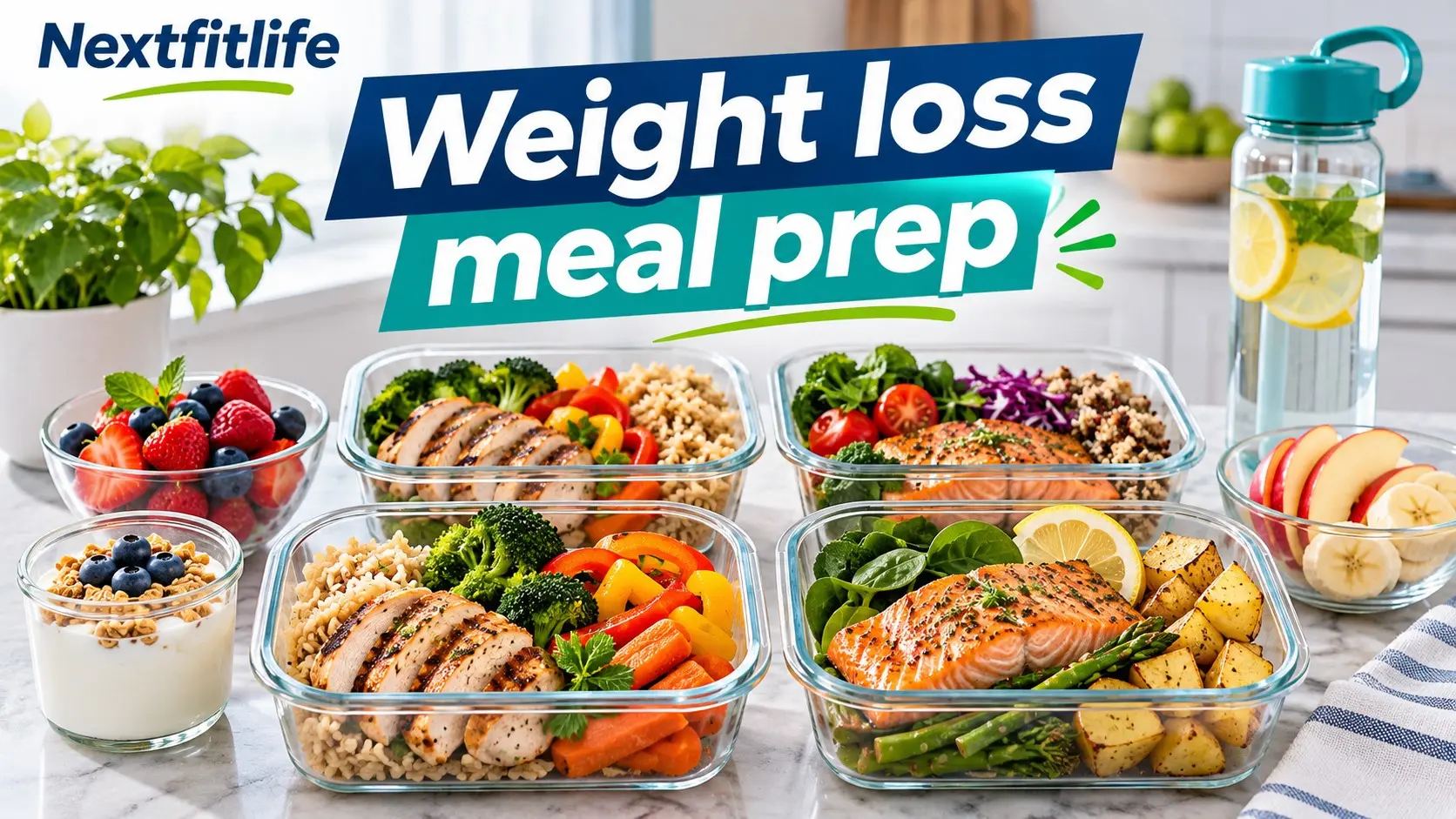
A useful meal prep system helps you prepare balanced portions of protein, vegetables, fruit, fiber rich carbohydrates, and healthy fats before the week becomes busy.
The most important rule is simple. Meal prep must still fit your actual calorie needs.
A container filled with healthy food can still provide more energy than your body needs if it contains large portions of rice, oil, nuts, cheese, sauces, or other calorie dense foods.
If you have not set a starting calorie target yet, use the Calorie Deficit Calculator. For the science behind the deficit itself, read How Weight Loss Works.
Important: This article is for general information and education. It does not replace medical advice, diagnosis, or treatment.
Get individual nutrition guidance before using a structured weight loss meal plan if you:
- Are pregnant or breastfeeding
- Are under 18
- Have an active eating disorder
- Have significant kidney or liver disease
- Have diabetes and use medication that can cause low blood sugar
- Have severe food allergies
- Need a medically prescribed diet
Table of Contents
- Quick Answer
- Why Meal Prep Helps
- What the Research Shows
- 13 Smart Meal Prep Steps
- How to Build a Meal
- Best Protein Foods
- Best Carbohydrates
- Best Vegetables and Fruit
- Healthy Fats
- Portion Control
- Beginner Grocery List
- 90 Minute Prep Method
- 7 Day Meal Framework
- Vegetarian Meal Prep
- Breakfast Prep
- Snack Prep
- Food Storage Safety
- Freezer Meal Prep
- Common Mistakes
- Meal Prep on a Budget
- What if Weight Loss Stops?
- Conclusion
- References and Sources
- Internal Links + Weight Loss Hub
- About the Author
- Frequently Asked Questions
Quick Answer: Does Weight Loss Meal Prep Really Work?
It can help a lot.
Meal planning and preparing food ahead can make healthier choices easier, reduce last minute food decisions, and give you more control over portions.
However, meal prep does not guarantee weight loss.
Fat loss still depends on your overall energy intake over time.
The most useful meal prep system does four things:
- Provides enough protein
- Includes filling vegetables and fiber
- Keeps calorie dense foods in sensible portions
- Makes the meal easy enough to eat when life gets busy
Why Does Meal Prep Help With Weight Loss?
Meal prep changes your food environment.
Imagine getting home at 7:30 p.m. after a long day.
If the refrigerator contains nothing ready to eat, dinner requires several decisions. You must choose a meal, check ingredients, cook it, and wait.
If a balanced meal is already prepared, the easiest option may also be the option that fits your goal.
This is why weight loss meal prep is mainly a behavior strategy.
It Reduces Last Minute Decisions
Planning does not eliminate hunger or cravings, but it reduces the number of food decisions you must make when you are already tired.
It Makes Portions Visible
A prepared container shows you approximately how much food you planned to eat.
This can be easier to manage than serving directly from a large pot at every meal.
It Makes Healthy Food Convenient
Cooked protein, chopped vegetables, fruit, yogurt, and ready grains compete much better with takeaway food when they require only a few minutes to assemble.
What Does the Research Actually Show?
A large observational study involving more than 40,000 adults found that people who planned meals tended to have better diet quality and greater food variety.
Meal planning was also associated with lower odds of obesity.
However, the study cannot prove that meal planning caused those outcomes.
People who plan meals may also differ in exercise, income, health habits, food knowledge, and many other factors.
That means the best conclusion is:
Meal planning is a useful practical tool for improving diet structure, but weight loss still depends on the full eating pattern and calorie balance.
Current CDC guidance also encourages people trying to manage weight to make specific plans and have healthier foods available ahead of time.
13 Smart Steps for Weight Loss Meal Prep
1. Set Your Calorie Goal First
Do not build meals around a random calorie target from social media.
Someone who needs 1,500 calories and someone who needs 2,400 calories should not automatically eat the same meal portions.
Use your current body size, age, activity, and goal to estimate your needs.
The Calorie Deficit Calculator can give you a starting point.
2. Decide How Many Meals You Actually Need
You probably do not need to prepare breakfast, lunch, dinner, and snacks for seven full days.
Ask where your real problem happens.
If lunch at work is the weak point, prep lunches first.
If dinner becomes takeaway four nights each week, focus on dinner.
Meal prep works best when it solves a real problem.
3. Start With Protein
A clear protein source can make meals more filling and helps support lean mass during weight loss.
Good meal prep options include:
- Chicken
- Turkey
- Fish
- Eggs
- Greek yogurt
- Cottage cheese
- Tofu
- Lentils
- Beans
- Chickpeas
For more ideas, use High Protein Foods for Weight Loss.
4. Add Plenty of Vegetables and Fruit
Vegetables can increase meal volume and fiber without adding large amounts of energy.
Fruit can make breakfasts and snacks more satisfying while adding fiber, water, vitamins, and sweetness.
Use a mix of fresh and frozen produce so you do not depend on everything staying fresh for a full week.
See Best Vegetables for Weight Loss for practical options.
5. Choose Filling Carbohydrates
Weight loss meal prep does not require removing carbohydrates.
Useful options include:
- Oats
- Potatoes
- Sweet potatoes
- Brown rice
- Quinoa
- Whole grain bread
- Beans
- Lentils
- Whole grain pasta
The portion should fit your calorie needs and activity.
6. Measure Calorie Dense Fats
Olive oil, nuts, seeds, cheese, avocado, and nut butter can all fit a healthy diet.
They are also energy dense.
You do not need to fear them, but pouring oil freely or grabbing several handfuls of nuts can quietly raise meal calories.
7. Build Reusable Meal Combinations
You do not need seven different recipes.
Prep components that can work together in several ways.
For example:
- Chicken
- Brown rice
- Roasted vegetables
- Chickpeas
- Greek yogurt sauce
- Salad greens
Those ingredients can become a rice bowl, salad, wrap filling, or warm dinner plate.
8. Make a Grocery List From the Plan
Do not plan ten meals and then shop from memory.
Write the meal plan first.
Then check your:
- Refrigerator
- Freezer
- Pantry
Cross off anything you already have before shopping.
This reduces duplicate purchases and food waste.
9. Prep Components Instead of 21 Full Meals
Beginners often make meal prep harder than necessary.
You can save plenty of time by preparing:
- One or two proteins
- One grain or potato
- Two vegetable options
- One sauce
- Several ready snacks
Then mix those foods through the week.
10. Portion Meals Before Storing
Pre portioning can help when your goal is portion control.
A simple container might include:
- A protein source
- A large vegetable portion
- A moderate carbohydrate portion
- A measured fat or sauce
You can adjust those portions as you learn what keeps you satisfied.
11. Cool and Store Food Safely
Do not leave cooked food sitting on the counter for several hours while it cools.
USDA guidance recommends refrigerating perishable leftovers within two hours.
Use shallow containers so food cools more quickly.
Keep your refrigerator at 40°F, about 4°C, or below.
12. Freeze Meals You Will Not Eat Soon
If you cook on Sunday and expect to eat a meal on Friday or Saturday, freezing it is often safer than leaving it refrigerated all week.
Freeze suitable meals in individual portions, then thaw safely before reheating.
13. Review Before the Next Prep
At the end of the week, ask:
- Which meals did I enjoy?
- Which meals kept me full?
- What went uneaten?
- What spoiled?
- Which portions were too large?
- Which portions were too small?
Your next meal prep should improve from the answers.
How to Build a Weight Loss Meal Prep Container
A practical structure is:
| Component | Examples | Main Role |
|---|---|---|
| Protein | Chicken, fish, eggs, tofu, beans, lentils | Fullness and muscle support |
| Vegetables | Broccoli, peppers, greens, carrots, cauliflower | Fiber and food volume |
| Carbohydrate | Potato, rice, oats, quinoa, whole grains | Energy and fiber |
| Healthy fat | Olive oil, nuts, seeds, avocado | Flavor and unsaturated fats |
This is a framework, not a required ratio.
A runner may need more carbohydrate. Someone with lower calorie needs may use less oil or grain. A vegetarian may rely more heavily on legumes and tofu.
Best Protein Foods for Meal Prep
Protein should be easy to cook, store, and use in several meals.
| Protein | Best Use | Prep Tip |
|---|---|---|
| Chicken | Bowls, salads, wraps | Cook in batches and freeze extra portions |
| Fish | Dinner bowls and salads | Prep only a few refrigerated portions |
| Eggs | Breakfast and snacks | Cook several at once |
| Lentils | Soups, bowls, salads | Cook a large pot and freeze portions |
| Greek yogurt | Breakfast and snacks | Keep fruit and crunchy toppings separate |
Best Carbohydrates for Meal Prep
Carbohydrates do not prevent fat loss.
Choose portions that match your calorie and activity needs.
Useful options include:
- Brown rice
- Quinoa
- Oats
- Potatoes
- Sweet potatoes
- Whole grain pasta
- Beans
- Lentils
If you prefer a lower carbohydrate style, read Low Carb Diet for Weight Loss before removing whole food carbohydrate sources unnecessarily.
Best Vegetables and Fruit to Prep
Choose produce that handles storage well.
Good Cooked Options
- Broccoli
- Carrots
- Cauliflower
- Peppers
- Green beans
- Roasted zucchini
Good Fresh Options
- Apples
- Oranges
- Berries
- Grapes
- Cucumber
- Cherry tomatoes
- Carrot sticks
Keep delicate salad leaves and wet dressings separate until you are ready to eat.
Healthy Fats Need Portions Too
Healthy does not mean unlimited.
A little olive oil may add flavor to several cups of vegetables, while several unmeasured tablespoons can turn a moderate calorie meal into a much larger one.
The same idea applies to:
- Nuts
- Nut butter
- Seeds
- Cheese
- Avocado
You do not need to weigh those foods forever. Measuring for a short period can teach you what the portion actually looks like.
How Much Food Should You Put in Each Container?
There is no universal answer.
Portions should reflect your:
- Calorie target
- Body size
- Activity
- Hunger
- Training
- Medical needs
If you consistently finish lunch and remain very hungry, your portion may be too small or poorly balanced.
If progress has stalled and meals contain large amounts of oil, grains, sauces, nuts, and cheese, the portion may be more energy dense than you realize.
Beginner Weight Loss Meal Prep Grocery List
| Category | Starter Foods |
|---|---|
| Protein | Chicken, eggs, Greek yogurt, canned tuna, lentils |
| Vegetables | Broccoli, peppers, carrots, spinach, cucumber |
| Fruit | Apples, oranges, berries, bananas |
| Carbohydrates | Oats, brown rice, potatoes, whole grain bread |
| Fats | Olive oil, nuts, seeds, avocado |
| Flavor | Herbs, spices, lemon, mustard, yogurt sauce |
The Simple 90 Minute Meal Prep Method
You do not need to spend your entire Sunday cooking.
First 10 Minutes
- Heat the oven
- Start rice, potatoes, or another carbohydrate
- Prepare cooking trays
Next 20 Minutes
- Season protein
- Chop vegetables
- Prepare any sauce
Next 30 Minutes
- Cook protein
- Roast vegetables
- Boil eggs if needed
Final 30 Minutes
- Portion meals
- Prepare fruit
- Pack snacks
- Label containers
- Freeze meals that will not be eaten within a few days
You may finish faster once the routine becomes familiar.
7 Day Weight Loss Meal Prep Framework
This is a flexible structure, not a fixed calorie prescription.
| Day | Breakfast | Lunch | Dinner |
|---|---|---|---|
| 1 | Greek yogurt, oats, berries | Chicken rice vegetable bowl | Salmon, potato, broccoli |
| 2 | Eggs and whole grain toast | Lentil and vegetable bowl | Chicken salad and potato |
| 3 | Overnight oats and yogurt | Tuna bean salad | Chicken stir fry with rice |
| 4 | Greek yogurt and fruit | Chicken vegetable wrap | Frozen prepped lentil meal |
| 5 | Eggs, fruit, oats | Chickpea grain bowl | Frozen prepped chicken dinner |
| 6 | Fresh flexible breakfast | Leftover or restaurant meal | Home cooked flexible meal |
| 7 | Flexible breakfast | Soup or salad | Fresh meal before next prep |
Notice that the weekend is more flexible.
A sustainable plan does not require every meal to come from a container.
Vegetarian Weight Loss Meal Prep
You can meal prep without meat.
Useful protein foods include:
- Lentils
- Beans
- Chickpeas
- Tofu
- Tempeh
- Eggs
- Greek yogurt
- Cottage cheese
A simple vegetarian container could include lentils, quinoa, roasted vegetables, leafy greens, and a yogurt based sauce.
Easy Breakfast Meal Prep
Breakfast prep does not have to mean five identical jars.
Rotate between:
- Overnight oats
- Greek yogurt with berries
- Boiled eggs and fruit
- Oatmeal packs
- Egg and vegetable muffins
If a breakfast does not keep you satisfied, add more protein or fiber before assuming you need greater restriction.
Smart Snack Prep
Snacks are optional.
If you like them, prepare portions rather than eating directly from large packages.
Useful options include:
- Greek yogurt
- Fruit
- Boiled eggs
- Vegetables and hummus
- Cottage cheese
- A measured portion of nuts
If frequent sweet snacks are your main challenge, see Stop Eating Sugar to Lose Weight.
Weight Loss Meal Prep Food Safety
This section matters just as much as calories.
USDA advises keeping refrigerated perishable foods at 40°F, about 4°C, or below.
Cooked leftovers should generally be refrigerated within two hours and eaten within three to four days.
| Food Safety Step | What to Do |
|---|---|
| After cooking | Refrigerate perishable food within two hours |
| Cooling | Use shallow containers for faster cooling |
| Refrigerator | Keep at 40°F or about 4°C or below |
| Refrigerated leftovers | Use within three to four days in most cases |
| Later meals | Freeze meals you will not eat soon |
Do not rely only on smell to decide whether refrigerated food is safe.
Should You Freeze Meal Prep?
Yes, especially when preparing more than three or four days of food.
Good freezer options include:
- Soups
- Stews
- Cooked chicken
- Cooked turkey
- Rice based meals
- Lentil dishes
- Bean chili
Label containers with the food and date.
Freeze in single portions so you do not have to thaw an entire batch.
Common Weight Loss Meal Prep Mistakes
Mistake 1: Preparing Too Much
Twenty one full meals can become overwhelming and increase food waste.
Start with three to five lunches.
Mistake 2: Eating the Same Meal Every Day
Variety makes meal prep easier to maintain.
Change vegetables, sauces, spices, or carbohydrate choices.
Mistake 3: Ignoring Calories Because the Food Is Healthy
Large amounts of oil, nuts, grains, cheese, and dressings can still exceed your needs.
Mistake 4: Making Meals Too Small
An extremely small meal may leave you hunting for snacks an hour later.
Use protein, vegetables, fiber, and enough overall food to create reasonable satisfaction.
Mistake 5: Leaving Food in the Fridge Too Long
Meal prep convenience is never worth unsafe storage.
Freeze later portions.
Mistake 6: Forgetting Sauces and Extras
Coffee drinks, oils, dressings, sauces, and snacks still contribute to total intake.
Mistake 7: Thinking Every Meal Must Be Prepped
A healthy plan needs flexibility.
You can still cook fresh food, eat with family, or go to a restaurant.
Meal Prep on a Budget
Meal prep can reduce waste when you plan around foods you already own and use ingredients in several recipes.
Budget friendly foods include:
- Eggs
- Oats
- Lentils
- Beans
- Potatoes
- Frozen vegetables
- Seasonal fruit
- Canned tuna
- Chicken when bought in larger packs
Frozen produce can be especially useful because you cook only what you need.
Meal Prep and Mindful Eating
Meal prep and mindfulness work well together.
Meal prep decides what food is available.
Mindful eating helps you notice whether you are still hungry once you start eating it.
A container does not have to be finished simply because it was prepared.
See Mindful Eating for Weight Loss for ways to slow down and notice satisfaction.
Meal Prep for Weight Loss After 40
The same principles work after 40, but preserving muscle becomes especially useful.
Build meals around protein, vegetables, fiber rich foods, and portions that fit your current needs.
Pair your meal plan with resistance training and daily movement.
See Weight Loss After 40 for the full strategy.
What if You Meal Prep but Still Do Not Lose Weight?
Meal prep can improve consistency without necessarily creating a calorie deficit.
Check:
- Meal portions
- Olive oil
- Nuts
- Cheese
- Dressings
- Snacks
- Drinks
- Weekend meals
- Current activity
Your calorie needs can also decrease as body weight falls.
If your trend has stopped for several weeks, read Why Am I Not Losing Weight? and the Weight Loss Plateau Guide.
Conclusion
Weight loss meal prep works best when it makes a balanced, appropriately portioned meal easier to choose during the moments when convenience usually wins.
You do not need 21 perfect containers or an entire Sunday in the kitchen.
Start with one protein, one carbohydrate, two vegetables, a few easy breakfasts, and several snacks. Portion what you will eat within the next few days, then freeze later meals for safety and variety.
Keep protein and vegetables prominent, measure calorie dense ingredients when needed, and adjust portions according to your own calorie needs rather than copying somebody else's meal plan.
Your next step: choose the three meals this week that are hardest for you to manage, prepare only those meals first, and use the Calorie Deficit Calculator if you need help sizing the portions.
References and Sources
- Centers for Disease Control and Prevention. How to Have Healthier Meals and Snacks. Updated April 29, 2026. Covers meal planning, protein foods, vegetables, fruit, whole grains, healthy fats, and reducing highly processed foods.
https://www.cdc.gov/healthy-weight-growth/healthy-eating/meals-snacks.html - Centers for Disease Control and Prevention. Steps for Losing Weight. Covers realistic goals, meal planning, healthy eating, physical activity, sleep, and long term behavior change.
https://www.cdc.gov/healthy-weight-growth/losing-weight/ - Ducrot P et al. Meal Planning Is Associated With Food Variety, Diet Quality and Body Weight Status in a Large Sample of French Adults. International Journal of Behavioral Nutrition and Physical Activity.
https://pubmed.ncbi.nlm.nih.gov/28153017/ - USDA Food Safety and Inspection Service. How Do I Handle Leftovers Safely? Covers refrigeration within two hours, shallow storage containers, refrigerator temperature, and the three to four day leftover window.
https://ask.fsis.usda.gov/article/How-do-I-handle-leftovers-safely - USDA MyPlate. Meal Planning. Practical guidance on planning meals, checking foods already at home, writing a grocery list, preparing whole grains, vegetables and beans ahead, and using leftovers efficiently.
https://www.myplate.gov/sites/default/files/2024-06/TipSheet-24-Meal-Planning.pdf
Internal Links + Weight Loss Hub
- How Weight Loss Works
- Calorie Deficit Calculator
- Weight Loss Goals
- Weight Loss Motivation
- Healthy Rate of Weight Loss
- Why Am I Not Losing Weight?
- Weight Loss Plateau Guide
- Mindful Eating for Weight Loss
- High Protein Foods for Weight Loss
- Mediterranean Diet Weight Loss
- Low Carb Diet for Weight Loss
- Weight Loss After 40
- Stop Eating Sugar to Lose Weight
- Best Vegetables for Weight Loss
- Walking for Weight Loss
- Strength Training and Muscle Building
- NextFitLife Fitness Hub
About the Author
Adel Galal is a father of four (three sons and a daughter) and a grandfather of four, with 33 years of hands-on parenting experience. He is the founder of Parnthub.com, based in Cairo, Egypt, where he shares practical guidance on feeding, development and family life from newborns to teenagers. Adel is not a medical professional; health articles cite trusted sources and are for general information only.
Learn more on the NextFitLife About Us page.
Frequently Asked Questions
Does weight loss meal prep help you lose weight?
It can help by making planned meals and portions easier to access, but meal prep does not directly cause fat loss. Your overall calorie intake still needs to support a calorie deficit.
How many meals should a beginner prep?
Start with three to five meals rather than preparing an entire week. Focus on the meals that are hardest for you to manage when you are busy.
How long can meal prep stay in the refrigerator?
USDA guidance says most cooked leftovers should generally be used within three to four days when refrigerated safely at 40°F or about 4°C or below.
Should I freeze meal prep for later in the week?
Yes. If you will not eat a cooked meal within the recommended refrigerated storage period, freezing it in individual portions is a practical option.
Do I need to count calories when meal prepping?
No. Calorie counting is optional, but portions still matter. You can use meal structure and portion awareness instead if formal tracking is not useful for you.
What is the best protein for weight loss meal prep?
Useful choices include chicken, fish, eggs, Greek yogurt, tofu, beans, chickpeas, and lentils. The best option is one that fits your diet, budget, and storage needs.
Can I eat rice during weight loss meal prep?
Yes. Rice can fit a weight loss diet. Portion size and total calorie intake matter more than banning one carbohydrate food.
Is meal prep good for vegetarians?
Yes. Lentils, beans, chickpeas, tofu, tempeh, eggs, yogurt, and other foods can provide protein for vegetarian meal prep.
Can healthy meal prep still have too many calories?
Yes. Large amounts of oil, nuts, cheese, rice, sauces, dressings, or other calorie dense foods can make a nutritious meal exceed your calorie needs.
Do I need special meal prep containers?
No. Food safe reusable containers that seal well are enough. Shallow containers are useful for safely cooling cooked leftovers.
Why am I not losing weight even though I meal prep?
Your meals may still provide enough calories to maintain your current weight. Review portions, drinks, snacks, weekend meals, activity, and your current calorie needs.
Do I have to meal prep every meal?
No. A sustainable plan can combine prepared meals with fresh cooking, family meals, restaurants, and other flexible choices.

Health & wellness writer with 30+ years of experience in nutrition, fitness, and healthy aging. Founder of NextFitLife.com — evidence-based health guidance.

