Last updated: July 20, 2026
Next review: July 2027
Written and source checked by: Adel Galal, Founder and Lead Writer at NextFitLife
Review status: Editorially reviewed and source checked. This article has not been medically reviewed by a doctor or registered dietitian.
Foods That Prevent Weight Loss: 16 Traps and Better Swaps
Foods That Prevent Weight Loss are not foods that block fat loss with one bite.
No food has that power.
Weight changes over time.
The full pattern matters.
Some foods and drinks are easy to consume in large amounts.
Some provide many calories in a small serving.
Some do not keep you full for long.
Others hide extra sugar, oil, cream, or large portions.
This can make a calorie deficit harder to maintain.
It does not mean these foods are bad.
It does not mean you must ban them forever.
The goal is to understand your normal portions, frequency, hunger, and habits.
You can then decide where a small change may help.
Weight management is not only about food.
Physical activity, sleep, stress, medicines, hormones, age, genes, health conditions, and food access can also affect progress.
This guide explains 16 common Foods That Prevent Weight Loss, why they may slow progress, and how to use simple food swaps without fear or guilt.
For a wider overview, visit the NextFitLife Weight Loss and Metabolism Foods Hub.
Quick Answer
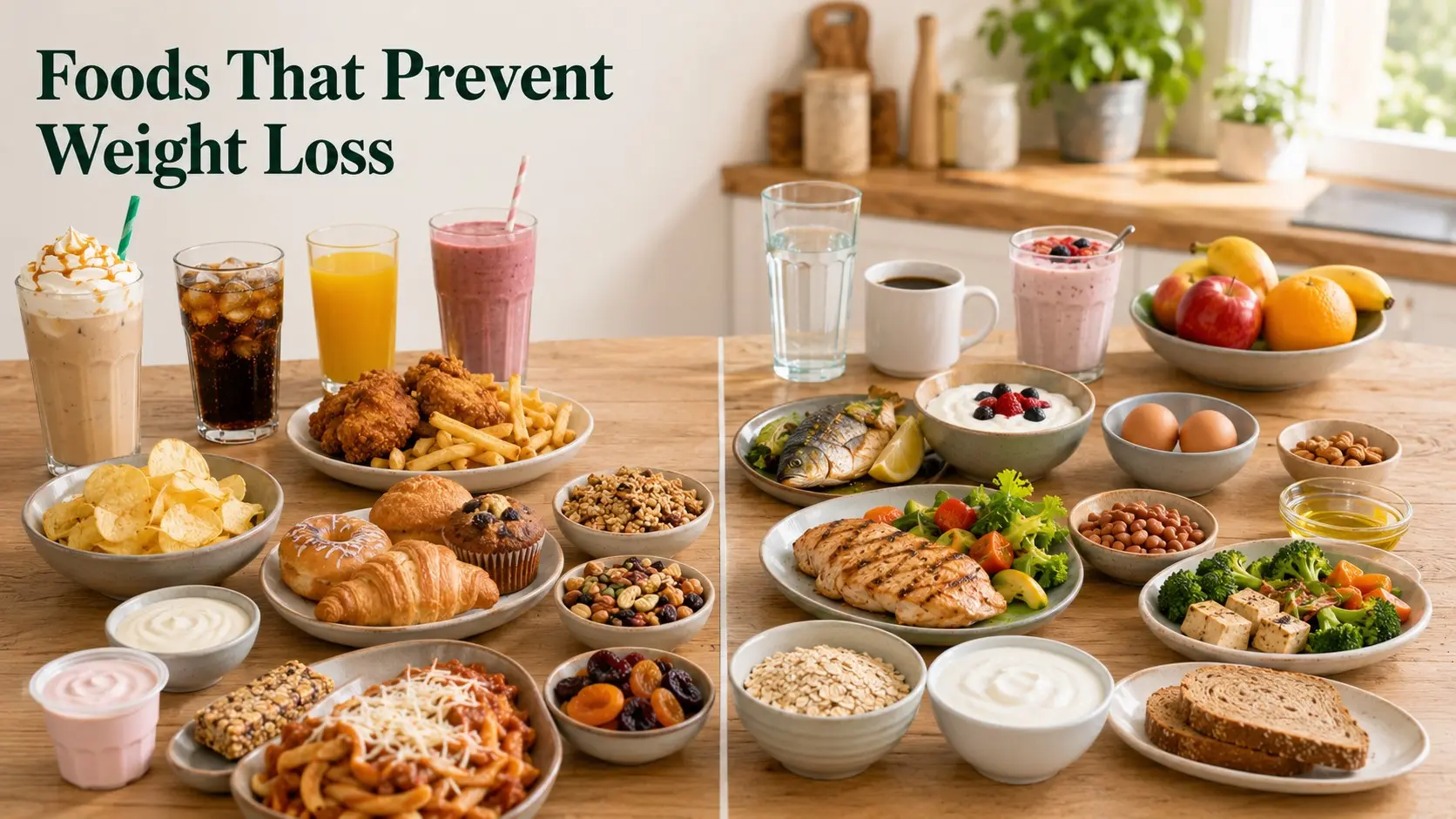
Common Foods That Prevent Weight Loss may include sugary drinks, sweet coffee, large juice servings, oversized smoothies, alcohol, pastries, fried food, chips, granola, trail mix, rich sauces, sweetened yogurt, snack bars, dried fruit, large restaurant meals, and oversized portions of calorie dense foods.
These foods do not need to be banned.
Check the portion.
Check how often you eat or drink them.
Pair them with protein, fiber, vegetables, fruit, or a balanced meal when useful.
The best plan is one that supports your health and can be maintained over time.
Important Medical and Nutrition Note
I am not a dermatologist or A doctor, and this content does not replace professional medical advice.
What I share comes from real life experience, extensive research, and consultation with healthcare providers.
Always consult qualified medical professionals for diagnosis and treatment of any health condition.
Weight loss is not safe or needed for every person.
Do not start a restrictive diet if you are pregnant, breastfeeding, under 18, underweight, recovering from illness, or living with an eating disorder unless your medical team guides you.
Ask a doctor or registered dietitian for personal advice if you have diabetes, kidney disease, liver disease, heart disease, digestive disease, food allergies, or medicine that affects appetite, blood sugar, or body weight.
Seek help if food rules cause fear, guilt, binge eating, purging, fasting, compulsive exercise, or strong distress about your body.
What Do Foods That Prevent Weight Loss Really Mean?
The phrase Foods That Prevent Weight Loss can sound too strict.
No normal food stops weight loss by itself.
A food may make progress harder when:
- The portion is much larger than expected
- It is easy to eat or drink quickly
- It contains a lot of added sugar or fat
- It does not provide much protein or fiber
- It is eaten often without hunger
- It replaces a more filling meal
- Its calories are not noticed
These are often called hidden calories.
The calories are not truly hidden.
They are simply easy to miss.
A spoon of oil, a sweet drink, a large smoothie, and a creamy sauce may not feel like a large meal.
Together, they can add a meaningful amount.
Calorie Dense Does Not Mean Unhealthy
Calorie dense foods provide a lot of energy in a small amount.
Examples include nuts, seeds, olive oil, avocado, cheese, chocolate, granola, and nut butter.
Many of these foods provide useful nutrients.
The issue is not the food.
The portion may simply be larger than your current goal allows.
Low Calorie Does Not Always Mean Filling
A food can be low in calories but not satisfying.
A tiny salad may leave you hungry.
A diet drink does not replace a meal.
A plate with protein, vegetables, and a suitable carbohydrate food may keep you more comfortable.
How Does Weight Loss Work?
Weight loss happens when the body uses more energy than it receives over time.
This is called energy balance.
The process is more complex than one day of calorie counting.
Your body can adapt as weight changes.
Hunger can increase.
Energy needs can fall.
Sleep, stress, activity, hormones, medicines, and medical conditions can also affect the process.
A useful plan should provide enough nutrition while creating a realistic energy difference.
Eating as little as possible is not the goal.
Very low food intake can cause:
- Weakness
- Poor concentration
- Strong hunger
- Muscle loss
- Nutrient gaps
- Constipation
- Changes in menstrual periods
- Loss of control around food
Healthy Weight Loss Is Usually Gradual
Healthy weight loss is usually steady rather than extreme.
Rapid changes may include water and muscle loss.
A realistic plan is more likely to last.
Your personal goal may be different from another person’s goal.
A healthcare professional can help when your weight, health, or medicine needs special care.
Food Is Only One Part
A useful plan may also include:
- Regular physical activity
- Strength activity
- Enough sleep
- Stress care
- Medical treatment
- Support from family or professionals
- Realistic goals
16 Foods That Prevent Weight Loss or Make Progress Harder
The foods below can fit a balanced diet.
They may slow progress when portions or frequency are not noticed.
1. Sugary Drinks
Soda, sweet tea, energy drinks, sports drinks, and fruit drinks can provide many liquid calories.
Liquid calories may not feel as filling as solid food.
A person may drink them in addition to normal meals.
Check the bottle size.
One bottle may contain more than one serving.
Better Options
- Water
- Sparkling water without added sugar
- Plain tea
- Coffee with less sugar
- Milk or a suitable fortified drink
- Water flavored with fruit or mint
You do not need to remove every sweet drink at once.
Replace one drink each day.
2. Sweet Coffee Drinks
Coffee itself contains very few calories.
The extras can change the drink.
Syrup, sugar, cream, sweet foam, chocolate, caramel, and whipped cream can turn coffee into a dessert.
A large café drink may contain several pumps of syrup and a large amount of milk or cream.
Better Options
- Choose a smaller cup
- Ask for fewer syrup pumps
- Skip whipped cream
- Use plain milk
- Choose unsweetened coffee more often
Coffee is not a meal.
Too much caffeine can affect sleep, anxiety, and heart rhythm.
3. Large Servings of Fruit Juice
Whole fruit contains fiber.
Juice contains much less fiber.
It is easy to drink several fruit portions in one glass.
Juice is not poison.
It is simply less filling than whole fruit for many people.
Better Options
- Eat a whole orange instead of a large orange juice
- Use a smaller glass
- Dilute juice with water when you enjoy the taste
- Drink juice with a meal rather than from a large bottle
People with diabetes may need personal guidance about juice and blood sugar.
4. Oversized Smoothies
A smoothie can be a useful meal.
It can also become very large.
Fruit, juice, honey, oats, nut butter, seeds, protein powder, yogurt, and granola can all be added to one cup.
These ingredients may each be useful.
The combined amount may be more than expected.
Build a Simpler Smoothie
- Use milk or a fortified alternative
- Add one or two fruit portions
- Add plain yogurt or tofu for protein
- Add oats when you need more food
- Choose one rich extra, such as nut butter or seeds
Do not add every healthy ingredient at the same time.
5. Alcoholic Drinks
Alcohol provides calories.
Sweet cocktails can also contain syrup, juice, cream, or soda.
Alcohol may affect sleep, judgment, hunger, and food choices.
It can also interact with medicines.
You do not need alcohol for health.
Ways to Reduce the Amount
- Choose alcohol free days
- Use a smaller serving
- Drink water between alcoholic drinks
- Avoid sweet mixers
- Choose an alcohol free option
People who are pregnant, driving, taking certain medicines, or living with some health conditions should avoid alcohol.
6. Pastries, Muffins, Cakes, and Large Baked Goods
A bakery muffin may look like breakfast.
It may contain refined flour, sugar, butter, oil, and a large portion.
Pastries and cakes can fit.
They may not keep you full for long when eaten alone.
Better Ways to Include Them
- Choose a smaller portion
- Share a large item
- Eat it with yogurt, eggs, or fruit
- Enjoy it slowly
- Buy single portions instead of a large box
You do not need to save every enjoyable food for a special occasion.
Frequency and portion matter more than guilt.
7. Fried Foods
Frying adds oil.
Oil contains a lot of energy in a small amount.
Fried chicken, fries, doughnuts, wings, and fried snacks can be easy to eat in large portions.
Other Cooking Methods
- Bake
- Grill
- Roast
- Steam
- Air cook with a measured amount of oil
- Pan cook with a small amount of oil
Fried food can still fit sometimes.
Pair it with vegetables and choose a portion that fits your meal.
8. Chips, Crackers, and Packaged Snack Foods
Chips and crackers can be easy to eat without noticing the amount.
Eating from a large package makes portions harder to see.
Words such as vegetable, baked, multigrain, or natural do not always mean the product is low in calories or sodium.
Helpful Steps
- Place a portion in a bowl
- Close the package
- Add fruit or yogurt when you need a filling snack
- Try plain popcorn
- Use whole grain toast with a protein topping
9. Granola and Trail Mix
Granola and trail mix can contain oats, nuts, seeds, dried fruit, oil, chocolate, and sweeteners.
These ingredients are concentrated.
A small serving may provide enough food.
A cereal bowl filled with granola may be much larger than the label serving.
Better Ways to Use Them
- Use granola as a topping
- Mix it with plain oats
- Measure trail mix into a small container
- Choose products with less added sugar
- Add fresh fruit for more volume
10. Nuts, Nut Butter, Seeds, Avocado, and Oils
These foods provide unsaturated fats and useful nutrients.
They can support a balanced diet.
They are also energy dense foods.
A free pour of oil can add much more than one spoon.
A large handful of nuts can become several servings.
Use Portion Awareness
- Measure oil with a spoon
- Use a small handful of nuts
- Use one spoon of nut butter
- Choose part of an avocado
- Use one or two rich toppings instead of several
Do not remove healthy fats completely.
Your body needs fat.
11. Sauces, Dressings, Mayonnaise, and Creamy Dips
Sauces can add flavor.
They can also add oil, sugar, cream, cheese, or sodium.
A salad may contain more calories from dressing than from the vegetables.
This does not make dressing bad.
The amount may simply need attention.
Better Options
- Ask for dressing on the side
- Use a spoon instead of pouring
- Mix yogurt with herbs
- Use lemon, vinegar, mustard, or salsa
- Use a smaller amount of the sauce you enjoy
12. Sweetened Yogurt and Dairy Desserts
Yogurt can provide protein and calcium.
Some flavored yogurts contain a meaningful amount of added sugar.
Drinkable yogurt, flavored milk, ice cream, and dairy desserts can be easy to consume quickly.
Better Options
- Choose plain yogurt
- Add fresh or frozen fruit
- Add cinnamon or vanilla
- Compare added sugar between brands
- Choose a portion that fits your meal
Plain yogurt is not required.
A lower sugar flavored yogurt can also fit.
13. Protein Bars and Energy Bars
A protein bar may be useful during travel or a busy day.
It is not automatically better than normal food.
Some bars are similar to candy bars with added protein.
Others provide fiber and useful nutrition.
Check the Label
- Serving size
- Calories
- Protein
- Fiber
- Added sugar
- Saturated fat
- Allergens
Simple Alternatives
- Fruit and yogurt
- A boiled egg
- Whole grain toast and nut butter
- Vegetables and hummus
- Cottage cheese and fruit
14. Dried Fruit
Dried fruit is normal fruit with much of the water removed.
It provides fiber and nutrients.
It is also easier to eat in a large amount.
A small box of raisins may contain many grapes.
Ways to Use Dried Fruit
- Add a small amount to oats
- Mix it with nuts
- Use it in salad
- Pair it with plain yogurt
- Choose fresh fruit more often when you want a larger portion
Check for added sugar in sweetened dried fruit.
15. Large Restaurant and Takeout Meals
Restaurant meals may contain large portions, more oil, butter, cream, cheese, sauce, and sodium than expected.
This does not mean you should stop eating out.
Helpful Restaurant Habits
- Read the menu before you go
- Choose vegetables as one side
- Ask for sauce on the side
- Share a large dish
- Save part for another meal
- Choose grilled, baked, or roasted food more often
One restaurant meal does not ruin progress.
Frequent large meals may simply need a plan.
16. Large Portions of Any Food
Even nutritious foods can make a calorie deficit harder when portions are much larger than your needs.
This includes rice, pasta, bread, nuts, oils, cheese, meat, cereal, smoothies, and desserts.
The answer is not tiny portions.
The answer is portion awareness.
Simple Portion Steps
- Serve food on a plate
- Eat without strong distraction when possible
- Pause before a second serving
- Notice hunger and comfort
- Add more vegetables or protein when a meal is not filling
- Use the label serving as information, not a strict rule
Simple Swaps for Foods That Prevent Weight Loss
| Common choice | Simple adjustment | Why it may help |
|---|---|---|
| Large soda | Water, plain tea, or a smaller soda | Reduces liquid calories without banning the drink. |
| Sweet coffee with cream | Smaller coffee with milk and less syrup | Keeps the flavor with fewer extras. |
| Large fruit juice | Whole fruit and water | Adds fiber and may feel more filling. |
| Oversized smoothie | Milk, yogurt, fruit, and one rich extra | Creates a simpler and easier to estimate meal. |
| Granola bowl | Oats or yogurt topped with a little granola | Keeps the crunch while increasing meal volume. |
| Sweetened yogurt | Plain yogurt with fruit | Lets you control the sweetness. |
| Fried meal | Grilled or baked protein with potatoes and vegetables | May reduce added oil while keeping a full meal. |
| Chips from a large bag | A bowl of chips with fruit or yogurt | Makes the portion easier to see and adds filling food. |
| Heavy salad dressing | A measured amount or dressing on the side | Keeps the taste while improving portion awareness. |
| Large restaurant meal | Eat until comfortable and save the rest | Avoids turning one meal into a food rule. |
Foods You Do Not Need to Cut Out for Weight Loss
Strict food bans are rarely needed.
Many foods blamed for weight gain can fit a balanced plan.
Carbohydrates
Carbohydrate foods include:
- Fruit
- Beans
- Oats
- Potatoes
- Rice
- Bread
- Pasta
- Milk
- Yogurt
These foods are not all the same.
Choose useful sources and portions that fit your needs.
Fruit
Whole fruit can provide fiber, water, vitamins, and minerals.
Fruit sugar is naturally present inside the fruit.
This is different from drinking a large sweetened fruit drink.
Potatoes
Plain potatoes can fit weight management.
The cooking method and toppings change the meal.
A baked potato is different from a large serving of fries with cheese sauce.
Dairy Foods
Milk, yogurt, and cheese can provide protein, calcium, and other nutrients.
Compare added sugar and portions when these matter to you.
Fats
Olive oil, nuts, seeds, avocado, and fish provide useful fats.
You do not need a fat free diet.
Use suitable portions.
Bread and Pasta
Bread and pasta can fit.
Pair them with protein, vegetables, beans, or a balanced sauce.
Snacks
Snacks are optional.
They can help when meals are far apart or energy needs are higher.
The issue is not the word snack.
The food, portion, hunger, and timing matter.
Dessert
Dessert can fit a flexible plan.
Enjoy a suitable portion.
Do not punish yourself afterward.
How to Read Food Labels for Weight Management
Nutrition labels can help you compare similar products.
Start with the Serving Size
The serving size tells you the amount used for the nutrition numbers.
It is not a personal recommendation.
Your portion may be larger or smaller.
Check Servings per Container
A bottle, bar, or package may contain more than one serving.
The total changes when you eat or drink the full package.
Check Added Sugar
Added sugar includes sugar added during processing or preparation.
It can come from table sugar, syrups, honey, and concentrated juice ingredients.
Compare similar drinks, yogurt, cereal, bars, and sauces.
Check Protein and Fiber
Protein rich foods and fiber rich foods may help a meal feel more satisfying.
A product does not become healthy only because the package says high protein.
Review the full label.
Check Saturated Fat and Sodium
These numbers may matter for heart health, blood pressure, and the full eating pattern.
Do Not Fear Long Ingredient Lists
A long ingredient list does not automatically make food harmful.
Vitamin names, stabilizers, and fortified nutrients may sound technical.
Use the label to check allergens and ingredients that matter to you.
Simple Meals That Support Weight Loss
Useful meals often combine protein, fiber, vegetables or fruit, and a suitable carbohydrate food.
Breakfast Idea 1
- Eggs
- Spinach and tomatoes
- Whole grain toast
- Fruit
Breakfast Idea 2
- Plain Greek yogurt
- Oats
- Berries
- Chia seeds
Breakfast Idea 3
- Oatmeal made with milk
- Apple
- Cinnamon
- A small amount of walnuts
Find more meals in our Healthy Breakfast Ideas Guide.
Lunch Idea 1
- Chicken or tofu
- Rice or potatoes
- Broccoli and peppers
- A measured amount of olive oil
Lunch Idea 2
- Lentil soup
- Mixed salad
- Whole grain bread
- Plain yogurt
Dinner Idea 1
- Baked fish
- Roasted potatoes
- Green beans
- Water
Dinner Idea 2
- Bean and vegetable pasta
- Side salad
- A small amount of cheese
Simple Snack Ideas
- Fruit and yogurt
- A boiled egg
- Vegetables and hummus
- Cottage cheese and berries
- A small amount of nuts with fruit
A snack is not required.
Eat one when it meets a real need.
For a structured example, visit our Simple Meal Plan for Weight Loss.
How to Use Mindful Eating Without Making It Complicated
Mindful eating means noticing the meal and your experience.
It does not mean eating perfectly slowly.
Try these steps:
- Serve food on a plate or in a bowl
- Sit down when possible
- Notice the taste and texture
- Pause during the meal
- Notice hunger and fullness
- Eat more when you still need food
Hunger is not failure.
A meal may need more food.
Add protein, vegetables, beans, potatoes, rice, bread, or another useful food.
Seven Day Foods That Prevent Weight Loss Habit Plan
This plan focuses on awareness.
It does not ban food.
| Day | Focus | Simple action |
|---|---|---|
| Day 1 | Drinks | Write down every drink. Replace one sweet drink with water. |
| Day 2 | Portions | Place snacks in a bowl instead of eating from the package. |
| Day 3 | Protein | Add eggs, yogurt, beans, fish, chicken, or tofu to one meal. |
| Day 4 | Fiber | Add vegetables, fruit, oats, beans, or whole grains. |
| Day 5 | Labels | Compare the serving size and added sugar in two similar foods. |
| Day 6 | Eating out | Ask for sauce on the side or save part of a large meal. |
| Day 7 | Review | Keep the easiest change and repeat it next week. |
What If You Eat Well but Weight Loss Stops?
A weight loss plateau is common.
It does not mean one food has stopped your metabolism.
Possible reasons include:
- Your body needs fewer calories at a lower weight
- Portions have increased slowly
- Drinks or sauces are not being noticed
- Physical activity has changed
- Sleep or stress has changed
- Water retention is hiding fat loss
- A medicine or health condition is affecting weight
- Your original goal may need review
Useful Plateau Steps
- Review one normal week
- Check drinks, oils, sauces, and snacks
- Review portion sizes without making meals tiny
- Keep protein and fiber in meals
- Add safe physical activity
- Protect sleep
- Speak with a healthcare professional when needed
Read our Weight Loss Plateau Guide for a complete review.
Common Mistakes with Foods That Prevent Weight Loss
Banning Every Food on the List
This can create fear and stronger cravings.
Most foods can fit in a suitable portion.
Eating Too Little
Very small meals may cause strong hunger later.
Build complete meals.
Calling Carbohydrates the Problem
Carbohydrates include many useful foods.
The type, portion, and full meal matter.
Ignoring Drinks
Sweet coffee, soda, alcohol, juice, and large smoothies may add more than expected.
Using Healthy Labels as Permission to Overeat
Organic, natural, protein, vegan, gluten free, and multigrain do not show the full nutrition value.
Depending on Detox Products
Detox tea, laxatives, vinegar drinks, and fat burners do not create safe fat loss.
Some can cause harm.
Skipping Meals and Losing Control Later
Skipping meals works for some adults.
For others, it leads to strong hunger.
Choose a pattern that helps you feel steady.
Ignoring Sleep and Stress
Poor sleep and high stress can affect appetite, energy, activity, and food decisions.
Expecting Daily Scale Loss
Body weight changes with water, sodium, hormones, digestion, and bowel movements.
Look at trends over time.
Blaming Yourself
Weight management can be difficult.
Medicine, medical conditions, genes, environment, cost, and food access matter.
Difficulty does not mean a lack of willpower.
When to Seek Professional Help
Speak with a doctor or registered dietitian if you:
- Have diabetes, kidney disease, liver disease, or heart disease
- Take medicine that affects weight or appetite
- Are pregnant or breastfeeding
- Are under 18 or underweight
- Lose weight without trying
- Feel weak, dizzy, or faint
- Have missed menstrual periods
- Have ongoing vomiting or diarrhea
- Have severe digestive symptoms
- Binge, purge, or fast to control weight
- Have strong fear or guilt around food
- Need a medically supervised weight plan
A clinician can review medical causes, medicines, laboratory tests, and treatment options.
Some people may benefit from structured nutrition care, approved medicines, or surgery.
These treatments should be discussed with qualified professionals.
Conclusion: Understand Foods That Prevent Weight Loss Without Fear
Foods That Prevent Weight Loss do not block fat loss with one serving.
The main concerns are usually portion size, frequency, liquid calories, rich extras, and meals that do not provide enough fullness.
Sugary drinks, sweet coffee, large smoothies, pastries, fried foods, chips, granola, trail mix, sauces, sweetened yogurt, bars, dried fruit, restaurant meals, and large portions may make a calorie deficit harder.
They do not need to be banned.
Use smaller portions when helpful.
Add protein and fiber.
Read labels.
Plan simple meals.
Choose water often.
Protect sleep and activity.
Ask for medical help when progress is difficult or symptoms appear.
Start with one action today.
Replace one sugary drink.
Measure cooking oil.
Put snacks in a bowl.
Or prepare tomorrow’s lunch before the day becomes busy.
Save this Foods That Prevent Weight Loss guide and share it with someone who wants realistic weight management advice without strict food bans.
References and Sources
- Centers for Disease Control and Prevention: Steps for Losing Weight
- Centers for Disease Control and Prevention: Healthy Eating for a Healthy Weight
- National Institute of Diabetes and Digestive and Kidney Diseases: Eating and Physical Activity to Lose or Maintain Weight
- World Health Organization: Healthy Diet Fact Sheet
- United States Food and Drug Administration: How to Understand and Use the Nutrition Facts Label
Frequently Asked Questions About Foods That Prevent Weight Loss
What are Foods That Prevent Weight Loss?
Foods That Prevent Weight Loss are foods and drinks that may make a calorie deficit harder when portions are large or they are consumed often. Examples include sugary drinks, sweet coffee, pastries, fried foods, large smoothies, rich sauces, and oversized restaurant meals.
What food should I stop eating to lose weight?
You usually do not need to stop eating one exact food. Review drinks, portions, sauces, snacks, and how often you eat calorie dense choices. Choose changes you can maintain.
What foods cause weight gain the fastest?
No food guarantees rapid weight gain. Frequent large portions of calorie dense foods and drinks can increase energy intake over time.
Can healthy foods prevent weight loss?
Nutritious foods such as nuts, avocado, olive oil, granola, and nut butter can make a calorie deficit harder when portions are much larger than needed. They do not need to be removed.
Should I stop eating carbohydrates?
No. Fruit, beans, oats, potatoes, rice, bread, and pasta can fit a weight loss plan. Choose portions and meals that support your needs.
Should I stop eating fruit?
No. Whole fruit provides water, fiber, vitamins, and minerals. Large juice and smoothie servings may be less filling than whole fruit.
Can I eat bread and still lose weight?
Yes. Bread can fit. Pair it with eggs, fish, chicken, beans, yogurt, vegetables, or another protein food when you want a more filling meal.
Are nuts bad for weight loss?
No. Nuts provide useful fats, protein, fiber, vitamins, and minerals. Use a suitable portion because they contain a lot of energy in a small amount.
Do sugary drinks stop weight loss?
They do not stop weight loss directly. They can add liquid calories without much fullness, which may make an energy deficit harder.
Are smoothies bad for weight loss?
No. A simple smoothie can fit. Large smoothies with juice, honey, nut butter, seeds, oats, granola, and protein powder may provide more food than expected.
Do I need to avoid restaurant food?
No. Choose a balanced meal, ask for sauce on the side, share a large dish, or save part for later when useful.
Why am I not losing weight even though I eat healthy food?
Portions, drinks, oils, sauces, activity, sleep, stress, medicines, health conditions, hormones, age, and normal body adaptation can all affect progress.
How can I break a weight loss plateau?
Review one normal week. Check portions, drinks, oils, snacks, sleep, stress, and activity. Speak with a healthcare professional when the plateau continues or health concerns appear.
How fast should I lose weight?
Gradual progress is usually easier to maintain than rapid loss. Your safe rate depends on your health, starting point, treatment, and personal plan.
When should I get professional weight loss help?
Seek help if you have a medical condition, take medicine that affects weight, are pregnant, are under 18, lose weight without trying, or have fear, binge eating, purging, fasting, or distress around food.

Health & wellness writer with 30+ years of experience in nutrition, fitness, and healthy aging. Founder of NextFitLife.com — evidence-based health guidance.