Published: September 13, 2026
Last updated: September 13, 2026
Next review: September 2027, or sooner if major ketogenic or vegan nutrition guidance changes
Written and source-checked by: Adel Galal, Founder and Lead Writer at NextFitLife
Medical review status: This article has not been medically reviewed by a doctor or registered dietitian.
A vegan keto diet is possible.
It is also one of the easier diets to plan badly.
Remove meat, fish, eggs, dairy, grains, most fruit, and most legumes, and the list of easy foods gets short very quickly.
That is why a useful Vegan Keto Diet Meal Plan cannot be built around avocado, coconut oil, and cauliflower alone.
You still need protein.
You still need fibre.
You still need vitamin B12, iodine, calcium, iron, zinc, omega-3 fats, and enough total food.
And you do not need to turn every meal into a bowl of added fat just because the diet is called keto.
Important medical note: I am not a dermatologist or a doctor, and this content does not replace professional medical advice. What I share comes from real-life experience, extensive research, and consultation with healthcare providers. Always consult qualified medical professionals for diagnosis and treatment of any health condition.
A strict ketogenic diet is not suitable for everyone. Get individual medical and nutrition advice before using this eating pattern if you are pregnant, breastfeeding, under 18, have diabetes, kidney disease, liver disease, pancreatic disease, gallbladder problems, a history of an eating disorder, unexplained weight loss, or use medicines that affect blood glucose or fluid balance.
People using SGLT2 diabetes medicines should not start a ketogenic eating pattern without medical guidance because of the risk of ketoacidosis.
What Is a Vegan Keto Diet?
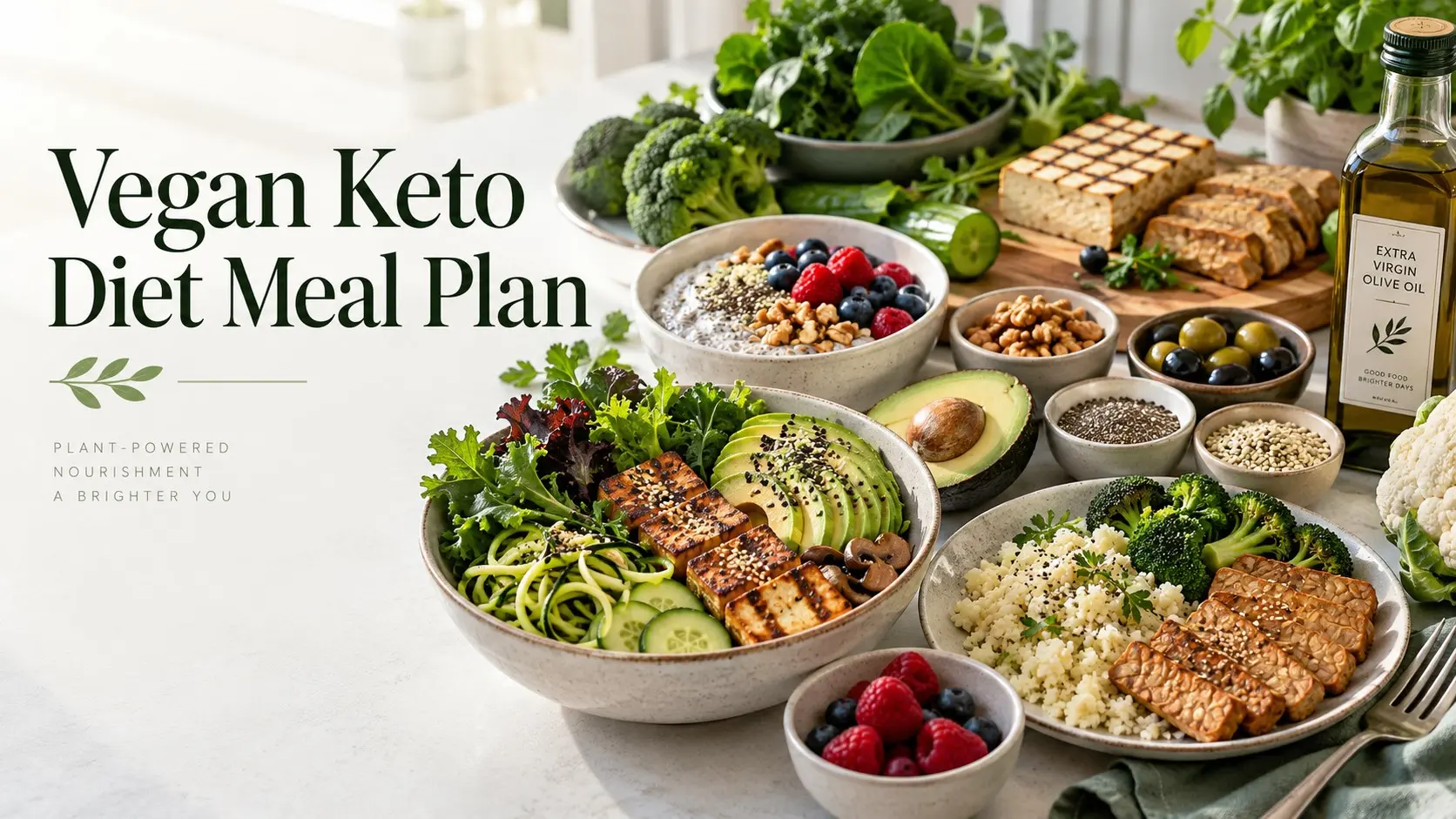
Quick answer: A Vegan Keto Diet Meal Plan combines a fully vegan eating pattern with very low carbohydrate intake. Meals usually rely on tofu, tempeh, seitan when tolerated, nuts, seeds, avocado, olive oil, low-carbohydrate vegetables, and fortified foods. The hard part is meeting protein, fibre, vitamin B12, iodine, calcium, iron, and omega-3 needs while carbohydrate intake stays very low.
A vegan diet excludes animal foods.
A ketogenic diet restricts carbohydrates enough for the body to produce higher levels of ketones.
True ketogenic diets often restrict carbohydrate much more than ordinary low-carbohydrate diets.
Research and clinical programs commonly use intakes around 20 to 50 grams of carbohydrate per day, although the exact intake required for nutritional ketosis differs from person to person.
This is why a vegan keto diet is much more restrictive than simply eating fewer refined carbohydrates.
Vegan Keto Is Not the Same as a Healthy Vegan Diet
This distinction matters.
A normal balanced vegan diet can include:
- Beans
- Lentils
- Chickpeas
- Whole grains
- Fruit
- Potatoes
- Other starchy vegetables
Those are nutritious foods.
A strict keto plan limits many of them because of carbohydrate content.
That restriction is about ketosis.
It does not mean oats, lentils, fruit, or potatoes suddenly became unhealthy.
The current NHS vegan guidance still recommends a varied eating pattern with vegetables, fruit, starchy foods, legumes, fortified dairy alternatives, nuts, seeds, and appropriate supplements or fortified foods. A vegan keto diet cuts away several of those easy nutrient sources. That is why planning matters more.
What Does the Latest Research Say?
The strongest new evidence comes from a 2026 systematic review of plant-based low-carbohydrate and ketogenic diets.
The authors reviewed clinical evidence on weight, blood lipids, glucose control, adherence, nutrition, and sustainability.
Their conclusion was mixed rather than dramatic.
Plant-based low-carbohydrate and ketogenic diets showed useful metabolic effects in controlled research.
Evidence certainty was moderate for weight and lipid outcomes and moderate to low for glycemic outcomes.
But strict plant-based ketogenic diets were harder to maintain in normal free-living conditions.
The authors also emphasized supervision for strict ketogenic versions.
That is a much better summary than calling vegan keto the healthiest diet in the world.
Does Vegan Keto Cause More Weight Loss?
Not automatically.
A recent 2026 meta-analysis comparing ketogenic diets with higher carbohydrate diets under similar prescribed energy conditions found a small additional average weight loss with ketogenic diets.
The difference was about 1.5 kilograms.
But the certainty of evidence was low.
Most studies were short.
The researchers also noted uncertainty about actual food and protein intake.
So keto can be one method of reducing food intake.
It is not a metabolic loophole.
A diet still has to fit your energy needs, health, appetite, and ability to continue it.
The First Rule: Build the Diet Around Protein
This is where many vegan keto menus fail.
They start with fat.
I would start with plant protein.
Useful lower-carbohydrate vegan protein foods include:
- Tofu
- Tempeh
- Plain seitan if you tolerate gluten
- Unsweetened soy foods
- Edamame in portions that fit your carbohydrate target
- Hemp seeds
- Chia seeds
- Some nuts and seeds
- Unsweetened vegan protein powder when normal food is not practical
Nuts and seeds contain protein.
They are not pure protein foods.
They also contain a lot of fat and energy.
That makes tofu, tempeh, seitan, and soy foods especially useful when you want meaningful protein without adding cups of nuts.
For more protein ideas, see the NextFitLife High Protein Foods Guide.
Do Not Build Vegan Keto Around Coconut Oil
Keto does not require large amounts of saturated fat.
This is one of the biggest mistakes in old keto meal plans.
A vegan version can easily become:
- Coconut oil
- Coconut cream
- Vegan cheese
- Processed keto snacks
- Large amounts of nut butter
That is not the version I recommend.
The 2026 American Heart Association dietary guidance recommends replacing sources of saturated fat with unsaturated fats and prioritizing minimally processed foods.
Use more:
- Extra virgin olive oil
- Avocado
- Walnuts
- Almonds
- Chia seeds
- Flaxseed
- Hemp seeds
- Tahini
Coconut foods can still fit.
They do not need to be the foundation.
Your Vegas Keto Nutrient Checklist
| Nutrient | Why It Needs Attention | Useful Vegan Sources |
|---|---|---|
| Protein | Many common vegan protein foods are also rich in carbohydrate | Tofu, tempeh, seitan, soy foods, selected protein powders |
| Vitamin B12 | Natural reliable vegan food sources are very limited | Fortified foods and an appropriate B12 supplement |
| Calcium | Dairy is excluded | Calcium set tofu, fortified unsweetened plant drinks, tahini, suitable greens |
| Iron | Plant iron is absorbed less efficiently | Tofu, tempeh, seeds, leafy greens, suitable legumes in planned portions |
| Iodine | Dairy, eggs, and seafood are absent | Iodized salt in an appropriate amount or a clinician reviewed supplement |
| Omega 3 fats | Fish is absent | Chia, flaxseed, walnuts, hemp seeds, and algae derived DHA or EPA when appropriate |
| Fiber | Grains, many fruits, and larger legume servings are restricted | Chia, flaxseed, avocado, leafy vegetables, broccoli, cauliflower, seeds |
| Vitamin D | Natural vegan food sources are limited | Fortified foods and an appropriate supplement when needed |
Vitamin B12 Is Not Optional
This deserves its own section.
NIH states that people eating little or no animal food have a greater risk of vitamin B12 deficiency because natural food sources are mainly animal foods.
A strict vegan diet therefore needs a reliable B12 source.
That usually means fortified foods, supplementation, or both.
Do not rely on unfortified nutritional yeast, mushrooms, fermented foods, spirulina, or sea vegetables as your only B12 strategy.
Check labels.
If a product is fortified, the amount should be listed.
See the NextFitLife Vitamin B12 Foods Guide for more detail.
Iodine Is Easy to Miss
A vegan diet removes several common iodine sources.
NIH lists seafood, dairy foods, and eggs among major iodine sources.
Those foods disappear on vegan keto.
Plant foods are not reliable iodine sources because the amount depends heavily on soil.
This is why iodized salt can be useful.
Do not assume pink salt, sea salt, kosher salt, or specialty salt contains iodine.
Many do not.
Seaweed is not a simple solution because iodine levels can vary widely.
If iodine intake is uncertain, talk with a registered dietitian or healthcare professional about an appropriate plan.
Omega 3 Fats Need a Plan Too
Vegan keto actually makes one part easier.
Nuts and seeds fit the diet well.
NIH identifies flaxseed, chia seeds, walnuts, and plant oils as sources of the omega 3 fat ALA.
Use them regularly.
For people who want a direct vegan source of DHA or EPA, algae based products are available.
Supplement choice and dose should fit the person's diet and medical needs.
Fiber Can Drop Fast on Keto
Cut grains.
Cut most fruit.
Reduce legumes.
Suddenly constipation becomes much easier.
Do not make your keto menu a plate of tofu sitting in oil.
Add:
- Leafy greens
- Broccoli
- Cauliflower
- Zucchini
- Mushrooms
- Cucumber
- Eggplant
- Avocado
- Chia seeds
- Ground flaxseed
Drink enough fluid too.
People with heart failure, kidney disease, or another prescribed fluid restriction need individual advice.
What Foods Fit a Vegan Keto Plan?
| Food Group | Useful Choices |
|---|---|
| Plant protein | Tofu, tempeh, seitan, unsweetened soy products, selected vegan protein powders |
| Low carbohydrate vegetables | Spinach, kale, broccoli, cauliflower, zucchini, cucumber, mushrooms, eggplant, cabbage, peppers |
| Unsaturated fats | Olive oil, avocado, walnuts, almonds, chia, flaxseed, hemp seeds, tahini |
| Lower carbohydrate fruit | Small portions of berries when they fit the daily plan |
| Fortified foods | Unsweetened fortified soy or pea drinks, fortified soy yogurt, fortified nutritional yeast |
| Flavor | Herbs, spices, vinegar, lemon or lime in suitable portions, garlic, ginger |
Which Healthy Vegan Foods Become Harder to Fit?
This is the uncomfortable part of strict keto.
Several excellent vegan foods become harder to use in normal portions.
Examples include:
- Lentils
- Chickpeas
- Kidney beans
- Black beans
- Oats
- Brown rice
- Quinoa
- Whole grain bread
- Potatoes
- Sweet potatoes
- Bananas
- Most other fruit in large servings
These foods are not unhealthy.
They simply contain more carbohydrate than a strict ketogenic plan usually allows.
If cutting these foods makes the diet difficult, a less restrictive plant-based low-carbohydrate diet may fit you better.
That option is supported by the 2026 review too, which found plant-based low-carbohydrate approaches easier to sustain than stricter plant-based ketogenic diets.
12 Vegan Keto Recipes
I built these around protein and vegetables first.
The recipes do not provide fixed carbohydrate numbers because tofu, tempeh, plant milks, sauces, protein powders, and packaged products vary between brands.
If you need a strict carbohydrate prescription, calculate it from the exact foods you buy or work with a registered dietitian.
1. Tofu Spinach Avocado Scramble
You need:
- Firm tofu
- Spinach
- Mushrooms
- Tomato in a suitable portion
- Turmeric
- Black pepper
- Avocado
- A small amount of olive oil
Crumble the tofu into a pan.
Add mushrooms and spinach.
Season with turmeric and pepper.
Serve with sliced avocado.
If you use nutritional yeast for B12, check that the product is actually fortified.
2. Chia Hemp Soy Yogurt Bowl
You need:
- Plain unsweetened fortified soy yogurt
- Chia seeds
- Hemp seeds
- A small portion of berries
- Chopped walnuts
- Cinnamon
Mix the chia into the yogurt.
Let it thicken.
Add hemp seeds, walnuts, cinnamon, and berries.
This is a better vegan keto breakfast than drinking oil in coffee.
3. Tempeh Cauliflower Rice Skillet
You need:
- Tempeh
- Cauliflower rice
- Broccoli
- Mushrooms
- Garlic
- Ginger
- Olive or another suitable unsaturated oil
- Low-sugar sauce or seasoning
Brown the tempeh.
Add vegetables.
Finish with cauliflower rice and seasoning.
Read packaged sauce labels because sugar can add up quickly.
4. Sesame Tofu Cabbage Bowl
You need:
- Firm tofu
- Shredded cabbage
- Cucumber
- Spinach
- Sesame seeds
- Tahini
- Lemon or vinegar
Cook the tofu until golden.
Serve over cabbage and spinach.
Add cucumber.
Thin tahini with water and lemon for a simple dressing.
5. Zucchini Noodles With Tofu Pesto
You need:
- Zucchini noodles
- Firm tofu
- Basil
- Walnuts
- Olive oil
- Garlic
- Lemon
- Leafy greens
Blend basil, walnuts, garlic, lemon, and a modest amount of olive oil.
Cook the tofu separately.
Toss with warm zucchini noodles.
You do not need to drown the meal in pesto.
6. Tempeh Lettuce Cups
You need:
- Crumbled tempeh
- Lettuce leaves
- Mushrooms
- Shredded cabbage
- Chopped cucumber
- Ginger
- Sesame seeds
Cook the tempeh with mushrooms and ginger.
Spoon it into lettuce leaves.
Add cabbage, cucumber, and sesame.
This works well for lunch because it travels better than many complicated keto recipes.
7. Seitan Broccoli Stir Fry
You need:
- Plain seitan
- Broccoli
- Peppers
- Mushrooms
- Garlic
- Ginger
- Sesame or olive oil in a modest amount
Slice the seitan.
Cook it with the vegetables.
Season to taste.
Check the product label because commercial seitan can contain added carbohydrate and sodium.
Do not use seitan if you have celiac disease or need to avoid gluten.
8. Roasted Eggplant With Tahini Tofu
You need:
- Eggplant
- Firm tofu
- Tahini
- Lemon
- Parsley
- Cucumber
- Olive oil
Roast the eggplant.
Cook or bake the tofu.
Serve together with cucumber and parsley.
Use tahini as a sauce rather than pouring it without measuring.
9. Edamame Tofu Crunch Bowl
You need:
- Tofu
- A measured portion of edamame
- Cabbage
- Cucumber
- Spinach
- Sesame seeds
- Lime
Combine cooked tofu with the vegetables.
Add edamame in an amount that fits your daily carbohydrate target.
Finish with sesame and lime.
Edamame is nutritious.
Strict keto still requires portion awareness.
10. Cauliflower Tempeh Taco Bowl
You need:
- Tempeh
- Cauliflower rice
- Lettuce
- Avocado
- Tomato in a suitable portion
- Coriander
- Lime
- Chili and cumin
Season and cook the tempeh.
Serve over cauliflower rice and lettuce.
Add avocado, coriander, and lime.
Skip sugary bottled sauces.
11. Mushroom Tofu Cream Soup
You need:
- Mushrooms
- Silken tofu
- Vegetable stock
- Spinach
- Garlic
- Herbs
- Olive oil
Cook the mushrooms and garlic.
Add stock.
Blend part of the soup with silken tofu for creaminess.
Add spinach at the end.
This avoids making coconut cream the automatic answer to every vegan keto soup.
12. Fortified Soy Chia Pudding
You need:
- Unsweetened fortified soy drink
- Chia seeds
- Ground flaxseed
- Cinnamon
- A small portion of berries
- Walnuts if desired
Mix and refrigerate until thick.
Use a fortified soy drink that contributes nutrients such as calcium and, depending on the product, vitamin B12 or vitamin D.
Check the label.
A Practical 7 Day Vegan Keto Meal Plan
This is a planning example.
It is not an individualized medical diet.
| Day | Breakfast | Lunch | Dinner |
|---|---|---|---|
| Day 1 | Tofu spinach avocado scramble | Sesame tofu cabbage bowl | Tempeh cauliflower rice skillet |
| Day 2 | Chia hemp soy yogurt bowl | Tempeh lettuce cups | Zucchini noodles with tofu pesto |
| Day 3 | Fortified soy chia pudding | Edamame tofu crunch bowl | Roasted eggplant with tahini tofu |
| Day 4 | Tofu spinach avocado scramble | Mushroom tofu cream soup | Seitan broccoli stir fry |
| Day 5 | Chia hemp soy yogurt bowl | Cauliflower tempeh taco bowl | Sesame tofu cabbage bowl |
| Day 6 | Fortified soy chia pudding | Zucchini noodles with tofu pesto | Tempeh cauliflower rice skillet |
| Day 7 | Tofu spinach avocado scramble | Roasted eggplant with tahini tofu | Mushroom tofu cream soup with a side salad |
What About Snacks?
Snacks are optional.
Do not add them because a meal plan says you must.
If you are hungry or need more food, options can include:
- A small portion of walnuts
- Celery or cucumber with tofu dip
- Olives
- A small portion of avocado
- Unsweetened soy yogurt
- Chia pudding
- Roasted tofu cubes
- A measured portion of edamame
Large portions of nuts can make energy intake rise very quickly.
What About Vegan Keto Breakfast?
Breakfast is where vegan keto often becomes repetitive.
You do not need avocado every morning.
Rotate:
- Tofu scramble
- Fortified soy chia pudding
- Unsweetened soy yogurt with seeds
- Leftover tempeh and vegetables
- A savory tofu bowl
For more plant protein breakfast ideas that do not require keto, see the Vegan High Protein Breakfast Guide.
Do You Need to Count Net Carbs?
You need some way to track carbohydrates if strict ketosis is truly your goal.
But food labels, recipes, and online databases can differ.
I would focus on the actual nutrition label for the exact products you use.
Pay attention to:
- Total carbohydrate
- Fiber
- Serving size
- Added sugar
- Ingredients
Do not assume a product is suitable just because the front says keto.
Do You Need to Measure Ketones?
Not everyone following a low carbohydrate diet needs to chase ketone numbers.
Therapeutic ketogenic diets are different.
For epilepsy, GLUT1 deficiency, or another medically prescribed ketogenic therapy, follow the clinical team managing the condition.
A general internet meal plan should not be used to manage a neurological disorder.
Can Vegan Keto Help Type 2 Diabetes?
Carbohydrate restriction can improve glucose control for some adults with type 2 diabetes.
But there is no single best macronutrient pattern for everyone.
The 2026 American Diabetes Association guidance emphasizes individualized nutrition based on preferences, needs, medications, and metabolic goals.
ADA also notes that long term advantages of low carbohydrate diets over balanced carbohydrate diets are not clear.
Medication changes can make this dangerous to manage alone.
SGLT2 Medicines and Keto Need Special Caution
This is one of the most important safety sections.
ADA guidance warns people using SGLT2 inhibitors about ketogenic eating because very low carbohydrate intake can increase the risk of diabetic ketoacidosis.
This can occur even when blood glucose is not extremely high.
Medicines in this class include drugs such as:
- Empagliflozin
- Dapagliflozin
- Canagliflozin
- Ertugliflozin
Do not start keto and then adjust diabetes medicine on your own.
Talk with the clinician managing your diabetes.
Who Should Avoid a General Vegan Keto Plan?
I would not use this article as a personal keto prescription if you:
- Are pregnant
- Are breastfeeding
- Are a child or teenager
- Have kidney disease
- Have a history of an eating disorder
- Are underweight
- Have significant liver disease
- Have pancreatic disease
- Have serious gallbladder problems
- Use an SGLT2 inhibitor
- Use insulin or medicine that can cause hypoglycemia without medical supervision
- Need a medically prescribed ketogenic diet for epilepsy or another neurological condition
The ADA specifically advises against very low carbohydrate plans during pregnancy and lactation, for children, in kidney disease, and in people with or at risk for disordered eating.
What Is the Keto Flu?
Some people report headaches, fatigue, nausea, constipation, poor concentration, or feeling unwell when they sharply reduce carbohydrate intake.
These symptoms are often called keto flu.
That is not an official infection.
It is a loose name for symptoms that occur during the diet transition.
Dehydration, reduced food intake, constipation, and shifts in fluid and sodium balance can contribute.
Severe symptoms are not something to push through.
Electrolytes Need More Sense, Not More Powder
Keto marketing often sells large electrolyte powders.
You do not automatically need them.
Food and appropriate fluid intake come first.
Use vegetables, tofu, nuts, seeds, and other nutrient-rich foods.
Iodized salt can help with iodine and sodium when appropriate.
But people with hypertension, kidney disease, heart failure, or prescribed sodium limits need individual advice.
Can Vegan Keto Raise LDL Cholesterol?
It can in some people.
This is one reason fat quality matters.
A diet based heavily on coconut oil and saturated fat may raise LDL cholesterol.
The 2026 American Heart Association guidance favours unsaturated fats and minimally processed foods for cardiovascular health.
A better vegan keto plate uses more:
- Olive oil
- Avocado
- Walnuts
- Chia
- Flaxseed
- Tahini
- Whole soy foods
If your LDL rises substantially after starting keto, talk with your healthcare professional rather than ignoring the result because weight is dropping.
What Lab Tests Might Be Worth Discussing?
A restrictive diet can justify a nutrition review, especially when used for months.
Depending on your health and diet, a clinician may consider checking:
- Vitamin B12 status
- Iron studies
- Vitamin D
- Blood lipids
- Glucose or A1C when relevant
- Kidney function
- Other nutrients based on symptoms and diet history
There is no universal test panel that every vegan keto eater needs.
Use symptoms, medical history, diet quality, and clinician judgment.
Vegan Keto and Constipation
This is common enough to plan for.
Do not wait until you have removed nearly every fibre-rich food.
Use:
- Chia seeds
- Ground flaxseed
- Avocado
- Broccoli
- Cauliflower
- Leafy greens
- Zucchini
- Eggplant
- Enough fluid when medically appropriate
Persistent constipation, severe abdominal pain, vomiting, blood in stool, or unexplained weight loss needs medical evaluation.
For wider digestive nutrition guidance, see the NextFitLife Gut Health Foods Guide.
Can Vegan Keto Build Muscle?
Yes, if total protein and energy are adequate and you train.
Keto itself does not build muscle.
Plant foods still need to provide enough protein.
Tofu, tempeh, seitan, soy foods, and selected vegan protein powders make the job easier.
Resistance training matters too.
If you cut calories aggressively while also cutting carbohydrate and protein, muscle retention becomes harder.
Can You Exercise on Vegan Keto?
Yes.
But your response depends on the activity.
Easy walking and moderate resistance training may feel normal once the diet is established.
High-intensity activity depends heavily on carbohydrate metabolism.
Some athletes therefore find strict keto harder to sustain for repeated high-intensity work.
You do not need ketosis to become fit.
Is Vegan Keto Better Than a Normal Vegan Diet?
There is no evidence that vegan keto is universally healthier.
A standard vegan diet gives you much more room for:
- Beans
- Lentils
- Whole grains
- Fruit
- Starchy vegetables
Those foods make fibre and micronutrient intake easier.
The NHS says a well-planned vegan diet can meet nutritional needs when it includes varied foods, fortified products, and supplements where needed.
A strict keto layer makes the planning harder.
Would a Moderate Plant-Based Low-Carb Diet Be Easier?
For many people, yes.
This may be the most useful conclusion from the 2026 research.
You can lower refined carbohydrates without trying to stay in ketosis.
That lets you keep foods such as:
- Lentils
- Beans
- More fruit
- Some whole grains
A moderate low carbohydrate vegan diet may be easier to maintain and easier to make nutritionally complete.
You do not get bonus health points for making the diet more restrictive than necessary.
Common Vegan Keto Mistakes
Starting With Fat Instead of Protein
Build the meal around tofu, tempeh, seitan, or another suitable protein first.
Living on Coconut Products
Use more unsaturated fats.
Ignoring Vitamin B12
Vegans need a reliable source.
Using Specialty Salt Without Checking Iodine
Many specialty salts are not iodized.
Cutting Vegetables Because They Contain Carbohydrates
Low-carbohydrate vegetables should make up a large part of the plate.
Drinking Keto Products Instead of Eating Meals
You do not need ketone drinks, oil coffee, or keto shakes to follow a low carbohydrate diet.
Eating Unlimited Nuts
Nuts are nutritious and very energy dense.
Assuming Vegan Means Heart Healthy
A diet high in coconut oil and ultra-processed vegan foods can still be poor quality.
Ignoring Constipation
Plan fiber before it becomes a problem.
Changing Diabetes Medicine Without Medical Advice
This can be dangerous.
My Practical Approach
If someone wants to try vegan keto, I would simplify the plan.
Start with plant protein.
Add a large amount of low-carbohydrate vegetables.
Use unsaturated fats.
Use seeds for fibre and omega-3 fats.
Choose fortified foods on purpose.
Have a reliable B12 plan.
Check iodine.
And decide whether the restriction is actually helping.
If the diet makes normal eating miserable, constipation constant, training poor, or nutrient planning impossible, move to a less restrictive plant based pattern.
Conclusion
A Vegan Keto Diet Meal Plan can work, but it needs much more planning than a standard vegan diet.
Build meals around tofu, tempeh, vegetables, chia, flaxseed, nuts, seeds, avocado, olive oil, and fortified foods.
Protect vitamin B12, iodine, calcium, iron, fibre, and omega-3 intake.
Do not build the diet around coconut oil and packaged keto products.
And do not use strict keto when your health or medication makes it unsafe.
Your next step: Before cutting carbohydrates further, write down one full day of food. Check where your protein, vitamin B12, iodine, calcium, fibre, and omega-3 fats are coming from. If you cannot answer those six questions, fix the plan before chasing ketosis.
References and Sources
The following open or publicly accessible sources were used to research and fact check this guide:
- Mazzola G, Rondanelli M, Cabrini C, Perna S. Metabolic, Adherence, and Sustainability Outcomes of Plant Based Low Carbohydrate and Ketogenic Diets: A Systematic Review of Clinical Evidence. Nutrition. 2026. This 2026 systematic review evaluates plant-based low-carbohydrate and ketogenic diets, including metabolic outcomes, nutrient adequacy, adherence, and long-term feasibility.Read the 2026 Systematic Review on PubMed
- American Diabetes Association. Standards of Care in Diabetes 2026, Facilitating Positive Health Behaviours and Well-Being. Current ADA guidance covers carbohydrate restriction, nutrient quality, intentional weight loss, protein and micronutrient monitoring, and the risk of ketogenic eating with SGLT2 medicines.Read the ADA 2026 Nutrition Guidance
- NHS. The Vegan Diet. Reviewed June 5, 2026.NHS guidance covers balanced vegan eating and nutrients that need particular attention, including vitamin B12, iodine, calcium, iron, vitamin D, selenium, and omega-3 fats.Read the NHS Vegan Diet Guide
- National Institutes of Health Office of Dietary Supplements. Vitamin B12 Fact Sheet.NIH explains why vegans have a higher risk of vitamin B12 inadequacy and why fortified foods or supplementation are important reliable sources.Read the NIH Vitamin B12 Fact Sheet
- American Heart Association. 2026 Dietary Guidance to Improve Cardiovascular Health. The current AHA guidance emphasizes vegetables, fruits, healthy protein sources, unsaturated fats, minimally processed foods, and limiting saturated fat, added sugars, and excess sodium.Read the AHA 2026 Dietary Guidance
Continue Reading on NextFitLife
Use these related NextFitLife guides to build a safer and more complete plant-based eating plan:
- Nutrition and Vitamins: Hebrew vitamin B12, iron, calcium, vitamin D, iodine, magnesium, supplements, deficiencies, and food sources.
- Vegan High Protein Breakfast: Find plant-based breakfast ideas with tofu, soy foods, seeds, oats, and other protein sources when strict keto is not required.
- Vitamin B12 Rich Foods Guide: Learn why fortified foods and supplements are especially important for people who eat no animal foods.
- High Protein Foods for Weight Loss: Compare tofu, tempeh, edamame, lentils, beans, and other protein foods and see how protein fits into weight management.
- Top Healthy Foods Guide: Build a varied diet around vegetables, fruit, beans, whole grains, tofu, nuts, seeds, and healthier fats.
- Nutrition Tips for Improving Your Health: Use practical food habits to improve meal quality, fibre, protein, fats, hydration, and nutrient variety.
- Gut Health Foods Guide: Learn why fibre and food variety matter and how highly restrictive diets can affect bowel habits.
Main nutrition hub: Visit the NextFitLife Nutrition and Vitamins Hub for more guidance on nutrients, fortified foods, deficiencies, supplements, and food first nutrition.
About the Author
Adel Galal is the Founder and Lead Writer at NextFitLife.
He focuses on making health, fitness, nutrition, and wellness information easier to understand and use in real life.
His content combines real-life experience, extensive research, and consultation with healthcare providers.
For restrictive eating patterns such as vegan keto, he gives extra attention to protein quality, micronutrient gaps, long-term adherence, medication safety, and whether a less restrictive eating pattern can reach the same practical goal.
Adel is not a doctor, dermatologist, registered dietitian, endocrinologist, kidney specialist, cardiologist, diabetes specialist, or licensed healthcare professional.
This article provides general education only and does not prescribe a therapeutic ketogenic diet or individualized carbohydrate target.
Learn more about Adel, NextFitLife, and the site's editorial approach on the About Us page.
Frequently Asked Questions
Can you do keto on a vegan diet?
Yes. A vegan ketogenic diet can be built around tofu, tempeh, seitan when tolerated, soy foods, nuts, seeds, avocado, unsaturated oils, and low-carbohydrate vegetables. Careful planning is needed to avoid nutrient gaps.
What can vegans eat on keto?
Useful foods include tofu, tempeh, seitan, unsweetened soy foods, cauliflower, broccoli, leafy greens, zucchini, mushrooms, avocado, olives, nuts, chia, flaxseed, hemp seeds, tahini, and olive oil.
What is the biggest problem with vegan keto?
The main challenge is nutrient adequacy. It can be difficult to get enough protein, fibre, vitamin B12, iodine, calcium, iron, vitamin D, and omega-3 fats while also keeping carbohydrates very low.
Do vegans need vitamin B12 on keto?
Yes. A fully vegan diet needs a reliable source of vitamin B12 from fortified foods, supplements, or both. Keto does not change that requirement.
Can tofu be eaten on keto?
Yes. Tofu is one of the most useful plant protein foods for vegan keto because it is relatively low in carbohydrates and provides meaningful protein.
Is tempeh keto friendly?
Tempeh can fit in many vegan keto plans. Carbohydrate content differs between products, so check the nutrition label and serving size.
Can I eat beans on vegan keto?
Normal portions of many beans and lentils contain too much carbohydrate for a strict ketogenic plan. Small portions of selected legumes may fit depending on the individual's carbohydrate target.
Can I eat fruit on vegan keto?
Fruit is restricted on strict keto because of carbohydrate content. Small portions of berries are easier to fit than many other fruits. Fruit is still a healthy food and does not need restriction unless ketosis is actually your goal.
Is vegan keto healthy?
It can be nutritionally adequate when carefully planned, but it is restrictive and is not automatically healthier than a balanced vegan diet. Long-term evidence remains limited.
Is vegan keto good for weight loss?
It can produce weight loss when it helps reduce energy intake. Recent evidence suggests ketogenic diets may produce a small short-term advantage under some conditions, but long-term superiority is uncertain.
Is vegan keto safe for diabetes?
It requires medical guidance when diabetes medicines are involved. People using SGLT2 medicines should avoid starting a ketogenic eating pattern without professional supervision because of ketoacidosis risk.
Can pregnant people follow vegan keto?
A general very low carbohydrate ketogenic diet is not recommended during pregnancy. A vegan pregnancy already requires careful nutrient planning, so pregnancy nutrition should be managed with qualified professional guidance.
Is vegan keto safe with kidney disease?
Do not use a general vegan keto plan with kidney disease without medical nutrition guidance. Protein, potassium, phosphorus, fluid, sodium, and energy needs can all require individual adjustment.
What fats are best for vegan keto?
Prioritize unsaturated fats from olive oil, avocado, walnuts, almonds, seeds, and tahini rather than making coconut oil and processed high-saturated-fat foods the foundation of the diet.
How do vegans get omega-3 on keto?
Chia seeds, flaxseed, walnuts, hemp seeds, and some plant oils provide ALA omega-3 fats. Vegan algae-derived DHA and EPA products are also available.
How do vegans get iodine on keto?
Iodized salt is one practical source when sodium intake allows it. Many specialty salts are not iodized. Vegan iodine intake deserves attention because dairy, eggs, and seafood are absent.
Does vegan keto cause constipation?
It can if grains, fruit, and legumes are removed without replacing their fibre. Use chia, flaxseed, avocado, leafy vegetables, broccoli, cauliflower, and enough fluid when medically appropriate.
Is coconut oil necessary for vegan keto?
No. Keto does not require coconut oil. Olive oil, avocado, nuts, seeds, tahini, and other unsaturated fat sources can make up most of the added fat.
Is plant-based low-carb easier than vegan keto?
For many people, yes. A moderate plant-based low-carbohydrate diet allows more beans, lentils, fruit, and whole grains and may be easier to sustain while still reducing refined carbohydrate intake.

Health & wellness writer with 30+ years of experience in nutrition, fitness, and healthy aging. Founder of NextFitLife.com — evidence-based health guidance.