Published: May 26, 2024
Last updated: July 21, 2026
Next review: July 2027, or earlier if important diabetes, medicine, or ketogenic-diet guidance changes
Written by: Adel Galal, Founder and Lead Writer at NextFitLife
Review status: Written and source checked by Adel Galal. Not medically reviewed by a doctor, registered dietitian, endocrinologist, cardiologist, nephrologist, pharmacist, obstetric clinician, pediatric specialist, or eating-disorder professional.
What changed: Removed “healing” and cure language, removed self-review and personal-experience authority claims, replaced universal carbohydrate targets with individualized guidance, expanded insulin and SGLT2 medicine warnings, distinguished nutritional ketosis from diabetic ketoacidosis, strengthened pregnancy, kidney, liver, pancreas, gallbladder, cholesterol, fibre, supplement, pediatric, and eating-disorder cautions, and aligned the visible FAQ with its schema.
Reading time: About 19 minutes
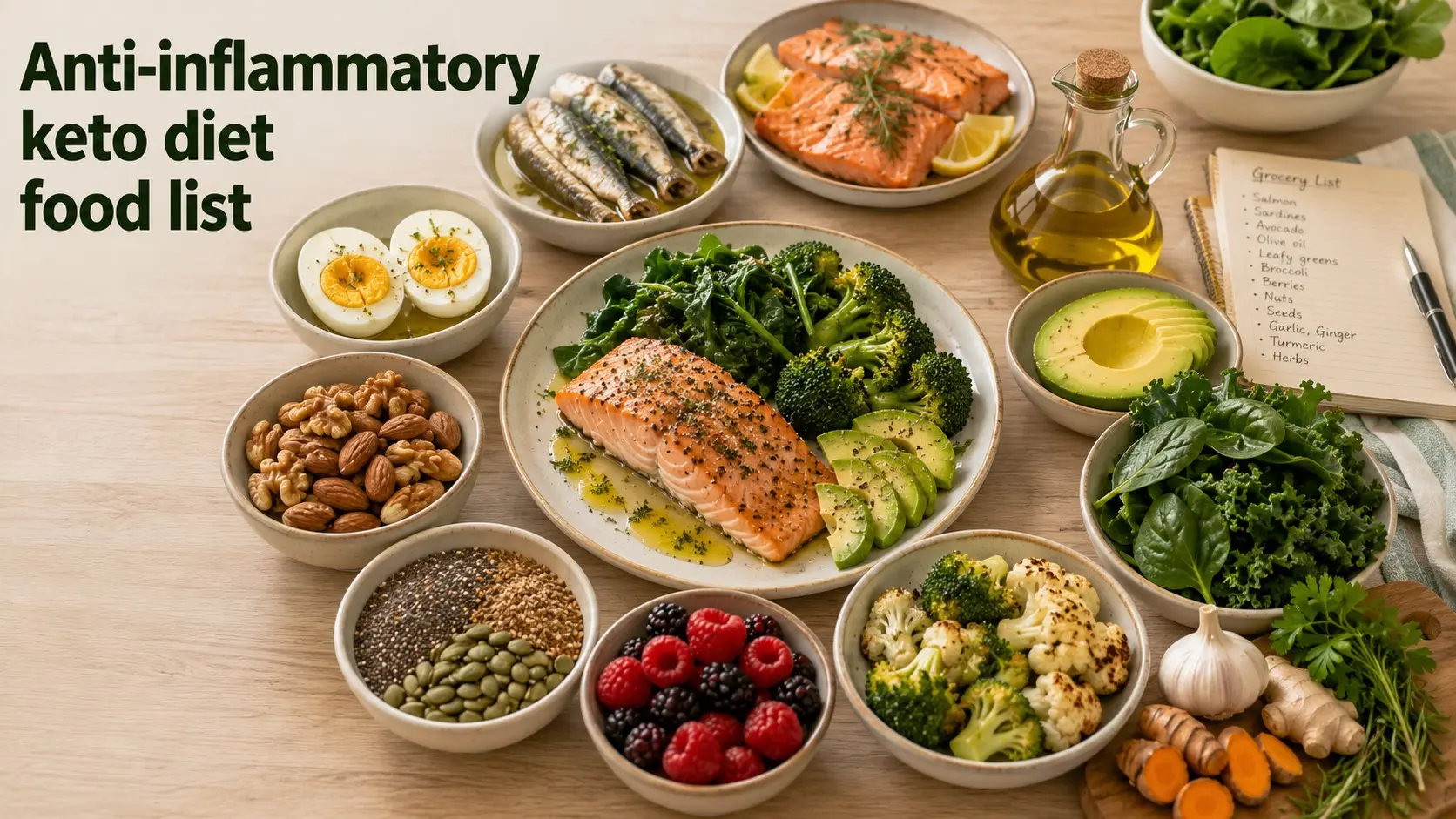
A food-quality-focused version gives priority to fish, olive oil, avocado, non-starchy vegetables, berries in suitable portions, nuts, seeds, eggs, tofu, herbs, and minimally processed protein foods.
It does not mean eating unlimited bacon, butter, coconut oil, cheese, cream, or packaged keto snacks.
Ketogenic diets may change some inflammatory markers in research, but the findings are mixed.
Any benefit may reflect weight change, reduced energy intake, lower blood glucose, fewer refined foods, or improved fat quality rather than ketosis alone.
Keto has not been proven to cure arthritis, autoimmune disease, diabetes, cancer, cardiovascular disease, inflammatory bowel disease, psoriasis, chronic pain, or another inflammatory condition.
This article explains food choices, fat quality, fibre, meal ideas, side effects, diabetes and medicine risks, who needs specialist care, and less restrictive alternatives.
Anti-Inflammatory Keto Diet Quick Answer
A safer food-quality-focused keto pattern emphasizes:
- Fatty fish
- Extra virgin olive oil
- Avocado
- Leafy green vegetables
- Broccoli, cauliflower, cabbage, and related vegetables
- Whole berries in portions that fit the plan
- Unsalted nuts
- Seeds
- Eggs or minimally processed protein alternatives
- Garlic, ginger, turmeric, and fresh herbs used as foods
Use unsaturated fats more often than butter, coconut oil, fatty processed meat, or large cheese portions.
Do not use a universal carbohydrate target from the internet.
Do not reduce insulin or diabetes medicine on your own.
A ketogenic diet can increase danger for people with type 1 diabetes and may contribute to ketoacidosis in people taking an SGLT2 medicine.
Pregnancy, breastfeeding, childhood, kidney or liver disease, pancreatic or gallbladder disease, eating-disorder history, underweight, and prescribed medical diets require specialist advice.
Review and Safety Notice
This article was written, and source checked by Adel Galal.
Adel is a health and wellness writer. He is not a doctor, registered dietitian, endocrinologist, cardiologist, nephrologist, hepatologist, pharmacist, obstetric clinician, pediatric specialist, or eating-disorder professional.
This article has not been clinically reviewed by a licensed medical or nutrition professional.
NextFitLife uses display advertising to support the website. Advertising does not determine the subjects, sources, conclusions, or recommendations on this page.
Read the Editorial Policy, Medical Review Policy, and Corrections Policy.
Important Keto and Diabetes Safety Note
Do not begin a strict ketogenic diet, stop insulin, reduce insulin, change diabetes medicine, or stop other prescription treatment because of this article.
Seek direct medical advice before major carbohydrate restriction if you:
- Have type 1 or type 2 diabetes
- Use insulin, a sulfonylurea, or another medicine that can cause low blood glucose
- Use an SGLT2 inhibitor
- Are pregnant, planning pregnancy, or breastfeeding
- Are under 18
- Have kidney, liver, pancreatic, gallbladder, or serious digestive disease
- Have had metabolic or bariatric surgery
- Are underweight or losing weight without trying
- Have an eating disorder or history of disordered eating
- Have a rare fat-metabolism disorder, porphyria, or another condition requiring a prescribed diet
Seek urgent medical help for repeated vomiting, abdominal pain, deep breathing, severe weakness, confusion, dehydration, fainting, or possible diabetic ketoacidosis.
Ketoacidosis can occur with an SGLT2 medicine even when blood glucose is not extremely high.
What Is a Ketogenic Diet?
A ketogenic diet is a very low-carbohydrate, high-fat eating pattern designed to produce nutritional ketosis.
During carbohydrate restriction, the liver produces ketone bodies that can be used as an energy source.
A ketogenic diet is more restrictive than a general lower-carbohydrate diet.
A person can reduce refined carbohydrates without entering ketosis.
There Is No Single Universal Keto Plan
Commercial plans use different carbohydrate, protein, fat, fibre, and calorie amounts.
The amount that produces ketosis varies with:
- Body size
- Activity
- Total energy intake
- Protein intake
- Medicine
- Pregnancy
- Health conditions
- Individual metabolism
A daily number found online is not a personal prescription.
People using medicine or managing a medical condition should receive an individualized plan.
What Does “Anti-Inflammatory Keto” Mean?
There is no formal clinical definition.
The phrase usually describes a ketogenic pattern that:
- Uses more unsaturated fat
- Includes non-starchy vegetables
- Includes fish, nuts, and seeds
- Uses herbs and spices as flavouring
- Limits processed meat
- Limits large amounts of butter, cream, and coconut oil
- Limits sugary drinks and refined snacks
- Limits highly processed keto products
The food choices matter more than the marketing label.
Does Keto Reduce Inflammation?
The evidence is mixed.
A 2025 systematic review and meta-analysis of randomized trials found changes in some inflammation-related markers but not a consistent improvement across every marker.1
This does not prove that keto treats inflammatory disease.
Possible changes may reflect:
- Weight loss
- Lower total energy intake
- Lower blood glucose
- Fewer sugary drinks
- Fewer refined snacks
- More fish
- Better fat quality
- Other lifestyle changes
Research on laboratory markers is not the same as proof of symptom relief, disease remission, or cure.
Food Does Not “Heal” Chronic Disease
A dietary pattern may support nutrition and general health.
It does not replace medical treatment for:
- Rheumatoid arthritis
- Lupus
- Inflammatory bowel disease
- Psoriasis
- Multiple sclerosis
- Diabetes
- Cancer
- Heart disease
- Chronic kidney disease
- Chronic pain
Feeling better after a food change does not prove that the underlying disease has been cured.
Top 10 Anti-Inflammatory Keto Food Groups
These foods can support a more nutrient-dense keto pattern.
They are not medicines.
1. Salmon, Sardines, and Other Fatty Fish
Fatty fish provide protein and long-chain omega-3 fatty acids.
Options include:
- Salmon
- Sardines
- Trout
- Mackerel
- Herring
- Anchovies
Fish can also provide vitamin B12, selenium, iodine, and sometimes vitamin D.
Choose baked, grilled, steamed, poached, or lightly sauteed preparations.
People with a fish allergy need another protein source.
Pregnant people should follow current fish-species and mercury guidance.
2. Extra Virgin Olive Oil
Extra virgin olive oil provides mostly monounsaturated fat and plant compounds.
Use it in:
- Salad dressing
- Cooked vegetables
- Fish dishes
- Egg dishes
- Soups
- Homemade sauces
Olive oil can replace some butter, cream, and animal fat.
It remains energy-dense, so use an amount that fits the meal.
3. Avocado
Avocado provides monounsaturated fat, fibre, potassium, folate, and vitamin E.
It can be served with eggs, fish, poultry, tofu, or salad.
People with kidney disease may need an individualized potassium plan.
There is no universal serving that suits everyone.
4. Leafy Green Vegetables
Examples include:
- Spinach
- Kale
- Collard greens
- Arugula
- Swiss chard
- Lettuce
- Watercress
Leafy greens can provide fibre, folate, magnesium, carotenoids, and vitamin K.
People taking warfarin need a consistent vitamin K intake rather than suddenly avoiding greens.
5. Broccoli, Cauliflower, Cabbage, and Related Vegetables
These vegetables can provide fibre, vitamin C, folate, and plant compounds.
Use them roasted, steamed, sautéed, mashed, or added to soup.
Increase portions gradually if they worsen gas or bloating.
6. Whole Berries
Raspberries, blackberries, and strawberries may fit in portions that match the person’s carbohydrate plan.
Whole berries provide more fibre than juice.
Dried berries may contain concentrated carbohydrates or added sugar.
Check labels carefully.
7. Unsalted Nuts
Nuts can provide unsaturated fats, protein, magnesium, vitamin E, and fibre.
Options include:
- Walnuts
- Almonds
- Hazelnuts
- Pecans
- Pistachios
- Macadamia nuts
Nuts are energy-dense.
Use a practical portion rather than eating directly from a large package.
Avoid nuts when allergy precautions require it.
8. Chia, Flax, Hemp, Pumpkin, and Sesame Seeds
Seeds may support fibre and mineral intake.
Add them gradually to yogurt, vegetables, salads, or egg dishes.
Chia absorbs fluid.
Ground flaxseed is easier to digest than whole flaxseed for many people.
People with swallowing problems, bowel narrowing, kidney disease, or fluid restrictions need individualized advice.
9. Eggs and Minimally Processed Protein Foods
Eggs provide protein, choline, vitamin B12, selenium, iodine, and fat.
Other options may include:
- Chicken
- Turkey
- Tofu
- Tempeh
- Plain yogurt
- Unsweetened soy foods
Eggs and protein foods support nutrition but are not anti-inflammatory treatments.
10. Garlic, Ginger, Turmeric, and Fresh Herbs
Herbs and spices can improve flavour without relying on sugar or excess salt.
Use ordinary food amounts.
A culinary amount is not equivalent to a concentrated capsule or extract.
High-dose supplements may interact with anticoagulants, diabetes medicine, blood-pressure medicine, or other drugs.
Food List Summary
| Food group | What it can provide | Practical use | Important caution |
|---|---|---|---|
| Fatty fish | Protein and omega-3 fats | Serve with vegetables and olive oil | Allergy and pregnancy fish guidance may apply |
| Olive oil | Mostly monounsaturated fat | Use for dressing and cooking | Energy-dense |
| Avocado | Unsaturated fat, fibre, potassium | Add to eggs, fish, tofu, or salad | Kidney potassium limits may apply |
| Leafy greens | Folate, magnesium, vitamin K, fibre | Add to eggs, soup, salads, or cooked meals | Warfarin consistency matters |
| Cruciferous vegetables | Fibre, vitamin C, folate | Roast, steam, mash, or add to soup | May worsen gas in some people |
| Berries | Fibre, vitamin C, plant compounds | Add a suitable portion to plain yogurt | Carbohydrate amount still counts |
| Nuts | Unsaturated fat, protein, magnesium | Use as a snack or meal addition | Allergy and portion size matter |
| Seeds | Fibre, fat, protein, minerals | Add gradually to meals | Swallowing and fluid needs may matter |
| Eggs or tofu | Protein and micronutrients | Serve with vegetables and suitable fats | Allergy and medical needs differ |
| Herbs and spices | Flavour and plant compounds | Use in ordinary culinary amounts | Supplements are not equivalent to food |
Why Fat Quality Matters on Keto
A ketogenic diet can become high in saturated fat when it relies on:
- Butter
- Coconut oil
- Cream
- Fatty meat
- Processed meat
- Large cheese portions
The American Heart Association advises replacing saturated-fat sources with unsaturated fats such as non-tropical liquid plant oils.5
AHA also states that saturated and trans fats raise LDL cholesterol and that unsaturated fats can help lower LDL when they replace saturated fat.6
Use more:
- Olive oil
- Avocado
- Fish
- Nuts
- Seeds
Use less:
- Butter
- Coconut and palm oils
- Cream
- Fatty processed meat
- Large cheese portions
Keto Can Affect Blood Lipids Differently
Some people experience lower triglycerides.
Some experience a marked increase in LDL cholesterol.
The response is individual.
A rise in HDL does not cancel out every concern about a large LDL increase.
People using keto beyond a short period should discuss lipid monitoring and cardiovascular risk with a qualified clinician.
Foods to Limit on a Food-Quality-Focused Keto Plan
Processed Meat
Limit frequent large servings of:
- Bacon
- Sausage
- Hot dogs
- Salami
- Processed deli meat
These foods may provide substantial sodium, saturated fat, and preservatives.
Large Amounts of Butter, Cream, and Coconut Oil
Being low in carbohydrate does not make a food the best main fat.
Use unsaturated fat sources more often.
Packaged Keto Snacks
Keto bars, cookies, chips, desserts, and shakes may contain:
- Substantial saturated fat
- Large portions
- Added sweeteners
- Low fibre
- High sodium
- Stimulants or herbal ingredients
A keto label is not a health guarantee.
Sugar Alcohols
Some sweeteners can cause gas, bloating, cramps, or diarrhea.
Product labels and “net carbohydrate” calculations can be confusing.
Monitor blood glucose when medically relevant.
Sweet Drinks and Refined Snacks
A person does not need ketosis to benefit from reducing sugary drinks, candy, and refined snack foods.
Carbohydrates, Fibre, and Constipation
There is no universal daily carbohydrate number that is safe or necessary for every person.
The amount required for ketosis differs.
A strict target can be unsafe when medicine, pregnancy, growth, kidney disease, liver disease, exercise, or an eating disorder is involved.
Total Carbohydrate Versus “Net Carbs”
“Net carbs” is a marketing and tracking term often calculated by subtracting fibre and sometimes sugar alcohols from total carbohydrate.
It is not a complete medical standard.
Sugar alcohols vary in digestion and blood-glucose effect.
Use total label information and professional guidance when precision matters.
Do Not Remove Vegetables to Lower Carbohydrates
A poorly planned keto diet may become low in fibre, folate, magnesium, potassium, and other nutrients.
Potential fibre sources include:
- Leafy greens
- Broccoli
- Cauliflower
- Cabbage
- Avocado
- Chia
- Ground flaxseed
- Berries
- Nuts
Increase fibre gradually.
Drink a suitable amount of fluid unless a clinician has prescribed a restriction.
Do not use magnesium or herbal laxatives without medical advice, especially with kidney disease.
Seek care for severe constipation, persistent abdominal pain, vomiting, blood in stool, or inability to pass stool or gas.
A Flexible Keto-Style Meal Pattern
This is a visual idea, not a medical prescription.
A meal may include:
- A generous amount of non-starchy vegetables
- A suitable portion of fish, eggs, poultry, tofu, tempeh, or another protein
- Olive oil, avocado, nuts, seeds, or another unsaturated fat
- A whole-food carbohydrate portion that fits the individualized plan
Strict keto does not require covering the plate with bacon, cheese, or butter.
Protein Should Be Individualized
A very high-protein intake is not required for nutritional ketosis.
Kidney disease, liver disease, age, activity, and total intake can change protein needs.
Sodium and Fluid Need Context
Early carbohydrate restriction may change body water and sodium balance.
Do not automatically add large amounts of salt or electrolyte powder.
People with high blood pressure, heart failure, kidney disease, or a prescribed fluid or sodium plan need individualized advice.
Three Days of Flexible Meal Ideas
These are general examples.
They do not provide a prescribed calorie, carbohydrate, protein, sodium, or potassium amount.
Day One
Breakfast: Eggs with spinach and mushrooms cooked in olive oil, with avocado if suitable.
Lunch: Salmon salad with leafy greens, cucumber, walnuts, and olive oil dressing.
Dinner: Chicken or tofu with roasted cauliflower, broccoli, and herbs.
Optional snack: Plain yogurt, berries, or a suitable portion of unsalted nuts.
Day Two
Breakfast: Plain Greek or unsweetened soy yogurt with chia, walnuts, and berries.
Lunch: Egg, tofu, or chicken lettuce wraps with cucumber and avocado.
Dinner: Trout, sardines, or tempeh with zucchini and cooked kale.
Optional snack: Vegetables with a suitable amount of nut or seed spread.
Day Three
Breakfast: Tofu scramble or eggs with vegetables and olive oil.
Lunch: Chicken, tofu, or tuna salad with cabbage, herbs, pumpkin seeds, and olive oil.
Dinner: Fish or tofu with broccoli, mushrooms, peppers, ginger, and cauliflower.
Optional snack: Plain yogurt, olives, berries, or unsalted nuts according to personal needs.
Snacks are optional.
Do not add food merely because a plan labels it keto.
Vegetarian and Vegan Keto Considerations
Vegetarian and vegan ketogenic diets are more restrictive because beans, lentils, fruit, grains, milk, and several plant proteins contain carbohydrates.
Vegetarian Options
- Eggs
- Plain yogurt
- Cheese in moderate portions
- Tofu
- Tempeh
- Unsweetened soy foods
- Nuts and seeds
- Avocado
- Olive oil
- Non-starchy vegetables
Vegan Options
- Tofu
- Tempeh
- Unsweetened soy yogurt
- Nuts and seeds
- Avocado
- Olive oil
- Non-starchy vegetables
A vegan ketogenic diet requires careful attention to:
- Vitamin B12
- Protein
- Calcium
- Iodine
- Iron
- Zinc
- Vitamin D
- Omega-3 fats
- Total energy
Professional diet planning is strongly advisable.
Pregnancy, breastfeeding, childhood, older age, and medical conditions require additional care.
Possible Keto Side Effects and Warning Signs
Possible early symptoms include:
- Headache
- Fatigue
- Dizziness
- Nausea
- Constipation
- Muscle cramps
- Poor exercise performance
- Difficulty concentrating
These symptoms may reflect:
- Reduced energy intake
- Fluid changes
- Medicine effects
- Low blood glucose
- Changes in sodium or other minerals
- Dehydration
- Another illness
Do not assume every symptom is a normal “keto flu.”
Seek prompt care for:
- Repeated vomiting
- Severe abdominal pain
- Deep or difficult breathing
- Confusion
- Fainting
- Severe weakness
- Signs of dehydration
- Very low blood glucose
- Possible ketoacidosis
Diabetes, Insulin, Sulfonylureas, and SGLT2 Medicines
Major carbohydrate restriction can change blood glucose and medicine needs.
Never Stop or Reduce Insulin on Your Own
People with type 1 diabetes need insulin.
Too little insulin can lead to diabetic ketoacidosis.
People with type 2 diabetes who use insulin may also require careful adjustment.
Low Blood Glucose
Insulin and some diabetes medicines can cause hypoglycemia when food intake, carbohydrate intake, or activity changes.
NIDDK states that low blood glucose is common in people using insulin and certain other diabetes medicines and can become severe.3
A safe plan may require:
- More frequent glucose monitoring
- Continuous glucose monitor review
- Medicine adjustment by the treatment team
- A plan for treating low blood glucose
- Sick-day instructions
SGLT2 Inhibitor Warning
SGLT2 medicines include empagliflozin, dapagliflozin, canagliflozin, and ertugliflozin.
Current FDA prescribing information for empagliflozin lists reduced caloric intake and a ketogenic diet among conditions that may precipitate ketoacidosis.2
Ketoacidosis may occur without very high blood glucose.
Do not begin keto while using an SGLT2 medicine without direct medical guidance.
Do not stop an SGLT2 medicine on your own.
Diabetes Does Not Have One Universal Diet
Some people may use a lower-carbohydrate pattern under supervision.
Others may do better with a Mediterranean, DASH, moderate-carbohydrate, or culturally familiar balanced plan.
Safety, sustainability, medicine, kidney function, and personal preferences matter.
Nutritional Ketosis and Diabetic Ketoacidosis Are Different
Nutritional ketosis is the planned production of ketones during marked carbohydrate restriction.
Diabetic ketoacidosis is a dangerous medical emergency involving severe metabolic acidosis.
DKA is most common in type 1 diabetes, but it can occur in other situations.
NIDDK states that high ketone levels can lead to DKA and require immediate treatment.4
Warning signs can include:
- Nausea
- Vomiting
- Abdominal pain
- Deep or difficult breathing
- Severe weakness
- Confusion
- Dehydration
- Fruity-smelling breath
Seek urgent medical care when DKA is possible.
Do not wait for a very high glucose reading, especially when an SGLT2 medicine is involved.
Who Needs Specialist Guidance Before Keto?
A ketogenic diet requires direct professional assessment for people who:
- Have type 1 diabetes
- Have type 2 diabetes or use glucose-lowering medicine
- Use an SGLT2 inhibitor
- Are pregnant, planning pregnancy, or breastfeeding
- Are under 18
- Have kidney disease
- Have liver disease
- Have pancreatitis or pancreatic disease
- Have gallbladder disease
- Have a rare fat-metabolism disorder
- Have porphyria
- Have an eating disorder or history of one
- Are underweight or losing weight unintentionally
- Have had metabolic or bariatric surgery
- Follow a prescribed medical diet
Pregnancy and Breastfeeding
Pregnancy and lactation increase several nutrient needs.
NIH notes important pregnancy considerations for folate, iodine, iron, choline, vitamin D, and other nutrients.7
Strict carbohydrate restriction may reduce access to fortified grains, fruit, legumes, and other nutrient sources.
Do not begin keto during pregnancy or breastfeeding without specialist care.
Children and Epilepsy
A medical ketogenic diet may be used for some people with difficult-to-control epilepsy.
This is a clinical therapy with specialist supervision, monitoring, supplements, and structured recipes.
It is not the same as a social-media weight-loss diet.
The Epilepsy Foundation describes ketogenic therapy as a medical dietary treatment and notes that ongoing monitoring is required.8
Kidney and Liver Conditions
Kidney disease can change protein, potassium, phosphorus, sodium, and fluid needs.
Liver disease can affect nutrient metabolism and tolerance.
A generic keto plan is not a kidney or liver treatment.
Pancreatic and Gallbladder Conditions
A high-fat pattern may worsen symptoms or complicate care for some people with pancreatic or gallbladder disease.
Seek personal medical advice.
Eating Disorders and Underweight
A highly restrictive diet can intensify food fear, rigid rules, bingeing, purging, or obsession with weight and carbohydrates.
Do not use keto as self-treatment for an eating disorder.
Seek specialized care.
What May Need Monitoring?
A clinician may review:
- Weight and unplanned weight change
- Blood pressure
- Blood glucose
- Low blood-glucose episodes
- A1C
- Kidney function
- Liver tests
- LDL cholesterol
- Triglycerides
- Medicine doses
- Constipation and digestive symptoms
- Micronutrient intake
- Menstrual changes
- Eating behaviour
- Hydration
Ketone testing is not required for every person who eats fewer carbohydrates.
People with diabetes need an individualized ketone-testing and sick-day plan.
Less Restrictive Alternatives
A person can improve diet quality without entering ketosis.
Mediterranean-Style Eating
A Mediterranean-style pattern may include:
- Vegetables
- Fruit
- Beans and lentils
- Whole grains
- Fish
- Olive oil
- Nuts and seeds
- Yogurt
- Herbs and spices
This pattern allows more fibre and a wider range of plant foods.
DASH-Style Eating
DASH emphasizes vegetables, fruit, whole grains, beans, suitable dairy, nuts, seeds, and lower-sodium choices.
It does not require ketosis.
Moderate Carbohydrate Reduction
Some people benefit from reducing sugary drinks, sweets, refined snacks, and oversized portions without eliminating fruit, beans, whole grains, or traditional staple foods.
The best pattern is one that is safe, nutritionally adequate, culturally workable, affordable, and sustainable.
Common Keto Myths
Myth: Keto Cures Inflammation
No. Research shows mixed changes in laboratory markers and does not prove disease treatment.
Myth: Every Fat Is Equally Healthy
No. Olive oil, nuts, seeds, avocado, and fish differ from butter, coconut oil, and processed meat.
Myth: Bacon and Cheese Can Replace Vegetables
No. Vegetables provide fibre, vitamins, minerals, and food variety.
Myth: Ketosis Guarantees Body-Fat Loss
No. Weight change still depends on energy intake, health, medicine, activity, and sustainability.
Myth: A Keto Label Makes Food Healthy
No. Packaged keto food may contain substantial saturated fat, sodium, calories, sweeteners, or stimulants.
Myth: Fruit Is Inflammatory
Whole fruit is part of many healthy eating patterns. Keto limits many fruits because of carbohydrate, not because fruit is inherently inflammatory.
Myth: Seed Oils Must Be Eliminated
Current heart guidance supports replacing saturated fats with unsaturated liquid plant oils.
Myth: Keto Is Safe With Every Diabetes Medicine
No. Carbohydrate restriction can change medicine needs and may raise the risk of low blood glucose or ketoacidosis.
Myth: Keto Is the Best Diet for Everyone
No. Mediterranean, DASH, moderate-carbohydrate, and culturally familiar balanced patterns may be safer and easier to maintain.
Conclusion
An anti-inflammatory keto diet food list should focus on food quality rather than bacon, butter, coconut oil, and packaged keto products.
Choose fish, olive oil, avocado, leafy greens, broccoli, berries in suitable portions, nuts, seeds, eggs or minimally processed alternatives, herbs, and spices.
These foods can support a nutrient-dense pattern.
They cannot cure inflammatory disease.
There is no universal carbohydrate target that is appropriate for everyone.
Do not reduce insulin or diabetes medicine without the treatment team.
Seek professional advice before strict keto when diabetes, pregnancy, breastfeeding, kidney or liver disease, pancreatic or gallbladder disease, eating-disorder history, underweight, childhood, or prescription medicine is involved.
A practical first step is replacing one processed-meat meal with fish or tofu, vegetables, and an unsaturated fat such as olive oil.
References and Sources
- Ji J, et al. The Effect of a Ketogenic Diet on Inflammation-Related Markers. Systematic review and meta-analysis of randomized controlled trials published in Nutrition Reviews.
- United States Food and Drug Administration. JARDIANCE Prescribing Information, 2025. Current prescribing information describing ketoacidosis risk and ketogenic diet as a possible precipitating condition.
- National Institute of Diabetes and Digestive and Kidney Diseases. Low Blood Glucose. Official information about insulin, diabetes medicines, hypoglycemia symptoms, and severe risk.
- National Institute of Diabetes and Digestive and Kidney Diseases. Healthy Living With Diabetes. Information about ketones, diabetic ketoacidosis, blood glucose, medicine, and individualized care.
- American Heart Association. Diet and Lifestyle Recommendations. Current guidance favoring unsaturated fats, whole foods, and minimally processed foods over saturated-fat sources and highly processed products.
- American Heart Association. Fats in Foods. Current information about saturated fat, LDL cholesterol, and replacing saturated fats with unsaturated fats.
- NIH Office of Dietary Supplements. Dietary Supplements and Life Stages: Pregnancy. Current nutrient considerations for folate, iodine, iron, choline, vitamin D, and other nutrients during pregnancy.
- Epilepsy Foundation. Ketogenic Diet for Seizures. Guidance about the supervised medical use of ketogenic dietary therapy.
- National Library of Medicine. The Ketogenic Diet: Clinical Applications, Evidence, and Implementation. Clinical overview of nutritional ketosis, uses, side effects, contraindications, and monitoring.
- National Institute of Diabetes and Digestive and Kidney Diseases. Healthy Eating for Adults With Chronic Kidney Disease. Guidance about individualized protein, potassium, phosphorus, sodium, and fluid needs.
- National Institute of Mental Health. Eating Disorders: What You Need to Know. Information about restrictive eating, warning signs, health risks, and treatment.
- NextFitLife. DASH Diet Guide. A less restrictive eating-pattern option focused on overall food quality and blood-pressure support.
Internal Links and NextFitLife Hubs
Frequently Asked Questions
What is an anti-inflammatory keto diet food list?
It is a very low-carbohydrate food pattern that emphasizes fish, olive oil, avocado, vegetables, berries in suitable portions, nuts, seeds, eggs or minimally processed alternatives, herbs, and spices.
Does keto heal inflammation?
No. Research shows mixed changes in some laboratory markers, but keto has not been proven to cure inflammatory disease.
What are the best food-quality choices for keto?
Useful options include fatty fish, olive oil, avocado, leafy greens, broccoli, cauliflower, berries, unsalted nuts, seeds, eggs, tofu, and culinary herbs.
How many carbohydrates should I eat on keto?
There is no universal target. The amount that produces ketosis varies, and medicine, health, pregnancy, growth, and nutrient needs can make strict targets unsafe.
Is olive oil a better main fat than butter?
Olive oil provides mostly unsaturated fat. Current heart guidance recommends replacing saturated-fat sources such as butter and coconut oil with unsaturated fats more often.
Can keto raise LDL cholesterol?
Yes. Some people experience a substantial LDL increase, especially when the pattern is high in butter, coconut oil, fatty meat, cream, and cheese.
Is keto safe for diabetes?
Not without individualized medical guidance. Carbohydrate restriction can change insulin and medicine needs and can increase low blood-glucose or ketoacidosis risk.
Why are SGLT2 medicines important?
FDA prescribing information lists ketogenic diets among possible precipitating conditions for ketoacidosis with SGLT2 medicines. Ketoacidosis may occur without extremely high blood glucose.
What is the difference between ketosis and ketoacidosis?
Nutritional ketosis is a planned rise in ketones during carbohydrate restriction. Diabetic ketoacidosis is a life-threatening medical emergency.
Who needs specialist advice before keto?
People with diabetes, pregnancy, breastfeeding, kidney or liver disease, pancreatic or gallbladder disease, eating-disorder history, underweight, childhood, bariatric surgery, or prescription diets need specialist assessment.
Can children follow keto?
Medical ketogenic therapy may be used for some children with difficult-to-control epilepsy under a specialist team. Children should not use a social-media keto diet for weight loss or inflammation.
Can I follow an anti-inflammatory eating pattern without keto?
Yes. Mediterranean and DASH-style patterns include vegetables, fruit, beans, whole grains, fish, olive oil, nuts, and seeds without requiring ketosis.
Is this article medically reviewed?
No. It was written and source checked using authoritative references, but it has not been medically reviewed by a doctor or registered dietitian.
Keto Diet Medical Disclaimer
All content on NextFitLife is for educational and informational purposes only.
It is not intended to replace professional medical advice, diagnosis, treatment, prescription medicine, diabetes management, pregnancy care, pediatric ketogenic therapy, eating-disorder care, or personalized advice from a registered dietitian.
Do not begin a strict ketogenic diet, stop insulin, change diabetes medicine, or use ketone supplements because of this article.
Speak with a qualified health care professional before major carbohydrate restriction if you have a medical condition, take prescription medicine, are pregnant, are breastfeeding, are under 18, are underweight, or have an eating-disorder history.
Seek urgent medical help for repeated vomiting, abdominal pain, deep or difficult breathing, confusion, fainting, severe weakness, dehydration, or possible diabetic ketoacidosis.

Health & wellness writer with 30+ years of experience in nutrition, fitness, and healthy aging. Founder of NextFitLife.com — evidence-based health guidance.