Published: Aug 20, 2024
Last updated: July 2026
Reviewed for accuracy: Editorially reviewed and fact-checked against hearing-health, ear-health, audiology, ENT, and public-health sources
Reading time: 15–20 minutes
Hearing Loss can change daily life.
You may ask people to repeat words.
You may turn the TV up.
You may miss phone calls.
You may hear ringing in the ears.
You may feel left out in groups.
Hearing Loss can happen at any age.
It can be mild. It can be severe. It can happen slowly. It can happen fast.
The good news is this: some Hearing Loss can be prevented. And many people can get help with hearing tests, hearing aids, earwax care, medicine review, infection care, or specialist treatment.
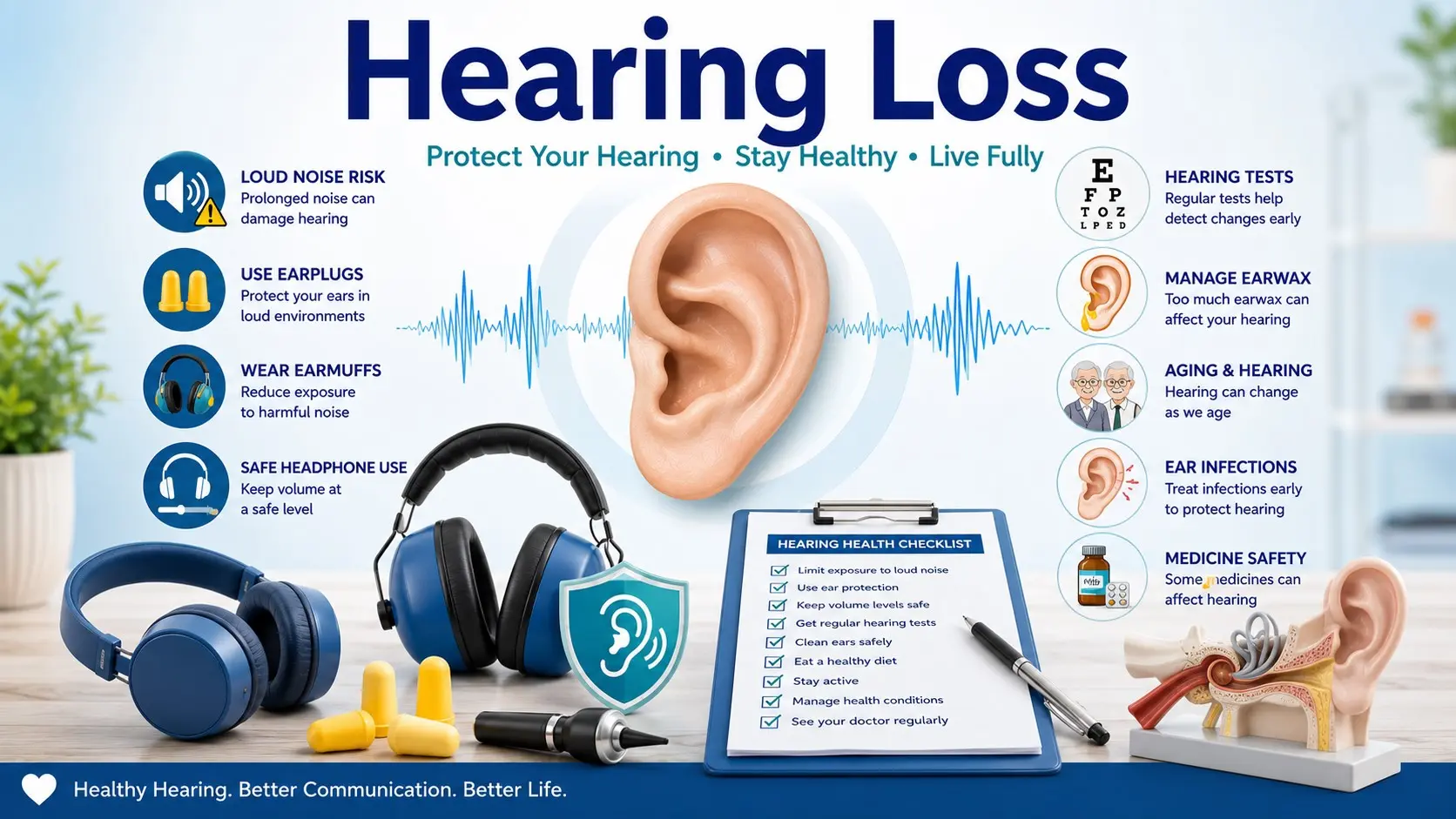
This guide explains Hearing Loss, common causes, symptoms, prevention, safe listening, tests, treatments, and when to get medical help.
For more help, visit our Miscellaneous & Other Health Hub, Medical Tests & Screenings Hub, Healthy Aging & Longevity Hub, First Aid & Home Remedies Hub, Infections & Immune Health Hub, and Health Hub.
Medical note: This article is for education only. It does not diagnose or treat Hearing Loss, ear infection, earwax blockage, tinnitus, Ménière’s disease, sudden hearing loss, head injury, medicine side effects, or any medical condition. Get urgent medical help for sudden hearing loss, hearing loss after head injury, severe ear pain, blood or pus from the ear, dizziness with hearing loss, facial weakness, or a very unwell child.
Quick Answer: What is hearing loss?
Hearing Loss means you cannot hear as well as before.
It may affect one ear or both ears.
It may be short-term or long-term.
Common signs include:
- People sound muffled.
- You ask people to repeat words.
- You turn the TV up.
- You struggle in noisy rooms.
- You miss doorbells or phone sounds.
- You hear ringing or buzzing.
- You avoid group talks.
- You feel tired after listening.
- You hear better in one ear than the other.
Hearing Loss can have many causes.
Some need quick care.
When Hearing Loss Is an Emergency
Get urgent medical help if hearing changes suddenly.
Do not wait days.
Get help now if you have:
- Sudden Hearing Loss in one ear or both ears
- Hearing Loss after a head injury
- Hearing Loss with severe dizziness
- Hearing Loss with facial weakness
- Hearing Loss with severe ear pain
- Blood or pus from the ear
- A child with hearing changes and a high fever
- A foreign object stuck in the ear
- A sudden loud pop with pain and a change
- New hearing loss after starting a medicine
Sudden Hearing Loss can sometimes be treated better when care starts early.
Common Symptoms of Hearing Loss
Hearing Loss may start slowly.
You may not notice it at first.
Signs can include:
- Speech sounds unclear.
- High voices are hard to hear.
- You hear sounds but miss words.
- You struggle when many people talk.
- You need subtitles.
- You avoid phone calls.
- You feel tired from listening.
- You feel embarrassed in groups.
- You miss alarms or birds.
- You have ringing in your ear.
- You feel pressure or fullness in the ear.
If hearing problems affect daily life, book a hearing test.
Types of Hearing Loss
There are three main types.
1. Conductive hearing loss
This happens when sound cannot move well through the outer or middle ear.
Likely causes include:
- Earwax blockage
- Ear infection
- Fluid behind the eardrum
- Hole in the eardrum
- Ear bone problems
- Foreign object in the ear
Some causes can improve with treatment.
2. Sensorineural hearing loss
This happens when the inner ear or hearing nerve is damaged.
Potential causes include:
- Aging
- Loud noise
- Genetics
- Some medicines
- Viral infections
- Head injury
- Inner ear disease
This type is often long-term.
Hearing aids or other devices may help.
3. Mixed hearing loss
This means both conductive and sensorineural hearing loss are present.
For example, a person may have age-related hearing loss plus earwax blockage.
Common Cause 1: Loud Noise
Loud noise is a major cause of preventable hearing loss.
Noise can damage tiny hair cells inside the inner ear.
Once these cells are damaged, they may not grow back.
Risky noise sources include:
- Loud headphones
- Concerts
- Clubs
- Fireworks
- Power tools
- Lawn mowers
- Leaf blowers
- Motorcycles
- Gunfire
- Factory noise
- Construction work
- Sporting events
If you need to shout to be heard, the sound may be too loud.
How to Prevent Noise-Related Hearing Loss
Use these simple rules:
- Turn the volume down.
- Move away from loud noise.
- Take quiet breaks.
- Avoid loud places when possible.
- Use earplugs or earmuffs.
- Protect children’s ears.
- Use hearing protection for work tools.
- Do not stand near speakers.
- Give your ears rest after loud events.
Prevention is easier than repair.
Common Cause 2: Aging
Hearing Loss often becomes more common with age.
This is sometimes called age-related hearing loss.
It may make high-pitched sounds harder to hear.
You may hear speech but miss words.
Age-related hearing changes can happen slowly.
A hearing test can help.
Common Cause 3: Earwax Blockage
Earwax is normal.
It helps protect the ear.
But too much earwax can block sound.
Earwax blockage may cause:
- Muffled hearing
- Ear fullness
- Earache
- Ringing
- Itching
- Dizziness, in some cases,
Do not push cotton swabs deep into the ear.
This can push wax deeper or harm the ear.
Ask a healthcare professional about safe wax removal.
Common Cause 4: Ear Infections
Ear infections can cause short-term hearing loss.
They may also cause:
- Ear pain
- Fever
- Fluid from the ear
- Fullness
- Poor sleep
- Irritability in children
- Balance problems
Children can get fluid behind the eardrum after infections.
This may affect hearing for a while.
Call a doctor if a child has ear pain, fever, fluid, or hearing problems.
Common Cause 5: Medicines That Can Affect Hearing
Some medicines can harm hearing in some people.
These are called ototoxic medicines.
They may affect hearing, balance, or ringing in the ears.
Do not stop medicine on your own.
But tell your doctor if hearing changes after the medicine starts or changes.
Also tell your doctor if you have:
- Ringing in the ears
- Dizziness
- New hearing trouble
- Ear fullness
- Balance changes
Common Cause 6: Genetics
Some hearing loss runs in families.
It may be present at birth.
It may appear later in life.
Children should have hearing checks when recommended.
Early support can help speech, learning, and social growth.
Common Cause 7: Head Injury or Ear Injury
A head injury can affect hearing.
A loud blast can also hurt hearing.
Ear injury may cause:
- Sudden hearing change
- Ear pain
- Blood from the ear
- Dizziness
- Ringing
- Balance problems
Get medical care after a head or ear injury.
Common Cause 8: Tinnitus
Tinnitus means hearing ringing, buzzing, hissing, or humming when no outside sound is present.
Tinnitus is not the same as hearing loss.
But they often happen together.
Tinnitus may be linked with noise damage, earwax, infection, stress, medicines, or age-related changes.
Get checked if tinnitus is new, one-sided, pulsing, or linked with hearing change or dizziness.
Common Cause 9: Inner Ear Problems
Some inner ear problems can affect hearing and balance.
Symptoms may include:
- Hearing Loss
- Dizziness
- Vertigo
- Ear fullness
- Ringing
- Nausea
See a doctor if hearing symptoms come with vertigo or severe dizziness.
Common Cause 10: Health Conditions
Some health problems may raise the risk of hearing problems.
Examples include:
- Diabetes
- High blood pressure
- Stroke
- Autoimmune disease
- Kidney disease
- Some infections
- Untreated ear disease
Good whole-body care can also support ear health.
For more, visit our Medical Tests & Screenings Hub.
How to Prevent Hearing Loss: 12 Simple Steps
You cannot prevent every type of hearing loss.
But you can reduce risk.
1. Turn the volume down
Use a lower volume on phones, tablets, TVs, and headphones.
If someone near you can hear your music from your headphones, it may be too loud.
2. Take listening breaks
Your ears need rest.
Take breaks from headphones and loud places.
Quiet time helps lower your total noise exposure.
3. Use Earplugs at loud events
Use earplugs at concerts, clubs, sports events, and fireworks.
Music earplugs can lower volume while keeping sound clearer.
4. Use Earmuffs for Tools
Use hearing protection for power tools, lawn mowers, leaf blowers, and work noise.
Keep ear protection near the tool so you remember.
5. Move away from speakers
Distance helps.
Do not stand close to loudspeakers.
Move back when you can.
6. Protect Children’s Ears
Children may not know when sound is too loud.
Use child-safe earmuffs at loud events.
Keep volume low on tablets and headphones.
7. Do not put objects deep in the Ear
Do not put cotton swabs, hairpins, or small tools deep into the ear.
This can push wax in or injure the ear.
8. Treat ear infections early
Do not ignore ear pain, fever, discharge, or hearing trouble.
Children may need care fast.
9. Review Medicines
Ask your doctor or pharmacist if your medicines can affect hearing.
Report new hearing changes, ringing, or dizziness.
10. Manage health risks
Manage diabetes, blood pressure, cholesterol, infections, and other health problems.
Your ears are part of your body.
11. Get Hearing Tests
A hearing test can find hearing changes.
It can also guide treatment.
Get tested if you notice changes or have loud noise exposure.
12. Use safety gear at Work
If you work around noise, follow workplace safety rules.
Use hearing protection correctly.
Ask about hearing checks if your job is noisy.
Safe Listening Tips for Headphones
Headphones can be safe if used wisely.
Try:
- Keep volume low.
- Use noise-cancelling headphones so you do not turn the volume up.
- Take breaks.
- Do not sleep with loud music.
- Use volume limits on phones.
- Choose over-ear headphones if they help you keep the volume lower.
- Avoid max volume.
If your ears ring after listening, the sound may have been too loud.
Hearing Loss in Children
Children may not say, “I cannot hear.”
Watch for signs.
A child may:
- Not respond to sounds
- Turn the TV up
- Ask “what?” often
- Speak loudly
- Have a speech delay
- Struggle at school
- Watch your face closely
- Seems to ignore people
- Have many ear infections
Hearing checks matter for children.
Early help supports speech and learning.
Hearing Loss in Older Adults
Older adults may lose their hearing slowly.
This can affect safety, mood, memory, and social life.
Signs may include:
- Missing words in group talks
- Avoiding social events
- Turning the TV volume high
- Feeling people mumble
- Missing phone calls
- Feeling tired after listening
Hearing aids, assistive devices, and communication tips can help.
Do not ignore hearing changes.
Hearing Loss and Mental Health
Hearing problems can affect mood.
They can make people feel isolated.
They can make talks feel hard.
This can lead to stress, sadness, or withdrawal.
Getting help can improve daily life.
For more support, visit our Mental Health & Wellness Hub.
How Hearing Loss Is Tested
A hearing test is usually simple and painless.
An audiologist or hearing professional may check:
- How well you hear soft sounds
- How well you hear speech
- Different sound pitches
- Middle ear function
- Ear canal and eardrum health
- One ear compared with the other
A doctor may also check for earwax, infection, fluid, or injury.
Treatment Options
Treatment depends on the cause.
Options may include:
- Earwax removal by a professional
- Treatment for ear infection
- Hearing aids
- Cochlear implants for some people
- Assistive listening devices
- Medicine review
- Ear surgery for some causes
- Tinnitus support
- Speech and language support for children
- Communication training
A hearing professional can guide the best option.
How to Communicate Better With Hearing Loss
Minor changes can help.
If you have hearing loss, try:
- Tell people what helps.
- Face the speaker.
- Reduce background noise.
- Ask people to speak clearly.
- Use captions.
- Use hearing aids if prescribed.
- Choose quiet tables in restaurants.
- Repeat back key details.
If someone you love has hearing loss, try:
- Face them when speaking.
- Speak clearly, not with anger.
- Do not shout from another room.
- Turn down background noise.
- Use short, clear sentences.
- Be patient.
What Not to Do
- Do not ignore sudden hearing loss.
- Do not push cotton swabs deep into the ear.
- Do not use ear candles.
- Do not stand near loudspeakers.
- Do not use max headphone volume.
- Do not skip ear protection around tools or fireworks.
- Do not ignore ear pain or discharge.
- Do not stop medicine without medical advice.
- Do not delay hearing checks for children.
- Do not assume hearing loss is just aging.
- Do not feel ashamed to use hearing aids.
Simple 7-Day Hearing Protection Plan
This is a simple start.
Day 1: Check Your Volume
Lower phone, TV, and headphone volume.
Day 2: Take Quiet Breaks
Rest your ears after loud sounds.
Day 3: Buy ear protection
Keep earplugs or earmuffs near tools or in your bag.
Day 4: Stop deep ear cleaning
Do not push cotton swabs into the ear canal.
Day 5: Watch for Symptoms
Notice ringing, muffled hearing, pain, or dizziness.
Day 6: Protect Children
Check the child's headphone volume and use earmuffs at loud events.
Day 7: Book a hearing test if needed
Book a test if hearing changes, ringing, or trouble understanding speech is present.
Daily Hearing Health Checklist
- Did I keep the volume low?
- Did I take breaks from headphones?
- Did I avoid loud places when possible?
- Did I use earplugs or earmuffs?
- Did I move away from loudspeakers?
- Did I avoid putting objects deep into my ears?
- Did I protect children’s ears?
- Did I notice ringing or muffled hearing?
- Do I need a hearing test?
- Do I have urgent warning signs?
Questions to Ask Your Doctor or Audiologist
- What type of hearing loss do I have?
- Is it in one ear or both?
- Could earwax be involved?
- Could infection be involved?
- Could my medicine affect hearing?
- Do I need a hearing test?
- Do I need an ENT specialist?
- Would hearing aids help?
- How can I protect my hearing at work?
- What ear protection should I use?
- What symptoms indicate urgent care?
- How often should I retest my hearing?
FAQ
What is hearing loss?
Hearing Loss means you cannot hear as well as before. It may affect one ear or both ears. It may be mild, moderate, severe, sudden, or slow.
What are common causes of hearing loss?
Common causes include loud noise, aging, earwax blockage, ear infections, fluid behind the eardrum, genetics, head injury, inner ear problems, and some medicines.
Can hearing loss be prevented?
Some hearing loss can be prevented. You can lower the risk by turning the volume down, avoiding loud noise, taking breaks, using earplugs or earmuffs, treating ear problems, and getting hearing tests.
What are the signs of hearing loss?
Signs include asking people to repeat words, turning the TV volume up, struggling in noisy rooms, missing phone sounds, hearing muffled speech, ringing in the ears, and feeling tired after listening.
When should I get urgent help for hearing loss?
Get urgent help for sudden hearing loss, hearing loss after head injury, severe ear pain, blood or pus from the ear, dizziness with hearing loss, facial weakness, or sudden hearing change in one ear.
Can loud headphones cause hearing loss?
Yes. Loud headphones can damage hearing, especially if the volume is high or listening lasts a long time. Keep volume low and take breaks.
Do earplugs prevent hearing loss?
Earplugs and earmuffs can lower noise exposure when used correctly. They are useful at concerts, around tools, at loud worksites, and near fireworks.
Can earwax cause hearing loss?
Yes. Earwax blockage can cause muffled hearing, ear fullness, ringing, or discomfort. Do not push cotton swabs deep into the ear. Ask a professional about safe removal.
Can hearing loss be treated?
Treatment depends on the cause. Options may include earwax removal, infection care, hearing aids, assistive devices, medicine review, surgery for some causes, or cochlear implants for some people.
How can I protect my child’s hearing?
Keep headphone volume low, use child-safe earmuffs at loud events, treat ear infections, avoid loud toys near the ear, and get hearing checks if speech, school, or response to sound is a concern.
Related Reading
- Miscellaneous & Other Health Hub
- Medical Tests & Screenings Hub
- Healthy Aging & Longevity Hub
- First Aid & Home Remedies Hub
- Infections & Immune Health Hub
- Mental Health & Wellness Hub
- Ear Bleeding: Causes, First Aid, and When to Worry
- Throat and Ear Pain When Swallowing: Causes and Relief
- Healthy Lifestyle Roadmap: 14 Practical Tips for Better Health
- Self-Care Habits: Simple Steps for Better Daily Health
- Health Hub
Key Takeaway
Hearing Loss can happen slowly or suddenly.
Common causes include loud noise, aging, earwax, infection, genetics, injury, inner ear problems, and some medicines. Some hearing loss can be prevented.
Turn the volume down. Take quiet breaks. Move away from loud noise. Use earplugs or earmuffs. Protect children’s ears. Do not put objects deep into the ear. Treat ear problems early. Get hearing tests when needed.
Get urgent care for sudden hearing loss, hearing loss after injury, severe ear pain, blood or pus from the ear, dizziness with hearing loss, or facial weakness.
Sources
- WHO — Deafness and Hearing Loss
- WHO — Deafness and Hearing Loss: Safe Listening
- CDC — Preventing Noise-Induced Hearing Loss
- CDC — Noise-Induced Hearing Loss Prevention
- NIDCD — Noise-Induced Hearing Loss
- NIDCD — Age-Related Hearing Loss
- NHS — Hearing Loss
- NHS Inform — Hearing Loss
- CDC NIOSH — Hearing Protection
- WHO — Making Listening Safe

Health & wellness writer with 30+ years of experience in nutrition, fitness, and healthy aging. Founder of NextFitLife.com — evidence-based health guidance.