Previously updated: October 7, 2026
Updated on: October 18, 2026
Written by: Adel Galal
Medical review status: This article has not been independently reviewed by a pulmonologist, primary care doctor, respiratory therapist, pharmacist, infectious disease specialist, or other licensed healthcare professional.
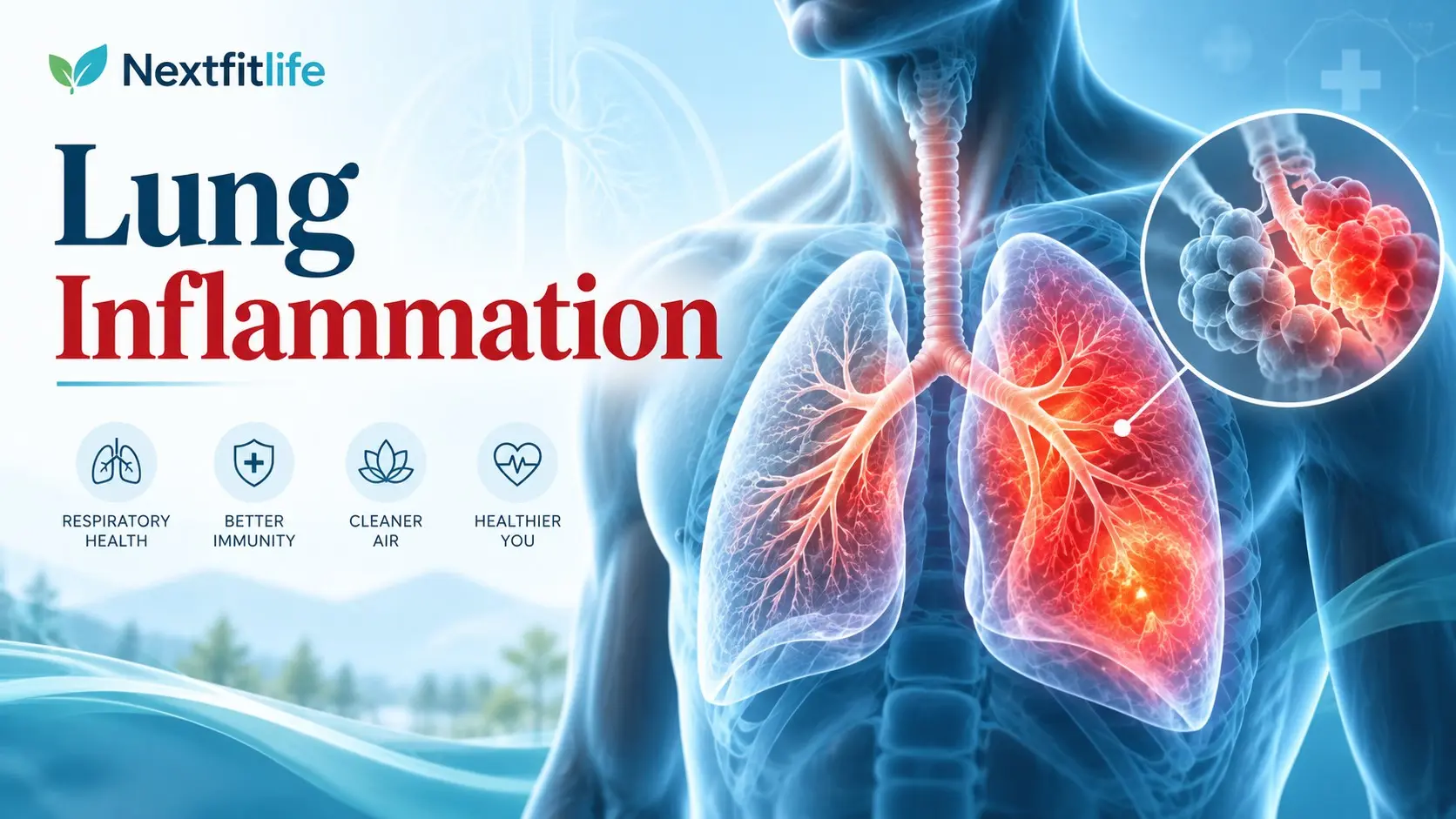
Lung inflammation is not one disease. It is a broad description for irritation, swelling, or immune activity affecting the airways, air sacs, lung tissue, pleura, or blood vessels around the lungs.
The cause matters because pneumonia, asthma, COPD, pleurisy, allergic lung reactions, autoimmune disease, medicine reactions, and interstitial lung disease need very different treatment.
Common symptoms can include cough, shortness of breath, wheezing, chest discomfort, fever, fatigue, or pain that gets worse when you take a deep breath. Symptoms alone cannot tell you which condition you have.
This article is for general information and education. It does not replace medical advice, diagnosis, or treatment.
For broader respiratory information, see Lung Health, Lung Detox, and the NextFitLife Lung and Respiratory Health Hub.
Table of Contents
- What lung inflammation means
- 13 critical signs
- Main causes
- Pneumonia
- Asthma
- COPD
- Pleurisy
- Hypersensitivity pneumonitis
- Interstitial lung disease
- Medicine reactions
- Autoimmune disease
- Smoke and workplace exposure
- How doctors find the cause
- Treatment by cause
- Antibiotics and steroids
- Home care limits
- Foods and supplements
- Recovery and scarring
- Emergency warning signs
- Frequently asked questions
What Is Lung Inflammation?
Lung inflammation means that part of the respiratory system is reacting to injury, infection, irritation, allergy, or immune activity.
The inflammation may affect different structures.
| Area | Examples | Possible Symptoms |
|---|---|---|
| Airways | Asthma, bronchitis, COPD | Cough, wheezing, chest tightness, breathlessness |
| Air sacs | Pneumonia, pneumonitis | Cough, fever, fatigue, breathlessness |
| Lung tissue | Interstitial lung disease | Dry cough, breathlessness, fatigue |
| Pleura | Pleurisy | Sharp pain that worsens with breathing or coughing |
| Lung blood vessels | Vasculitis and selected autoimmune disorders | Breathlessness, chest symptoms, sometimes blood in mucus |
This is why the phrase inflamed lungs cannot tell you the diagnosis by itself.
13 Critical Signs That Can Occur With Lung Inflammation
1. Persistent Cough
A cough is one of the most common respiratory symptoms.
It may be dry or produce mucus.
Possible causes include infection, asthma, COPD, airway irritation, interstitial disease, reflux, and several other conditions.
2. Shortness of Breath
Shortness of breath can happen when airways narrow, air sacs fill with inflammatory material, lung tissue becomes stiff, or oxygen transfer becomes less efficient.
It can also come from heart disease, anemia, blood clots, and other non lung causes.
3. Wheezing
Wheezing is a high pitched sound caused by narrowed airways.
It is common with asthma and may occur with COPD or other airway conditions.
Not everyone with asthma wheezes.
4. Chest Tightness
Chest tightness can happen with airway narrowing, especially in asthma.
However, chest pressure or heaviness can also be related to the heart.
Severe or new chest pressure should not be assumed to come from the lungs.
5. Sharp Pain With Deep Breathing
Sharp pain that becomes worse when you breathe deeply, sneeze, or cough can be pleuritic chest pain.
Pleurisy can occur with infection, autoimmune disease, chest injury, or a blood clot in the lung.
This symptom deserves assessment because some causes are serious.
6. Fever or Chills
Fever can point toward infection, including pneumonia.
But not everyone with pneumonia has a high fever, especially older adults or people with weakened immune systems.
7. Increased Mucus
Airway inflammation can increase mucus production.
This may occur with:
- Bronchitis
- COPD
- Respiratory infections
- Other airway conditions
Mucus color alone cannot reliably tell you whether an infection is bacterial.
8. Extreme Tiredness
Inflammation and infection can make you feel very tired.
Fatigue is also common in some interstitial lung diseases.
9. Reduced Exercise Tolerance
You may notice that normal walking, stairs, or household activities leave you more breathless than before.
A change from your normal ability is more important than comparing yourself with another person.
10. Rapid Breathing
Breathing faster than usual can occur when the lungs are struggling to exchange oxygen or when the body is responding to infection.
Marked rapid breathing deserves prompt assessment.
11. Coughing Blood
Blood in mucus can have several causes, from airway irritation to infection, pulmonary embolism, or cancer.
It should not be dismissed as simple inflammation.
12. Blue or Gray Lips
Blue or gray lips or skin may mean that oxygen levels are dangerously low.
This is an emergency sign.
13. Confusion or Fainting
Confusion, collapse, or fainting with respiratory symptoms can signal severe illness, low oxygen, or another emergency.
Seek urgent care.
Lung Inflammation Is a Description, Not a Diagnosis
This distinction matters.
If someone says “your lungs are inflamed,” you still need to know:
- Which part is inflamed?
- What caused it?
- Is infection present?
- Are the airways narrowed?
- Is the pleura involved?
- Is there scarring?
- Is a medicine or workplace exposure responsible?
The answers determine treatment.
Pneumonia Can Cause Lung Inflammation
Pneumonia is an infection of the lungs.
It may be caused by:
- Bacteria
- Viruses
- Fungi
- Less commonly, other organisms
Possible symptoms include:
- Cough
- Fever or chills
- Shortness of breath
- Fatigue
- Chest pain when breathing or coughing
- Sometimes nausea, vomiting, or diarrhea
Treatment depends on the cause and severity.
Do All Pneumonia Cases Need Antibiotics?
No.
Antibiotics treat bacterial infections.
They do not treat viral pneumonia.
Some people may need antiviral treatment when a specific viral infection is diagnosed and treatment is appropriate.
Severe pneumonia may require hospital care, oxygen, intravenous treatment, or other support.
Asthma Is an Inflammatory Airway Disease
Asthma involves inflammation and increased sensitivity in the airways.
Symptoms can include:
- Wheezing
- Cough
- Chest tightness
- Shortness of breath
- Nighttime symptoms
- Symptoms triggered by exercise, cold air, allergens, smoke, or infection
Asthma treatment commonly uses inhaled medicines and trigger control.
Read Asthma Without Obvious Wheezing if cough or chest tightness occurs without clear wheezing.
Asthma Treatment Targets Airway Inflammation
Some asthma medicines provide quick relief by opening narrowed airways.
Other medicines are used for long term control and reduce airway inflammation.
Inhaled corticosteroids are an important controller treatment for many people with asthma.
Your treatment plan depends on symptoms and asthma severity.
COPD Also Involves Chronic Lung Inflammation
Chronic obstructive pulmonary disease is a long term lung condition with persistent airflow limitation.
Common symptoms include:
- Shortness of breath
- Chronic cough
- Mucus
- Wheezing
- Reduced stamina
Smoking is a major cause, but harmful occupational and environmental exposures can also contribute.
COPD Flare Ups Can Increase Inflammation
A COPD flare can cause a sudden worsening of:
- Breathlessness
- Cough
- Wheezing
- Mucus production
Triggers can include respiratory infections, smoke, dust, and other environmental exposure.
Treatment may involve bronchodilators, corticosteroids in selected cases, antibiotics in selected cases, oxygen, or hospital care depending on severity.
Pleurisy Is Inflammation Around the Lungs
Pleurisy affects the pleura, the thin layers of tissue around the lungs and inside the chest wall.
The classic symptom is sharp pain that becomes worse with:
- Deep breathing
- Coughing
- Sneezing
- Chest movement
Pleurisy itself is not the final diagnosis. Doctors still need to identify why the pleura became inflamed.
What Can Cause Pleurisy?
Possible causes include:
- Viral infection
- Pneumonia
- Tuberculosis
- Pulmonary embolism
- Lupus
- Rheumatoid arthritis
- Chest trauma
- Selected cancers
Because pulmonary embolism can cause pleuritic pain, sudden chest pain with shortness of breath should be evaluated urgently.
What Is Hypersensitivity Pneumonitis?
Hypersensitivity pneumonitis is lung inflammation caused by an immune reaction to something inhaled.
Possible exposures include:
- Mold
- Fungi
- Bird proteins
- Some agricultural dusts
- Contaminated humidifiers or ventilation systems
- Selected workplace chemicals
Repeated exposure can cause chronic disease and may lead to permanent lung damage in some people.
Mold Exposure and Lung Inflammation
Mold exposure does not affect everyone in the same way.
It can trigger:
- Allergy symptoms
- Asthma symptoms
- Airway irritation
- Hypersensitivity pneumonitis in susceptible people
If symptoms improve away from a particular building and return when you go back, tell your healthcare professional.
Read Mold Exposure Cough for more guidance.
Interstitial Lung Disease Can Involve Inflammation and Scarring
Interstitial lung disease is a broad group of disorders affecting tissue around the air sacs.
Symptoms can include:
- Dry cough
- Shortness of breath
- Chest discomfort
- Extreme tiredness
- Abnormal breathing sounds
- Finger clubbing in some cases
Some interstitial diseases begin with inflammation and may progress to fibrosis or scarring.
What Causes Interstitial Lung Disease?
Possible causes include:
- Autoimmune disease
- Occupational dust
- Asbestos
- Mold or other inhaled antigens
- Medicines
- Radiation treatment
- Genetic factors
Some cases have no known cause.
Can Lung Scarring Be Reversed?
Established fibrosis is not the same as temporary inflammation.
Some treatment can slow further damage and help breathing, but established scar tissue may not disappear.
This is why finding progressive interstitial lung disease early can matter.
Medicines Can Sometimes Cause Lung Inflammation
Some medicines can cause drug induced lung disease.
Possible patterns include:
- Pneumonitis
- Interstitial inflammation
- Fibrosis
- Asthma like reactions
- Pleural fluid
- Lung bleeding in rare situations
Medicines linked with lung reactions include selected chemotherapy drugs, immune treatments, antibiotics, heart medicines, and others.
Do not stop an important prescription on your own. Contact the clinician who prescribed it if new respiratory symptoms appear.
Can Amiodarone Affect the Lungs?
Amiodarone is one example of a medicine that can cause lung toxicity in some people.
New cough or breathlessness while taking it should be discussed promptly with the prescribing clinician.
Many people take amiodarone without developing this complication, so symptoms need proper evaluation rather than assumptions.
Can Antibiotics Cause Lung Inflammation?
Some medicines in the antibiotic family can rarely cause drug related lung reactions.
Nitrofurantoin is one well known example.
This does not mean antibiotics generally inflame the lungs.
The risk depends on the specific medicine and the individual.
Autoimmune Disease Can Affect the Lungs
Some autoimmune diseases can cause lung or pleural inflammation.
Examples include:
- Rheumatoid arthritis
- Lupus
- Scleroderma
- Vasculitis
- Other connective tissue diseases
Joint pain, rashes, muscle weakness, Raynaud symptoms, or other systemic symptoms may provide useful clues.
Can Smoking Inflame the Lungs?
Yes.
Tobacco smoke irritates and damages the respiratory tract.
It contributes to chronic airway inflammation, COPD, lung cancer, and several other respiratory problems.
Quitting smoking is one of the most useful steps for long term lung health.
See Lung Detox for Smokers for a safe recovery focused guide.
Can Vaping Cause Lung Problems?
Vape aerosol can expose the lungs to fine particles, chemicals, nicotine, and metals depending on the product.
Vaping should not be viewed as a lung treatment or a way to clean inflamed lungs.
New cough, chest pain, or shortness of breath after vaping deserves medical attention.
Workplace Dust and Fumes Matter
Some jobs involve repeated exposure to substances that can irritate or injure the lungs.
Examples include:
- Silica
- Asbestos
- Wood dust
- Welding fumes
- Metal dust
- Paint fumes
- Isocyanates
- Agricultural dust
Tell your clinician about your job and previous jobs if unexplained respiratory symptoms develop.
How Is Lung Inflammation Diagnosed?
There is no single “lung inflammation test.”
The evaluation usually begins with a detailed history.
A clinician may ask about:
- When symptoms started
- Fever
- Mucus
- Smoking
- Vaping
- Recent infections
- Workplace exposure
- Mold or bird exposure
- Travel
- Medicines
- Autoimmune symptoms
- Previous lung disease
Physical Examination
A healthcare professional may listen for:
- Wheezing
- Crackling sounds
- Reduced breath sounds
- Pleural rubbing sounds
They may also check breathing rate, temperature, heart rate, and oxygen saturation.
Blood Tests
Blood tests may help answer different questions.
Depending on the case, these can include:
- Complete blood count
- Tests for infection or inflammation
- Autoimmune tests
- Tests for organ function
No single inflammation marker can tell you exactly what is happening inside the lungs.
Chest X Ray
A chest X ray can help identify problems such as:
- Pneumonia
- Fluid
- Some masses
- Selected chronic lung changes
A normal chest X ray does not rule out every lung condition.
CT Scan
A chest CT gives more detailed images than a standard X ray.
It can help evaluate:
- Interstitial lung disease
- Pulmonary embolism when the correct CT study is used
- Complex pneumonia
- Pleural disease
- Lung nodules and masses
Whether you need CT imaging depends on your symptoms and clinical findings.
Spirometry and Lung Function Tests
Spirometry measures how much air you can breathe out and how quickly you can blow it out.
It is useful when asthma or COPD is suspected.
Other lung function tests can measure lung volumes and how well gases move from the lungs into the blood.
Pulse Oximetry
A pulse oximeter estimates oxygen saturation.
It can be useful, but it does not identify the cause of lung inflammation.
A normal home reading does not rule out:
- Asthma
- Early pneumonia
- Interstitial lung disease
- Pleurisy
- Other important conditions
If symptoms are severe, do not delay care because the number looks normal.
Bronchoscopy
Some people need bronchoscopy.
A clinician passes a thin flexible instrument into the airways to look inside and, when needed, collect samples.
This is not needed for routine mild respiratory illness, but it can be useful in selected complex cases.
How Is Lung Inflammation Treated?
There is no universal treatment.
The cause decides the treatment.
| Cause | Possible Treatment |
|---|---|
| Bacterial pneumonia | Appropriate antibiotics and supportive care |
| Viral pneumonia | Supportive care and selected antiviral treatment when indicated |
| Asthma | Inhaled medicines, trigger control, action plan |
| COPD | Bronchodilators, selected anti inflammatory medicines, smoking cessation, rehabilitation |
| Hypersensitivity pneumonitis | Avoid the trigger and use specialist treatment when needed |
| Interstitial lung disease | Cause specific care, sometimes steroids, antifibrotic medicines, oxygen, rehabilitation |
| Pleurisy | Treat the underlying cause and control pain when safe |
| Medicine reaction | Clinician guided medicine change plus treatment of the reaction |
When Are Antibiotics Useful?
Antibiotics help when a bacterial infection requires them.
They do not treat:
- Viral infections
- Asthma
- COPD itself
- Allergic lung reactions
- Autoimmune inflammation
- Most interstitial lung diseases
Do not use leftover antibiotics because a cough feels “deep.”
When Are Steroids Used?
Corticosteroids can reduce inflammation in selected diseases.
They may be used in conditions such as:
- Asthma
- Selected COPD flare ups
- Some interstitial lung diseases
- Some allergic or immune lung reactions
They are not a universal treatment for every inflamed lung.
Oral or injected steroids can cause significant side effects, especially with repeated or prolonged use.
Can Steroids Make Infection Worse?
Steroids change immune responses.
In some situations they are part of appropriate treatment, even when infection is present.
In other situations unnecessary steroid use can be harmful.
This is why steroid treatment should follow a clear medical reason rather than self diagnosis.
Do Inhalers Treat Lung Inflammation?
Some do.
Inhaled corticosteroids can reduce airway inflammation in diseases such as asthma.
Bronchodilator inhalers mainly relax airway muscles to improve airflow.
Different inhalers have different jobs.
Do not borrow someone else's inhaler.
Oxygen Therapy
Some people with severe lung disease need supplemental oxygen.
Oxygen is a medical treatment and should be prescribed based on clinical need.
It is not a wellness treatment for ordinary chest discomfort.
Antifibrotic Medicines
Some progressive fibrotic interstitial lung diseases may be treated with medicines such as nintedanib or pirfenidone.
These medicines can slow disease progression in selected patients.
They do not simply dissolve existing scar tissue.
Pulmonary Rehabilitation
Pulmonary rehabilitation can help people with selected chronic lung diseases improve daily function.
Programs can include:
- Supervised exercise
- Education
- Breathing strategies
- Energy conservation
- Nutrition support
This is very different from a commercial lung cleanse.
What Can You Safely Do at Home?
Home care depends on the diagnosis.
General supportive steps can include:
- Rest during an acute illness
- Avoid smoking and vaping
- Avoid known respiratory irritants
- Drink according to your normal medical needs
- Use prescribed medicines exactly as directed
- Attend follow up appointments
- Return for care if symptoms worsen
These steps support recovery but do not replace treatment of the underlying cause.
Does Steam Reduce Lung Inflammation?
No evidence supports steam as a universal treatment for inflamed lungs.
Warm humid air may make the nose or throat feel more comfortable.
It does not treat pneumonia, asthma inflammation, pleurisy, interstitial lung disease, or pulmonary embolism.
Avoid bowls of boiling water because serious burns can occur.
Do Essential Oils Treat Lung Inflammation?
No.
Essential oils are not treatments for pneumonia or chronic inflammatory lung disease.
Strong fragrances can also irritate sensitive airways.
Do not inhale concentrated oils into the lungs.
What About Ginger?
Ginger can be part of a healthy diet.
Warm ginger tea may soothe an irritated throat.
It is not a treatment for bacterial pneumonia, asthma, COPD, pleurisy, or lung fibrosis.
What About Turmeric?
Turmeric contains curcumin and has been studied for many biological effects.
That does not make turmeric milk or curcumin supplements a treatment for lung inflammation.
Supplements can also interact with medicines.
Can Honey Help?
Honey may soothe some coughs or throat irritation.
It does not treat the underlying lung inflammation.
Never give honey to a child under 12 months.
Does Vitamin C Treat Lung Inflammation?
Vitamin C is an essential nutrient.
Correcting a deficiency is useful for general health.
High dose vitamin C does not replace treatment for pneumonia, asthma, COPD, or interstitial lung disease.
Does Vitamin D Help?
Vitamin D deficiency should be treated when it is present.
Vitamin D should not be presented as a universal lung anti inflammatory treatment.
Read Vitamin D Deficiency if low vitamin D is a concern.
What About NAC?
N acetylcysteine can thin mucus and has specific medical uses.
Its role depends on the condition.
It is not a universal treatment for lung inflammation and should not delay diagnosis of persistent respiratory symptoms.
Can Foods Reduce Lung Inflammation?
No single food treats an inflamed lung.
A balanced diet supports overall health and recovery.
Good choices include:
- Vegetables
- Fruit
- Whole grains
- Beans
- Fish or other suitable protein foods
- Nuts and seeds
- Healthy fats
A nutritious diet is supportive care, not a replacement for medical treatment.
Should You Follow an Anti Inflammatory Diet?
A generally healthy eating pattern can support heart and metabolic health.
But there is no special diet that cures all forms of lung inflammation.
Do not delay antibiotics, inhalers, specialist treatment, or hospital care while trying a food based protocol.
Can Lung Inflammation Heal?
Sometimes.
Recovery depends on the cause.
A viral respiratory infection may resolve completely.
Bacterial pneumonia may improve with appropriate treatment.
Asthma can often be controlled but may remain a chronic condition.
Some interstitial lung disease can progress to permanent scarring.
How Long Does Recovery Take?
There is no universal timeline.
Recovery depends on:
- The diagnosis
- Disease severity
- Age
- Overall health
- Smoking status
- Immune function
- Whether scarring is present
- How quickly effective treatment starts
Be cautious with articles promising that lung inflammation will clear in three days, one week, or one month.
When Should You Contact a Doctor?
Arrange medical assessment for:
- New or worsening shortness of breath
- Persistent cough
- Repeated wheezing
- Chest pain with breathing
- Fever that persists or returns
- Coughing blood
- Reduced exercise tolerance
- Unexplained weight loss
- Symptoms after a new medicine
- Symptoms linked to work or mold exposure
Who Should Seek Advice Earlier?
Lower your threshold for medical advice if you are:
- An older adult
- Pregnant
- Immunocompromised
- Living with COPD or asthma
- Living with heart disease
- Living with kidney disease
- Receiving cancer treatment
Respiratory illness may become severe more quickly in some higher risk groups.
When Is Lung Inflammation an Emergency?
Call emergency services for:
- Severe breathing difficulty
- Rapidly worsening breathlessness
- Blue or gray lips or skin
- Severe chest pressure or heaviness
- Chest pain spreading to the arm, jaw, neck, or back
- Fainting
- Sudden confusion
- Inability to speak normally because of breathlessness
- A significant amount of blood when coughing
Do not drive yourself if you are severely unwell.
Common Lung Inflammation Myths
| Claim | What Is More Accurate |
|---|---|
| All lung inflammation needs antibiotics | Antibiotics treat selected bacterial infections, not every inflammatory lung condition. |
| Steroids treat all inflamed lungs | Steroids are useful for selected diagnoses and can be harmful when used without a clear reason. |
| Steam clears lung inflammation | Steam may soothe the upper airway but does not treat pneumonia or deeper lung disease. |
| Turmeric cures inflamed lungs | Turmeric is a food, not a replacement for medical treatment. |
| A normal oxygen reading means everything is fine | A normal home reading cannot rule out many respiratory conditions. |
| All lung inflammation eventually heals | Some conditions can cause permanent scarring or chronic airflow limitation. |
| Green mucus proves bacterial infection | Mucus color alone does not reliably identify the cause. |
A Simple Action Plan for New Respiratory Symptoms
- Check how severe the breathing problem is.
- Act immediately on emergency warning signs.
- Notice whether fever, wheezing, chest pain, or mucus is present.
- Think about recent infection, smoke, mold, dust, birds, work exposure, or a new medicine.
- Stop smoking and avoid vaping.
- Continue prescribed inhalers exactly as directed.
- Do not start leftover antibiotics or steroids.
- Drink according to normal medical needs.
- Rest if you are acutely ill.
- Arrange assessment when symptoms are persistent, worsening, or unexplained.
- Ask about imaging or lung function testing when clinically appropriate.
- Return for reassessment if treatment is not helping as expected.
- Keep follow up appointments if a chronic lung condition is diagnosed.
Conclusion: Lung Inflammation Needs the Right Diagnosis
Lung inflammation can come from infection, asthma, COPD, pleurisy, allergies, harmful exposures, medicines, autoimmune disease, or interstitial lung disease.
There is no single treatment that works for every cause.
Antibiotics, steroids, inhalers, oxygen, antifibrotic medicines, trigger avoidance, and supportive care each have a place, but only when they fit the condition.
Do not rely on steam, herbs, supplements, or leftover medicine when breathing symptoms persist.
If cough, wheezing, chest pain, breathlessness, or fatigue is new or worsening, arrange medical assessment. Severe breathing trouble, blue lips, confusion, severe chest pain, fainting, or significant coughing of blood needs emergency care.
References and Sources
- Centers for Disease Control and Prevention. About Pneumonia.
Covers bacterial, viral, fungal, and other causes of pneumonia plus common symptoms including cough, fever, breathlessness, fatigue, and chest pain.
https://www.cdc.gov/pneumonia/about/index.html - National Heart, Lung, and Blood Institute. Interstitial Lung Diseases.
Explains inflammatory and fibrotic lung disease, symptoms, causes, environmental exposure, autoimmune disease, diagnosis, and long term care.
https://www.nhlbi.nih.gov/health/interstitial-lung-diseases - National Heart, Lung, and Blood Institute. Interstitial Lung Disease Treatment.
Covers corticosteroids, bronchodilators, antifibrotic medicines, oxygen therapy, exposure avoidance, and the limits of reversing established scarring.
https://www.nhlbi.nih.gov/health/interstitial-lung-diseases/treatment - National Heart, Lung, and Blood Institute. COPD Treatment.
Covers bronchodilators, anti inflammatory treatment, inhaled corticosteroids, inhaler technique, and treatment of COPD symptoms and flare ups.
https://www.nhlbi.nih.gov/health/copd/treatment - Centers for Disease Control and Prevention. Asthma.
Provides current information on asthma, airway inflammation, trigger control, medicines, and emergency planning.
https://www.cdc.gov/asthma/ - MedlinePlus. Pleurisy.
Explains pleural inflammation, sharp pain with breathing, causes such as infection and pulmonary embolism, diagnostic testing, and treatment based on the cause.
https://medlineplus.gov/ency/article/001371.htm - MedlinePlus. Hypersensitivity Pneumonitis.
Covers lung inflammation caused by inhaled mold, fungi, dust, bird proteins, contaminated ventilation systems, and selected chemicals.
https://medlineplus.gov/ency/article/000109.htm - MedlinePlus. Drug Induced Pulmonary Disease.
Covers pneumonitis, interstitial inflammation, fibrosis, asthma like reactions, pleural disease, medication causes, testing, and treatment.
https://medlineplus.gov/ency/article/000104.htm
Internal Links and Helpful NextFitLife Guides
- Lung Health
- Lung Detox
- Lung Detox for Smokers
- Lungs Cleaning
- Lung and Respiratory Health Hub
- Walking Pneumonia Symptoms
- Mold Exposure Cough
- Asthma Without Obvious Wheezing
- Dry Cough at Night
- Morning Cough
- Post Viral Cough
- Wheezing at Night
- NextFitLife Health Hub
About the Author
Adel Galal is a father of four, three sons and a daughter, and a grandfather of four, with 33 years of hands on parenting experience. He is the founder of Parnthub.com, based in Cairo, Egypt, where he shares practical guidance on feeding, development, and family life from newborns to teenagers.
Adel is not a medical professional. Health articles cite trusted medical and public health sources and are for general information only.
I am not a doctor or licensed healthcare professional, and this content does not replace professional medical advice, diagnosis, or treatment. I share information based on extensive research, real life experience, and consultation with healthcare providers. Always consult qualified medical professionals for diagnosis, treatment, or guidance about any health condition.
Learn more on the NextFitLife About Us page.
Frequently Asked Questions
What does lung inflammation mean?
Lung inflammation is a broad description for irritation or immune activity affecting the airways, air sacs, lung tissue, pleura, or blood vessels. It is not one specific disease.
What are common symptoms of lung inflammation?
Possible symptoms include cough, shortness of breath, wheezing, chest tightness, chest pain with breathing, fever, mucus, fatigue, and reduced exercise tolerance.
What causes lung inflammation?
Causes include infection, asthma, COPD, pleurisy, allergic lung reactions, mold or dust exposure, medicines, autoimmune disease, smoking, and interstitial lung disease.
Can pneumonia cause lung inflammation?
Yes. Pneumonia is an infection of the lungs caused by bacteria, viruses, fungi, or other organisms and can produce marked inflammation.
Does lung inflammation always need antibiotics?
No. Antibiotics are used for suitable bacterial infections. They do not treat viral infection, asthma, autoimmune disease, or most other inflammatory lung conditions.
Do steroids treat lung inflammation?
Steroids can reduce inflammation in selected conditions such as asthma and some interstitial or allergic lung diseases. They are not appropriate for every cause.
Can asthma cause inflamed lungs?
Asthma is an inflammatory airway disease. It can cause cough, wheezing, chest tightness, and shortness of breath.
Can COPD cause chronic inflammation?
Yes. COPD involves long term airway and lung inflammation along with persistent airflow limitation.
What does pleurisy feel like?
Pleurisy often causes sharp chest pain that becomes worse with deep breathing, coughing, sneezing, or chest movement.
Can mold inflame the lungs?
Yes. Mold may worsen allergy or asthma symptoms and can trigger hypersensitivity pneumonitis in susceptible people.
Can medicine cause lung inflammation?
Yes. Selected medicines can cause pneumonitis, interstitial lung disease, fibrosis, asthma like reactions, or other lung problems.
How do doctors test for lung inflammation?
Testing depends on the suspected cause and may include physical examination, oxygen measurement, blood tests, chest X ray, CT imaging, spirometry, or other lung function tests.
Can a normal pulse oximeter rule out lung inflammation?
No. A normal oxygen reading does not rule out asthma, early pneumonia, pleurisy, or many other respiratory conditions.
Does steam reduce lung inflammation?
No. Steam may soothe the upper airway but does not treat pneumonia, asthma inflammation, pleurisy, or interstitial lung disease.
Can turmeric reduce lung inflammation?
Turmeric is a food ingredient and should not be used as a replacement for medical treatment of lung disease.
Can lung inflammation heal completely?
Some causes resolve completely, while chronic conditions may persist. Interstitial disease can sometimes lead to permanent fibrosis or scarring.
How long does lung inflammation take to heal?
There is no fixed timeline. Recovery depends on the diagnosis, severity, age, overall health, and whether permanent lung damage is present.
When should I see a doctor for lung inflammation symptoms?
Seek assessment for persistent or worsening cough, breathlessness, wheezing, fever, chest pain with breathing, coughing blood, or reduced exercise tolerance.
Can lung inflammation cause permanent damage?
Yes. Some interstitial lung diseases, repeated exposures, and severe inflammatory conditions can lead to fibrosis or other lasting lung damage.
When is lung inflammation an emergency?
Seek emergency help for severe breathing difficulty, blue or gray lips, sudden confusion, fainting, severe chest pressure, inability to speak normally because of breathlessness, or significant coughing of blood.

Health & wellness writer with 30+ years of experience in nutrition, fitness, and healthy aging. Founder of NextFitLife.com — evidence-based health guidance.