
Updated on: October 17, 2026
Written and source checked by: Adel Galal, Founder and Lead Writer at NextFitLife
Medical review status: This article has not been medically reviewed by a cardiologist, physician, emergency medicine specialist, pharmacist, registered nurse, or other licensed healthcare professional.
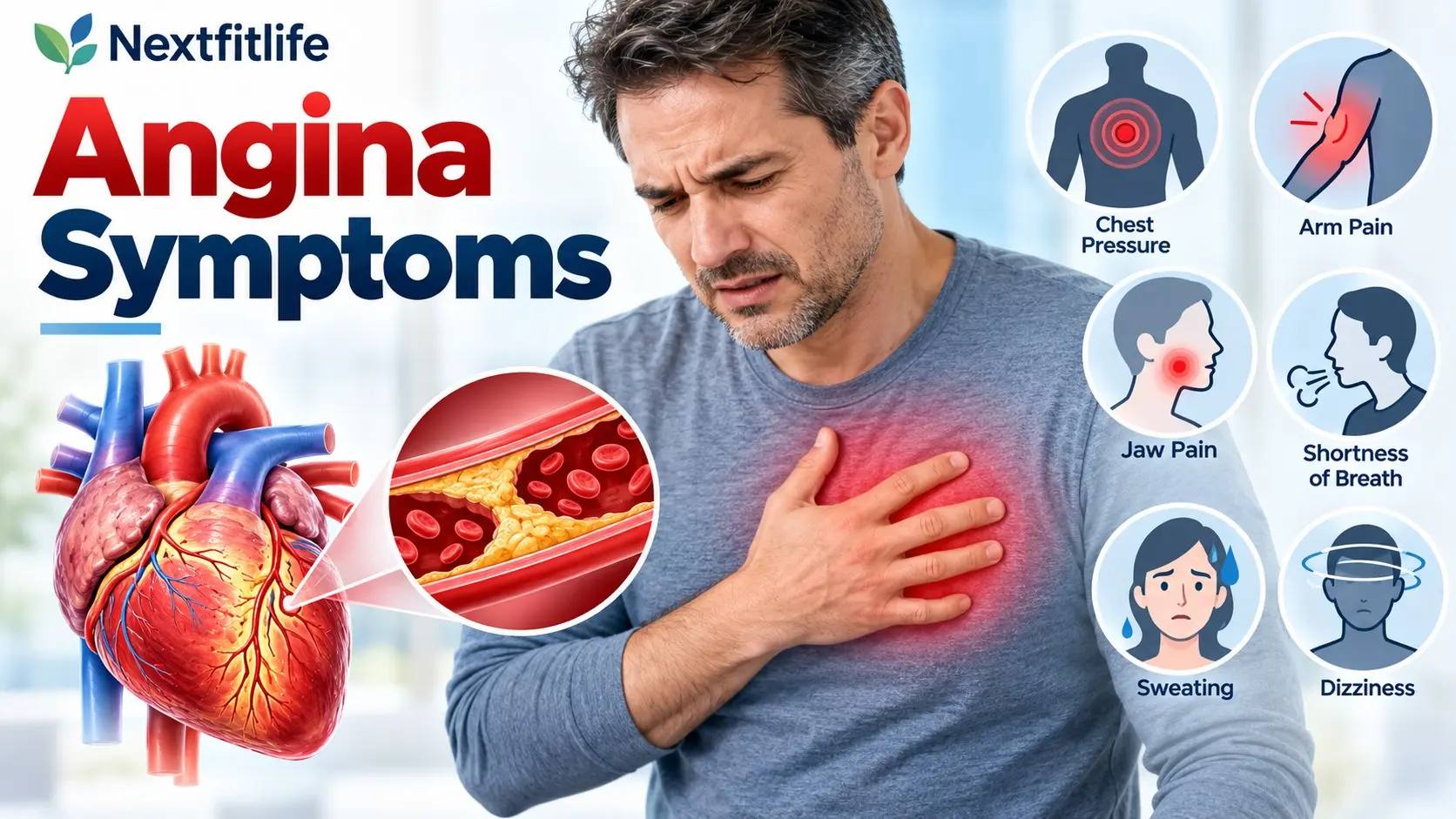
Angina symptoms often include chest pressure, squeezing, tightness, heaviness, burning, or discomfort caused by reduced blood flow to the heart muscle.
The discomfort may stay in the chest or spread to the shoulders, arms, neck, jaw, back, or upper stomach. Some people also feel short of breath, weak, sweaty, dizzy, nauseated, or unusually tired.
The pattern matters. Predictable discomfort during activity that improves with rest can fit stable angina. New chest pain at rest, pain that is becoming stronger or lasting longer, or discomfort that no longer improves as expected can signal unstable angina or a heart attack.
This article is for general information and education. It does not replace medical advice, diagnosis, or treatment.
If you are worried about a possible heart attack rather than chronic angina, read Signs of a Heart Attack. For broader cardiovascular warning signs, see Symptoms of Heart Disease.
Table of Contents
- What angina means
- 12 critical angina symptoms
- Chest pressure
- Chest tightness
- Chest heaviness
- Burning discomfort
- Arm or shoulder pain
- Neck, jaw, or back pain
- Shortness of breath
- Fatigue
- Cold sweating
- Nausea
- Dizziness
- Weakness or fainting
- Types of angina
- Stable angina
- Unstable angina
- Microvascular angina
- Vasospastic angina
- Refractory angina
- Angina vs heart attack
- Angina in women and men
- Common triggers
- Causes and risk factors
- How angina is diagnosed
- Modern treatment
- Nitroglycerin safety
- When stents or bypass surgery may help
- Exercise and cardiac rehabilitation
- Prevention
- Frequently asked questions
What Is Angina?
Angina, also called angina pectoris, is chest pain or discomfort caused when the heart muscle does not receive enough oxygen rich blood for its current workload.
Angina is not a disease by itself.
It is a symptom of an underlying heart or blood vessel problem.
The most common cause is coronary artery disease, where plaque narrows arteries that supply the heart.
Other causes include:
- Spasm of a coronary artery
- Disease of the tiny coronary vessels
- Severe anemia
- Heart valve disease
- Uncontrolled high blood pressure
- Heart muscle disease
The harder the heart works, the more oxygen it needs.
If blood flow cannot increase enough, angina symptoms may appear.
What Does Angina Feel Like?
People describe angina in many different ways.
It may feel like:
- Pressure
- Tightness
- Squeezing
- Heaviness
- Burning
- Fullness
- Aching
- A band around the chest
Some people do not call it pain at all.
They may simply say that the chest feels “heavy,” “tight,” or “uncomfortable.”
Where Is Angina Pain Usually Felt?
Angina often begins behind or near the breastbone.
It can spread to:
- One arm
- Both arms
- Shoulders
- Neck
- Jaw
- Upper back
- Upper stomach
The location alone cannot tell you whether chest discomfort is angina, because many other conditions can cause pain in these areas.
12 Critical Angina Symptoms
1. Chest Pressure
The classic symptom is a feeling of pressure in the chest.
It may feel as though:
- Someone is sitting on your chest
- A heavy object is pressing down
- Your chest is being compressed
Pressure that appears with activity and improves with rest can suggest stable angina.
Pressure that appears at rest or becomes worse than usual needs urgent assessment.
2. Chest Tightness
Some people describe angina as tightness rather than pain.
The chest may feel:
- Constricted
- Closed in
- Hard to expand
- Tightly wrapped
Tightness paired with shortness of breath, sweating, nausea, or spreading pain is more concerning.
3. Chest Heaviness
A heavy sensation can occur during exertion.
You may notice it while:
- Walking uphill
- Climbing stairs
- Carrying something heavy
- Walking quickly
- Exercising in cold weather
A repeatable exertional pattern is an important clue.
4. Burning or Indigestion Like Discomfort
Angina can feel like:
- Heartburn
- Burning behind the breastbone
- Indigestion
- Upper stomach pressure
This is one reason heart problems are sometimes mistaken for stomach problems.
Do not use antacids as a home test for new unexplained chest symptoms.
5. Arm or Shoulder Pain
Angina can spread into:
- The left arm
- The right arm
- Both arms
- One or both shoulders
The discomfort may feel like aching, heaviness, pressure, or weakness.
Only having right arm symptoms does not make a heart cause impossible.
6. Neck, Jaw, or Back Pain
Reduced blood flow to the heart can cause referred discomfort outside the chest.
This may involve:
- Jaw
- Neck
- Upper back
- Area between the shoulder blades
These areas are also common sites of muscle and joint pain, so the full pattern matters.
7. Shortness of Breath
Shortness of breath can happen with angina, sometimes even without obvious chest pain.
You may notice:
- Breathlessness when walking
- Breathlessness climbing stairs
- Difficulty keeping pace with others
- Breathlessness during stress
Severe or sudden shortness of breath is an emergency symptom.
8. Extreme Fatigue
Some people become unusually tired when the heart is not receiving enough blood during activity.
This may appear as:
- Sudden loss of stamina
- Needing frequent breaks
- Feeling exhausted after normal activity
- Activity that feels much harder than before
Fatigue has many causes, but a new change in exercise ability deserves attention.
9. Cold Sweating
Cold or clammy sweating can occur with severe heart ischemia.
It is especially concerning with:
- Chest pressure
- Nausea
- Shortness of breath
- Dizziness
- Arm or jaw pain
Call emergency services if this pattern is new or severe.
10. Nausea
Angina and heart attack can sometimes cause:
- Nausea
- Upper stomach discomfort
- A feeling of indigestion
Nausea alone is usually caused by something else.
Nausea with chest pressure, breathlessness, sweating, or radiating pain is more concerning.
11. Dizziness or Lightheadedness
Some people feel dizzy during an angina episode.
Possible reasons include:
- Reduced heart output
- Abnormal heart rhythm
- Low blood pressure
- A serious coronary event
Dizziness has many noncardiac causes, but dizziness with chest symptoms should not be ignored.
12. Weakness or Fainting
Sudden weakness can occur during severe heart ischemia.
Fainting is less typical for uncomplicated stable angina and raises concern for:
- Heart attack
- Dangerous arrhythmia
- Valve disease
- Another cardiovascular emergency
Fainting with chest pain requires urgent medical care.
Types of Angina at a Glance
| Type | Typical Pattern | Urgency |
|---|---|---|
| Stable angina | Predictable with exertion or stress, improves with rest or prescribed medicine | Needs ongoing medical care |
| Unstable angina | New, worse, longer, more frequent, or occurring at rest | Emergency |
| Microvascular angina | May occur with exertion, emotional stress, or rest and may last longer | Needs specialist evaluation |
| Vasospastic angina | Often occurs at rest, commonly at night or early morning | Needs cardiology assessment |
| Refractory angina | Persistent symptoms despite standard treatment | Specialist treatment needed |
What Is Stable Angina?
Stable angina usually follows a pattern.
It may occur when:
- You walk a certain distance
- You climb stairs
- You carry something heavy
- You become emotionally stressed
- You exercise in cold weather
The discomfort usually improves with rest or with fast acting medicine prescribed by your clinician.
The pattern matters because a sudden change can mean the condition has become unstable.
The Classic Stable Angina Pattern
A predictable pattern does not mean angina is harmless.
Stable angina usually points to underlying coronary artery disease and increased cardiovascular risk.
What Is Unstable Angina?
Unstable angina is part of acute coronary syndrome.
It can mean blood flow to the heart has suddenly become more limited.
Warning signs include chest discomfort that:
- Occurs at rest
- Wakes you from sleep
- Starts with very little activity
- Lasts longer than your usual episodes
- Feels stronger than before
- Happens more often
- Does not improve normally with rest
- Does not improve normally with prescribed nitroglycerin
What Is Microvascular Angina?
Microvascular angina occurs when the tiny blood vessels inside the heart do not work normally.
A standard angiogram may not show a major blockage in the large coronary arteries.
Symptoms may still be real and significant.
Microvascular angina may:
- Occur during exercise
- Occur during emotional stress
- Occur at rest
- Last longer than classic stable angina
- Cause breathlessness or fatigue
- Respond less predictably to standard angina medicine
It is seen frequently in women, especially around and after menopause.
What Is Vasospastic Angina?
Vasospastic angina, also called variant or Prinzmetal angina, occurs when a coronary artery suddenly tightens.
This temporary spasm reduces blood flow.
Unlike classic stable angina, it often occurs:
- At rest
- During sleep
- Late at night
- Early in the morning
The episodes may occur in a repeating pattern.
Calcium channel blockers and nitrates are commonly used for this form.
Some beta blockers can worsen vasospasm, so treatment must match the angina type.
What Is Refractory Angina?
Refractory angina describes persistent angina that continues despite standard medicine and procedures.
Symptoms may continue for months and seriously limit daily activity.
These patients often need a specialist center that can review:
- Diagnosis
- Current medicine
- Coronary anatomy
- Possible repeat procedures
- Alternative therapies
- Cardiac rehabilitation
- Quality of life support
Angina vs Heart Attack
Angina and a heart attack both involve reduced oxygen supply to heart muscle.
The main difference is heart muscle injury.
| Feature | Stable Angina | Heart Attack |
|---|---|---|
| Typical trigger | Activity or stress | May happen during activity or rest |
| Rest response | Usually improves | May not improve |
| Pattern | Predictable | Often new, severe, changing, or unexpected |
| Heart muscle damage | No permanent injury during a typical brief episode | Heart muscle injury occurs |
| Troponin | Usually not elevated from stable angina | Often rises because heart muscle has been injured |
At home, you cannot reliably distinguish unstable angina from a heart attack.
If symptoms are new, severe, occurring at rest, or different from your usual pattern, treat them as an emergency.
Angina Symptoms in Women
Women can have classic chest pressure or squeezing.
They may also report more symptoms outside the chest, including:
- Arm discomfort
- Back pain
- Neck pain
- Jaw discomfort
- Shortness of breath
- Nausea
- Dizziness
- Unusual fatigue
Microvascular angina is also more common in women than in men.
The symptoms should not be dismissed as stress or indigestion without appropriate assessment.
Angina Symptoms in Men
Men commonly report:
- Chest pressure
- Chest squeezing
- Arm or shoulder discomfort
- Shortness of breath
- Sweating
- Jaw or neck pain
Men can also have atypical or mild symptoms.
No one should wait for dramatic crushing chest pain before seeking help.
What Triggers Stable Angina?
Anything that makes the heart work harder can trigger symptoms if coronary blood flow cannot keep up.
Common triggers include:
- Walking uphill
- Climbing stairs
- Heavy lifting
- Emotional stress
- Cold weather
- A large meal
- Sexual activity
- Sudden intense exercise
A predictable trigger pattern is useful information to record and share with your healthcare team.
Why Can Cold Weather Trigger Angina?
Cold can narrow blood vessels and increase the heart's workload.
Some people with coronary artery disease notice symptoms sooner while walking in cold wind.
Dress warmly and avoid suddenly jumping into intense outdoor activity when the temperature is very low.
Why Can a Large Meal Trigger Angina?
Digesting a large meal changes blood flow and increases the body's workload.
People with significant coronary disease may notice chest discomfort after a heavy meal, especially if they become active soon afterward.
Smaller meals may help if this is a clear personal trigger.
Can Emotional Stress Trigger Angina?
Yes.
Stress can increase:
- Heart rate
- Blood pressure
- Heart muscle oxygen demand
This can trigger stable angina in some people.
Stress management can support treatment, but it does not replace coronary disease care.
What Causes Angina?
Coronary artery disease
The most common cause is plaque buildup inside coronary arteries.
The narrowed artery may provide enough blood while resting but not during higher demand.
Coronary artery spasm
A coronary artery can temporarily tighten and reduce blood flow.
This causes vasospastic angina.
Coronary microvascular dysfunction
Tiny heart vessels may fail to widen normally when the heart needs more blood.
This can cause microvascular angina.
Other conditions
Conditions that raise heart workload or reduce oxygen supply can contribute, including:
- Severe anemia
- Very high blood pressure
- Heart valve disease
- Cardiomyopathy
- Rapid heart rhythms
Risk Factors for Angina
Many angina risk factors are also coronary artery disease risk factors.
They include:
- Smoking
- High blood pressure
- High LDL cholesterol
- Diabetes
- Chronic kidney disease
- Low physical activity
- Older age
- Family history of early heart disease
- Obesity
- Unhealthy diet
- Sleep problems
How Is Angina Diagnosed?
Doctors first need to decide whether the chest symptoms could be an emergency.
Testing may include:
ECG
An electrocardiogram records the heart's electrical activity.
It can show:
- Signs of reduced heart blood flow
- Previous heart damage
- Abnormal rhythms
A normal resting ECG does not completely rule out coronary artery disease.
Troponin
Troponin is released when heart muscle is injured.
Blood testing can help distinguish a heart attack from unstable angina and other causes.
Stress testing
A stress test evaluates how the heart responds when it works harder.
Some stress tests combine exercise with:
- ECG monitoring
- Echocardiography
- Nuclear imaging
- MRI
Coronary CT angiography
CT coronary angiography can show plaque and narrowing in coronary arteries.
Coronary angiography
Invasive angiography can show coronary anatomy in detail and may be followed by treatment when appropriate.
Special testing for spasm or microvascular disease
Some patients need specialized testing to assess coronary spasm or tiny vessel function.
This can be important when symptoms continue despite no major blockage being visible in the large coronary arteries.
How Is Stable Angina Treated?
Treatment aims to:
- Relieve symptoms
- Improve blood flow
- Reduce heart workload
- Lower heart attack risk
- Slow coronary disease
The treatment plan may include lifestyle changes, medicine, cardiac rehabilitation, and procedures.
Nitroglycerin for Angina
Nitroglycerin is a nitrate medicine that widens blood vessels and reduces the heart's workload.
Fast acting forms may be prescribed as:
- Tablets under the tongue
- Spray
Long acting nitrate treatment may also be prescribed for prevention.
Follow your personal instructions
If you have nitroglycerin, your clinician should give you clear instructions for:
- When to take it
- How many doses to use
- When to call emergency services
Follow that personal plan rather than copying another person's instructions.
Critical Nitroglycerin Safety
Nitrates can interact dangerously with medicines used for erectile dysfunction and with some medicines used for pulmonary hypertension.
Examples include medicines containing:
- Sildenafil
- Tadalafil
- Vardenafil
The combination can cause a dangerous fall in blood pressure.
Tell every treating clinician which medicines you use.
Beta Blockers
Beta blockers can reduce:
- Heart rate
- Blood pressure
- Heart workload
- Oxygen demand
They are useful in many patients with stable angina.
They are not the preferred treatment for vasospastic angina and may worsen spasm in some patients.
Calcium Channel Blockers
Calcium channel blockers relax blood vessels and can reduce heart workload.
They may be used for:
- Stable angina
- Vasospastic angina
- Some patients who cannot take beta blockers
They are especially important in coronary artery spasm.
Ranolazine
Ranolazine can be used for persistent angina in selected patients.
It may reduce how often symptoms occur and improve exercise tolerance.
It may also be considered in some cases of microvascular or refractory angina.
Aspirin and Other Antiplatelet Medicines
Some people with coronary artery disease are prescribed aspirin or another antiplatelet medicine to reduce clot related risk.
This is not suitable for everyone.
Do not start daily aspirin simply because you have chest discomfort.
Aspirin can cause serious bleeding and should be used according to medical advice.
Statins
Statins lower LDL cholesterol and reduce cardiovascular risk.
They also help stabilize atherosclerotic plaque.
For many people with coronary artery disease, cholesterol treatment is a central part of preventing heart attack and stroke.
When Is a Stent Used?
PCI, often called angioplasty and stenting, can open a narrowed coronary artery.
It may be used when:
- Angina remains limiting despite medicine
- Coronary anatomy makes PCI appropriate
- An acute coronary syndrome is present
A stent can relieve symptoms when a significant blockage is responsible.
It does not replace long term risk factor treatment.
When Is Bypass Surgery Used?
Coronary artery bypass graft surgery, or CABG, creates a new route for blood to travel around severe coronary narrowing.
It may be recommended for selected patients with:
- Complex coronary disease
- Multiple important blockages
- Certain high risk artery patterns
- Symptoms despite treatment
The choice between medicine, PCI, and CABG depends on the person's anatomy, symptoms, heart function, diabetes status, and overall health.
Can Exercise Help Angina?
Regular physical activity is an important part of coronary disease treatment when the condition is stable.
Exercise can improve:
- Fitness
- Blood pressure
- Blood sugar
- Cholesterol
- Body weight
- Stress management
But exercise should not be used to “push through” angina.
If symptoms occur:
- Stop the activity.
- Follow your angina action plan.
- Use prescribed medicine as directed.
- Seek emergency help if symptoms do not improve as expected.
What Is Cardiac Rehabilitation?
Cardiac rehabilitation is a supervised program that combines:
- Exercise
- Education
- Risk factor management
- Medicine support
- Nutrition guidance
- Smoking cessation
- Stress management
It can be helpful for eligible people with coronary disease or after heart procedures.
Can Diet Help Angina?
A heart healthy diet can help treat the coronary disease that often causes angina.
Focus on foods such as:
- Vegetables
- Whole fruit
- Beans
- Lentils
- Whole grains
- Fish
- Nuts
- Seeds
- Unsaturated fats
Limit excess:
- Sodium
- Added sugar
- Processed meats
- Saturated fat
- Highly processed foods
No food can replace nitroglycerin, open a severely narrowed artery, or treat unstable angina.
Can Angina Go Away With Weight Loss?
Weight loss may improve cardiovascular risk in people with overweight or obesity.
It can help with:
- Blood pressure
- Blood sugar
- Exercise capacity
- Sleep apnea
- Cardiovascular workload
But losing weight does not prove a coronary blockage has disappeared.
Angina still needs appropriate medical management.
Smoking and Angina
Smoking damages blood vessels and raises the risk of coronary artery disease, heart attack, and vasospasm.
Stopping smoking is one of the strongest ways to reduce cardiovascular risk.
Support can include:
- Counseling
- Quit programs
- Nicotine replacement when appropriate
- Prescription medicine
Can Alcohol Trigger Angina?
Alcohol can trigger coronary spasm in some people with vasospastic angina.
Heavy alcohol use can also raise blood pressure and damage heart muscle.
If you notice a clear relationship between alcohol and chest symptoms, tell your cardiologist.
Can Caffeine Cause Angina?
Moderate caffeine is tolerated by many adults.
But high doses may increase heart rate, blood pressure, anxiety, or palpitations in sensitive people.
Energy drinks can contain large caffeine doses and other stimulants.
If caffeine repeatedly triggers symptoms, reduce it and discuss the pattern with your healthcare team.
Can Angina Happen During Sleep?
Yes.
Chest discomfort during sleep may occur with:
- Unstable angina
- Vasospastic angina
- Heart attack
New chest pain that wakes you from sleep should be taken seriously.
Can Angina Happen Without Chest Pain?
Yes.
Some people experience an anginal equivalent rather than classic chest pain.
Possible symptoms include:
- Shortness of breath
- Jaw discomfort
- Arm discomfort
- Unusual fatigue
- Weakness
- Nausea
This can be especially important in older adults, women, and people with diabetes.
Can Angina Be Silent?
Reduced heart blood flow can sometimes occur without noticeable pain.
This is called silent ischemia.
It may be discovered through testing or during evaluation for another problem.
People with diabetes may be more likely to have less obvious symptoms because of nerve damage.
Can Angina Cause Palpitations?
Palpitations can occur during an episode, but they are not the defining symptom of angina.
They may also indicate:
- An arrhythmia
- Anxiety
- Thyroid disease
- Anemia
- Caffeine effects
Palpitations with chest discomfort or fainting need prompt assessment.
Angina vs Heartburn
Heartburn usually comes from stomach acid moving into the esophagus.
It can feel like burning behind the breastbone.
Angina can also feel like burning.
| Feature | Angina | Heartburn |
|---|---|---|
| Common trigger | Exertion or stress | Meals or lying down |
| Spread to arm or jaw | Can occur | Less typical |
| Shortness of breath | Can occur | Not typical |
| Sour taste or reflux | Not typical | Can occur |
These clues are not reliable enough to rule out heart disease at home.
Angina vs Muscle Pain
Muscle or chest wall pain may be more likely when the pain:
- Changes with movement
- Changes when you press the area
- Follows a recent injury
However, movement related or tender pain does not completely exclude a heart problem.
New unexplained chest symptoms still deserve assessment.
Angina vs Anxiety
Anxiety can cause:
- Chest tightness
- Palpitations
- Shortness of breath
- Sweating
- Dizziness
Those symptoms overlap with heart disease.
Do not label new severe chest symptoms as anxiety without medical evaluation when a heart problem is possible.
How to Track Angina Symptoms
A symptom diary can help your cardiology team understand the pattern.
Record:
- Time symptoms started
- What you were doing
- Where discomfort occurred
- How it felt
- How long it lasted
- Whether it spread
- Other symptoms
- What made it improve
- Whether nitroglycerin helped
Do not spend time documenting symptoms during a possible emergency.
How to Prevent Angina Episodes
Prevention depends on the cause.
For coronary artery disease, useful steps include:
- Take prescribed medicines
- Do not smoke
- Control LDL cholesterol
- Control blood pressure
- Manage diabetes
- Exercise safely
- Follow a heart healthy diet
- Maintain a healthier weight when appropriate
- Manage stress
- Get adequate sleep
If a specific trigger repeatedly causes stable angina, discuss how to manage that activity with your clinician rather than simply avoiding all physical effort.
Common Angina Mistakes
| Mistake | Why It Is Risky | Better Approach |
|---|---|---|
| Waiting for crushing pain | Angina may feel like mild pressure, burning, or heaviness | Pay attention to the full pattern |
| Ignoring a change in stable angina | A new pattern can indicate unstable angina | Seek urgent assessment |
| Driving yourself during severe symptoms | You could suddenly worsen or collapse | Use emergency transport when available |
| Using someone else's nitroglycerin | It can dangerously lower blood pressure or interact with other medicine | Use only your prescribed treatment |
| Starting daily aspirin yourself | Aspirin can cause serious bleeding | Use according to medical advice |
| Assuming no large blockage means no angina | Microvascular disease or coronary spasm may be present | Ask about further evaluation |
When Should You Call a Doctor About Angina?
Contact your healthcare team if your stable symptoms:
- Happen more often
- Appear with less activity
- Last longer
- Feel stronger
- Need more medicine than before
- Reduce your normal activity
Do not wait for a routine appointment if the change is sudden or severe.
When Is Angina an Emergency?
Call emergency services when:
- Chest discomfort is new
- Symptoms occur at rest
- Pain lasts longer than your usual episodes
- Pain becomes severe
- Symptoms keep returning
- Your prescribed medicine does not work as expected
- You are severely short of breath
- You faint or nearly faint
- You develop a cold sweat with chest symptoms
- Pain spreads to the arm, shoulder, jaw, neck, or back
- You are not sure whether it is angina or a heart attack
You do not need to prove that a heart attack is happening before calling for help.
Conclusion: Know Your Angina Pattern and Notice Changes
Angina symptoms can include chest pressure, squeezing, burning, heaviness, arm or jaw discomfort, breathlessness, sweating, nausea, dizziness, fatigue, and weakness.
The most useful clue is the pattern. Stable angina usually happens predictably during exertion and settles with rest or prescribed medicine. Unstable angina is new, worsening, longer lasting, less predictable, or present at rest.
If your normal angina pattern changes, contact your healthcare team promptly. If symptoms are severe, happen at rest, do not improve as expected, or could be a heart attack, call emergency services immediately.
References and Sources
- National Heart, Lung, and Blood Institute. Angina Symptoms.
Covers chest pressure, tightness, heaviness, burning, radiating pain, breathlessness, fatigue, nausea, sweating, dizziness, stable angina, unstable angina, microvascular angina, and vasospastic angina.
https://www.nhlbi.nih.gov/health/angina/symptoms - National Heart, Lung, and Blood Institute. Angina Types.
Covers stable, unstable, microvascular, vasospastic, and refractory angina and how symptom patterns differ.
https://www.nhlbi.nih.gov/health/angina/types - National Heart, Lung, and Blood Institute. Angina Causes and Risk Factors.
Covers coronary artery disease, microvascular disease, coronary spasm, anemia, heart disease risk factors, smoking, stress, physical inactivity, and prevention.
https://www.nhlbi.nih.gov/health/angina/causes - National Heart, Lung, and Blood Institute. Angina Treatment.
Covers nitrates, beta blockers, calcium channel blockers, ranolazine, antiplatelet medicine, statins, PCI, and bypass surgery.
https://www.nhlbi.nih.gov/health/angina/treatment - National Heart, Lung, and Blood Institute. Angina Diagnosis.
Covers ECG, troponin, echocardiography, stress testing, coronary CT angiography, invasive angiography, and specialized testing for spasm and microvascular disease.
https://www.nhlbi.nih.gov/health/angina/diagnosis - Mayo Clinic. Angina Symptoms and Causes.
Covers angina symptoms, coronary artery disease, emergency warning signs, stable and unstable patterns, and when chest pain needs emergency care.
https://www.mayoclinic.org/diseases-conditions/angina/symptoms-causes/syc-20369373 - National Heart, Lung, and Blood Institute. Living With Angina.
Covers activity, food triggers, cold conditions, stress management, lifestyle changes, and warning changes in an established angina pattern.
https://www.nhlbi.nih.gov/health/angina/living-with
Internal Links and Helpful NextFitLife Guides
- Heart Health Complete Guide
- Signs of a Heart Attack: Critical Warning Signs
- Symptoms of Heart Disease: Critical Warning Signs
- Congestive Heart Failure: Symptoms, Causes and Treatment
- Right Side Chest Pain: Causes and Warning Signs
- Waking Up With Racing Heart: Causes and Red Flags
- Heart Health After 50: Risks, Screening and Prevention
- High Cholesterol: Symptoms, Causes and Treatment
- Heart Healthy Foods: Cholesterol, Blood Pressure and DASH
- How to Improve Blood Circulation Safely
About the Author
Adel Galal is the Founder and Lead Writer at NextFitLife. He researches heart health, circulation, fitness, nutrition, healthy aging, and evidence based wellness and turns current medical and public health guidance into clear practical information for everyday readers.
I am not a doctor or licensed healthcare professional, and this content does not replace professional medical advice, diagnosis, or treatment. I share information based on extensive research, real life experience, and consultation with healthcare providers. Always consult a qualified healthcare professional for diagnosis, treatment, or guidance about any health condition.
Learn more about Adel Galal, NextFitLife, and the site's editorial approach on the About Us page.
Frequently Asked Questions
What are the most common angina symptoms?
Common angina symptoms include chest pressure, squeezing, tightness, heaviness, burning, arm or shoulder discomfort, jaw or neck pain, shortness of breath, fatigue, sweating, nausea, dizziness, and weakness.
What does angina chest pain feel like?
Angina may feel like pressure, heaviness, squeezing, tightness, burning, fullness, or aching rather than a sharp pain.
Where can angina pain spread?
Angina discomfort can spread to one or both arms, shoulders, neck, jaw, upper back, or upper stomach.
What is stable angina?
Stable angina follows a predictable pattern, usually during physical activity or emotional stress, and typically improves with rest or prescribed medicine.
What is unstable angina?
Unstable angina is new, worsening, longer lasting, less predictable, or present at rest. It is a medical emergency because it can progress to a heart attack.
What is microvascular angina?
Microvascular angina is caused by problems in the heart's small blood vessels. Symptoms may occur during activity or rest, last longer, and respond less predictably to standard angina medicine.
What is vasospastic angina?
Vasospastic angina is caused by a temporary spasm of a coronary artery. It often happens at rest, especially late at night or early in the morning.
Can angina happen without chest pain?
Yes. Some people have shortness of breath, jaw discomfort, arm discomfort, fatigue, weakness, or nausea instead of obvious chest pain.
How can I tell angina from a heart attack?
Stable angina often improves with rest or prescribed medicine. Heart attack or unstable angina symptoms may happen at rest, last longer, feel stronger, or fail to improve. You cannot reliably distinguish them at home when symptoms are new or severe.
Can angina feel like indigestion?
Yes. Angina can cause burning or upper stomach discomfort that resembles heartburn or indigestion.
Can angina make you short of breath?
Yes. Shortness of breath can occur with angina, sometimes even when chest discomfort is mild or absent.
Can angina cause fatigue?
Yes. Some people notice unusual tiredness or reduced exercise ability when heart blood flow cannot meet demand.
Can stress trigger angina?
Yes. Emotional stress can raise heart rate and blood pressure and can trigger stable angina in susceptible people.
Can cold weather trigger angina?
Yes. Cold can narrow blood vessels and increase the heart's workload, so some people develop symptoms sooner in cold weather.
Can a large meal trigger angina?
Yes. A heavy meal can increase the body's workload and may trigger symptoms in some people with significant coronary disease.
How is angina diagnosed?
Doctors may use an ECG, troponin blood testing, stress testing, echocardiography, coronary CT angiography, invasive coronary angiography, and specialized testing for coronary spasm or microvascular disease.
What medicines treat angina?
Depending on the type, treatment may include nitrates, beta blockers, calcium channel blockers, ranolazine, antiplatelet medicine, cholesterol lowering medicine, and other cardiovascular treatment.
Is nitroglycerin safe for everyone?
No. Nitroglycerin can cause low blood pressure and can interact dangerously with some medicines for erectile dysfunction and pulmonary hypertension. Use only your prescribed medicine and instructions.
Can a stent cure angina?
A stent can relieve angina caused by a suitable narrowed coronary artery, but it does not cure the underlying tendency to develop coronary artery disease. Long term risk factor treatment remains important.
When should angina symptoms be treated as an emergency?
Call emergency services for new chest symptoms, pain at rest, severe or worsening discomfort, symptoms that do not improve as expected, fainting, severe shortness of breath, cold sweating, or symptoms that may be a heart attack.

Health & wellness writer with 30+ years of experience in nutrition, fitness, and healthy aging. Founder of NextFitLife.com — evidence-based health guidance.

