
Updated on: October 17, 2026
Written and source checked by: Adel Galal, Founder and Lead Writer at NextFitLife
Medical review status: This article has not been medically reviewed by a cardiologist, cardiac electrophysiologist, physician, pharmacist, registered nurse, or other licensed healthcare professional.
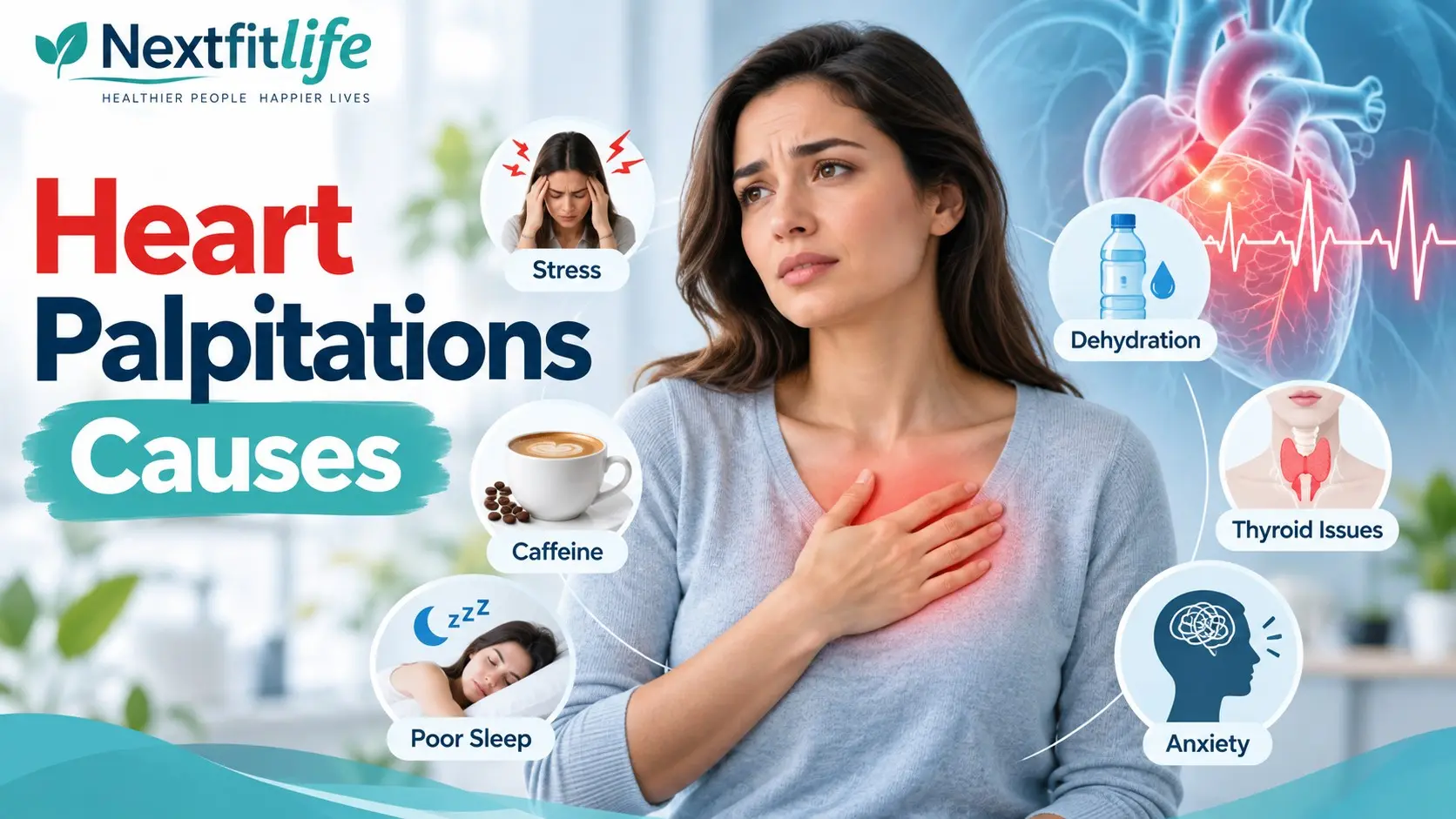
Heart palpitations causes range from simple triggers such as stress, caffeine, exercise, poor sleep, dehydration, and some medicines to medical problems such as anemia, thyroid disease, atrial fibrillation, supraventricular tachycardia, or other abnormal heart rhythms.
Palpitations describe an unusual awareness of your heartbeat. Your heart may feel as though it is racing, pounding, fluttering, skipping, pausing, or adding an extra beat.
Most brief palpitations are not dangerous, but the pattern matters. A heartbeat that suddenly becomes very fast, stays irregular, lasts longer than usual, or comes with chest pain, shortness of breath, dizziness, or fainting needs more attention.
This article is for general information and education. It does not replace medical advice, diagnosis, or treatment.
If you wake with a racing heartbeat, read Waking Up With Racing Heart. For a broader symptom overview, see Symptoms of Heart Disease.
Table of Contents
- What heart palpitations feel like
- 13 common and important causes
- Stress and anxiety
- Caffeine and energy drinks
- Nicotine
- Alcohol
- Poor sleep
- Exercise
- Dehydration
- Medicines and decongestants
- Anemia
- Thyroid disease
- Pregnancy and menopause
- Low blood sugar and electrolytes
- Heart rhythm problems
- Premature beats
- Atrial fibrillation
- SVT
- Ventricular rhythm problems
- Palpitations at night
- Palpitations after eating
- Palpitations during exercise
- How doctors diagnose the cause
- What to track at home
- Smart fixes and prevention
- When to see a doctor
- Emergency warning signs
- Frequently asked questions
What Are Heart Palpitations?
Heart palpitations are sensations that make you unusually aware of your heartbeat.
You may feel them in your:
- Chest
- Neck
- Throat
People describe them in different ways.
Your heartbeat may feel like it is:
- Racing
- Pounding
- Fluttering
- Skipping
- Pausing
- Thumping
- Adding an extra beat
- Beating irregularly
Palpitations can last a few seconds, several minutes, or much longer.
They can happen during exercise, after eating, while sitting quietly, or when you lie down at night.
Palpitations Are a Symptom, Not a Diagnosis
This is one of the most useful facts to understand.
A palpitation tells you what the heartbeat feels like. It does not tell you why it is happening.
The same fluttering sensation may come from:
- A harmless premature beat
- Anxiety
- Too much caffeine
- Thyroid disease
- Atrial fibrillation
- Another arrhythmia
That is why doctors look at the rhythm itself rather than relying only on how the heartbeat feels.
What Do Different Palpitations Feel Like?
| Feeling | Possible Explanation | What Matters |
|---|---|---|
| Single thump or skipped beat | Premature atrial or ventricular beat | Often benign when isolated |
| Fast regular racing | Exercise, anxiety, sinus tachycardia, or SVT | Sudden onset and very fast rate may need assessment |
| Fast irregular rhythm | Possible atrial fibrillation | Needs medical evaluation |
| Pounding heartbeat | Stress, exercise, fever, anemia, thyroid disease, or normal rhythm felt strongly | Check triggers and other symptoms |
| Fluttering | Premature beats, AFib, or another rhythm | Recurring episodes may need rhythm monitoring |
1. Stress and Anxiety
Stress is one of the most common causes of a pounding or racing heartbeat.
When you feel threatened or anxious, the body releases stress hormones such as adrenaline.
These signals can:
- Raise heart rate
- Make the heart beat harder
- Increase awareness of normal heartbeats
- Trigger occasional premature beats
Palpitations from anxiety may appear suddenly during:
- Work stress
- Arguments
- Panic attacks
- Public speaking
- Travel
- Worry about health
Do not assume every palpitation is anxiety
This is important.
Heart rhythm problems can cause anxiety because suddenly feeling your heart race is frightening.
If episodes are new, recurring, prolonged, or paired with fainting, chest pain, or shortness of breath, get them checked.
2. Caffeine and Energy Drinks
Caffeine affects the nervous system and can increase heart rate or make premature beats more noticeable in sensitive people.
Sources include:
- Coffee
- Tea
- Energy drinks
- Pre workout products
- Cola
- Chocolate
- Some headache medicines
Not everyone with palpitations needs to stop caffeine completely.
The useful question is whether your episodes reliably follow caffeine use.
Try a trigger test
If you suspect caffeine:
- Track how much you drink.
- Note the timing of palpitations.
- Reduce the amount gradually.
- See whether the episodes become less frequent.
Avoid suddenly stopping very high caffeine intake if it causes strong withdrawal headaches.
3. Nicotine
Nicotine stimulates the nervous system.
It can raise:
- Heart rate
- Blood pressure
- Adrenaline activity
This can make the heartbeat feel faster or stronger.
Nicotine exposure can come from:
- Cigarettes
- Vaping
- Nicotine pouches
- Other tobacco products
Smoking also increases long term cardiovascular risk.
4. Alcohol
Alcohol can trigger palpitations in some people.
Heavy drinking can raise the risk of abnormal rhythms, including atrial fibrillation.
Episodes may occur:
- While drinking
- Later that night
- The next morning
Alcohol can also contribute indirectly through:
- Dehydration
- Poor sleep
- Electrolyte changes
If palpitations repeatedly follow alcohol, reducing or avoiding it is sensible.
5. Poor Sleep
Lack of sleep can raise stress hormones and make the heart feel more noticeable.
Poor sleep can also increase:
- Anxiety
- Caffeine use
- Blood pressure
- Fatigue
Sleep apnea is particularly important because it is linked with heart rhythm problems such as atrial fibrillation.
Ask about sleep apnea if you:
- Snore loudly
- Stop breathing during sleep
- Wake choking
- Have morning headaches
- Feel very sleepy during the day
6. Exercise
It is normal for the heart to beat faster during exercise.
Exercise can also make occasional premature beats more noticeable.
But certain patterns deserve evaluation.
Get checked if palpitations during exercise cause:
- Chest pain
- Fainting
- Near fainting
- Severe dizziness
- Unusual breathlessness
- A sudden very rapid heartbeat
Palpitations during exercise are more concerning when there is known heart disease or a family history of sudden cardiac death.
7. Dehydration
Dehydration can reduce circulating blood volume and may make the heart beat faster.
It may happen after:
- Heavy exercise
- Hot weather
- Vomiting
- Diarrhea
- Heavy sweating
- Not drinking enough
Dehydration can also contribute to changes in electrolytes.
However, drinking excessive amounts of water is not a treatment for unexplained palpitations.
People with heart failure or kidney disease may need a specific fluid plan.
8. Medicines and Decongestants
Several medicines can cause or worsen palpitations.
Examples may include:
- Nasal decongestants
- Some asthma inhalers
- ADHD medicines
- Thyroid medicine when the dose is too high
- Some weight loss medicines
- Some antidepressants
- Some heart medicines
Cold medicines containing stimulants such as pseudoephedrine can make the heartbeat feel faster or stronger in some people.
9. Anemia
Anemia means the blood does not carry oxygen normally because of a low red blood cell count or low hemoglobin.
The heart may compensate by beating faster.
Possible symptoms include:
- Palpitations
- Fatigue
- Shortness of breath
- Dizziness
- Pale skin
- Reduced exercise ability
Iron deficiency is one common cause, but anemia has many causes.
A blood count and other tests may be needed.
10. Overactive Thyroid
An overactive thyroid can speed up the body's metabolism and heart rate.
Hyperthyroidism may cause:
- Racing heartbeat
- Palpitations
- Tremor
- Sweating
- Heat intolerance
- Weight loss
- Anxiety
- Frequent bowel movements
Thyroid disease can also increase the risk of atrial fibrillation.
Blood tests can check thyroid function.
11. Pregnancy, Perimenopause, and Menopause
Hormonal and circulatory changes can make palpitations more noticeable.
Pregnancy
Pregnancy increases blood volume and heart workload.
Many palpitations during pregnancy are benign.
However, pregnancy can also uncover:
- Anemia
- Thyroid disease
- Arrhythmias
- Heart muscle disease
Repeated or severe symptoms should be assessed.
Perimenopause and menopause
Hormonal changes can be associated with:
- Palpitations
- Hot flashes
- Sleep disturbance
- Anxiety
Do not assume every new palpitation during menopause is hormonal, especially if the rhythm is prolonged or other warning signs are present.
12. Low Blood Sugar and Electrolyte Problems
Low blood sugar can trigger adrenaline release.
This can cause:
- Palpitations
- Sweating
- Trembling
- Hunger
- Weakness
- Anxiety
This is especially important for people using diabetes medicines.
Electrolytes
Minerals such as:
- Potassium
- Magnesium
- Sodium
help regulate electrical activity in the heart.
Abnormal levels can affect rhythm.
Do not take high dose potassium or magnesium supplements simply because you have palpitations.
Too much can also be dangerous.
13. Heart Rhythm Problems
Palpitations sometimes come from a true arrhythmia.
An arrhythmia happens when the heart's electrical signals do not follow the normal rhythm.
The heart may beat:
- Too fast
- Too slowly
- Irregularly
- With premature beats
Some arrhythmias are harmless.
Others increase the risk of stroke, fainting, heart failure, or sudden cardiac arrest.
Premature Atrial and Ventricular Beats
A very common cause of the “skipped beat” feeling is a premature contraction.
There are two main types:
- Premature atrial contractions, or PACs
- Premature ventricular contractions, or PVCs
The heart beats a little early, then there may be a short pause before the next beat.
The next heartbeat can feel stronger, which is why people often describe a sudden thump.
Triggers can include:
- Stress
- Caffeine
- Alcohol
- Poor sleep
- Exercise
- Electrolyte changes
Occasional premature beats are common.
Frequent or highly symptomatic episodes may need testing.
Atrial Fibrillation
Atrial fibrillation, or AFib, is a common arrhythmia.
The upper heart chambers beat in a rapid and disorganized way.
The pulse often becomes irregular.
Possible symptoms include:
- Fluttering
- Fast irregular heartbeat
- Weakness
- Fatigue
- Shortness of breath
- Dizziness
- Reduced exercise ability
Some people feel nothing.
Why AFib matters
AFib can increase the risk of stroke because blood may pool and clot inside the heart.
Some people need blood thinning medicine based on their individual stroke risk.
Do not start aspirin or an anticoagulant on your own.
Supraventricular Tachycardia
Supraventricular tachycardia, or SVT, can cause the heart to suddenly switch from a normal rate to a very fast regular rhythm.
The episode may start and stop abruptly.
Possible symptoms include:
- Sudden racing heartbeat
- Chest pounding
- Dizziness
- Shortness of breath
- Anxiety
- Weakness
- Fainting in some cases
Episodes may last seconds, minutes, or longer.
Recurring SVT can often be treated successfully.
Ventricular Tachycardia
Ventricular tachycardia starts in the lower chambers of the heart.
It can be dangerous, especially in people with:
- Previous heart attack
- Weak heart muscle
- Cardiomyopathy
- Known structural heart disease
Symptoms may include:
- Very rapid heartbeat
- Chest discomfort
- Dizziness
- Shortness of breath
- Fainting
- Collapse
Severe symptoms need emergency care.
Can a Slow Heartbeat Feel Like Palpitations?
Yes.
Palpitations do not always mean the heart is fast.
A slow rhythm, pauses, or irregular beats can also make a heartbeat feel unusual.
Slow rhythms become more concerning when paired with:
- Dizziness
- Fainting
- Weakness
- Breathlessness
- Confusion
Heart Palpitations at Night
Palpitations often feel stronger at night because the room is quiet and there are fewer distractions.
Lying down may also make heart movement more noticeable against the chest wall.
Nighttime triggers may include:
- Stress
- Alcohol
- Caffeine taken late
- Poor sleep
- Sleep apnea
- Reflux
- Premature beats
- Atrial fibrillation
If you wake with racing heart episodes, read Waking Up With Racing Heart.
Heart Palpitations After Eating
Some people notice palpitations after meals.
Possible reasons include:
- Caffeine
- Alcohol
- Large meals
- High sugar meals
- Rapid blood sugar changes
- Reflux
- Anxiety about symptoms
- Food additives or stimulants
The normal digestive response also changes blood flow and nervous system activity.
Read Heart Rate After Eating for a more detailed guide.
Palpitations After Exercise
A fast heartbeat immediately after exercise is expected.
The heart should gradually slow during recovery.
Seek medical assessment if exercise repeatedly causes:
- Sudden racing that feels different from normal exercise heart rate
- Irregular heartbeat
- Chest pain
- Fainting
- Severe dizziness
- Unusual breathlessness
Palpitations With Fever
Fever often raises heart rate.
The heart may feel faster because the body is working harder.
Palpitations during illness can also be worsened by:
- Dehydration
- Low blood pressure
- Cold medicines
- Electrolyte changes
A very fast heart rate, chest pain, fainting, severe weakness, or breathing difficulty during an infection needs medical evaluation.
Can Low Iron Cause Heart Palpitations?
Yes.
Iron deficiency can lead to anemia.
If oxygen carrying capacity falls, the heart may compensate by beating faster.
Other clues include:
- Tiredness
- Weakness
- Shortness of breath
- Pale skin
- Dizziness
Iron supplements should be used for a confirmed need rather than every episode of palpitations.
Can Vitamin B12 Deficiency Cause Palpitations?
Severe vitamin B12 deficiency can contribute to anemia, which may cause palpitations.
Other B12 deficiency symptoms can include:
- Fatigue
- Weakness
- Numbness
- Tingling
- Balance problems
Testing is more useful than guessing.
Can Low Magnesium Cause Palpitations?
Very low magnesium can affect heart rhythm.
However, taking magnesium without knowing your level is not always safe or useful.
Kidney disease can make excess magnesium dangerous.
If an electrolyte problem is suspected, a blood test is the better first step.
Can High Potassium Cause Palpitations?
Yes.
Both high and low potassium can affect the electrical system of the heart.
High potassium is more likely in people with:
- Kidney disease
- Certain heart medicines
- Some blood pressure medicines
- Potassium supplements
Never use high dose potassium to treat palpitations unless a clinician has confirmed that you need it.
Heart Palpitations and Blood Pressure
Blood pressure can be:
- Normal
- High
- Low
during an episode.
A normal blood pressure reading does not prove the rhythm is normal.
A very low blood pressure with palpitations, fainting, weakness, or confusion needs urgent assessment.
Heart Palpitations and Heart Disease
Palpitations can occur with:
- Coronary artery disease
- Heart failure
- Cardiomyopathy
- Valve disease
- Previous heart attack
- Congenital heart disease
Palpitations are more concerning when a person already has significant structural heart disease.
For broader warning signs, see Symptoms of Heart Disease.
Heart Palpitations vs Heart Attack
Palpitations by themselves do not usually mean a heart attack.
A heart attack is caused by blocked or severely reduced blood flow to part of the heart muscle.
Possible heart attack symptoms include:
- Chest pressure or pain
- Arm or shoulder discomfort
- Jaw or back pain
- Shortness of breath
- Cold sweat
- Nausea
- Dizziness
Palpitations can occur during a heart attack if the heart rhythm changes.
Read Signs of a Heart Attack for more detail.
Heart Palpitations vs Anxiety
| Feature | Anxiety Related | Possible Arrhythmia |
|---|---|---|
| Common trigger | Stress, panic, worry | May occur without emotional trigger |
| Onset | Often during anxiety | Can start abruptly |
| Rhythm | Often regular fast sinus rhythm | May be irregular or extremely fast |
| Diagnosis | History and evaluation | ECG or rhythm monitor may be needed |
The two can overlap.
An arrhythmia can make you anxious, and anxiety can make your heartbeat faster.
Do not diagnose yourself from sensation alone.
How Are Heart Palpitations Diagnosed?
A good evaluation begins with the story.
A clinician may ask:
- When the palpitations started
- How often they happen
- How long they last
- Whether the rhythm feels regular or irregular
- Whether they begin suddenly
- Whether they stop suddenly
- What you are doing when they start
- Whether you faint or feel dizzy
- How much caffeine or alcohol you use
- Which medicines and supplements you take
Physical examination
The examination may include:
- Heart rate
- Blood pressure
- Heart sounds
- Lung sounds
- Thyroid signs
- Signs of anemia or heart failure
ECG
An electrocardiogram records the heart's electrical activity.
It can identify many rhythm problems.
The limitation is simple: if the palpitation is not happening during the ECG, the tracing may look normal.
A normal short ECG therefore does not always end the evaluation.
Holter Monitor
A Holter monitor records the heart rhythm continuously for a period of time.
It may be useful when episodes occur frequently.
The goal is to match your symptom with the actual heart rhythm at that moment.
Patch and Event Monitors
Longer monitoring may be useful when symptoms occur less often.
Options can include:
- Wearable patch monitors
- Event monitors
- Mobile cardiac telemetry
- Implantable loop recorders in selected cases
The best monitor depends on how often the symptoms happen.
Blood Tests
Tests may look for noncardiac triggers.
Depending on the history, these can include:
- Complete blood count
- Thyroid tests
- Electrolytes
- Kidney function
- Blood glucose
- Iron studies
Echocardiogram
An echocardiogram uses ultrasound to look at heart structure and function.
It can assess:
- Heart pumping strength
- Heart valves
- Chamber size
- Heart muscle thickness
It is often used when the clinician suspects structural heart disease.
Can a Smartwatch Help?
A smartwatch can be useful as supporting information.
Some devices can record:
- Heart rate
- Rhythm trends
- Single lead ECG tracings
If your device can capture an ECG during symptoms, save it and show it to your healthcare professional.
But wearables have limitations.
A normal reading does not rule out every arrhythmia, and abnormal alerts sometimes occur when the rhythm is actually harmless.
Do not let a smartwatch replace medical evaluation when symptoms are concerning.
What Should You Track at Home?
A short symptom diary can be very useful.
Write down:
- Date and time
- What you were doing
- How the heartbeat felt
- How suddenly it began
- How long it lasted
- Heart rate if available
- Whether the pulse felt regular
- Caffeine use
- Alcohol use
- Recent medicine
- Sleep quality
- Other symptoms
Do not spend time recording details during a medical emergency.
How to Calm Benign Heart Palpitations
If you have already been evaluated and the episodes are considered benign, simple steps may reduce triggers.
Slow your breathing
Stress related palpitations may improve when the nervous system settles.
Try slow comfortable breathing without forcing long breath holds.
Sit down
If you feel lightheaded, sit or lie in a safe place to avoid falling.
Review the trigger
Ask whether you recently had:
- Extra coffee
- An energy drink
- Nicotine
- Alcohol
- Cold medicine
- Very little sleep
- Heavy exercise
Hydrate normally
If you have been sweating heavily or clearly have not had enough fluid, normal rehydration may help.
Do not force large amounts of water if you have heart failure or kidney disease.
Should You Try Vagal Maneuvers?
Certain vagal maneuvers can sometimes stop specific forms of SVT.
However, they are not appropriate for every racing heartbeat.
If a clinician has diagnosed SVT and taught you a maneuver, follow those instructions.
Do not perform carotid massage on yourself.
New unexplained rapid heart rhythms should be diagnosed rather than repeatedly treated at home.
Do Not Use Cough CPR
“Cough CPR” is often promoted online as a way to control a dangerous rhythm.
It is not a home treatment for palpitations.
If someone becomes unconscious and is not breathing normally:
- Call emergency services.
- Begin standard CPR.
- Use an AED as soon as possible.
How to Prevent Heart Palpitations
Prevention depends on the cause.
If your medical evaluation has ruled out a dangerous rhythm, these habits may help:
- Sleep consistently
- Manage stress
- Reduce excess caffeine
- Avoid energy drinks if they trigger symptoms
- Stop smoking and nicotine use
- Limit alcohol
- Stay appropriately hydrated
- Avoid stimulant recreational drugs
- Review decongestants and stimulant medicines
- Treat anemia when present
- Treat thyroid disease
- Manage sleep apnea
- Follow treatment for diagnosed arrhythmias
Do You Need to Stop Coffee Completely?
Not necessarily.
Some people tolerate coffee without a problem.
Others clearly notice symptoms after caffeine.
Instead of assuming coffee is always the cause, look for a repeatable relationship.
If you consume very large amounts, reducing intake is sensible even when palpitations are not present.
Do You Need Electrolyte Drinks?
Usually not for routine palpitations.
Electrolyte drinks may be useful after heavy sweating, prolonged exercise, vomiting, or diarrhea in some people.
But they are not a standard heart rhythm treatment.
Some products contain:
- Large amounts of sodium
- Potassium
- Sugar
This can be unsuitable for certain heart and kidney conditions.
What About Magnesium Supplements?
Magnesium deficiency can affect rhythm.
That does not mean magnesium supplements are the answer to every flutter.
Supplements can cause:
- Diarrhea
- Medicine interactions
- Excess magnesium in people with kidney problems
Use supplements for a clear reason, not just because an online post says they “calm the heart.”
Can Deep Breathing Stop Palpitations?
Slow breathing can help when stress or panic is driving a normal rapid heartbeat.
It may not stop an arrhythmia.
That difference matters.
If your heart suddenly races at a very high rate for several minutes, or if palpitations repeatedly occur without an emotional trigger, medical evaluation is more useful than relying only on breathing exercises.
When Should You See a Doctor?
Arrange a medical evaluation when palpitations:
- Keep coming back
- Are happening more often
- Last more than a few minutes repeatedly
- Last for a long period
- Wake you from sleep often
- Appear during exercise
- Begin suddenly without a clear trigger
- Feel very fast or irregular
- Are affecting daily life
You should also seek assessment sooner if you have:
- Known heart disease
- Heart failure
- Valve disease
- Previous heart attack
- Cardiomyopathy
- A strong family history of rhythm disease
- A family history of sudden cardiac death
When Are Heart Palpitations an Emergency?
Call emergency services if palpitations occur with:
- Chest pain or pressure
- Severe shortness of breath
- Fainting
- Near fainting
- Severe dizziness
- Sudden severe weakness
- Cold clammy sweating with chest symptoms
- Confusion
- Collapse
Do not drive yourself when severely symptomatic if emergency transport is available.
What if the Palpitations Stop Before You Get Help?
A rhythm problem can stop before you reach a clinic.
That does not make the episode imaginary.
If symptoms have ended but you experienced:
- Fainting
- Chest pain
- Severe breathlessness
- A prolonged very fast heartbeat
you still need timely medical assessment.
Common Heart Palpitation Mistakes
| Mistake | Why It Can Backfire | Better Approach |
|---|---|---|
| Assuming every palpitation is anxiety | Arrhythmias can feel similar | Evaluate recurring or prolonged symptoms |
| Assuming every skipped beat is dangerous | Occasional premature beats are common | Look at frequency and associated symptoms |
| Taking potassium or magnesium without testing | Excess levels can be harmful | Check for a true deficiency when appropriate |
| Trusting a normal smartwatch reading | A wearable may miss intermittent rhythm problems | Use it as supporting information |
| Stopping prescribed medicine suddenly | Some medicines need gradual adjustment | Speak with the prescriber |
| Ignoring fainting | Fainting can indicate a significant rhythm problem | Seek prompt medical assessment |
Conclusion: Find the Trigger Before Trying to Fix the Rhythm
Heart palpitations causes range from common triggers such as stress, caffeine, nicotine, alcohol, poor sleep, dehydration, and medicines to anemia, thyroid disease, pregnancy related changes, premature beats, atrial fibrillation, SVT, and other arrhythmias.
The best next step is not to guess. Notice the pattern, track your triggers, review medicines, and get recurring or prolonged episodes checked.
If palpitations occur with chest pain, severe breathlessness, fainting, or collapse, call emergency services immediately.
References and Sources
- American Heart Association. How Serious Are Heart Palpitations? Causes, Symptoms and When to Worry.
Published February 9, 2026. Covers the definition of palpitations, premature beats, stress, exercise, caffeine, electrolyte problems, medicines, arrhythmias, evaluation, and warning symptoms.
https://www.heart.org/en/news/2026/02/09/how-serious-are-heart-palpitations-causes-symptoms-and-when-to-worry - American Heart Association. Symptoms of Atrial Fibrillation.
Covers palpitations, weakness, fatigue, faintness, sweating, chest symptoms, stroke risk, and different AFib patterns.
https://www.heart.org/en/health-topics/atrial-fibrillation/what-are-the-symptoms-of-atrial-fibrillation - NHS. Heart Palpitations.
Covers racing, pounding, fluttering, skipped beats, exercise, poor sleep, stress, medicines, caffeine, alcohol, nicotine, anemia, thyroid disease, arrhythmias, emergency symptoms, and ECG testing.
https://www.nhs.uk/symptoms/heart-palpitations/ - NHS. Heart Rhythm Problems.
Covers tachycardia, bradycardia, irregular rhythms, palpitations, dizziness, breathlessness, fatigue, chest discomfort, and fainting.
https://www.nhs.uk/conditions/arrhythmia/ - Cleveland Clinic. Heart Palpitations.
Covers racing, pounding, skipped, extra and fluttering beats, common triggers, pregnancy, menopause, anemia, thyroid disease, dehydration, medicines, and treatment.
https://my.clevelandclinic.org/health/diseases/17084-heart-palpitations - Cleveland Clinic. Arrhythmia.
Updated April 9, 2026. Covers abnormal heart rhythms, palpitations, dizziness, fainting, shortness of breath, chest discomfort, structural heart disease, electrolyte problems, inherited rhythm conditions, and treatment.
https://my.clevelandclinic.org/health/diseases/16749-arrhythmia - Mayo Clinic. Heart Palpitations: Diagnosis and Treatment.
Covers ECG testing, trigger management, reducing stimulants, stress management, and treatment of underlying arrhythmias.
https://www.mayoclinic.org/diseases-conditions/heart-palpitations/diagnosis-treatment/drc-20373201 - Mayo Clinic. Heart Palpitations in Adults.
Covers emergency warning signs including chest pain, dizziness, fainting, and shortness of breath.
https://www.mayoclinic.org/symptom-checker/heart-palpitations-in-adults-adult/related-factors/itt-20009075
Internal Links and Helpful NextFitLife Guides
- Heart Health Complete Guide
- Waking Up With Racing Heart: Causes and Red Flags
- Heart Pounding After Waking Up: Causes and Warning Clues
- Heart Rate After Eating: Causes and Warning Signs
- Symptoms of Heart Disease: Critical Warning Signs
- Signs of a Heart Attack: Critical Warning Signs
- Angina Symptoms: Causes, Treatment and Prevention
- Congestive Heart Failure: Symptoms, Causes and Treatment
- Brisk Walking Heart Rate: Safe Zones and Warning Signs
- Blood Pressure Higher at Night: Causes and Smart Checks
About the Author
Adel Galal is the Founder and Lead Writer at NextFitLife. He researches heart health, circulation, fitness, nutrition, sleep, healthy aging, and evidence based wellness and turns current medical and public health guidance into clear practical information for everyday readers.
I am not a doctor or licensed healthcare professional, and this content does not replace professional medical advice, diagnosis, or treatment. I share information based on extensive research, real life experience, and consultation with healthcare providers. Always consult a qualified healthcare professional for diagnosis, treatment, or guidance about any health condition.
Learn more about Adel Galal, NextFitLife, and the site's editorial approach on the About Us page.
Frequently Asked Questions
What are the most common heart palpitations causes?
Common causes include stress, anxiety, caffeine, nicotine, alcohol, poor sleep, exercise, dehydration, medicines, anemia, thyroid disease, hormonal changes, electrolyte problems, premature beats, and arrhythmias.
What do heart palpitations feel like?
They may feel like racing, pounding, fluttering, skipped beats, extra beats, pauses, or an irregular heartbeat in the chest, neck, or throat.
Are heart palpitations dangerous?
Most brief isolated palpitations are not dangerous, but some are caused by arrhythmias or heart disease and need medical evaluation.
When should I worry about heart palpitations?
Get medical advice if palpitations keep returning, last longer than a few minutes repeatedly, become more frequent, happen during exercise, or feel very fast or irregular.
When are heart palpitations an emergency?
Call emergency services when palpitations occur with chest pain, severe shortness of breath, fainting, near fainting, severe dizziness, sudden weakness, confusion, or collapse.
Can anxiety cause heart palpitations?
Yes. Stress and anxiety can raise adrenaline and make the heart beat faster or harder. However, recurring palpitations should not automatically be blamed on anxiety.
Can caffeine cause heart palpitations?
Yes. Caffeine can trigger or worsen palpitations in sensitive people, especially when large amounts or energy drinks are consumed.
Can dehydration cause heart palpitations?
Yes. Dehydration can reduce blood volume and raise heart rate, and severe fluid loss can also disturb electrolytes.
Can low iron cause heart palpitations?
Yes. Iron deficiency can cause anemia, which may make the heart beat faster to deliver enough oxygen to the body.
Can thyroid problems cause palpitations?
Yes. An overactive thyroid can cause a racing heartbeat and can raise the risk of atrial fibrillation.
Can menopause cause heart palpitations?
Yes. Hormonal changes during perimenopause and menopause can be associated with palpitations, but new or prolonged episodes should still be evaluated.
Can pregnancy cause heart palpitations?
Yes. Pregnancy increases blood volume and heart workload, so palpitations are common. Persistent or severe symptoms should be checked because anemia, thyroid disease, and arrhythmias can also occur.
Why do I get heart palpitations at night?
Palpitations may feel stronger at night because the environment is quiet. Caffeine, alcohol, stress, poor sleep, sleep apnea, premature beats, and arrhythmias can also contribute.
Why does my heart skip a beat?
A skipped beat sensation is often caused by a premature atrial or ventricular contraction followed by a short pause and a stronger next heartbeat.
What is atrial fibrillation?
Atrial fibrillation is an irregular rhythm from the upper chambers of the heart. It may cause fluttering, a fast irregular heartbeat, weakness, breathlessness, dizziness, or no symptoms at all.
What is SVT?
Supraventricular tachycardia is a fast rhythm that starts above the heart's lower chambers and often begins and ends suddenly.
Can a smartwatch diagnose palpitations?
A smartwatch can record useful heart rate and rhythm information, but it cannot safely diagnose or rule out every arrhythmia or heart problem.
How do doctors test heart palpitations?
Testing may include an ECG, Holter monitor, patch monitor, event monitor, blood tests, echocardiogram, and other heart tests depending on the symptoms.
Can magnesium stop heart palpitations?
Magnesium may help if a true deficiency is contributing, but supplements are not a universal treatment and can be unsafe in excess or with kidney disease.
How can I reduce harmless heart palpitations?
After serious causes have been excluded, useful steps may include better sleep, stress control, reducing excess caffeine, avoiding nicotine, limiting alcohol, staying appropriately hydrated, and reviewing medicines that trigger symptoms.

Health & wellness writer with 30+ years of experience in nutrition, fitness, and healthy aging. Founder of NextFitLife.com — evidence-based health guidance.

