
Published on: March 8, 2025
Updated on: November 4, 2026
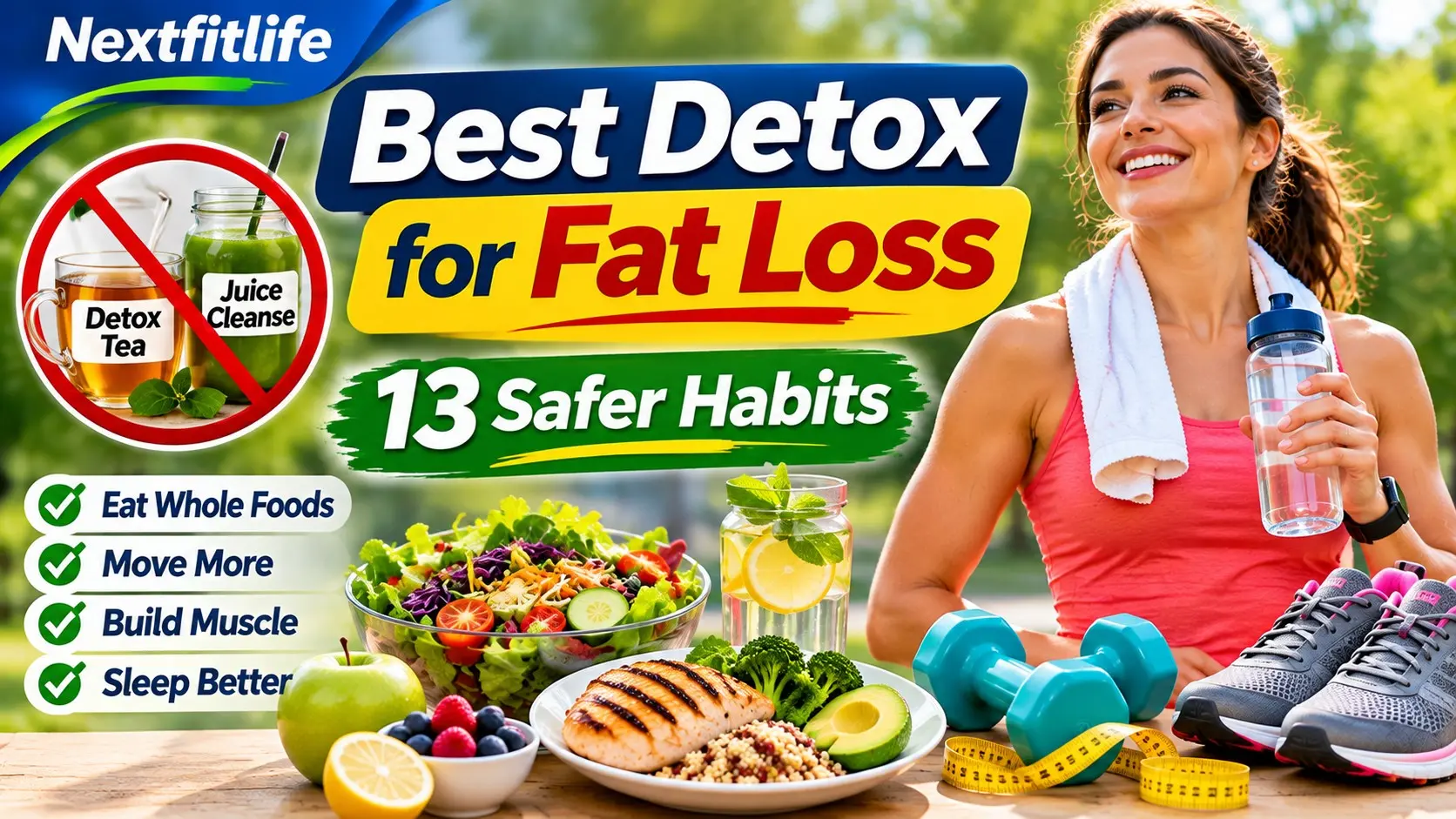
If you are searching for the best detox for fat loss, the most useful answer may surprise you: you do not need a commercial cleanse to lose body fat.
Juice cleanses, detox teas, laxatives, fasting kits, and “toxin flushing” supplements are often marketed as shortcuts. Research does not show that these products produce reliable long term fat loss or remove vague, unnamed toxins from the body.
Real fat loss comes from a sustainable calorie deficit, while healthy eating, regular activity, resistance training, sleep, and stress management make that deficit easier to maintain.
This guide shows you what detox claims get wrong and gives you 13 safer habits that can support real weight management.
Important: This article is for general information and education. It does not replace medical advice, diagnosis, or treatment.
Table of Contents
- Quick Answer
- What Detox Really Means
- Why Detox Diets Do Not Melt Fat
- 13 Safer Fat Loss Habits
- Seven Day Healthy Reset
- Juice Cleanses
- Detox Teas and Laxatives
- Water and Lemon Water
- Green Tea
- Fasting and Detox Claims
- Supplements and Safety
- Prescription Weight Management
- Common Detox Mistakes
- When to Get Medical Help
- Conclusion
- References and Sources
- Explore More Weight Management Guides
- About the Author
- Frequently Asked Questions
Quick Answer: What Is the Best Detox for Fat Loss?
The best detox for fat loss is not a juice cleanse, detox tea, laxative, or supplement.
If fat loss is appropriate for you, a safer approach is to:
- Ignore vague toxin removal claims.
- Create a moderate calorie deficit.
- Eat regular balanced meals.
- Include protein at main meals.
- Eat more vegetables and fiber.
- Replace sugary drinks with lower calorie choices.
- Walk more often.
- Add regular aerobic exercise.
- Strength train.
- Sleep enough.
- Manage stress and eating triggers.
- Track real trends rather than quick water loss.
- Build habits you can maintain.
For a complete weight management foundation, read our Basic Weight Loss Tips and Weight Loss Strategies.
What Does Detox Really Mean?
The word “detox” is often used very loosely online.
A commercial detox may involve:
- Juice only diets
- Very low calorie plans
- Herbal teas
- Dietary supplements
- Fasting
- Laxatives
- Enemas
- Colon cleansing
- Saunas
These products often claim to remove “toxins,” but the toxin may not even be named.
Medical detoxification is different. Certain poisonings and toxic exposures require real medical treatment. That is not the same as a commercial juice cleanse.
Does Your Body Need a Cleanse?
Your body already has systems that process, transform, and remove waste products.
The liver, kidneys, lungs, digestive system, skin, and other tissues all have roles in normal metabolism and waste removal.
A detox drink does not take over these functions.
You can support overall health with enough nutrition, hydration, sleep, movement, and appropriate medical care when needed.
Simple truth: You do not need to “flush” body fat or normal metabolic waste with a commercial cleanse.
Why Detox Diets Do Not Melt Body Fat
Some cleanses make the scale drop quickly because they provide very few calories or carbohydrates.
That does not mean several pounds of body fat disappeared.
Rapid changes can include:
- Water loss
- Changes in stored carbohydrate
- Less food inside the digestive tract
- Dehydration
NCCIH notes that juice and detox diets may produce early weight loss because calorie intake is low, but weight often returns after normal eating resumes.
Long term body fat reduction requires an overall energy deficit that you can maintain.
13 Safer Alternatives to a Detox Diet
1. Stop Chasing Unnamed Toxins
Be cautious when a product says it “removes toxins” without telling you which toxins, how they were measured, or what evidence supports the claim.
Health claims should be specific and testable.
2. Create a Moderate Calorie Deficit
Body fat decreases when your routine creates a calorie deficit over time.
You can start by reducing calories that provide little fullness.
- Measure cooking oil.
- Reduce sugary drinks.
- Control restaurant portions.
- Reduce frequent high calorie snacks.
- Choose grilled foods more often than fried foods.
You do not need a starvation diet.
3. Eat Regular Balanced Meals
Instead of replacing meals with juice, build meals from real foods you can keep eating.
A balanced meal might include:
- Vegetables
- Whole fruit
- A protein source
- A high fiber carbohydrate
- A sensible amount of healthy fat
NIDDK recommends a long term eating pattern rather than a short cleanse.
4. Include Protein at Main Meals
Protein rich foods can help make meals satisfying and support muscle.
Examples include:
- Fish
- Chicken
- Eggs
- Greek yogurt
- Beans
- Lentils
- Tofu
- Soy foods
A juice only plan often lacks enough protein.
5. Increase Vegetables and Fiber
High fiber foods can increase meal volume and help with fullness.
Useful choices include:
- Broccoli
- Spinach
- Carrots
- Beans
- Lentils
- Whole fruit
- Oats
- Whole grains
See our Best Vegetables for Weight Loss.
6. Replace Sugary Drinks
Replacing a sugary drink with water or an unsweetened drink can reduce calorie intake.
That is very different from claiming water “flushes fat.”
Choose:
- Water
- Sparkling water
- Unsweetened tea
- Plain coffee
7. Walk More
Walking for weight loss can increase daily energy expenditure without requiring a gym.
Try:
- A 10 minute walk after meals
- A lunch walk
- Walking during phone calls
- A brisk evening walk
See our Walking for Weight Loss guide.
8. Add Aerobic Activity
Adults should generally work toward at least 150 minutes of moderate aerobic activity each week.
Options include:
- Brisk walking
- Cycling
- Swimming
- Dancing
- Low impact cardio
For home options, try our Low Impact Exercises to Burn Fat at Home.
9. Strength Train Regularly
Resistance training supports muscle, strength, and physical function.
You can train with:
- Bodyweight
- Dumbbells
- Resistance bands
- Machines
- Free weights
Adults should generally include muscle strengthening activity on at least two days each week.
See our Strength Training and Muscle Building Guide.
10. Protect Your Sleep
Sleep can affect appetite, food choices, energy, mood, and your ability to exercise.
Try to:
- Keep a regular sleep schedule.
- Reduce late caffeine.
- Keep your room dark.
- Allow enough time for sleep.
Sleep is not a detox treatment, but it is part of a healthy lifestyle.
11. Manage Stress and Eating Triggers
Stress can influence sleep, appetite, emotional eating, and activity.
Helpful strategies include walking, breathing exercises, regular meals, exercise, and planning ahead.
For more guidance, read How to Get Rid of Stress Belly.
12. Track Real Trends
Do not judge a plan from a sudden two day change on the scale.
Track:
- Weekly weight trends
- Waist measurement
- Walking
- Strength
- Meal habits
- Sleep
Water loss is not the same as body fat loss.
13. Build a Plan You Can Maintain
The best plan is not the one that makes the scale fall fastest for three days.
It is the one you can continue for months.
Sustainable habits are more useful than repeated cycles of cleansing, restriction, and regain.
A Seven Day Healthy Reset Instead of a Detox
| Day | Habit | Goal |
|---|---|---|
| Day 1 | Replace sugary drinks with water | Reduce easy calories |
| Day 2 | Add vegetables to lunch and dinner | Increase food volume |
| Day 3 | Include protein at each main meal | Support fullness |
| Day 4 | Walk for 20 to 30 minutes | Increase movement |
| Day 5 | Complete a strength workout | Support muscle |
| Day 6 | Prepare healthy foods for the week | Make good choices easier |
| Day 7 | Review what felt sustainable | Build long term habits |
This is a habit reset, not a toxin cleanse.
Do Juice Cleanses Help With Fat Loss?
Juice cleanses may reduce scale weight for a short period because you are eating very little.
That is not proof of meaningful fat loss.
Juice only plans may also provide too little:
- Protein
- Fiber
- Fat
- Energy
- Certain vitamins and minerals
NCCIH notes that there is no compelling evidence supporting detox diets for long term weight management.
Are Detox Teas Safe?
Be cautious.
Some detox teas contain laxative ingredients.
Laxatives can increase bowel movements and water loss, but they do not remove stored body fat.
Possible problems include:
- Diarrhea
- Dehydration
- Abdominal cramping
- Electrolyte problems
A lower scale number caused by dehydration is not fat loss.
Does Colon Cleansing Help With Weight Loss?
There is not good evidence that colon cleansing produces lasting fat loss.
NCCIH warns that colon cleansing can cause side effects, and risk may be greater for people with certain gastrointestinal, kidney, or heart conditions.
Your colon does not need to be washed out to burn body fat.
Does Drinking More Water Detox Your Body?
Water is essential for health, but drinking excessive amounts does not cleanse body fat.
Drink enough for your needs rather than forcing a fixed extreme amount.
People with certain kidney or heart conditions may have specific fluid guidance from their medical team.
NCCIH also warns that drinking very large amounts of water or herbal tea while eating almost nothing can cause dangerous electrolyte problems.
Does Lemon Water Detox Belly Fat?
No.
Lemon water can be a refreshing low calorie drink, but it does not flush fat from the stomach.
It can be useful if it helps you replace a sugary drink.
That benefit comes from the calorie difference, not a cleansing effect.
Can Green Tea Help With Fat Loss?
Unsweetened green tea can fit into a healthy eating pattern.
However, it should not be marketed as a detox that melts fat.
Any effect on body weight appears small and inconsistent compared with the impact of total food intake and activity.
Concentrated supplements are also different from drinking ordinary tea.
See our Herbal Drinks for Weight Loss guide.
Is Fasting a Detox?
Fasting and detoxification are not the same thing.
Some fasting patterns are studied as dietary approaches, but marketing a fast as a way to flush toxins is a different claim.
NCCIH notes that firm conclusions about many fasting approaches are still limited.
Fasting can also cause headaches, weakness, fainting, and dehydration in some people.
People with diabetes, people taking certain medicines, pregnant or breastfeeding people, and those with a history of eating disorders should seek professional advice before restrictive fasting.
Are Detox Supplements Safe?
Do not assume a product is safe because the label says “natural.”
FDA does not approve dietary supplements for safety and effectiveness before they are marketed in the same way it approves prescription drugs.
Some supplements can interact with medicines or cause side effects.
There is also a more serious concern with weight loss products.
FDA continues to identify products marketed for weight loss that contain hidden drug ingredients.
In 2026, FDA issued multiple warnings about weight loss products with undeclared ingredients. The agency warns that its database only includes a small fraction of contaminated products, so a product not appearing on the list is not proof that it is safe.
What About Prescription Weight Loss Medicines?
Prescription weight management medicine is different from a commercial detox supplement.
For some people with overweight or obesity, a healthcare professional may recommend an approved medicine as part of a larger treatment plan.
NIDDK notes that these medicines work best alongside healthy eating and physical activity rather than replacing them.
Treatment decisions depend on your health, weight, medications, goals, possible benefits, and possible side effects.
Never use another person's prescription medicine.
Common Detox and Fat Loss Mistakes
Thinking Water Loss Is Fat Loss
Dehydration can lower scale weight without reducing much body fat.
Using Laxatives to Lose Weight
Laxatives affect the bowel. They do not remove stored body fat.
Drinking Only Juice
Juice only plans can be low in protein, fiber, and other nutrients.
Buying “Natural” Detox Pills
Natural does not automatically mean safe or effective.
Skipping Meals for Days
Extreme restriction can lead to weakness and is difficult to sustain.
Drinking Extreme Amounts of Water
Too much water, especially with very little food, can disturb electrolyte balance.
Expecting Lemon Water to Burn Belly Fat
Lemon water is a drink choice, not a belly fat treatment.
Ignoring Protein
Balanced meals are usually more useful than juice only cleanses.
Ignoring Strength Training
Resistance exercise supports muscle, strength, and physical function.
Repeating Cleanses After Every Setback
Return to your normal healthy routine instead of punishing yourself with restriction.
Who Should Be Especially Careful With Detox Plans?
Talk with a healthcare professional before a restrictive cleanse if you:
- Have diabetes
- Have kidney disease
- Have heart disease
- Have gastrointestinal disease
- Take prescription medicines
- Are pregnant
- Are breastfeeding
- Have a history of an eating disorder
- Are planning a cleanse for a child or teenager
When Should You Stop a Detox and Get Help?
Stop a restrictive cleanse and seek medical advice if you develop significant dizziness, repeated vomiting, severe diarrhea, or marked weakness.
Seek urgent medical care for symptoms such as:
- Fainting
- Confusion
- Chest pain
- Severe weakness
- Severe dehydration
- Difficulty breathing
- Seizures
These are not signs that a cleanse is “working.”
Conclusion
The best detox for fat loss is not a cleanse at all. Evidence does not support juice detoxes, laxative teas, colon cleanses, or toxin flushing supplements as reliable methods for lasting fat loss.
A better approach is much less dramatic: eat balanced meals, control total calories, include protein and fiber, walk regularly, strength train, sleep enough, and repeat those habits.
Your next step: skip the cleanse and choose three actions today. Replace one sugary drink with water, eat vegetables and protein at your next meal, and take a 20 minute walk.
References and Sources
- National Center for Complementary and Integrative Health. Detoxes and Cleanses: What You Need to Know. Reviews evidence, limitations, and safety concerns surrounding juice cleanses, fasting, laxatives, colon cleansing, and commercial detox programs.
https://www.nccih.nih.gov/health/detoxes-and-cleanses-what-you-need-to-know - Centers for Disease Control and Prevention. Steps for Losing Weight. CDC recommends gradual weight loss and a lifestyle that includes healthy eating, physical activity, sleep, and stress management.
https://www.cdc.gov/healthy-weight-growth/losing-weight/ - National Institute of Diabetes and Digestive and Kidney Diseases. Eating and Physical Activity to Lose or Maintain Weight. Guidance on sustainable nutrition, calorie reduction, physical activity, and long term weight management.
https://www.niddk.nih.gov/health-information/weight-management/adult-overweight-obesity/eating-physical-activity - U.S. Food and Drug Administration. Weight Loss Product Notifications. FDA maintains current warnings about weight loss products found to contain dangerous or undeclared ingredients.
https://www.fda.gov/drugs/medication-health-fraud-notifications/weight-loss-product-notifications - U.S. Food and Drug Administration. Questions and Answers on Dietary Supplements. Explains supplement regulation, labeling, safety responsibilities, and why supplements are not approved for safety before marketing in the same way as prescription medicines.
https://www.fda.gov/food/information-consumers-using-dietary-supplements/questions-and-answers-dietary-supplements
Explore More Weight Management Guides
- Weight Loss Strategies
- Basic Weight Loss Tips
- How to Shed Pounds Quickly
- How to Drop Pounds
- Lose Stubborn Fat
- How to Melt Fat in Body
- Walking for Weight Loss
- Best Vegetables for Weight Loss
- Best Foods to Burn Belly Fat
- Herbal Drinks for Weight Loss
- Low Impact Exercises to Burn Fat at Home
- Strength Training and Muscle Building Guide
Frequently Asked Questions
What is the best detox for fat loss?
The best detox for fat loss is not a cleanse. Sustainable calorie control, balanced meals, regular activity, strength training, sleep, and healthy habits are more useful for lasting fat loss.
Do detox diets really help you lose fat?
There is no compelling evidence that detox diets produce lasting fat loss. Very restrictive plans may cause short term weight changes because calorie intake and body water drop.
Can a juice cleanse make you lose weight?
A juice cleanse may lower scale weight temporarily because calorie intake is very low, but this does not prove meaningful body fat loss. Juice only plans may also lack protein, fiber, and other nutrients.
Do detox teas burn fat?
No. Some detox teas contain laxatives that cause bowel movements and water loss. They do not remove stored body fat and may cause diarrhea or dehydration.
Does lemon water detox belly fat?
No. Lemon water does not flush belly fat. It can be a low calorie drink and may help if it replaces a sugary beverage.
Does drinking lots of water remove toxins?
Normal hydration supports health, but excessive water does not cleanse body fat. Drinking very large amounts while eating very little can disturb electrolyte balance.
Is green tea a detox for weight loss?
No. Unsweetened green tea can fit a healthy diet, but it is not a detox treatment and does not replace calorie control, physical activity, and other healthy habits.
Is fasting the same as detoxing?
No. Some fasting patterns are studied as dietary approaches, but claims that fasting flushes unspecified toxins are different. Fasting can also cause weakness, headaches, fainting, or dehydration in some people.
Are natural detox supplements safe?
Not necessarily. Natural does not automatically mean safe. FDA warns that some weight loss products contain hidden ingredients and that dietary supplements are not approved for safety before marketing in the same way as prescription drugs.
When should I stop a detox plan?
Stop a restrictive cleanse and seek medical advice if you develop significant dizziness, repeated vomiting, severe diarrhea, or marked weakness. Fainting, confusion, chest pain, severe weakness, or serious dehydration needs urgent assessment.

