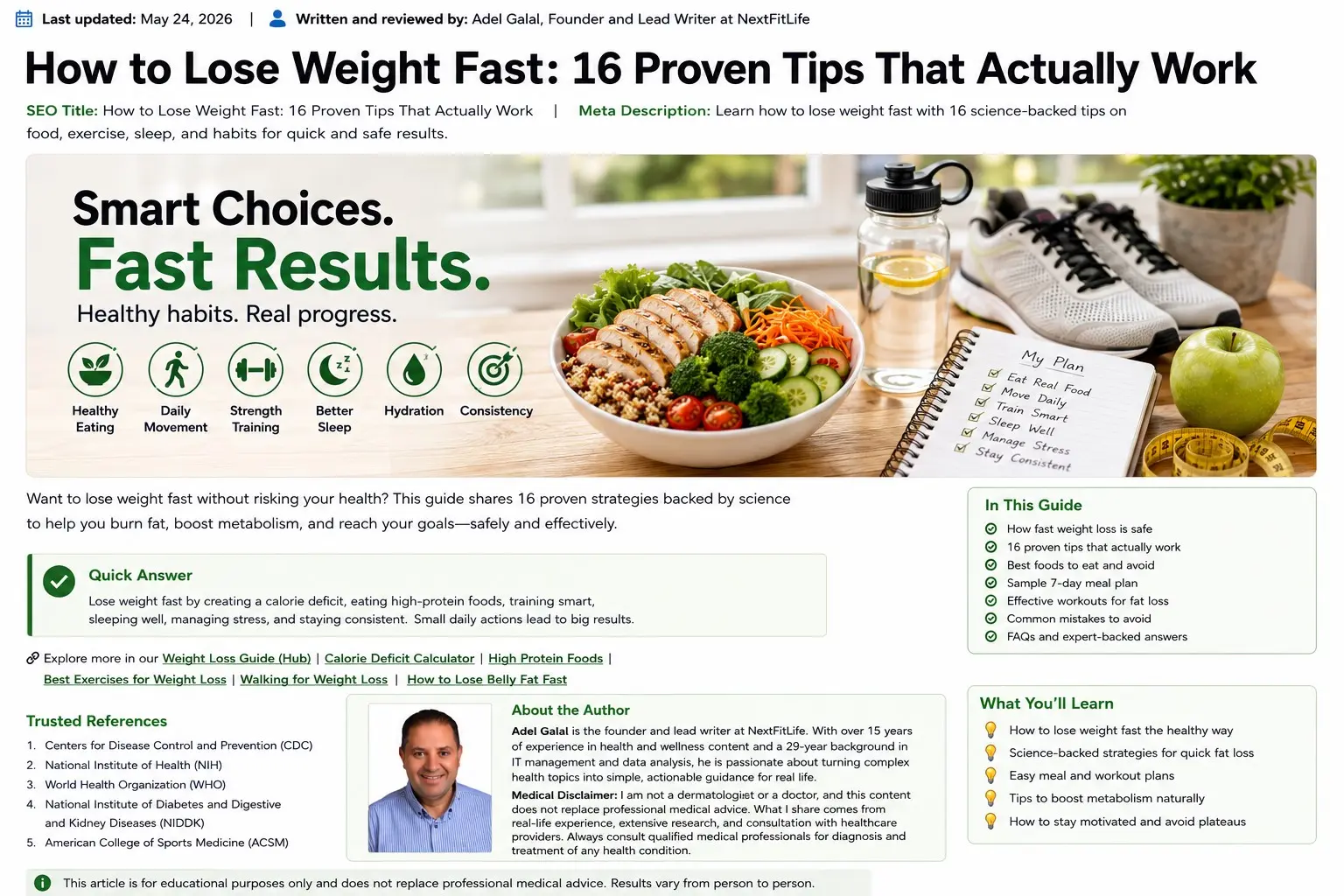
Published: October 2024
Last updated: August 6, 2026
Written and source- checked by: Adel Galal, Founder and Lead Writer at NextFitLife
Reading time: About 16 minutes
Many people want to know how to lose weight fast.
The honest answer is simple. You can make progress quickly, but real fat loss still takes time.
Large changes on the scale during the first few days often include water and food inside the digestive system. They do not always mean that you lost a large amount of body fat.
I have researched health, fitness, nutrition, sleep, and weight management for more than 15 years. One lesson appears again and again. The fastest useful plan is not the harshest plan.
It is the plan that helps you make steady progress without leaving you weak, hungry, afraid of food, or unable to enjoy normal life.
This guide explains 16 practical ways to support safe weight loss. It covers food, walking, strength work, sleep, stress, progress tracking, plateaus, and medical support.
This article is part of the NextFitLife Complete Weight Loss Guide.
Quick answer: To learn how to lose weight fast, start with a modest calorie deficit. Build balanced meals. Add protein and fiber. Reduce sugary drinks. Walk often. Train your muscles. Sleep well. Track your weekly trend. Avoid detox plans and extreme diets.
Can You Really Lose Weight Fast?
Yes, but the word fast needs a safe meaning.
Many adults aim to lose about 1 to 2 pounds each week. This is about 0.45 to 0.9 kilograms.
Some people lose more during the first week. Much of this early change may be water.
Your result may be affected by:
- Your starting weight
- Your normal food intake
- Your activity level
- Your sleep
- Your stress
- Your medicines
- Your hormones
- Your health conditions
- Your age
Do not compare your first week with another person.
Focus on your own progress over several weeks.
What Is a Realistic Fast Weight Loss Goal?
| Time | A realistic result for many adults | What may change |
|---|---|---|
| One week | About 0.45 to 0.9 kilograms | Fat, water, and digestive contents |
| One month | About 2 to 4 kilograms | Waist size, fitness, energy, and eating habits |
| Six months | About 5 to 10 percent of starting weight may be a useful first goal | Health markers, movement, sleep, and daily comfort |
These numbers are general examples.
Your safe rate may be slower. Slow progress is still progress.
Why Very Fast Diets Often Fail
Very strict diets may create a quick scale change.
They can also cause:
- Strong hunger
- Low energy
- Loss of muscle
- Dizziness
- Food obsession
- Constipation
- Poor sleep
- Binge eating
- Rapid weight regain
A diet may work for three days and still be a poor plan.
Sustainable weight loss requires habits that can continue after the first week.
Who Should Get Medical Advice First?
Speak with a qualified healthcare professional before starting a weight loss plan if you have:
- Diabetes
- Heart disease
- Kidney disease
- Liver disease
- High blood pressure
- Thyroid disease
- PCOS
- Pregnancy
- Breastfeeding
- An eating disorder history
- Severe fatigue
- Unexplained weight change
Ask for advice if you take medicine that affects appetite, blood sugar, blood pressure, sleep, hormones, digestion, or body weight.
Stop your plan and seek medical care if you feel faint, confused, very weak, or seriously unwell.
16 Safe Ways to Lose Weight Faster
1. Choose a Clear First Goal
Do not begin with one huge target.
Choose a smaller first goal that feels possible.
An initial goal of about 5 percent of your starting weight may support better health for some people.
Then choose simple daily actions.
- Walk for 20 minutes on five days
- Drink water with lunch and dinner
- Add protein to breakfast
- Prepare dinner at home four times this week
- Keep a steady bedtime
These actions support weight loss motivation.
Read How to Set Weight Loss Goals for more help.
2. Create a Modest Calorie Deficit
Fat loss requires a calorie deficit.
This means your body uses more energy than you eat and drink over time.
You do not need the largest possible deficit.
A modest change is often easier to repeat.
You can create one by:
- Reducing very large portions
- Replacing sugary drinks with water
- Using less oil and sauce
- Eating fried food less often
- Walking more
- Cooking more meals at home
Use the NextFitLife Calorie Deficit Calculator as a starting estimate.
A calculator does not replace personal medical or nutrition advice.
3. Use the Simple Plate Method
You do not need to count every calorie.
The plate method can support portion control.
| Plate area | Food group | Examples |
|---|---|---|
| Half | Vegetables or salad | Broccoli, tomatoes, spinach, carrots, peppers, and cucumber |
| One quarter | Protein | Fish, chicken, eggs, yogurt, beans, lentils, and tofu |
| One quarter | Carbohydrate food | Rice, potatoes, oats, whole grains, beans, and fruit |
| Small amount | Healthy fat | Olive oil, nuts, seeds, and avocado |
This creates a simple healthy eating plan.
Your meals can change with your culture, health needs, budget, allergies, and food choices.
4. Add Protein to Main Meals
Protein can help meals feel more filling.
It also supports muscle during weight loss.
Useful high-protein foods include:
- Eggs
- Fish
- Chicken
- Lean meat
- Greek yogurt
- Cottage cheese
- Beans
- Lentils
- Tofu
You do not need a strict protein timing schedule.
Try to include a useful protein food at breakfast, lunch, and dinner.
Read High Protein Foods for Weight Loss for more ideas.
Ask a qualified professional for personal guidance if you have kidney disease, liver disease, pregnancy, or another condition that affects your protein needs.
5. Eat More Fiber-Rich Foods
Fibre-rich foods can help your meals feel larger and more filling.
Good choices include:
- Vegetables
- Fruit
- Oats
- Beans
- Lentils
- Whole grains
- Nuts
- Seeds
Add fiber slowly if you do not eat much now.
Drink enough water as you increase it.
A large and sudden increase may cause gas or bloating.
6. Replace Sugary Drinks
Drinks can add many calories without creating much fullness.
Watch for:
- Soda
- Sweet tea
- Large sweet coffee drinks
- Energy drinks
- Fruit drinks
- Frequent alcohol
Begin with one simple change.
Drink water with one meal today.
Try unsweetened tea. Reduce the sugar or syrup in your coffee.
7. Plan Simple Meals Before You Get Hungry
Planning can reduce last minute food choices.
Choose three breakfasts, three lunches, and three dinners that you enjoy.
Keep the foods simple.
For example:
- Eggs, vegetables, and whole grain toast
- Greek yogurt, berries, and oats
- Chicken, rice, and salad
- Lentil soup with fruit
- Fish, potatoes, and vegetables
Use the Simple Meal Plan for Weight Loss for more meal ideas.
8. Make Your Kitchen Support You
Your surroundings can make healthy choices easier.
- Keep fruit where you can see it
- Keep water nearby
- Prepare protein foods in advance
- Place vegetables at the front of the refrigerator
- Keep walking shoes ready
- Buy fewer foods that lead to mindless eating
Do not rely on willpower all day.
Make the healthy choice easy to find.
9. Walk Every Day You Can
Walking for weight loss is simple, useful, and low cost.
It supports heart health, mood, blood sugar, fitness, and daily energy use.
You do not need 10,000 steps on the first day.
Start from your current level.
- Walk for 10 minutes after one meal
- Add 1,000 steps to your normal day
- Take walking breaks during work
- Use stairs when safe
- Take an evening family walk
Read Walking for Weight Loss for a full plan.
10. Strength Train Twice Each Week
Strength training can help protect muscle while you lose weight.
It also supports bones, balance, and normal daily movement.
| Exercise | Beginner amount |
|---|---|
| Chair squat | 8 repetitions |
| Wall pushup | 8 repetitions |
| Glute bridge | 8 repetitions |
| Resistance band row | 8 repetitions |
| Standing march | 30 seconds |
Start with one round.
Rest when needed.
Add more only when the routine feels safe and comfortable.
Read Strength Training Exercises at Home for Beginners.
Exercise safety: Ask a qualified healthcare professional before starting a new exercise plan if you have chest pain, fainting, severe shortness of breath, uncontrolled blood pressure, recent surgery, major joint pain, repeated falls, or another condition that affects exercise safety.
11. Add Cardio Slowly
You do not need hard interval training when you first begin.
Start with walking, cycling, swimming, or another activity that fits your ability.
Inactive adults can begin with short sessions and build gradually.
Work toward at least 150 minutes of moderate activity each week.
More active adults may work toward 300 minutes for added benefits.
Your weekly plan might include:
- Five walks of 30 minutes
- Three walks of 30 minutes and two short bike rides
- Several short sessions that add up during the week
Choose activities you can repeat.
12. Sleep for at Least Seven Hours
Sleep and weight loss are connected.
Poor sleep can make hunger, cravings, planning, and activity harder.
Most adults need at least seven hours of sleep each night.
Try these habits:
- Keep a steady wake time
- Reduce caffeine later in the day
- Put screens away before bed
- Keep the room dark and quiet
- Get daylight during the day
- Use a simple bedtime routine
Ask for medical help if you snore loudly, stop breathing during sleep, wake with headaches, or feel very sleepy during the day.
13. Pause Before Stress Eating
Stress eating is common.
It does not mean you have failed.
Before eating because of stress, try this short pause:
- Ask whether you are physically hungry
- Drink water
- Take five slow breaths
- Walk for five minutes
- Write down what you feel
- Then decide what you need
If you are hungry, eat a planned meal or snack.
The goal is not to ignore real hunger.
Read Stress Busting Techniques for more support.
14. Slow Down While You Eat
Eating quickly can make it harder to notice fullness.
Try these simple steps:
- Sit at a table
- Put your phone away
- Take smaller bites
- Pause during the meal
- Stop when you feel comfortably full
This is a simple form of mindful eating.
You do not need to finish food only because it is on your plate.
15. Track Weekly Trends
Tracking helps you see what works.
It should not shame you.
You may track:
- Weekly weight trend
- Waist measurement
- Steps
- Strength progress
- Sleep
- Energy
- Meal habits
Your weight can change each day because of water, salt, hormones, exercise, and digestion.
Do not react to one number.
Review the trend over three or four weeks.
If weighing causes fear, guilt, binge eating, or obsessive behaviour, use other measures and seek professional support.
16. Use Medical Support When It Is Right for You
Some people need more than a general lifestyle plan.
Professional support may include:
- A registered dietitian
- A structured weight management program
- Help with sleep apnea
- Mental health support
- Weight loss medications
- Metabolic or bariatric surgery
Prescription treatment is not designed for quick cosmetic loss.
It may help some adults with obesity or weight related health problems.
Medicine works best as part of a complete plan that also includes food, movement, sleep, monitoring, and medical follow up.
Never buy prescription weight management medicine from an unverified seller.
Using medical support is not failure.
A Simple Seven Day Quick Start Plan
| Day | Food action | Movement action |
|---|---|---|
| Day 1 | Track your normal food and drinks | Walk for 10 minutes |
| Day 2 | Replace one sugary drink with water | Walk for 15 minutes |
| Day 3 | Add protein to breakfast | Complete one beginner strength round |
| Day 4 | Fill half your dinner plate with vegetables | Walk for 20 minutes |
| Day 5 | Plan one balanced snack | Take three short movement breaks |
| Day 6 | Cook one simple meal at home | Complete one beginner strength round |
| Day 7 | Review what worked and plan the next week | Take a relaxed walk |
This plan will not create a miracle result in seven days.
It can create a strong start.
Simple Meal Ideas for Faster Weight Loss
| Meal | Simple choices |
|---|---|
| Breakfast | Eggs with vegetables, Greek yogurt with fruit and oats, or oatmeal with nuts |
| Lunch | Chicken salad bowl, lentil soup with fruit, or tuna with potatoes and vegetables |
| Dinner | Fish with rice and vegetables, chicken with potatoes and salad, or beans with whole grains |
| Snack | Fruit with yogurt, carrots with hummus, boiled eggs, or a small handful of nuts |
Read Healthy Snacks for Weight Loss for more choices.
What to Do During a Weight Loss Plateau
A weight loss plateau is normal.
It does not always mean your plan has failed.
Progress may slow because:
- Your smaller body uses less energy
- Your portions became larger
- Your daily movement dropped
- Water is hiding fat loss
- Your sleep changed
- Your stress increased
- A medicine affects weight
Review at least three or four weeks of progress.
Then check:
- Drinks and snacks
- Portion sizes
- Weekend meals
- Walking and steps
- Strength sessions
- Sleep
- Stress
Make one small change.
Do not begin an extreme diet.
Fast Weight Loss Methods to Avoid
- Detox drinks
- Dehydration plans
- Very low calorie diets without medical care
- Unsafe fat burning products
- Extreme fasting
- Vomiting or laxatives
- Hard daily workouts with no recovery
- Removing every carbohydrate
- Buying prescription medicine without a clinician
Natural does not always mean safe.
Fast does not always mean better.
Conclusion
The safest answer to how to lose weight fast is to use a plan that creates steady progress without harming your health.
Build balanced meals. Add protein and fibre. Reduce sugary drinks. Walk often. Train your muscles. Sleep well. Track your weekly trend. Ask for professional help when you need it.
Start today with three actions. Drink water with one meal. Walk for ten minutes. Add protein to your next meal.
Keep the actions small enough to repeat tomorrow.
References and Sources
Centers for Disease Control and Prevention: Steps for Losing Weight
National Institute of Diabetes and Digestive and Kidney Diseases: Choosing a Safe and Successful Weight Loss Program
World Health Organization: Healthy Diet
Office of Disease Prevention and Health Promotion: Physical Activity Guidelines
Centers for Disease Control and Prevention: Sleep in Adults
Explore More NextFitLife Weight Loss Guides
Continue with the NextFitLife Complete Weight Loss Guide for help with nutrition, exercise, calories, habits, plateaus, and long term weight maintenance.
- Weight Loss for Beginners
- Natural Weight Loss
- Sustainable Weight Loss Tips
- Calorie Deficit Calculator
- High Protein Foods for Weight Loss
- Simple Meal Plan for Weight Loss
- Walking for Weight Loss
- Best Exercises for Weight Loss
- Weight Loss Habits Guide
- Common Weight Loss Mistakes
About the Author

Adel Galal, Founder and Lead Writer at NextFitLife
Adel Galal is the founder and lead writer at NextFitLife.
He has more than 15 years of health and wellness writing experience. He researches fitness, foods and nutrition, sleep, weight management, beauty, and healthy aging.
Adel also spent 29 years working as an IT Manager for the Nestlé Egypt Region. His work involved data, systems, planning, problem solving, structured review, and information management.
He now uses these skills to compare trusted sources, identify important limits, and explain complex health topics in clear and practical language.
Medical disclaimer: This content is for general educational purposes and does not replace professional medical advice, diagnosis, or treatment. Consult an appropriately qualified healthcare professional for personal medical concerns. This article explains published guidance and does not provide a personal clinical assessment. Always consult qualified medical professionals for diagnosis and treatment of any health condition.
Frequently Asked Questions
How Can I Lose Weight Fast in One Week?
Use balanced meals, reduce sugary drinks, walk each day, add protein and fiber, sleep well, and track your habits. You may see a scale change, but part of the first week change may be water.
Can I Lose 10 Pounds in Three Days?
You cannot safely lose 10 pounds of body fat in three days. A large scale change in that time is mainly water, digestive contents, or dehydration.
What Is the Fastest Safe Weight Loss Rate?
Many adults aim to lose about 1 to 2 pounds each week. Your safe rate may be slower based on your health, medicines, age, and starting weight.
Do I Need to Stop Eating Carbohydrates?
No. You can include suitable portions of fruit, vegetables, oats, beans, lentils, rice, potatoes, and whole grains.
Can I Lose Weight Fast Without Exercise?
Food changes can lead to weight loss. Activity supports heart health, fitness, muscle, mood, and long term maintenance.
Are Weight Loss Supplements Safe?
Some supplements may affect your heart, blood pressure, sleep, mood, blood sugar, or medicines. Ask a qualified healthcare professional before using them.
Can Prescription Medicine Help With Weight Loss?
Prescription treatment may help some adults with obesity or weight-related health problems. It requires medical assessment, follow-up, and a complete lifestyle plan.
What Should I Do After a Bad Eating Day?
Return to your normal plan at the next meal. Do not starve yourself or use extreme exercise to compensate.

Health & wellness writer with 30+ years of experience in nutrition, fitness, and healthy aging. Founder of NextFitLife.com — evidence-based health guidance.