Published – February 28 Last Updated: February 28, 2026
The Day My Uncle Couldn’t See His Grandkids
My uncle smoked for 35 years. Two packs a day. He’d laugh off the warnings.
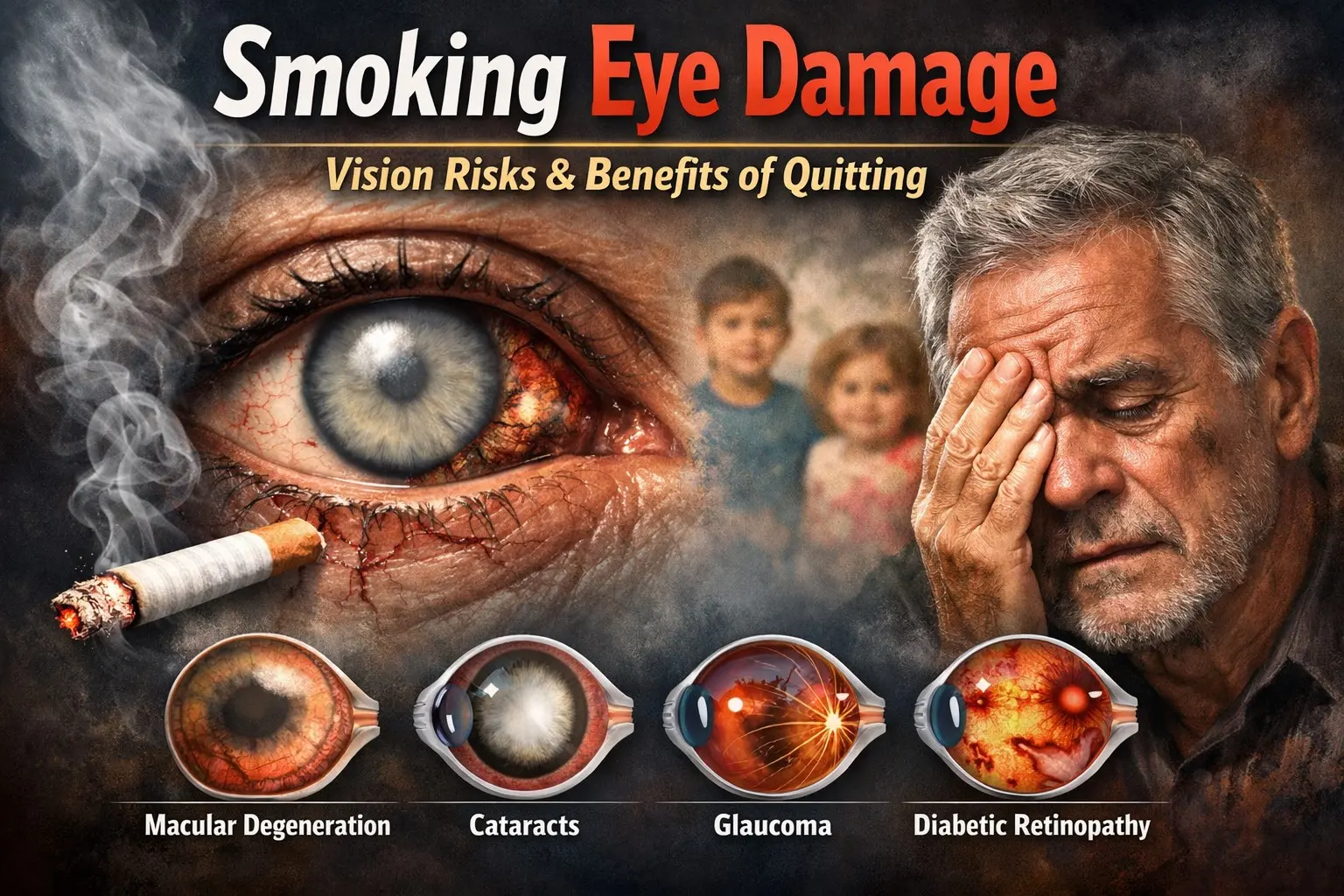
“I feel fine,” he’d say, lighting another cigarette. Then, at 62, he started losing his vision. Macular degeneration. His eye doctor asked one question: “Do you smoke?”
My uncle nodded. The doctor shook his head. “That’s likely why.” Within two years, my uncle couldn’t drive. Couldn’t read. Could barely see his grandchildren’s faces.
He quit smoking immediately. But the damage was already done. That’s when I learned the truth about smoking eye damage. It’s not just your lungs. Your eyes pay a devastating price.
→ Complete guide – Complete Guide to Eye Health: Vision Care, Prevention & Wellness
How Smoking Destroys Your Eyes
Smoking doesn’t just stain your teeth. It systematically damages every part of your eyes.
What Cigarettes Do to Your Vision
Every cigarette releases –
- 7,000 toxic chemicals
- Free radicals that attack eye cells
- Carbon monoxide reduces oxygen
- Heavy metals that accumulate in tissues
These toxins –
- Damage to blood vessels in your eyes
- Kill cells in your retina
- Reduce protective antioxidants
- Accelerate aging of eye structures
The Oxygen Problem
Smoking cuts oxygen to your eyes
Your retina needs constant oxygen. Smoking reduces blood oxygen levels and constricts blood vessels.
Less oxygen means:
- Cells die faster
- Damage accumulates
- Vision deteriorates
- Disease risk skyrockets
Smoking Eye Damage: The Major Diseases
Let me break down exactly what eye health problems you face from smoking cigarettes.
Age-Related Macular Degeneration (AMD)
The most devastating connection
Smokers have 2-3 times higher AMD risk than non-smokers. Heavy smokers face 3-4 times the risk.
What AMD does
- Destroys your central vision
- Makes reading impossible
- You can’t recognize faces
- Can’t drive safely
- Leading cause of blindness over 50
The mechanism
Smoking causes oxidative stress in your macula. The toxins accumulate over the years, slowly destroying the cells you need for detailed vision.
Research shows – Even former smokers have elevated AMD risk for years after quitting. But quitting still helps significantly.
→ Prevention – Macular Degeneration Prevention: Diet and Lifestyle Strategies
Cataracts
Smokers develop cataracts earlier
Studies show smokers have 2-3 times higher cataract risk. You’ll need surgery 10-15 years earlier than non-smokers.
All cataract types increase
- Nuclear cataracts (2x risk)
- Cortical cataracts (2x risk)
- Posterior subcapsular cataracts (3x risk)
Why smoking causes cataracts
Cigarette smoke creates free radicals that damage lens proteins. Over time, these proteins clump together, creating cloudiness.
The more you smoke, the faster it happens.
→ Prevention guide – Cataracts Prevention: How to Protect Your Vision Naturally
Glaucoma
Smoking damages your optic nerve
Research links smoking to increased glaucoma risk, particularly in women and people with a family history.
How it happens
- Smoking raises eye pressure
- Reduces blood flow to the optic nerve
- Increases oxidative stress
- Damages nerve cells permanently
The danger – Glaucoma has no symptoms until you’ve already lost significant vision. By the time you notice, it’s too late to recover.
→ Early detection – Glaucoma Awareness: Early Detection and Prevention Tips
Diabetic Retinopathy
For smokers with diabetes
You face a perfect storm. Smoking makes blood sugar control harder and directly damages retinal blood vessels.
Smokers with diabetes have
- Faster disease progression
- More severe complications
- Higher blindness risk
- Worse treatment outcomes
Dry Eye Syndrome
Immediate and chronic effects
Cigarette smoke irritates the eyes directly. But chronic smoking also reduces tear production and quality.
Symptoms worsen
- Burning sensation
- Gritty feeling
- Redness
- Blurred vision
- Light sensitivity
Even secondhand smoke causes dry eyes.
→ Relief Strategies – Dry Eye Syndrome: Causes, Symptoms, and Natural Remedies
Thyroid Eye Disease
Particularly dangerous for women
Smoking is the strongest modifiable risk factor for thyroid eye disease (Graves’ ophthalmopathy).
Symptoms include
- Bulging eyes
- Double vision
- Eye pain and pressure
- Vision loss in severe cases
Smokers with thyroid conditions – Your risk is 7-8 times higher than that of non-smokers with thyroid disease.
The Numbers Don’t Lie
Let me show you the stark reality of smoking eye damage.
Risk Increases by Condition
| Condition | Smoker Risk vs Non-Smoker |
| AMD | 2-4x higher |
| Cataracts | 2-3x higher |
| Glaucoma | 1.5-2x higher |
| Diabetic retinopathy | 2x faster progression |
| Dry eye | 2x higher |
| Thyroid eye disease | 7-8x higher |
Dose-Response Relationship
The more you smoke, the worse it gets
Light smokers (1-14 cigarettes/day)
- AMD risk: 2x higher
- Cataract risk: 2x higher
Moderate smokers (15-24 cigarettes/day)
- AMD risk: 2.5x higher
- Cataract risk: 2.5x higher
Heavy smokers (25+ cigarettes/day)
- AMD risk: 3-4x higher
- Cataract risk: 3x higher
Years matter too: Every 10 years of smoking increases risk significantly.
Benefits of Quit Smoking Vision Recovery
Here’s the encouraging news: Your eyes start healing when you quit.
Immediate Benefits (Days to Weeks)
Within 24 hours
- Blood oxygen levels normalize
- Carbon monoxide clears out
- Eye irritation reduces
Within 1-2 weeks
- Dry eye symptoms improve
- Redness decreases
- Tear quality gets better
Within 1 month
- Blood flow to the eyes improves
- Oxygen delivery increases
- Cells start repairing
Medium-Term Benefits (Months to Years)
After 3-6 months
- Dry eye is significantly better
- Blood vessel health improves
- Oxidative stress reduces
After 1-2 years
- Cataract risk starts decreasing
- AMD risk begins to decrease
- Overall eye health is stabilizing
After 5 years
- AMD risk drops by 50% compared to current smokers
- Cataract risk is significantly reduced
- Most eye health markers are improving
Long-Term Benefits (10+ Years)
After 10-15 years:
- AMD risk approaches (but doesn’t quite reach) never-smoker levels
- Cataract risk is much closer to the non-smoker risk
- Most smoking-related eye damage risks are substantially reduced
The key message – It’s never too late to quit. Your eyes will benefit no matter when you stop.
Secondhand Smoke and Children’s Eyes
You’re not just hurting your own vision.
Secondhand Smoke Effects
Children exposed to cigarette smoke have
- Higher risk of eye infections
- Increased dry eye symptoms
- Greater allergy and irritation
- Possible increased AMD risk later in life
Pregnant smokers risk
- Premature birth (leads to eye problems)
- Low birth weight (affects eye development)
- Increased childhood eye disease risk
Protecting Your Family
The only safe level is zero
- Don’t smoke indoors ever
- Don’t smoke in cars (even with windows open)
- Change clothes after smoking before holding children
- Better yet: quit completely
How to Quit for Your Vision
Quitting smoking is hard. But your vision is worth it.
Why Standard Advice Often Fails
“Just use willpower” doesn’t work
Nicotine is incredibly addictive. You need real strategies and support.
What actually works
- Combination of methods
- Professional support
- Medication when needed
- Addressing triggers
- Having a solid plan
Proven Quitting Strategies
Nicotine replacement therapy (NRT)
- Patches, gum, lozenges
- Reduces withdrawal symptoms
- Doubles success rates
- Available over-the-counter
Prescription medications
- Varenicline (Chantix) – highly effective
- Bupropion (Wellbutrin) – helps with cravings
- Combination with NRT works best
Behavioural support
- Counselling or coaching
- Support groups
- Quit smoking apps
- Identifying and avoiding triggers
Combination approach
- Medication + counseling = highest success
- Studies show 3-4x better outcomes
- Don’t try to tough it out alone
My Friend’s Successful Quit Story
Sarah smoked for 18 years
She tried quitting five times before it stuck. Here’s what finally worked:
Her successful approach
- Used varenicline (prescription)
- Weekly counselling sessions
- Quit smoking app for tracking
- Exercise replaced smoking breaks
- Support group for accountability
Timeline
- Week 1-2: Hardest part, but medication helped
- Week 3-4: Cravings reducing
- Month 2: Feeling much better
- Month 6: Rarely thought about cigarettes
- Year 1: Completely smoke-free
Eye benefits she noticed
- Dry eyes improved within weeks
- Redness is completely gone by month 2
- The eye doctor confirmed better blood vessel health at 1 year
Addressing Common Concerns
“I’ll gain weight.”
- Average gain: 5-10 pounds
- Temporary and manageable
- Better than losing your vision
“I’ve smoked too long to benefit.”
- False. Your eyes benefit at any age
- Even 60+ year-olds see improvements
- It’s never too late
“I’ve tried and failed.”
- Most people try 7-10 times before success
- Each attempt teaches you something
- Previous failures predict future success (you learn what doesn’t work)
Protecting Your Eyes While Quitting
Support your vision during the transition.
Nutrition Support
Boost antioxidants
- Leafy greens daily (lutein, zeaxanthin)
- Colorful vegetables
- Omega-3 fatty acids
- Vitamin C and E
Why this helps
- Repairs oxidative damage
- Supports cell regeneration
- Reduces inflammation
- Protects against further damage
→ Eye nutrition: 10 Best Foods for Eye Health and Better Vision
Supplement Considerations
AREDS2 formula
- Proven for AMD prevention
- Contains key antioxidants
- Especially important for former smokers
- Ask your doctor about starting
→ Supplement guide: Vitamins for Eye Health: Complete Guide to Essential Nutrients
Regular Eye Exams Critical
Former smokers need
- Annual comprehensive eye exams
- Dilated retinal examination
- Glaucoma screening
- AMD monitoring (Amsler grid at home)
Early detection saves vision
- Treatments work best when started early
- Many eye diseases have no symptoms initially
- Don’t skip exams even if your vision seems fine
Your Quit Smoking Action Plan
This Week
✅ Set your quit date (within 2 weeks)
✅ Tell family and friends
✅ Talk to the doctor about medications
✅ Remove cigarettes and triggers from home
This Month
✅ Start your quit date with support
✅ Use NRT or medications as prescribed
✅ Track cravings and victories
✅ Stay connected to support system
First Year
✅ Celebrate milestones (1 week, 1 month, 3 months, 6 months, 1 year)
✅ Keep using support resources
✅ Get a comprehensive eye exam
✅ Notice vision improvements
FAQs about smoking eye damage
Q: Will quitting reverse the eye damage I already have?
A: Quitting can’t reverse existing AMD or cataracts, but it prevents further damage and slows progression. Your eyes will heal significantly in other ways.
Q: How long until my AMD risk decreases after quitting?
A: Risk starts decreasing within months and drops substantially after 5-10 years. Former smokers never quite reach never-smoker risk levels, but the improvement is significant.
Q: Is vaping or e-cigarettes safer for my eyes?
A: Research is still emerging, but early studies show vaping also damages eyes through oxidative stress and reduced blood flow. Not a safe alternative.
Q: Can secondhand smoke really damage my eyes?
A: Yes. Studies show secondhand smoke exposure increases dry eye risk and may contribute to other eye diseases. Avoid exposure whenever possible.
Q: I only smoke a few cigarettes a day. Am I still at risk?
A: Yes. Even light smoking (1-5 cigarettes daily) significantly increases eye disease risk. There’s no safe level of smoking for the eyes.
Q: Will smoking marijuana affect my eyes like cigarettes?
A: Marijuana smoke contains similar toxins and causes eye irritation, redness, and dry eyes. Long-term effects on AMD and cataracts are still being studied, but smoke exposure of any kind is harmful.
Final Thoughts about smoking eye damage
The connection between cigarettes and eye health and vision loss is undeniable. Smoking destroys your eyes systematically.
The brutal facts:
- 2-4x higher AMD risk
- 2-3x higher cataract risk
- Faster disease progression
- Earlier vision loss
- Higher blindness risk
The hopeful truth:
- Your eyes heal when you quit
- Benefits start immediately
- Significant improvement within years
- It’s never too late
- Support and treatment available
My uncle’s regret:
He tells anyone who’ll listen: “I’d give anything to have my vision back. Don’t make my mistake. Quit now while you still can see.”
Your eyes are irreplaceable. The cigarettes aren’t worth losing them.
Start today:
- Talk to your doctor about quitting
- Set your quit date
- Get the support you need
- Protect your precious vision
References
- Centers for Disease Control and Prevention
- https://www.cdc.gov/tobacco/campaign/tips/diseases/vision-loss-blindness.html
- Smoking and Cataract Development
- Finding: All cataract types increased 2-3x in smokers; earlier onset by 10-15 years
- https://www.nei.nih.gov/learn-about-eye-health/eye-conditions-and-diseases/cataracts
- American Academy of Ophthalmology
Medical Disclaimer
This information is educational only. It doesn’t replace professional medical advice. Consult healthcare professionals for smoking cessation support and eye care.

Adel Galal is a health and wellness writer with over 30 years of experience studying and writing about health, fitness, nutrition, and healthy living. He is the founder of NextFitLife.com, where he shares practical, evidence-based guidance to support long-term health at any age. Adel’s mission is simple:
to help people make smarter health choices that fit real life, at any age.