Last Updated: July 13, 2026
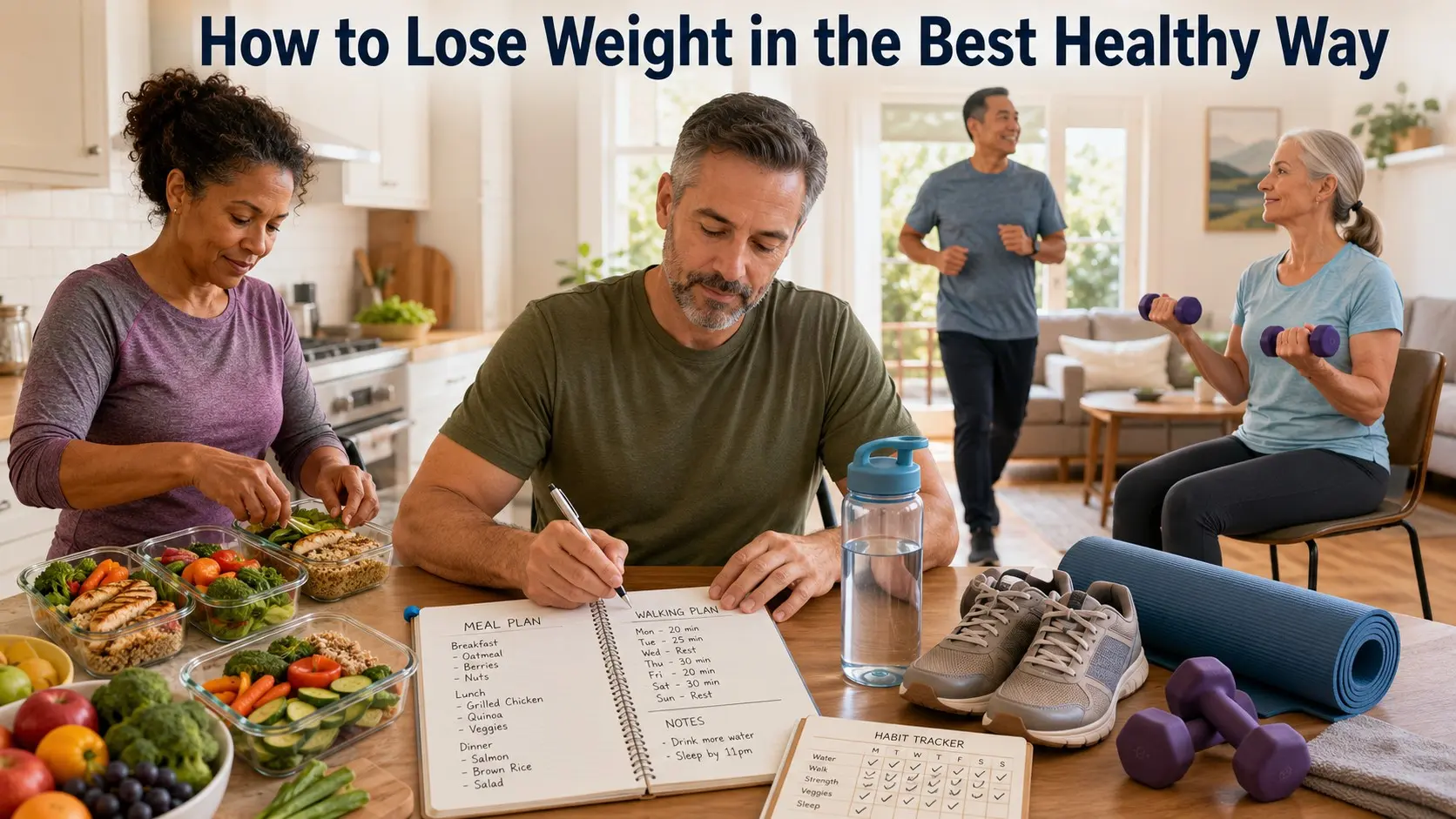
Topic: How to Lose Weight in the Best Healthy Way
Reading Time: About 12 minutes
Content Note: This article is for education only. It does not replace medical advice.
Many people want to know how to lose weight in the best healthy way.
They want results.
They want a plan that feels simple.
They want to stop starting over.
They also want to avoid crash diets, shame, and confusing rules.
That is the right goal.
Healthy weight loss should not feel like punishment.
It should help your body.
It should help your energy.
It should help your daily routine.
It should be safe enough to repeat.
The best healthy way to lose weight is not one food.
It is not one workout.
It is not one supplement.
It is a group of small habits that work together.
This guide gives you a simple plan for food, movement, sleep, stress, tracking, and long-term success.
Quick answer
How to lose weight in the best healthy way starts with a simple plan.
Eat balanced meals.
Add protein.
Add vegetables and fruit.
Drink water.
Walk often.
Do strength training when safe.
Sleep better.
Manage stress.
Use realistic portions.
Track small habits.
Avoid crash diets and extreme promises.
What does healthy weight loss mean?
Healthy weight loss means losing weight in a way that supports your body.
It should not make you feel weak all day.
It should not make you fear food.
It should not force you into unsafe rules.
It should help you build better habits that you can keep.
This is why healthy weight loss is about more than the scale.
It is also about energy, strength, sleep, confidence, blood pressure, blood sugar, and daily function.
Why fast and simple can be risky
Fast and simple sounds good.
But fast weight loss plans can become too strict.
Some plans remove entire food groups.
Some push detox drinks.
Some make you eat too little.
Some lead to hunger and overeating later.
The better goal is simple and safe.
You can still start quickly.
But do not chase a dramatic change in a few days.
Build a plan that works this week and still makes sense next month.
Before you start
Talk with a qualified healthcare professional before starting a new weight loss plan if you have diabetes, heart disease, kidney disease, liver disease, high blood pressure, pregnancy, breastfeeding, eating disorder history, severe joint pain, dizziness, unexplained weight loss, severe fatigue, or a long-term health condition.
Also ask for medical advice if you take medicine that affects blood sugar, blood pressure, appetite, fluid balance, digestion, or weight.
Stop any plan that makes you feel faint, confused, very weak, or unwell.
Step 1: Know your real reason
Your reason matters.
Weight loss is easier when the reason is personal and kind.
No shame.
Not fear.
No pressure from others.
Good reasons sound like this:
- I want more energy.
- I want to walk with less effort.
- I want better health habits.
- I want to feel stronger.
- I want to care for my body.
This makes sustainable weight loss easier.
Step 2: Set a realistic goal
Do not set a goal that scares you.
Set a goal you can act on.
Instead of saying, “I must lose a lot of weight fast,” say:
- I will walk for 20 minutes today.
- I will add protein to breakfast.
- I will drink water with lunch.
- I will eat vegetables at dinner.
- I will sleep 30 minutes earlier.
Action goals are better than panic goals.
They tell you what to do today.
Step 3: Build a balanced plate
You do not need a perfect diet.
You need better meals most of the time.
Use this simple plate:
- Half a plate of vegetables or fruit
- One quarter plate of protein
- One quarter plate of whole grains, potatoes, beans, lentils, or rice
- A small amount of healthy fat
- Water, tea, or coffee without too much sugar
This helps you build balanced meals.
It can also help you feel full with no need extreme rules.
Step 4: Eat protein at meals
Protein can help meals feel more filling.
It can also help support muscle while you lose weight.
Good protein foods include:
- Eggs
- Chicken
- Fish
- Lean meat
- Greek yogurt
- Cottage cheese
- Beans
- Lentils
- Tofu
- Tempeh
This is a simple way to use protein for weight loss.
You do not need protein powder unless it truly helps your routine.
Step 5: Add fibre foods
Fibre helps meals feel filling.
It supports digestion.
It also helps you eat more whole foods.
Good fibre foods include:
- Vegetables
- Fruit
- Oats
- Beans
- Lentils
- Whole grains
- Nuts
- Seeds
This supports high-fibre foods.
Add fibre slowly if your stomach is sensitive.
Drink water, too.
Step 6: Create a small calorie gap.
Weight loss happens when your body uses more energy than you consume over time.
This is called a calorie deficit.
But the gap does not need to be extreme.
Small changes are easier to keep.
Try these:
- Use smaller portions of snacks.
- Drink water instead of sugary drinks.
- Add vegetables before second servings.
- Eat slower.
- Stop when satisfied, not stuffed.
- Plan meals before hunger gets too strong.
This is safer than starving.
Step 7: Make breakfast easier
Breakfast is not required for every person.
But if breakfast helps you feel in control, use it.
Good options include:
- Greek yogurt with berries
- Eggs with vegetables
- Oatmeal with fruit and nuts
- Beans with whole- grain toast
- Cottage cheese with fruit
A filling breakfast can help some people reduce random snacking later.
Step 8: Plan lunch before you are starving
Lunch is where many plans break.
Busy days can lead to random choices.
Keep lunch simple.
- Chicken salad bowl
- Tuna with potatoes and vegetables
- Lentil soup with salad
- Turkey or tofu wrap
- Beans with rice and vegetables
Simple meals are easier to repeat.
Step 9: Make dinner calm
Dinner should not be a battle.
Build a normal plate.
Add protein.
Add vegetables.
Add a smart carb.
Eat slowly.
Stop when satisfied.
Do not save all your calories for night if that makes you overeat.
A calm dinner can help with portion control.
Step 10: Drink fewer hidden calories
Drinks can add calories fast.
Many people do not notice them.
Watch for:
- Soda
- Sweet tea
- Large sweet coffee drinks
- Juice
- Energy drinks
- Alcohol
You do not need to be perfect.
But replacing one sweet drink with water can be a strong first step.
This supports low-calorie drinks.
Step 11: Walk often
Walking is simple and useful.
It does not need special equipment.
It can support weight goals and health.
Start small.
- Walk 10 minutes after one meal.
- Take 5-minute walking breaks.
- Park farther away when safe.
- Use stairs when safe.
- Walk while talking on the phone.
This is a simple form of walking for weight loss.
Step 12: Add strength training
Strength training helps your muscles.
It supports daily movement.
It can help body composition over time.
You do not need a gym.
Start with simple moves:
- Chair squats
- Wall push-ups
- Glute bridges
- Step ups
- Dumbbell rows
- Farmer carries
Try 2 days each week if safe.
This supports strength training for weight loss.
Step 13: Sleep better
Sleep affects hunger.
It affects cravings.
It affects mood.
It affects energy for movement.
Try these simple steps:
- Keep a steady sleep time when possible.
- Limit late caffeine if it affects you.
- Put your phone away earlier.
- Keep the room dark and calm.
- Use a short bedtime routine.
This supports sleep and weight loss.
Step 14: Manage stress eating
Stress eating is common.
It does not mean you failed.
It means your body wants comfort.
Try a pause before eating due to stress.
- Drink water.
- Take 5 slow breaths.
- Walk for 5 minutes.
- Write what you feel.
- Then choose what to eat.
This can help with stress eating.
Step 15: Track small habits
Tracking should guide you.
It should not shame you.
Track what helps.
- Water
- Steps
- Protein at meals
- Vegetables
- Sleep time
- Strength days
This supports habit tracking.
Do not track in a way that harms your mood.
Step 16: Prepare your environment
Your environment can make healthy choices easier.
Try this:
- Keep fruit where you can see it.
- Keep water nearby.
- Keep walking shoes ready.
- Put snacks in smaller containers.
- Cook protein foods ahead of time.
- Keep a simple meal list on your phone.
This helps you rely less on willpower.
Step 17: Do not ban every food
Strict food bans can backfire.
They can make cravings stronger.
You can still enjoy favourite foods sometimes.
The key is portion and frequency.
Eat mostly whole foods.
Keep treats planned and calm.
This makes the plan easier to keep.
Step 18: Know what progress looks like
Progress is not only about the scale.
Look for:
- More energy
- Better sleep
- More steps
- Better meal control
- Less random snacking
- More strength
- Better clothes fit
- Improved waist size
This gives a better view of body composition and health.
Simple 7-day healthy weight loss starter plan
Day 1
Add protein to breakfast and walk for 10 minutes.
Day 2
Drink water instead of one sugary drink and add vegetables to dinner.
Day 3
Walk after one meal and prepare one planned snack.
Day 4
Do a light strength workout and sleep 30 minutes earlier.
Day 5
Eat slowly at one meal and stop when satisfied.
Day 6
Plan breakfast and lunch before the day starts.
Day 7
Review what worked and repeat your best 3 habits.
Simple meal ideas
Breakfast
- Eggs with vegetables
- Greek yogurt with berries
- Oatmeal with fruit and nuts
- Beans with whole- grain toast
Lunch
- Chicken bowl with rice and salad
- Tuna with potatoes and vegetables
- Lentil soup with fruit
- Tofu with vegetables and noodles or rice
Dinner
- Fish with vegetables and potatoes
- Lean meat with salad and rice
- Chicken with roasted vegetables
- Beans or lentils with whole grains
Simple workout plan
Use this 2 or 3 days each week if safe.
Round 1
- Chair squat, 10 reps
- Wall push-up, 10 reps
- Glute bridge, 10 reps
- Standing march, 30 seconds
Round 2
- Step up, 8 reps each side
- Dumbbell row, 10 reps each side
- Dead bug, 6 reps each side
- Farmer carry, 20 seconds
Start with 1 round if you are new.
Build slowly.
Stop if you feel pain or unsafe symptoms.
What to avoid?
- Crash diets
- Detox drinks
- Very low-calorie plans without medical care
- Skipping all carbs
- Training through pain
- Weighing yourself many times a day
- Expecting perfect progress
- Quitting after one hard day
Healthy weight loss should not feel like punishment.
What if weight loss is slow?
Slow does not mean failure.
Your body may need time.
Check the basics.
- Are portions realistic?
- Are drinks adding calories?
- Are snacks unplanned?
- Are you sleeping poorly?
- Are you moving less than you think?
- Are weekends very different from weekdays?
Fix one thing at a time.
Do not restart the whole plan every week.
When to get extra help
Get help if weight loss feels confusing or unsafe.
A healthcare professional or registered dietitian can help you build a personal plan.
This is important if you have medical conditions, medication changes, eating disorder history, unexplained weight change, or strong food anxiety.
You deserve support.
My simple rule
Do not ask only, “How fast can I lose weight?”
Ask, “What healthy habits can I repeat?”
That question is better.
Repeatable habits create real change.
Conclusion
How to lose weight in the best healthy way is not about crash diets, fear, or fast promises.
It is about simple habits that support your body.
Eat balanced meals.
Add protein and fibre.
Walk often.
Use light strength training.
Sleep better.
Manage stress.
Track small wins.
Your next step: choose one meal habit, one walking habit, and one sleep habit from this How to Lose Weight in the Best Healthy Way guide and start today.
Related guides from NextFitLife
This article is part of our Fitness Hub. You may also want to visit our Fitness Nutrition & Supplements Guide, Fitness for Beginners Guide, and Cardio & Endurance Guide.
FAQ
What is the best healthy way to lose weight?
The best healthy way to lose weight is to build balanced meals, eat protein and fibre, walk often, do safe strength training, sleep better, manage stress, and use realistic portions.
Can I lose weight fast and still be healthy?
You can start quickly with healthy habits, but safe fat loss takes time. Avoid crash diets, detox drinks, and very low-calorie plans without medical care.
What should I eat to lose weight?
Choose meals with protein, vegetables, fruit, whole grains, beans, lentils, healthy fats, and water. Keep portions realistic and plan snacks.
Is walking good for weight loss?
Walking can support weight loss by helping you move more. It works best with balanced meals, strength training, sleep, and consistency.
Do I need to cut carbs to lose weight?
No. You do not need to cut all carbs. Choose better carbs such as oats, potatoes, fruit, beans, lentils, rice, and whole grains when they fit your plan.
Who should ask a doctor before losing weight?
Talk with a healthcare professional if you have diabetes, heart disease, kidney disease, liver disease, high blood pressure, pregnancy, breastfeeding, a history of eating disorders, dizziness, unexplained weight loss, severe fatigue, or a long-term condition.
References and Sources
- Centers for Disease Control and Prevention. Steps for Losing Weight.
- National Institute of Diabetes and Digestive and Kidney Diseases. Choosing a Safe and Successful Weight Loss Program.
- Mayo Clinic. Weight Loss: 6 Strategies for Success.
- MedlinePlus. Weight Control.
- Centers for Disease Control and Prevention. Physical Activity and Your Weight and Health.

Health & wellness writer with 30+ years of experience in nutrition, fitness, and healthy aging. Founder of NextFitLife.com — evidence-based health guidance.