
Published on: May 2024
Updated on: October 12, 2026
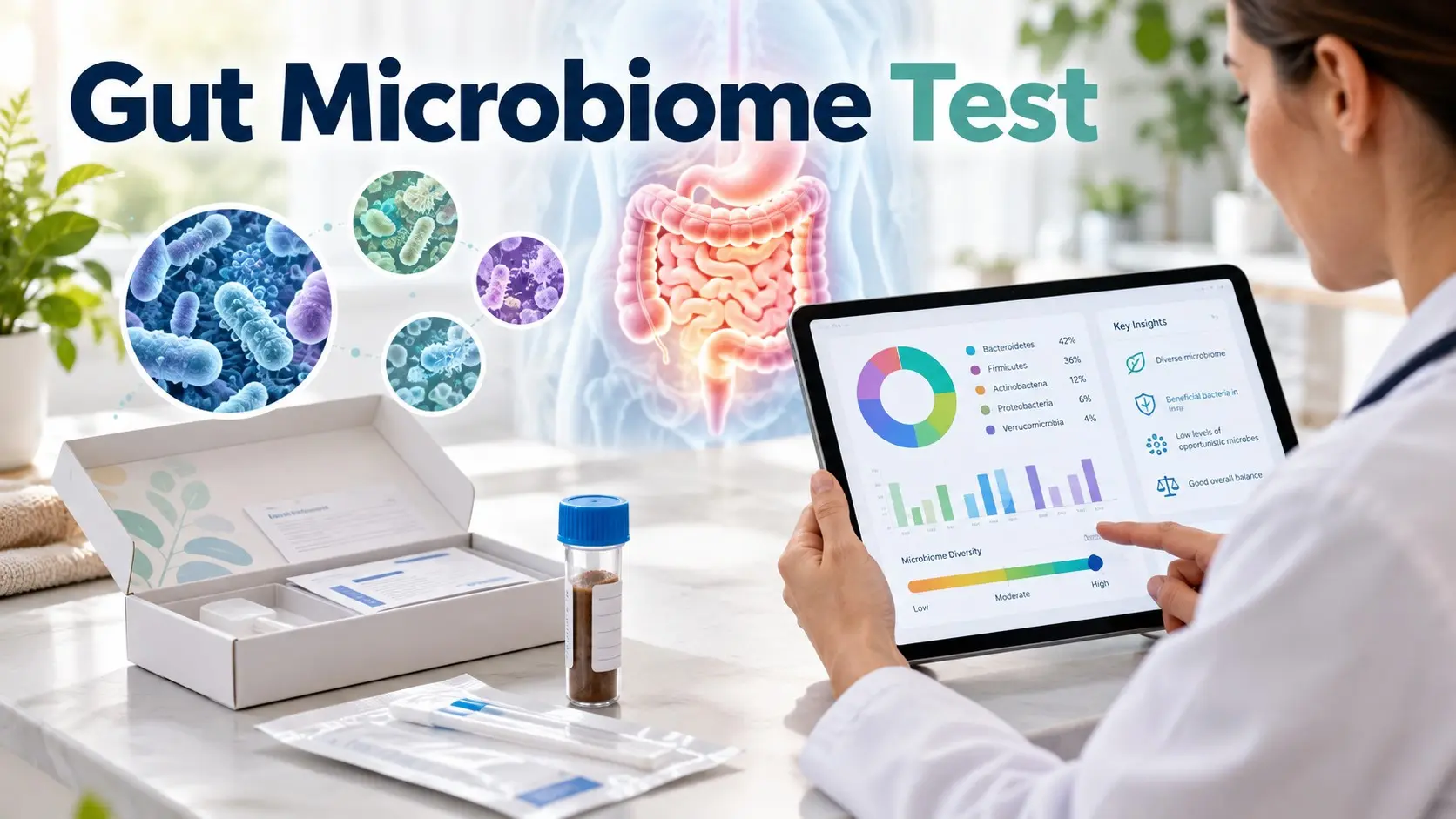
A Gut Microbiome Test can show which microbes and microbial genes are detected in a stool sample. It can be interesting for learning about your gut microbiota, but current evidence does not support using a commercial microbiome profile by itself to diagnose IBS, inflammatory bowel disease, food intolerance, depression, obesity, or a vague condition called “dysbiosis.”
That distinction matters.
The science of the microbiome is exciting. The clinical use of consumer microbiome testing is much less settled.
In 2025, an international expert consensus concluded that evidence for routine microbiome testing in clinical practice was still limited. The panel discouraged people from ordering microbiome testing without a clinical reason and advised that treatment changes should not be based on a commercial report alone.
A 2026 review from the British Society of Gastroenterology reached an even stronger conclusion. It reported that there is still no medical condition for which broad microbiome profiling has an established clinical indication that adds to routine care.
This does not make every test useless.
It changes what the test should be used for.
Medical note: This article is for general information and education. It does not replace medical advice, diagnosis, or treatment.
I am not a dermatologist or a doctor, and this content does not replace professional medical advice. What I share comes from real life experience, extensive research, and consultation with healthcare providers. Always consult qualified medical professionals for diagnosis and treatment of any health condition.
Medical review status: This article has not been independently medically reviewed by a gastroenterologist, microbiome researcher, registered dietitian, pathologist, physician, or other licensed healthcare professional.
Do not let a home microbiome test delay medical care
Arrange medical assessment if digestive symptoms come with:
- Blood in the stool
- Black stool
- Unexplained weight loss
- Persistent vomiting
- Severe or worsening abdominal pain
- Fever with significant digestive symptoms
- Dehydration
- Anemia
- Persistent diarrhea
- Symptoms that wake you repeatedly at night
- A major new change in bowel habits
These problems need a clinical assessment rather than a commercial microbiome score.
Quick answer: Is a Gut Microbiome Test worth it? It may be interesting if you understand that it is mainly a snapshot of microbes found in one stool sample. It is not a validated replacement for medical diagnosis. If you have persistent digestive symptoms, standard medical testing is usually more useful because it looks for specific diseases, infections, inflammation, or malabsorption.
Table of Contents
- What a Gut Microbiome Test Is
- 9 Critical Facts Before You Buy
- It Is Not a Diagnostic Test
- A Stool Sample Is Only a Snapshot
- The Sequencing Method Matters
- Diversity Is Not a Health Diagnosis
- Good and Bad Bacteria Is Too Simple
- Dysbiosis Has No Universal Score
- Personalized Advice Has Limits
- Medical Stool Tests Are Different
- Quality and Privacy Matter
- 16S vs Shotgun Sequencing
- What Your Report May Show
- What It Cannot Tell You
- When Medical Tests Matter More
- Gut Health Without Testing
- Frequently Asked Questions
- References and Sources
What Is a Gut Microbiome Test?
A Gut Microbiome Test usually analyzes a stool sample to estimate which microorganisms or microbial genes are present.
The human digestive tract contains bacteria, archaea, viruses, fungi, and other microorganisms.
Together, these organisms and their genetic material form the gut microbiome.
Microbes help with several normal body functions.
They can:
- Break down some food components
- Ferment dietary fiber
- Produce short chain fatty acids
- Interact with the intestinal lining
- Interact with the immune system
- Compete with other microbes
- Take part in the gut brain axis
These effects make the microbiome an important area of medical research.
Research importance, however, does not automatically make every commercial test clinically useful.
How Does a Gut Microbiome Test Work?
Most consumer tests follow a similar process.
- You order a kit.
- You collect a small stool sample.
- You seal the sample according to the kit instructions.
- You send it to a laboratory.
- The laboratory extracts microbial genetic material.
- Sequencing and computer analysis estimate the microbes in the sample.
- You receive a report or online dashboard.
The report may include:
- Microbes detected
- Relative abundance
- A diversity score
- Comparison with a reference population
- Estimated microbial functions
- Food suggestions
- Supplement suggestions
The last two items deserve caution.
A report can contain recommendations without proving that following those recommendations will improve a health condition.
9 Critical Facts About Gut Microbiome Testing
1. A Commercial Microbiome Profile Is Not a Medical Diagnosis
This is the most important fact in the article.
A consumer microbiome test should not be used to diagnose:
- Irritable bowel syndrome
- Crohn's disease
- Ulcerative colitis
- Celiac disease
- Food allergy
- Food intolerance
- Small intestinal bacterial overgrowth
- Colon cancer
- Anxiety
- Depression
- Obesity
The 2025 international consensus on microbiome testing found that evidence for wide clinical use remains insufficient.
The expert panel also discouraged treatment changes based only on microbiome reports.
Cleveland Clinic makes the same practical point. Commercial kits can provide information about microbial composition, but healthcare professionals generally do not use them to diagnose digestive disease.
2. One Stool Sample Is Only a Snapshot
Your stool does not contain a perfect copy of every microbial community in your digestive tract.
Some microbes live close to the intestinal wall.
Others are more likely to appear in stool.
The result can also shift with:
- Diet
- Recent antibiotics
- Other medicines
- Illness
- Travel
- Alcohol use
- Smoking
- Bowel transit time
- Sample handling
The international consensus recommends recording factors such as age, diet, medicines, smoking, alcohol use, health conditions, and gut transit because they can influence the microbiome.
A report therefore describes a sample taken at one point in time.
It is not a permanent microbial identity card.
3. The Sequencing Method Changes What the Test Can See
Not every microbiome profiling method provides the same information.
Two common approaches are 16S rRNA sequencing and shotgun metagenomics.
| Method | What It Looks At | Main Limitation |
|---|---|---|
| 16S rRNA sequencing | A selected bacterial and archaeal gene region | Less detail for many species and does not give a full view of all microbial genes |
| Shotgun metagenomics | A broad sample of microbial DNA | More expensive and computationally complex, and interpretation is still limited |
| Clinical stool test | A specific pathogen, inflammatory marker, blood, parasite, or other defined target | Answers a narrower clinical question rather than mapping the whole microbiome |
Shotgun sequencing can often identify microbes at a finer level and examine microbial genes.
That still does not mean it can tell you exactly what each microbe is doing inside your body.
4. A Microbiome Diversity Score Is Not a Health Diagnosis
Many reports provide a microbial diversity score.
Diversity is useful in microbiome research, but the simple rule that “more diversity always equals better health” is not reliable enough for individual diagnosis.
The 2025 international consensus specifically states that there is not enough information to give strict healthy reference ranges for the relative abundance of many microbial species.
That matters because a report may display a red, yellow, or green score that looks more certain than the science behind it.
A low score does not automatically mean you are sick.
A high score does not prove your gut is healthy.
5. The Idea of Good Bacteria and Bad Bacteria Is Too Simple
The old version of this article divided microbes into “beneficial” and “problematic” lists.
That is too crude.
A microbe can behave differently depending on:
- Its strain
- Its amount
- Other microbes nearby
- The host
- Diet
- Immune status
- Whether the intestinal barrier is healthy
For example, finding Escherichia coli DNA in a stool profile does not automatically mean you have an E. coli infection.
Different strains behave very differently.
Likewise, finding a bacterium associated with health in research does not mean you should buy a supplement containing that organism.
6. “Dysbiosis” Is Not a Single Standardized Diagnosis
Dysbiosis is a research term used to describe changes in microbial communities.
It is often used in commercial wellness reports as though it were a single disease.
It is not.
There is no universal clinical “dysbiosis score” that tells doctors:
- You have dysbiosis
- This is the cause of your symptoms
- This specific food caused it
- This probiotic will fix it
Cleveland Clinic notes that healthcare professionals do not normally test for dysbiosis itself.
They test for specific problems, such as infection, inflammation, or selected forms of bacterial overgrowth.
7. Personalized Food and Probiotic Advice Has Important Limits
Many companies turn your microbial profile into personalized nutrition advice.
Some may also recommend specific probiotics or supplements.
That sounds precise.
The evidence is not yet precise enough to assume that a food or probiotic recommendation generated from one commercial stool profile will treat your symptoms.
The international consensus panel specifically discourages testing companies from giving post test therapeutic advice directly from microbiome results.
This does not mean nutrition is unimportant.
Diet strongly affects the microbiome.
It means that the jump from “this microbe was detected” to “therefore you need this supplement” may be larger than the evidence supports.
8. A Clinical Stool Test Is Different From a Microbiome Wellness Test
This distinction can save time and money.
Doctors use validated stool testing to answer specific clinical questions.
Examples include testing for:
- Blood
- Specific bacteria
- Giardia
- Other selected parasites
- Fecal calprotectin
- Fecal lactoferrin
- Other disease specific markers
For chronic diarrhea, the American Gastroenterological Association recommends selected tests such as fecal calprotectin or lactoferrin to look for inflammatory disease, testing for Giardia, and blood testing for celiac disease when appropriate.
Those tests are designed to answer clinical questions.
A broad microbiome profile is designed to describe a microbial community.
They are not interchangeable.
9. Laboratory Quality, Data Handling, and Privacy Matter
A microbiome test involves more than collecting stool.
The result depends on:
- Collection method
- Sample preservation
- Shipping conditions
- Laboratory technique
- Sequencing platform
- Reference database
- Computer pipeline
- How the company interprets the data
The international consensus recommends that laboratories meet high quality standards and use validated, current computational methods.
Before buying a test, also read the company's privacy policy.
Ask:
- Who owns the raw data?
- Can you download it?
- How long is it stored?
- Can the company use it for research?
- Can you request deletion?
- Is data shared with third parties?
A colorful report is not enough.
The laboratory and data policy matter too.
16S Sequencing vs Shotgun Metagenomics
The difference between testing methods is worth understanding before you pay for a kit.
16S rRNA Sequencing
16S rRNA sequencing examines a specific gene that helps scientists classify bacteria and archaea.
It is widely used because it can be cheaper and simpler than broad metagenomic sequencing.
Its limits include:
- Less reliable species level detail for many bacteria
- Limited information about microbial genes
- No complete view of viruses or fungi
- Results that depend on the selected gene region and analysis pipeline
Shotgun Metagenomics
Shotgun metagenomics sequences a much broader collection of DNA in the sample.
It can provide:
- Finer taxonomic detail
- Information on microbial genes
- Broader detection of different microbial groups
- More detailed estimates of functional potential
But “more data” does not automatically mean “better medical advice.”
The biggest barrier is increasingly interpretation rather than the ability to generate sequences.
Can Two Microbiome Tests Give Different Results?
Yes.
The 2026 British Society of Gastroenterology review highlighted a study in which aliquots from the same stool sample produced marked variation when sent to different direct consumer microbiome testing companies.
Possible reasons include:
- Different laboratory methods
- Different sequencing depth
- Different databases
- Different computer pipelines
- Different reporting rules
This is another reason not to treat one commercial score as a definitive health diagnosis.
What Can a Gut Microbiome Report Reasonably Tell You?
Depending on the method, a report may reasonably describe:
- Microbial DNA detected in the sample
- Estimated relative abundance
- Microbial diversity measures
- Comparison with the company's reference population
- Some microbial gene pathways with metagenomic testing
This can be useful for:
- Personal curiosity
- Education
- Research participation
- Understanding how microbiome science works
The report should be interpreted as descriptive information rather than a medical verdict.
What Can a Gut Microbiome Test Not Reliably Tell You?
A commercial test cannot reliably tell you:
- Whether your microbiome is universally “healthy”
- The single cause of bloating
- The cause of fatigue
- Whether you have IBS
- Whether you have inflammatory bowel disease
- Whether you have celiac disease
- Whether you need an antibiotic
- Which probiotic will cure your symptoms
- Exactly which foods your body can tolerate
- Whether your depression comes from your gut
- Whether you will develop diabetes or obesity
Associations found in microbiome research are not always diagnostic tools.
Can a Microbiome Test Diagnose IBS?
No commercial microbiome profile is currently an established diagnostic test for IBS.
NIDDK explains that IBS is diagnosed mainly from the pattern of symptoms, medical history, and physical assessment.
Doctors may order blood tests, stool tests, breath testing, endoscopy, or colonoscopy when they need to rule out other conditions.
If constipation is part of your problem, see IBS Constipation Diet.
Can a Microbiome Test Diagnose Celiac Disease?
No.
Celiac disease is normally evaluated with specific blood tests and, in many cases, small intestinal biopsy.
A microbiome profile cannot replace these tests.
Do not start a gluten free diet before celiac testing without discussing it with your healthcare professional because removing gluten can affect diagnostic results.
Read Celiac Disease and the List of Foods to Avoid with Celiac Disease for more context.
Can It Diagnose Inflammatory Bowel Disease?
No.
Crohn's disease and ulcerative colitis require medical assessment.
Clinicians may use:
- Blood tests
- Fecal calprotectin
- Other stool tests
- Endoscopy
- Colonoscopy
- Imaging
- Biopsy
Microbiome research has found differences between people with inflammatory bowel disease and healthy comparison groups.
That does not make a consumer microbiome score a diagnostic test.
What About Bloating, Gas, and Diarrhea?
These symptoms have many possible causes.
They can come from:
- IBS
- Lactose intolerance
- Celiac disease
- Infections
- Medication effects
- Constipation
- Inflammatory bowel disease
- Carbohydrate intolerance
- Other digestive disorders
If symptoms persist, a clinician can choose tests based on the pattern.
For example, NIDDK lists stool testing, blood tests, breath testing, and endoscopy among tests used for selected cases of chronic diarrhea.
For related reading, see Bloating Gurgling Stomach and Stomach Pain After Eating.
Does a Microbiome Test Measure Inflammation?
Microbiome sequencing itself measures microbial genetic material.
It does not directly measure intestinal inflammation.
Some commercial kits bundle microbiome sequencing with separate biomarkers.
These need to be judged individually.
Fecal calprotectin, for example, is a separate stool biomarker used clinically to help assess intestinal inflammation.
Do not assume that a bacterial “inflammation score” is equivalent to a validated inflammatory biomarker.
Does a Test Show Which Bacteria Are Alive?
Standard DNA based testing may detect genetic material whether the organism was active, inactive, or no longer alive.
Some advanced research methods study RNA, metabolites, proteins, or other biological signals to learn more about microbial activity.
Those methods are scientifically interesting, but they still require careful validation before they become routine diagnostic tools.
Can a Microbiome Test Tell You Which Probiotic to Take?
Not reliably.
The idea sounds logical:
You are “low” in one organism, so take a capsule containing that organism.
Human microbiology is not that simple.
A probiotic strain has its own evidence, dose, formulation, and clinical purpose.
A microbiome report showing a low relative abundance of a bacterial group does not prove that replacing it with a supplement will improve your symptoms.
Do not start multiple supplements simply to “correct” a chart.
Can a Gut Microbiome Test Explain Anxiety or Depression?
No.
The gut brain axis is a real area of science.
The digestive system, microbes, immune system, nervous system, hormones, and brain interact in complex ways.
But a consumer stool profile cannot diagnose anxiety or depression or tell you that one microbe caused a mental health condition.
The old idea that gut microbes simply make a “happy chemical” that then controls your mood is too simplistic.
Serotonin biology differs between the gut and brain, and peripheral serotonin does not simply travel into the brain to create happiness.
Should You Change Your Diet Before Testing?
Not unless a healthcare professional tells you to.
The international consensus advises people not to stop treatment or change their usual diet before testing unless directed by their healthcare professional.
Artificially changing your routine may make the sample less representative of your normal state.
Also report relevant factors such as:
- Recent antibiotics
- Probiotics
- Major dietary changes
- New medicines
- Recent illness
- Travel
Should You Retest Your Gut Microbiome?
Routine retesting has not been proven to improve clinical outcomes for most people.
Your microbiome can change over time, so a second test may look different.
But a changing diversity score does not automatically mean your health has improved or worsened.
If a company encourages frequent testing, ask what clinical evidence shows that retesting changes meaningful health outcomes.
How to Choose a Gut Microbiome Test if You Still Want One
If you understand the limits and still want a test for educational purposes, look beyond marketing.
Ask Which Sequencing Method Is Used
Is it 16S sequencing or shotgun metagenomics?
Ask What the Score Means
Does the company explain how reference ranges were created?
Look for Method Transparency
A serious provider should explain:
- Sample handling
- Sequencing method
- Quality control
- Analysis pipeline
- Database sources
- Limitations
Be Careful With Disease Claims
A company should not present a wellness microbiome profile as proof that you have a disease.
Question Automatic Supplement Sales
Be especially cautious when the same company:
- Finds an “imbalance”
- Defines what it means
- Sells the supplement designed to fix it
That does not prove the recommendation is wrong.
It does create a commercial incentive worth considering.
Read the Privacy Policy
Know how your biological and account data will be stored and used.
Which Tests May Be More Useful for Digestive Symptoms?
| Problem | Possible Clinical Approach | Why It Helps |
|---|---|---|
| Persistent diarrhea | History, blood tests, targeted stool tests | Looks for defined causes such as infection, inflammation, or malabsorption |
| Possible IBD | Fecal calprotectin, blood work, endoscopy when needed | Assesses intestinal inflammation |
| Possible celiac disease | Celiac blood testing and biopsy when appropriate | Tests the actual disease process |
| Possible lactose intolerance | Clinical assessment and selected breath testing | Tests carbohydrate digestion rather than broad microbial composition |
| Possible infection | Targeted pathogen testing | Looks for organisms known to cause disease |
Your doctor chooses tests according to symptoms, duration, age, medical history, travel, medicines, family history, and warning signs.
Can You Improve Gut Health Without a Microbiome Test?
Yes.
You do not need a personalized bacterial score before practicing basic habits that support digestive and general health.
Eat a Varied Diet
Include a mix of:
- Vegetables
- Fruit
- Beans
- Lentils
- Whole grains when tolerated
- Nuts
- Seeds
Different plant foods provide different fibers and other compounds that gut microbes can use.
There is no need to reach a magic number of plant foods every week to prove that your microbiome is healthy.
Increase Fiber Gradually
Fiber supports bowel health and microbial fermentation.
Increase it gradually if your current diet is low in fiber.
A sudden large increase can worsen gas or bloating.
Include Fermented Foods if You Enjoy and Tolerate Them
Examples include:
- Yogurt with live cultures
- Kefir
- Kimchi
- Sauerkraut
These foods can be part of a healthy diet.
They are not required to “rebuild” every person's microbiome.
Use Antibiotics Appropriately
Antibiotics can alter the microbiome.
They are also important medicines that save lives.
Use them when prescribed for an appropriate reason rather than avoiding necessary treatment because you are worried about gut bacteria.
Support Sleep, Activity, and Stress Management
Overall health habits interact with digestive health.
For practical ideas, see Stress Reduction Techniques and Sleep Hygiene.
What About Foods Marketed to “Heal the Gut”?
No single food repairs every digestive problem.
A healthy eating pattern can support normal digestion, but persistent symptoms need the right diagnosis.
See Foods to Heal Your Gut for a practical food based guide, and visit the Gut Health Foods Hub for related nutrition topics.
Does Gut Health Affect Weight?
The microbiome is being studied in obesity and metabolic health.
Associations between microbial patterns and body weight do not mean a stool test can tell you why you gained weight or which diet will make you lose it.
Weight is influenced by many factors, including energy intake, activity, sleep, medicines, hormones, genetics, and health conditions.
For more context, read Gut Health and Weight Loss.
Questions to Ask Before Spending Money on a Test
- What exact question am I trying to answer?
- Would a doctor use a different validated test for that question?
- Which sequencing method does the company use?
- How are its reference ranges created?
- Does it clearly explain uncertainty?
- Does it make disease claims?
- Does it sell supplements based on the same score?
- Can I obtain my raw data?
- What happens to my biological and digital data?
- Would the result change anything I should safely do?
If you cannot identify a meaningful decision the result will change, the test may simply provide expensive curiosity.
Conclusion
A Gut Microbiome Test can provide an interesting snapshot of microbial DNA found in a stool sample. Modern sequencing can reveal impressive amounts of information, and microbiome research is advancing rapidly.
But a detailed report is not the same as a validated diagnosis.
Current international consensus does not support routine microbiome profiling for clinical care, and a 2026 British gastroenterology review still found no established clinical indication for broad microbiome profiling.
If you want a test for curiosity, choose a transparent laboratory and understand the limits before paying. If you have persistent bloating, diarrhea, constipation, pain, bleeding, weight loss, anemia, or other concerning symptoms, your better next step is a medical evaluation aimed at finding the actual cause.
References and Sources
- Porcari S, et al. International Consensus Statement on Microbiome Testing in Clinical Practice. The Lancet Gastroenterology and Hepatology.
https://pubmed.ncbi.nlm.nih.gov/39647502/ - International Consensus Statement on Microbiome Testing in Clinical Practice. Open Access Full Text.
https://pmc.ncbi.nlm.nih.gov/articles/PMC12343204/ - British Society of Gastroenterology Gut Microbiota for Health Expert Panel. Recent Advances in Our Understanding of the Gut Microbiome. Gut. 2026.
https://gut.bmj.com/content/early/2026/06/02/gutjnl-2026-338252 - Cleveland Clinic. What Is Your Gut Microbiome?
https://my.clevelandclinic.org/health/body/25201-gut-microbiome - National Institute of Diabetes and Digestive and Kidney Diseases. Diagnosis of Diarrhea.
https://www.niddk.nih.gov/health-information/digestive-diseases/diarrhea/diagnosis - National Institute of Diabetes and Digestive and Kidney Diseases. Diagnosis of Irritable Bowel Syndrome.
https://www.niddk.nih.gov/health-information/digestive-diseases/irritable-bowel-syndrome/diagnosis - National Institute of Diabetes and Digestive and Kidney Diseases. Diagnosis of Celiac Disease.
https://www.niddk.nih.gov/health-information/digestive-diseases/celiac-disease/diagnosis - American Gastroenterological Association. Laboratory Evaluation of Functional Diarrhea and Diarrhea Predominant IBS.
https://gastro.org/clinical-guidance/laboratory-evaluation-of-functional-diarrhea-and-diarrhea-predominant-irritable-bowel-syndrome-in-adults-ibs-d/
Internal Links + Hub
- Digestive Health and Gut Hub
- Gut Health Foods Hub
- Foods to Heal Your Gut
- Gut Friendly Breakfast
- Recipes for a Healthy Gut
- How to Heal Your Gut
- Gut Health and Weight Loss
- Worst Foods for Gut Health
- Bloating Gurgling Stomach
- Stomach Pain After Eating
- IBS Constipation Diet
- Celiac Disease
- Foods to Avoid With Celiac Disease
- Medical Tests and Screenings Hub
About the Author
Adel Galal is the Founder and Lead Writer of NextFitLife.com.
Adel has maintained a personal interest in health, fitness, nutrition, sleep, wellness, and healthy aging for more than 30 years. His health and wellness writing experience spans more than 15 years.
His approach is to compare established medical guidance with popular wellness claims, identify where evidence is strong or uncertain, and turn complex health information into practical language readers can use when speaking with healthcare professionals.
For microbiome topics, this means separating exciting research from what a commercial test can actually prove for one person. A detailed bacterial chart can be scientifically interesting without being a validated diagnosis or treatment plan.
Adel is not a physician, gastroenterologist, microbiome scientist, registered dietitian, laboratory specialist, pharmacist, or other licensed healthcare professional. NextFitLife content is educational and does not replace diagnosis, medical treatment, laboratory interpretation, nutrition therapy, or individual medical care.
Learn more about Adel and NextFitLife on the About Us page.
Frequently Asked Questions
What is a Gut Microbiome Test?
A Gut Microbiome Test analyzes a stool sample to estimate which microbes or microbial genes are present. Commercial reports may show relative abundance, diversity measures, and comparisons with a reference population.
Are gut microbiome tests accurate?
Laboratories can accurately sequence microbial genetic material, but interpretation is the harder issue. Results can vary with the sample, testing method, database, and analysis pipeline, and there are no universal healthy reference ranges for many microbes.
Is a Gut Microbiome Test worth it?
It may be worthwhile for curiosity or education if you understand its limits. Current evidence does not support using a commercial microbiome test as a routine diagnostic tool or as the sole basis for treatment.
Can a microbiome test diagnose IBS?
No. IBS is diagnosed mainly from symptoms, medical history, and clinical assessment. Doctors may use other tests when they need to rule out diseases that can cause similar symptoms.
Can a microbiome test diagnose celiac disease?
No. Celiac disease is usually evaluated with specific antibody blood tests and, when appropriate, small intestinal biopsy. A commercial microbiome profile cannot replace those tests.
Can a Gut Microbiome Test detect inflammation?
Microbiome sequencing measures microbial genetic material rather than inflammation itself. Some commercial panels include separate inflammatory biomarkers, but these should not be confused with bacterial diversity or microbiome scores.
What is a dysbiosis score?
Dysbiosis refers broadly to changes in a microbial community. There is no single universal clinical dysbiosis score that reliably diagnoses disease or tells every person which treatment they need.
What is the difference between 16S and shotgun sequencing?
16S sequencing analyzes a selected microbial gene region and is mainly used to classify bacteria and archaea. Shotgun metagenomics sequences a broader collection of microbial DNA and can provide finer taxonomic and gene level information.
Does higher microbiome diversity always mean better gut health?
No. Diversity can be useful in research, but a higher score is not automatically healthier for every person. Current expert consensus says there is not enough information to define strict healthy abundance ranges for many microbes.
Can a microbiome test tell me which probiotic I need?
Not reliably. Finding a low or high amount of a microbial group does not prove that taking a matching probiotic will improve your symptoms. Probiotic effects depend on the strain, dose, condition, and person.
Can a Gut Microbiome Test explain bloating?
Not by itself. Bloating can come from constipation, IBS, food intolerance, celiac disease, digestive infections, diet, and other causes. Persistent symptoms deserve a clinical assessment.
Can a microbiome test diagnose anxiety or depression?
No. The gut brain axis is an active field of research, but a stool microbiome profile cannot diagnose a mental health condition or prove that a particular microbe caused it.
Should I change my diet before collecting the sample?
Not unless a healthcare professional instructs you to. Expert consensus recommends keeping your usual diet and treatment before testing so the result is not deliberately altered.
What medical tests are different from a microbiome test?
Clinical tests may look specifically for blood, pathogens, parasites, inflammation, celiac antibodies, or problems digesting certain carbohydrates. These tests answer defined medical questions rather than broadly profiling the microbial community.
When should I see a doctor instead of buying a microbiome test?
Seek medical assessment for persistent symptoms or warning signs such as blood in stool, black stool, unexplained weight loss, anemia, persistent diarrhea, repeated vomiting, severe pain, fever, dehydration, or a major change in bowel habits.

Health & wellness writer with 30+ years of experience in nutrition, fitness, and healthy aging. Founder of NextFitLife.com — evidence-based health guidance.

