
Published on: May 2024
Updated on: October 12, 2026
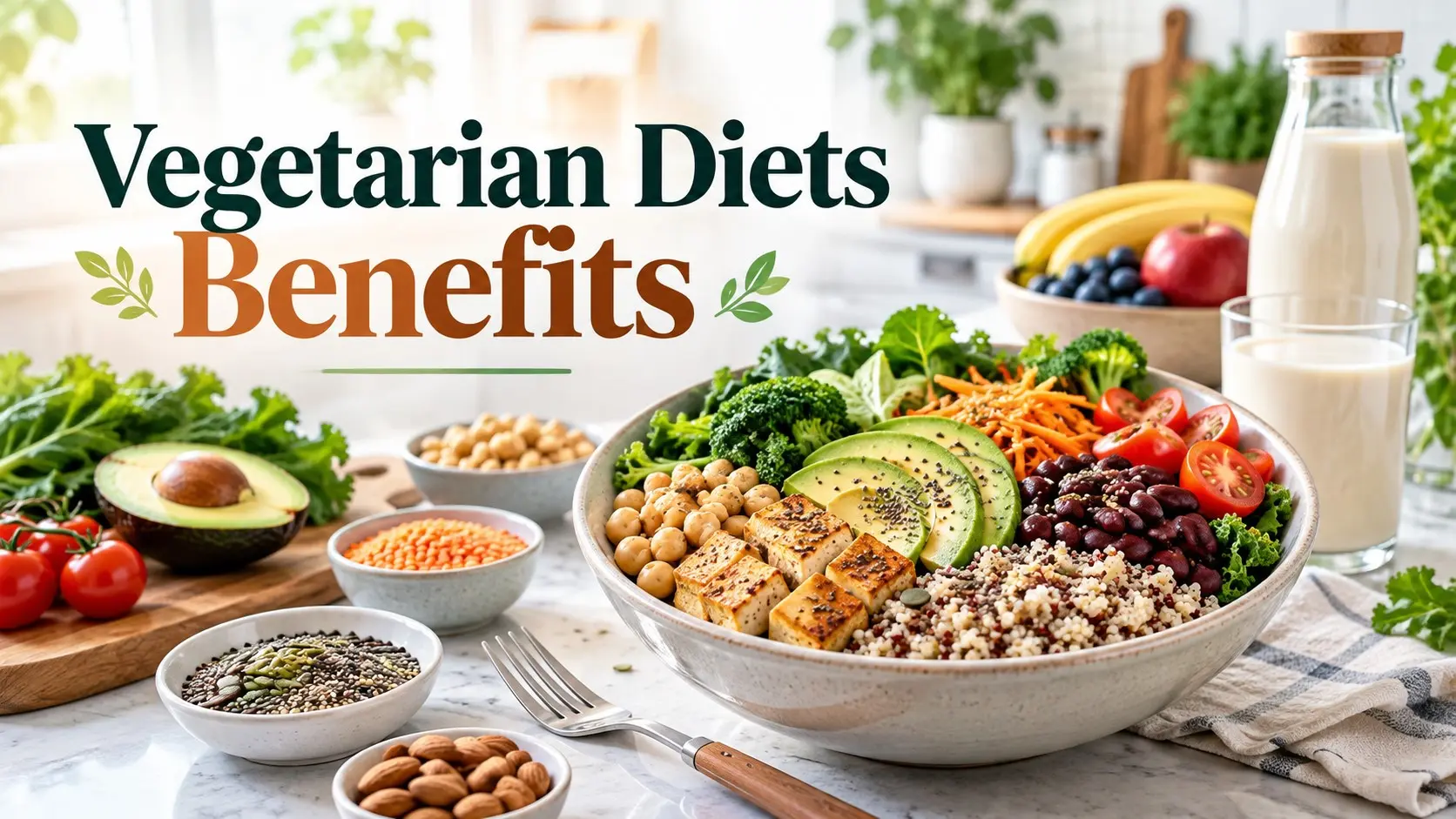
Vegetarian Diets Benefits can include better heart health, lower LDL cholesterol, improved blood pressure, easier weight management, more fiber, and better blood sugar control. But these benefits come from the quality of the food, not simply from removing meat.
A vegetarian plate built around beans, lentils, vegetables, fruit, whole grains, nuts, seeds, eggs, dairy, tofu, and other minimally processed foods can be highly nutritious.
A vegetarian diet built mostly around fries, sweets, refined bread, sugary drinks, and heavily processed meat substitutes is a different story.
The word vegetarian describes what you leave out.
Your health depends on what you put back in.
Medical note: This article is for general information and education. It does not replace medical advice, diagnosis, or treatment.
I am not a dermatologist or a doctor, and this content does not replace professional medical advice. What I share comes from real life experience, extensive research, and consultation with healthcare providers. Always consult qualified medical professionals for diagnosis and treatment of any health condition.
Medical review status: This article has not been independently medically reviewed by a physician, registered dietitian, cardiologist, endocrinologist, pharmacist, or other licensed healthcare professional.
Quick answer: A well planned vegetarian diet can support long term health. The 2025 Academy of Nutrition and Dietetics position states that appropriately planned vegetarian and vegan diets can be nutritionally adequate for adults and can improve several cardiometabolic health outcomes.
Who may need more individual planning?
Pregnant or breastfeeding people, children, teenagers, older adults, competitive athletes, people with eating disorders, kidney disease, digestive disease, anemia, or known nutrient deficiencies may need individualized advice from a doctor or registered dietitian.
Table of Contents
- What a Vegetarian Diet Includes
- 11 Science Backed Benefits
- Support Heart Health
- Improve LDL Cholesterol
- Support Healthy Blood Pressure
- Help With Type 2 Diabetes
- Support a Healthy Body Weight
- Increase Fiber Intake
- Support Regular Bowel Function
- Feed the Gut Microbiota
- Increase Nutrient Rich Plant Foods
- Offer Affordable Protein Choices
- Reduce Environmental Impact
- Healthy vs Unhealthy Vegetarian Eating
- Protein Without Meat
- Vitamin B12
- Iron and Vitamin C
- Calcium and Vitamin D
- Iodine
- Omega 3 and Zinc
- Simple Vegetarian Plate
- Common Mistakes
- Frequently Asked Questions
- References and Sources
What Is a Vegetarian Diet?
A vegetarian diet usually excludes meat, poultry, fish, and seafood.
There are several common patterns.
| Pattern | Usually Includes | Usually Excludes |
|---|---|---|
| Lacto ovo vegetarian | Plant foods, milk, yogurt, cheese, eggs | Meat, poultry, fish, seafood |
| Lacto vegetarian | Plant foods and dairy | Meat, poultry, fish, seafood, eggs |
| Ovo vegetarian | Plant foods and eggs | Meat, poultry, fish, seafood, dairy |
| Vegan | Foods of plant origin | All animal derived foods |
The Academy of Nutrition and Dietetics treats vegetarian and vegan patterns as separate but closely related eating styles.
A plant based diet is broader.
Some people use the phrase for a fully vegan diet. Others use it for a diet that mainly emphasizes plant foods but may still include small amounts of animal foods.
11 Vegetarian Diets Benefits Worth Knowing
1. A Well Planned Vegetarian Diet Can Support Heart Health
Cardiovascular health has some of the strongest evidence behind vegetarian eating patterns.
A 2024 umbrella review looked at 21 systematic reviews.
Vegetarian patterns, including vegan diets, were associated with lower cardiovascular disease incidence and somewhat lower cardiovascular mortality than nonvegetarian diets.
This does not prove that simply avoiding meat prevents heart disease.
The benefit appears to come from the overall eating pattern.
Healthy vegetarian diets usually emphasize:
- Vegetables
- Fruit
- Whole grains
- Legumes
- Nuts
- Seeds
- Unsaturated plant oils
The American Heart Association continues to recommend these foods as part of heart healthy eating.
2. It Can Help Lower LDL Cholesterol
Replacing fatty meat and high saturated fat foods with beans, lentils, tofu, nuts, seeds, and other plant proteins can reduce saturated fat intake.
That can help lower LDL cholesterol.
The 2024 cardiovascular umbrella review found favorable changes in blood lipids among people following vegetarian or vegan patterns.
A 2024 systematic review also found improvements in several cardiometabolic markers.
But the replacement matters.
Replacing meat with lentils is different from replacing it with pastries, fries, or foods high in coconut oil.
The American Heart Association specifically warns that meatless food is not automatically low in saturated fat.
3. It May Support Healthier Blood Pressure
Vegetarian diets can be rich in potassium, magnesium, fiber, and unsaturated fats when built from whole plant foods.
These features fit well with current heart healthy eating guidance.
Recent evidence suggests vegetarian and especially vegan patterns can produce modest reductions in blood pressure in some populations.
Do not treat vegetarian eating as a replacement for prescribed blood pressure medicine.
Diet is one part of care.
4. It Can Help With Type 2 Diabetes Management
Vegetarian eating can be a valid option for adults with type 2 diabetes.
A 2024 meta analysis of randomized controlled trials found that vegetarian and vegan diets likely reduced HbA1c by about 0.4 percentage points and produced a modest reduction in BMI compared with nonvegetarian diets.
A separate 2025 meta analysis also found improvements in HbA1c, LDL cholesterol, and BMI in people with type 2 diabetes.
The useful foods are not simply “meat free.”
They include:
- Beans
- Lentils
- Chickpeas
- Whole grains
- Vegetables
- Nuts
- Seeds
- Whole fruit
Sugary vegetarian foods can still raise blood glucose.
5. It Can Support a Healthy Body Weight
Vegetarian diets are often linked with lower BMI.
This does not mean vegetarian eating causes automatic weight loss.
Many plant foods are high in dietary fiber and water, which can help make meals filling.
Beans, vegetables, fruit, whole grains, and potatoes can provide substantial food volume without requiring very high energy intake.
But vegetarian foods can also be energy dense.
Examples include:
- Large amounts of cheese
- Fried foods
- Pastries
- Sweets
- Nut butter
- High calorie meat substitutes
Weight still depends on the total dietary pattern, portion sizes, activity, sleep, medicines, health conditions, and other factors.
For a focused guide, read Plant Based Diet for Weight Loss.
6. Vegetarian Eating Can Make High Fiber Meals Easier
Meat, fish, eggs, and dairy do not contain fiber.
Plant foods do.
A vegetarian diet centered on:
- Beans
- Lentils
- Whole grains
- Vegetables
- Fruit
- Nuts
- Seeds
can make it easier to get enough dietary fiber.
Fiber supports normal bowel function and helps with fullness.
Increase it gradually if your current intake is low.
A sudden large increase can cause gas and bloating.
7. More Fiber Can Support Regular Bowel Function
Constipation is often linked with low fiber intake, although it has many possible causes.
Whole plant foods can add both soluble and insoluble fiber to the diet.
Examples include oats, lentils, chickpeas, pears, berries, vegetables, and whole grain bread.
Fiber works best when fluid intake is also adequate.
If constipation is persistent, painful, or severe, do not keep adding fiber without checking the cause.
See Best Constipation Treatments for a fuller guide.
8. Plant Foods Feed the Gut Microbiota
Many gut microbes use fibers and other plant compounds as fuel.
Eating a varied range of whole plant foods can support microbial fermentation and the production of compounds such as short chain fatty acids.
That does not mean there is one perfect microbiome for every vegetarian.
It also does not mean that a commercial microbiome score proves your vegetarian diet is healthy.
Food quality still matters.
Read Gut Microbiome Test for a more careful look at what microbiome testing can and cannot tell you.
9. It Can Increase Nutrient Rich Plant Foods
A healthy vegetarian pattern often includes more foods rich in:
- Folate
- Vitamin C
- Potassium
- Magnesium
- Fiber
- Carotenoids
- Polyphenols
These nutrients and compounds come from eating a wide range of plant foods.
The benefit is not created by the word vegetarian.
Someone who removes chicken but replaces it with white bread and sweets has not automatically improved diet quality.
10. Beans and Lentils Offer Affordable Plant Protein
Vegetarian food does not have to be expensive.
Beans, lentils, chickpeas, peas, oats, peanut butter, and other staples can provide economical sources of energy and plant protein.
The American Heart Association describes beans and other legumes as nutritious, fiber rich protein foods and notes that they can be cost effective compared with meat.
Cost will still vary by country, season, food availability, and whether you buy basic ingredients or specialty vegetarian products.
11. Plant Forward Eating Can Reduce Environmental Impact
Many people also choose vegetarian eating for environmental reasons.
Meals based more heavily on grains, beans, vegetables, fruit, nuts, and seeds generally require fewer animal products.
This can reduce the environmental burden linked with some forms of livestock production.
The Academy's 2025 vegetarian position paper notes that environmental concerns are one of the major reasons adults choose vegetarian or vegan eating patterns.
You do not have to become fully vegetarian overnight to shift more meals toward plant foods.
Healthy Vegetarian Diet vs Unhealthy Vegetarian Diet
This may be the most useful comparison in the article.
| More Often | Less Often | Why |
|---|---|---|
| Beans and lentils | Highly processed meat substitutes | Protein plus fiber with less processing |
| Whole grains | Refined grain snacks | More fiber and micronutrients |
| Vegetables and fruit | Sugary drinks and sweets | Higher nutrient density |
| Nuts and seeds | Foods rich in coconut or palm fat | More unsaturated fats |
| Water and unsweetened drinks | Sugary drinks | Less added sugar |
The American Heart Association specifically warns that not all plant based foods are healthy.
A vegetarian burger can be convenient, but check:
- Sodium
- Saturated fat
- Added sugar
- Protein
- Iron
- Calcium
Can Vegetarians Get Enough Protein?
Yes.
Most adults can meet protein needs with a varied vegetarian diet.
Good sources include:
- Lentils
- Beans
- Chickpeas
- Tofu
- Tempeh
- Edamame
- Textured soy protein
- Peas
- Nuts
- Seeds
- Whole grains
- Eggs
- Milk
- Greek yogurt
- Cottage cheese
You do not need to combine two specific plant proteins at every meal.
Eating a varied diet across the day can provide the essential amino acids your body needs.
People with very high protein needs may need more planning.
For practical ideas, read High Protein Vegetarian Meals and Vegetarian Bodybuilding Meal Plan.
Vitamin B12 Is the Nutrient You Should Not Ignore
Vitamin B12 is needed for healthy blood cells, DNA, and the nervous system.
It is naturally found mainly in animal foods.
Lacto ovo vegetarians may obtain B12 from:
- Milk
- Yogurt
- Cheese
- Eggs
But intake is not automatically adequate.
People eating little or no dairy and eggs need a reliable source from fortified foods or supplements.
Vegans need particular attention to B12.
Do not rely on spirulina, fermented vegetables, mushrooms, or other unfortified plant foods as your only dependable B12 source.
Read Vitamin B12 Guide and Vitamin B12 Deficiency for more detail.
Iron Needs More Than a High Number on a Food List
Vegetarian diets can contain plenty of iron.
The issue is absorption.
Plant foods contain nonheme iron, which is generally absorbed less efficiently than heme iron from meat.
Vegetarian iron sources include:
- Lentils
- Beans
- Chickpeas
- Tofu
- Fortified breakfast cereal
- Nuts
- Seeds
- Wholemeal bread
- Dark green vegetables
Pairing these foods with vitamin C can improve nonheme iron absorption.
Examples include:
- Lentils with tomatoes
- Beans with peppers
- Fortified cereal with berries
- Chickpeas with lemon
- Tofu with broccoli
Tea and coffee taken with meals can reduce nonheme iron absorption, so people with low iron may benefit from separating them from iron rich meals.
See Foods That Help Iron Absorption.
Calcium Still Matters Without Meat
Meat is not a major calcium source, so vegetarianism itself does not create a calcium problem.
The issue becomes more important when dairy is also removed.
Useful calcium sources can include:
- Milk
- Yogurt
- Cheese
- Calcium fortified plant drinks
- Calcium set tofu
- Some green vegetables
- Fortified foods
Check plant milk labels.
Not every product is fortified to the same level.
Vitamin D Needs Separate Attention
Vitamin D is difficult to obtain from food alone in many diets.
Vegetarian sources may include:
- Egg yolk
- Fortified milk
- Fortified plant drinks
- Fortified cereals
- Some UV exposed mushrooms
Individual supplement needs depend on age, sun exposure, skin pigmentation, health conditions, and local public health guidance.
For more detail, read Vitamin D Foods for Vegetarians.
Do Not Forget Iodine
Iodine supports normal thyroid hormone production.
Vegetarians who eat dairy and eggs may obtain some iodine from these foods, depending on local food production.
People who avoid them need another reliable source.
Iodized salt can provide iodine where it is available.
Some fortified foods also contain it.
Seaweed is not always a simple answer because iodine amounts can vary widely and some seaweeds can contain very high levels.
Read Plant Based Iodine Sources.
What About Omega 3 Fatty Acids?
Vegetarian sources of the omega 3 fat ALA include:
- Ground flaxseed
- Chia seeds
- Walnuts
- Rapeseed or canola oil
- Hemp seeds
The body can convert some ALA into EPA and DHA, but conversion is limited.
People who do not eat fish may consider an algae derived EPA or DHA supplement when appropriate.
Ask a healthcare professional if you are pregnant, breastfeeding, taking blood thinning medicine, or managing a medical condition.
Zinc Is Available From Plant Foods Too
Zinc sources include:
- Beans
- Lentils
- Chickpeas
- Nuts
- Seeds
- Whole grains
- Dairy
- Eggs
Plant compounds called phytates can reduce zinc absorption.
Soaking, fermenting, sprouting, and using a varied diet can help improve overall mineral availability.
Selenium Can Be Easy to Miss
Selenium content in plant foods varies with the soil where they were grown.
Sources can include:
- Whole grains
- Beans
- Nuts
- Seeds
- Eggs
- Dairy foods
Brazil nuts can contain very high selenium levels, so more is not always better.
See Vegan Selenium Sources for practical food options.
A Simple Vegetarian Plate
You do not need a complicated meal plan.
A balanced meal might contain:
- Half the plate: vegetables or vegetables plus fruit
- One quarter: beans, lentils, tofu, eggs, yogurt, or another protein food
- One quarter: whole grains, potatoes, or another starchy food
- A small amount: nuts, seeds, olive oil, or another unsaturated fat
Exact portions depend on your body size, activity, health, goals, and appetite.
Example One Day Vegetarian Menu
| Meal | Example | Nutrition Focus |
|---|---|---|
| Breakfast | Oats with yogurt or fortified soy drink, berries, chia, walnuts | Protein, fiber, calcium, omega 3 fats |
| Lunch | Lentil bowl with quinoa, peppers, tomatoes, greens, lemon | Protein, iron, vitamin C, fiber |
| Snack | Fruit with nuts or hummus with vegetables | Fiber, healthy fat, minerals |
| Dinner | Tofu and vegetable stir fry with brown rice | Protein, calcium if tofu is calcium set, vegetables, whole grains |
Common Vegetarian Diet Mistakes
Removing Meat Without Replacing Protein
A plate of pasta with tomato sauce can be vegetarian.
It may still be low in protein if that is all you eat.
Add lentils, beans, tofu, tempeh, eggs, dairy, or another protein source.
Living on Cheese
Cheese can provide protein and calcium.
Large amounts can also provide considerable saturated fat and sodium.
Use variety instead of making cheese the main replacement for meat at every meal.
Assuming Every Vegan Product Is Healthy
A cookie can be vegan.
So can fries.
So can soda.
A vegetarian or vegan label tells you what ingredients are absent.
It does not tell you the food's overall nutrition quality.
Ignoring Vitamin B12
B12 deficiency can affect the blood and nervous system.
Do not wait for symptoms before thinking about a reliable B12 source.
Eating Too Little
Whole plant foods can be filling.
People with high energy needs may accidentally eat too little when changing diets.
This matters for athletes, teenagers, and people trying to build muscle.
Adding Fiber Too Fast
A rapid jump in beans, whole grains, and vegetables can cause bloating and gas.
Increase fiber step by step.
Is Vegetarian Eating Better Than Mediterranean Eating?
There is no single best diet for everyone.
A Mediterranean diet can include fish and modest amounts of other animal foods while emphasizing vegetables, legumes, whole grains, nuts, olive oil, and fruit.
A vegetarian diet removes meat and fish.
Both can be nutrient rich.
The healthier pattern is the one that provides adequate nutrition, fits your health needs, and can be maintained.
Do You Have to Become Fully Vegetarian?
No.
The American Heart Association notes that even adding more meatless meals can improve diet quality when healthy plant foods replace less healthy choices.
You could start with:
- One meatless dinner each week
- Lentils instead of meat in one meal
- Beans in tacos or chili
- Tofu in a stir fry
- Hummus instead of processed deli meat
- A vegetable and bean soup
You do not need an all or nothing approach to eat more plant foods.
Can Vegetarian Diets Be Safe Long Term?
Yes, when they are well planned.
The 2025 Academy position states that appropriately planned vegetarian and vegan dietary patterns can be nutritionally adequate for adults and can offer long term cardiometabolic benefits.
The word appropriately planned matters.
Pay attention to:
- Protein
- Vitamin B12
- Iron
- Calcium
- Vitamin D
- Iodine
- Zinc
- Omega 3 fats
Who Should Speak With a Dietitian?
A registered dietitian can be especially helpful if you:
- Are pregnant or breastfeeding
- Are feeding a vegetarian child
- Are a teenager
- Are an older adult with low appetite
- Have iron deficiency or anemia
- Have a history of B12 deficiency
- Have kidney disease
- Have inflammatory bowel disease
- Have celiac disease
- Are an athlete with high energy needs
- Have an eating disorder or highly restrictive diet
Conclusion
Vegetarian Diets Benefits are real, but they do not come from avoiding meat alone.
The strongest pattern is built around vegetables, fruit, beans, lentils, whole grains, nuts, seeds, soy foods, and suitable eggs or dairy if you include them.
Current research supports benefits for cardiovascular risk factors, cholesterol, blood sugar control, weight, and overall diet quality.
At the same time, vegetarian diets need thoughtful planning for vitamin B12, iron, calcium, vitamin D, iodine, zinc, and omega 3 fats.
Your next step can be simple. Replace one less healthy meal this week with a balanced meal built around beans, lentils, tofu, vegetables, or whole grains, then build from there.
References and Sources
- Academy of Nutrition and Dietetics. Vegetarian Dietary Patterns for Adults: A Position Paper of the Academy of Nutrition and Dietetics. 2025.
https://www.eatrightpro.org/-/media/files/eatrightpro/practice/academy-positions/vegetarian-dietary-patterns-for-adults.pdf - American Heart Association. 2026 Dietary Guidance to Improve Cardiovascular Health.
https://professional.heart.org/en/science-news/2026-dietary-guidance-to-improve-cardiovascular-health - American Heart Association. Vegetarian, Vegan and Meatless Meals.
https://www.heart.org/en/healthy-living/healthy-eating/eat-smart/nutrition-basics/vegetarian-vegan-and-meals-without-meat - NHS. The Vegetarian Diet.
https://www.nhs.uk/live-well/eat-well/how-to-eat-a-balanced-diet/the-vegetarian-diet/ - Landry MJ, et al. Vegetarian Dietary Patterns and Cardiovascular Risk Factors and Disease Prevention: An Umbrella Review. American Journal of Preventive Cardiology. 2024.
https://pubmed.ncbi.nlm.nih.gov/39430429/ - Guest NS, et al. Vegetarian and Vegan Dietary Patterns to Treat Adult Type 2 Diabetes: A Systematic Review and Meta Analysis of Randomized Controlled Trials. Advances in Nutrition. 2024.
https://pubmed.ncbi.nlm.nih.gov/39415400/ - Lv M, et al. Effects of Vegetarian or Vegan Diets on Glycemic and Cardiometabolic Health in Type 2 Diabetes. Nutrition Reviews. 2025.
https://pubmed.ncbi.nlm.nih.gov/40037300/ - Hannibal L, et al. Vitamin B12 Status and Supplementation in Plant Based Diets. Food and Nutrition Bulletin. 2024.
https://pubmed.ncbi.nlm.nih.gov/38987876/
Internal Links + Hub
- Special Diets Hub
- Foods and Nutrition Hub
- Healthy Eating Lifestyle Hub
- Healthy Eating Lifestyle
- Plant Based Diet for Weight Loss
- High Protein Vegetarian Meals
- Vegetarian Bodybuilding Meal Plan
- Vitamin D Foods for Vegetarians
- Vitamin B12 Guide
- Vitamin B12 Deficiency
- Foods That Help Iron Absorption
- How to Treat Iron Deficiency Anemia
- Plant Based Iodine Sources
- Vegan Selenium Sources
- Diet for Strong Bones and Muscles
About the Author
Adel Galal is the Founder and Lead Writer of NextFitLife.com.
Adel has maintained a personal interest in health, fitness, nutrition, sleep, wellness, and healthy aging for more than 30 years. His health and wellness writing experience spans more than 15 years.
His approach is to compare current nutrition guidance with popular diet claims, separate strong evidence from marketing, and turn complex information into practical steps readers can use when planning meals or speaking with healthcare professionals.
For vegetarian nutrition, he focuses on both sides of the picture. A diet can provide more fiber, legumes, whole grains, and plant protein while still requiring attention to nutrients such as vitamin B12, iron, iodine, calcium, vitamin D, zinc, and omega 3 fats.
Adel is not a physician, registered dietitian, nutritionist, cardiologist, endocrinologist, pharmacist, or other licensed healthcare professional. NextFitLife content is educational and does not replace diagnosis, medical nutrition therapy, prescribed treatment, or individualized dietary care.
Learn more about Adel and NextFitLife on the About Us page.
Frequently Asked Questions
What are the main Vegetarian Diets Benefits?
A well planned vegetarian diet can support heart health, lower LDL cholesterol, improve blood pressure, help blood sugar control, support a healthy body weight, and provide plenty of fiber and nutrient rich plant foods.
Is a vegetarian diet automatically healthy?
No. Fries, sweets, refined bread, sugary drinks, and many heavily processed foods can be vegetarian. The strongest health benefits come from a diet centered on vegetables, fruit, beans, lentils, whole grains, nuts, seeds, and suitable protein foods.
Can vegetarians get enough protein?
Yes. Beans, lentils, chickpeas, tofu, tempeh, soy foods, nuts, seeds, whole grains, eggs, milk, yogurt, and cheese can all contribute protein. Most adults can meet protein needs with a varied diet.
Do vegetarians need vitamin B12 supplements?
Some do. Vegetarians who regularly eat dairy and eggs may obtain B12 from those foods, but intake is not always adequate. People eating little or no animal food need a reliable source from fortified foods or supplements.
Are vegetarian diets good for heart health?
They can be. Recent systematic reviews associate healthy vegetarian patterns with lower cardiovascular risk and improvements in several risk factors, especially when whole plant foods replace foods high in saturated fat.
Can a vegetarian diet lower cholesterol?
Yes, especially when beans, lentils, nuts, seeds, soy, whole grains, and unsaturated fats replace foods high in saturated fat. A vegetarian diet high in cheese, coconut oil, sweets, or refined foods may not produce the same benefit.
Can vegetarian eating help type 2 diabetes?
Yes. Recent randomized trial reviews suggest vegetarian and vegan patterns can produce modest improvements in HbA1c, BMI, and some cardiometabolic measures in adults with type 2 diabetes. Diabetes medicines should still be managed with a healthcare professional.
Do vegetarian diets help with weight loss?
They can support weight management, but weight loss is not automatic. High fiber foods may improve fullness, while large portions of fried foods, sweets, cheese, nuts, or processed products can still provide substantial calories.
What nutrients should vegetarians watch?
Important nutrients include vitamin B12, iron, calcium, vitamin D, iodine, zinc, omega 3 fatty acids, and protein. Individual needs depend on which animal foods you still eat and your age, health, and life stage.
What are the best vegetarian protein foods?
Useful options include beans, lentils, chickpeas, tofu, tempeh, edamame, peas, nuts, seeds, whole grains, eggs, milk, yogurt, and cheese.
Is plant iron harder to absorb?
Yes. Nonheme iron from plant foods is generally absorbed less efficiently than heme iron from meat. Pairing plant iron sources with vitamin C can improve absorption.
Do vegetarians need omega 3 fats?
Yes. Flaxseed, chia seeds, walnuts, hemp seeds, and rapeseed or canola oil provide ALA omega 3. People who do not eat fish may consider algae derived EPA or DHA when appropriate.
Is vegetarian food better for the environment?
Meals centered on plant foods can reduce reliance on animal agriculture and may reduce food related environmental impacts, especially when they replace high impact animal foods.
Can children follow a vegetarian diet?
Children can eat vegetarian diets, but growth increases the need for careful energy and nutrient planning. Parents should pay close attention to protein, iron, B12, calcium, vitamin D, iodine, zinc, and other nutrients and seek pediatric dietetic advice when needed.
What is the easiest way to start eating vegetarian?
Start with one or two balanced meatless meals each week. Replace meat with beans, lentils, tofu, eggs, or another protein food rather than simply removing it from the plate.

Health & wellness writer with 30+ years of experience in nutrition, fitness, and healthy aging. Founder of NextFitLife.com — evidence-based health guidance.

