
Published: Aug 1, 2025
Last updated: July 19, 2026
Next review: July 2027
Written by: Adel Galal, Founder and Lead Writer at NextFitLife
Editorial review: Updated using current bone health, muscle health, calcium, vitamin D, protein, exercise, and supplement guidance
Medical review status: This article has not been medically reviewed by a doctor, registered dietitian, or physical therapist
Reading time: About 21 minutes
A Diet for Strong Bones and Muscles gives your body the calcium, vitamin D, protein, magnesium, and energy it needs for daily movement.
Food matters.
Movement matters too.
Your bones and muscles work as one system.
Muscles pull on bones to help you stand, walk, lift, climb, and balance.
Strong muscles may also reduce your chance of falling.
No single food can rebuild weak bones or grow strong muscles overnight.
Milk alone cannot prevent osteoporosis.
Protein powder alone cannot prevent muscle loss.
Calcium tablets cannot replace safe exercise.
A complete plan includes nutritious food, enough energy, resistance training, weight-bearing exercise, balance work, sleep, and medical care when needed.
This guide explains the best foods, simple meal plans, calcium and vitamin D targets, protein choices, supplement safety, and warning signs that need professional care.
For more bone nutrition guidance, visit the NextFitLife Bone and Joint Health Hub.
Important Medical Note
This content is for general educational purposes and does not replace professional medical advice, diagnosis, or treatment. Consult an appropriately qualified healthcare professional for personal medical concerns.
This article explains published guidance and does not provide a personal clinical assessment.
Always consult qualified medical professionals for diagnosis and treatment of any health condition.
I am also not an endocrinologist, kidney specialist, orthopedic specialist, registered dietitian, pharmacist, physical therapist, or certified exercise professional.
Do not stop osteoporosis medicine, change kidney treatment, or begin high-dose calcium, vitamin D, protein, magnesium, vitamin K, creatine, or muscle supplements because of this article.
Speak with a qualified healthcare professional before changing your diet or exercise when you have osteoporosis, kidney disease, kidney stones, high blood calcium, heart disease, diabetes, swallowing problems, a recent fracture, or severe muscle weakness.
Quick Answer: What Is the Best Diet for Strong Bones and Muscles?
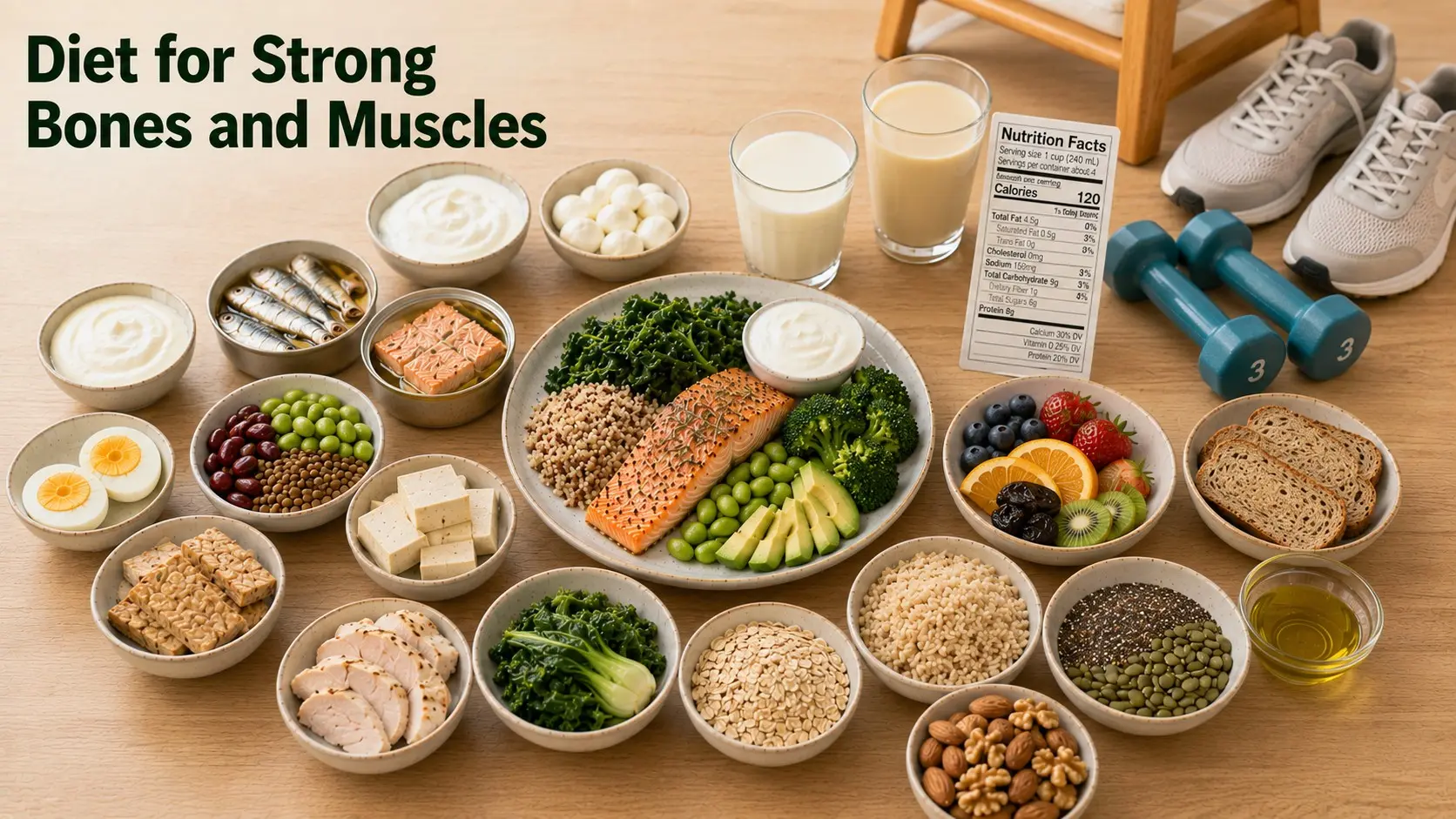
The best Diet for Strong Bones and Muscles includes a variety of foods rather than one superfood.
Useful choices include:
- Plain yogurt and kefir
- Milk and fortified soy drinks
- Cheese and cottage cheese
- Sardines and canned salmon with soft bones
- Salmon, trout, and other fatty fish
- Eggs
- Chicken, turkey, and lean meat
- Beans, lentils, soybeans, and edamame
- Tofu made with calcium sulfate and tempeh
- Kale, bok choy, turnip greens, and broccoli
- Oats, quinoa, brown rice, and whole grain bread
- Walnuts, almonds, chia, and pumpkin seeds
- Berries, citrus fruit, prunes, and colourful vegetables
- Avocado and olive oil
These foods provide a mix of:
- Calcium-rich foods
- Vitamin D foods
- High protein foods
- Magnesium
- Vitamin K
- Vitamin C
- Vitamin B12
- Iron
- Zinc
- Healthy fats
- Fiber
Try to include a protein food at each main meal.
Include a calcium source several times across the day.
Add vegetables, fruit, whole grains, and healthy fats for a balanced pattern.
Why Bones and Muscles Must Be Supported Together
Bones give your body structure.
Muscles create movement.
Tendons connect muscles to bones.
Your nerves tell your muscles when to contract.
Your muscles help protect joints and maintain balance.
When muscle strength falls, walking and daily tasks may become harder.
This can raise the risk of falls.
When bones are weak, a fall is more likely to cause a fracture.
Supporting both systems is important for:
- Walking
- Climbing stairs
- Standing from a chair
- Carrying groceries
- Maintaining posture
- Protecting independence
- Reducing fall risk
- Supporting healthy aging
What Nutrients Support Strong Bones and Muscles?
Calcium
Calcium forms a large part of bone structure.
It also helps muscles contract and nerves send signals.
When calcium intake remains too low, the body can take calcium from bones to maintain the calcium needed in the blood.
Vitamin D
Vitamin D helps the intestine absorb calcium.
It also supports normal muscle function.
Low vitamin D can contribute to weak muscles and poorly mineralized bones.
Protein
Protein provides amino acids that the body uses to build and repair muscle.
Protein is also part of the bone framework.
Eating enough protein is especially important during growth, recovery, aging, and resistance exercise.
Magnesium
Magnesium supports normal muscles, nerves, energy use, and bone structure.
Food sources include beans, nuts, seeds, whole grains, and leafy vegetables.
Vitamin K
Vitamin K supports proteins involved in bone metabolism and normal blood clotting.
Leafy vegetables are rich sources.
Vitamin C
Vitamin C helps the body make collagen.
Collagen forms part of bones, tendons, cartilage, skin, and other connective tissues.
Iron and Vitamin B12
Iron helps carry oxygen in the blood.
Vitamin B12 supports blood and nerve cells.
Low levels may cause fatigue or weakness.
Carbohydrate and Healthy Fat
Carbohydrate provides energy for daily activity and exercise.
Healthy fats support cells, hormones, and the absorption of some vitamins.
A strong body needs enough total energy.
Protein cannot work well when the whole diet is too low in food.
How Much Calcium Do You Need?
| Age or Life Stage | Calcium Needed Each Day |
|---|---|
| Birth to 6 months | 200 milligrams |
| 7 to 12 months | 260 milligrams |
| 1 to 3 years | 700 milligrams |
| 4 to 8 years | 1,000 milligrams |
| 9 to 18 years | 1,300 milligrams |
| Adults aged 19 to 50 | 1,000 milligrams |
| Men aged 51 to 70 | 1,000 milligrams |
| Women aged 51 to 70 | 1,200 milligrams |
| Adults older than 70 | 1,200 milligrams |
| Pregnant or breastfeeding teens | 1,300 milligrams |
| Pregnant or breastfeeding adults | 1,000 milligrams |
These are general targets for healthy people.
Your personal need may differ because of health, pregnancy, kidney function, digestive disease, or medical treatment.
Read the NextFitLife Foods to Increase Calcium in Bones Guide for more options.
How Much Vitamin D Do You Need?
General daily vitamin D targets are:
- 400 IU for babies younger than 1 year
- 600 IU for children and adults aged 1 to 70
- 800 IU for adults older than 70
Few foods naturally contain much vitamin D.
Fatty fish and fortified foods are the main food sources.
Some people need a clinician directed supplement.
Do not assume that more vitamin D is always better.
Read the NextFitLife Foods High in Vitamin D Guide.
How Much Protein Do You Need?
Protein needs vary.
They depend on:
- Age
- Body size
- Activity
- Pregnancy
- Illness
- Recovery
- Muscle goals
- Kidney and liver health
Many people eat most of their protein at dinner.
A more balanced pattern places protein across breakfast, lunch, dinner, and suitable snacks.
Examples include:
- Eggs or yogurt at breakfast
- Beans, fish, chicken, or tofu at lunch
- Fish, poultry, lentils, tofu, or lean meat at dinner
- Yogurt, milk, nuts, or edamame as snacks
Older adults may need special attention to protein because appetite and muscle response can decline with age.
People with kidney disease need a personal protein plan.
Top Foods in a Diet for Strong Bones and Muscles
1. Plain Yogurt and Kefir
Plain yogurt provides calcium and protein in one simple food.
Eight ounces of plain low fat yogurt may provide about 415 milligrams of calcium.
The amount varies by brand.
Yogurt may also provide:
- Vitamin B12
- Phosphorus
- Iodine
- Vitamin D when fortified
Greek yogurt often contains more protein.
Its calcium amount may differ from standard yogurt.
Check the label.
Serve plain yogurt with:
- Berries
- Oats
- Chia seeds
- Prunes
- Walnuts
Kefir may provide similar dairy nutrients.
Choose unsweetened products when possible.
Lactose free yogurt may suit people with lactose intolerance.
Milk allergy requires safe avoidance of dairy proteins.
2. Milk and Fortified Soy Drinks
One cup of milk may provide about 276 to 299 milligrams of calcium.
Milk also provides protein, vitamin B12, phosphorus, and iodine.
Many milk products contain added vitamin D.
A fortified soy drink may provide about 299 milligrams of calcium per cup.
It often provides more protein than almond, rice, coconut, or many oat drinks.
Check the label for:
- Calcium
- Vitamin D
- Vitamin B12
- Protein
- Added sugar
Shake fortified drinks before pouring.
The added calcium may settle at the bottom.
Use milk or fortified soy drink in:
- Oatmeal
- Cereal
- Soup
- Smoothies
- Simple sauces
3. Cheese and Cottage Cheese
Cheese provides calcium, protein, phosphorus, and vitamin B12.
Part skim mozzarella may provide about 333 milligrams of calcium in a 1.5 ounce serving.
Cottage cheese provides protein.
Its calcium amount is lower than many hard cheeses and yogurts.
Use a moderate portion because cheese may contain a lot of sodium and saturated fat.
Add cheese to:
- Eggs
- Vegetables
- Whole grain toast
- Bean meals
- Salad
Many aged cheeses contain little lactose.
They still contain milk proteins.
4. Sardines and Canned Salmon With Soft Bones
Fish with edible bones provides calcium and protein together.
Three ounces of canned sardines with bones may provide about 325 milligrams of calcium.
Three ounces of canned pink salmon with bones may provide about 181 milligrams.
These foods may also provide:
- Vitamin B12
- Omega 3 fats
- Selenium
- Vitamin D
Use sardines or canned salmon in:
- Whole grain sandwiches
- Rice bowls
- Salads
- Fish cakes
- Pasta dishes
Mash the soft bones into the fish.
Fresh boneless salmon does not provide the same calcium amount.
5. Salmon, Trout, and Other Fatty Fish
Fatty fish provides protein, vitamin D, vitamin B12, and omega 3 fats.
Three ounces of cooked rainbow trout may provide about 645 IU of vitamin D.
Three ounces of cooked sockeye salmon may provide about 570 IU.
Amounts vary by species and source.
Useful choices include:
- Salmon
- Trout
- Sardines
- Mackerel
- Herring
Serve fatty fish with:
- Potatoes
- Brown rice
- Kale
- Broccoli
- Beans
Choose lower mercury fish and follow local seafood advice.
6. Eggs
Eggs provide complete protein.
They also provide choline, vitamin B12, selenium, iodine, and a small amount of vitamin D.
Eggs are easy to add to breakfast or lunch.
Serve eggs with:
- Kale
- Broccoli
- Whole grain toast
- Potatoes
- Cheese
- Avocado
Eggs do not provide enough calcium or vitamin D to support the full plan by themselves.
Avoid eggs when you have an allergy.
7. Chicken, Turkey, and Lean Meat
Chicken, turkey, and lean meat provide protein, zinc, iron, selenium, and vitamin B12.
These nutrients support blood, nerves, muscles, and recovery.
Choose less processed options more often.
Useful meals include:
- Chicken with rice and vegetables
- Turkey with potatoes and kale
- Lean meat with beans and peppers
- Chicken soup with whole grains
Processed meat may contain large amounts of sodium and saturated fat.
Limit frequent large servings of sausage, bacon, and highly processed deli meat.
8. Beans, Lentils, Soybeans, and Edamame
Beans and lentils provide plant protein, magnesium, iron, zinc, potassium, folate, and fiber.
One half cup of cooked soybeans may provide about 131 milligrams of calcium.
Useful choices include:
- Soybeans
- Edamame
- Chickpeas
- Black beans
- White beans
- Kidney beans
- Red lentils
- Green lentils
Serve them:
- With brown rice
- In soup
- In salad
- With vegetables
- In whole grain wraps
Soaking dried beans and cooking them in fresh water may improve texture and reduce some compounds that affect mineral absorption.
Add beans slowly when they cause gas.
9. Tofu Made With Calcium Sulfate and Tempeh
Firm tofu made with calcium sulfate may provide about 253 milligrams of calcium in one half cup.
It also provides plant protein.
Tofu made with another setting agent may contain much less calcium.
Check the ingredient list and Nutrition Facts label.
Use tofu:
- With rice and vegetables
- In curry
- In soup
- Scrambled with vegetables
- In grain bowls
Tempeh provides plant protein, magnesium, iron, and other nutrients.
Its calcium content varies.
People with a soy allergy must avoid soy foods.
10. Kale, Bok Choy, Turnip Greens, and Broccoli
These vegetables provide calcium, vitamin K, vitamin C, folate, fiber, and magnesium.
Approximate calcium amounts include:
- 99 milligrams in one half cup of cooked turnip greens
- 94 milligrams in one cup of cooked kale
- 74 milligrams in one cup of raw bok choy
- 21 milligrams in one half cup of raw broccoli
These foods contain less calcium per serving than yogurt or milk.
The calcium in kale, broccoli, and cabbage is absorbed efficiently.
Serve these vegetables:
- With eggs
- With fish
- With tofu
- With beans
- In soup
People taking warfarin should keep vitamin K intake steady and follow medical advice.
Why Spinach Is Not the Best Calcium Source
Spinach contains calcium.
One half cup of cooked spinach may contain about 123 milligrams.
However, spinach contains oxalic acid.
This binds much of the calcium.
Only about 5 percent of spinach calcium may be absorbed.
Spinach remains a nutritious food.
It provides folate, magnesium, iron, and vitamin K.
Use yogurt, milk, fortified drinks, fish with bones, calcium set tofu, kale, or bok choy as stronger calcium sources.
11. Oats, Quinoa, Brown Rice, and Whole Grain Bread
Whole grains provide carbohydrate for energy.
They may also provide fiber, magnesium, iron, zinc, and B vitamins.
Carbohydrate helps support active muscles during walking and exercise.
Useful choices include:
- Oats
- Quinoa
- Brown rice
- Barley
- Whole grain bread
- Whole grain pasta
Pair grains with protein.
Examples include:
- Oatmeal with yogurt
- Rice with beans
- Quinoa with tofu
- Whole grain bread with eggs
- Pasta with chicken or lentils
12. Walnuts, Almonds, Chia, and Pumpkin Seeds
Nuts and seeds provide healthy fat, protein, magnesium, zinc, fiber, and vitamin E.
One tablespoon of chia seeds may provide about 76 milligrams of calcium.
Useful choices include:
- Walnuts
- Almonds
- Pumpkin seeds
- Chia seeds
- Ground flaxseed
- Sesame seeds
- Tahini
Add nuts or seeds to:
- Yogurt
- Oatmeal
- Salad
- Vegetable meals
- Whole grain bread
Choose unsalted products.
Increase chia slowly and drink enough fluid.
Read the NextFitLife Magnesium Rich Foods Guide.
13. Berries, Citrus Fruit, Prunes, and Colorful Vegetables
Fruit and vegetables provide vitamin C, potassium, fiber, vitamin K, and plant compounds.
Vitamin C helps the body make collagen.
Useful choices include:
- Blueberries
- Strawberries
- Oranges
- Kiwi
- Prunes
- Red peppers
- Tomatoes
- Carrots
- Sweet potatoes
These foods do not directly build muscle.
They support a complete diet and provide nutrients used throughout the body.
Research on prunes and bone health is promising but does not prove that prunes treat osteoporosis.
14. Avocado and Olive Oil
Avocado and olive oil provide unsaturated fats.
They can help replace some butter, cream, coconut oil, and fatty processed foods.
Use avocado:
- With eggs
- In salads
- With beans
- On whole grain toast
- In rice bowls
Use olive oil for:
- Cooking vegetables
- Salad dressing
- Fish meals
- Bean dishes
- Whole grain meals
Healthy fats are energy dense.
Use a suitable amount for your needs.
Diet for Strong Bones and Muscles Food Table
| Food | Main Nutrients | Simple Serving Idea |
|---|---|---|
| Plain yogurt | Calcium, protein, vitamin B12 | Serve with berries and chia |
| Milk | Calcium, protein, vitamin D when fortified | Use in oatmeal |
| Fortified soy drink | Calcium, protein, vitamin D, vitamin B12 | Serve with fortified cereal |
| Sardines with bones | Calcium, protein, omega 3 fats | Serve on whole grain toast |
| Salmon | Protein, vitamin D, omega 3 fats | Bake with broccoli and potatoes |
| Eggs | Protein, vitamin B12, choline | Cook with kale |
| Chicken or turkey | Protein, zinc, iron, vitamin B12 | Serve with rice and vegetables |
| Beans and lentils | Protein, magnesium, iron, fiber | Add to soup or grain bowls |
| Calcium set tofu | Calcium and plant protein | Cook with bok choy and rice |
| Leafy vegetables | Vitamin K, calcium, magnesium | Serve with eggs or fish |
| Whole grains | Carbohydrate, magnesium, fiber | Pair with beans or chicken |
| Nuts and seeds | Healthy fat, protein, magnesium | Add to yogurt or oatmeal |
Calcium Absorption Matters
The calcium number on a label does not tell the full story.
Your body absorbs different amounts from different foods.
Calcium absorption from dairy products and many fortified foods is about 30 percent.
Absorption may fall because of:
- Low vitamin D status
- Oxalic acid
- Phytic acid
- Older age
- Some digestive diseases
- Some medicines
Spread calcium foods across the day.
Do not depend on one very large serving.
Why Protein Timing May Help
Your body repairs and builds muscle throughout the day.
Placing protein in more than one meal can make it easier to meet your daily need.
A simple pattern may look like this:
- Breakfast with eggs, yogurt, or milk
- Lunch with beans, chicken, fish, or tofu
- Dinner with fish, poultry, lentils, tofu, or lean meat
- A snack with yogurt, milk, nuts, or edamame
Exercise gives muscles a reason to adapt.
Protein supplies building material.
Both parts matter.
Diet for Strong Bones and Muscles After Age 50
Bone loss and muscle loss become more common with age.
Appetite may also fall.
Dental problems, swallowing difficulty, medicine, illness, and living alone may make eating harder.
Helpful steps include:
- Include protein at breakfast
- Use calcium rich foods daily
- Choose soft protein when chewing is difficult
- Use fortified foods when appetite is small
- Eat regular meals
- Use resistance exercise when safe
- Practice balance work
- Check vitamin D when advised
Easy foods may include:
- Yogurt
- Eggs
- Soft fish
- Lentil soup
- Tofu
- Oatmeal with milk
- Cottage cheese
What Is Sarcopenia?
Sarcopenia is the loss of muscle mass, muscle strength, or physical function that can occur with aging or illness.
Possible signs include:
- Difficulty standing from a chair
- Slower walking
- Weak grip
- Frequent falls
- Tired legs
- Difficulty climbing stairs
- Unplanned weight loss
Food alone is not enough to treat sarcopenia.
A plan may include protein, enough calories, resistance training, medical assessment, and treatment of underlying causes.
A One Day Diet for Strong Bones and Muscles
This is a general example.
It is not a personal treatment plan.
Breakfast
Plain Greek yogurt with oatmeal, berries, chia seeds, and walnuts.
Morning Drink
Milk or fortified soy drink.
Lunch
Chicken, quinoa, broccoli, kale, and avocado.
Snack
One orange with cottage cheese or a small serving of edamame.
Dinner
Baked salmon with potatoes, bok choy, and olive oil.
Vegetarian Dinner
Calcium set tofu with brown rice, broccoli, kale, and sesame seeds.
Three Day Diet for Strong Bones and Muscles Plan
Day 1
Breakfast: Yogurt with oats, berries, and chia.
Lunch: Chicken with quinoa, kale, and peppers.
Dinner: Salmon with potatoes and broccoli.
Day 2
Breakfast: Eggs with cheese, kale, and whole grain toast.
Lunch: Lentil soup with yogurt and whole grain bread.
Dinner: Sardines with brown rice, turnip greens, and salad.
Day 3
Breakfast: Fortified cereal with fortified soy drink, strawberries, and walnuts.
Lunch: Tofu with bok choy, quinoa, and carrots.
Dinner: Turkey with sweet potatoes, broccoli, and olive oil.
Visit the NextFitLife Meal Prep and Recipes Hub for more planning ideas.
Seven Simple High Protein Breakfasts
- Greek yogurt with oats and berries
- Eggs with kale and whole grain toast
- Oatmeal made with milk and topped with chia
- Cottage cheese with fruit and walnuts
- Tofu scramble with vegetables
- Fortified cereal with soy drink and pumpkin seeds
- Egg and cheese whole grain sandwich
Simple Snacks for Bones and Muscles
- Plain yogurt with fruit
- Milk or fortified soy drink
- Cheese with whole grain crackers
- Edamame
- A boiled egg
- Almonds with an orange
- Cottage cheese with berries
- Hummus with suitable vegetables
Snacks are optional.
Use them when they help you meet energy and nutrient needs.
Shopping List for Strong Bones and Muscles
Dairy and Alternatives
- Plain yogurt
- Greek yogurt
- Kefir
- Milk
- Lactose free milk
- Fortified soy drink
- Cheese
- Cottage cheese
Fish, Meat, and Eggs
- Sardines with bones
- Canned salmon with bones
- Salmon
- Trout
- Eggs
- Chicken
- Turkey
- Lean meat
Plant Protein
- Tofu made with calcium sulfate
- Tempeh
- Soybeans
- Edamame
- Lentils
- Chickpeas
- Black beans
- White beans
Vegetables
- Kale
- Bok choy
- Turnip greens
- Broccoli
- Bell peppers
- Carrots
- Sweet potatoes
Grains
- Oats
- Quinoa
- Brown rice
- Whole grain bread
- Whole grain pasta
- Fortified cereal
Fruit, Nuts, Seeds, and Fats
- Berries
- Oranges
- Kiwi
- Prunes
- Walnuts
- Almonds
- Pumpkin seeds
- Chia seeds
- Ground flaxseed
- Avocado
- Olive oil
Diet for Strong Bones and Muscles With Lactose Intolerance
Lactose intolerance does not always require complete dairy avoidance.
Many people tolerate:
- Lactose free milk
- Lactose free yogurt
- Hard cheese
- Small dairy servings with meals
Other choices include:
- Fortified soy drink
- Calcium set tofu
- Sardines with bones
- Canned salmon with bones
- Kale
- Bok choy
- Fortified cereal
A milk allergy is different from lactose intolerance.
A milk allergy requires avoidance of milk proteins.
Vegetarian Diet for Strong Bones and Muscles
A vegetarian diet can support bones and muscles with planning.
Useful foods include:
- Eggs
- Yogurt
- Milk
- Cheese
- Fortified soy drink
- Calcium set tofu
- Tempeh
- Beans
- Lentils
- Nuts
- Seeds
- Whole grains
Pay attention to calcium, vitamin D, protein, vitamin B12, iron, zinc, and iodine.
Vegan Diet for Strong Bones and Muscles
A vegan diet requires careful planning.
Useful choices include:
- Fortified soy drink
- Calcium set tofu
- Tempeh
- Soybeans
- Edamame
- Beans
- Lentils
- Kale
- Bok choy
- Chia seeds
- Whole grains
- Fortified cereal
Vitamin B12 must come from fortified food or a reliable supplement.
Vitamin D, calcium, iodine, protein, iron, zinc, and omega 3 fats also need attention.
A registered dietitian can help when the diet is restricted.
Diet With Kidney Disease
Kidney disease can change protein, calcium, phosphorus, potassium, vitamin D, and parathyroid hormone needs.
Foods that support healthy adults may not fit every kidney plan.
Examples include:
- Milk and yogurt
- Nuts and seeds
- Beans and lentils
- Fortified drinks
- Potatoes
- Some fish
Do not begin a high protein or high calcium plan without guidance from your kidney care team.
Diet During Weight Loss
Very fast weight loss can reduce muscle mass.
It may also make it harder to meet calcium, vitamin D, and protein needs.
When losing weight:
- Include protein at meals
- Use resistance exercise when safe
- Avoid extreme restriction
- Include calcium rich foods
- Monitor strength and energy
People using weight loss medicine may need extra help because appetite can become very low.
Speak with the prescribing clinician when you become weak, lose weight very quickly, or cannot eat enough.
Do You Need Protein Powder?
Most people can obtain protein from food.
Protein powder may be useful when eating enough is difficult.
It is not required for muscle strength.
Products may contain:
- Added sugar
- Large vitamin doses
- Herbal ingredients
- Stimulants
- Ingredients not clearly listed
Choose a simple product only when a healthcare professional or dietitian agrees it is suitable.
People with kidney disease, liver disease, allergies, or medicine interactions need special care.
Do You Need Creatine?
Creatine is found naturally in the body and in animal foods.
Some people use creatine supplements with resistance training.
It is not a replacement for food or exercise.
Supplement quality and individual safety matter.
Speak with a qualified healthcare professional before using creatine when you have kidney disease, are pregnant, take several medicines, or have another medical condition.
Calcium Supplement Safety
Food should usually be the first calcium source.
A supplement may help when food does not provide enough.
Supplements may cause:
- Constipation
- Gas
- Bloating
- Nausea
Calcium supplements may also interact with medicines.
Use them only to fill a real gap.
Calcium Carbonate and Calcium Citrate
Calcium carbonate contains more elemental calcium.
It is usually taken with food.
Calcium citrate is less dependent on stomach acid.
It can be taken with or without food.
Calcium citrate may cause fewer digestive symptoms for some people.
Check the label for elemental calcium.
How to Take Calcium Safely
When a healthcare professional recommends calcium:
- Count calcium from food first
- Read the elemental calcium amount
- Use the recommended dose
- Keep each dose at 500 milligrams or less unless directed otherwise
- Take calcium carbonate with food
- Ask about medicine timing
- Report constipation, gas, or nausea
Calcium may interfere with levothyroxine, some antibiotics, and other medicines.
Ask a pharmacist how to separate the doses.
Can Too Much Calcium Cause Harm?
Yes.
For adults aged 19 to 50, the general upper limit is 2,500 milligrams each day from food and supplements combined.
For adults aged 51 and older, the upper limit is 2,000 milligrams.
These limits are not goals.
Excess calcium may contribute to:
- Constipation
- Nausea
- Kidney problems
- Excess urination
- Abnormal heart rhythm
- High blood calcium
Vitamin D Supplement Safety
More vitamin D is not always better.
For most adults, the general upper limit is 4,000 IU each day unless a clinician prescribes another amount.
Too much vitamin D may cause high blood calcium.
Possible signs include:
- Nausea
- Vomiting
- Muscle weakness
- Confusion
- Excess thirst
- Frequent urination
- Kidney stones
- Kidney damage
Use blood testing and medical advice instead of guessing at a high dose.
Exercise Is Essential for Strong Bones and Muscles
Food supplies nutrients.
Exercise gives bones and muscles a reason to adapt.
Weight Bearing Exercise
Weight bearing activity makes your body work against gravity.
Examples include:
- Walking
- Stair climbing
- Dancing
- Jogging when safe
- Racket sports
Resistance Training
Resistance exercise makes muscles work against force.
Examples include:
- Resistance bands
- Free weights
- Weight machines
- Body weight exercise
- Standing from a chair
- Carrying suitable household items
Balance Exercise
Balance work can reduce falls.
Examples include:
- Tai chi
- Heel to toe walking
- Standing balance practice
- Guided physical therapy exercise
People with osteoporosis, a past fracture, severe weakness, or balance problems need safe exercise guidance.
Read the NextFitLife Walking Exercise for Seniors Guide.
Recovery and Sleep
Muscles need recovery after exercise.
Sleep supports normal hormone signals, energy, balance, and exercise performance.
Try to:
- Follow a regular sleep schedule
- Avoid very hard training every day
- Eat enough food
- Include protein after activity when practical
- Stay hydrated
Persistent poor sleep, loud snoring, or breathing pauses should be discussed with a healthcare professional.
Habits That Can Weaken Bones and Muscles
Long term health may be harmed by:
- Smoking
- Heavy alcohol use
- Very low calorie diets
- Poor protein intake
- Low calcium intake
- Long periods of inactivity
- Untreated vitamin D deficiency
- Frequent falls
- Long term steroid medicine
- Untreated hormone disorders
When to Ask for a Bone Density Test
A bone density test measures bone mineral density.
Ask about testing when you have:
- A fracture after a minor fall
- Long term steroid use
- Loss of height
- A rounded upper back
- Very low body weight
- Early menopause
- A parent with a hip fracture
- Rheumatoid arthritis
- A digestive condition that reduces absorption
- Low estrogen or testosterone
A normal blood calcium result does not prove that your bones are strong.
When to Contact a Healthcare Professional
Arrange medical advice when you have:
- Unexplained muscle weakness
- Loss of muscle size
- Difficulty standing from a chair
- Frequent falls
- Unplanned weight loss
- Loss of height
- Persistent back pain
- A fracture after a small fall
- Long term steroid use
- Kidney or digestive disease
- Difficulty meeting protein or calcium needs
Warning Signs That Need Prompt Care
Seek prompt medical care for:
- Severe pain after a fall
- Inability to stand or walk after an injury
- A visible bone deformity
- Sudden severe back pain
- New numbness or weakness
- Loss of bladder or bowel control
- Severe weakness with confusion
- Dark urine after very hard exercise
- Chest pain or severe breathing trouble
Common Myths About a Diet for Strong Bones and Muscles
Myth: One food can build strong bones and muscles
No.
You need a complete eating pattern and regular activity.
Myth: More protein always creates more muscle
No.
Muscle growth also requires resistance exercise, enough energy, recovery, and good health.
Myth: Milk prevents every fracture
No.
Milk provides useful nutrients but cannot replace exercise, fall prevention, or medical treatment.
Myth: Spinach is the best calcium food
No.
Spinach calcium is poorly absorbed because of oxalate.
Myth: Eggs provide enough vitamin D
No.
Eggs provide only a small amount.
Myth: Protein powder is required after exercise
No.
Food can provide enough protein for many people.
Myth: Walking is enough to build every muscle
Walking is useful.
Resistance exercise is also important for strength.
Myth: Calcium supplements are safer than food
No.
Supplements may cause side effects and medicine interactions.
Myth: Muscle loss is unavoidable with age
Some change is common, but strength training, food, activity, and medical care can help preserve function.
Myth: A normal blood calcium test means strong bones
No.
Blood calcium is tightly controlled and does not measure bone density.
Five High Authority References and Sources
- National Institutes of Health Office of Dietary Supplements: Calcium Fact SheetOpen guidance updated in June 2026 covering calcium needs, food values, absorption, supplement forms, upper limits, side effects, and medicine interactions.
- National Institutes of Health Office of Dietary Supplements: Vitamin D Fact SheetOpen guidance covering vitamin D needs, food sources, calcium absorption, supplements, upper limits, and toxicity.
- National Institute of Arthritis and Musculoskeletal and Skin Diseases: Exercise for Bone HealthOpen guidance about weight bearing activity, resistance training, balance work, bones, muscles, and fall prevention.
- National Institute on Aging: Healthy Meal Planning for Older AdultsOpen guidance about nutrient dense foods, seafood, dairy, fortified soy foods, beans, protein intake, hydration, and meal planning.
- National Institute of Arthritis and Musculoskeletal and Skin Diseases: OsteoporosisOpen guidance about bone loss, fractures, risk factors, physical activity, smoking, alcohol, diagnosis, and treatment.
Conclusion: Diet for Strong Bones and Muscles
A Diet for Strong Bones and Muscles includes calcium rich foods, vitamin D foods, enough protein, whole grains, vegetables, fruit, nuts, seeds, and healthy fats.
Choose yogurt, milk, fortified soy drink, fish with bones, salmon, eggs, poultry, beans, calcium set tofu, leafy vegetables, oats, nuts, and seeds.
Pair food with resistance training, weight bearing activity, balance exercise, good sleep, and medical care when needed.
Start with one simple step today.
Add yogurt or eggs to breakfast.
Add beans, fish, chicken, or tofu to lunch.
Include a calcium source and vegetables with dinner.
Speak with a qualified healthcare professional when you have osteoporosis, kidney disease, repeated fractures, frequent falls, severe weakness, or questions about protein and supplements.
Internal Links and NextFitLife Hubs
- NextFitLife Foods and Nutrition Hub
- Vitamins and Minerals in Food Hub
- Bone and Joint Health Hub
- Osteoporosis Healthy Diet
- Foods for Bones Strengthen
- Foods to Increase Calcium in Bones
- Calcium Rich Foods Guide
- Foods High in Vitamin D
- Vitamins for Strong Bones and Joints
- Foods High in Magnesium
- Vitamin K2 Benefits and Food Sources
- Walking Exercise for Seniors
- Meal Prep and Recipes Hub
Frequently Asked Questions About a Diet for Strong Bones and Muscles
What is the best Diet for Strong Bones and Muscles?
The best Diet for Strong Bones and Muscles includes calcium rich foods, vitamin D foods, protein, whole grains, vegetables, fruit, nuts, seeds, and healthy fats.
Which foods make bones and muscles stronger?
Useful foods include yogurt, milk, fortified soy drink, fish with bones, salmon, eggs, poultry, beans, tofu, leafy vegetables, whole grains, nuts, and seeds.
Can a Diet for Strong Bones and Muscles prevent osteoporosis?
A healthy diet supports bones but cannot prevent every case of osteoporosis. Exercise, hormones, age, genetics, medicine, smoking, alcohol, and fall prevention also matter.
How much calcium do adults need?
Most adults need 1,000 to 1,200 milligrams each day, depending on age and sex.
How much vitamin D do adults need?
Adults aged 19 to 70 generally need 600 IU each day. Adults older than 70 generally need 800 IU.
What protein is best for muscle strength?
Useful protein sources include eggs, fish, yogurt, milk, poultry, lean meat, beans, lentils, tofu, tempeh, nuts, and seeds.
Is milk required for strong bones?
No. Fortified soy drink, calcium set tofu, fish with bones, fortified cereal, kale, bok choy, and other foods can provide calcium.
Is spinach good for bone strength?
Spinach is nutritious, but most of its calcium is poorly absorbed because of oxalate. Use other foods as your main calcium sources.
Can older adults rebuild muscle?
Many older adults can improve strength and function through safe resistance exercise, enough food, suitable protein, and treatment of medical problems.
Do I need protein powder?
Most people can obtain enough protein from food. Protein powder may help when eating enough is difficult, but it should be chosen carefully.
Should I take calcium supplements?
Use calcium supplements only when food does not meet your needs and a healthcare professional recommends a suitable amount.
What exercise supports bones and muscles?
A combination of weight bearing exercise, resistance training, and balance work supports bones, muscle strength, and fall prevention.
When should muscle weakness be checked?
Seek medical advice for unexplained weakness, frequent falls, unplanned weight loss, difficulty standing from a chair, or rapid loss of strength.
Can kidney patients follow a high protein bone diet?
Not without personal advice. Kidney disease can change protein, calcium, phosphorus, potassium, and vitamin D needs.

Health & wellness writer with 30+ years of experience in nutrition, fitness, and healthy aging. Founder of NextFitLife.com — evidence-based health guidance.