
First published: October 2024
Updated on: October 14, 2026
Written and source checked by: Adel Galal, Founder and Lead Writer at NextFitLife
Medical review status: This article has not been medically reviewed by a dentist, oral medicine specialist, or doctor.
Canker sores are painful ulcers that form inside the mouth. Most small sores heal on their own within about one to two weeks. They are not caused by herpes and they are not contagious. Treatment focuses on easing pain, protecting the sore, reducing irritation, and checking for an underlying cause when ulcers are severe or keep returning.
Quick answer:
A typical canker sore is a small round or oval ulcer inside the mouth with a pale center and red edge. Avoid foods that sting, use gentle oral care, and consider an appropriate pain relieving gel or rinse. See a dentist or doctor if sores are large, frequent, unusually painful, or last two weeks or longer.
This article is for general information and education. It does not replace medical advice, diagnosis, or treatment.
Most canker sores are more annoying than dangerous. Still, I would not treat every mouth ulcer as a routine canker sore. A lesion that refuses to heal, keeps growing, causes major trouble eating or drinking, or comes with other symptoms deserves proper assessment.
For more oral health guidance, visit the NextFitLife Oral Care Hub or read our broader Mouth Ulcers guide.
Get medical help sooner if the problem is more than a simple sore.
Seek prompt care if you cannot drink enough, have trouble swallowing, develop major mouth or facial swelling, feel very unwell, or have severe sores with fever. Trouble breathing, rapidly increasing tongue or throat swelling, or signs of a serious allergic reaction need emergency care.
Table of Contents
- What canker sores look like
- Canker sores versus cold sores
- Why canker sores happen
- 11 proven relief and prevention tips
- Protect the sore
- Choose foods that hurt less
- Use gentle rinses
- Try suitable pain relief
- Ask about topical steroids
- Use a soft toothbrush
- Consider SLS free toothpaste
- Fix dental irritation
- Track personal triggers
- Check nutrients when appropriate
- Investigate recurrent ulcers
- Types of canker sores
- What not to put on a canker sore
- When testing may help
- When to see a dentist or doctor
- References and Sources
- Internal Links and Hub
- About the Author
- Frequently Asked Questions
What Are Canker Sores?
Canker sores, also called aphthous ulcers, are shallow painful ulcers that develop on the soft tissues inside the mouth.
They commonly appear:
- Inside the lips
- Inside the cheeks
- On or under the tongue
- At the base of the gums
- On the soft palate
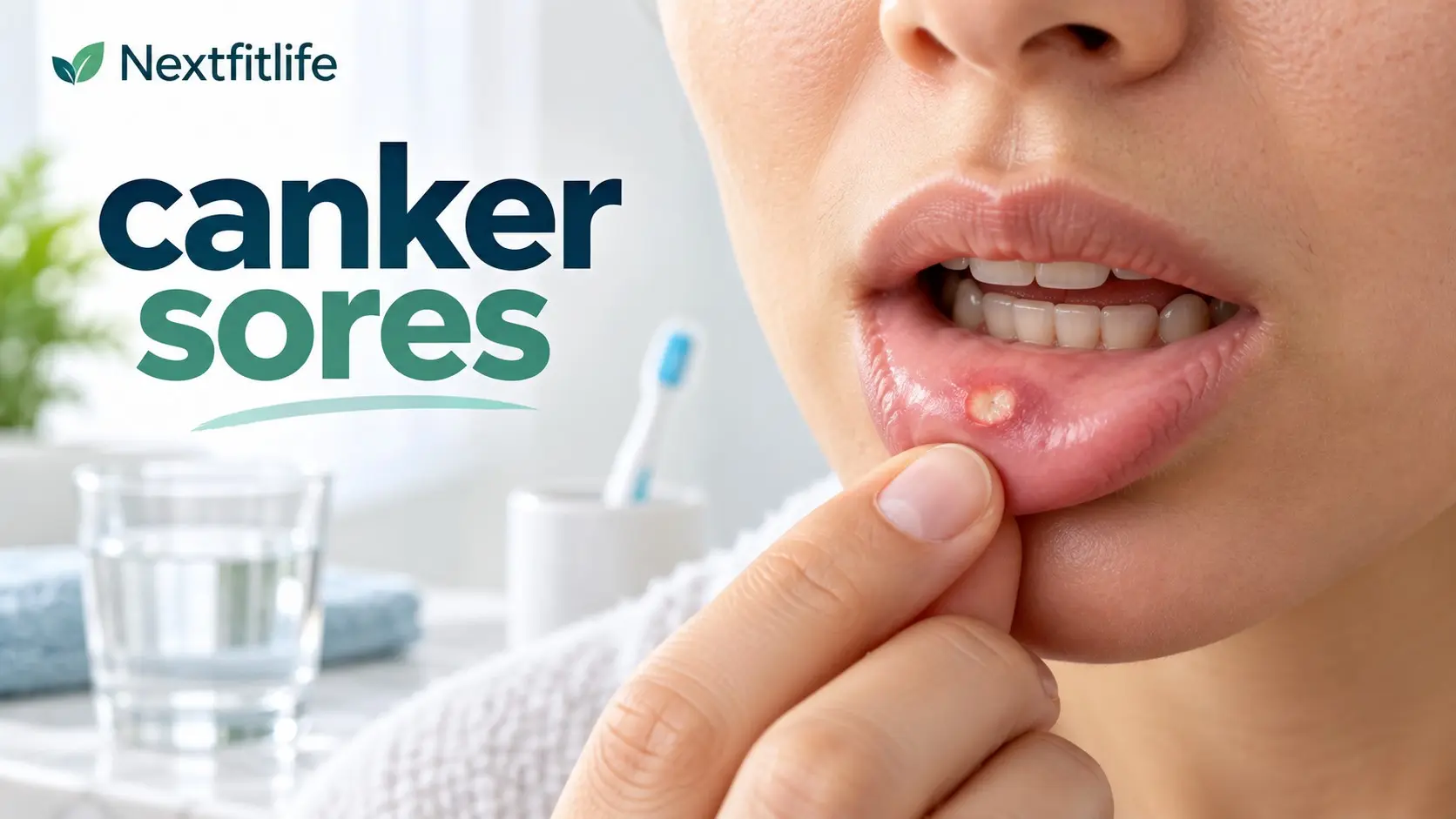
A typical sore is round or oval. The center looks white, yellow, or gray, while the surrounding edge is red.
You may notice burning or tingling before the ulcer becomes visible.
Pain can feel surprisingly strong compared with the size of the sore, especially when you eat, drink, brush your teeth, or talk.
Are Canker Sores Contagious?
No.
That distinction is one of the most useful facts to remember.
Canker sores are not caused by herpes simplex virus and do not spread from one person to another through kissing, cups, utensils, or casual contact.
That is very different from a cold sore.
Canker Sores vs Cold Sores: What Is the Difference?
| Feature | Canker Sore | Cold Sore |
|---|---|---|
| Main location | Inside the mouth | Usually on or around the outer lip |
| Typical appearance | Round ulcer with pale center and red border | Cluster of fluid filled blisters |
| Cause | Exact cause is unclear | Usually herpes simplex virus type 1 |
| Contagious | No | Yes |
| Antiviral medicine | Not routine treatment | May be used for herpes cold sores |
The names can be confusing, especially because both hurt.
If the lesion is on the outside of the lip and looks like grouped blisters, read our Cold Sores guide or Cold Sore on Lip guide.
What Causes Canker Sores?
The exact cause remains unclear.
That means anyone promising one universal cause is oversimplifying the problem.
What we do know is that several factors can trigger or accompany recurrent aphthous stomatitis.
Mouth Injury
A cheek bite, rough brushing, a sharp tooth, braces, dental work, or another small injury can trigger a sore in someone who is prone to them.
If an ulcer keeps appearing in the exact same spot, check for something rubbing against the tissue.
Stress
Stress is a recognized trigger for some people.
That does not mean stress simply “weakens the immune system” and causes every sore. The biology of recurrent aphthous ulcers is more complex.
What matters in practice is whether your own outbreaks repeatedly appear during stressful periods.
Foods That Irritate the Mouth
Acidic, salty, sharp, and spicy foods can make an existing sore hurt much more.
Some people also report specific foods as personal triggers.
Do not remove a long list of nutritious foods just because the internet says they cause canker sores.
Track your own pattern first.
Sodium Lauryl Sulfate
Some people with recurrent sores do better after switching from toothpaste containing sodium lauryl sulfate to an SLS free toothpaste.
This is worth a simple trial if sores keep returning, but it is not a guaranteed cure.
Hormonal Changes
Some people notice sores around menstrual hormonal changes.
The pattern varies, so a diary can be more useful than assuming hormones are the cause of every outbreak.
Nutrient Deficiencies
Recurrent aphthous ulcers can occur with deficiencies of:
- Iron
- Vitamin B12
- Folate
- Zinc
This does not mean everyone with a canker sore needs four supplements.
If ulcers are frequent, severe, or appear alongside fatigue, pale skin, weight loss, bowel problems, or other symptoms, ask whether blood testing makes sense.
Other Health Conditions
Repeated or severe mouth ulcers can sometimes occur with conditions such as:
- Celiac disease
- Crohn disease
- Ulcerative colitis
- Behçet disease
- Some immune disorders
These conditions are much less common than an ordinary minor canker sore.
Do not jump from one small ulcer to a serious diagnosis.
The reason to investigate is a repeated, unusual, or severe pattern.
11 Proven Canker Sore Relief and Prevention Tips
1. Protect the Sore From Extra Irritation
A tiny ulcer can hurt all day if it keeps rubbing against a tooth, brace, retainer, or sharp food.
Remove the irritation when possible.
If a sharp tooth, filling, denture, or orthodontic appliance keeps catching the same spot, ask a dentist or orthodontist to check it.
Orthodontic wax may help with some brace related rubbing.
2. Eat Foods That Hurt Less While It Heals
You do not need a special canker sore diet.
You do need food that does not make every bite painful.
During a flare, softer and cooler foods may be easier:
- Plain yogurt
- Oatmeal
- Soft eggs
- Rice
- Soft pasta
- Banana
- Avocado
- Soup that is warm rather than hot
Avoid foods that clearly sting the ulcer, especially citrus, vinegar, chili, very salty snacks, sharp chips, and very hot drinks.
3. Use a Saltwater or Baking Soda Rinse
A gentle rinse is one of the simplest home measures.
Mayo Clinic suggests a saltwater rinse made with about half a teaspoon of salt in one cup of warm water.
A baking soda rinse is another option.
Swish gently, then spit it out.
The point is comfort and gentle mouth care, not burning the ulcer into submission.
4. Use Appropriate Pain Relief
Over the counter topical products can reduce pain while the sore heals.
Some contain a local anesthetic such as benzocaine.
Follow the package instructions and ask a dentist or pharmacist if you have medical conditions, take several medicines, are pregnant, or are choosing a product for a child.
Do not keep applying more because the numb feeling wears off.
5. Ask About a Topical Corticosteroid for Severe or Recurrent Sores
For troublesome canker sore treatment, topical corticosteroids are one of the most established options.
Current oral medicine guidance lists steroid pastes, rinses, sprays, or other topical forms as common treatments for recurrent aphthous stomatitis.
They work best when used early in an outbreak.
These are treatments to discuss with a dentist, doctor, or oral medicine specialist rather than borrowing someone else's prescription.
6. Brush Gently With a Soft Toothbrush
Oral hygiene still matters when your mouth hurts.
Use a soft toothbrush and brush gently around the sore.
Do not stop cleaning your teeth for a week because brushing feels uncomfortable. At the same time, do not scrub the ulcer itself.
For a broader daily routine, see our Oral Hygiene Guide.
7. Try SLS Free Toothpaste if Ulcers Keep Returning
If you get recurrent sores, an SLS free toothpaste is a low effort change worth discussing or trying.
Mayo Clinic includes avoiding toothpastes and mouth rinses containing sodium lauryl sulfate among its prevention suggestions.
Give the change enough time to judge your own pattern.
Do not expect one new toothpaste to solve recurrent ulcers caused by a medical condition.
8. Fix Repeated Dental Trauma
An ulcer that keeps appearing next to the same sharp tooth needs a mechanical solution.
Likewise, repeated biting from an uneven bite, a rough filling, an appliance, or a poorly fitting denture can keep reopening tissue.
That is a dentist problem, not a vitamin problem.
9. Track Personal Triggers Instead of Banning Everything
A useful trigger diary is simple.
| Track | What to Write | Why It Helps |
|---|---|---|
| Date | When the sore started | Shows recurrence frequency |
| Location | Lip, cheek, tongue, gums | Repeated same spot may suggest trauma |
| Food | Unusual or suspected triggers | Helps find personal patterns |
| Stress | Low, medium, or high | Can reveal timing links |
| Other symptoms | Fever, diarrhea, rash, genital sores, eye symptoms | May change the medical evaluation |
A diary is better than removing ten foods forever based on one outbreak.
10. Correct Nutrient Deficiencies Instead of Guessing
The old advice to take zinc and B12 “just in case” is too casual.
If testing shows vitamin B12 deficiency, iron deficiency, low folate, or another nutrient problem, correcting it makes sense.
If your nutrient levels are normal, extra supplements may not fix recurrent ulcers.
For more context, see our Vitamin B12 Deficiency guide, Iron Deficiency Anemia guide, and Zinc and Copper Rich Foods guide.
11. Investigate Frequent or Unusual Ulcers
This is where prevention becomes medical detective work.
Ask for an assessment if ulcers keep returning, become unusually large, appear in many places, or occur with symptoms outside the mouth.
A clinician may consider nutritional deficiency, medicine effects, gastrointestinal disease, immune conditions, or a diagnosis other than recurrent aphthous stomatitis.
What Are the Three Main Types of Canker Sore?
Minor Canker Sores
These are the common ones.
They are usually small, shallow, and heal within roughly one to two weeks without scarring.
Major Canker Sores
Major aphthous ulcers are larger, deeper, and more painful.
They can take several weeks to heal and may leave a scar.
A large ulcer deserves more attention than a typical small sore.
Herpetiform Canker Sores
The name is confusing.
Herpetiform aphthous ulcers are not caused by herpes.
They are many very small ulcers that appear in clusters and can merge into a larger irregular sore.
If you suddenly develop dozens of mouth ulcers, get professional advice rather than trying to identify the type yourself.
How Long Do Canker Sores Last?
Most minor canker sores heal within one to two weeks.
The pain usually improves before the ulcer completely disappears.
Larger major ulcers can last several weeks.
A sore that is still present after two weeks deserves closer attention, especially if it is not clearly improving.
A persistent mouth ulcer should not automatically be labeled “just a canker sore” forever.
What Is the Fastest Way to Heal a Canker Sore?
There is no instant cure.
The most useful strategy is to treat early and reduce repeated irritation.
For a mild sore:
- Stop foods that sting.
- Use gentle oral hygiene.
- Try a saltwater or baking soda rinse.
- Use an appropriate topical pain product if needed.
- Protect the area from biting or dental rubbing.
For severe or frequently recurring ulcers, ask a clinician about a topical corticosteroid or another prescription approach.
Treatment can reduce pain and sometimes shorten the course, but the ulcer still needs time to heal.
Should You Put Salt Directly on a Canker Sore?
I would not.
Putting dry salt directly on an ulcer can cause intense pain and irritation.
A dilute saltwater rinse is the gentler approach recommended by major medical sources.
More pain does not mean more healing.
Should You Use Hydrogen Peroxide?
Do not pour household hydrogen peroxide directly onto a mouth ulcer.
Some commercial oral products contain appropriately formulated peroxide, and Mayo Clinic lists peroxide containing oral products among available treatments.
That is different from repeatedly applying a harsh household solution to delicate mouth tissue.
Use products made for oral use and follow the directions.
What About Aloe Vera?
Aloe is popular online, but it is not a first line treatment in major canker sore guidelines.
If you use an oral product, choose one specifically made for use inside the mouth.
Do not use cosmetic skin gel simply because it contains aloe.
Do Antibiotics Treat Canker Sores?
Routine antibiotics are not the answer.
A canker sore is not a bacterial infection.
Some antiseptic mouth rinses may be recommended in selected cases, but that is different from taking an antibiotic.
Do Antiviral Medicines Treat Canker Sores?
No, not ordinary aphthous ulcers.
Antiviral medicine is used for viral conditions such as herpes cold sores.
Canker sores are not caused by herpes virus.
This is one of the most important corrections to the old version of this article.
Can Stress Cause Canker Sores?
Stress is a recognized trigger, especially in people prone to recurrent aphthous stomatitis.
That does not mean every ulcer is psychological.
Think of stress as one possible trigger among several.
If your sores follow periods of poor sleep, exams, deadlines, travel, or illness, stress management may help reduce one part of the pattern.
Can Vitamin B12 Deficiency Cause Canker Sores?
Repeated mouth ulcers can occur in people with low vitamin B12.
Iron, folate, and zinc deficiencies can also be associated with recurrent ulcers.
Testing is more useful than guessing.
If you also have tiredness, pale skin, dizziness, tingling, a sore tongue, dietary restriction, or digestive problems, mention those symptoms when you see your clinician.
Can Celiac Disease Cause Recurrent Canker Sores?
Yes, recurrent aphthous ulcers can occur with celiac disease.
But a single canker sore does not mean you have celiac disease.
The connection becomes more relevant when ulcers keep coming back and there are other clues such as ongoing diarrhea, bloating, weight loss, iron deficiency, or a family history.
Read Signs of Celiac Disease or our full Celiac Disease guide if those symptoms fit your situation.
Can Crohn Disease or Ulcerative Colitis Cause Mouth Ulcers?
They can.
Inflammatory bowel diseases are among the systemic conditions associated with recurrent mouth ulcers.
If sores occur with persistent diarrhea, abdominal pain, blood in the stool, weight loss, or other digestive symptoms, tell your healthcare professional.
For more digestive guidance, visit the Digestive Health and Gut Hub.
When Should Behçet Disease Be Considered?
Behçet disease is uncommon, so it should not be your first assumption.
It becomes more relevant when repeated oral ulcers occur alongside other problems such as genital ulcers, eye inflammation, or certain skin symptoms.
If you have that combination, tell your doctor clearly rather than treating each symptom separately.
Can Children Get Canker Sores?
Yes.
Children can develop aphthous ulcers, but mouth sores in children have several other possible causes too.
Viral illnesses, hand foot and mouth disease, trauma, braces, and other infections can all produce painful mouth lesions.
For child specific guidance, use our Mouth Ulcers in Children guide.
What Should You Not Put on a Canker Sore?
A painful ulcer makes harsh home remedies tempting.
I would avoid:
- Undiluted hydrogen peroxide
- Vinegar directly on the sore
- Lemon juice
- Rubbing alcohol
- Aspirin placed directly on the ulcer
- Undiluted essential oils
- Very hot saltwater
- Strong whitening products
Anything that chemically burns or further injures the tissue can make an already painful mouth worse.
When Might Blood Tests Be Useful?
Most simple canker sores need no testing.
If ulcers are severe, persistent, or recurrent, a clinician may consider blood tests based on your history.
Possible checks can include:
- Complete blood count
- Iron studies
- Vitamin B12
- Folate
- Other tests guided by symptoms
There is no one universal “canker sore blood test.”
The investigation should follow the pattern of symptoms.
Can a Mouth Ulcer Be Something More Serious?
Most are not.
But this is why persistent ulcers have a time limit.
See a dentist or doctor if a mouth ulcer lasts longer than about two weeks, especially if it is not healing.
Also get it checked if the ulcer is getting larger, unusually hard, repeatedly bleeds, appears in an unusual location, or is accompanied by unexplained weight loss, a neck lump, or other concerning symptoms.
A persistent sore deserves a diagnosis rather than endless home treatment.
When Should You See a Dentist or Doctor?
Arrange a medical or dental review if:
- A sore lasts two weeks or longer
- It is unusually large
- Several ulcers appear at once
- New sores develop before older ones heal
- The pain is difficult to control
- You cannot eat or drink normally
- You develop a high fever
- Sores return frequently
- You also have diarrhea, weight loss, rash, genital sores, or eye symptoms
- The ulcer repeatedly appears in the same place
- You have a weakened immune system
- You are unsure whether the lesion is actually a canker sore
Conclusion: Treat Canker Sores Gently and Know When to Check Them
Most canker sores need patience more than aggressive treatment. Protect the ulcer, avoid foods that sting, keep your mouth clean, use appropriate pain relief, and give a simple minor sore time to heal.
The part I would not ignore is recurrence.
If ulcers are large, frequent, slow to heal, or appear with other symptoms, make an appointment with a dentist or healthcare professional. Correct diagnosis is more useful than adding another home remedy.
References and Sources
- National Institute of Dental and Craniofacial Research. Fever Blisters and Canker Sores. Information on causes, symptoms, diagnosis, treatment, and the difference between aphthous ulcers and herpes cold sores.
https://www.nidcr.nih.gov/health-info/fever-blisters-canker-sores - Mayo Clinic. Canker Sore: Symptoms and Causes. Guidance on appearance, triggers, associated health conditions, prevention, and warning signs.
https://www.mayoclinic.org/diseases-conditions/canker-sore/symptoms-causes/syc-20370615 - Mayo Clinic. Canker Sore: Diagnosis and Treatment. Guidance on mouth rinses, topical medicines, corticosteroids, nutritional testing, saltwater rinses, and treatment of severe ulcers.
https://www.mayoclinic.org/diseases-conditions/canker-sore/diagnosis-treatment/drc-20370620 - MedlinePlus, U.S. National Library of Medicine. Canker Sores. Overview of aphthous ulcers, triggers, symptoms, healing, and treatment.
https://medlineplus.gov/cankersores.html - MSD Manual. Recurrent Aphthous Stomatitis. Updated March 2026 clinical review covering causes, ulcer types, diagnosis, and treatment.
https://www.msdmanuals.com/home/mouth-and-dental-disorders/symptoms-of-oral-and-dental-disorders/recurrent-aphthous-stomatitis - NHS. Mouth Ulcers. Guidance on self care, treatment, prevention, and when a persistent oral ulcer should be assessed.
https://www.nhs.uk/conditions/mouth-ulcers/
Internal Links and Hub
- Oral Care Hub
- Mouth Ulcers Guide
- Mouth Ulcers in Children
- Oral Hygiene Guide
- Cold Sores Guide
- Cold Sore on Lip
- Oral Thrush Guide
- Vitamin B12 Deficiency
- Iron Deficiency Anemia
- Zinc and Copper Rich Foods
- Celiac Disease Guide
- Signs of Celiac Disease
- Digestive Health and Gut Hub
- NextFitLife Health Hub
About the Author
Adel Galal is the Founder and Lead Writer at NextFitLife. He writes about health, fitness, nutrition, oral health, healthy aging, and practical everyday wellness.
His approach is to compare current medical, dental, and public health sources, separate established guidance from weak claims, and explain health topics in simple language readers can use when deciding what to do next.
I am not a dermatologist or A doctor, and this content does not replace professional medical advice. What I share comes from real-life experience, extensive research, and consultation with healthcare providers. Always consult qualified medical professionals for diagnosis and treatment of any health condition.
Adel is not a dentist, oral medicine specialist, oral surgeon, pharmacist, or physician. This article is educational and does not diagnose or prescribe treatment for persistent mouth ulcers.
Learn more about Adel Galal and NextFitLife on the About Us page.
Frequently Asked Questions
What causes canker sores?
The exact cause is unclear. Common triggers include minor mouth injury, stress, certain irritating foods, sodium lauryl sulfate in some toothpastes, hormonal changes, and nutrient deficiencies. Recurrent ulcers can sometimes occur with other medical conditions.
Are canker sores contagious?
No. Canker sores are not caused by herpes and do not spread between people.
How long does a canker sore last?
Most minor canker sores heal within about one to two weeks. Large major ulcers can take several weeks to heal and may leave scars.
What is the fastest way to ease canker sore pain?
Avoid foods that sting, use gentle oral care, try a saltwater or baking soda rinse, and consider an appropriate over the counter pain relieving product. Severe or recurrent ulcers may need prescription treatment.
Does salt heal canker sores?
A dilute saltwater rinse may help keep the area clean and ease discomfort. Putting dry salt directly on the ulcer can cause intense irritation and is not necessary.
Can vitamin B12 deficiency cause canker sores?
Recurrent aphthous ulcers can be associated with low vitamin B12, iron, folate, or zinc. Supplements make the most sense when a deficiency or clinical need has been identified.
Does toothpaste cause canker sores?
Some people with recurrent ulcers report fewer sores after avoiding toothpaste containing sodium lauryl sulfate. An SLS free toothpaste can be a reasonable trial, but it does not prevent every canker sore.
Are canker sores herpes?
No. Canker sores are aphthous ulcers and are not caused by herpes simplex virus. Cold sores are usually caused by herpes and are contagious.
Do antiviral medicines treat canker sores?
No. Routine aphthous ulcers are not herpes infections, so antiviral medicines used for cold sores are not standard canker sore treatment.
Can stress cause canker sores?
Stress is a recognized trigger in some people with recurrent aphthous stomatitis. It is one possible factor rather than the only cause.
Can celiac disease cause mouth ulcers?
Recurrent aphthous ulcers can occur with celiac disease. One isolated canker sore does not mean you have celiac disease, but repeated ulcers plus digestive or deficiency symptoms deserve discussion with a healthcare professional.
When should I see a doctor or dentist for a canker sore?
Get medical or dental advice if the ulcer lasts two weeks or longer, keeps returning, is very large or painful, makes eating or drinking difficult, or occurs with fever, weight loss, diarrhea, rash, genital sores, eye symptoms, or other concerning signs.

Health & wellness writer with 30+ years of experience in nutrition, fitness, and healthy aging. Founder of NextFitLife.com — evidence-based health guidance.

